Vegan Sticky Sesame Chickpeas
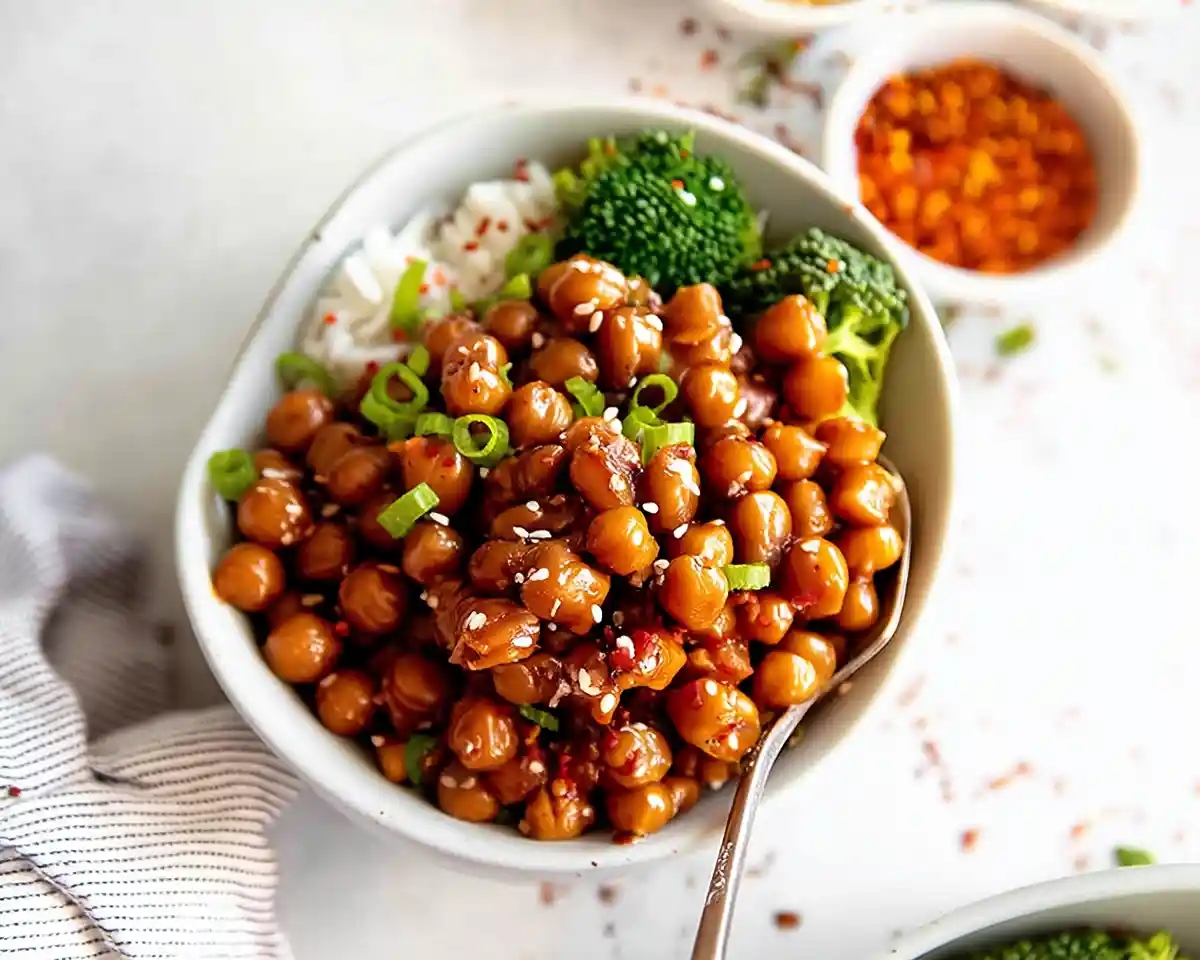
These Vegan Sticky Sesame Chickpeas are crispy, sweet, and savory perfection in under 20 minutes. A healthy protein-packed meal the whole family loves!
You know what? I never thought chickpeas could taste this incredible until I made this recipe on a random Tuesday when I had exactly 15 minutes before my kids’ soccer practice. Now it’s our go-to meal at least twice a week, and honestly, my seven-year-old asks for these Vegan Sticky Sesame Chickpeas more than pizza.
The magic happens when humble chickpeas get coated in a glossy, caramelized sauce that’s both sweet and savory with just a hint of heat. It’s one of those plats healthy that feels like takeout but comes together faster than you can scroll through your favorite chickpea recipes online.
This dish checks every box for busy families—naturally gluten-free, protein-rich, budget-friendly, and so delicious that even picky eaters won’t realize they’re eating legumes. Whether you’re brand new to plant-based cooking or just need reliable healthy food motivation on hectic weeknights, this recipe is about to become your new best friend.
Table of Contents
Vegan Sticky Sesame Chickpeas
Equipment
- Large sauté pan
- Small mixing bowl
- Whisk
- Wooden spoon
Ingredients
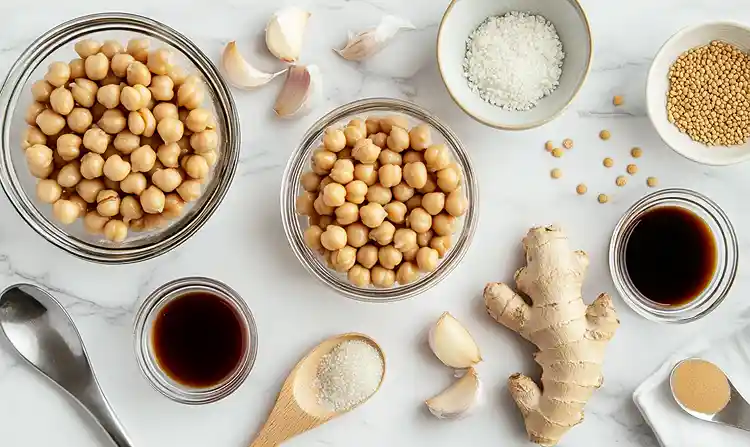
- 2 15-ounce cans chickpeas drained and rinsed
- 3-4 large garlic cloves minced
- 1 tablespoon avocado oil or olive oil
- 1.5 tablespoons toasted sesame oil
- ⅓ cup low sodium tamari or soy sauce
- 3 tablespoons maple syrup
- 2 teaspoons rice vinegar
- ½ teaspoon ground ginger
- 1 tablespoon tapioca starch
- ¼ cup low sodium vegetable broth or water divided
- ½ teaspoon red pepper flakes optional for spice
Instructions
- Drain and rinse the chickpeas thoroughly under cold water and set them aside on a clean kitchen towel. Pat them gently to remove excess moisture—this helps the sauce stick better and creates that irresistible glossy coating we’re after.
- Mince the garlic cloves finely and add them to a large sauté pan along with the avocado or olive oil. Sauté over medium heat for 2-3 minutes, stirring frequently until the garlic becomes golden and so fragrant it makes your mouth water.
- While the garlic sizzles, grab a small bowl and whisk together the tapioca starch with half of the vegetable broth (2 tablespoons) until completely smooth with no clumps remaining. This slurry is your secret weapon for that perfectly thick, sticky sauce.
- To the sauté pan with the garlic, add the low sodium soy sauce, sesame oil, maple syrup, rice vinegar, ground ginger, and the remaining 2 tablespoons of vegetable broth. Whisk everything together until well combined—the aroma at this point is absolutely heavenly.
- Pour in the tapioca mixture and stir it through the sauce. Watch as tiny bubbles start to form around the edges, which means your sauce is about to transform into something magical.
- Add the drained chickpeas to the pan and stir gently but thoroughly until every single chickpea is coated in that gorgeous, shimmering sauce. Make sure they’re all getting equal love here.
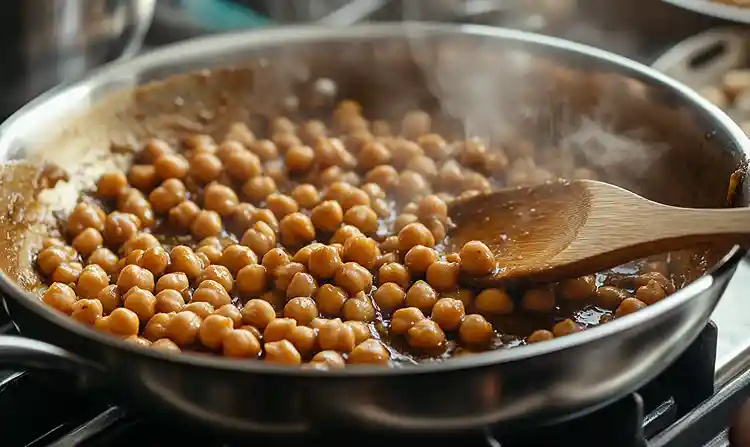
- Reduce the heat to low and let the chickpeas simmer for about 5 minutes, stirring occasionally. The sauce will thicken and become gloriously sticky, clinging to each chickpea like a sweet, savory hug.
- Remove the pan from heat and let it sit for 2-3 minutes. This resting time allows the chickpeas to absorb every bit of flavor, and the sauce will thicken up even more as it cools slightly.
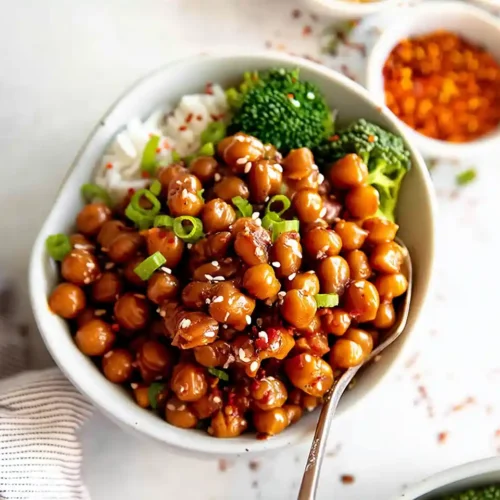
- Serve immediately over steamed broccoli, fluffy quinoa, or jasmine rice. Sprinkle with extra sesame seeds or sliced green onions if you’re feeling fancy!
Notes
Ingredients
| Ingredient | Amount |
|---|---|
| Canned chickpeas | 2 (15-ounce) cans |
| Garlic cloves (large) | 3-4 |
| Avocado oil or olive oil | 1 tablespoon |
| Toasted sesame oil | 1.5 tablespoons |
| Low sodium tamari or soy sauce | ⅓ cup |
| Maple syrup | 3 tablespoons |
| Rice vinegar | 2 teaspoons |
| Ground ginger | ½ teaspoon |
| Tapioca starch | 1 tablespoon |
| Low sodium vegetable broth or water | ¼ cup (divided) |
| Red pepper flakes (optional) | ½ teaspoon |
Instructions
Step 1: Drain and rinse the chickpeas thoroughly under cold water and set them aside on a clean kitchen towel. Pat them gently to remove excess moisture—this helps the sauce stick better and creates that irresistible glossy coating we’re after.
Step 2: Mince the garlic cloves finely and add them to a large sauté pan along with the avocado or olive oil. Sauté over medium heat for 2-3 minutes, stirring frequently until the garlic becomes golden and so fragrant it makes your mouth water.
Step 3: While the garlic sizzles, grab a small bowl and whisk together the tapioca starch with half of the vegetable broth (2 tablespoons) until completely smooth with no clumps remaining. This slurry is your secret weapon for that perfectly thick, sticky sauce.
Step 4: To the sauté pan with the garlic, add the low sodium soy sauce, sesame oil, maple syrup, rice vinegar, ground ginger, and the remaining 2 tablespoons of vegetable broth. Whisk everything together until well combined—the aroma at this point is absolutely heavenly.
Step 5: Pour in the tapioca mixture and stir it through the sauce. Watch as tiny bubbles start to form around the edges, which means your sauce is about to transform into something magical.
Step 6: Add the drained chickpeas to the pan and stir gently but thoroughly until every single chickpea is coated in that gorgeous, shimmering sauce. Make sure they’re all getting equal love here.
Step 7: Reduce the heat to low and let the chickpeas simmer for about 5 minutes, stirring occasionally. The sauce will thicken and become gloriously sticky, clinging to each chickpea like a sweet, savory hug.
Step 8: Remove the pan from heat and let it sit for 2-3 minutes. This resting time allows the chickpeas to absorb every bit of flavor, and the sauce will thicken up even more as it cools slightly.
Step 9: Serve immediately over steamed broccoli, fluffy quinoa, or jasmine rice. Sprinkle with extra sesame seeds or sliced green onions if you’re feeling fancy!
Substitutions
Can’t find tamari? Regular soy sauce works perfectly, though tamari keeps this dish naturally gluten-free and adds a slightly richer, less salty flavor. Coconut aminos are another great swap if you’re avoiding soy entirely.
Out of tapioca starch? Cornstarch is your best friend here—use the exact same amount and follow the same mixing method. Arrowroot powder also works beautifully and creates an equally glossy finish.
No toasted sesame oil? Well… you’ll miss that nutty depth, but you can use regular sesame oil or add an extra tablespoon of avocado oil plus a sprinkle of toasted sesame seeds at the end. The flavor won’t be quite as complex, but it’ll still be delicious.
Prefer a different sweetener? Swap the maple syrup with agave nectar, honey (if not strictly vegan), or even brown sugar dissolved in a tiny splash of water. Each brings its own subtle flavor twist to these chickpea recipes.
Troubleshooting
Sauce too thin? Mix another teaspoon of tapioca starch with a tablespoon of cold water and stir it in. Let it simmer for another minute or two until it reaches that perfect sticky consistency.
Chickpeas breaking apart? You might be stirring too vigorously or cooking them too long. Gentle folding motions work best, and remember that 5 minutes of simmering is truly all you need for tender chickpeas that hold their shape.
Too salty? Add another tablespoon of maple syrup and a squeeze of fresh lime juice to balance the flavors. You can also toss in more chickpeas or serve over extra rice to mellow the saltiness.
Not sticky enough? Make sure you’re using tapioca starch or cornstarch, not flour—flour won’t create that glossy coating. Also, let the sauce bubble and thicken before adding the chickpeas, and don’t skip the resting time at the end.
Storage & Meal Prep
Store leftover Vegan Sticky Sesame Chickpeas in an airtight container in the refrigerator for up to 4 days. The sauce may thicken as it sits, but a quick splash of vegetable broth when reheating brings it right back to life.
For meal prep, you can make a double batch on Sunday and portion it into containers with your favorite grain and veggies. These plats healthy reheat beautifully in the microwave (1-2 minutes on high) or on the stovetop with a tiny bit of water.
Serving Suggestions
These sticky chickpeas are incredibly versatile and work with just about any grain or veggie combo you have on hand. I love serving them over cauliflower rice for a low-carb option or spooned into lettuce wraps for a fun, interactive dinner.
Try pairing them with roasted sweet potatoes and sautéed bok choy for a complete meal that’s as colorful as it is nutritious. For extra healthy food motivation, top with sliced avocado, pickled red onions, and a sprinkle of cilantro—it transforms this simple dish into something restaurant-worthy.
Variations
Crispy version: After coating the chickpeas, spread them on a parchment-lined baking sheet and broil for 3-4 minutes until they get slightly crispy on the outside while staying tender inside. This adds amazing textural contrast.
Kid-friendly twist: Skip the red pepper flakes and add an extra tablespoon of maple syrup for a sweeter version that little ones absolutely devour. My kids call these “candy chickpeas,” and I’m not correcting them.
Extra veggie boost: Toss in snap peas, bell pepper strips, or edamame during the last 2 minutes of cooking for added nutrition and crunch. This transforms the dish into a complete one-pan meal.
Spicy lovers: Double the red pepper flakes or add a drizzle of sriracha at the end. A sprinkle of crushed Szechuan peppercorns takes it to a whole new level if you’re feeling adventurous.
Vegan Sticky Sesame Chickpeas FAQs
Can I use dried chickpeas instead of canned?
Absolutely! Cook 1.5 cups of dried chickpeas until tender, then follow the recipe as written. Just make sure they’re completely drained before adding them to the sauce so it sticks properly.
How do I make this oil-free?
Sauté the garlic in a couple tablespoons of vegetable broth instead of oil, and skip the sesame oil or replace it with more tamari for depth. The sauce will be slightly less rich but still wonderfully flavorful.
What’s the best way to reheat these chickpeas?
Warm them gently in a skillet over medium-low heat with a splash of water or broth, stirring occasionally. Microwaving works too, but the stovetop method keeps the texture better and revives that glossy coating.
Why aren’t my chickpeas getting sticky?
Make sure you’re using starch (tapioca or cornstarch), not flour, and let the sauce bubble and thicken before adding the chickpeas. Also, don’t skip the resting time after cooking—that’s when the magic really happens!
Can I freeze these for later?
Yes, though the texture changes slightly upon thawing. Freeze in portions for up to 2 months, then thaw overnight in the fridge and reheat with a splash of liquid to refresh the sauce.
Best grain to serve with Vegan Sticky Sesame Chickpeas?
Honestly, they’re amazing over any grain! I rotate between jasmine rice, quinoa, and brown rice depending on what I have. For Thanksgiving or holiday gatherings, I love serving them over wild rice for something a bit more special.
More Delicious Plant-Based Meals
If you’re loving these sticky chickpeas, you’ll definitely want to try my crispy gluten-free chicken taquitos for another family-friendly weeknight winner. They’re just as quick and even easier to eat with your hands!
Craving more cozy comfort food? This hearty vegan tomato white bean stew is like a warm hug in a bowl, and it uses pantry staples you probably already have. Perfect for meal prep too!
For a fun homemade pasta night, check out my pillowy gluten-free sweet potato gnocchi—it’s easier than you think and pairs beautifully with these chickpeas in a bowl-style meal.
Why This Recipe Works
Man, oh man, there’s something magical about the combination of sweet maple syrup, salty tamari, and nutty sesame oil that just works on every level. According to research on plant-based protein sources, chickpeas are nutritional powerhouses packed with fiber, protein, and essential minerals—making them an ideal choice for healthy, satisfying meals.
The tapioca starch is the real MVP here, creating that signature sticky, glossy coating without any cornstarch grittiness. Plus, this recipe embodies everything great about modern plats healthy—it’s quick, nourishing, naturally gluten-free, and flexible enough to adapt to whatever you have in your pantry or fridge.
Whether you’re searching for tried-and-true chickpea recipes or just need some healthy food motivation to get dinner on the table, this dish delivers every single time. Happy cooking!