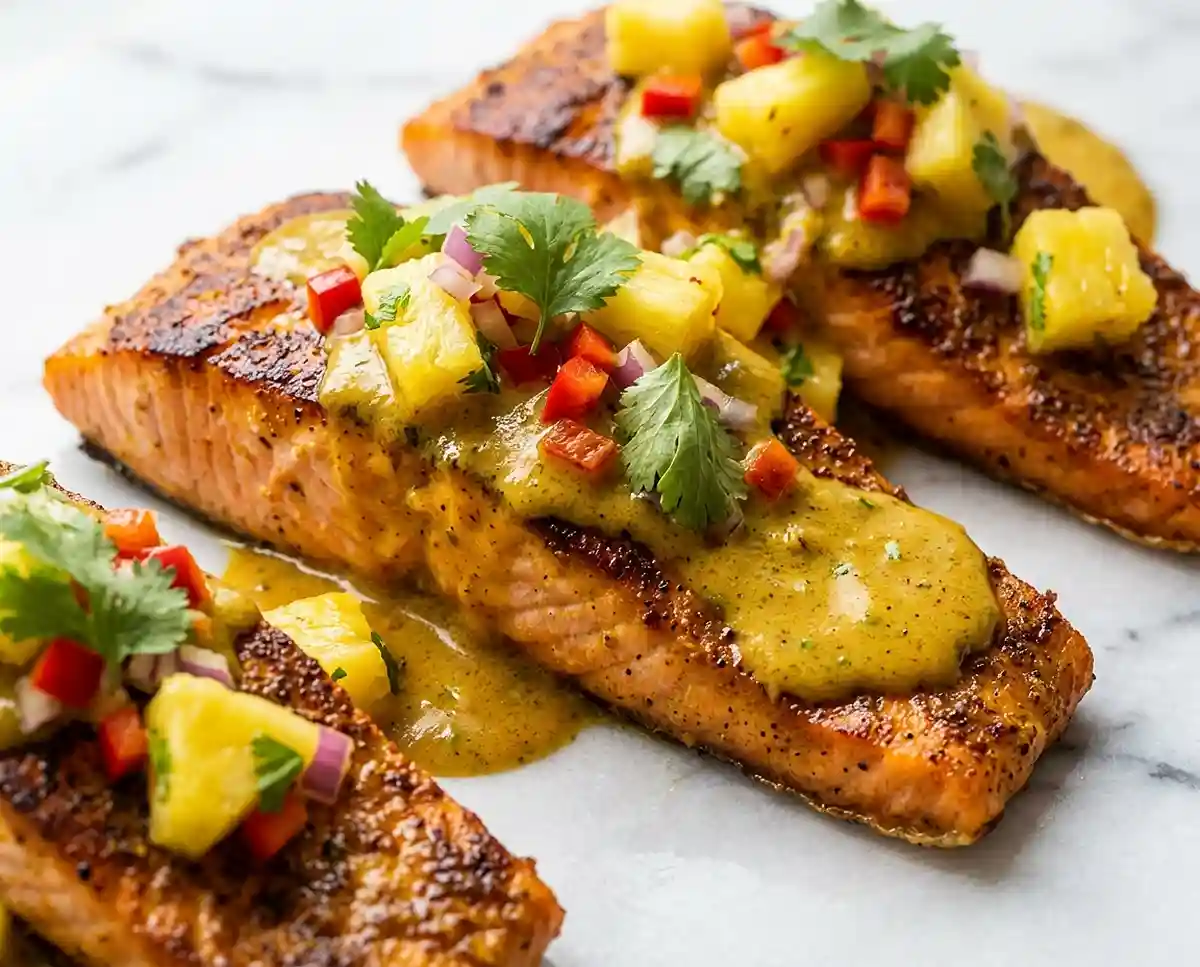
Coconut Curry Salmon with Pineapple Salsa
Make Coconut Curry Salmon with Pineapple Salsa in under 30 minutes with one skillet, bold gluten-free flavors, step-by-step instructions, and fresh tropical ingredients.
The first time I made a gluten-free salmon dinner that actually wowed my whole family, it was a total accident. I grabbed a can of coconut milk and some red curry paste without checking the labels — and then spent twenty frantic minutes Googling whether they were safe.
That near-miss taught me everything about reading labels and building bold flavor without relying on soy sauce or any wheat-based shortcuts. Now, gluten-free coconut curry salmon with pineapple salsa is my go-to when I want something impressive but genuinely easy on a weeknight.
Can a single skillet dish really deliver restaurant-level flavor with zero gluten risk? Absolutely — and I’ll show you exactly how. The coconut curry sauce wraps each fillet like a warm, silky blanket, and the bright pineapple salsa cuts right through the richness.
Why You’ll Love This Coconut Curry Salmon with Pineapple Salsa
- Bold, layered flavor — The turmeric-spiced crust, creamy coconut curry sauce, and tangy pineapple salsa work together without any one element overpowering the others.
- Beginner-friendly confidence — One skillet, eight straightforward steps, and no tricky gluten-free substitutions required in the cooking process itself.
- Naturally dairy-free — Full-fat coconut milk does all the creamy heavy lifting, so this works beautifully for dairy-free households too.
- Fast enough for a weeknight, special enough for guests — This comes together in under 30 minutes but looks stunning plated for a dinner party.
The Secret to Perfect Gluten-Free Coconut Curry Salmon
- Pat the salmon completely dry before seasoning. Moisture is the enemy of a golden sear. Dry fillets mean the spice crust actually sticks and caramelizes instead of steaming off in the pan.
- Use certified gluten-free curry powder and red curry paste. Cross-contamination is real — some spice blends and curry pastes are processed on shared equipment. According to trusted celiac research from the Celiac Disease Foundation, even small amounts of hidden gluten can cause reactions in sensitive individuals.
- Simmer the coconut curry sauce gently, not aggressively. A hard boil breaks the emulsion and turns your silky sauce grainy. Medium heat and occasional stirring keep it glossy and cohesive.
- Make the pineapple salsa while the salmon cooks. Fresh pineapple releases juice as it sits, so assembling it last-minute keeps every bite bright and textured rather than watery.
Table of Contents
Ingredients
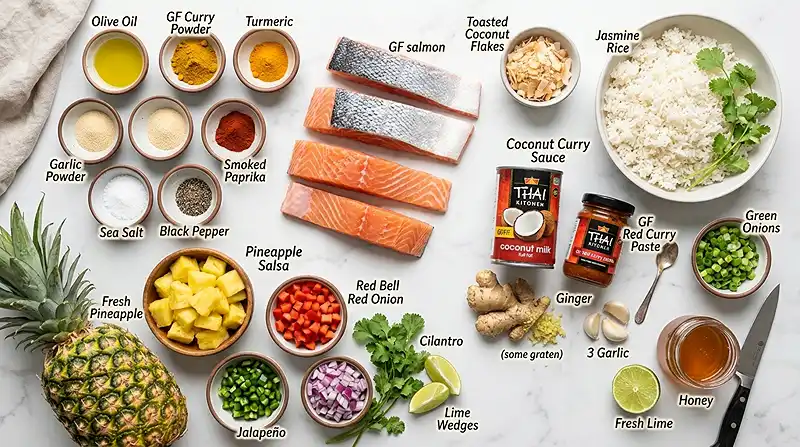
For the Salmon
| Ingredient | Amount | Notes |
|---|---|---|
| Salmon fillets | 4 (about 6 oz each) | Skin-on or skinless both work |
| Olive oil | 1 tablespoon | For brushing the fillets |
| Certified gluten-free curry powder | 1 teaspoon | Check the label carefully |
| Ground turmeric | ½ teaspoon | Adds color and warmth |
| Garlic powder | ½ teaspoon | |
| Onion powder | ½ teaspoon | |
| Smoked paprika | ½ teaspoon | |
| Salt | ½ teaspoon | |
| Black pepper | ¼ teaspoon |
For the Coconut Curry Sauce
| Ingredient | Amount | Notes |
|---|---|---|
| Olive oil | 1 tablespoon | |
| Garlic, minced | 2 cloves | |
| Fresh ginger, grated | 1 teaspoon | Fresh is worth it here |
| Full-fat coconut milk | 1 cup | Shake the can before opening |
| Certified gluten-free red curry paste | 1 tablespoon | Read the label — some brands contain wheat |
| Lime juice | 1 teaspoon | |
| Honey or maple syrup | 1 teaspoon | Balances the heat |
| Salt | ¼ teaspoon |
For the Pineapple Salsa
| Ingredient | Amount | Notes |
|---|---|---|
| Fresh pineapple, diced | 1½ cups | Fresh beats canned for texture and brightness |
| Red bell pepper, finely diced | ½ | |
| Red onion, finely diced | ¼ cup | |
| Jalapeño, seeded and minced | 1 small (optional) | Skip for a milder salsa |
| Fresh cilantro, chopped | 2 tablespoons | |
| Fresh lime juice | 1 tablespoon | |
| Salt | Pinch |
Optional Garnishes
- Fresh cilantro
- Lime wedges
- Sliced green onions
- Toasted coconut flakes
- Cooked jasmine rice or cauliflower rice
Instructions
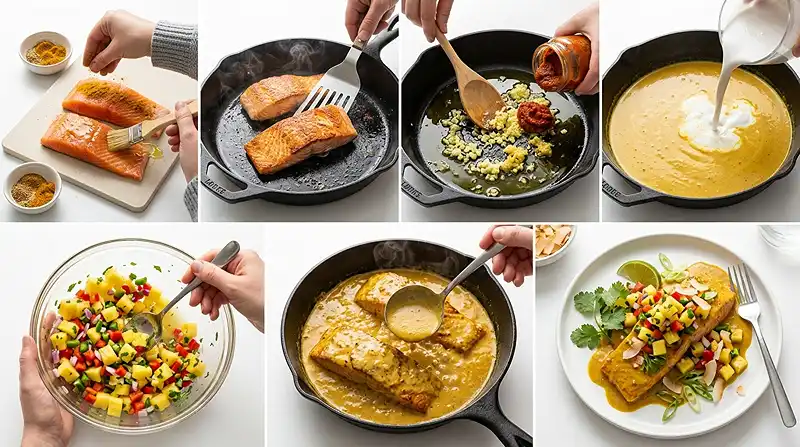
- Season the salmon. Pat the salmon fillets completely dry with paper towels. Brush with 1 tablespoon olive oil, then season evenly with the curry powder, turmeric, garlic powder, onion powder, smoked paprika, salt, and black pepper.
- Sear the salmon. Heat a large skillet over medium-high heat. Cook the salmon for 4–5 minutes per side until the edges turn deep golden and the flesh flakes easily. Transfer to a plate and keep warm. Pro Tip: Resist pressing down on the fillets — let the crust develop undisturbed for the best color.
- Build the aromatics. Reduce heat to medium. Add 1 tablespoon olive oil, the minced garlic, and grated ginger to the same skillet. Cook for 30 seconds, stirring constantly, until the kitchen smells nutty and fragrant.
- Make the coconut curry sauce. Stir in the coconut milk, gluten-free red curry paste, lime juice, honey (or maple syrup), and salt. Simmer for 3–5 minutes, stirring occasionally, until the sauce thickens slightly and coats the back of a spoon.
- Make the pineapple salsa. While the sauce simmers, combine the diced pineapple, red bell pepper, red onion, jalapeño (if using), cilantro, lime juice, and a pinch of salt in a bowl. Toss well. Pro Tip: Taste and adjust lime juice — ripe pineapple needs less acid than underripe fruit.
- Finish the salmon in the sauce. Return the salmon fillets to the skillet and spoon the coconut curry sauce generously over the top. Simmer for 1–2 minutes to warm through. The sauce should cling to the fillets like a glossy glaze.
- Plate and top. Transfer the salmon to plates or a serving platter. Spoon the coconut curry sauce from the pan over each fillet, then pile the fresh pineapple salsa on top generously.
- Garnish and serve. Add fresh cilantro, sliced green onions, toasted coconut flakes, and lime wedges. Serve immediately over steamed jasmine rice or cauliflower rice for a complete gluten-free meal.
Make It Your Own
Well… swapping the protein is the easiest way to riff on this recipe. Thick-cut mahi-mahi or halibut fillets work beautifully with the same spice blend and sauce. Shrimp is another crowd-pleaser — just reduce the sear time to 2 minutes per side.
For a lower-carb base, cauliflower rice soaks up the coconut curry sauce just as well as jasmine rice. It also keeps the dish lighter if you’re serving it alongside a big summer spread. That’s actually how I served this last Fourth of July — cauliflower rice for the adults and regular jasmine rice for the kids, everyone happy.
You know, the pineapple salsa is incredibly flexible too. Swap fresh mango for pineapple when it’s in season — the sweetness pairs just as well with the curry heat. Diced cucumber also works if you want a cooler, crunchier contrast. For a nut-free toasted crunch, skip the coconut flakes and use toasted sesame seeds instead.
If you’d like to skip the honey entirely, pure maple syrup keeps this recipe completely vegan-friendly from sauce to salsa. The flavor difference is minimal — just slightly earthier. This makes it a reliable option for mixed-diet households where one person avoids all animal products.
For meal prep fans, the coconut curry sauce can be made up to three days ahead and refrigerated. Gently reheat it in the skillet before adding freshly cooked salmon. The Greek yogurt ranch veggie pasta salad on Grainless Life is another great make-ahead option if you want a full spread for the week.
Common Problems & Solutions
Problem: The salmon is sticking to the pan
Solution: Make sure the skillet is fully preheated before the fish goes in. A cold pan causes protein to bond to the surface. Heat it until a drop of water skitters and evaporates immediately, then add your oil and let that heat through before laying the fillets down.
Problem: The coconut curry sauce is watery and won’t thicken
Solution: Simmer uncovered over medium heat and give it time. Full-fat coconut milk thickens as water evaporates — low-fat versions don’t have enough fat content to build a proper sauce. If you accidentally used light coconut milk, whisk in one teaspoon of arrowroot starch mixed with a tablespoon of cold water to help it along.
Problem: The sauce looks broken or curdled
Solution: Reduce the heat immediately and whisk vigorously. Man, oh man… a boiling coconut sauce can split in seconds. The fat separates from the liquid when it gets too hot. Lower the flame, add a splash more coconut milk, and whisk until it comes back together — it usually does.
Problem: The pineapple salsa is too watery by serving time
Solution: Assemble the salsa no more than 15 minutes before serving. Salt and lime juice draw moisture out of the pineapple quickly. If you prepped it earlier, drain off any accumulated liquid before spooning it over the salmon — the flavor is still there, but the texture will be better.
For deeper reading on gluten-free cooking safety — including which condiments and spice blends to watch out for — this authoritative gluten-free nutrition overview from Beyond Celiac is an excellent resource.
Storage & Meal Prep
| Method | Duration | Notes |
|---|---|---|
| Counter | Not recommended | Fish should not sit at room temp more than 2 hours |
| Fridge | 3–4 days | Store salmon and salsa separately in airtight containers |
| Freezer | Up to 2 months | Freeze salmon and sauce only — fresh salsa does not freeze well |
To reheat, place the salmon and sauce in a covered skillet over low heat with a splash of water or broth for 3–4 minutes. Microwave works in a pinch — cover loosely and use 60% power to avoid drying out the fish. Always make a fresh batch of pineapple salsa when serving leftovers.
If you have leftover coconut curry sauce with no salmon, toss it with rice noodles or use it as a base for a quick veggie soup. Nothing goes to waste this way, and the sauce genuinely gets better after a night in the fridge as the flavors meld.
Coconut Curry Salmon with Pineapple Salsa FAQs
Can I use frozen salmon for this recipe?
Yes, frozen salmon works well — just thaw it completely in the refrigerator overnight and pat it very dry before seasoning. Excess moisture from improperly thawed fish will prevent a good sear and dilute the spice crust.
How do I know the red curry paste is gluten-free?
Always check the label for a certified gluten-free seal or scan the ingredient list for wheat, barley, or rye. Some brands use wheat as a thickener or are processed on shared equipment. Maesri and Thai Kitchen are two widely available brands with gluten-free options, but labels can change — always verify the current batch.
What’s the best way to serve this for a dinner party?
Keep the salmon warm in a low oven (200°F) while you finish other dishes, and prepare the pineapple salsa last. Plate individually for an elegant presentation, or serve family-style with the sauce in a small pitcher on the side so guests can control their portions.
Why did my pineapple salsa turn out too spicy?
The jalapeño heat level varies a lot depending on the pepper. Taste the jalapeño before adding the full amount and start with half. Removing all the seeds and white membrane also significantly reduces heat. If the salsa is already too spicy, add more diced pineapple to balance it out.
Can I make the coconut curry sauce ahead of time?
Absolutely. The coconut curry sauce keeps refrigerated for up to 3 days in an airtight container. Reheat it gently over medium-low heat, stirring until smooth, before returning the freshly cooked salmon to the pan. This is a great shortcut for busy weeknights.
Serving Suggestions
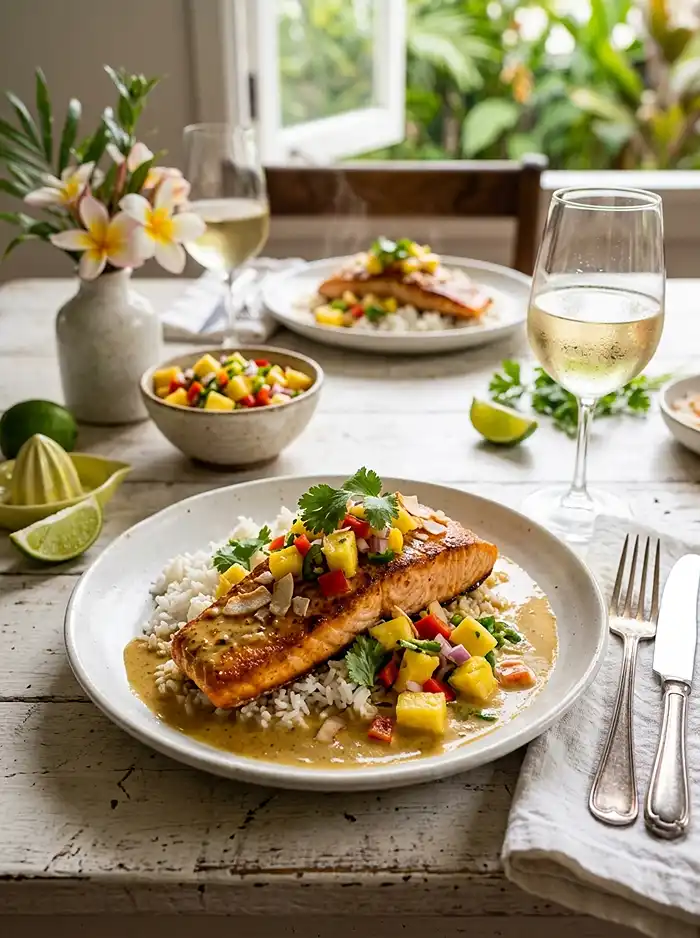
This gluten-free salmon dinner shines alongside steamed jasmine rice or cauliflower rice — the sauce pools beautifully underneath and every grain soaks it up. A simple cucumber salad or mango slaw alongside adds crunch without competing with the pineapple salsa.
For a cool, sweet finish that keeps the tropical mood going, try these dairy-free watermelon creamsicles — they’re a refreshing way to close out the meal. For something a little more indulgent after dinner, these no-bake key lime cheesecake cups pair wonderfully with the bright lime notes already running through this dish.
This recipe is also a natural fit for a relaxed summer gathering or backyard cookout where you want something vibrant and crowd-pleasing without spending all day in the kitchen. The colors alone — the deep golden salmon, the golden sauce, and the jewel-bright salsa — make the platter as beautiful as it is satisfying.
If you tried this recipe, I’d love to hear how it went — drop your notes in the comments below and let me know if you made any fun swaps. Snap a photo and pin it to your weeknight dinner board so others can find it too. And if something didn’t go as planned, tell me that too — real feedback helps this community more than any five-star review.
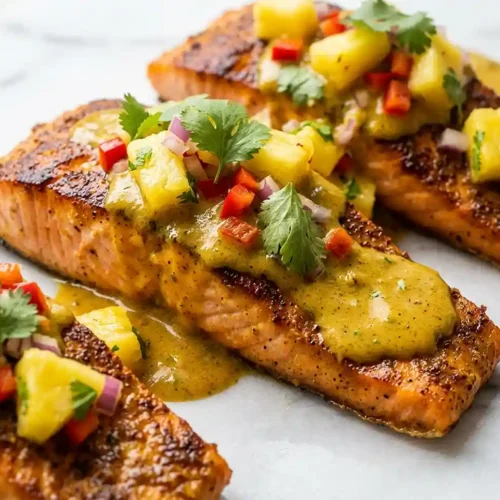
Coconut Curry Salmon with Pineapple Salsa
Equipment
- Large skillet
- Mixing bowl
- Cutting board
- Chef’s knife
- Measuring cups
- Measuring spoons
- Wooden spoon or spatula
- Paper towels
Ingredients
For the Salmon
- 4 salmon fillets about 6 oz each; skin-on or skinless
- 1 tablespoon olive oil for brushing the fillets
- 1 teaspoon certified gluten-free curry powder check the label carefully
- ½ teaspoon ground turmeric adds color and warmth
- ½ teaspoon garlic powder
- ½ teaspoon onion powder
- ½ teaspoon smoked paprika
- ½ teaspoon salt
- ¼ teaspoon black pepper
For the Coconut Curry Sauce
- 1 tablespoon olive oil
- 2 cloves garlic minced
- 1 teaspoon fresh ginger grated
- 1 cup full-fat coconut milk shake the can before opening
- 1 tablespoon certified gluten-free red curry paste read the label; some brands contain wheat
- 1 teaspoon lime juice
- 1 teaspoon honey or maple syrup balances the heat
- ¼ teaspoon salt
For the Pineapple Salsa
- 1 ½ cups fresh pineapple diced
- ½ red bell pepper finely diced
- ¼ cup red onion finely diced
- 1 small jalapeño seeded and minced; optional
- 2 tablespoons fresh cilantro chopped
- 1 tablespoon fresh lime juice
- 1 pinch salt
Optional Garnishes
- fresh cilantro
- lime wedges
- sliced green onions
- toasted coconut flakes
- cooked jasmine rice or cauliflower rice for serving
Instructions
- Pat the salmon fillets completely dry. Brush with olive oil and season with curry powder, turmeric, garlic powder, onion powder, smoked paprika, salt, and black pepper.
- Heat a large skillet over medium-high heat and sear the salmon for 4–5 minutes per side until golden and cooked through. Transfer to a plate and keep warm.
- Reduce heat to medium. Add olive oil, minced garlic, and grated ginger to the skillet and cook for about 30 seconds until fragrant.
- Stir in coconut milk, gluten-free red curry paste, lime juice, honey or maple syrup, and salt. Simmer for 3–5 minutes until slightly thickened.
- Combine pineapple, red bell pepper, red onion, jalapeño, cilantro, lime juice, and a pinch of salt in a bowl to make the salsa.
- Return the salmon to the skillet and spoon the coconut curry sauce over the fillets. Simmer for 1–2 minutes to warm through.
- Transfer the salmon to serving plates and spoon the coconut curry sauce over each fillet.
- Top generously with pineapple salsa, garnish as desired, and serve immediately with jasmine rice or cauliflower rice.