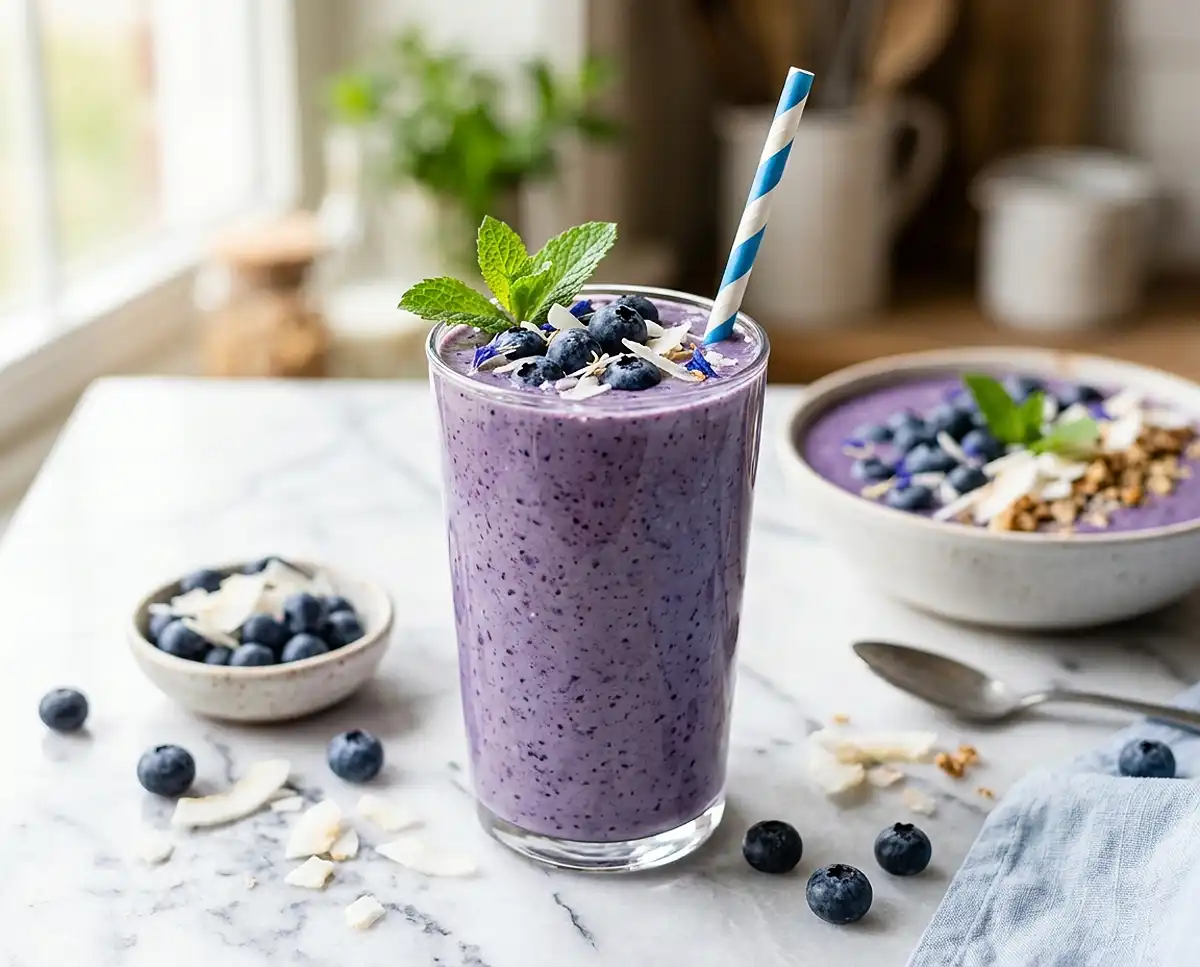
Gluten-Free Blueberry Coconut Smoothie
Gluten-free blueberry coconut smoothie with just 3 ingredients ready in 5 minutes. Naturally dairy-free, antioxidant-rich breakfast that tastes like tropical dessert.
Three years ago, I stood in my kitchen at 6:30 AM with a cranky toddler pulling on my leg and exactly seven minutes before we needed to leave for preschool. I threw frozen blueberries and coconut milk into my blender, hit the button, and discovered what would become our go-to morning lifeline. This gluten-free blueberry coconut smoothie saved countless chaotic mornings—and it still does.
The combination of creamy coconut milk and sweet-tart blueberries creates a texture that’s as velvety as soft-serve ice cream, but you’re drinking pure nutrition instead of empty calories. Fresh or frozen berries work equally well, which means this smoothie adapts to whatever’s in your fridge or freezer on any given day.
Why You’ll Love This Gluten-Free Blueberry Coconut Smoothie
- 5-minute miracle: Three core ingredients blend into a complete breakfast faster than brewing coffee—perfect for rushed school mornings or grab-and-go breakfasts
- Naturally allergy-friendly: Inherently gluten-free and dairy-free with no substitutions needed; works for nearly every dietary restriction without special shopping
- Antioxidant powerhouse: One cup of blueberries delivers more anthocyanins than most people eat in a week, supporting brain health and reducing inflammation
- Kid-approved tropical flavor: The subtle sweetness of coconut milk transforms tart blueberries into a treat that even picky eaters request—no added sugar required for most taste preferences
The Secret to Perfect Gluten-Free Blueberry Coconut Smoothie
Full-fat coconut milk creates restaurant-quality creaminess: Using canned full-fat coconut milk (not the watered-down carton version) gives this smoothie a rich, luxurious texture that rivals any dairy-based shake. The natural fats help your body absorb fat-soluble vitamins A and K from the blueberries, making this both delicious and nutritionally strategic.
Frozen blueberries eliminate the need for ice: Using frozen berries instead of fresh ones naturally chills and thickens your smoothie without watering it down with ice cubes. Frozen blueberries are also flash-frozen at peak ripeness, often containing more antioxidants than off-season fresh berries according to research from the Journal of Agricultural and Food Chemistry.
Minimal sweetener preserves gut-friendly fiber: Blueberries contain natural fruit sugars and coconut milk adds subtle sweetness, so most people need little to no added sugar. When you do sweeten, using raw honey or pure maple syrup adds trace minerals and keeps the fiber-to-sugar ratio balanced—important for steady energy without blood sugar crashes.
Blending order prevents motor strain: Adding liquid first, then berries, ensures your blender blades can move freely from the start. This technique prevents that frustrating grinding sound and protects your blender motor, as explained in America’s Test Kitchen’s blender usage guide.
Table of Contents
Ingredients
| Ingredient | Amount | Notes |
|---|---|---|
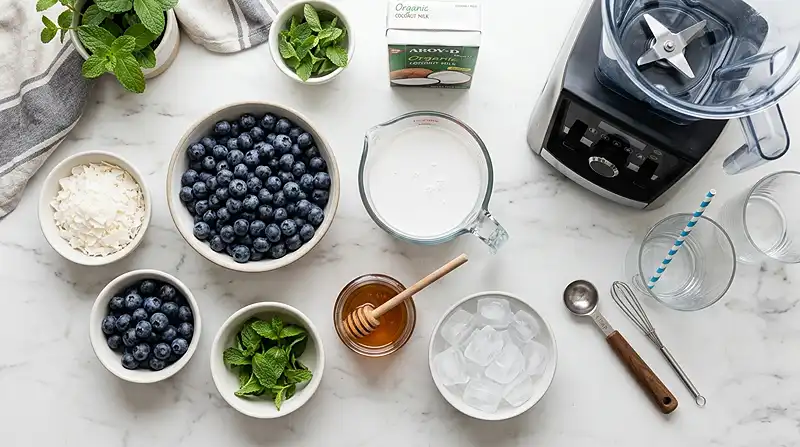
| Blueberries (fresh or frozen) | 1 cup | ~140g; frozen work best for thick, cold texture |
| Coconut milk | 1½ cups | Full-fat canned for creamiest result; shake can well before opening |
| Brown sugar or raw honey | To taste (optional) | Start with 1-2 tsp; many skip sweetener entirely |
| Ice cubes | Optional | Use only if using fresh (not frozen) blueberries |
Optional Toppings:
- Fresh blueberries (2-3 tablespoons)
- Shredded unsweetened coconut (1-2 tablespoons)
- Fresh mint leaves (2-3 leaves, torn)
Makes: 1-2 servings (about 2½ cups total)
Prep time: ~3 minutes
Total time: ~5 minutes
Step-by-Step Instructions
Step 1: Prepare your blender and ingredients
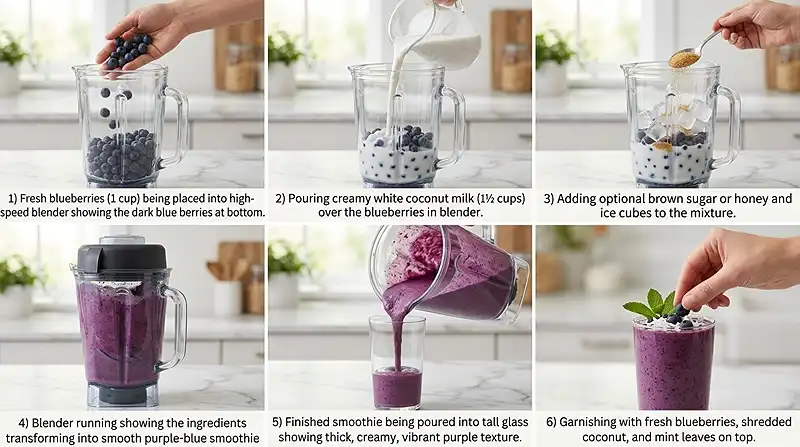
If using canned coconut milk, shake the can vigorously for 15-20 seconds before opening—this redistributes the cream that naturally separates during storage. Measure out 1 cup of blueberries (fresh or frozen) and have your optional sweetener ready.
Step 2: Layer ingredients strategically
Pour 1½ cups coconut milk into your blender first—this creates the liquid base that allows the blades to move freely. Add the 1 cup of blueberries on top of the liquid, not directly onto the blades.
Pro Tip: If your blender struggles with frozen ingredients, let frozen blueberries sit at room temperature for 5 minutes to soften slightly before blending.
Step 3: Add sweetener if desired
Taste your coconut milk first—some brands are naturally sweeter than others. If you want extra sweetness, add 1-2 teaspoons brown sugar or raw honey now. You can always add more after blending, but you can’t remove it once it’s mixed.
Step 4: Add ice only if using fresh berries
If you’re using fresh (not frozen) blueberries, add 4-6 ice cubes to create that thick, frosty texture. Skip ice entirely if using frozen berries—they’ll chill and thicken the smoothie naturally.
Step 5: Blend until completely smooth
Secure the lid tightly and blend on high speed for 45-60 seconds. You’re looking for a uniform purple color with no visible berry chunks or ice pieces. The mixture should pour like thick milkshake—not watery, not so thick it won’t pour.
Step 6: Check consistency and adjust
Stop the blender and check texture. Too thick? Add 2-4 tablespoons more coconut milk and pulse briefly. Too thin? Add a handful more frozen blueberries or 2-3 ice cubes and blend again.
Step 7: Serve immediately with toppings
Pour into glasses or bowls (yes, this is thick enough to eat with a spoon as a smoothie bowl). Garnish with fresh blueberries for texture contrast, a sprinkle of shredded coconut for tropical flair, and torn mint leaves for brightness.
Make It Your Own
Coconut milk alternatives for different flavors:
Swap coconut milk for unsweetened almond milk if you want a lighter, less tropical version—though you’ll lose some creaminess. Oat milk creates a naturally sweeter smoothie with subtle vanilla notes, while cashew milk makes it extra rich. You know what surprised me? Using chilled coconut water instead of milk creates a refreshing, lighter version perfect for post-workout hydration.
Berry variations beyond blueberries:
Try 1 cup frozen mixed berries (strawberries, raspberries, blackberries) for a more complex flavor, or go all strawberries for a classic strawberry-coconut combination. Frozen wild blueberries pack more intense flavor and antioxidants than regular blueberries in the same volume.
Protein boost for meal replacement:
Add 1 scoop vanilla or unflavored protein powder (whey, collagen, or plant-based) to transform this into a complete meal with 20+ grams of protein. A tablespoon of almond butter or 2 tablespoons hemp seeds adds protein plus healthy fats that keep you full until lunch.
Greens addition for extra nutrition:
Blend in 1 cup fresh spinach or ½ cup frozen cauliflower rice—the blueberries completely mask the color and flavor of mild greens. I started sneaking spinach into my daughter’s morning smoothie this way and she still has no idea two years later.
Sweetener options for different dietary needs:
Replace brown sugar with 2-3 pitted Medjool dates for natural sweetness plus fiber and potassium. Stevia or monk fruit sweetener work for sugar-free versions, though start with just 2-3 drops since they’re intensely sweet. A tablespoon of pure maple syrup adds mineral-rich sweetness with subtle caramel notes.
Common Problems & Solutions
Problem: Smoothie is too thick and won’t blend properly
Direct Solution: Add 2-4 tablespoons more coconut milk and blend again.
Explanation: This happens most often with frozen berries or when using a less powerful blender. Adding liquid in small increments helps the blades catch and pull ingredients down into the vortex. If your blender still struggles, stop and use a spatula to push ingredients toward the center, then resume blending.
Problem: Watery texture instead of creamy thickness
Direct Solution: Use full-fat canned coconut milk, not the refrigerated carton kind.
Explanation: Carton coconut milk contains mostly water with stabilizers and gums to mimic thickness—it’s designed for drinking, not blending. Canned full-fat coconut milk contains 17-20% fat that creates genuine creaminess. Man, oh man, the difference is dramatic when you use the right product.
Problem: Smoothie tastes bland or too tart
Direct Solution: Add 1-2 teaspoons honey or a pinch of salt to balance flavors.
Explanation: Blueberries vary wildly in sweetness depending on season and variety—frozen berries picked at peak ripeness are often sweeter than off-season fresh ones. A tiny pinch of salt (⅛ teaspoon) enhances both sweet and fruity flavors without making the smoothie taste salty.
Problem: Blender leaves chunks or won’t blend evenly
Direct Solution: Pour liquid in first, then add frozen ingredients, and blend in 15-20 second intervals.
Explanation: Starting with liquid ensures the blades can move immediately. If chunks remain after a full minute of blending, your blender may lack the power for frozen ingredients—let berries thaw for 5 minutes before trying again, or invest in a higher-powered blender for smoothie success.
Storage & Meal Prep
| Method | Duration | Notes |
|---|---|---|
| Refrigerator (blended) | 24 hours | Separation is normal; shake or stir before drinking |
| Freezer (blended) | 1-2 months | Pour into ice cube trays; blend frozen cubes with fresh milk when ready |
| Freezer (pre-portioned) | 3 months | Bag berries + add-ins; add liquid when blending |
Meal prep game-changer: Every Sunday, I portion 1-cup servings of frozen blueberries into small zip-top bags with my protein powder or any add-ins. On weekday mornings, I dump one bag into the blender, add coconut milk, and blend for 45 seconds—it’s faster than pouring cereal.
Thawing and re-blending: If you refrigerate leftover smoothie and the coconut cream separates to the top, don’t panic. Simply shake the container vigorously for 10-15 seconds or give it a quick 10-second re-blend. The texture returns to normal immediately.
Gluten-Free Blueberry Coconut Smoothie FAQs
Can I use light coconut milk instead of full-fat?
Yes, but expect a much thinner, less creamy result. Light coconut milk contains 5-7% fat compared to 17-20% in full-fat versions, which dramatically affects texture. If you’re watching calories, light coconut milk works—just know it’ll taste more like a juice than a milkshake. Consider adding ¼ of a ripe avocado for creaminess without coconut fat.
Is this smoothie actually gluten-free?
Yes—blueberries, coconut milk, and natural sweeteners are inherently gluten-free. However, cross-contamination can occur if your blueberries were processed in a facility that handles wheat products. For celiac disease, look for certified gluten-free labels on packaged frozen berries and check that your coconut milk doesn’t contain malt or barley-derived additives (rare but possible). The Celiac Disease Foundation’s ingredient guide offers detailed information on hidden gluten sources.
Can I make this ahead for the whole week?
Blended smoothies keep 24 hours refrigerated, but pre-portioned freezer packs last 3 months. I don’t recommend blending a week’s worth at once since nutrients degrade and flavors dull after about 36 hours. Instead, prep freezer bags with pre-measured berries and any add-ins, then blend fresh each morning—it takes the same 5 minutes but tastes infinitely better.
What’s the best blender for smoothies?
A high-powered blender (Vitamix, Blendtec, or Ninja) handles frozen ingredients effortlessly. Budget-friendly options like the NutriBullet or Hamilton Beach work fine for this recipe since blueberries are soft fruits that don’t require extreme power. If your current blender struggles, let frozen berries soften for 5 minutes before blending or use fresh berries with ice instead.
How can I make this more filling as a meal replacement?
Add 1 scoop protein powder, 1 tablespoon nut butter, and 2 tablespoons chia seeds or oats. This boosts protein to 25+ grams, adds healthy fats for satiety, and includes fiber that keeps you full for 3-4 hours. I often blend in ½ cup cooked and cooled quinoa for complete protein—sounds weird but you genuinely can’t taste it through the blueberries and coconut.
Serving & Pairing Ideas
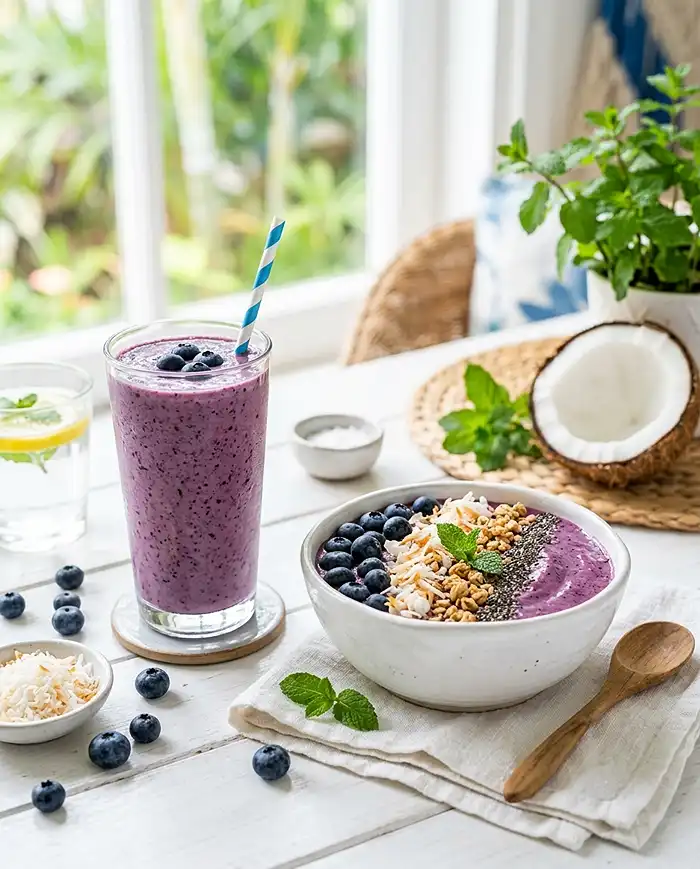
Serve this gluten-free blueberry coconut smoothie in tall glasses with wide straws for easy sipping, or pour into bowls and top with granola clusters, sliced banana, and a drizzle of almond butter for a smoothie bowl that feels like a special breakfast. During Fourth of July weekend, I make a double batch and freeze it in popsicle molds—kids go wild for the red-white-and-blue effect when you layer it with coconut yogurt.
Pair this smoothie with protein-rich savory dishes to create balanced meals that sustain energy all morning. Try it alongside our gluten-free turkey meatball skillet for a hearty breakfast-for-dinner combo, or serve as a refreshing side to buffalo chicken stuffed sweet potatoes for lunch. On hot summer evenings, this smoothie makes a light dessert that won’t weigh you down after grilling gluten-free corn ribs.
The tropical coconut flavor also pairs beautifully with tex-mex or Caribbean-inspired meals—it’s the perfect cooling contrast to spicy dishes.
Give It a Try
This gluten-free blueberry coconut smoothie has rescued more mornings in my house than any other recipe—it’s the difference between skipping breakfast entirely and starting the day nourished. The best part? Even my pickiest eater thinks it’s a treat, not “health food.”
Blend a batch this week and let me know if you prefer it thick enough to eat with a spoon or thin enough to drink on your commute. Pin this recipe for your morning rotation, and drop a comment sharing your favorite smoothie add-ins—I’m always looking for new variations to keep breakfast exciting!
Gluten-Free Blueberry Coconut Smoothie
Equipment
- High-Powered Blender
- Measuring cups
- Measuring spoons
- Glasses or bowls for serving
- Spatula (optional)
Ingredients
Smoothie Base
- 1 cup blueberries fresh or frozen (~140g); frozen work best for thick, cold texture
- 1 ½ cups coconut milk full-fat canned for creamiest result; shake can well before opening
- brown sugar or raw honey to taste, optional; start with 1-2 tsp; many skip sweetener entirely
- ice cubes optional; use only if using fresh (not frozen) blueberries
Optional Toppings
- 2-3 tablespoons fresh blueberries for garnish
- 1-2 tablespoons shredded unsweetened coconut for garnish
- 2-3 leaves fresh mint leaves torn, for garnish
Instructions
- If using canned coconut milk, shake the can vigorously for 15-20 seconds before opening to redistribute the cream that naturally separates during storage. Measure out 1 cup of blueberries (fresh or frozen) and have your optional sweetener ready.
- Pour 1½ cups coconut milk into your blender first—this creates the liquid base that allows the blades to move freely. Add the 1 cup of blueberries on top of the liquid, not directly onto the blades. If your blender struggles with frozen ingredients, let frozen blueberries sit at room temperature for 5 minutes to soften slightly before blending.
- Taste your coconut milk first—some brands are naturally sweeter than others. If you want extra sweetness, add 1-2 teaspoons brown sugar or raw honey now. You can always add more after blending, but you can’t remove it once it’s mixed.
- If you’re using fresh (not frozen) blueberries, add 4-6 ice cubes to create that thick, frosty texture. Skip ice entirely if using frozen berries—they’ll chill and thicken the smoothie naturally.
- Secure the lid tightly and blend on high speed for 45-60 seconds. You’re looking for a uniform purple color with no visible berry chunks or ice pieces. The mixture should pour like thick milkshake—not watery, not so thick it won’t pour.
- Stop the blender and check texture. Too thick? Add 2-4 tablespoons more coconut milk and pulse briefly. Too thin? Add a handful more frozen blueberries or 2-3 ice cubes and blend again.
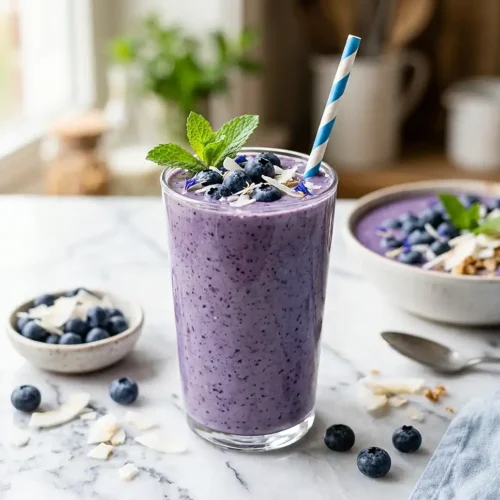
- Pour into glasses or bowls (this is thick enough to eat with a spoon as a smoothie bowl). Garnish with fresh blueberries for texture contrast, a sprinkle of shredded coconut for tropical flair, and torn mint leaves for brightness. Serve immediately.