Gluten-Free Blueberry Peach Yogurt Bark
Make gluten-free blueberry peach yogurt bark with Greek yogurt, fresh fruit, and chia seeds. A simple frozen snack ready in minutes with no baking required.
My kids discovered yogurt bark the summer I was testing frozen snacks for a family reunion, and I’ve been making it on repeat ever since. This gluten-free blueberry peach yogurt bark came together in about ten minutes, went into the freezer, and disappeared within an hour of hitting the snack table.
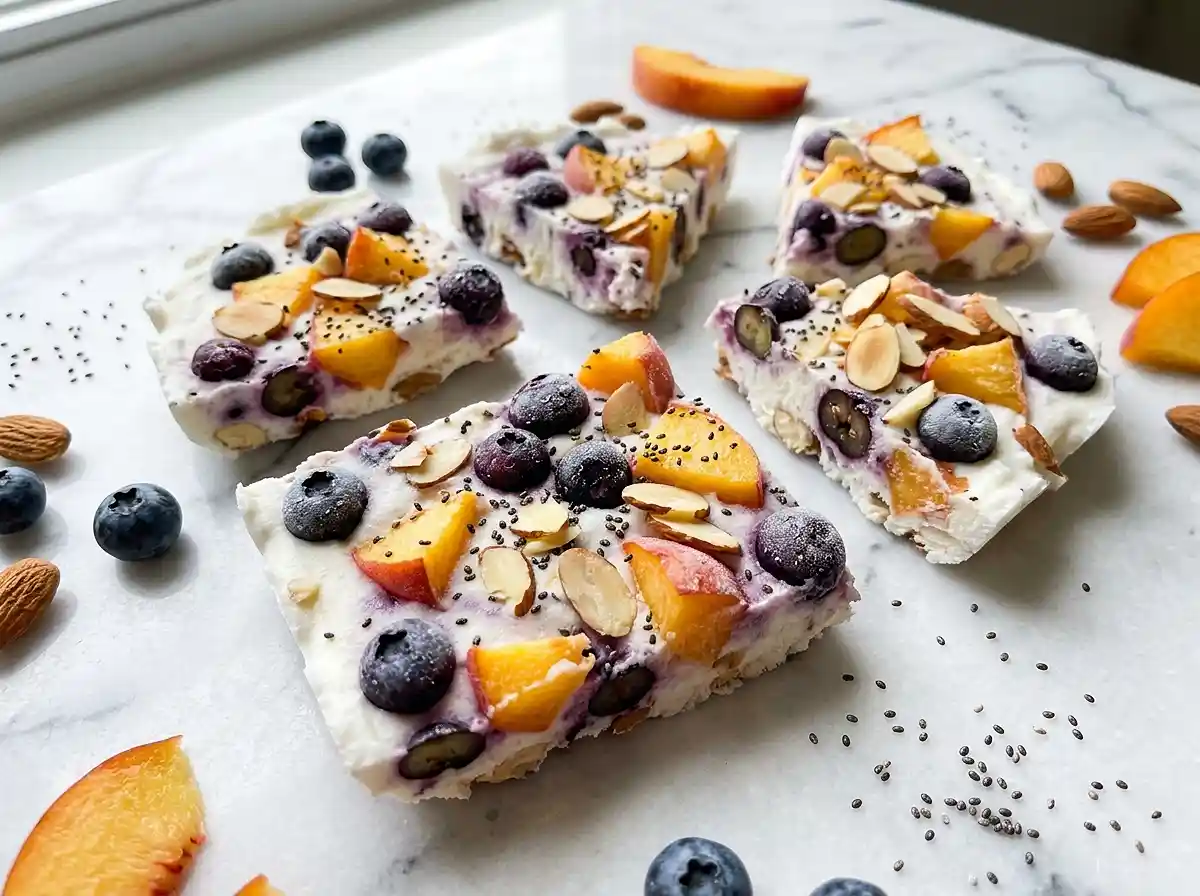
What I love about it is the contrast — creamy, tangy Greek yogurt underneath, with jammy blueberries and soft peach pieces on top that freeze into something that shatters satisfyingly when you break it apart. It’s the kind of snack that feels more indulgent than it actually is.
You know… that’s the real win here. No oven, no mixing beyond a quick stir, and the freezer does all the heavy lifting. So — can a no-bake frozen bark really hold up as a serious summer snack? After watching adults reach for it before the kids did, I’ll let the results speak for themselves.
Table of Contents
Why You’ll Love This Blueberry Peach Yogurt Bark
- Texture that surprises: The frozen yogurt base snaps clean and crisp, while the blueberries and peaches soften just enough to give each piece a burst of real fruit flavor — like a frozen fruit bar and a creamy popsicle in one bite.
- No baking, no equipment: A bowl, a spoon, a sheet tray, and parchment paper. That’s the whole setup. If you can stir and spread, you can make this.
- Naturally gluten-free: Every ingredient in this bark is naturally free of gluten — no substitutions needed, no label-reading anxiety for most households.
- Made for warm weather: This is a make-ahead frozen treat that keeps for weeks in the freezer. It’s ideal for snack prep, lunchboxes, or a grab-and-go option on hot days when the last thing you want is a warm kitchen.
The Secret to Perfect Gluten-Free Blueberry Peach Yogurt Bark
- Full-fat or 2% Greek yogurt spreads better: Fat-free Greek yogurt has more water content, which causes icy, grainy texture when frozen. Whole milk or 2% Greek yogurt freezes into a creamier, denser base that holds together when you break the bark into pieces.
- Spread thickness matters: A ¼-inch layer is the sweet spot. Too thin and the bark shatters into shards too small to eat. Too thick and it takes forever to freeze through and can feel icy rather than creamy in the center.
- Dry your fruit before adding it: Wet blueberries or peaches release moisture as they freeze and can create pools of ice that separate from the yogurt base. Pat fruit dry with a paper towel before sprinkling — a small step that makes a real difference in texture. According to guidance from the Harvard T.H. Chan School of Public Health on protein-rich foods, Greek yogurt is one of the most nutrient-dense snack bases available, offering protein, calcium, and probiotics in every serving.
- Chia seeds do double duty: They add a gentle crunch and also absorb surface moisture from the fruit as the bark freezes, helping the toppings stay anchored to the yogurt base rather than sliding off when you break it.
Ingredients
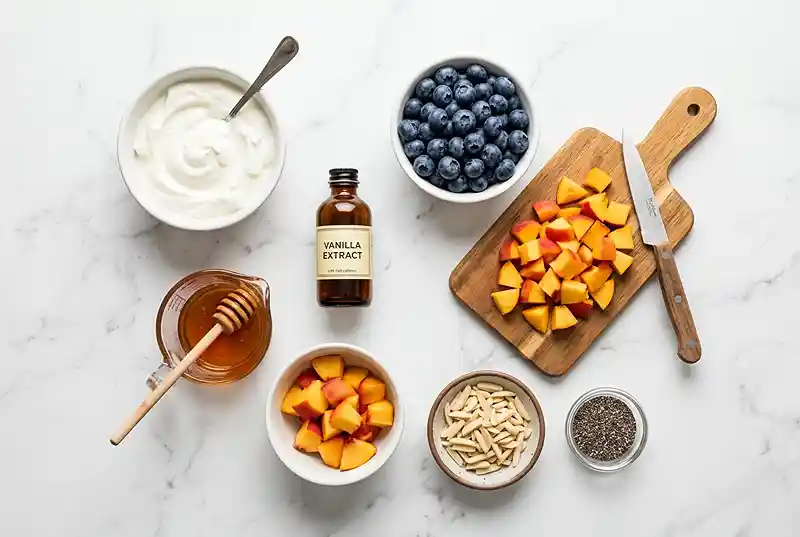
| Ingredient | Amount | Notes |
|---|---|---|
| Plain Greek yogurt | 2 cups | Whole milk or 2% recommended for best texture |
| Honey or maple syrup | 2 tbsp | Use maple syrup to keep it dairy-free-friendly |
| Vanilla extract | 1 tsp | Check label for gluten-free certification if needed |
| Blueberries | 1 cup | Fresh or frozen (thaw and pat dry if using frozen) |
| Diced peaches | 1 cup | Fresh preferred; canned works if well-drained |
| Sliced almonds | 2 tbsp | Omit for nut-free; sunflower seeds work as a swap |
| Chia seeds | 1 tbsp | Helps anchor toppings and adds a mild crunch |
Instructions
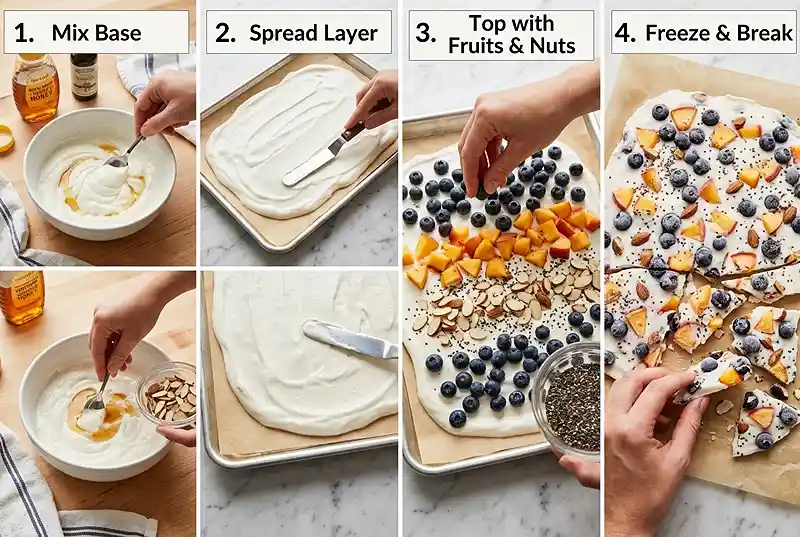
Line a large baking sheet or flat tray with parchment paper, leaving a little overhang on the sides so you can lift the bark out easily once frozen. Make sure the tray fits flat in your freezer before you start — this sounds obvious, but it’s easy to forget.
In a medium bowl, mix together the 2 cups plain Greek yogurt, 2 tbsp honey or maple syrup, and 1 tsp vanilla extract until smooth and evenly combined. The mixture should be creamy and spreadable with no visible streaks of honey.
Pro Tip: If your honey is thick and cold, warm it for 10 seconds in the microwave first. It’ll blend into the yogurt much more evenly and you won’t end up with sweet pockets in the bark.
Pour the yogurt mixture onto the prepared tray and spread it into an even layer about ¼-inch thick using a spatula or the back of a spoon. Work from the center outward for the most even coverage. Uneven thickness means some sections freeze faster than others.
Sprinkle the 1 cup blueberries, 1 cup diced peaches, 2 tbsp sliced almonds, and 1 tbsp chia seeds evenly over the yogurt layer. Press the fruit down very gently with your fingertips — just enough contact to help them adhere, not so much that they sink into the yogurt.
Pro Tip: Pat your fruit dry with a paper towel before adding it. Excess moisture from fruit is the number-one reason bark toppings slide off or create icy pockets beneath them.
Transfer the tray to a flat surface in the freezer. Freeze for 3 to 4 hours, or until the bark is completely firm with no soft spots when you press the center. Don’t rush this step — partially frozen bark crumbles messily instead of snapping into clean pieces.
Once fully frozen, lift the bark from the tray using the parchment overhang and break or cut it into pieces. A sharp knife gives you cleaner edges; breaking by hand gives you rustic, irregular pieces that honestly look more appealing on a snack board.
Transfer the pieces to an airtight container or zip-top freezer bag with parchment between layers to prevent sticking. Store in the freezer until ready to serve. Remove pieces individually as needed — the bark goes soft quickly at room temperature.
Make It Your Own
Well… if peaches aren’t in season, mango is the best swap. The flavor profile stays tropical and sweet, and mango freezes beautifully without releasing as much juice as stone fruit can. Dice it small so each piece of bark gets an even distribution of fruit in every bite.
For a fully dairy-free yogurt bark, swap the Greek yogurt for a thick coconut yogurt. Look for one labeled “full-fat” or “coconut cream based” — thin coconut yogurts have too much water and result in an icy, crumbly bark that doesn’t hold together cleanly. The flavor will be slightly richer and more tropical, which works well with the blueberry peach combination.
You can turn this into a blueberry peach snack with more crunch by swapping the sliced almonds for granola. Use a certified gluten-free granola and press it lightly into the yogurt before freezing. The granola softens slightly as it freezes but keeps enough texture to feel satisfying. For a complementary recipe that also works great as a summer appetizer, these crispy chickpea Caesar lettuce cups pair well with a frozen snack spread.
A drizzle of nut butter over the yogurt base before adding toppings adds both flavor and staying power. Almond butter, sunflower butter, or tahini all work. Swirl it through the yogurt base gently with a skewer or toothpick to create a marbled look that’s as visually striking as it is tasty.
Common Problems and Solutions
Man, oh man — the most common issue I see with frozen yogurt bark is toppings that slide right off the moment you pick up a piece. This almost always means the fruit wasn’t patted dry before it was added. Water between the fruit and the yogurt creates a slip layer as things freeze. Dry fruit, gentle pressure when placing it, and a full freeze time of at least 3 hours fixes this completely.
Problem: Bark is icy and grainy instead of creamy. This is a yogurt fat issue. Fat-free or low-fat Greek yogurt has more water, which forms large ice crystals as it freezes. Switch to whole milk or 2% Greek yogurt for a noticeably smoother result. If you’re committed to a lower-fat version, stir 1 tablespoon of cream cheese into the yogurt base — the extra fat smooths the texture without adding much to the overall calorie count.
Problem: Bark won’t break cleanly and crumbles instead. Crumbling usually means the bark is either under-frozen or was spread too thin in places. Make sure the tray is level in your freezer so the yogurt layer is even thickness throughout. A full 4-hour freeze, or overnight, gives you the cleanest snap.
Problem: Bark melts too fast when serving. Yogurt bark softens quickly at room temperature — that’s just its nature. Serve directly from the freezer onto a chilled plate, or keep the container nested in a bowl of ice when setting it out. Pieces are best eaten within a few minutes of being pulled from the freezer.
Storage and Meal Prep
| Method | Duration | Notes |
|---|---|---|
| Counter | 5–10 minutes max | Serve immediately; melts quickly at room temp |
| Fridge | Not recommended | Bark softens and loses texture; keep frozen |
| Freezer | 2–3 months | Layer with parchment in an airtight container |
This bark doesn’t reheat — it’s a frozen treat through and through. For the best experience, pull individual pieces straight from the freezer as needed rather than thawing the whole batch.
For meal prep, make a double batch on Sunday and keep two containers stacked in the freezer. It’s a ready-made snack for lunchboxes, post-workout, or an afternoon treat that requires zero effort on the day. Pair it with a protein-forward savory meal like these gluten-free chipotle turkey stuffed peppers for a balanced weekday dinner that ends on a cool, sweet note.
Your Questions Answered
Can I use frozen fruit instead of fresh?
Yes, but thaw it completely and pat it very dry before using. Frozen fruit releases a lot of water as it thaws, which creates icy pockets between the fruit and the yogurt base. Spread thawed fruit on paper towels and press gently before adding it to the bark.
How do I make this yogurt bark dairy-free?
Swap the Greek yogurt for a thick, full-fat coconut yogurt. Thin coconut yogurts have too much water content and result in an icy texture after freezing. Use maple syrup instead of honey to keep it fully plant-based and check your coconut yogurt label for gluten-free certification if needed.
Can I make yogurt bark ahead of time for a party?
Yes — yogurt bark keeps in the freezer for up to 2 to 3 months in an airtight container. Make it days or even weeks ahead and pull pieces directly from the freezer when guests are ready for dessert. Layer pieces between parchment sheets to prevent sticking.
Why did my bark crack unevenly when I broke it?
Uneven spreading is usually the cause. Thicker sections freeze more slowly and stay softer, while thin edges over-freeze and shatter. Spread the yogurt to a consistent one-quarter inch thickness using a flat spatula or bench scraper for the cleanest break.
How do I store yogurt bark without pieces sticking together?
Layer pieces between sheets of parchment paper inside an airtight container or freezer bag. This prevents sticking and keeps each piece intact. Avoid stacking too many layers, as the weight can compress the bottom pieces over time.
Serving Suggestions
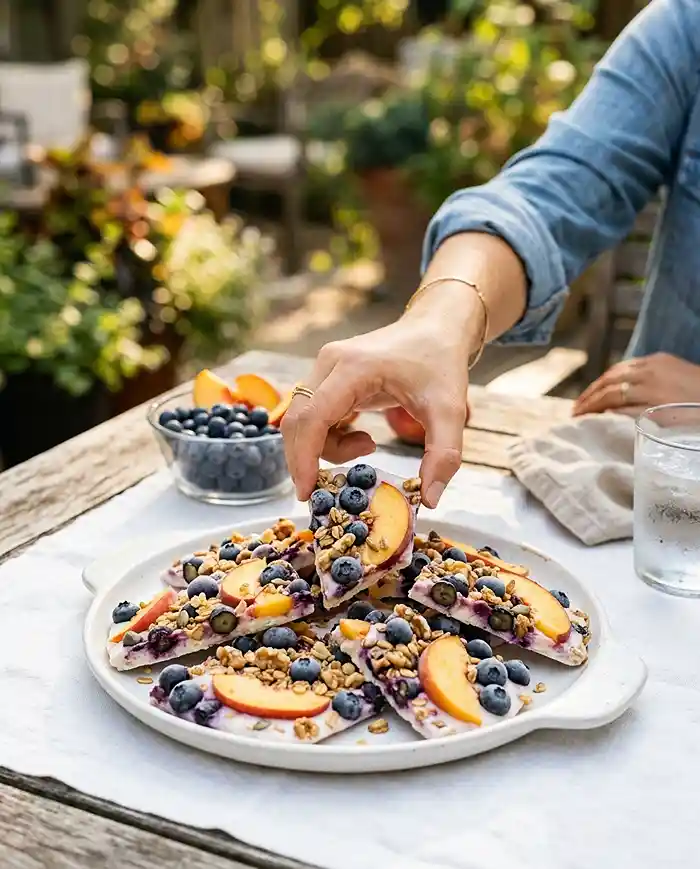
Arrange bark pieces on a chilled wooden board alongside fresh berries, sliced peaches, and a small bowl of extra honey for drizzling — it makes a stunning snack spread that looks like it took far more effort than it did.
These pieces also work beautifully as a packable lunchbox treat on hot summer days. Wrap individual pieces in parchment and tuck them into an insulated lunch bag; they’ll still be partially frozen by lunchtime and taste like a reward.
For a Fourth of July or summer birthday party dessert table, set the bark out just before guests serve themselves and pair it with a pitcher of sparkling water with lime. It’s light, colorful, and satisfying without being heavy after a big cookout meal.
Give this recipe a try and let me know how it goes in the comments below — I’d especially love to hear what fruit combinations you tried. And if you loved it, save it to Pinterest so other families can find a frozen snack that actually works for gluten-free households.
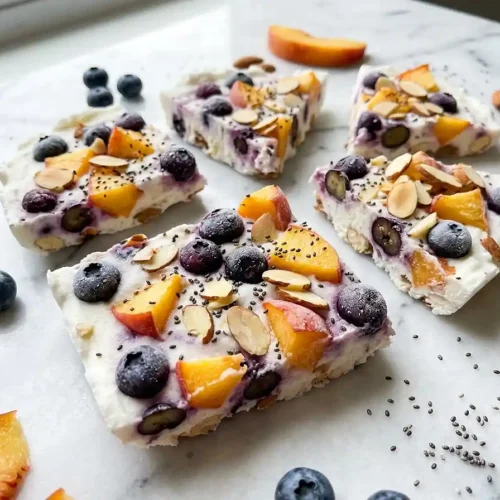
Gluten-Free Blueberry Peach Yogurt Bark
Equipment
- Large Baking Sheet or Flat Tray
- Parchment paper
- Medium bowl
- Spatula or spoon
- Knife
Ingredients
Yogurt Bark
- 2 cups Plain Greek yogurt Whole milk or 2% recommended
- 2 tbsp Honey or maple syrup Maple syrup for dairy-free-friendly option
- 1 tsp Vanilla extract Gluten-free if needed
- 1 cup Blueberries Fresh or thawed and patted dry
- 1 cup Diced peaches Fresh preferred or well-drained canned peaches
- 2 tbsp Sliced almonds Optional; omit for nut-free
- 1 tbsp Chia seeds Adds crunch and helps toppings adhere
Instructions
- Line a large baking sheet or flat tray with parchment paper, leaving overhang on the sides for easy removal.
- In a medium bowl, mix the Greek yogurt, honey or maple syrup, and vanilla extract until smooth and fully combined.
- Spread the yogurt mixture onto the prepared tray in an even layer about 1/4-inch thick.
- Sprinkle the blueberries, diced peaches, sliced almonds, and chia seeds evenly over the yogurt. Gently press the toppings into the surface.
- Freeze for 3 to 4 hours, or until completely firm with no soft spots.
- Lift the bark from the tray using the parchment paper and break or cut into pieces.
- Store pieces in an airtight container with parchment between layers and keep frozen until ready to serve.