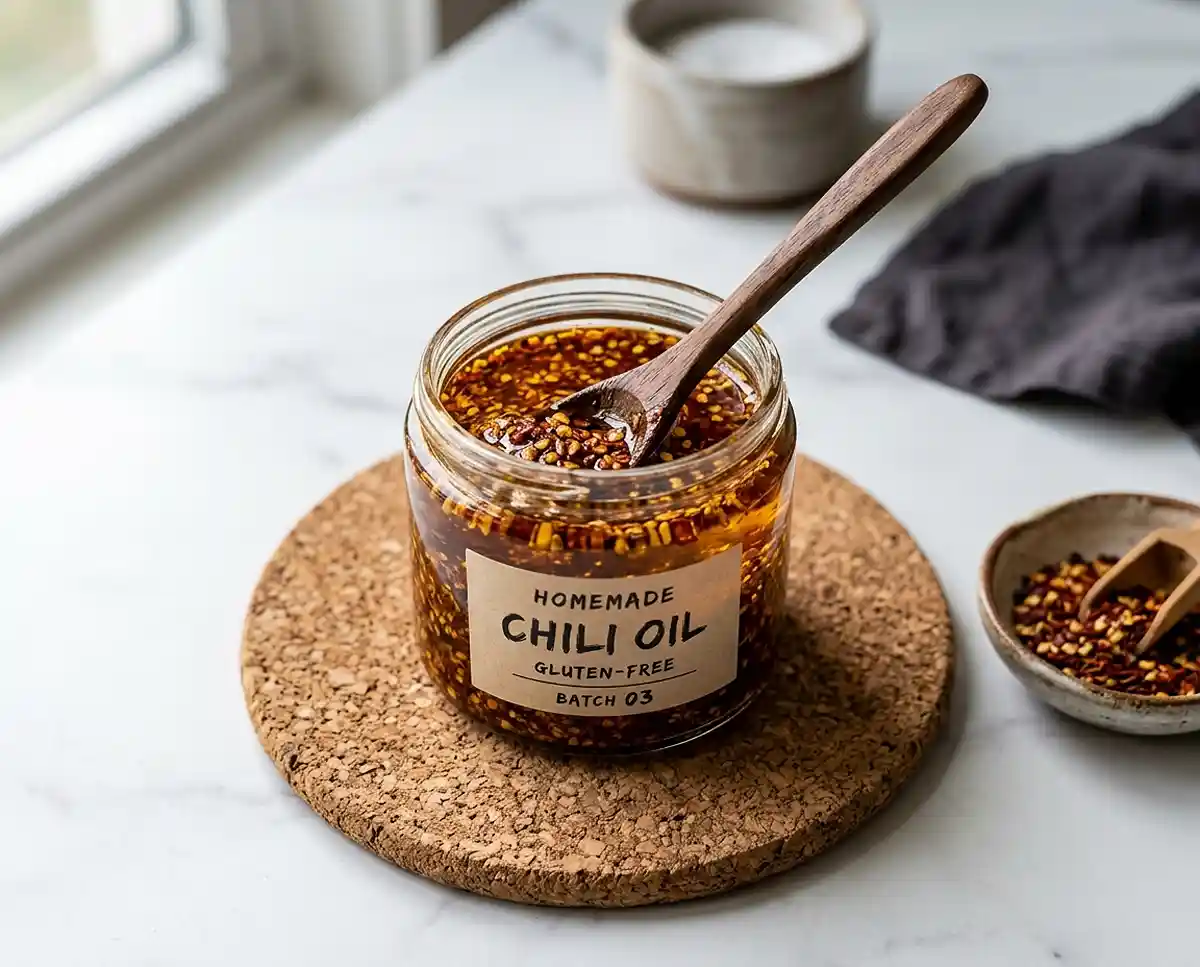
Gluten-Free Chili Oil
Crispy, smoky, and ready in 10 minutes—this gluten-free chili oil delivers restaurant-quality heat without sneaky wheat ingredients hiding in the bottle.
The first time I tried making chili oil at home, I scorched the whole batch. I’d cranked the heat too high, walked away to grab my phone, and came back to a kitchen that smelled like burnt popcorn at a Fourth of July cookout gone wrong. Ever had one of those moments where you just stare at the pan and laugh because crying won’t help?
Well, after that humbling lesson and probably twenty more batches, I finally nailed a foolproof method for gluten-free chili oil that’s safer, fresher, and tastier than most jars at the store. So many commercial brands sneak in soy sauce with wheat or shared-equipment warnings, which makes life tricky for those of us with celiac disease or gluten sensitivity.
This recipe takes about 10 minutes, uses pantry staples, and gives you that addictive crispy-chili-on-the-bottom texture we all chase. I’ll walk you through every step like I’m standing right next to you at the stove.
Table of Contents
Why You’ll Love This Homemade Chili Oil
- Crispy, smoky texture with toasty edges and a slow-building heat that hits just right on dumplings, eggs, or rice
- Beginner-friendly—if you can boil water, you can make this in under 15 minutes flat
- Naturally gluten-free when you swap in tamari, plus easily made sugar-free or low-sodium
- Works best as a finishing oil for noodles, stir-fries, roasted veggies, or drizzled over avocado toast
The Secret to Perfect Gluten-Free Chili Oil
Getting the oil temperature right is everything. Too cool and your chili flakes taste raw and grassy; too hot and they burn into bitter ash in seconds.
- Hit the 300-320°F sweet spot. This range toasts the chili flakes without scorching them, releasing capsaicin and natural oils for that deep red color and rounded heat. A simple candy thermometer takes the guesswork out completely.
- Use tamari instead of regular soy sauce. Most traditional soy sauces contain wheat as a primary ingredient, which is why store-bought chili oil often isn’t safe. According to the Celiac Disease Foundation’s guidance on hidden gluten, soy sauce is one of the most commonly overlooked sources, so tamari is your friend here.
- Choose a high smoke-point oil. Avocado, grapeseed, or refined peanut oil all handle high heat without breaking down. Olive oil will smoke and turn bitter, so save it for salads.
- Pour hot oil over dry ingredients (not the other way around). This flash-toasts the chili flakes evenly and creates that signature sizzle and bloom of color that makes homemade chili oil feel like magic.
Ingredients
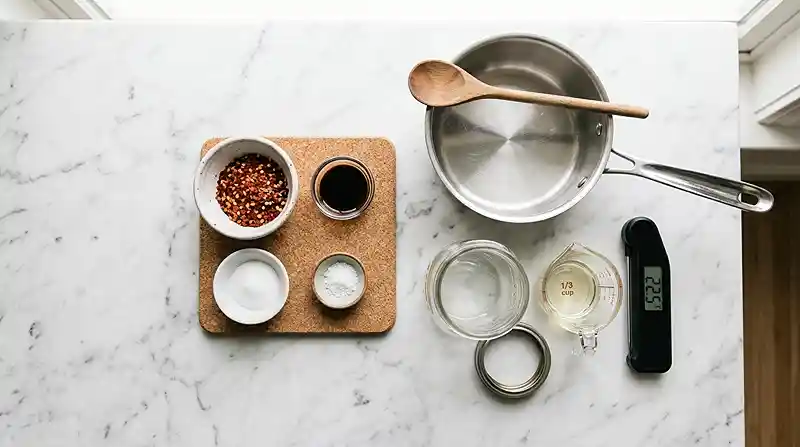
| Ingredient | Amount | Notes |
|---|---|---|
| Chili flakes (crushed pepper) | ¼ cup [20g] | Korean gochugaru gives milder, fruitier heat; Sichuan flakes bring the numbing punch |
| Soy sauce or tamari | 1 tablespoon | Use certified gluten-free tamari to keep this safe |
| Sugar | 1 teaspoon | Optional—reduce or omit if you prefer pure heat |
| Salt | ½ teaspoon | Fine sea salt dissolves best |
| High-heat oil | ⅓ cup [75g] | Avocado, grapeseed, or refined peanut oil |
A quick note on chili flakes: the type you choose changes everything. Korean gochugaru creates a vibrant red oil with gentle warmth, while crushed red pepper from the spice aisle leans hotter and earthier. Both work beautifully here.
Step-by-Step Instructions
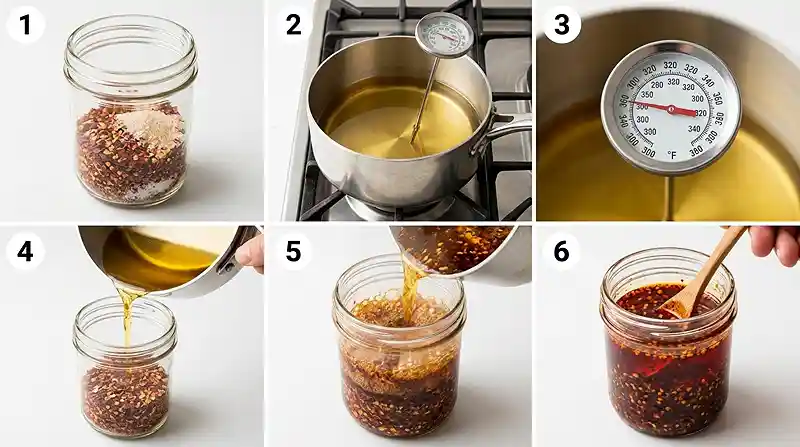
1. Combine your dry ingredients. Place the chili flakes, sugar, and salt in a heat-safe bowl or a glass mason jar. Glass works best because it won’t crack from sudden heat, and you can store the finished oil right in the same vessel. Add the tamari last so it pools at the bottom.
2. Heat the oil carefully. Pour the oil into a tall, shallow saucepan and warm it over medium heat until it reaches 300-320°F (150-160°C). If you don’t have a thermometer, drop in a single chili flake—it should sizzle gently and turn a shade darker within 5 seconds, not blacken instantly. The oil should shimmer but not smoke.
3. Pour and watch the magic happen. Slowly stream the hot oil into your jar of dry ingredients—it’ll bubble up dramatically and smell as nutty and fragrant as freshly toasted sesame seeds on a Thanksgiving morning. Stir gently with a heat-safe spoon to make sure every flake gets coated. Let it sit for at least 10 minutes before using so the flavors marry.
Pro Tip: Pour the oil in two stages if you’re nervous—half first, stir, then the rest. This keeps things controlled and prevents any dangerous splattering on your stovetop.
Make It Your Own
Add aromatics for depth. Toss a couple of smashed garlic cloves, sliced ginger, a star anise pod, or a cinnamon stick into the oil while it heats, then strain them out before pouring. This gives you a complex, layered Spicy Chili Oil that tastes like it came from a tiny restaurant in Chengdu.
Make it sugar-free. You know, the sugar isn’t doing structural work here—it just rounds out the heat. Skip it entirely or swap in a teaspoon of monk fruit if you’re keeping things low-carb. The flavor stays balanced as long as you keep the salt.
Boost the umami. Add ½ teaspoon of toasted sesame seeds and a pinch of Sichuan peppercorns to your dry mix for that signature numbing-tingly quality. For a deeper savory note, a ¼ teaspoon of mushroom powder works wonders in this Homemade Chili Oil without adding any allergens.
Smoky variation. Swap half the chili flakes for smoked paprika or chipotle powder. This version is incredible drizzled over grilled corn at summer barbecues or stirred into mayo for a quick spicy aioli.
Common Problems & Solutions
Problem: My chili flakes turned black and bitter.
Your oil was too hot when you poured it. Capsaicin and natural sugars in chili flakes burn fast above 350°F, leaving an acrid taste no amount of salt can fix. Next time, pull the oil off the heat at 300°F and let it coast up to 320°F off-burner.
Problem: My oil tastes flat and raw.
The oil wasn’t hot enough to properly bloom the spices. If the chili flakes barely sizzled when the oil hit them, you missed the toasting window. Reheat the entire jar gently in a saucepan to 250°F for a minute, then let it cool—this usually rescues the batch.
Problem: The oil separated weirdly or looks cloudy.
Man, oh man, this one tripped me up early on—it’s almost always condensation from a wet jar or spoon. Always use bone-dry tools and containers, since even a drop of water can cause separation and shorten shelf life. If it’s already happened, strain the oil and use within a week.
Problem: It’s not spicy enough.
You’re likely using a mild chili variety like Korean gochugaru, which is gorgeous but gentle. Blend in ½ teaspoon of cayenne or use a hotter crushed red pepper next time. You can also let the finished oil steep for 48 hours—the heat intensifies noticeably as it sits.
Storage & Meal Prep
| Method | Duration | Notes |
|---|---|---|
| Counter | 2-3 weeks | Airtight glass jar, away from sunlight |
| Fridge | 2-3 months | Oil may solidify slightly—just bring to room temp |
| Freezer | 6 months | Use freezer-safe jar with headspace for expansion |
To refresh older chili oil, give the jar a good stir before each use since the solids settle at the bottom. I love using leftover oil to make a quick dipping sauce with a splash of black vinegar, or drizzling it over scrambled eggs, roasted sweet potatoes, and even popcorn. Nothing goes to waste in my kitchen.
Your Questions Answered
What chili oil is gluten-free?
Chili oils made with pure oils, chili flakes, salt, and certified gluten-free tamari are safe. Many commercial brands contain regular soy sauce (which has wheat) or are produced on shared equipment with gluten-containing products. Always check labels for “certified gluten-free” or stick with homemade versions like this one for guaranteed safety.
Is Lao Gan Ma chili oil gluten-free?
Lao Gan Ma’s classic Crispy Chili in Oil is generally considered gluten-free, but the brand doesn’t carry official certification. Their ingredients don’t list wheat, but cross-contamination during manufacturing isn’t guaranteed against. If you have celiac disease, I’d recommend making your own batch to be 100% certain—it’s why people find Lao Gan Ma so addictive in the first place: that crispy texture and savory-sweet balance you can absolutely replicate at home.
Is Lee Kum Kee Chiu Chow chili oil gluten-free?
Lee Kum Kee Chiu Chow Chili Oil is not certified gluten-free and should be avoided by those with celiac disease. While the basic ingredients appear safe, Lee Kum Kee produces many soy sauce products containing wheat in shared facilities. The brand itself acknowledges potential cross-contamination, so I always tell my readers to skip it if you’re strictly gluten-free.
Which chili brands are gluten-free?
Brands like Fly By Jing, Momofuku Chili Crunch, and Trader Joe’s Chili Onion Crunch are widely considered gluten-free. Fly By Jing is officially certified, which makes it my top pick when I’m not making my own. Always double-check labels each time you buy, since formulations can change without warning.
Can I double or triple this recipe?
Yes, this recipe scales beautifully up to 4x without adjustments. Just use a larger saucepan and a bigger heat-safe jar, and keep the oil temperature exactly the same. Bigger batches actually store wonderfully and make incredible homemade gifts during the holiday season—mason jars with cute labels are always a hit at Christmas.
Serving Suggestions
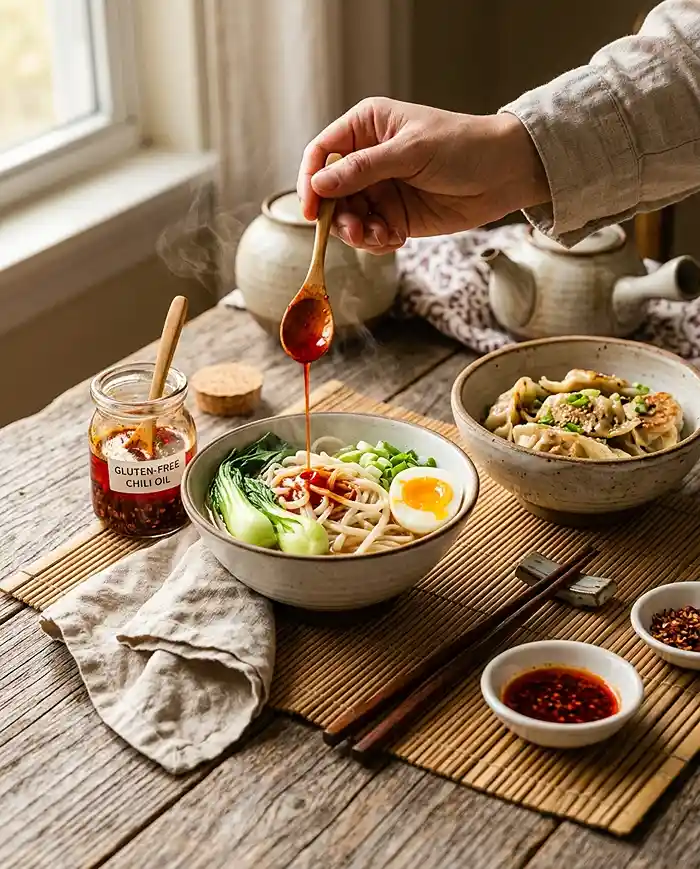
Drizzle this Gluten-Free Hot Oil over dumplings, ramen, fried rice, or steamed vegetables for an instant flavor upgrade. It’s also a game-changer on top of avocado toast, eggs benedict, or even pizza if you’re feeling adventurous. For a sweet-and-spicy dessert moment, try a tiny drizzle over vanilla ice cream alongside my moist gluten-free pineapple upside down cake at your next family dinner. Pair it with a cozy slice of easy gluten-free snack cake or these fudgy gluten-free banana brownies for a full spread that covers every craving.
If you try this gluten-free chili oil, I’d love to hear how it turned out—drop a comment below with your favorite way to use it, and don’t forget to pin this recipe to your Pinterest board so you can find it again. Your ratings and feedback genuinely help other gluten-free cooks find recipes that actually work, and there’s nothing I love more than hearing how you’ve made this your own. Happy cooking, friend!