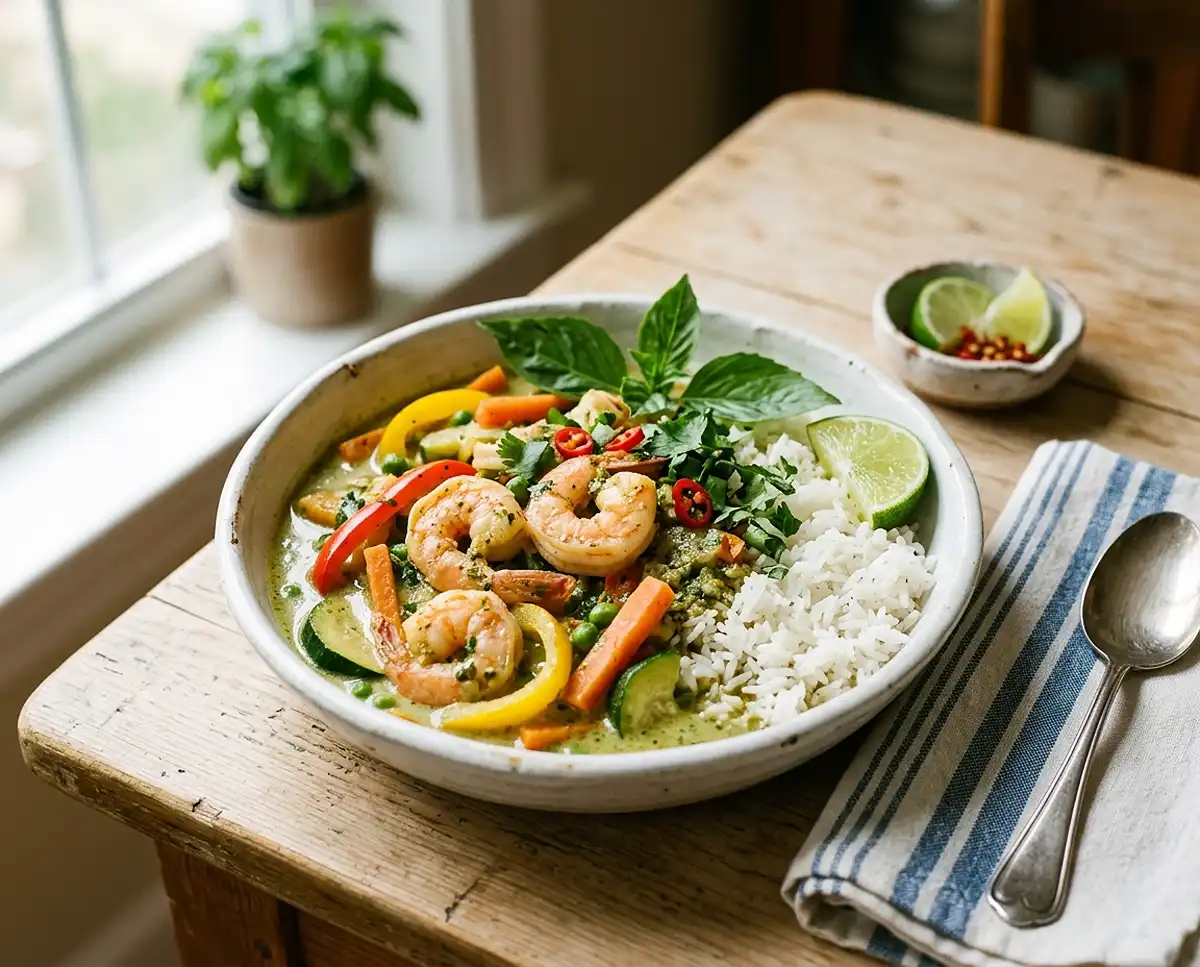
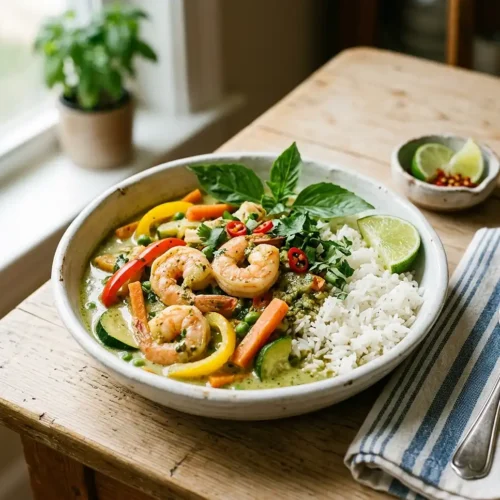
Gluten-Free Coconut Lime Shrimp Curry
This Gluten-Free Coconut Lime Shrimp Curry simmers tender shrimp in a fragrant coconut-lime sauce loaded with veggies—ready in 40 minutes flat.
The first time I made this Gluten-Free Coconut Lime Shrimp Curry, I’d just gotten home from a Labor Day weekend at my sister’s lake house with a cooler full of shrimp and zero energy to plan dinner. I dumped what I had into one pot, squeezed two limes over the top, and watched my picky eight-year-old nephew ask for thirds. That’s the kind of recipe that earns a permanent spot in the rotation.
Have you ever ordered shrimp curry at a Thai restaurant only to wonder if the curry paste secretly contained wheat or soy sauce with gluten? Well… this version skips all that worry by using a verified gluten-free curry paste and gluten-free fish sauce, so you can eat it freely without the post-meal anxiety. The sauce turns into liquid silk that clings to every shrimp and vegetable, with a sweet-tart finish that makes you want to drink it straight from the bowl.
You know what makes this gluten free shrimp curry feel so restaurant-quality? It’s the layered cooking method—searing the shrimp first, blooming the curry paste in oil, then letting the coconut milk simmer down until it concentrates into a velvety sauce. It’s a quick skillet main that punches way above its weeknight weight class.
Why You’ll Love This Gluten-Free Coconut Lime Shrimp Curry
- Velvety, complex sauce with bright lime, sweet brown sugar, and aromatic green curry that tastes like it simmered all day.
- Beginner-friendly one-pot method—if you can stir, you can pull this off on a Tuesday night.
- Naturally gluten-free and easily dairy-free, packed with vegetables that sneak in real nutrition.
- Versatile for meal prep—tastes even better the next day and reheats beautifully for lunches.
The Secret to a Perfect Gluten-Free Coconut Lime Shrimp Curry
- Sear shrimp first, then remove: Cooking shrimp briefly and pulling them out keeps them tender instead of rubbery, since they finish cooking when added back at the end.
- Bloom the curry paste in oil: Stirring the green curry paste into hot oil for 2 minutes releases its aromatic compounds and builds a deeper flavor base than just dumping it into liquid.
- Simmer for 20 full minutes: Reducing the coconut milk concentrates the flavors and thickens the sauce naturally—no cornstarch slurry or wheat-based thickeners needed.
- Add lime juice with the coconut milk: Cooking the lime briefly mellows its sharpness while keeping the bright citrus notes that define this dish.
If you’re new to navigating Thai pantry staples, the Celiac Disease Foundation’s gluten-free foods guide is a trusted resource for verifying curry pastes, fish sauces, and Asian condiments—wheat shows up in surprising places like soy-based fish sauces and some commercial curry blends.
Table of Contents
Ingredients
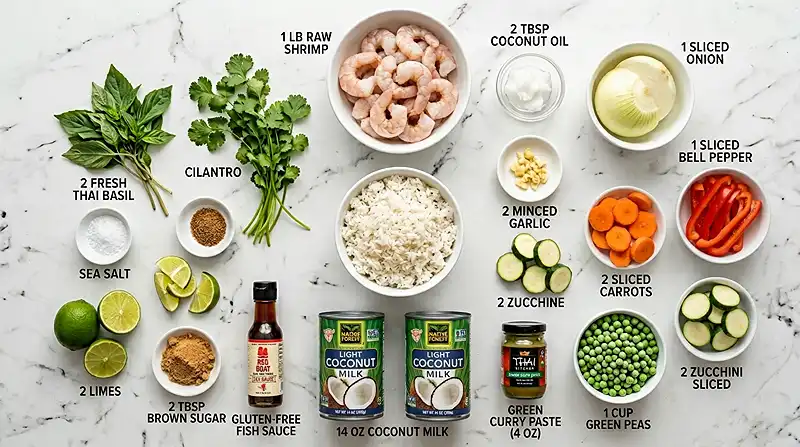
Servings: 4 people
- 2 tbsp coconut oil
- 1 lb shrimp, peeled and deveined
- 2 tsp sea salt (divided)
- 1 onion, sliced
- 2 cloves garlic, minced
- 1 bell pepper, sliced
- 2 carrots, sliced
- 2 zucchini, sliced
- 1 cup frozen peas
- 1 jar (4 oz) green curry paste (gluten-free)
- 2 cans (14 oz each) light coconut milk
- 2 tbsp fish sauce (gluten-free)
- 2 tbsp brown sugar
- Juice of 2 limes
For Serving
- Cooked rice
- Thai basil or cilantro
- Lime wedges
Pro tip: Always check labels on green curry paste and fish sauce—Thai Kitchen and Mae Ploy both carry verified gluten-free curry pastes, while Red Boat fish sauce is widely trusted for celiac-safe Asian cooking.
Step-by-Step Instructions
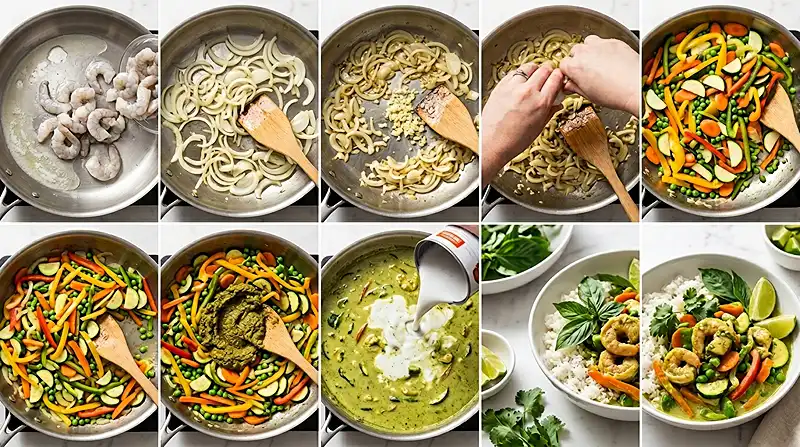
- Sear the shrimp. Heat the coconut oil in a large pot or deep skillet over medium-high heat until it shimmers. Add the shrimp, sprinkle with 1 teaspoon of salt, and cook for about 3 minutes total, flipping once, until they turn pink with curled tails.
- Remove shrimp and set aside. Transfer the cooked shrimp to a plate using a slotted spoon, leaving the flavorful oil behind in the pot. They’ll finish cooking when you add them back at the end.
- Sauté the onion. Add the sliced onion to the same pot and cook for 5 minutes, stirring occasionally, until softened and translucent with golden edges. The aroma should be sweet and slightly caramelized.
- Add the garlic. Stir in the minced garlic and cook for another 1–2 minutes until fragrant. Don’t walk away here—garlic burns fast and turns bitter.
- Add the vegetables. Toss in the bell pepper, carrots, zucchini, and frozen peas. Cook for 5 minutes, stirring occasionally, until the vegetables soften slightly but still have a bit of bite (they’ll continue cooking in the simmer).
- Bloom the curry paste. Stir in the green curry paste and the remaining 1 teaspoon of salt, coating the vegetables evenly. Cook for 2 minutes until the paste darkens slightly and releases a deep, herbal aroma.
- Build the sauce. Pour in both cans of light coconut milk, the fish sauce, brown sugar, and lime juice. Stir well to dissolve the curry paste and brown sugar into the liquid for an even, pale-green sauce.
- Simmer. Bring the curry to a gentle boil, then reduce the heat to low and simmer uncovered for 20 minutes, stirring occasionally. The sauce will reduce by about a third and turn glossy enough to coat the back of a spoon.
- Return the shrimp. Add the cooked shrimp back to the pot and stir to coat them in the sauce. Cook for 2 minutes until heated through but no longer—overcooking shrimp turns them rubbery.
- Serve. Spoon the curry over warm cooked rice and top with torn Thai basil or cilantro. Add a fresh lime wedge to each bowl for an extra squeeze right before eating.
Make It Your Own
Swap the protein: Use 1 pound of cubed chicken thighs, sliced beef sirloin, or firm tofu in place of the shrimp. Chicken needs about 6–7 minutes total cooking time at the start, while tofu only needs 3–4 minutes per side to crisp up.
Try different curry pastes: Red curry paste delivers a smokier, deeper flavor, while yellow curry paste leans milder and slightly sweeter. Just verify gluten-free certification, since not all Thai curry brands are celiac-safe.
Adjust the heat level: Add 1–2 sliced Thai chilies for serious heat, or stir in a teaspoon of red pepper flakes near the end. Man, oh man… for a sweeter, family-friendly version, scale back the curry paste to 2 tablespoons and add an extra tablespoon of brown sugar.
Bulk up the vegetables: Cauliflower florets, snap peas, baby corn, or sliced mushrooms all work beautifully in this coconut lime dinner. Add quick-cooking veggies in the last 5 minutes of simmering so they don’t turn mushy.
Common Problems & Solutions
Problem: Shrimp turn out rubbery and tough. Solution: Pull the shrimp from the pot the moment they turn pink with curled tails, and only return them at the very end for 2 minutes. Overcooking is the number-one culprit—shrimp keep cooking from residual heat even after you remove them.
Problem: Curry sauce tastes flat or one-dimensional. Solution: Add another tablespoon of fish sauce and a fresh squeeze of lime juice right before serving. The five-flavor balance (salty, sweet, sour, spicy, umami) needs all elements present, so taste and adjust before plating.
Problem: Sauce is too thin and watery. Solution: Simmer uncovered for an additional 5–10 minutes to reduce further before adding the shrimp back. You know… I once rushed this step for a midweek dinner and ended up with curry soup instead of curry sauce—patience pays off here.
Problem: Curry paste won’t dissolve smoothly. Solution: Make sure the paste is fully bloomed in the hot oil for the full 2 minutes before adding liquid. If it still clumps, whisk vigorously after pouring in the coconut milk to break up any remaining lumps.
Storage & Meal Prep
| Method | Duration | Notes |
|---|---|---|
| Counter | Up to 2 hours | Cool to room temp before refrigerating |
| Fridge | 3–4 days | Airtight container, store rice separately |
| Freezer | 2 months | Freeze sauce only, add fresh shrimp when reheating |
To reheat, warm the curry over low heat in a saucepan with a splash of water or coconut milk if it’s thickened too much in the fridge. The flavors actually deepen overnight, making leftovers taste even better than fresh. For zero-waste cooking, save shrimp shells in the freezer to make a quick seafood stock for future curries or rice dishes.
Gluten-Free Coconut Lime Shrimp Curry FAQs
Can I use frozen shrimp instead of fresh?
Yes, frozen shrimp work perfectly—just thaw them completely first. Run them under cold water in a colander for 5 minutes, then pat dry with paper towels before seasoning, since excess moisture prevents proper searing.
How do I make this curry dairy-free?
This recipe is already dairy-free thanks to coconut milk as the sauce base. Just double-check that your green curry paste doesn’t contain any milk-based ingredients (some commercial brands sneak in dried milk powder).
What’s the best rice to serve with shrimp curry?
Jasmine rice is the traditional pairing because its soft, fragrant grains soak up the curry sauce beautifully. Brown rice, basmati, or cauliflower rice all work as alternatives—just match the cooking time so everything’s hot when you serve.
Can I use full-fat coconut milk instead of light?
Yes, full-fat coconut milk creates a richer, more luxurious sauce. The trade-off is significantly more calories and fat per serving, so I usually stick with light coconut milk for weeknight cooking and save full-fat for special occasions.
Why did my curry separate or look broken?
The coconut milk likely came to too aggressive a boil, which can cause the fat to separate from the liquid. Keep the simmer gentle (small bubbles, not rolling), and stir every few minutes to keep the sauce emulsified and silky.
Serving Suggestions
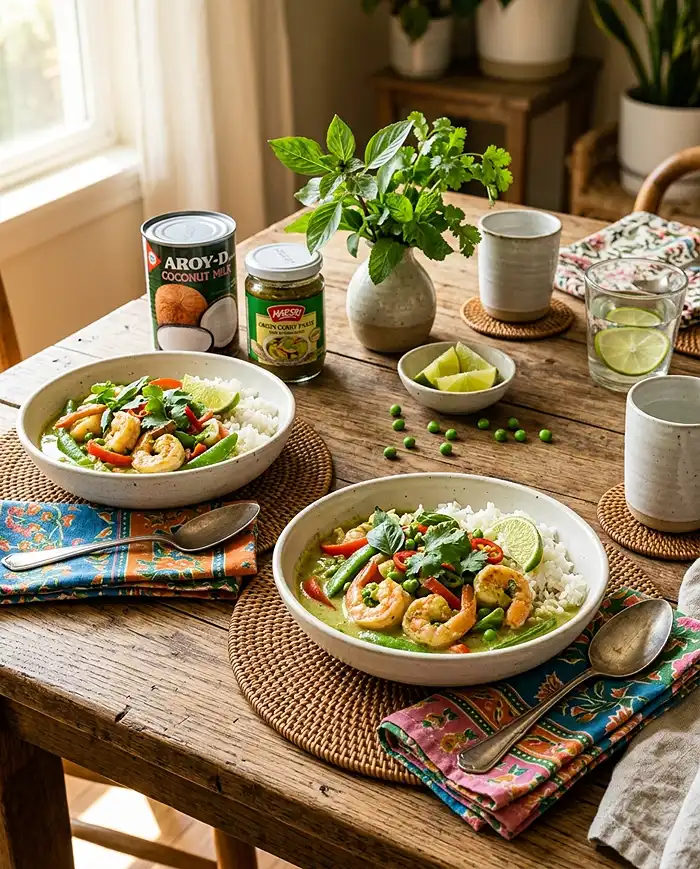
This Gluten-Free Coconut Lime Shrimp Curry shines on a Fourth of July patio dinner that breaks from the usual burgers and hot dogs—serve it family-style over jasmine rice with extra lime wedges for a bright, summery vibe. Pair it with my gluten-free cucumber melon smoothie as a cooling sip alongside the spice.
For a backyard cookout that mixes Asian-inspired flavors, follow the curry with gluten-free teriyaki turkey burgers on a separate night to use up extra fresh herbs. End the meal with gluten-free raspberry lemonade whoopie pies for a tart-sweet dessert that cleanses the palate after the rich coconut sauce.
Time to Simmer!
If this Gluten-Free Coconut Lime Shrimp Curry becomes a regular in your dinner lineup, drop a star rating and tell me in the comments which protein swap or veggie combo you tried. Pin this recipe to your Pinterest gluten-free dinners board so it’s right there waiting for the next “what’s for dinner” emergency. Happy cooking, friend—I think you’re going to love every fragrant, lime-bright bite.
Gluten-Free Coconut Lime Shrimp Curry
Equipment
- Large pot or deep skillet
- Wooden spoon or spatula
- Slotted spoon
- Cutting board
- Chef’s knife
- Citrus Juicer
- Measuring cups and spoons
Ingredients
Curry
- 2 tablespoons coconut oil
- 1 lb shrimp peeled and deveined
- 2 teaspoons sea salt divided
- 1 onion sliced
- 2 cloves garlic minced
- 1 bell pepper sliced
- 2 carrots sliced
- 2 zucchini sliced
- 1 cup frozen peas
- 1 jar (4 oz) green curry paste certified gluten-free
- 2 cans (14 oz each) light coconut milk
- 2 tablespoons fish sauce certified gluten-free
- 2 tablespoons brown sugar
- lime juice juice of 2 limes
For Serving
- cooked rice jasmine recommended
- Thai basil or cilantro for garnish
- lime wedges for serving
Instructions
- Heat the coconut oil in a large pot or deep skillet over medium-high heat until it shimmers. Add the shrimp, sprinkle with 1 teaspoon of salt, and cook for about 3 minutes total, flipping once, until they turn pink with curled tails.
- Transfer the cooked shrimp to a plate using a slotted spoon, leaving the flavorful oil behind in the pot. They’ll finish cooking when added back at the end.
- Add the sliced onion to the same pot and cook for 5 minutes, stirring occasionally, until softened and translucent with golden edges. The aroma should be sweet and slightly caramelized.
- Stir in the minced garlic and cook for another 1 to 2 minutes until fragrant. Don’t walk away here, since garlic burns fast and turns bitter.
- Toss in the bell pepper, carrots, zucchini, and frozen peas. Cook for 5 minutes, stirring occasionally, until the vegetables soften slightly but still have a bit of bite, since they’ll continue cooking in the simmer.
- Stir in the green curry paste and the remaining 1 teaspoon of salt, coating the vegetables evenly. Cook for 2 minutes until the paste darkens slightly and releases a deep, herbal aroma.
- Pour in both cans of light coconut milk, the fish sauce, brown sugar, and lime juice. Stir well to dissolve the curry paste and brown sugar into the liquid for an even, pale-green sauce.
- Bring the curry to a gentle boil, then reduce the heat to low and simmer uncovered for 20 minutes, stirring occasionally. The sauce will reduce by about a third and turn glossy enough to coat the back of a spoon.
- Add the cooked shrimp back to the pot and stir to coat them in the sauce. Cook for 2 minutes until heated through but no longer, since overcooking shrimp turns them rubbery.
- Spoon the curry over warm cooked rice and top with torn Thai basil or cilantro. Add a fresh lime wedge to each bowl for an extra squeeze right before eating.