Gluten-Free Greek Sheet Pan Shrimp
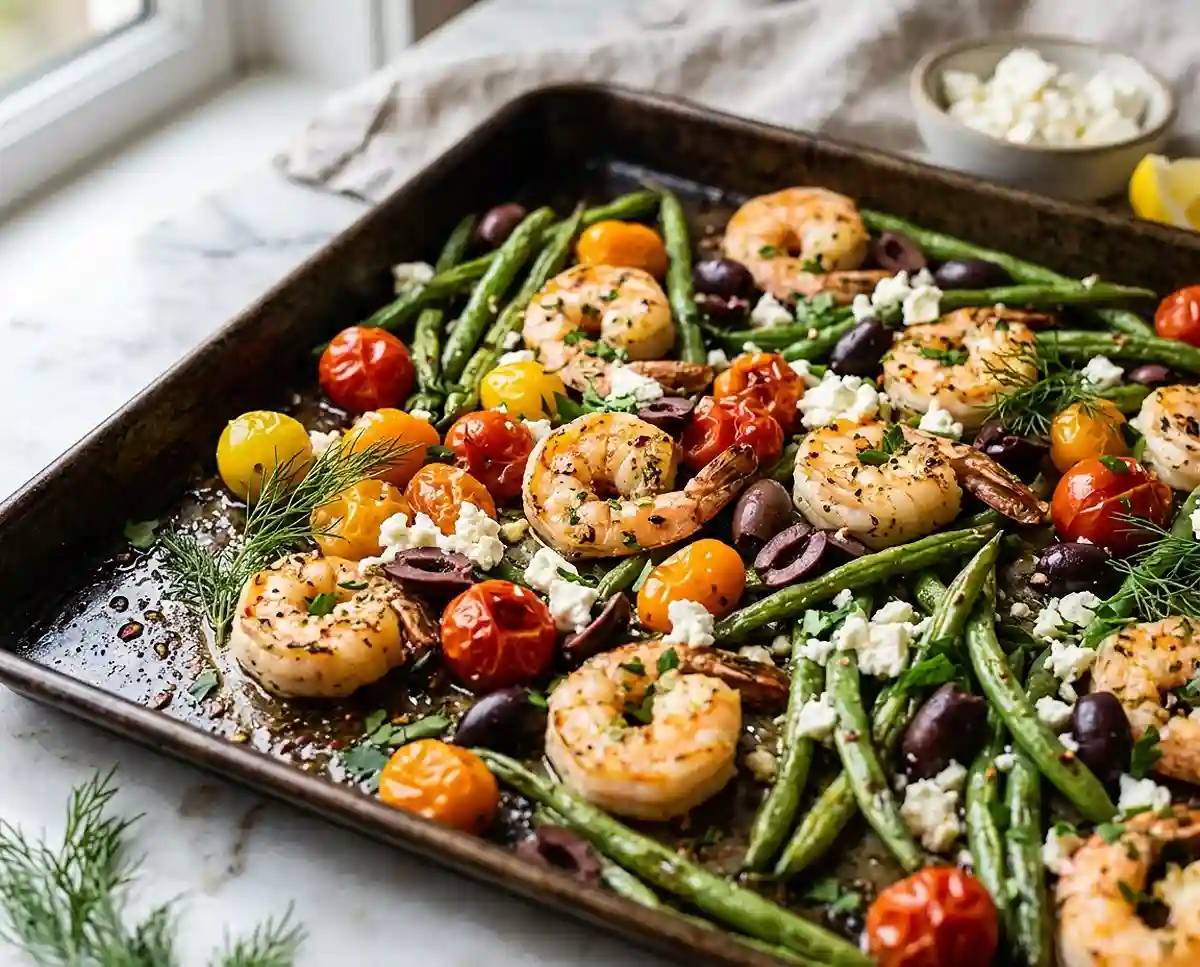
This gluten-free Greek sheet pan shrimp with green beans, tomatoes, feta, and olives delivers bold Mediterranean flavor in just 30 minutes. One pan, zero fuss.
The first time I attempted a Greek-inspired shrimp dinner, I overthought the whole thing — separate pans for the shrimp, a stovetop sauce for the vegetables, homemade seasoning blends from scratch. By the time dinner hit the table, my kitchen looked like a disaster zone and I was too tired to enjoy the food. That’s when I realized the entire meal could go on one sheet pan, and this gluten-free Greek sheet pan shrimp recipe was born out of pure exhaustion and a refusal to wash one more dish.
Well… turns out that simplifying the process actually made the food taste better. When the shrimp, green beans, tomatoes, and olives all roast together at high heat, the flavors mingle and concentrate in a way that a multi-pan approach just can’t replicate. The tomatoes burst and create their own sauce, the garlic gets nutty and sweet, and the shrimp come out tender with beautifully pink, curled edges. Isn’t it funny how the easiest path often gives you the best results?
Table of Contents
Why You’ll Love This Greek Sheet Pan Shrimp
- Bright, herbaceous Mediterranean flavor from Greek seasoning, fresh dill, dried oregano, and briny kalamata olives — every bite tastes like a Greek island vacation
- Genuinely beginner-proof — toss everything on a pan, season, and bake — there’s no searing, no flipping, no monitoring required
- Naturally gluten-free with no substitutions or workarounds needed, making it one of those rare gluten-free shrimp dinners that doesn’t feel like it’s “missing” anything
- Ready in 30 minutes flat, including prep, making it the ideal quick weeknight recipe when you need real food on the table fast
The Secret to Perfect Gluten-Free Greek Sheet Pan Shrimp
A sheet pan meal is only as good as the details behind it. These specific techniques ensure the shrimp stay tender, the vegetables roast properly, and the Greek flavors come through in every forkful.
- High heat (450°F) is the key to caramelization without overcooking. At this temperature, the shrimp develop a light sear on the outside while staying succulent inside, and the green beans get tender-crisp edges instead of turning limp and steamed. The tomatoes blister and burst, releasing their natural juices into a light pan sauce that coats everything. Lower temperatures cause the vegetables to release moisture slowly, which steams the shrimp instead of roasting them.
- Splitting the Greek seasoning into two additions builds layered flavor. The first half goes into the tossing bowl, where it dissolves into the olive oil and penetrates the shrimp and vegetables. The second half gets sprinkled directly on top before baking, creating a concentrated seasoning crust on the surface. According to food science principles outlined by the James Beard Foundation, layering seasonings at different stages produces more complex, developed flavor than adding everything at once.
- Using dill stems in the toss and fronds as a finishing garnish maximizes the herb. Dill stems carry the same essential oils as the fronds but are sturdier, so they hold up to oven heat and infuse the cooking juices. The delicate fronds go on after baking, delivering a burst of fresh, anise-like brightness that heat would destroy. This zero-waste approach gets every ounce of flavor from the herb.
- Kalamata olives and feta go on at strategic moments. The olives roast with everything else, which concentrates their brininess and softens their texture slightly. The feta gets crumbled on after baking so it stays creamy and intact rather than melting into an oily puddle — feta’s high moisture content makes it behave unpredictably under extended high heat.
Ingredients For Gluten-Free Greek Sheet Pan Shrimp
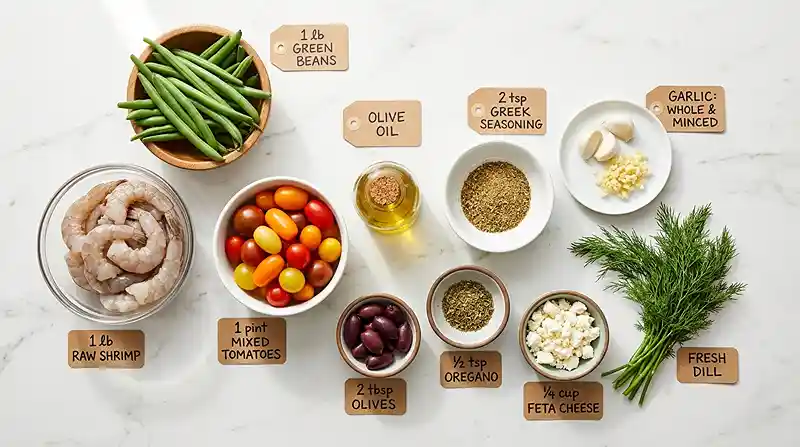
Sheet Pan Base:
- 1 lb green beans
- 1 pint gourmet medley grape/cherry tomatoes
- 1 lb peeled and deveined shrimp
- 1 tablespoon olive oil
- 3 cloves garlic, minced
- 2 tablespoons kalamata olives
Seasoning:
- 2 teaspoons Cavender’s All Purpose Greek Seasoning, divided
- ¼ cup fresh dill, chopped and divided
- ½ teaspoon dried oregano
Finishing:
- ¼ cup crumbled feta
A note on Cavender’s Greek Seasoning: This blend is a staple in many kitchens and is widely considered gluten-free, but Cavender’s does not carry a certified gluten-free label. If you have celiac disease or severe sensitivity, check the Celiac Disease Foundation’s product verification resources or contact the manufacturer directly. For a certified alternative, you can blend your own using garlic powder, onion powder, oregano, basil, black pepper, and a pinch of cinnamon.
Instructions For Gluten-Free Greek Sheet Pan Shrimp
Step 1: Preheat your oven to 450°F. Position the rack in the center for the most even heat distribution. Line a large rimmed baking sheet with parchment paper or foil for easy cleanup.
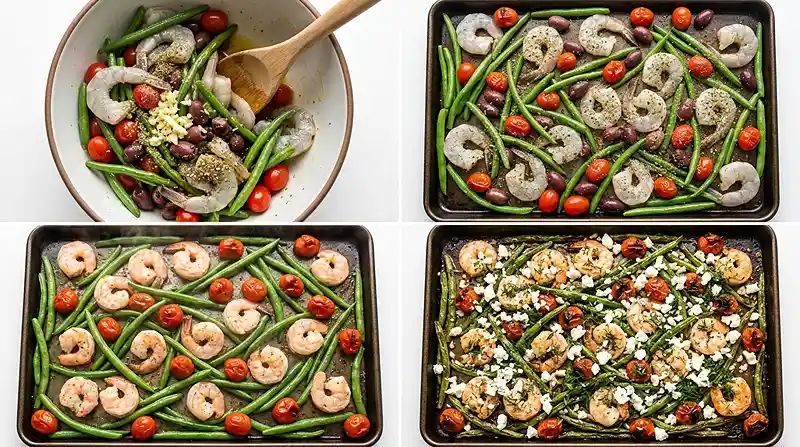
Step 2: Place the green beans, tomatoes, minced garlic, kalamata olives, and shrimp in a large mixing bowl. Drizzle the 1 tablespoon olive oil over everything and sprinkle with half (1 teaspoon) of the Greek seasoning and half the fresh dill — use the stem portions here, as they’ll hold up to the oven heat and infuse the pan juices with flavor. Toss everything together until evenly coated and glistening.
Pro Tip: Make sure your shrimp are thoroughly patted dry before they go into the bowl. Excess moisture on the shrimp creates steam in the oven and prevents the beautiful light sear you’re after.
Step 3: Pour the contents of the bowl onto the prepared baking sheet and spread into a single, even layer. Sprinkle the remaining 1 teaspoon of Greek seasoning and the ½ teaspoon dried oregano evenly over the top. Make sure the shrimp aren’t buried under vegetables — they need direct exposure to the oven heat for proper cooking.
Pro Tip: If your pan looks crowded, use two sheet pans. Overcrowding is the single most common reason this greek sheet pan meal turns out steamed instead of roasted.
Step 4: Bake for 20 minutes. You’ll know it’s done when the shrimp are pink and curled into a loose “C” shape, the green beans have lightly charred tips, and the tomatoes have blistered and split open — releasing little pools of ruby-red juice that taste as sweet and concentrated as sun-dried tomato paste straight from the jar.
Step 5: Remove from the oven and immediately sprinkle the ¼ cup crumbled feta and remaining fresh dill fronds over the top. The residual heat will slightly soften the feta without melting it. Serve right away while everything is hot and the dill is vibrant.
Make It Your Own
This gluten-free shrimp dinner is incredibly adaptable. The Greek seasoning and Mediterranean base flavors work with almost any protein or vegetable swap you throw at them.
Use chicken instead of shrimp. Cut boneless, skinless chicken breast or thighs into 1-inch pieces and increase the baking time to 22-25 minutes, or until the chicken reaches 165°F internally. Chicken thighs are the better choice here — their higher fat content keeps them juicy at 450°F, while breasts can dry out quickly at such high heat.
Swap the green beans for asparagus or broccolini. Both roast beautifully at 450°F and cook in roughly the same time frame. Cut asparagus spears in half so they’re a similar length to the green beans, and trim broccolini stems to ensure even cooking. Either swap keeps this firmly in greek sheet pan meal territory.
You know… my favorite variation is adding a handful of artichoke hearts (canned, drained, and quartered) to the pan before roasting. They get golden and slightly crispy on the edges, and they soak up the Greek seasoning and garlic like little flavor sponges. It makes the whole dish feel more substantial without adding much effort.
Make it dairy-free. Simply skip the feta or replace it with a dairy-free feta alternative. The dish is so flavorful from the Greek seasoning, olives, garlic, and fresh herbs that it honestly doesn’t suffer without the cheese. A squeeze of lemon juice after baking adds a bright tang that fills the same role feta plays.
Common Problems & Solutions
Problem: The shrimp are rubbery and overcooked.
Pull the pan at exactly 20 minutes and check immediately. Shrimp cook fast at 450°F, and even 2-3 extra minutes can push them from tender to bouncy. If your shrimp are on the smaller side (41/50 count), check at 15-17 minutes instead. The “C” shape curl is your visual cue — if they’ve tightened into an “O,” they’ve gone too far.
Problem: The green beans are still raw when the shrimp are done.
This happens when the beans are too thick or bunched together on the pan. Choose thinner green beans (French-style haricots verts are ideal) and make sure they’re spread in a single layer with space around them. Man, oh man… thick green beans at 450°F for only 20 minutes just don’t get there, and extending the time overcooks the shrimp. If you only have thick beans, snap them in half lengthwise.
Problem: The tomatoes didn’t burst.
Your tomatoes may not have had enough direct contact with the hot pan surface. Make sure they’re sitting directly on the sheet pan (or parchment), not perched on top of green beans or shrimp. Smaller grape tomatoes burst more reliably than larger cherry varieties because they have a higher skin-to-flesh ratio and less structural integrity under heat.
Problem: Everything tastes bland.
Two teaspoons of seasoning spread across a full pound of shrimp and a pound of green beans can feel subtle. If the flavor isn’t punching through, add a generous squeeze of fresh lemon juice right after baking — the acid amplifies everything. Also taste your Greek seasoning before cooking. If the jar has been open for over a year, the dried herbs inside have likely lost significant potency and you may need to increase the amount slightly.
Storage & Meal Prep
| Method | Duration | Notes |
|---|---|---|
| Counter | Up to 2 hours | Keep covered; food safety limit for cooked shrimp |
| Fridge | 2-3 days | Store in airtight container; shrimp texture is best within 1-2 days |
| Freezer | Up to 2 months | Freeze shrimp and vegetables without feta; add fresh feta when reheating |
To reheat, spread leftovers on a sheet pan and warm at 375°F for 6-8 minutes. The oven method keeps the shrimp from turning rubbery, which the microwave almost guarantees. For meal prep, portion the cooked shrimp and vegetables over rice or quinoa in individual containers, storing feta and dill separately so they stay fresh. Leftover shrimp and vegetables also work beautifully chopped and folded into a cold Greek-style grain salad with cucumber and a lemon vinaigrette.
FAQs About Gluten-Free Greek Sheet Pan Shrimp
Can I use frozen shrimp for this recipe?
Yes, but thaw them completely first. Place frozen shrimp in a colander under cold running water for 5-10 minutes until fully thawed, then pat them very dry with paper towels. Cooking frozen or partially frozen shrimp at 450°F releases excess water that steams the entire pan, preventing the roasted texture and caramelized edges you want from this recipe.
How do I know if Cavender’s Greek Seasoning is gluten-free?
Cavender’s does not contain wheat-based ingredients in its listed formula and is widely used in gluten-free cooking, but it does not carry a certified gluten-free label. If you have celiac disease, contact the manufacturer for current cross-contamination information or make your own blend using garlic powder, onion powder, oregano, basil, black pepper, parsley, and a pinch of cinnamon. Homemade gives you full control over every ingredient.
What’s the best way to keep the shrimp from overcooking?
Use large shrimp (21/25 count or bigger) and check the pan at exactly 20 minutes. Larger shrimp are more forgiving at high heat and give you a wider window between done and overdone. The shrimp are ready when they’re pink, opaque, and curled into a loose “C” shape — if they’ve curled into a tight circle, they’ve gone past the ideal point.
Why did my sheet pan meal come out steamed instead of roasted?
Overcrowding is the most common cause. When ingredients are piled on top of each other, trapped moisture creates steam instead of allowing hot air to circulate and brown the surfaces. Use a large 18×13-inch half sheet pan and spread everything in a true single layer with visible pan surface between pieces. If it looks tight, split the recipe across two pans.
Can I add other vegetables to this recipe?
Absolutely — zucchini rounds, bell pepper strips, red onion wedges, and artichoke hearts all roast well at 450°F within the same 20-minute window. Cut any additions into similar-sized pieces so they cook evenly alongside the green beans and tomatoes. Avoid adding vegetables with very high water content like cucumber or raw spinach, as they’ll wilt and release liquid that interferes with roasting.
Serving Suggestions
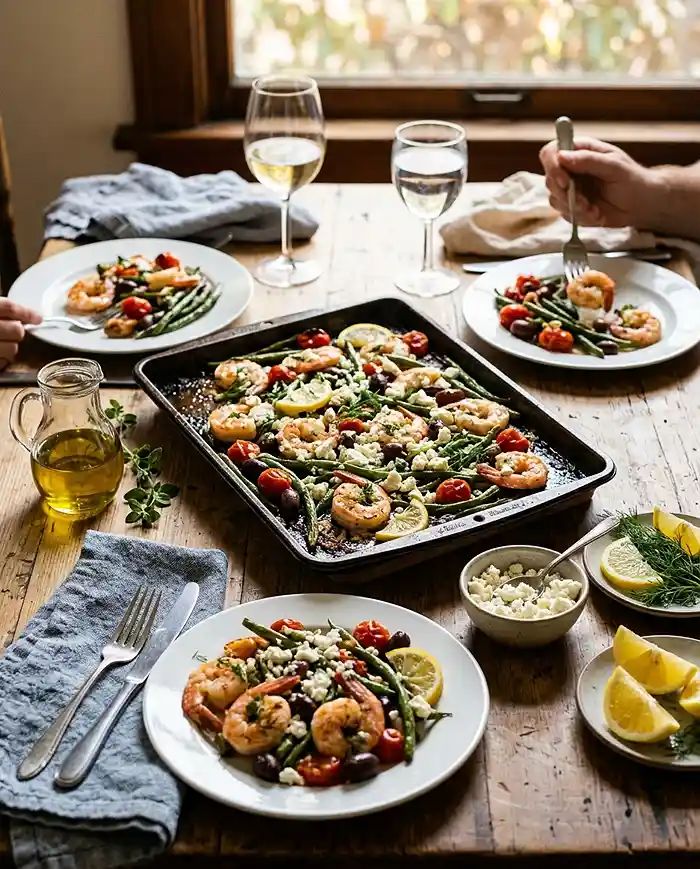
This gluten-free Greek sheet pan shrimp is a complete meal on its own, but it pairs beautifully over a bed of warm orzo, fluffy rice, or roasted lemon potatoes for a heartier plate.
It’s a standout dish for Easter dinner or a relaxed Sunday family supper when you want Mediterranean flavors without the fuss. If you’re building a bigger spread, serve it alongside smoky gluten-free Cajun shrimp sausage sheet pan for a two-pan feast with completely different flavor profiles, or pair it with vibrant gluten-free honey chipotle salmon bowls for a seafood-themed dinner party.
For a lighter finish, set out a platter of colorful gluten-free fruit salsa with cinnamon chips as a sweet ending that keeps the whole meal naturally gluten-free.
Give This 30-Minute Dinner a Try
I truly believe this is one of those recipes that earns a permanent spot in your weeknight rotation once you make it the first time — it’s just that easy and that flavorful. Save it to Pinterest so you can find it on your busiest nights, and drop a comment below to tell me how yours turned out or what you added. Your tweaks and ideas always make these recipes better, and I love hearing what works in your kitchen.
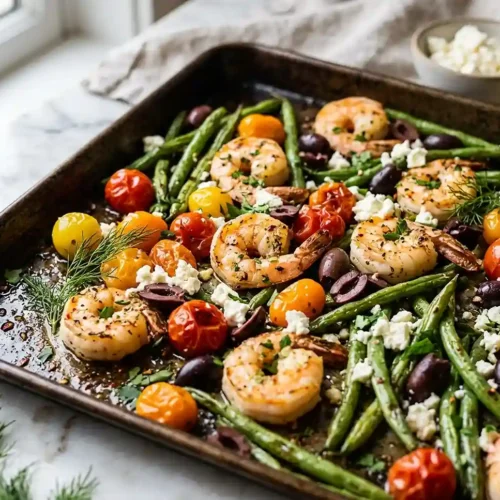
Gluten-Free Greek Sheet Pan Shrimp
Equipment
- Large rimmed baking sheet
- Parchment paper or foil
- Large mixing bowl
Ingredients
Sheet Pan Base
- 1 lb green beans
- 1 pint gourmet medley grape/cherry tomatoes
- 1 lb peeled and deveined shrimp
- 1 tablespoon olive oil
- 3 cloves garlic minced
- 2 tablespoons kalamata olives
Seasoning
- 2 teaspoons Cavender’s All Purpose Greek Seasoning divided
- ¼ cup fresh dill chopped and divided
- ½ teaspoon dried oregano
Finishing
- ¼ cup crumbled feta
Instructions
- Preheat your oven to 450°F. Position the rack in the center and line a large rimmed baking sheet with parchment paper or foil for easy cleanup.
- Place the green beans, tomatoes, minced garlic, kalamata olives, and shrimp in a large mixing bowl. Drizzle with 1 tablespoon olive oil and sprinkle with half (1 teaspoon) of the Greek seasoning and half the fresh dill (preferably the stems). Toss until everything is well coated and glistening.
- Pour the contents onto the prepared baking sheet and spread into a single, even layer. Sprinkle the remaining 1 teaspoon Greek seasoning and ½ teaspoon dried oregano evenly over the top. Bake for 20 minutes until the shrimp are pink and curled, the green beans have lightly charred tips, and the tomatoes have blistered and burst.
- Remove from the oven and immediately sprinkle with the ¼ cup crumbled feta and remaining fresh dill fronds. Serve immediately while everything is hot and the dill is vibrant.