Gluten-Free Korean Cabbage Recipe
Make this gluten-free Korean cabbage recipe with tamari, fish sauce, and one spicy pepper. Step-by-step, crisp-tender or soft, ready in about 15 minutes.
A reader emailed me last spring with a small kitchen crisis. Her cabbage kept turning out soggy, and she’d just learned her tamari had wheat in it. She wanted a gluten-free Korean cabbage recipe that took ten minutes and didn’t bore her kids.
So I went back to my own stove and tested it three nights in a row. Big chunks, a hot pan, a splash of water, and two sauces with checked labels solved nearly everything. Why does plain cabbage taste so much better after a few minutes of sizzle?
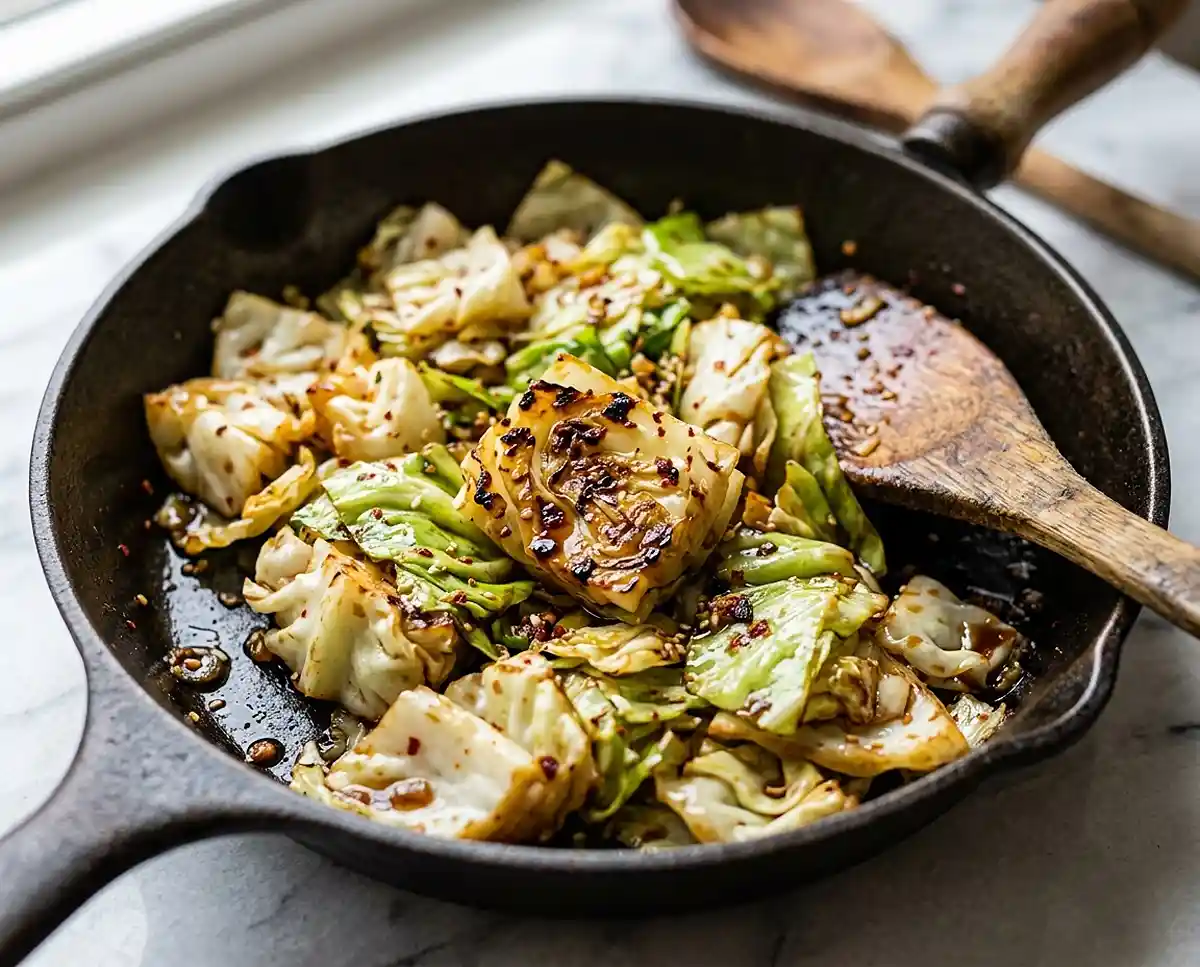
Listen… this Korean stir fried cabbage recipe is a weeknight side, not a project. It isn’t kimchi and doesn’t pretend to be. You get a savory, gently spicy pile of glossy cabbage that’s ready before the rest of dinner stops resting.
Table of Contents
The 60-Second Rundown on This Korean Stir-Fried Cabbage
- Texture and flavor: Crisp-tender with golden edges and a glossy, savory coat, or soft and silky if you keep cooking it. One chopped spicy pepper gives a slow-building kick rather than a punch.
- Honest difficulty: Beginner-friendly. One pan, eight short steps, and about 15 minutes start to finish. The only real skill is staying near the stove.
- Handy extras: It uses just ⅓ tablespoon of butter, it’s kid-friendly if you seed the pepper, and it reheats well for a quick lunch.
- When it earns its spot: Weeknights, when you want a vegetable side for rice, grilled meat, or eggs that people actually finish.
Why These Ingredients Behave
- Large chunks stay crisp-tender. Thick ribs hold their structure, while fine shreds release water faster than the pan can evaporate it. That’s the root of most soggy, watery stir-fried cabbage.
- A little water steams the ribs. Two tablespoons of water soften the pectin and cellulose in the thick parts while the hot pan browns the edges. You get tender centers and toasty surfaces in the same few minutes.
- Checked sauces keep it gluten-free. Regular soy sauce is brewed with wheat, so certified gluten-free tamari delivers the same savory depth without hidden gluten. Gluten-free fish sauce adds the salty, funky backbone.
- Butter goes in last. The fat coats the leaves, rounds off the salt and heat, and gives that glossy finish. Added at the end, it doesn’t brown or burn while the cabbage finishes cooking.
Ingredients
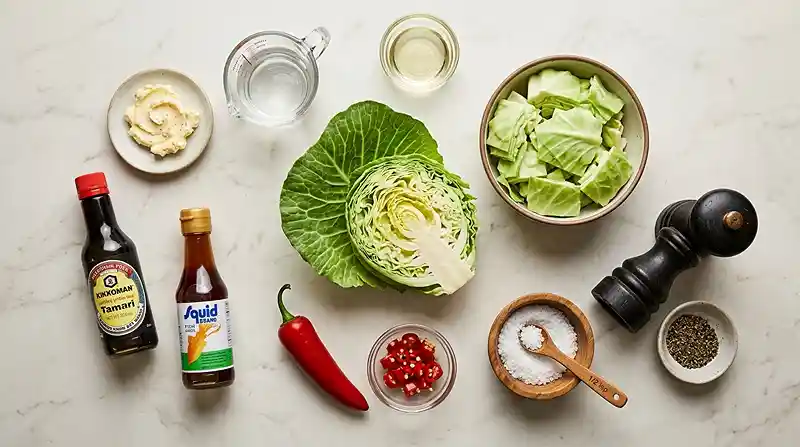
Serves 2
For the Cabbage
- ¼ head (about 400 g) cabbage, cut into large pieces
- Drizzle of neutral cooking oil
- 2 tablespoons water, plus more as needed
For the Heat and Seasoning
- 1 spicy pepper, chopped
- Salt and black pepper, to taste
- 1 teaspoon certified gluten-free tamari
- 1 teaspoon gluten-free fish sauce
For the Finish
- ⅓ tablespoon (about 5 g) butter
Certified gluten-free tamari and gluten-free fish sauce are the two bottles worth reading twice. Tamari is often wheat-free but not always, as a well-regarded reference on gluten in soy sauce lays out. Fish sauce labels vary too, so look for a gluten-free claim.
For the spicy pepper, a jalapeño gives mild warmth and a serrano brings real heat. Use whatever fresh chile you can find at your grocery store.
Instructions
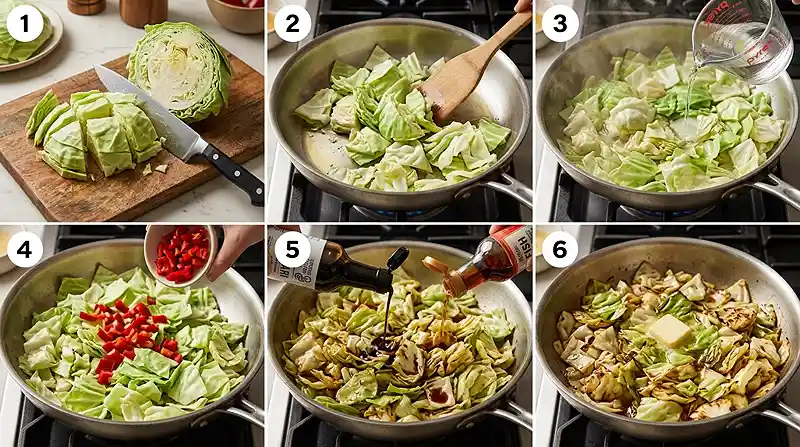
- Prep the cabbage. Cut the cabbage into large, bite-sized pieces. Don’t separate every single leaf, because chunky pieces give the dish better texture. Note to self: leave a little core attached to each chunk so the leaves hold together in the pan.
- Stir-fry the cabbage. Heat a large frying pan over medium heat and add a drizzle of oil. Add the cabbage, season with salt and black pepper, and toss for 2 to 3 minutes, stirring occasionally, until lightly softened. The sizzle sounds like light rain on a tin roof, and the kitchen starts to smell sweet and toasty.
- Add the water. Pour in 2 tablespoons of water to help the cabbage steam gently. Add a splash more if the pan looks dry.
- Add the pepper. Add the chopped spicy pepper and stir-fry for about 30 seconds, just until it smells fragrant. Note to self: this is the step where I used to walk away, and the pepper scorched every time.
- Add the sauces. Drizzle in the certified gluten-free tamari and gluten-free fish sauce. Gently toss until the cabbage is evenly coated. Taste before you add more salt, since both sauces are salty.
- Finish with butter. Add the butter and toss until it melts and the cabbage turns glossy.
- Cook to your preferred texture. For crisp-tender cabbage, stir-fry for 1 to 2 more minutes. For softer cabbage, keep cooking for 4 to 5 more minutes, until the ribs are silky and the edges are browned.
- Serve. Serve immediately while hot.
Change It Up
Milder heat. Slit the pepper and scrape out the seeds and white ribs before chopping, since that’s where most of the capsaicin lives. You keep the green, fruity flavor of the pepper and lose most of the burn. This is the version my kids will actually eat.
Dairy-free. Skip the butter and toss in a few drops of toasted sesame oil off the heat. You lose the rounded, glossy finish butter gives, but the fat still coats the cabbage and carries the sauce. Add the sesame oil last, because it scorches fast and turns bitter.
Funny enough, my favorite use for leftovers is a spicy Korean coleslaw. Pull the cabbage at the crisp-tender stage, spread it on a plate to cool, and chill it for an hour. It eats like a warm-weather slaw, only with toasty edges and no mayonnaise to separate.
Make it a meal. This stir-fry cabbage turns into dinner when you toss in leftover cooked chicken or top it with a soft-fried egg. Add the protein after the butter so nothing overcooks while the cabbage finishes.
What not to swap. Regular soy sauce defeats the whole point, since it’s brewed with wheat. Skipping the fish sauce works in a pinch, but the dish loses its savory backbone and tastes flat. If you’re browsing Korean recipes made with cabbage, this is the quick weeknight cousin to the slower, fermented ones.
Rescue Guide
Problem: watery, soggy cabbage. Solution: cook over true medium heat, stop adding water after the splash the pan asks for, and don’t crowd the pan. Cabbage holds a surprising amount of liquid, and a cool or crowded pan steams it instead of letting that liquid evaporate.
Problem: bland, flat flavor. Solution: salt the cabbage as it hits the oil, then taste after the tamari and fish sauce go in. Early salt draws moisture out through osmosis and seasons the leaves from the inside, while the sauces layer umami on top.
Problem: too salty. Whew… I’ve done it. Solution: splash in a little water or serve the cabbage over plain steamed rice. Tamari and fish sauce both carry a lot of sodium, so the cabbage and rice need room to dilute it.
Problem: burnt or bitter pepper. Solution: keep the chopped pepper in the pan for only about 30 seconds, and lower the heat if the pan smokes. Small pepper pieces scorch quickly on a dry spot, and scorched capsaicin tastes acrid instead of warm.
Problem: cabbage still raw in the middle. Solution: keep cooking in one-minute bursts, adding a small splash of water if needed. A reader told me hers stayed raw at the core, and the fix was cutting the chunks more evenly so the thick ribs cooked at the same pace.
Storage & Meal Prep
| Method | Duration | Notes |
|---|---|---|
| Counter | Up to 2 hours | Serve warm, then refrigerate promptly |
| Fridge | 3-4 days | Airtight container; bring to room temp or reheat |
| Freezer | Not recommended | Cooked cabbage turns limp and watery after thawing |
Reheat leftovers in a hot frying pan for a minute or two, which brings back some of the browned edges. The microwave works too, but the texture will be softer.
For no-waste ideas, fold cold leftovers into an omelet, pile them on a rice bowl, or chill them as the spicy slaw above.
Serving Suggestions
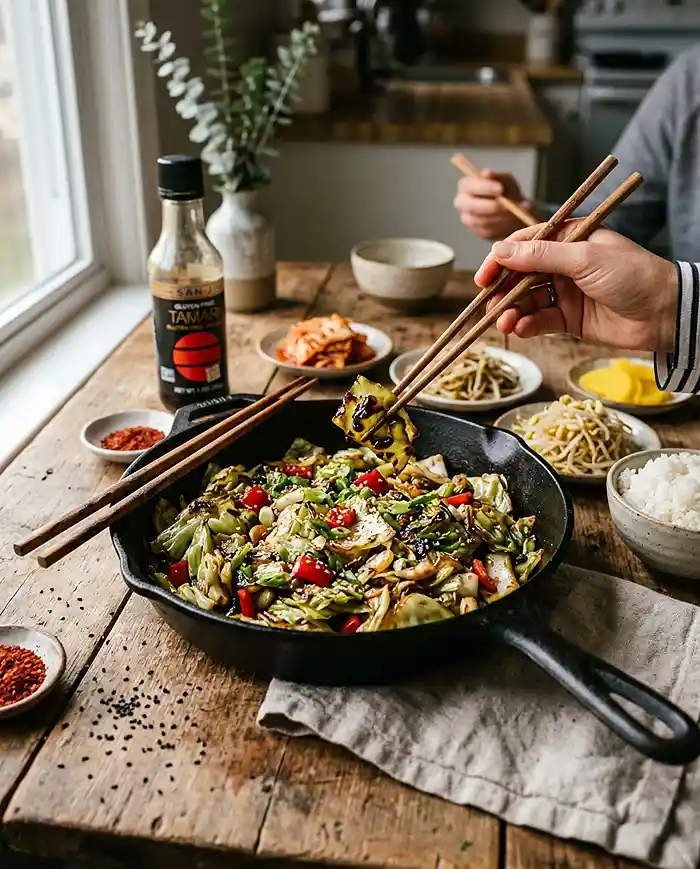
Serve this next to steamed rice and grilled meat, or spoon it over a fried egg for a fast lunch. It also stands in for coleslaw at a July 4th cookout, right beside the burgers and corn. The gentle heat plays well with smoky, charred food.
More cabbage on the table? My smothered cabbage recipe is the slow, cozy cousin of this one.
On a lazy Sunday, try my Hungarian stuffed cabbage, a classic take on cabbage rolls.
For a baking project afterward, these gluten-free Swedish cardamom buns make a fine coffee companion.
FAQs About Gluten-Free Korean Cabbage Recipe
Can I make this Korean cabbage ahead of time?
Yes, you can. Cook it to the crisp-tender stage, cool it quickly, and refrigerate it in an airtight container for 3 to 4 days. Reheat it in a hot pan for a minute or two to wake the texture back up.
How do I keep stir-fried cabbage from getting watery?
Use medium heat, large pieces, and only the 2 tablespoons of water the recipe calls for. A cool or crowded pan steams the cabbage instead of searing it. If your pan is on the small side, cook the cabbage in two batches.
What’s the best cabbage for this recipe?
Green cabbage and napa both work. Green holds a firmer bite, while napa cooks faster and turns silkier, so check it early. Choose a head that feels heavy for its size, with tight leaves.
Why did my cabbage taste flat?
Usually it was under-salted early or the pan was too cool to brown the edges. Salt the cabbage as soon as it hits the oil, and let it pick up golden spots before adding the sauces. Taste before serving, since tamari and fish sauce vary from brand to brand.
Do I really need certified gluten-free tamari and fish sauce?
Yes, if you’re avoiding gluten. Regular soy sauce is brewed with wheat, and some tamari and fish sauces contain wheat or are made on shared lines. Check each bottle for a gluten-free label whenever you buy, since brands can change recipes.
Final Thoughts
Give this gluten-free Korean cabbage recipe a try this week, and pin it for the next time cabbage is on sale. Then come back and tell me what you changed, whether it was the pepper, the texture, or the pan.
Leave a rating and a comment with any questions. Your tweaks are how this recipe keeps getting better.
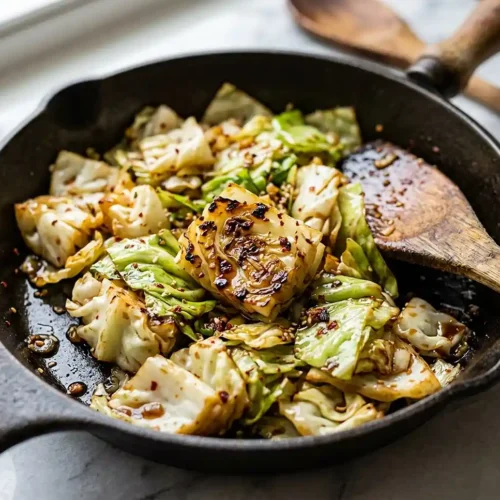
Gluten-Free Korean Cabbage Recipe: Easy, Spicy Side
Equipment
- Large frying pan
Ingredients
For the Cabbage
- ¼ head cabbage about 400 g, cut into large pieces
- neutral cooking oil for cooking; use a drizzle
- 2 tablespoons water plus more as needed
For the Heat and Seasoning
- 1 spicy pepper chopped
- salt to taste
- black pepper to taste
- 1 teaspoon certified gluten-free tamari
- 1 teaspoon gluten-free fish sauce
For the Finish
- ⅓ tablespoon butter about 5 g
Instructions
- Cut the cabbage into large, bite-sized pieces, leaving a little core attached to each chunk so the leaves hold together in the pan.
- Heat a large frying pan over medium heat and add a drizzle of oil. Add the cabbage, season with salt and black pepper, and toss for 2 to 3 minutes, stirring occasionally, until lightly softened.
- Pour in 2 tablespoons of water to help the cabbage steam gently. Add a splash more if the pan looks dry.
- Add the chopped spicy pepper and stir-fry for about 30 seconds, just until fragrant. Lower the heat if the pepper starts to scorch.
- Drizzle in the certified gluten-free tamari and gluten-free fish sauce. Gently toss until the cabbage is evenly coated. Taste before adding more salt because both sauces are salty.
- Add the butter and toss until it melts and the cabbage turns glossy.
- For crisp-tender cabbage, stir-fry for 1 to 2 more minutes. For softer cabbage, continue cooking for 4 to 5 more minutes, until the ribs are silky and the edges are browned.
- Serve immediately while hot.