Gluten-Free Mango Pineapple Sorbet
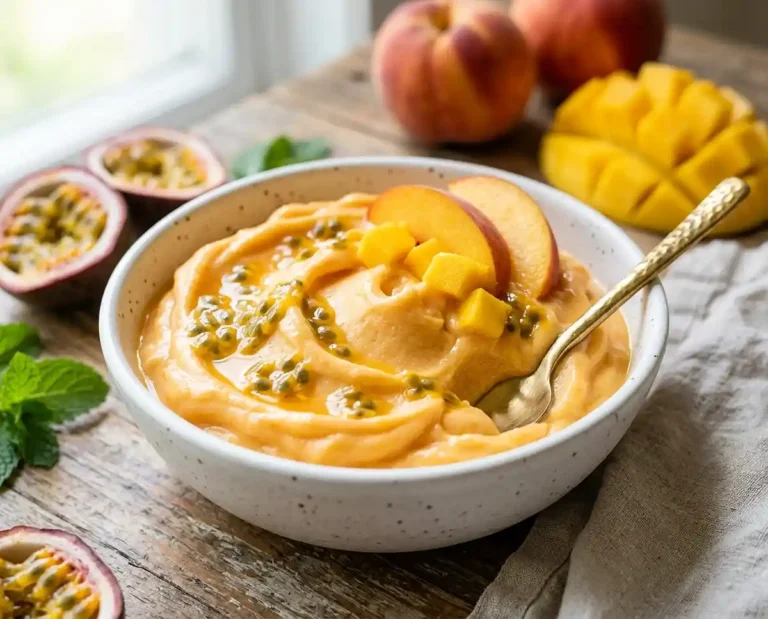
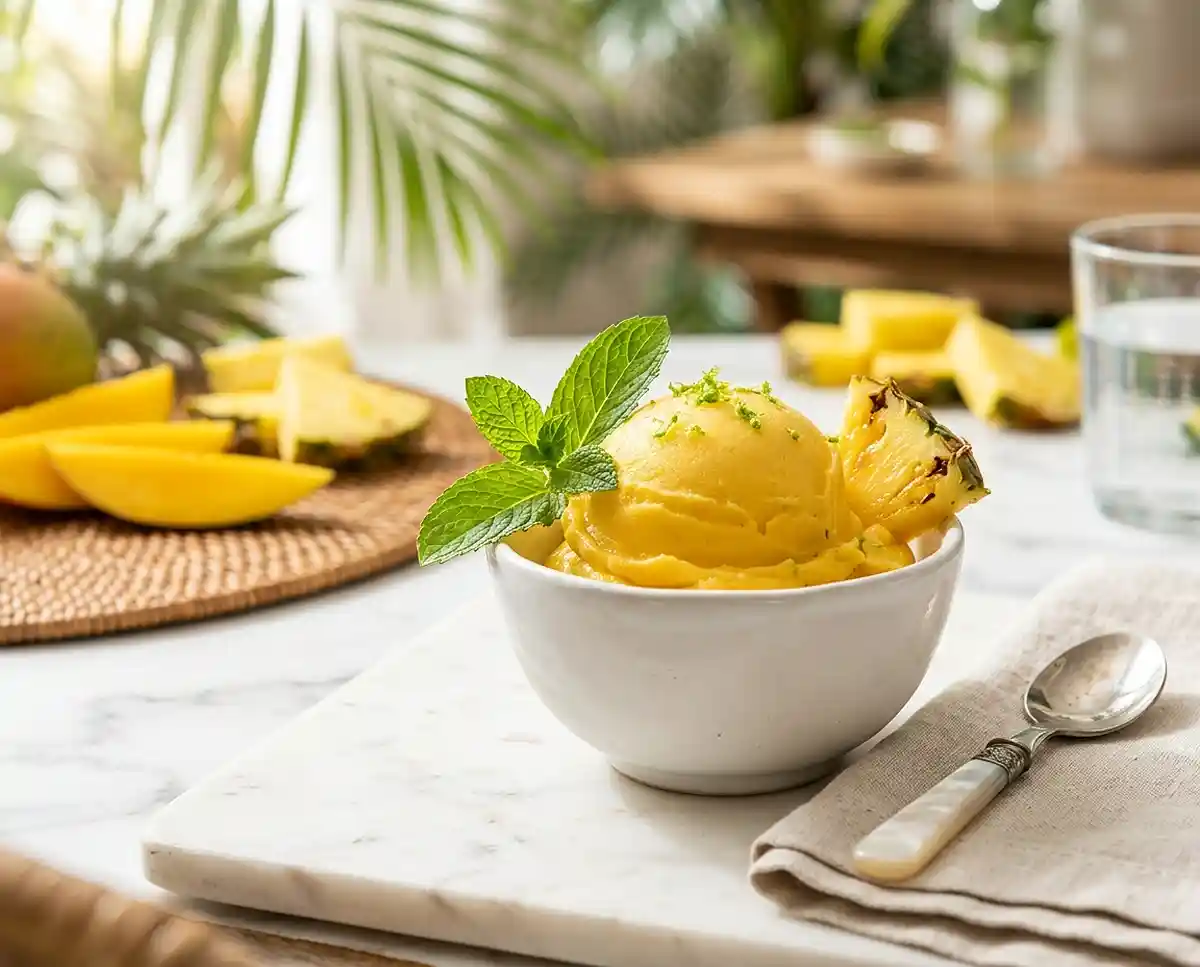
This gluten-free mango pineapple sorbet blends ripe mangoes, sweet pineapple, and bright lime into a creamy, dreamy frozen treat that tastes like a tropical vacation in every spoonful.
The first time I made homemade sorbet, I made the mistake of using underripe mangoes and ended up with something so tart my eyes watered. I added more sweetener trying to fix it, then more lime to balance the sweetener, and ended up with a Frankenstein sorbet that tasted nothing like fruit. Have you ever tried to fix a recipe halfway through and made it worse?
Well, after that misadventure, I learned that ripe fruit is non-negotiable for gluten-free mango pineapple sorbet that actually tastes like sunshine. With just four simple ingredients and an ice cream maker, you can have homemade sorbet that’s silkier, fresher, and way more flavorful than anything from the store.
Table of Contents
Why You’ll Love This Mango Pineapple Sorbet
- Bright, tropical, and naturally sweet with juicy mango, tangy pineapple, and a zippy lime kick that wakes up every taste bud
- 4-ingredient simplicity—no complicated techniques, just blend, chill, and churn
- Naturally gluten-free, dairy-free, and vegan, making it a universal crowd-pleaser for any allergy-friendly gathering
- Works best as a refreshing summer dessert, palate cleanser between courses, or healthy frozen treat for kids and adults alike
The Secret to Perfect Gluten-Free Mango Pineapple Sorbet
Getting that smooth, scoopable, never-icy texture is what separates a great sorbet from a frozen fruit puck. The science behind it is all about sugar, fat, and freezing technique.
- Choose deeply ripe mangoes. Underripe mangoes are stringy, tart, and starchy—not the silky, honeyed fruit you want for sorbet. Look for mangoes that yield to gentle pressure and smell sweet at the stem end. The National Mango Board’s ripeness guide walks through every variety’s ripeness cues if you’re new to picking mangoes.
- Use corn syrup or another invert sugar. Corn syrup might sound old-school, but it prevents ice crystals from forming and gives sorbet that creamy, soft-serve texture. Honey or agave nectar work as natural alternatives if corn syrup isn’t your style.
- Strain the puree before churning. Mango fibers and pineapple strings can leave a slightly grainy texture if left in. A quick pass through a fine-mesh strainer rewards you with the silkiest, most professional-tasting sorbet possible.
- Chill the mixture before churning. A fully cold base churns faster, freezes more evenly, and creates a smoother final product. Room-temperature puree leads to icy, hard sorbet that’s tough to scoop.
Ingredients For Gluten-Free Mango Pineapple Sorbet
| Ingredient | Amount | Notes |
|---|---|---|
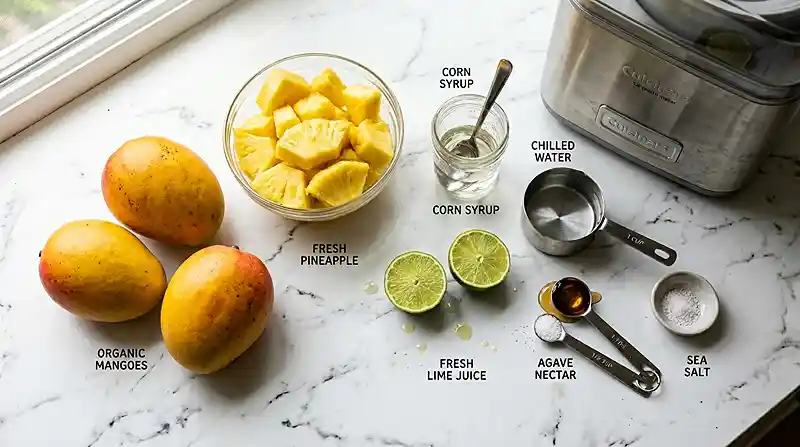
| Ripe mangoes | 3 (about 2 cups pulp) | Honey, Ataulfo, or Champagne varieties shine |
| Pineapple chunks | 2 cups | Fresh or frozen both work |
| Corn syrup | ½ cup | Or honey/agave for natural sweetener |
| Lime juice, freshly squeezed | ¼ cup | About 2 medium limes; never bottled |
A quick tip on the pineapple: frozen pineapple chunks actually work beautifully here and make the chill step faster. Just be sure they’re 100% pineapple with no added sugar or preservatives.
Instructions For Gluten-Free Mango Pineapple Sorbet
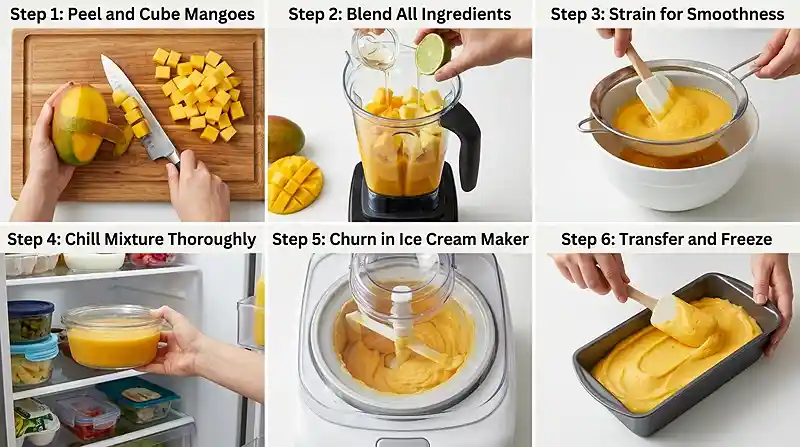
1. Prep and blend. Scoop the ripe mango flesh and pineapple chunks into a blender. Add the corn syrup and freshly squeezed lime juice, then blend on high for about 30 seconds until completely smooth and creamy. The mixture should look like a vibrant golden-orange smoothie that smells like a Caribbean breeze.
2. Strain the puree. Pour the blended mixture through a fine-mesh strainer set over a large bowl. Use the back of a spoon to press the liquid through, scraping any pulp that clings to the underside back into the bowl. Discard the fibrous solids left behind in the strainer—this step is what gives you that silky, professional sorbet texture.
3. Chill thoroughly. Cover the strained puree with plastic wrap pressed directly onto the surface to prevent a skin from forming. Refrigerate for at least 4 hours or overnight, until the puree is very cold to the touch. A cold base is key to a smooth final sorbet.
4. Churn the sorbet. Pour the chilled puree into your ice cream maker and churn according to the manufacturer’s instructions, usually 15-20 minutes. The sorbet is ready when it has the consistency of soft-serve ice cream—thick, fluffy, and easy to scoop with a spoon.
5. Freeze to set. Transfer the churned sorbet to an airtight freezer-safe container, smooth the top with the back of a spoon, and freeze for at least 2 hours until set. The sorbet will firm up to a perfectly scoopable texture as it freezes.
Pro Tip: Press a piece of parchment paper directly onto the surface of the sorbet before sealing the container. This extra layer prevents ice crystals from forming on top, keeping the texture silky-smooth even after a few days in the freezer.
Make It Your Own
Switch up the fruit. Strawberries, peaches, or mixed berries all work beautifully in place of pineapple. Use 2 cups of any fruit you love, keeping the mango ratio the same for that creamy texture. Tropical fruits like passion fruit or guava add an even more exotic twist to this tropical frozen treat.
Use natural sweeteners. You know, corn syrup gets a bad rap, but honey and agave nectar work beautifully as natural alternatives. Use the same ½ cup measurement, and adjust to taste depending on how sweet your fruit is. Maple syrup also works but adds a slight maple flavor that may compete with the tropical notes.
Add a boozy twist. A tablespoon of light rum, vodka, or tequila prevents over-freezing and adds grown-up flavor for adult-only gatherings. Skip this for kid-friendly versions, but it’s a fun upgrade for backyard parties or adults-only summer dinners.
Add herbs or spices. A handful of fresh basil, mint, or even a pinch of chili powder takes this sorbet to next-level territory. Blend the herbs in with the fruit for an aromatic finish, or sprinkle chili powder on top right before serving for a sweet-spicy contrast.
Common Problems & Solutions
Problem: My sorbet froze rock-hard.
You probably skipped the corn syrup or invert sugar, which is what keeps sorbet scoopable. The sugar lowers the freezing point and prevents large ice crystals from forming. If your sorbet is already too hard, let it sit on the counter for 5-10 minutes before scooping.
Problem: The texture came out grainy or icy.
Man, oh man, this is almost always a straining issue. Always pass the puree through a fine-mesh strainer before churning to remove fruit fibers that crystallize. Also, make sure your puree is fully chilled before churning—warm puree creates icy sorbet.
Problem: My sorbet tastes too tart or not sweet enough.
The fruit wasn’t ripe enough, or you used limes that were extra acidic. Taste the puree before chilling and add more corn syrup or honey to balance. Remember that sorbet tastes less sweet when frozen, so it should taste slightly sweeter than you want at room temperature.
Problem: I don’t have an ice cream maker.
You can still make sorbet without one, though the texture will be slightly different. Pour the chilled puree into a shallow dish, freeze for 1 hour, then stir vigorously with a fork to break up ice crystals. Repeat every 30 minutes for 3-4 hours until you reach a scoopable texture.
Storage & Meal Prep
| Method | Duration | Notes |
|---|---|---|
| Counter | Up to 10 minutes | Will start melting quickly |
| Fridge | Not recommended | Will melt and lose texture |
| Freezer | Up to 2 weeks | Press parchment on surface to prevent ice |
For best meal prep, make the sorbet up to 2 weeks ahead and store in an airtight container with parchment paper pressed directly on the surface. Let the sorbet sit on the counter for 5-10 minutes before scooping for the easiest serving. Leftover sorbet is incredible blended into smoothies or topped with a splash of sparkling water for a quick tropical mocktail.
FAQs About Gluten-Free Mango Pineapple Sorbet
Is sorbet typically gluten-free?
Most homemade sorbet is naturally gluten-free since it’s made with fruit, sugar, and water. Store-bought sorbets can sometimes contain gluten through cookies, mix-ins, or modified food starch, so always check labels. This recipe is 100% gluten-free with simple, clean ingredients.
Is mango sorbet dairy-free?
Yes, traditional sorbet is dairy-free by definition since it’s made with fruit, sugar, and water—no milk or cream. This is the key difference between sorbet and sherbet (which contains a small amount of dairy). This recipe is fully dairy-free and vegan-friendly.
Can I make this sorbet without an ice cream maker?
Yes, you can make sorbet without an ice cream maker, though the texture will be slightly less creamy. Pour the chilled puree into a shallow dish, freeze for 1 hour, then vigorously stir with a fork every 30 minutes for 3-4 hours total to break up ice crystals. The result is a granita-style texture that’s still delicious.
What’s the difference between sorbet and sherbet?
Sorbet contains only fruit, sugar, and water with no dairy at all. Sherbet contains a small amount of dairy (usually milk or cream) which gives it a creamier texture and milder fruit flavor. Both are frozen desserts, but sorbet is the dairy-free option suitable for vegan and lactose-intolerant diets.
How long does homemade sorbet last in the freezer?
Homemade sorbet stays at its best texture for up to 2 weeks in an airtight container in the freezer. Beyond that, it may develop ice crystals and lose its silky texture. Press a piece of parchment paper directly on the surface before sealing to extend its life and prevent freezer burn.
Serving Suggestions
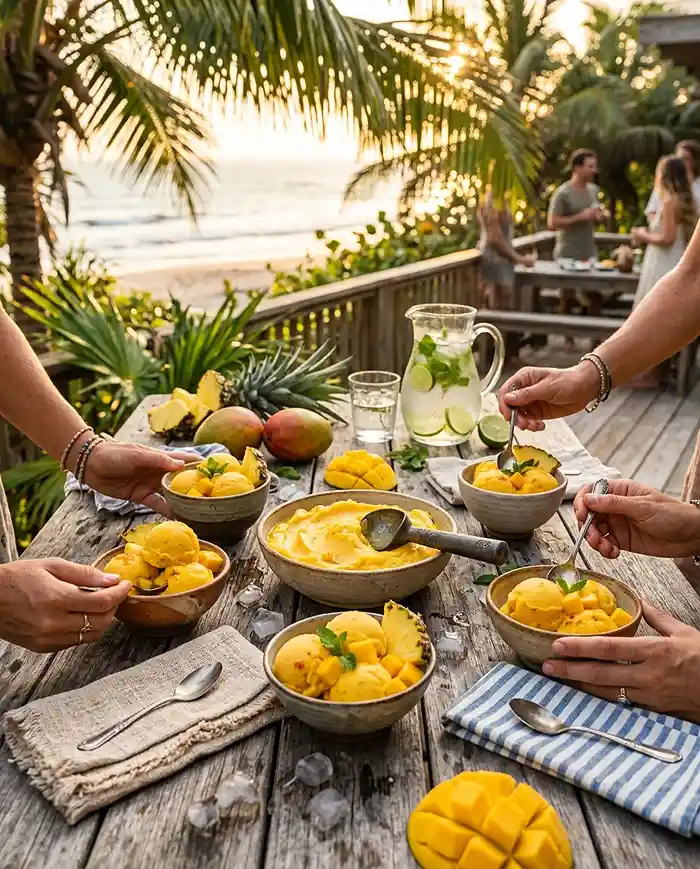
Serve this gluten-free mango pineapple sorbet in chilled glasses or coconut shells for a stunning tropical presentation, garnished with fresh mint, edible flowers, or a tiny umbrella for fun. It’s especially perfect for Fourth of July cookouts, summer pool parties, baby showers, or as a palate cleanser between savory courses at a fancy dinner.
For a complete summer entertaining spread, pair this sorbet with my gluten-free blueberry vanilla freezer pie for a dessert duo, my gluten-free veggie-loaded pizza bowls for a hearty main, or my gluten-free grilled taco chicken kebabs as a smoky savory contrast. The cool tropical sorbet is the perfect ending to any backyard summer feast.
If you make this gluten-free mango pineapple sorbet, I’d love to hear how it turned out—drop a star rating and comment below with your favorite fruit variation. Don’t forget to pin this recipe to your Pinterest board so it’s there next time you need a refreshing, allergy-friendly dessert. Happy scooping, friend!
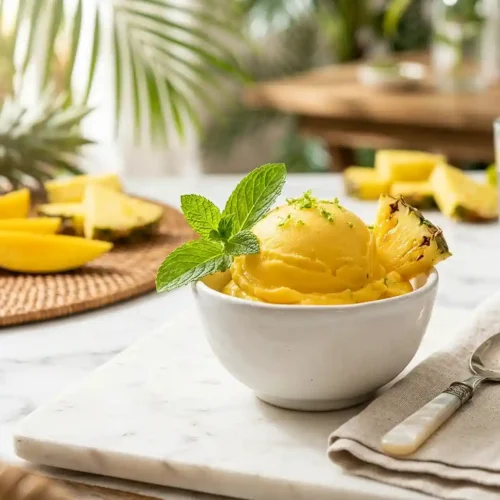
Gluten-Free Mango Pineapple Sorbet
Equipment
- Blender
- Fine mesh strainer
- Large bowl
- Ice cream maker
- Airtight freezer-safe container
Ingredients
Sorbet
- 3 ripe mangoes about 2 cups of pulp; Honey, Ataulfo, or Champagne varieties shine
- 2 cups pineapple chunks fresh or frozen, no added sugar
- 0.5 cup corn syrup or honey/agave for natural sweetener
- 0.25 cup lime juice freshly squeezed; about 2 medium limes
Instructions
- Scoop the ripe mango flesh and pineapple chunks into a blender. Add the corn syrup and lime juice, then blend on high for about 30 seconds until completely smooth.
- Pour the blended mixture through a fine-mesh strainer set over a large bowl. Use the back of a spoon to press the liquid through, then discard the fibrous solids left behind.
- Cover the strained puree with plastic wrap pressed directly onto the surface and refrigerate for at least 4 hours or overnight, until very cold.
- Pour the chilled puree into your ice cream maker and churn according to the manufacturer’s instructions, usually 15-20 minutes, until the consistency of soft serve.
- Transfer the churned sorbet to an airtight freezer-safe container, smooth the top, and freeze for at least 2 hours until set and scoopable.