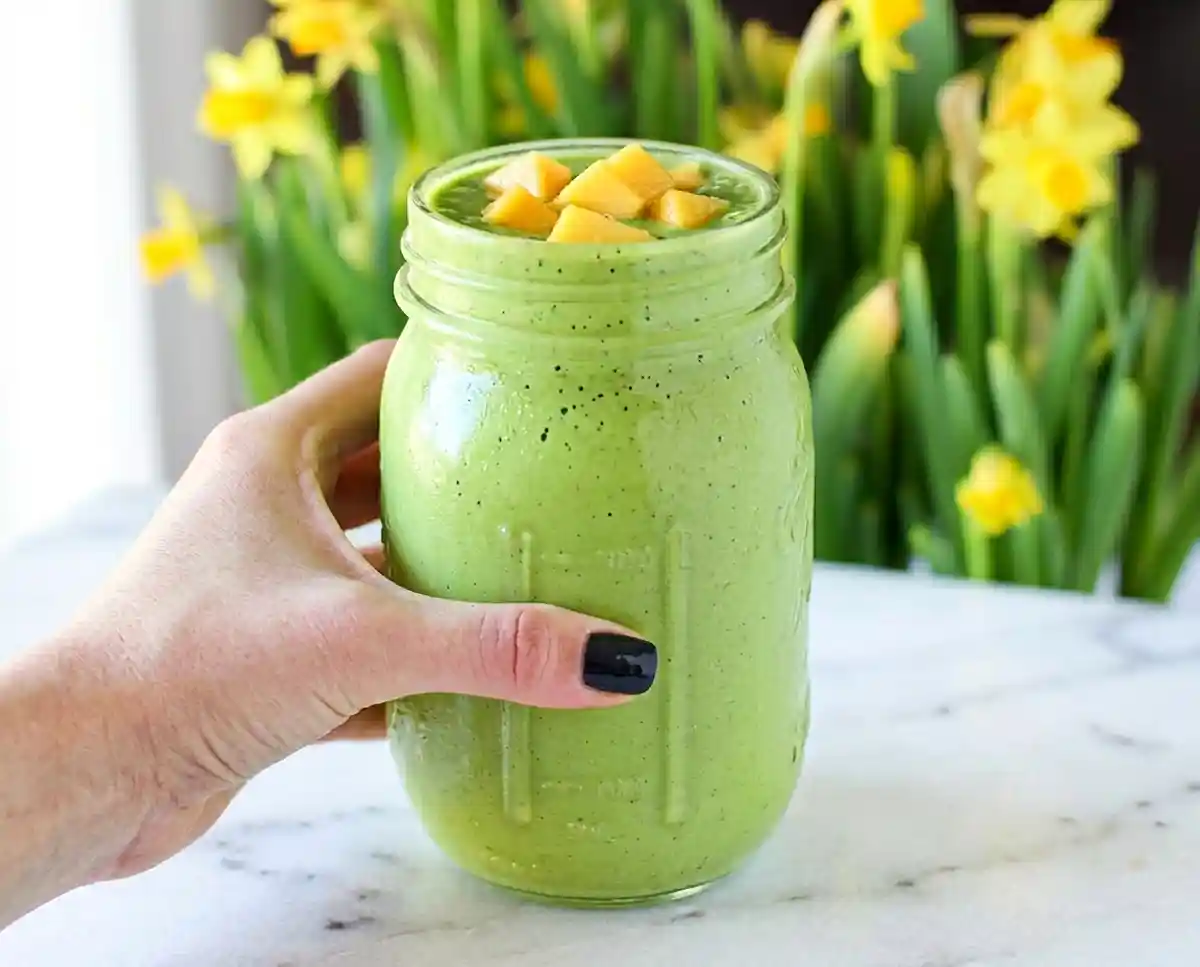
Gluten-Free Peach Mango Smoothie
Gluten-free peach mango smoothie with spinach, Greek yogurt, and collagen—a creamy tropical breakfast packed with protein and nutrients, ready in 5 minutes.
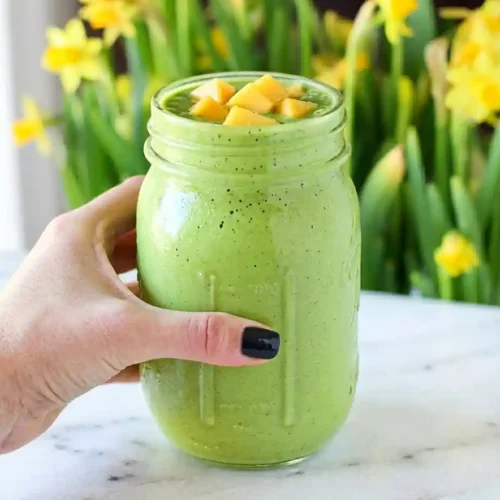
Some mornings call for a breakfast that feels like a mini vacation. This gluten-free peach mango smoothie delivers exactly that—tropical sweetness, creamy texture, and enough protein to keep you fueled until lunch. The best part? You’d never know there’s a pile of spinach hiding in that gorgeous golden glass.
I started making this gluten-free dairy-free smoothie (well, technically dairy-light with the Greek yogurt) after a trip to Hawaii left me craving tropical flavors every morning. The combination of frozen peaches and mango creates this incredibly thick, almost soft-serve consistency that makes you feel like you’re cheating even though you’re actually loading up on vitamins and protein.
What sets this peach mango drink apart from basic fruit smoothies is the collagen boost and sneaky vegetables. Three to four cups of spinach might sound like a lot, but once it’s blended with sweet fruit and creamy yogurt, it disappears completely. You get all the nutrients without any of that “healthy” taste that makes kids run the other direction.
Table of Contents
Quick Overview: Why You’ll Love This Recipe
- Naturally gluten-free – All ingredients are safe for gluten-free diets
- Hidden vegetables – Spinach blends in invisibly for extra nutrition
- High protein – Greek yogurt and collagen provide staying power
- 5-minute breakfast – Blend and go on busy mornings
- Thick and creamy – Frozen fruit creates that perfect smoothie texture
- Kid-approved – Sweet tropical flavor masks the greens completely
Why This Gluten-Free Peach Mango Smoothie Works
The secret to a smoothie that tastes like dessert but fuels like a proper breakfast lies in the frozen fruit. Using frozen peaches and mango instead of fresh creates that thick, frosty consistency that makes smoothies so satisfying. The frozen banana adds natural sweetness and extra creaminess without any added sugar.
Choosing mango Greek yogurt amplifies the tropical flavor while adding a serious protein punch. That 5.3-ounce container of Chobani delivers about 12 grams of protein on its own. Combined with a scoop of collagen, you’re looking at a breakfast that actually keeps you full instead of leaving you hungry an hour later.
The spinach situation deserves some explanation. Man, oh man, I was skeptical the first time I tried adding greens to a fruit smoothie. But here’s the thing—spinach has an incredibly mild flavor that gets completely masked by sweet fruits like mango and peach. The bright green color gets overtaken by the orange and yellow tones, leaving you with a smoothie that looks and tastes purely tropical while secretly delivering iron, vitamin K, and fiber.
Unsweetened vanilla almond milk keeps things light and adds a subtle flavor that complements the fruit without competing with it. It’s the liquid that ties everything together without adding unnecessary calories or sugar.
Ingredients You’ll Need
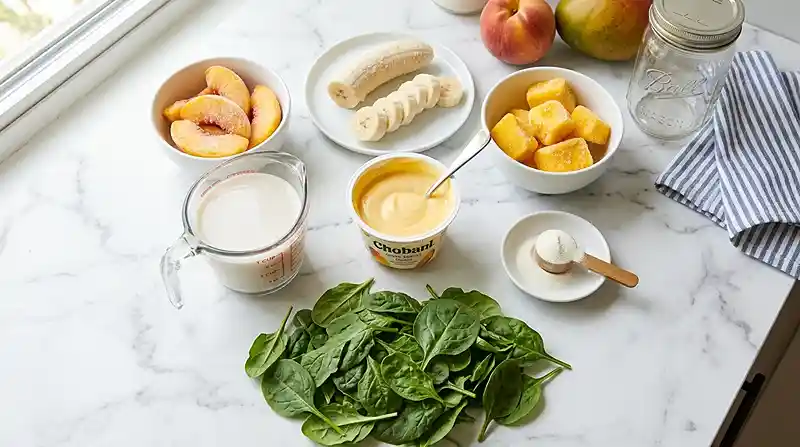
| Amount | Ingredient |
|---|---|
| 5-6 | Frozen peach slices |
| ½ | Frozen banana |
| 5-6 | Frozen mango chunks |
| 1 cup | Unsweetened vanilla almond milk |
| 5.3 oz | Mango Greek yogurt (such as Chobani) |
| 1 scoop | Collagen powder |
| 3-4 cups | Fresh spinach |
Step-by-Step Instructions
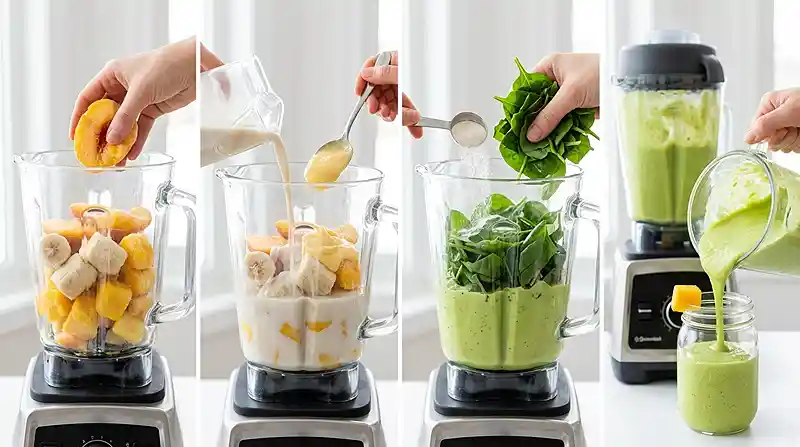
Step 1: Add the unsweetened vanilla almond milk to your blender first. Putting liquid at the bottom helps the blades spin freely and prevents ingredients from getting stuck.
Step 2: Add the mango Greek yogurt and collagen powder on top of the liquid. This allows the powdered collagen to hydrate and blend smoothly rather than clumping.
Step 3: Pack the fresh spinach into the blender. It looks like a lot, but it will blend down dramatically. Lightly pressing it helps fit more in.
Step 4: Add the frozen peach slices, frozen mango chunks, and frozen banana half on top of the spinach. The weight of the frozen fruit helps push the greens down toward the blades.
Step 5: Blend on high speed for 60-90 seconds until completely smooth. Stop and scrape down the sides if needed, then blend again until no chunks remain.
Step 6: Pour into a tall glass and enjoy immediately while thick and cold. The smoothie will thin out as it sits, so drink it fresh for the best texture.
Pro tip: If your blender struggles with frozen fruit, let the ingredients sit for 2-3 minutes before blending, or add a splash more almond milk.
Substitutions & Variations
Fully dairy-free: Replace the Greek yogurt with coconut yogurt or cashew-based yogurt. The texture will be slightly different but still delicious.
Extra protein: Add a scoop of vanilla protein powder in addition to or instead of the collagen. This bumps the protein content significantly for post-workout recovery.
Different greens: Swap spinach for baby kale or a spring mix. Kale has a slightly stronger flavor, so you may want to reduce the amount by half.
Nut-free option: Use oat milk or coconut milk instead of almond milk. Both create a creamy base without any tree nuts.
Lower sugar: Skip the flavored yogurt and use plain Greek yogurt instead. The frozen fruit provides plenty of natural sweetness.
Tropical boost: Add a tablespoon of shredded coconut or a splash of coconut cream for extra island vibes.
You know, I’ve also thrown in a tablespoon of almond butter when I want something more filling. It adds healthy fats and makes the smoothie taste almost like a tropical milkshake.
Expert Troubleshooting
Problem: Smoothie is too thin and watery.
Solution: Add more frozen fruit or reduce the almond milk by ¼ cup. You can also add a few ice cubes.
Explanation: The thickness comes from frozen ingredients. Fresh fruit or too much liquid creates a runny consistency.
Problem: Smoothie has visible green specks or chunks.
Solution: Blend longer, at least 90 seconds on high. Consider blending the spinach with liquid first, then adding fruit.
Explanation: Leafy greens need thorough blending to break down completely. A high-powered blender helps significantly.
Problem: Smoothie tastes too “green” or vegetal.
Solution: Add more frozen banana or a tablespoon of honey. The sweeter the fruit, the more it masks the spinach.
Explanation: Some spinach batches are more bitter than others. Extra sweetness balances the flavor.
Problem: Collagen powder clumps in the smoothie.
Solution: Add collagen directly to the liquid before other ingredients, or blend liquid and collagen first for 10 seconds.
Explanation: Collagen powder needs liquid contact to dissolve properly. Adding it on top of frozen fruit causes clumping.
Problem: Smoothie separates after sitting.
Solution: Give it a quick stir or re-blend briefly. Drink immediately for best results.
Explanation: Smoothies naturally separate as heavier particles settle. This is normal and doesn’t affect taste.
Storage & Meal Prep
| Method | Duration | Notes |
|---|---|---|
| Fresh (in glass) | Best within 30 minutes | Texture is optimal immediately |
| Refrigerated | Up to 24 hours | Shake or re-blend before drinking |
| Freezer smoothie packs | 2-3 months | Pre-portion fruit and spinach in bags |
| Frozen smoothie | Up to 1 month | Freeze in ice cube trays, re-blend with milk |
Meal prep strategy: Pre-portion the frozen fruit and spinach into individual freezer bags. In the morning, dump one bag into the blender, add milk, yogurt, and collagen, and blend. This cuts prep time to under 2 minutes.
Smoothie pack contents: In each freezer bag, combine 5-6 peach slices, 5-6 mango chunks, ½ banana (slice before freezing), and a handful of spinach. Make 5-7 packs on Sunday for the whole week.
Traveling tip: Blend the smoothie, pour into an insulated tumbler, and pack in a cooler bag. It stays cold and thick for 2-3 hours.
FAQs About Gluten-Free Peach Mango Smoothie
Do peaches and mangoes go together?
Absolutely—they’re a perfect pairing. Both fruits have complementary tropical sweetness with subtle floral notes. Peaches add a slightly tangy edge while mango brings rich, honey-like sweetness. Together they create a balanced flavor that’s neither too sweet nor too tart.
Can gluten-free people have smoothies?
Yes, smoothies are naturally gluten-free when made with whole ingredients like fruit, vegetables, yogurt, and milk. The key is checking labels on any packaged ingredients like protein powders, flavored yogurts, or granola toppings, as some may contain gluten or be processed in facilities with wheat.
What goes well with peaches in a smoothie?
Peaches pair beautifully with bananas, mangoes, strawberries, raspberries, and pineapple. For non-fruit additions, vanilla, ginger, cinnamon, honey, and almond butter all complement peach flavor. Greek yogurt and coconut milk add creaminess that enhances the peach’s natural sweetness.
What fruits blend well with mango?
Mango is incredibly versatile and pairs well with pineapple, banana, peach, papaya, passion fruit, coconut, lime, and strawberry. For a green smoothie, mango’s strong sweetness effectively masks leafy greens like spinach or kale better than most other fruits.
Serving Suggestions
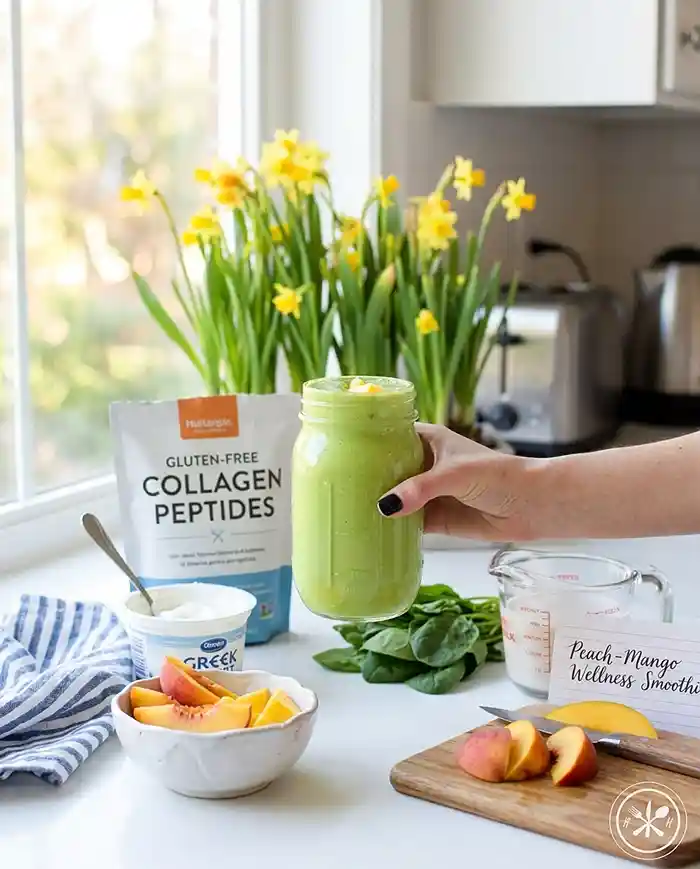
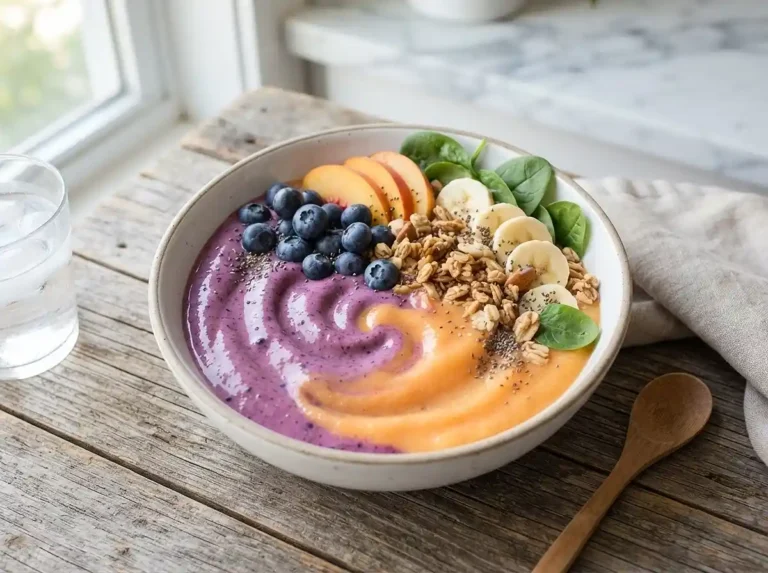
This gluten-free peach mango smoothie is a complete tropical breakfast on its own, but you can easily turn it into a smoothie bowl by using less liquid and topping with granola, sliced fruit, coconut flakes, and chia seeds.
For a more substantial morning meal, pair the smoothie with a slice of gluten-free toast topped with almond butter, or enjoy alongside a hard-boiled egg for extra protein. The tropical flavors also complement lighter breakfast fare like gluten-free muffins or a simple fruit salad.
Hosting a brunch? Set up a smoothie bar with this recipe as the base. Let guests customize with add-ins like extra protein powder, different nut butters, or additional fruits. It’s interactive and ensures everyone gets exactly what they want.
Looking for more gluten-free breakfast and meal ideas? This smoothie pairs perfectly with planning ahead for dinner—try the honey mustard chicken sheet pan dinner or garlic butter shrimp foil packets for an easy weeknight meal. For dessert lovers, the gluten-free no-bake blueberry yogurt pie makes a stunning finish to any summer gathering.
Ready to Make This?
Once you try this gluten-free peach mango smoothie, I predict it’ll become your go-to tropical breakfast. It’s sweet enough to feel like a treat, nutritious enough to fuel your morning, and quick enough for even the most hectic days.
I’d love to hear how yours turns out. Did you try any variations? Add extra greens? Share your experience in the comments below, and don’t forget to pin this recipe for your next smoothie prep session. Your future self will thank you when a delicious, healthy breakfast is just a blend away.
Gluten-Free Peach Mango Smoothie
Equipment
- High-speed blender
- Measuring cups
- tall glass
Ingredients
Smoothie Ingredients
- 5-6 frozen peach slices
- ½ frozen banana
- 5-6 frozen mango chunks
- 1 cup unsweetened vanilla almond milk
- 5.3 oz mango Greek yogurt such as Chobani
- 1 scoop collagen powder
- 3-4 cups fresh spinach
Instructions
- Add the unsweetened vanilla almond milk to your blender first. Putting liquid at the bottom helps the blades spin freely and prevents ingredients from getting stuck.
- Add the mango Greek yogurt and collagen powder on top of the liquid. This allows the powdered collagen to hydrate and blend smoothly rather than clumping.
- Pack the fresh spinach into the blender. It looks like a lot, but it will blend down dramatically. Lightly pressing it helps fit more in.
- Add the frozen peach slices, frozen mango chunks, and frozen banana half on top of the spinach. The weight of the frozen fruit helps push the greens down toward the blades.
- Blend on high speed for 60-90 seconds until completely smooth. Stop and scrape down the sides if needed, then blend again until no chunks remain.
- Pour into a tall glass and enjoy immediately while thick and cold. The smoothie will thin out as it sits, so drink it fresh for the best texture.