Gluten-Free Smores Cookie Skillet
Discover the gooey, campfire-inspired gluten-free skillet cookie that comes together in minutes and bakes up with crispy edges and a molten chocolate-marshmallow center—no bonfire required.
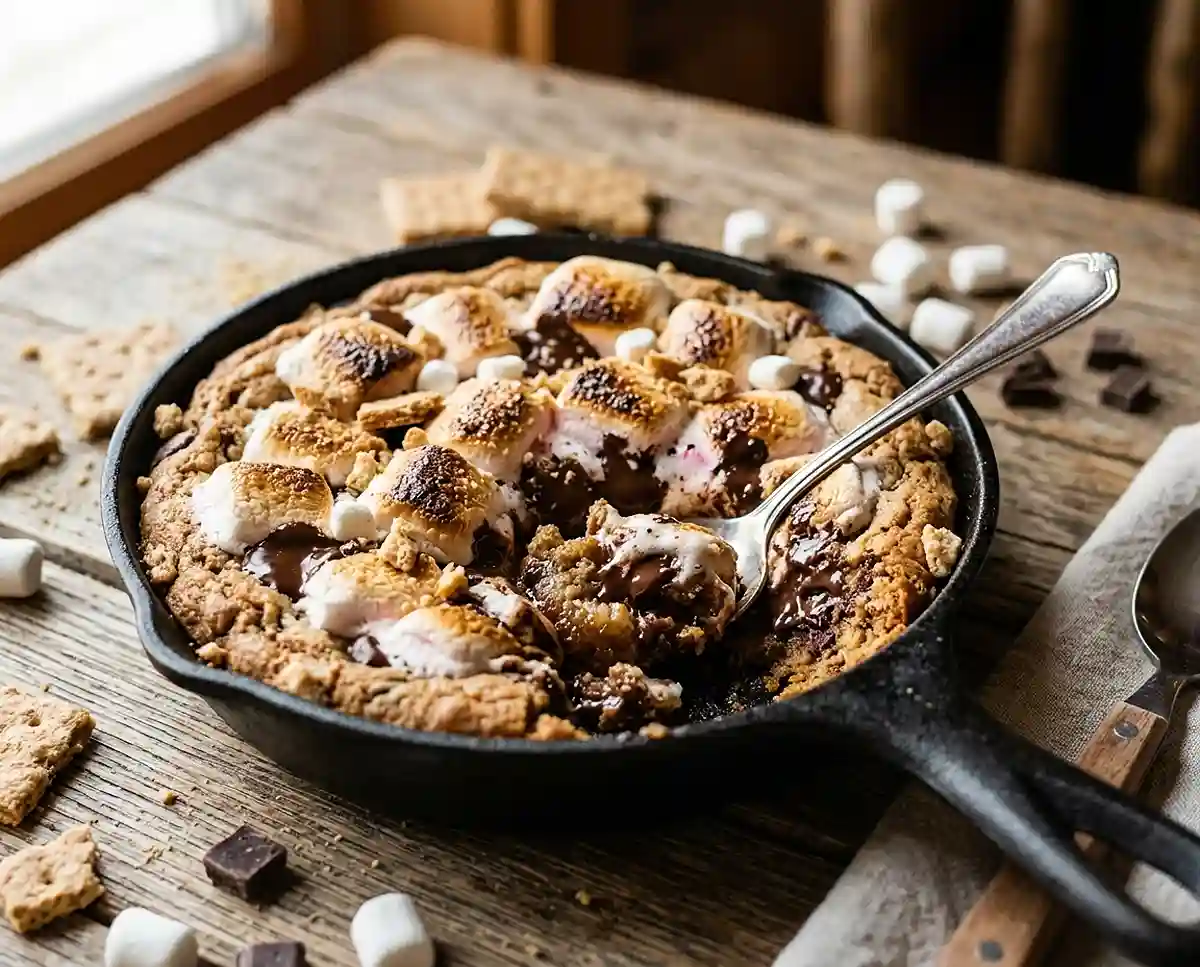
The first time I made a gluten-free smores cookie skillet, I pulled it out of the oven way too early. Panicked, thought it was raw, shoved it back in—and ended up with something closer to a hockey puck than the gloriously gooey skillet cookie I’d been dreaming about. Hard lesson learned. Now I know that the jiggly, underdone-looking center is exactly what you want, because it keeps cooking as it rests, and that’s where all the magic lives.
This recipe is one of those rare ones where gluten-free actually works better than the original. The GF flour gives you a chewier, denser bite that holds up beautifully to the melted chocolate and toasted marshmallows piled on top. Does it remind you of sitting around a summer campfire? Absolutely—except you’re in your kitchen, there’s no smoke in your eyes, and you get to eat it with a scoop of ice cream on top.
Table of Contents
Why You’ll Love This Gluten-Free S’mores Cookie Skillet
- Gooey center, crispy edges — the freeze-before-baking trick is what makes the texture contrast genuinely impressive
- Ready in under 30 minutes of active time — most of the work is the oven doing its thing
- Naturally adaptable — dairy-free swaps work seamlessly (see the substitutions section)
- Perfect for sharing — serves 4 straight from the skillet; ideal for a cozy Friday night or a holiday movie spread
The Secret to Perfect Gluten-Free Smores Cookie Skillet
- Egg yolks only, not whole eggs. The fat in the yolk is what creates that fudgy, dense texture. Whole eggs add too much water and protein, turning your cookie cakey and dry. This single swap is everything.
- Melt the butter slowly, don’t boil it. Boiling breaks down the emulsion and you lose the moisture control that keeps the middle soft. Low and slow on the heat, always.
- Freezing before baking is a game-changer. Chilling the dough firms it up so the outside sets and crisps before the interior melts through. You get that bakery-style contrast—crunchy rim, molten core—without any special equipment.
- Two-stage marshmallow and chocolate. Half goes into the dough for gooey pockets; the other half gets broiled on top for that scorched, campfire look. This is what separates a good skillet cookie from a great one.
Ingredients For Gluten-Free Smores Cookie Skillet
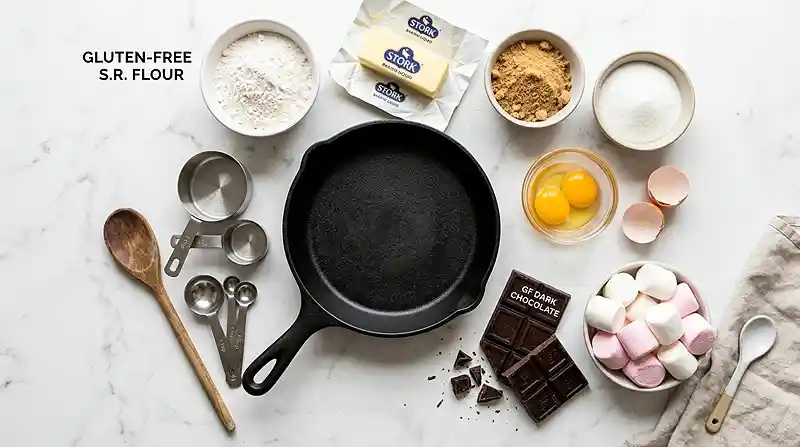
Dry
| Ingredient | Amount |
|---|---|
| Gluten-free self-raising flour | 80g |
| Light brown sugar | 40g |
| Caster sugar | 40g |
Wet
| Ingredient | Amount | Notes |
|---|---|---|
| Butter (hard block, e.g. Stork) | 50g | Hard block butter melts more consistently than spreadable |
| Egg yolks | 2 | Yolks only—whole eggs make it cakey |
The S’mores Bit
| Ingredient | Amount | Notes |
|---|---|---|
| Gluten-free marshmallows | approx. 40g (2 handfuls) | Check the label—not all marshmallows are GF |
| Dark chocolate | 50g | Or any chocolate you love; milk chocolate works beautifully |
Instructions For Gluten-Free Smores Cookie Skillet
1. Preheat and prep everything first. Set your oven to 175°C (fan). Weigh out every single ingredient before you start. This matters more than it sounds—once your butter is melted, you want to move quickly to keep the dough at the right consistency for that perfect gooey middle.
2. Melt the butter. Melt the butter in a pan over a very low heat. Do not let it boil—just a gentle melt until it’s fully liquid. This takes about 2 minutes and the patience is worth it.
3. Combine sugars and butter. Add both sugars into a mixing bowl, pour in the melted butter, and stir until fully combined. A wooden spoon works perfectly here; no electric whisk needed. About 15 seconds of stirring and you’re done.
4. Add the egg yolks. Add the 2 egg yolks and lightly mix in—about 5 seconds. Don’t overwork it.
5. Add the flour. Add the gluten-free self-raising flour and mix thoroughly with a spoon until a cohesive dough forms. It’ll look thick and slightly sticky, which is exactly right.
6. Fold in half the s’mores toppings. Add half the marshmallows and half the chocolate into the dough and fold them through. These melt into gooey pockets during baking.
7. Fill and level the skillet. Spoon the dough into your skillet and spread it out with the back of a spoon until roughly level. Don’t press too hard—just even it out.
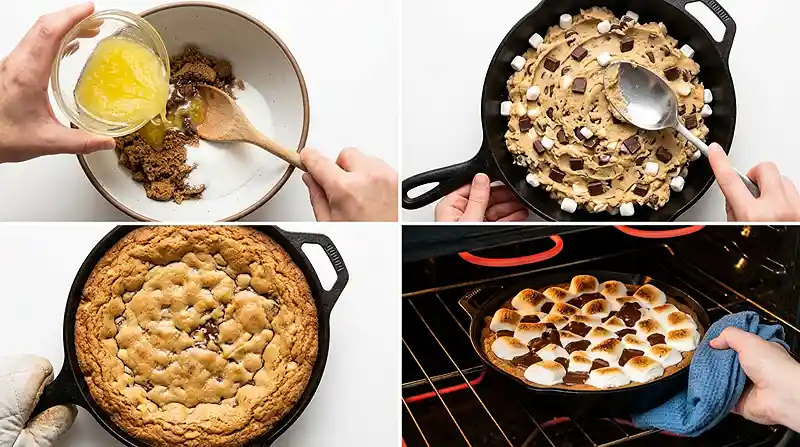
Pro Tip: The Freeze Step (Highly Recommended)
8. Freeze for at least 1 hour (overnight is even better). Place the filled skillet in the freezer before baking. This step isn’t strictly essential, but it gives you the most satisfying result: a genuinely crunchy edge with a molten, flowing center. If you skip it, reduce your bake time by 3 minutes.
9. Bake. Bake from frozen for 19 minutes. If you skipped the freeze, bake for 16 minutes. At the end of baking, the edges should be golden brown and the center should look pale and underdone—that’s the goal. Do not poke a skewer in to test it like you would a cake. If the middle is still gooey (which it should be), the skewer will come out wet. That’s not a problem, that’s success.
10. Add the remaining toppings. Remove from the oven and scatter the rest of the marshmallows and chocolate around the outside edge.
11. Grill for that scorched finish. Place the skillet under the grill for 1 minute, or until the marshmallows start to melt and blister at the edges. That slightly scorched, toasty look is your campfire moment. You can put it back in the oven instead, but you won’t get the same caramelized finish on the marshmallows.
12. Rest for 5 minutes—don’t skip this. The cookie is still cooking from residual heat when it comes out. If you dig in immediately, it’ll be too liquid. Give it 5 minutes and you’ll have a perfect, scoopable texture that holds together without being stiff.
13. Add a scoop of ice cream and serve straight from the skillet.
Make It Your Own
Dairy-free version: Swap the butter for a hard dairy-free block (not a soft spread—you need the fat content and structure). The recipe works just as well. For the chocolate, use a dairy-free dark chocolate and double-check your marshmallow brand, as some contain gelatin derived from animal products.
You know… the chocolate choice here matters more than people think. Dark chocolate gives you a slightly bitter contrast to the sweet sugars and marshmallows, but milk chocolate creates a richer, sweeter result that kids tend to love. White chocolate chunks are also genuinely excellent if you want something a little unexpected.
Different flour blends: This recipe uses gluten-free self-raising flour, which already has the raising agents built in. If your GF self-raising blend is particularly starchy or dense, the freeze step becomes even more important—it’ll help the cookie hold structure as it bakes.
Add-ins: A pinch of flaky sea salt scattered on top before the grill step cuts through the sweetness beautifully. A tablespoon of peanut butter folded into the dough makes this something extraordinary. Crushed GF graham-style crackers pressed into the top after baking complete the full s’mores experience.
Common Problems & Solutions
Problem: The cookie came out cakey, not fudgy. Solution: You likely used whole eggs rather than just the yolks, or your butter was too hot when you combined everything. The extra protein and water from egg whites puff the cookie up like a cake. Stick to yolks only and make sure the butter has cooled slightly before mixing in.
Problem: The edges burned before the middle cooked. Solution: Your oven runs hot, or the skillet is too small and the dough is too thick in the centre. Try reducing the oven to 165°C fan and adding 2–3 minutes to the bake time. A wider, shallower spread of dough bakes more evenly.
Man, oh man… this next one trips people up every single time.
Problem: The middle is completely liquid even after resting. Solution: It went back in the oven in a panic, didn’t it? The jiggle when it comes out is normal. Let it rest the full 5 minutes before judging it. The residual heat from the cast iron skillet will set the middle perfectly. Only if it’s still runny after 10 minutes of resting does it need more time.
Problem: The marshmallows burned under the grill. Solution: One minute under a hot grill is all it takes. Stay close and watch it—grills vary enormously and the marshmallows go from perfect to charcoal quickly. A lightly toasted, golden-brown marshmallow is the goal, not a blackened one.
Storage & Make-Ahead
| Method | Duration | Notes |
|---|---|---|
| Counter | 2–3 days | Airtight container; texture stays good at room temp |
| Fridge | 5–7 days | Bring to room temperature before reheating |
| Freezer | 2–3 months | Wrap portions individually in cling film |
To reheat, microwave individual portions for 20–30 seconds until just warm—this revives the gooey centre. Alternatively, place back in a low oven (150°C) for 8–10 minutes covered loosely with foil. Leftover portions crumbled over vanilla ice cream the next day are genuinely one of life’s better moments.
You can also prep the skillet and freeze it unbaked for up to 3 months. Bake straight from frozen as per the recipe—it’s a brilliant make-ahead option if you’re planning a gathering.
Gluten-Free Smores Cookie Skillet FAQs
Can I make this without a cast iron skillet?
Yes, any oven-safe pan will work, but cast iron is strongly preferred. Cast iron retains and distributes heat more evenly, which is what creates the distinctive crunchy edge. A ceramic or stainless steel baking dish will work but the edge contrast won’t be as pronounced—add 2–3 minutes to the bake time and watch for the golden colour.
How do I know when it’s done if I can’t use a skewer?
Watch the edges, not the middle. When the border has turned a deep golden brown and pulled slightly away from the sides of the skillet, it’s done—regardless of how the centre looks. The centre will always appear underdone when you pull it out, and that’s exactly right. Trust the edge colour and the rest time.
What’s the best gluten-free flour to use for this recipe?
A gluten-free self-raising blend with a raising agent already included. Brands like Doves Farm or Bob’s Red Mill GF 1-to-1 work well. Avoid flours that are pure single-grain (like pure rice flour) without any xanthan gum—they’ll create a crumbly, falling-apart texture rather than a chewy, fudgy one.
Why did my cookie turn out dry?
Most likely the flour ratio was off or the butter was overheated. GF flours absorb liquid differently than wheat flour—if the dough looks too dry before baking, a teaspoon of milk stirred in can help. Also check that your butter wasn’t boiling when you added it to the sugar; boiled butter loses moisture rapidly and creates a drier result.
Can I double the recipe for a bigger crowd?
Yes, use a larger skillet (25–28cm) and add 5–7 minutes to the bake time. Keep the freeze step—it’s even more important for a thicker batch. Check the edges for that golden colour as your guide.
Serving Suggestions
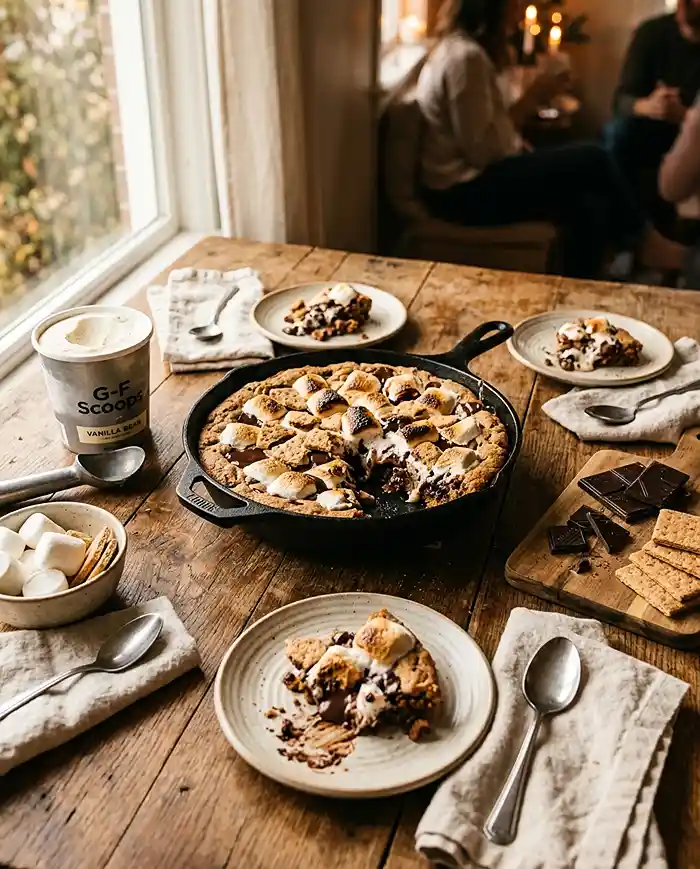
This gluten-free smores cookie skillet is perfectly at home at a Thanksgiving dessert table or as a cozy Christmas Eve treat—serve it warm straight from the skillet with scoops of vanilla ice cream around the table and let everyone dig in together, family-style.
It pairs beautifully with a refreshing orange creamsicle smoothie to balance out the richness, or alongside gluten-free watermelon feta skewers as part of a summer spread that balances sweet and savory. If you’re building out a full skillet-based dinner night, the gluten-free summer succotash chicken skillet makes an incredible savory main before this finishes the meal.
If you make this gluten-free smores cookie skillet, I genuinely want to hear how it went—drop a comment below, especially if you tried a variation. And if it turned out exactly as gooey and ridiculous as it should be, sharing it on Pinterest helps other GF families find it too. Happy baking.
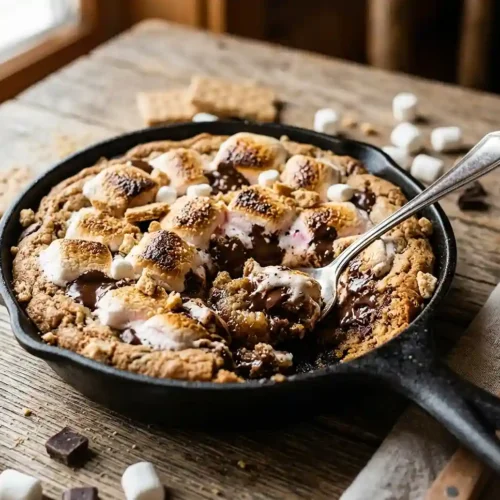
Gluten-Free S’mores Cookie Skillet
Equipment
- Cast-iron skillet
- Mixing bowl
- Small saucepan
- Wooden spoon
- Kitchen scale
Ingredients
Cookie Base
- 80 g Gluten-free self-raising flour
- 50 g Butter Use a hard block like Stork—not a soft spreadable
- 40 g Light brown sugar
- 40 g Caster sugar
- 2 Egg yolks Yolks only—using whole eggs will make the cookie cakey
The S’mores Bit
- 40 g Gluten-free marshmallows Approximately 2 handfuls—check label to confirm gluten-free
- 50 g Dark chocolate Or any chocolate you prefer; milk chocolate works well too
Instructions
- Preheat your oven to 175°C (fan). Weigh out all ingredients before you begin—once the butter is melted you want to move quickly to keep the dough at the right consistency for the best gooey middle.
- Melt the butter in a small saucepan over a very low heat. Do not let it boil—just a gentle melt until fully liquid, about 2 minutes.
- Add both sugars to a mixing bowl, pour in the melted butter, and stir with a wooden spoon until fully combined. No electric whisk needed—about 15 seconds of stirring is all it takes.
- Add the 2 egg yolks and lightly mix in. This takes about 5 seconds—don’t overwork it.
- Add the gluten-free self-raising flour and mix thoroughly with a spoon until a cohesive dough forms. It will look thick and slightly sticky—that’s exactly right.
- Add half the marshmallows and half the chocolate to the dough and fold them in. These will melt into gooey pockets during baking.
- Spoon the dough into your skillet and spread it out with the back of a spoon until roughly level. Don’t press too hard—just even it out.
- For best results, place the skillet in the freezer for at least 1 hour (overnight is even better). This step isn’t essential but gives you a crunchier edge and a more molten center. If skipping the freeze, go straight to baking.
- Bake from frozen for 19 minutes (or 16 minutes if not frozen). The edges should be golden brown and the center will look pale and underdone—that is correct. Do not test with a skewer the way you would a cake; a gooey center means the skewer won’t come out clean, and that’s the goal.
- Remove from the oven and scatter the remaining marshmallows and chocolate around the outside edge of the skillet.
- Place the skillet under the grill for 1 minute, or until the marshmallows start to melt and blister. Grilling gives a campfire-style scorched finish that the oven alone won’t achieve. Watch closely—marshmallows burn fast.
- Leave to cool for at least 5 minutes before serving. The cookie continues cooking from residual heat and will set to the perfect scoopable texture if you give it time.
- Add a scoop of ice cream and any extra toppings you like. Serve straight from the skillet and enjoy.