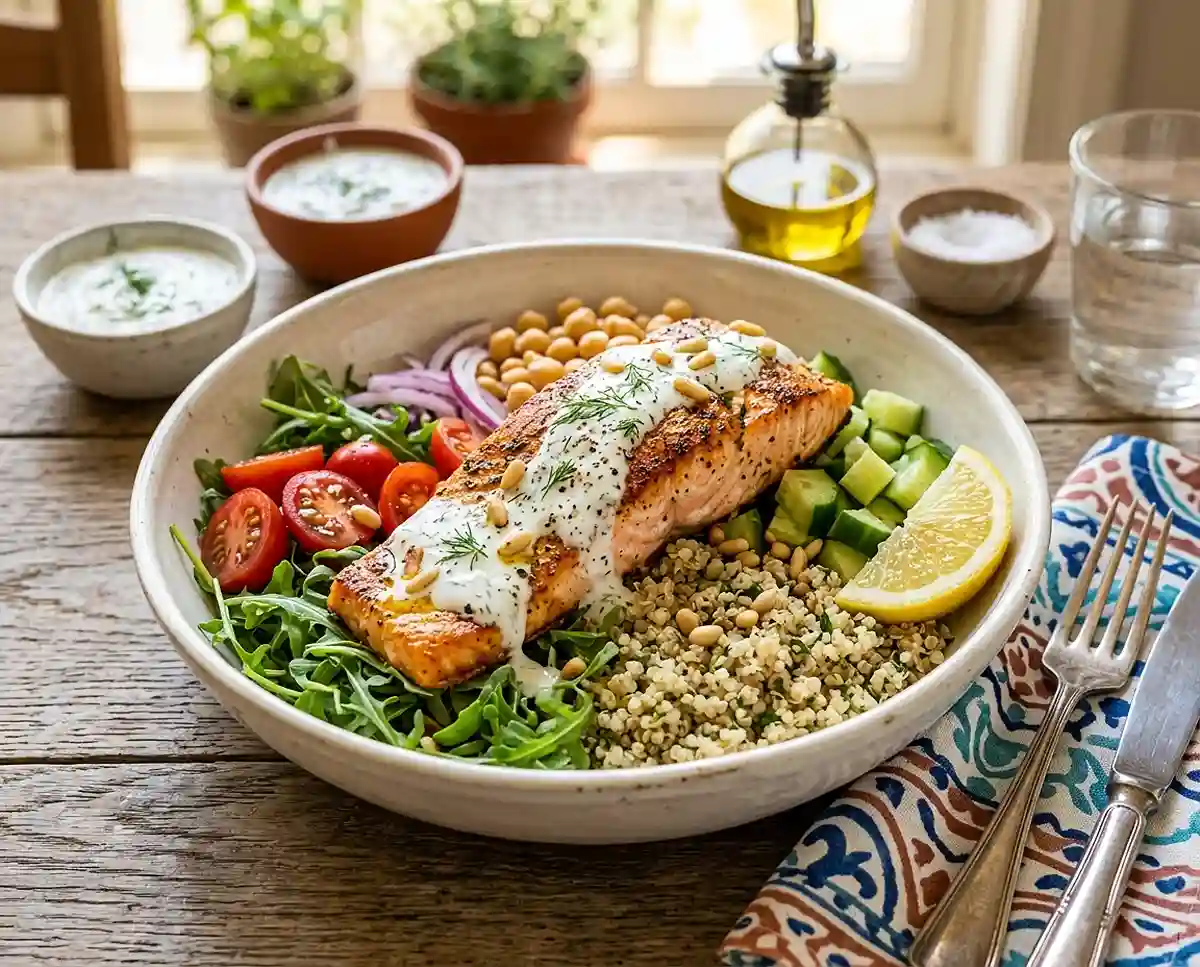
Mediterranean Salmon Bowls
These Mediterranean salmon bowls gluten-free recipe combines flaky baked salmon, fresh vegetables, and creamy dill sauce. Ready in 30 minutes.
The first time I made Mediterranean salmon bowls gluten-free for my book club, I was skeptical that something this colorful could come together in under 30 minutes. My friend Linda, who’d just gone gluten-free after her celiac diagnosis, took one bite of the creamy dill sauce and asked if I’d cheated and ordered from a Greek restaurant. Well, three weeks later, she texted that she’d made it four times since.
Here’s what most folks miss about Mediterranean cooking: the cuisine is naturally one of the most gluten-free-friendly in the world, but restaurant versions often hide wheat in places you’d never expect. Have you ever wondered why a “simple” Mediterranean bowl from a fast-casual chain leaves you feeling unwell? Hidden wheat in marinades, fried toppings, and creamy sauces is almost always the answer.
This recipe makes 3 to 4 generous bowls, takes about 30 minutes from start to finish, and uses one sheet pan plus a couple of mixing bowls. No specialty ingredients, no complicated techniques, just bright Mediterranean flavors layered into bowls that taste like they took twice as long to make.
Why You’ll Love These Mediterranean Salmon Bowls
- Flaky, perfectly seasoned salmon: Smoked paprika and oregano create a Mediterranean spice crust that locks in moisture and adds complex savory depth.
- Cool, creamy dill sauce: The yogurt-mayo-sour cream blend tastes like tzatziki’s richer cousin, draping over warm salmon like silk on glass.
- Naturally gluten-free build: Swapping couscous for quinoa or rice keeps the bowl celiac-safe without sacrificing the satisfying grain base.
- Meal prep lunch ready: Components store separately for 4 days, so you’ve got Mediterranean dinner-quality lunches all week long.
The Secret to Perfect Mediterranean Salmon Bowls Gluten-Free
Great Mediterranean bowls come down to four small techniques most home cooks skip. Master these and your version will rival any Greek or Lebanese restaurant.
- Pat the salmon completely dry: Moisture on the surface causes spices to slide off and prevents the gentle crust from forming during baking.
- Bake at moderate temperature, not high heat: 350°F cooks salmon slowly enough to keep it flaky and moist, while higher temps dry out the edges before the center sets.
- Quinoa or rice instead of couscous: Couscous is made from wheat, so swapping in naturally gluten-free grains is non-negotiable for celiac safety.
- Make sauce ahead for deeper flavor: Resting the dill sauce for at least 15 minutes allows the herbs to bloom into the dairy, creating a brighter, more complex finish.
According to authoritative American Heart Association guidance on the Mediterranean diet, omega-3-rich fish like salmon paired with vegetables and whole grains supports heart and brain health, making these gluten free salmon bowls both satisfying and genuinely good for you.
Table of Contents
Ingredients You’ll Need
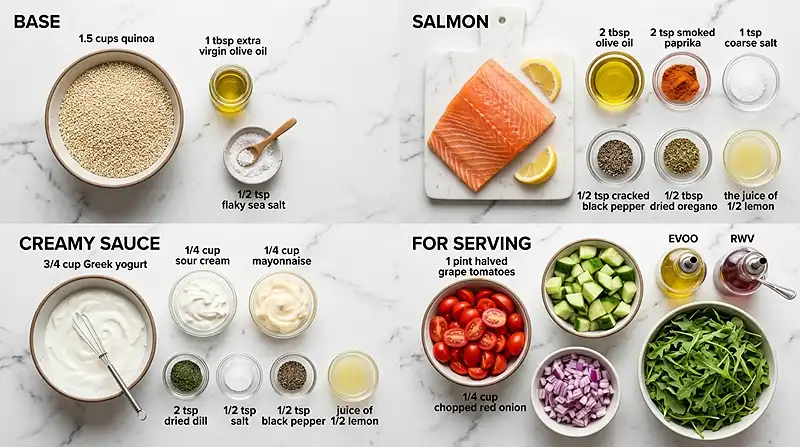
This recipe makes 3 to 4 servings. Use the exact quantities below for the right balance of protein, vegetables, and creamy-tangy sauce.
Grain Base
- 1 1/2 cups quinoa or rice (used instead of traditional couscous)
- 1 tablespoon olive oil
- 1/2 teaspoon salt
Salmon and Spices
- 1 large salmon fillet, cut into portions (about 1 1/2 lbs)
- 2 tablespoons olive oil
- 2 teaspoons smoked paprika
- 1 teaspoon salt
- 1/2 teaspoon black pepper
- 1/2 tablespoon dried oregano
- Juice of 1/2 lemon
Creamy Dill Sauce
- Juice of 1/2 lemon
- 3/4 cup plain Greek yogurt (full-fat for richest texture)
- 1/4 cup sour cream
- 1/4 cup mayonnaise
- 2 teaspoons dried dill
- 1/2 teaspoon salt
- 1/2 teaspoon black pepper
Bowl Toppings
- 1 pint grape tomatoes, halved
- 1 English cucumber, chopped
- 1/4 cup red onion, chopped
- Fresh arugula (about 4 cups)
- Olive oil and red wine vinegar, for drizzling
- Lemon wedges, for serving
Smoked paprika is the secret weapon here, since it adds a subtle smoky depth that mimics the char of grilled fish. If you can only find regular sweet paprika, add 1/4 teaspoon of cumin to compensate for the missing smoky notes.
Step-by-Step Instructions
Follow these steps in order, and start the quinoa first since it takes the longest. The salmon and sauce come together while the grain cooks, so everything finishes at the same time.
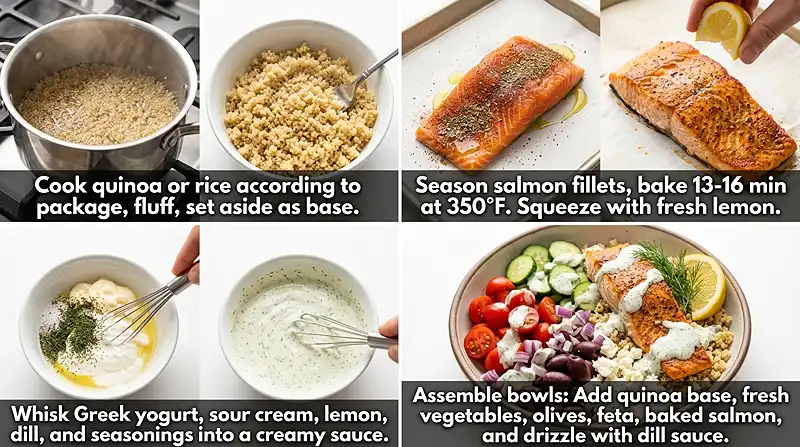
- Cook the grain base. Rinse the quinoa under cold water for 30 seconds (this removes any bitter coating), then cook according to package directions with the olive oil and salt added to the water. Once tender, fluff with a fork and set aside, covered, to keep warm. Pro tip: Quinoa is done when the little tails curl out from each grain.
- Preheat the oven and prep the salmon. Heat your oven to 350°F (175°C) and line a sheet pan with parchment paper or foil for easy cleanup. Pat the salmon portions dry with paper towels (this is what makes the spices stick), then drizzle with 2 tablespoons of olive oil.
- Season the salmon. In a small bowl, mix the smoked paprika, salt, black pepper, and dried oregano with a fork until evenly combined. Sprinkle the spice mix evenly over both sides of the salmon, gently pressing it into the flesh so it adheres during baking.
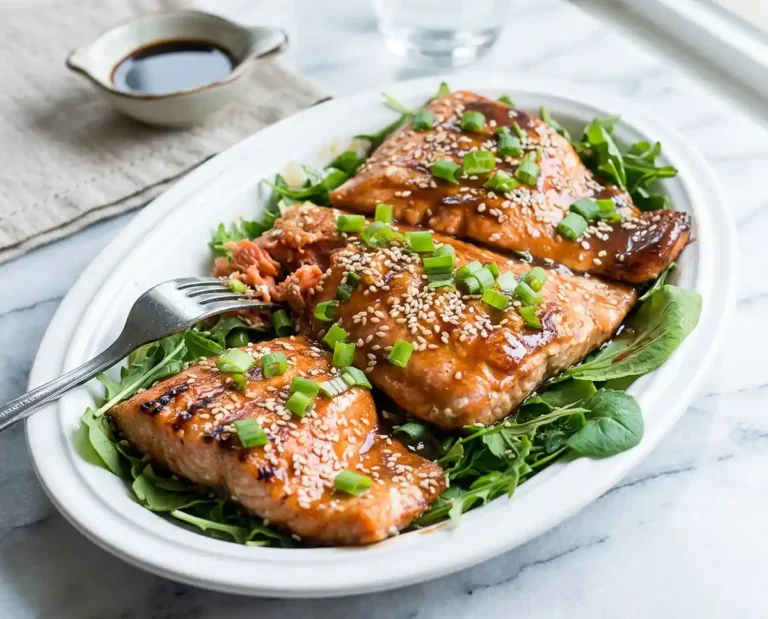
- Bake the salmon. Place the seasoned salmon skin-side down on the prepared sheet pan and bake for 13 to 16 minutes, depending on thickness. The salmon is done when it flakes easily with a fork at the thickest part and the surface looks opaque rather than translucent. Squeeze the juice of half a lemon over the hot salmon as soon as it comes out of the oven.
- Make the creamy dill sauce. While the salmon bakes, whisk together the lemon juice, Greek yogurt, sour cream, mayonnaise, dried dill, salt, and black pepper in a medium bowl until completely smooth. Taste and adjust seasoning as needed, then refrigerate for at least 15 minutes to let the flavors meld.
- Prep the vegetables. Halve the grape tomatoes, chop the English cucumber into bite-sized pieces, and finely chop the red onion. Pile everything onto a cutting board or platter so it’s ready to assemble in the final step.
- Assemble the bowls. Divide the cooked quinoa or rice among 3 or 4 wide bowls as the base. Top each with a handful of fresh arugula, a portion of cucumber, tomatoes, and red onion, then place a piece of baked salmon on top.
- Drizzle and serve. Spoon the creamy dill sauce generously over the salmon, then finish each bowl with a drizzle of olive oil, a splash of red wine vinegar, and a fresh lemon wedge on the side. Serve immediately while the salmon is still warm and the vegetables are crisp as a freshly picked apple.
Make It Your Own
One of the things I love about these Mediterranean dinner bowls is how flexible they are once you’ve got the formula. Man, oh man, have I built a hundred different versions of this bowl over the past decade.
Swap the protein. Grilled chicken thighs, lemon-garlic shrimp, seared tuna, or chickpeas all work as 1:1 replacements for the salmon. Chickpeas (drained, tossed in the same spice blend, and roasted at 400°F for 20 minutes) make this fully vegetarian without sacrificing protein content.
Change up the grain. Swap quinoa for brown rice, farro (only if not gluten-free), buckwheat groats, or cauliflower rice. Cauliflower rice keeps the meal low-carb and works especially well as a base for warmer salmon and cool sauce contrast.
Add Mediterranean classics. Toss in pitted Kalamata olives, crumbled feta cheese, marinated artichoke hearts, or roasted red peppers for extra Mediterranean flair. Each addition brings authentic flavor without breaking the gluten-free profile of these gluten free salmon bowls.
Make it dairy-free. Replace the Greek yogurt and sour cream with unsweetened coconut yogurt or cashew-based yogurt, and use vegan mayo. The sauce will be slightly less tangy, so add an extra teaspoon of lemon juice and a pinch of salt to compensate.
Common Problems and Solutions
Even a 30-minute bowl can throw a curveball. Here are the issues I see readers run into most often, with the fixes I’ve tested in my own kitchen.
Problem: My salmon came out dry and tough. You overcooked it or used a thinner fillet than the recipe assumes. Pull the salmon when it flakes easily but still looks slightly translucent in the very center, since residual heat will finish cooking it on the way to the table. Thinner fillets need 10 to 12 minutes maximum.
Problem: The spice rub fell off during baking. Well, you skipped patting the salmon dry. Moisture creates a barrier between the spices and the fish, so always pat thoroughly with paper towels and press the rub firmly into the flesh before baking.
Problem: The dill sauce tastes flat or one-note. You know what this means? The salt is too low or the dill needed time to bloom. Add an extra pinch of salt and a squeeze of fresh lemon, then let the sauce rest in the fridge for at least 15 minutes (longer is better, since dried dill needs hydration to release its full flavor).
Problem: My quinoa came out mushy or bitter. You either skipped rinsing or used too much water. Always rinse quinoa for 30 seconds under cold water to remove the bitter saponin coating, and stick to a 1:1.75 ratio of quinoa to water for fluffy, separated grains.
Storage and Meal Prep
These bowls are built for batch cooking, which is why I prep four at once on Sunday for a week of grab-and-go lunches.
| Method | Duration | Notes |
|---|---|---|
| Counter | Up to 2 hours | Cool fully before refrigerating; do not leave assembled longer for food safety |
| Fridge | 3 to 4 days | Store salmon, grain, sauce, and vegetables separately for best texture |
| Freezer | 2 months | Freeze cooked salmon and quinoa only; sauce and vegetables don’t freeze well |
To assemble for lunch, layer warm or cold quinoa in a container with vegetables, top with flaked salmon, and pack the sauce in a small separate container. Drizzle the sauce just before eating to keep everything from getting soggy. Use leftover salmon flaked into omelets, salads, or stuffed into gluten-free wraps for variety throughout the week.
Mediterranean Salmon Bowls FAQs
Are Mediterranean bowls naturally gluten-free?
Mediterranean bowls can be gluten-free when made with rice, quinoa, or other naturally safe grains, but traditional couscous, pita bread, and some marinades contain wheat. Always check labels on hummus, tahini, and pre-made dressings, since some brands include wheat-based thickeners. Building your own at home with verified ingredients is the safest approach.
Can I use frozen salmon?
Yes, but thaw it completely in the fridge overnight before cooking and pat extremely dry with paper towels. Frozen salmon releases more water during baking, which can prevent the spice crust from forming properly. Always check for any small bones with your fingers before seasoning, since freezing can sometimes loosen pin bones.
What’s the best fish substitute if I don’t like salmon?
Cod, halibut, mahi-mahi, or trout all work beautifully in this recipe with the same spice blend and bake time. White fish cooks slightly faster (10 to 12 minutes), so check for flakiness at the 10-minute mark. Each option holds up well to the bold smoked paprika seasoning.
How do I know when salmon is fully cooked?
Salmon is done when the internal temperature reaches 145°F at the thickest part and the flesh flakes easily with a fork. The color should change from translucent pink to opaque pinkish-orange, with the layers gently separating when pressed. A digital meat thermometer is the most reliable tool for first-time cooks.
Can I make these bowls without dairy?
Yes, replace the Greek yogurt and sour cream with unsweetened coconut yogurt and use vegan mayonnaise. The sauce remains creamy and tangy, though slightly milder, and pairs just as well with the smoky salmon. Add an extra teaspoon of lemon juice to brighten the dairy-free version.
Serving Suggestions
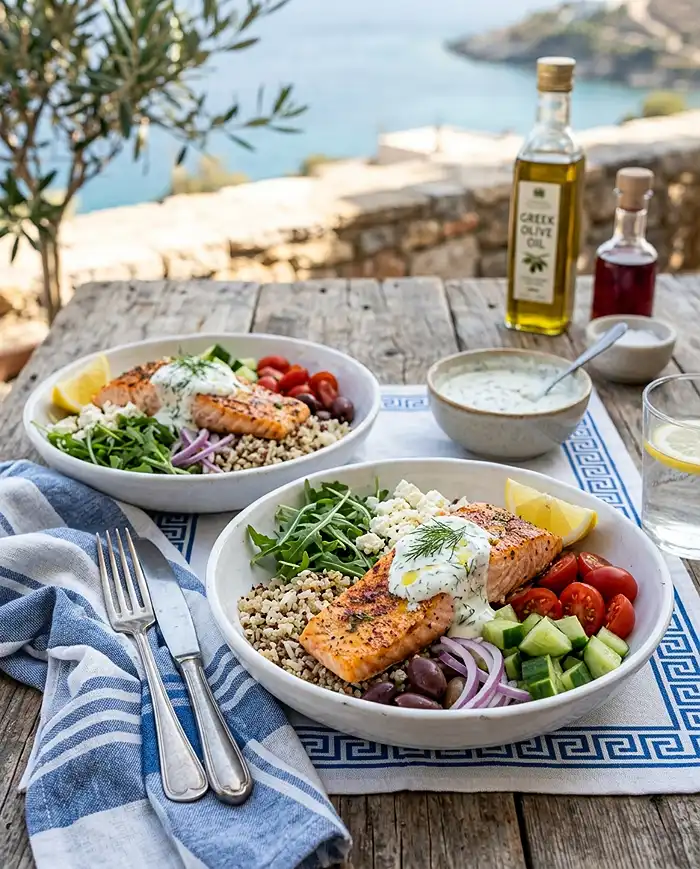
Plate these bowls family-style with extra lemon wedges and a basket of warm gluten-free pita for scooping up the creamy sauce. They’re a standout choice for summer dinner parties, Mother’s Day brunches, or warm-weather Memorial Day gatherings where everyone’s craving something fresh and light. Pair with my blistered shishito peppers as a smoky starter, sip alongside a refreshing gluten-free blueberry lavender smoothie for brunch, and finish with a slice of my no-bake salted caramel chocolate tart for a dessert that ties the whole meal together.
Give It a Try and Share Your Bowl
If you make these Mediterranean salmon bowls, I’d love to hear how they turned out and which add-ins became your signature combo. Snap a photo of those colorful layered bowls, pin it to your healthy dinner Pinterest board, and tag me so I can cheer you on. Drop a star rating and a comment below with your tweaks, because your kitchen wisdom helps the next reader pull off Mediterranean dinner magic with confidence.
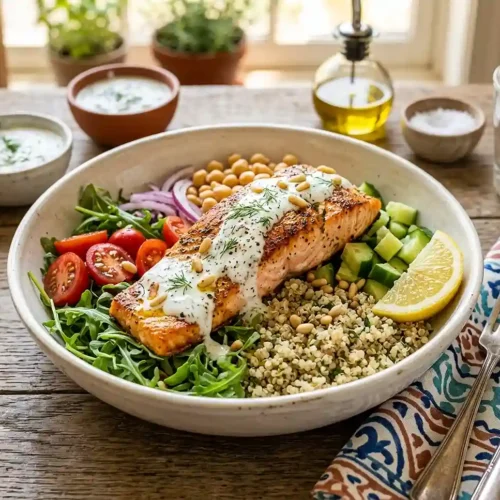
Mediterranean Salmon Bowls Gluten-Free
Equipment
- Sheet pan
- Parchment paper or foil
- Medium saucepan
- Mixing bowl
- Whisk
- Cutting board
- Sharp knife
- Measuring cups and spoons
Ingredients
Grain Base
- 1 ½ cups quinoa or rice instead of traditional couscous
- 1 tablespoon olive oil
- ½ teaspoon salt
Salmon and Spices
- 1 large salmon fillet cut into portions, about 1 1/2 lbs
- 2 tablespoons olive oil
- 2 teaspoons smoked paprika
- 1 teaspoon salt
- ½ teaspoon black pepper
- ½ tablespoon dried oregano
- ½ lemon juiced
Creamy Dill Sauce
- ½ lemon juiced
- ¾ cup plain Greek yogurt full-fat for richest texture
- ¼ cup sour cream
- ¼ cup mayonnaise
- 2 teaspoons dried dill
- ½ teaspoon salt
- ½ teaspoon black pepper
Bowl Toppings
- 1 pint grape tomatoes halved
- 1 English cucumber chopped
- ¼ cup red onion chopped
- 4 cups fresh arugula
- olive oil and red wine vinegar for drizzling
- lemon wedges for serving
Instructions
- Rinse the quinoa under cold water for 30 seconds to remove the bitter coating, then cook according to package directions with the olive oil and salt added to the water. Once tender, fluff with a fork and set aside, covered, to keep warm.
- Preheat the oven to 350°F (175°C) and line a sheet pan with parchment paper or foil. Pat the salmon portions dry with paper towels, then drizzle with 2 tablespoons of olive oil.
- In a small bowl, mix the smoked paprika, salt, black pepper, and dried oregano with a fork. Sprinkle the spice mix evenly over both sides of the salmon, gently pressing it into the flesh.
- Place the seasoned salmon skin-side down on the prepared sheet pan and bake for 13 to 16 minutes, depending on thickness. The salmon is done when it flakes easily with a fork and reads 145°F internally. Squeeze the juice of half a lemon over the hot salmon as soon as it comes out of the oven.
- While the salmon bakes, whisk together the lemon juice, Greek yogurt, sour cream, mayonnaise, dried dill, salt, and black pepper in a medium bowl until completely smooth. Refrigerate for at least 15 minutes to let the flavors meld.
- Halve the grape tomatoes, chop the English cucumber into bite-sized pieces, and finely chop the red onion. Set everything aside ready to assemble.
- Divide the cooked quinoa or rice among 3 or 4 wide bowls as the base. Top each with a handful of fresh arugula, a portion of cucumber, tomatoes, and red onion, then place a piece of baked salmon on top.
- Spoon the creamy dill sauce generously over the salmon, then finish each bowl with a drizzle of olive oil, a splash of red wine vinegar, and a fresh lemon wedge on the side. Serve immediately while the salmon is still warm.