Monk Fruit Chocolate Chip Cookies
Make gluten-free monk fruit chocolate chip cookies with almond flour, step-by-step instructions, troubleshooting tips, and storage guidance for soft, golden results.
My neighbor brought a plate of cookies to our block party last summer and I ate three before asking what was in them. When she said “no sugar, no gluten,” I didn’t believe her. That was my introduction to gluten-free monk fruit chocolate chip cookies—and I’ve been testing my own version ever since.
The first batch I made myself was a flat, greasy disaster. I’d used cold butter straight from the fridge, which kept the fat from incorporating properly. Lesson learned: room-temperature ingredients aren’t optional in almond flour baking—they’re the whole game.
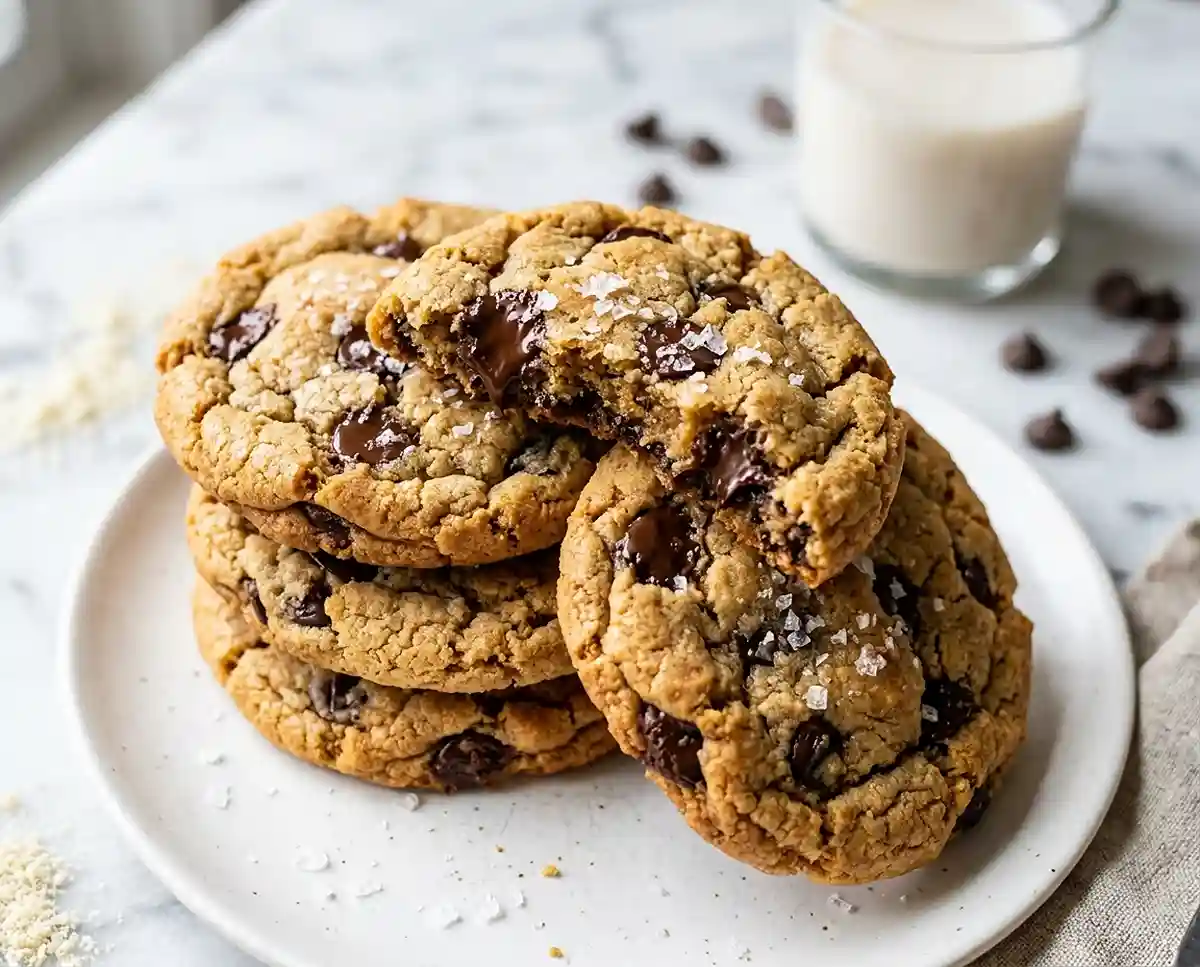
These cookies now bake up with golden edges that give just slightly when you press them, and a soft, chewy center that holds its shape on the rack. No gritty aftertaste, no spreading puddle—just a genuinely satisfying cookie that happens to be both gluten-free and sugar-free.
Why You’ll Love These Monk Fruit Chocolate Chip Cookies
- Soft center, golden edges: Almond flour creates a naturally tender crumb that stays moist for days—no dry, crumbly texture that often plagues gluten-free baked goods.
- Beginner-friendly with one bowl: No stand mixer required, no chilling time, no complicated technique—mix, scoop, and bake in under 30 minutes.
- Naturally sugar-free and easily dairy-free: Monk fruit sweetener adds zero glycemic impact, and plant-based butter swaps in seamlessly for a fully dairy-free version.
- Holiday and everyday ready: These bake beautifully in batches of 24 and travel well, making them ideal for gifting, school events, or weekend baking with kids.
The Secret to Perfect Gluten-Free Monk Fruit Chocolate Chip Cookies
- Finely milled blanched almond flour—not almond meal: The difference is significant. Almond meal (made from whole almonds with skins) produces a dense, gritty cookie. Finely milled blanched almond flour gives you a smooth, uniform dough that bakes evenly. According to the Celiac Disease Foundation’s trusted gluten-free food guide, verifying that specialty flours are processed in certified gluten-free facilities matters for anyone with celiac disease.
- Softened butter means softened—not melted: Softened butter creates air pockets when mixed, which gives the cookie structure. Melted butter causes spreading and a greasy, flat result. Press your finger into the stick—it should leave an indent without sinking entirely.
- Don’t flatten the dough balls: Almond flour cookies spread naturally in the oven. If you flatten them before baking, they’ll spread too thin and overbake around the edges before the center sets.
- The 5–10 minute rest on the pan is non-negotiable: Almond flour cookies are structurally fragile straight out of the oven. They firm up as they cool, so moving them too soon means crumbling. Let them set completely on the pan before transferring to a wire rack.
Table of Contents
Ingredients
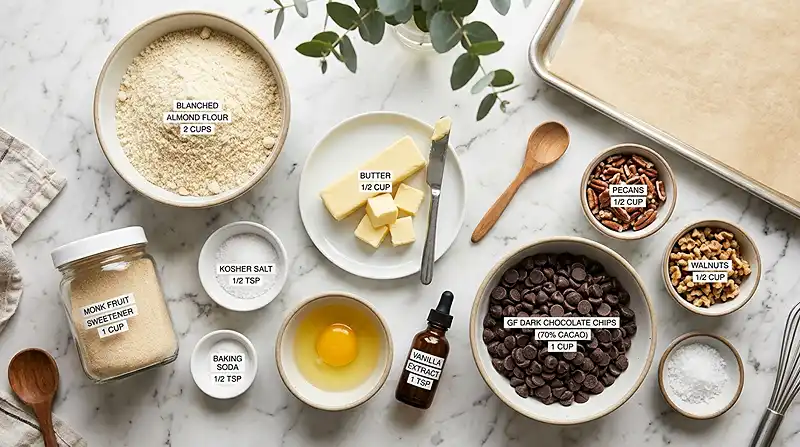
These are the exact ingredients for 24 cookies. See the “Make It Your Own” section below for tested substitutions.
Cookie Dough
| Ingredient | Amount | Notes |
|---|---|---|
| Finely milled blanched almond flour | 2 cups | Not almond meal; finely milled is key for texture |
| Granulated monk fruit sweetener | ⅓ cup | Measures like sugar; use granulated, not powdered |
| Kosher salt | 1 pinch | Balances the sweetness and enhances chocolate flavor |
| Baking soda | ½ teaspoon | Provides lift; check freshness if cookies come out flat |
| Unsalted butter, softened | ½ cup (1 stick) | Or plant-based butter for dairy-free |
| Large egg, room temperature | 1 | Room temp eggs emulsify more evenly into the dough |
| Vanilla extract | 1 tablespoon | Pure vanilla extract, not imitation |
| Certified gluten-free chocolate chips | 1 cup | Or use sugar-free chocolate chips to keep fully sugar-free |
Optional Add-Ins
| Add-In | Amount |
|---|---|
| Chopped pecans or walnuts | ¼ cup |
| Flaky sea salt, for sprinkling | To taste |
| Ground cinnamon | ½ teaspoon |
Instructions
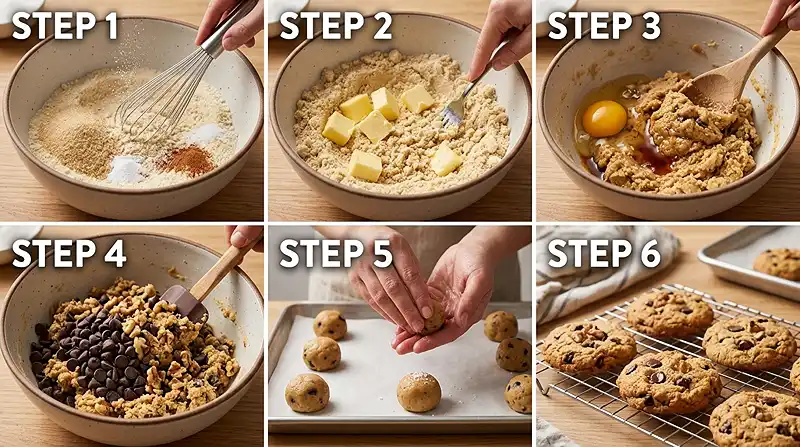
Prep and Mix the Dry Ingredients
- Preheat and prepare. Preheat your oven to 350°F (175°C) and line a large baking sheet with parchment paper. Parchment prevents sticking and promotes even browning on the bottom—don’t skip it.
- Whisk the dry ingredients. In a large mixing bowl, whisk together the 2 cups almond flour, ⅓ cup granulated monk fruit sweetener, 1 pinch kosher salt, ½ teaspoon baking soda, and ½ teaspoon ground cinnamon if using. Whisking breaks up any lumps in the almond flour that would create uneven pockets in the finished cookie.
Build the Dough
- Cut in the butter. Add the ½ cup softened butter and mix until the mixture resembles coarse, sandy crumbs with no large butter chunks remaining. This should take about 60 seconds of hand-mixing—you’re not creaming it, just distributing the fat evenly through the flour.
- Add the wet ingredients. Stir in the 1 large room-temperature egg and 1 tablespoon vanilla extract until a soft, slightly sticky dough forms. The dough should hold its shape when pinched but feel tacky to the touch—that’s the right consistency.
- Fold in the chocolate chips. Gently fold in the 1 cup certified gluten-free chocolate chips and ¼ cup chopped pecans or walnuts if using. Pro Tip: Reserve a small handful of chips to press into the tops of the dough balls just before baking—this gives you that bakery-style look with visible chocolate on top.
Scoop, Bake, and Cool
- Portion the dough. Scoop about 1 tablespoon of dough per cookie and roll into balls between your palms. If the dough sticks to your hands, lightly dampen them with cool water—don’t add more flour, which would throw off the balance of the recipe.
- Arrange and season. Place the dough balls about 2 inches apart on the prepared baking sheet. Do not flatten them. Sprinkle the tops with flaky sea salt if desired—the salt blooms in the oven and creates pockets of contrast against the sweet chocolate that taste like they came from a specialty bakery.
- Bake until golden. Bake for 12–13 minutes, or until the edges are lightly golden and the tops look just set but still slightly underdone in the center. The cookies will continue to firm up as they cool, so pulling them a minute early always beats overbaking.
- Rest, then transfer. Allow the cookies to cool on the baking sheet for 5–10 minutes before transferring them to a wire rack to cool completely. Resist the urge to move them early—they’ll hold together beautifully once cooled.
Make It Your Own
Dairy-Free Version: Swap the unsalted butter for an equal amount of plant-based butter (stick format, not spread). Brands formulated as sticks have a lower water content than tub spreads, which keeps the cookie from turning greasy. The rest of the recipe stays exactly the same.
Egg-Free Option: Replace the egg with 1 flax egg (1 tablespoon ground flaxseed mixed with 3 tablespoons water, rested for 5 minutes). The cookies will be slightly denser and less golden on the edges, but they’ll still hold together and slice cleanly. Well… they may not win a beauty contest, but they’ll taste right.
Sugar-Free Chocolate Chips: Swap the certified gluten-free chocolate chips for a sugar-free variety to keep these fully sugar-free chocolate chip cookies with zero added cane sugar. Look for chips sweetened with erythritol or monk fruit—they melt and pool just like regular chips. These are a great option for anyone managing blood sugar, as research from the National Institute of Diabetes and Digestive and Kidney Diseases supports reducing added sugar for metabolic health.
Cinnamon-Walnut Variation: Include the ½ teaspoon cinnamon and ¼ cup chopped walnuts for a cookie with a warm, spiced depth. The cinnamon doesn’t overpower the chocolate—it rounds out the sweetness of the monk fruit and adds a toasty undertone that makes these feel right at home on a Thanksgiving dessert table.
Mini Cookie Option: Use a teaspoon scoop instead of a tablespoon for smaller, bite-sized cookies. Reduce bake time to 9–10 minutes and watch the edges closely—smaller cookies overbake faster than you’d expect.
Common Problems & Solutions
Problem: The cookies spread too thin and come out flat. Solution: Check that your butter was softened, not melted, and that you didn’t flatten the dough balls before baking. Almond flour has no gluten to provide structure, so the cookies rely entirely on cold-ish butter to hold their shape during the early minutes in the oven. If your kitchen is very warm, refrigerate the shaped dough balls for 10 minutes before baking.
Problem: The cookies crumbled when I tried to move them. Solution: You moved them too soon. Almond flour cookies are fragile when warm because the fats haven’t re-solidified yet. Give them a full 5–10 minutes on the baking sheet before touching them, and they’ll firm up into perfectly transferable rounds.
Problem: The cookies came out gummy or undercooked in the center. Man, oh man, this one is frustrating when you’ve waited 13 minutes—but it usually means your oven runs cool. Buy an inexpensive oven thermometer; most home ovens are off by 25–50°F. Bake at the actual 350°F, and the centers will set correctly during the cooling rest on the pan.
Problem: The dough is too sticky to roll into balls. Solution: Lightly dampen your hands with cool water rather than adding more flour. Adding extra almond flour shifts the fat-to-flour ratio and produces a dry, crumbly baked cookie. A small amount of water on your palms is all you need—just enough to keep the dough from sticking without wetting it through.
Storage & Meal Prep
| Method | Duration | Notes |
|---|---|---|
| Counter | Up to 5 days | Airtight container; layer with parchment to prevent sticking |
| Fridge | Up to 7 days | Bring to room temperature before serving for best texture |
| Freezer (baked) | Up to 3 months | Wrap individually in plastic wrap, then store in a freezer bag |
| Freezer (raw dough balls) | Up to 3 months | Freeze on a tray first, then transfer to a bag; bake from frozen, add 2–3 minutes |
You know, freezing raw dough balls is genuinely one of the best meal prep habits for cookie bakers. You get fresh-baked cookies on demand without committing to a full batch—just pull out however many you need and bake straight from frozen.
To refresh refrigerated cookies, let them sit at room temperature for 20–30 minutes. A 10-second microwave warm-up also revives the soft center nicely if you’re in a hurry—just don’t overheat or the chocolate chips will seize.
Monk Fruit Chocolate Chip Cookies FAQs
Can I use coconut flour instead of almond flour in this recipe?
No, coconut flour cannot be substituted 1:1 for almond flour. Coconut flour is extremely absorbent—it soaks up roughly four times more liquid than almond flour—so swapping them without reformulating the entire recipe will produce a dry, dense, inedible result. If you need a coconut flour cookie recipe, look for one specifically developed for that flour.
How do I keep gluten-free chocolate chip cookies from falling apart?
The two most important factors are letting the cookies cool fully on the pan before moving them and using finely milled blanched almond flour rather than coarser almond meal. Almond flour cookies firm up as they cool—the fat and egg proteins set during the resting period. Moving cookies while still warm will always cause crumbling regardless of the recipe.
What’s the best monk fruit sweetener for baking cookies?
Use granulated monk fruit sweetener, not powdered or liquid forms, for this recipe. Granulated monk fruit measures and behaves like regular sugar in baking, dispersing evenly through the dough. Powdered varieties dissolve too quickly and can create a wet dough, while liquid forms add moisture that changes the texture entirely.
Why did my cookies turn out greasy?
Greasy cookies almost always come from butter that was too soft or partially melted before mixing. Butter should be softened to the point where it holds its shape but yields to gentle pressure—not shiny, not liquid. If your kitchen is warm, work quickly once the butter is out of the fridge, or chill the shaped dough balls for 10 minutes before baking.
Can I make the dough ahead of time and refrigerate it overnight?
Yes, the dough can be refrigerated for up to 24 hours before baking. Cover the bowl tightly with plastic wrap or transfer the shaped dough balls to an airtight container. Cold dough actually bakes up slightly thicker and chewier than room-temperature dough, so make-ahead prep can work in your favor here.
Serving Suggestions
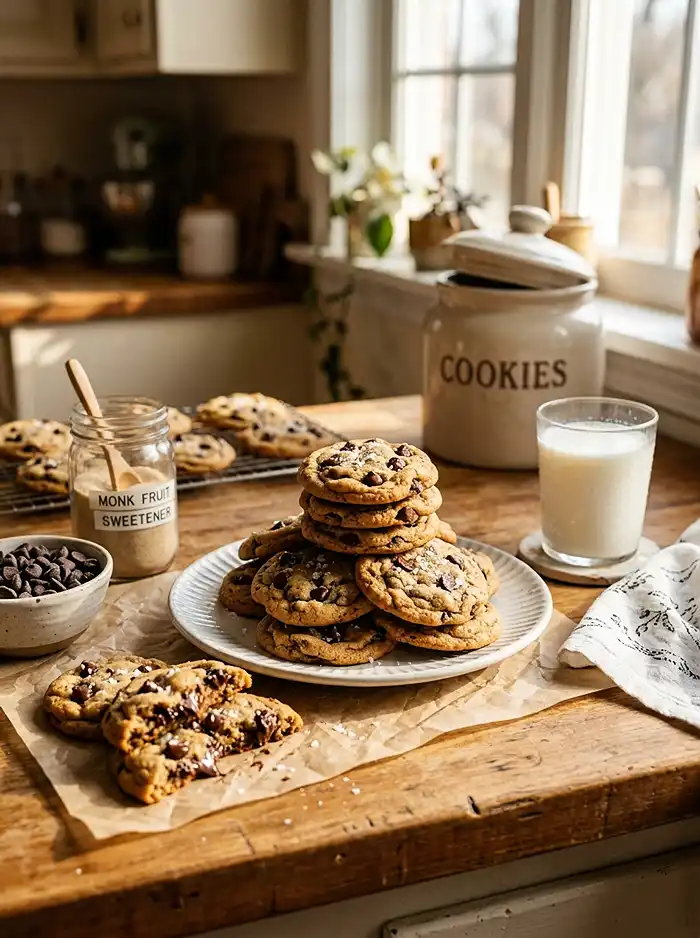
These cookies pair beautifully with a cold glass of oat milk or a mug of strong black coffee—the slight bitterness of both cuts through the richness of the chocolate in a way that makes each bite feel more intentional. They’re the kind of cookie that tastes like it took effort even though you had the whole batch done in under 30 minutes.
For a full gluten-free spread at your next holiday cookie exchange or family Christmas gathering, pair these with a batch of energy-boosting bites from this gluten-free sprouted power bowl guide for a balanced sweet-and-savory table. If you want a complete sugar-free afternoon snack, these cookies alongside a glass of homemade cold brew yerba mate is a combination worth bookmarking.
Hosting a crowd that includes non-gluten-free guests? Put these on the same plate as something savory like these gluten-free buffalo white bean tacos and watch them disappear before anyone thinks to ask what’s in them.
If you make these gluten-free monk fruit chocolate chip cookies, I’d genuinely love to hear how they turned out—drop a comment below with your variation or any substitutions you tried. Share a photo on Pinterest so others in the gluten-free community can find this recipe, and leave a star rating if you have a minute—it makes a real difference for small food blogs.
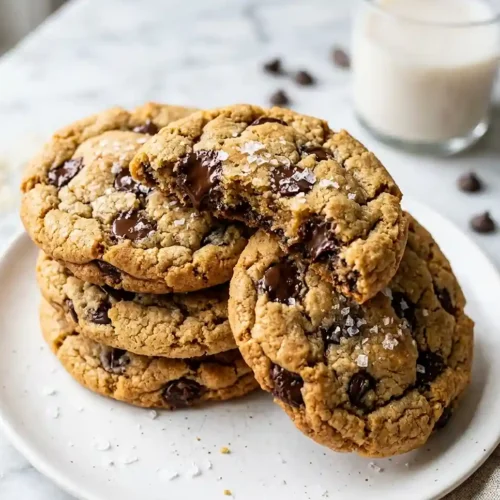
Gluten-Free Monk Fruit Chocolate Chip Cookies Recipe
Equipment
- Large mixing bowl
- Whisk
- Rubber spatula
- Baking sheet
- Parchment paper
- Cookie scoop or tablespoon
- Wire cooling rack
Ingredients
Cookie Dough
- 2 cups finely milled blanched almond flour not almond meal
- ⅓ cup granulated monk fruit sweetener granulated, not powdered
- 1 pinch kosher salt
- ½ teaspoon baking soda
- ½ cup unsalted butter softened, or plant-based butter
- 1 large egg room temperature
- 1 tablespoon vanilla extract pure vanilla extract
- 1 cup certified gluten-free chocolate chips or sugar-free chocolate chips
Optional Add-Ins
- ¼ cup chopped pecans or walnuts optional
- flaky sea salt to taste
- ½ teaspoon ground cinnamon optional
Instructions
- Preheat the oven to 350°F (175°C) and line a baking sheet with parchment paper.
- Whisk together the almond flour, monk fruit sweetener, salt, baking soda, and cinnamon if using.
- Add the softened butter and mix until the mixture resembles coarse crumbs.
- Stir in the egg and vanilla extract until a soft, slightly sticky dough forms.
- Fold in the chocolate chips and optional chopped nuts.
- Scoop about 1 tablespoon of dough into balls and place them 2 inches apart on the prepared baking sheet without flattening.
- Sprinkle with flaky sea salt if desired and bake for 12–13 minutes until the edges are lightly golden.
- Cool the cookies on the baking sheet for 5–10 minutes before transferring to a wire rack to cool completely.