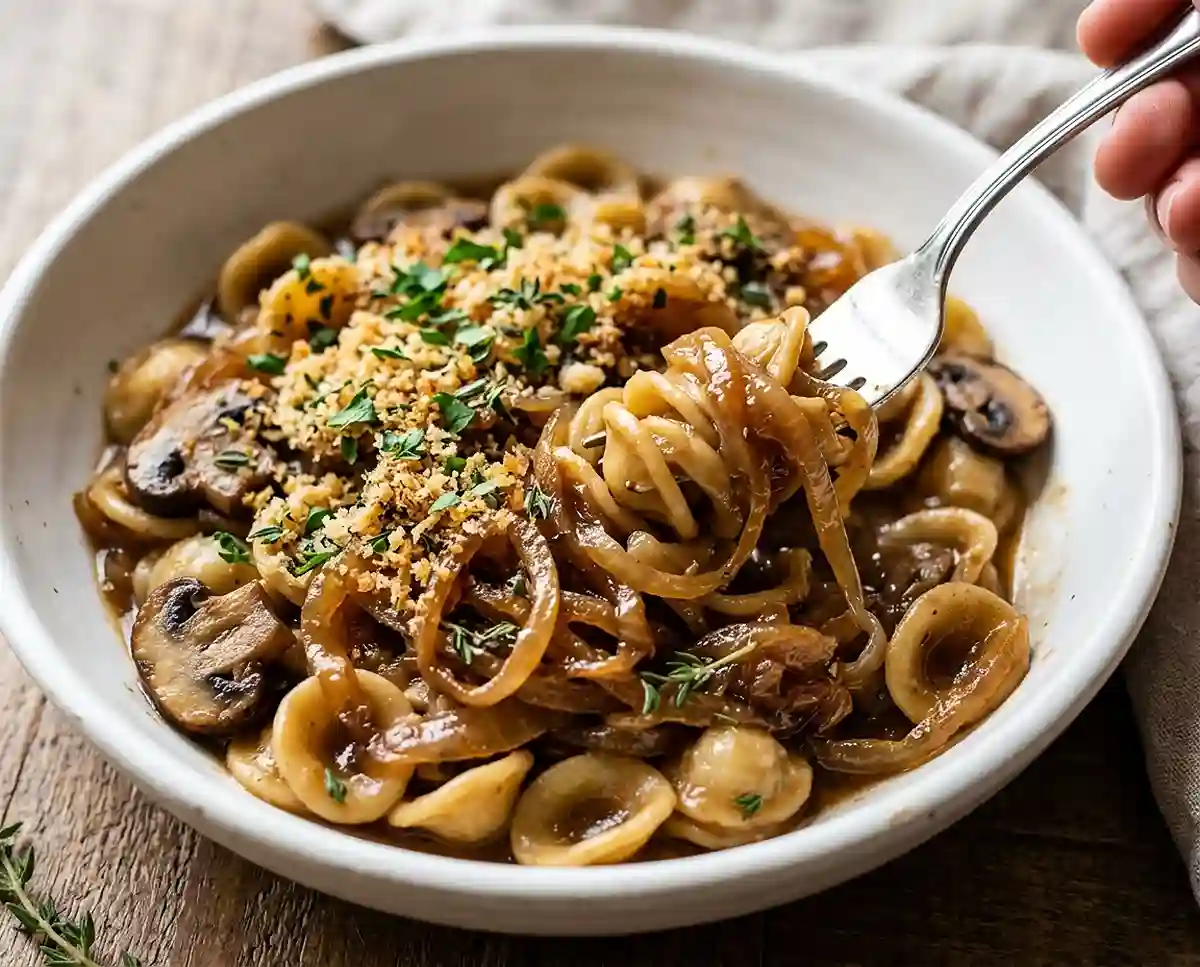
One-Pot French Onion Pasta
Learn how to make gluten-free one-pot French onion pasta with caramelized onions, mushrooms, and thyme. Step-by-step directions plus troubleshooting tips.
One-pot pasta is forgiving, as long as you stay near the stove. A student in my Saturday workshop once asked why her gluten-free one-pot pasta kept turning gluey. Turns out she had walked away, and gluten-free pasta sheds starch quickly and sticks to the pan without regular stirring. That lesson is built into this gluten-free one-pot French onion pasta.
Here’s the thing… French onion flavor doesn’t need cheese, cream, or a broiler. Slowly caramelized onions, mushrooms, thyme, and a splash of sherry vinegar give you that deep, savory-sweet taste in a single pot. The pasta cooks right in the broth and thickens it into a silky sauce.
Can a French onion dish feel rich without any dairy? Yes, because pasta starch and a little gluten-free flour thicken the broth, so the sauce clings to every piece of orecchiette. The result is creamy in texture without any cream.
At a Glance: Why This Gluten-Free One-Pot French Onion Pasta Delivers
This is a cozy, one-pot dinner that tastes like French onion soup but eats like a pasta night.
- Texture and flavor: tender pasta in a silky, savory-sweet sauce, with earthy mushrooms and a bright finish from sherry vinegar.
- Difficulty: beginner. The only real commitment is 25–30 minutes of stirring the onions.
- Unique advantages: it uses one pot, has no cheese or cream, and swaps easily between beef and vegetable broth.
- Best for: cool-weather weeknights and relaxed dinners for four.
What Makes This Gluten-Free One-Pot French Onion Pasta Actually Work
Five small techniques turn a handful of pantry ingredients into a layered, savory sauce.
- Slow caramelization builds sweetness: low, steady heat gives the onions’ natural sugars time to brown, while high heat can burn the surface before real flavor develops.
- Deglazing captures flavor: white wine lifts the browned bits from the bottom of the pan, so they flavor the sauce instead of scorching.
- Flour thickens the broth: stirring the gluten-free flour into the hot pan for a couple of minutes cooks off its raw taste and helps the sauce cling, even if your pasta releases little starch.
- Vinegar goes in last: adding sherry vinegar off the heat keeps its bright acidity and balances the sweet onions.
Caramelizing onions can’t be rushed, as this explanation of caramelized onion timing points out. Cooking them too hot can burn the surface before the sugars have time to transform.
For gluten-free safety, check the broth, flour blend, breadcrumbs, and pasta labels, since packaged products vary by brand. The Celiac Disease Foundation’s food label reading guide explains what to look for.
Table of Contents
Ingredients
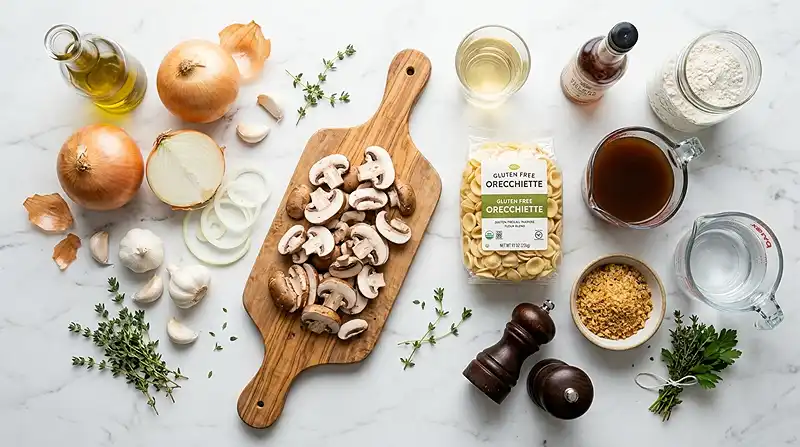
This recipe serves 4 and cooks in one large, deep skillet or Dutch oven.
Aromatics and Vegetables
- ¼ cup olive oil
- 3 medium yellow onions, thinly sliced
- 4 garlic cloves, minced
- 8 ounces cremini mushrooms, sliced
- 1 tablespoon fresh thyme leaves
Liquids and Thickener
- ½ cup dry white wine
- 2 tablespoons gluten-free all-purpose flour blend
- 2 cups gluten-free beef broth or vegetable broth
- 2 cups water, plus more if needed
Pasta and Finish
- 12 ounces dried gluten-free orecchiette or other short-cut pasta
- 1 tablespoon sherry vinegar
- Salt and freshly ground black pepper, to taste
- Fresh herbs, for serving (optional)
- Gluten-free toasted breadcrumbs, for serving (optional)
Choose yellow onions, which have a good balance of sweetness and sharpness for caramelizing. Orecchiette cups the sauce well, but any short gluten-free pasta works. Check the sherry vinegar label too, and avoid malt vinegar, which contains gluten.
Instructions
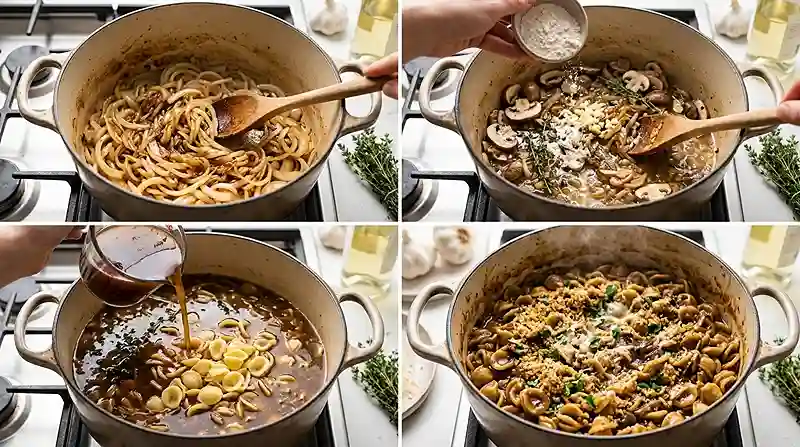
Here’s how to make gluten-free one-pot French onion pasta from start to finish in a single pan.
- Caramelize the onions. Heat the olive oil in a large, deep skillet or Dutch oven over medium heat. Add the sliced onions and a generous pinch of salt. Cook, stirring frequently, for 25–30 minutes until deeply golden and caramelized, when the pot smells like warm toffee, and reduce the heat if the onions begin to burn.
- Cook the vegetables. Add the garlic, cremini mushrooms, and fresh thyme. Sauté for 3–4 minutes, until the mushrooms begin to soften. Pro Tip: The mushrooms will release liquid first, then start to brown.
- Add the wine and flour. Pour in the dry white wine, scraping up any browned bits from the bottom of the pan. Simmer for 1–2 minutes. Sprinkle in the gluten-free flour blend and stir continuously for another 2–3 minutes until the mixture thickens into a paste-like coating.
- Add the broth and pasta liquid. Pour in the gluten-free beef broth or vegetable broth and the water. Season with salt and freshly ground black pepper, then bring the mixture to a gentle boil. Pro Tip: Go easy on the salt now, since the liquid reduces as the pasta cooks.
- Cook the pasta. Stir in the gluten-free orecchiette. Reduce the heat to maintain a steady simmer and cook according to the pasta package instructions, stirring frequently to prevent sticking. Start checking for doneness at the lower end of the suggested cooking time, and add extra hot water or gluten-free broth a little at a time if the liquid is absorbed before the pasta is tender.
- Finish the sauce. Once the pasta is tender, remove the pan from the heat and stir in the sherry vinegar. Taste and adjust the seasoning as needed. The sauce should be glossy and thick enough to coat a spoon.
- Serve. Spoon into bowls and garnish with fresh herbs and gluten-free toasted breadcrumbs, if desired. Serve immediately while warm. Pro Tip: If the sauce thickens as it stands, loosen it with a splash of hot water.
Adapting This Recipe to Your Kitchen
For a lighter one-pot pasta with caramelized onions, use vegetable broth instead of beef broth. The flavor will be sweeter and less savory, so add a little extra thyme and season carefully at the end. Check that the broth is labeled gluten-free either way.
If you’d rather skip the wine, replace it with an equal amount of broth. You’ll lose some acidity, so taste before the final vinegar and add it gradually. The vinegar still brightens the dish, which is why this swap works.
Trust me on this one… stick to short pasta shapes. Orecchiette, small shells, and short penne cook evenly in a limited amount of liquid, while long noodles tangle and are harder to stir. Check the package timing, since gluten-free brands vary widely.
For a creamier gluten-free French onion pasta recipe, stir a small handful of grated Parmesan or a splash of cream into the pot off the heat. The fat adds richness, but it also makes the dish no longer dairy-free. Use gluten-free cheese and check the label.
Troubleshooting: Fixes for the Most Common Issues
Problem: The pasta is mushy or gummy. Solution: Start checking at the lower end of the package time and remove the pan from the heat as soon as it’s tender. One of my workshop students discovered that pulling the pot off the heat two minutes early fixed her gluey pasta, because gluten-free pasta keeps softening in hot sauce.
Problem: The pasta is sticking to the pot. Solution: Stir frequently and keep the heat at a steady simmer. Gluten-free pasta releases starch quickly, and the starch glues pieces to the bottom if nobody stirs.
Problem: The liquid is gone but the pasta is still firm. Solution: Add hot water or gluten-free broth a little at a time. Hot liquid keeps the simmer going, while cold liquid stalls the cooking.
Problem: The onions taste bitter. Solution: I’ll be straight with you… burnt onions rarely recover, so start fresh with lower heat and more stirring. Burned sugars turn bitter, and that flavor carries into the whole dish.
Storage & Meal Prep
| Method | Duration | Notes |
|---|---|---|
| Counter | Up to 2 hours | Refrigerate promptly after serving |
| Fridge | 3-4 days | Airtight container; loosen with a splash of water when reheating |
| Freezer | Not recommended | Gluten-free pasta turns soft after thawing |
Reheat leftovers in a saucepan over low heat with a splash of water or broth, stirring until steaming hot. The pasta absorbs liquid in the fridge, so the extra splash restores the sauce.
For no-waste ideas, thin leftovers with broth for a quick onion-and-pasta soup. You can also spoon a portion over toasted gluten-free bread for a hearty lunch.
Common Questions, Straight Answers
Can I caramelize the onions ahead of time?
Yes, you can caramelize the onions a day or two ahead and refrigerate them. Store them in an airtight container. Reheat them in the pot before adding the garlic, mushrooms, and thyme, which saves the longest step on a busy night.
How do I keep gluten-free pasta from sticking in a one-pot recipe?
Stir frequently and keep the heat at a steady simmer. Gluten-free pasta releases starch quickly, and the starch can glue pieces to the bottom of the pot. Frequent stirring keeps the pieces moving and the sauce evenly thick.
What’s the best gluten-free pasta for one-pot cooking?
Short shapes such as orecchiette hold up best. They cook evenly in limited liquid and are easier to stir than long noodles. Start checking for doneness at the lower end of the package time, since brands vary.
Why did my pasta turn gluey?
The pasta most likely cooked too long or wasn’t stirred often enough. Gluten-free pasta softens quickly and releases starch that can turn the sauce gummy. Check early, stir often, and remove the pan from the heat once the pasta is tender.
Serving Suggestions
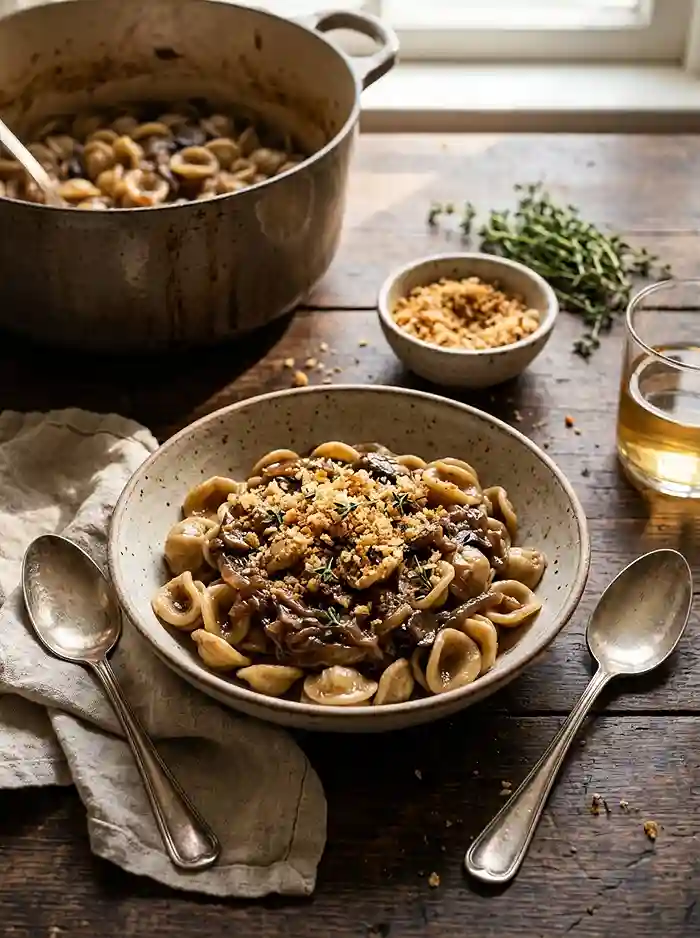
Serve bowls with a crisp green salad or roasted broccoli to balance the richness. It’s also a filling dinner on Halloween night, before the kids head out for trick-or-treating.
For a brighter pasta night, try this gluten-free frozen lemon 4-ingredient pasta. On a slower weekend, my gluten-free Mississippi pot roast recipe makes a cozy follow-up.
Final Thoughts
Try this gluten-free one-pot French onion pasta on a cool evening and leave a rating once you’ve tasted it. If something goes differently in your kitchen, tell me in the comments and I’ll help you work it out.
If you enjoy a weekend project, my gluten-free Asian dumpling lasagna is another good place to practice.
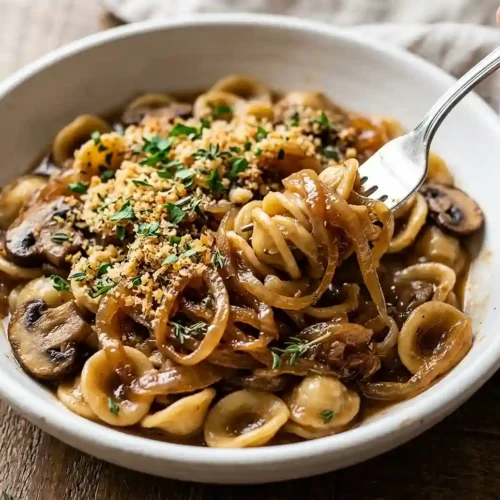
Gluten-Free One-Pot French Onion Pasta
Equipment
- Large deep skillet or Dutch oven
- Cutting board
- Chef’s knife
- Wooden spoon or spatula
- Measuring cups
- Measuring spoons
- Colander
Ingredients
Aromatics and Vegetables
- ¼ cup Olive oil
- 3 medium Yellow onions Thinly sliced
- 4 cloves Garlic Minced
- 8 ounces Cremini mushrooms Sliced
- 1 tablespoon Fresh thyme leaves
Liquids and Thickener
- ½ cup Dry white wine Can be replaced with an equal amount of broth
- 2 tablespoons Gluten-free all-purpose flour blend Check the package label to confirm gluten-free status
- 2 cups Gluten-free beef broth or vegetable broth Choose a product labeled gluten-free
- 2 cups Water Plus more if needed during cooking
Pasta and Finish
- 12 ounces Dried gluten-free orecchiette or other short-cut pasta Choose a labeled gluten-free product; short pasta shapes are easiest to stir
- 1 tablespoon Sherry vinegar Check the label and avoid malt vinegar
- To taste Salt
- To taste Freshly ground black pepper
- Optional Fresh herbs For serving
- Optional Gluten-free toasted breadcrumbs For serving; confirm the product is labeled gluten-free
Instructions
- Heat the olive oil in a large, deep skillet or Dutch oven over medium heat. Add the sliced onions and a generous pinch of salt. Cook, stirring frequently, for 25–30 minutes until deeply golden and caramelized. Reduce the heat if the onions begin to burn.
- Add the minced garlic, sliced cremini mushrooms, and fresh thyme. Sauté for 3–4 minutes, until the mushrooms begin to soften and release their liquid.
- Pour in the dry white wine, scraping up the browned bits from the bottom of the pan. Simmer for 1–2 minutes. Sprinkle in the gluten-free flour blend and stir continuously for another 2–3 minutes until the mixture thickens into a paste-like coating.
- Add the gluten-free beef broth or vegetable broth and 2 cups of water. Season with salt and freshly ground black pepper, then bring the mixture to a gentle boil. Season lightly at first because the liquid will reduce as the pasta cooks.
- Stir in the gluten-free orecchiette or other short pasta. Reduce the heat to maintain a steady simmer and cook according to the package instructions, stirring frequently to prevent sticking. Start checking for doneness at the lower end of the suggested cooking time. If the liquid is absorbed before the pasta is tender, add extra hot water or gluten-free broth a little at a time.
- Once the pasta is tender, remove the pan from the heat and stir in the sherry vinegar. Taste and adjust the salt and pepper as needed. The sauce should be glossy and thick enough to coat a spoon.
- Spoon the pasta into bowls and garnish with fresh herbs and gluten-free toasted breadcrumbs, if desired. Serve immediately while warm. If the sauce thickens as it stands, loosen it with a splash of hot water.