Tropical Coconut Rice Pudding Cups
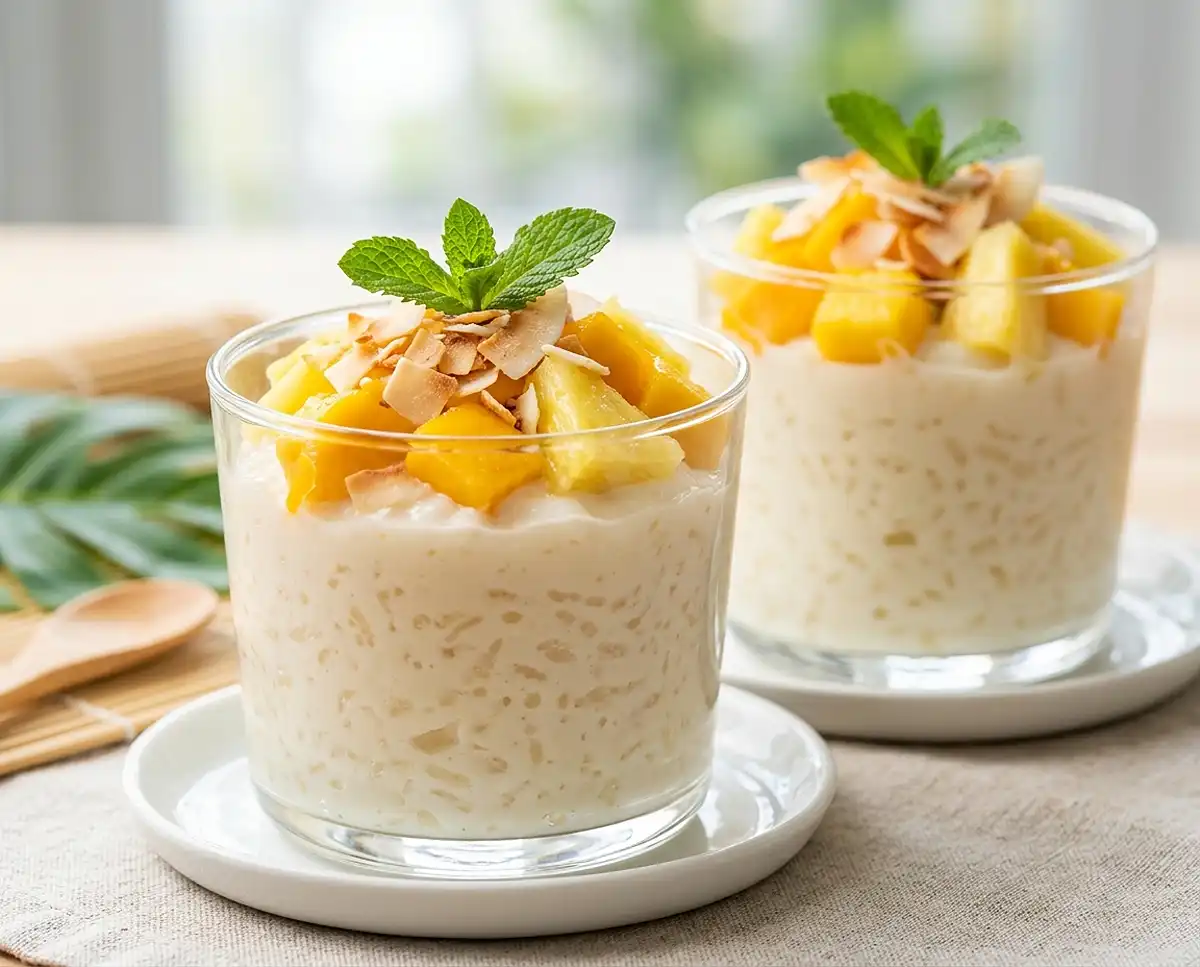
These Gluten-Free Tropical Coconut Rice Pudding Cups layer creamy coconut pudding with juicy pineapple and mango for a dairy-free island-style dessert.
The first time I made these Gluten-Free Tropical Coconut Rice Pudding Cups, I was trying to recreate a dessert I’d had at a beachfront café during a family trip to Maui. I came home, tinkered with three different rice ratios, and ended up with a pudding so creamy my daughter asked if it had ice cream hidden in it. Now they’re our go-to dessert for any backyard gathering that needs a little tropical magic.
Have you ever made rice pudding that turned out gloppy or chalky, with grains that felt sandy on your tongue? Well, the trick I’m sharing today fixes that completely, and it involves starting with already-cooked rice instead of raw grains. The pudding turns silky and luxurious, like spooning into a coconut cloud after a warm summer rain.
This gluten free dairy free pudding is naturally vegan when you use maple syrup, and it comes together with pantry staples plus whatever ripe tropical fruit you have on hand. It’s a Fourth of July dessert table favorite at my house, where the pineapple and mango feel just right against the holiday heat.
Why You’ll Love These Tropical Coconut Rice Pudding Cups
- Creamy, sweet-with-warm-spice flavor, with coconut milk standing in for heavy cream to deliver a velvety mouthfeel that rivals any dairy version.
- Beginner-friendly stovetop method, with about 20 minutes of hands-on cooking and almost no risk of failure.
- Naturally dairy-free, gluten-free, and refined-sugar-free when you use maple syrup, making this tropical dessert safe for nearly every guest list.
- Works best for warm-weather entertaining, brunches, kid-friendly desserts, and any time you want a make-ahead treat that looks like vacation in a glass.
The Secret to Perfect Gluten-Free Tropical Coconut Rice Pudding Cups
Rice pudding succeeds when the starches release gradually, thickening the milk into a velvety custard while keeping the grains intact. A few small techniques make this version stand out from the chalky stovetop puddings of years past.
- Start with already-cooked white rice, which releases its starches in a controlled, gentle way and shortens cooking time to about 20 minutes.
- Use full-fat coconut milk from a can, not the refrigerated coconut beverage, because the fat content (17-20%) is what gives the pudding its luxurious body.
- Stir frequently but not constantly, just every minute or so, to release starch without breaking the rice grains into mush.
- Add salt early, since even a small pinch wakes up the natural sweetness of coconut and ripe tropical fruit. According to the Whole Grains Council’s guide to rice, short-grain or medium-grain white rice produces the creamiest pudding texture.
Table of Contents
Ingredients
For the Coconut Rice Pudding
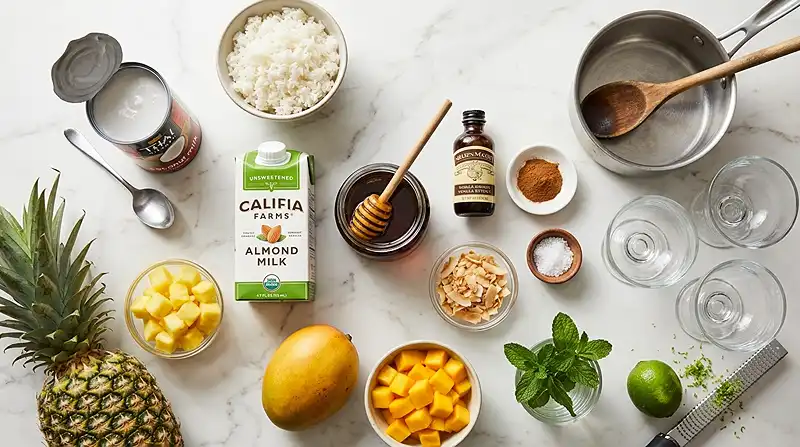
| Amount | Ingredient | Notes |
|---|---|---|
| 1 cup | cooked white rice | leftover or freshly cooked |
| 1 can (13.5 oz) | full-fat coconut milk | not refrigerated coconut beverage |
| 1 cup | unsweetened almond milk or coconut milk | adjust for richness |
| 1/4 cup | maple syrup or honey | adjust to taste |
| 1 tsp | vanilla extract | pure, not imitation |
| 1/2 tsp | ground cinnamon | freshly ground if possible |
| sea salt | a pinch |
Tropical Topping
| Amount | Ingredient | Notes |
|---|---|---|
| 1 cup | diced fresh pineapple | ¼-inch dice |
| 1 | ripe mango | diced |
| 2 tbsp | toasted coconut flakes | unsweetened |
| fresh mint leaves | for garnish | |
| lime zest | optional, brightens flavor |
A quick note on rice: short-grain or medium-grain white rice (Calrose, jasmine, or sushi rice) yields the creamiest texture. Long-grain rice like basmati works in a pinch but produces a slightly firmer pudding.
Step-by-Step Instructions
1. Combine the Pudding Base
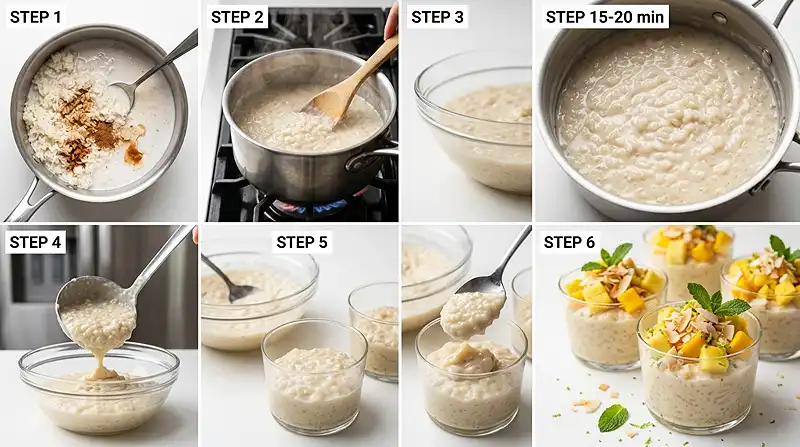
In a medium saucepan, combine the 1 cup cooked white rice, 1 can full-fat coconut milk, 1 cup almond milk or coconut milk, 1/4 cup maple syrup or honey, 1 teaspoon vanilla, 1/2 teaspoon cinnamon, and a small pinch of sea salt. Whisk gently to incorporate the maple syrup and break up any rice clumps.
Pro Tip: shake the can of coconut milk before opening, or whisk it briefly in the saucepan to combine the cream and water layers.
2. Simmer Until Thick and Creamy
Bring the mixture to a gentle simmer over medium heat, then reduce to medium-low so bubbles barely break the surface. Cook for 15-20 minutes, stirring every minute or so with a wooden spoon, until the pudding thickens enough to coat the back of the spoon and you can drag a clear line through it.
You know… the smell at this stage is pure vacation, all warm vanilla and toasted coconut wafting through the kitchen. Pro Tip: the pudding continues to thicken as it cools, so pull it off the heat when it’s slightly looser than your final desired texture.
3. Cool Briefly, Then Chill
Remove the pan from heat and let the pudding cool at room temperature for 10 minutes, stirring once or twice to release steam. Transfer to a glass bowl or directly into your serving cups, cover with plastic wrap pressed against the surface, and refrigerate for at least 1 hour.
The plastic-wrap-on-surface trick prevents a thick skin from forming, which is the biggest texture issue with chilled pudding.
4. Toast the Coconut Flakes
While the pudding chills, spread the 2 tablespoons unsweetened coconut flakes in a dry skillet over medium-low heat. Stir constantly for 3-4 minutes until they turn golden brown and smell deeply nutty, then immediately transfer to a plate to stop cooking.
Coconut goes from golden to scorched in about 30 seconds once it starts coloring, so don’t walk away from the stove during this step.
5. Dice the Tropical Fruit
Cut the fresh pineapple into ¼-inch cubes, aiming for about 1 cup total. Peel and dice 1 ripe mango into similar-sized pieces, working around the flat pit at the center.
Pro Tip: chill the fruit in the fridge for 15 minutes before assembling, so the temperature contrast against the cool pudding feels extra refreshing.
6. Assemble the Cups
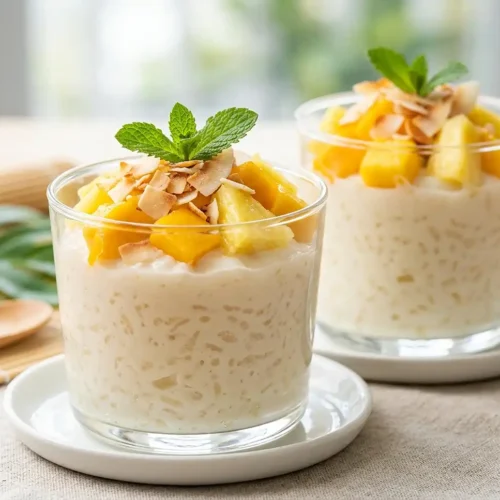
Divide the chilled rice pudding evenly among 6 serving cups, glasses, or small mason jars. Layer the diced pineapple and mango on top, then sprinkle each cup with a generous pinch of toasted coconut flakes.
Garnish each cup with a small sprig of fresh mint and an optional sprinkle of lime zest, which makes the flavors feel like sunshine bouncing off the ocean. Serve chilled, straight from the fridge.
Make It Your Own
Chocolate-coconut twist: stir 2 tablespoons of unsweetened cocoa powder into the pudding base before simmering. Top with sliced banana and toasted almonds instead of tropical fruit for a totally different vibe that still feels indulgent and dairy-free.
Berry version: swap the pineapple and mango for fresh strawberries and blueberries, finishing with toasted slivered almonds. This works beautifully for Memorial Day or summer brunches when berries are at peak ripeness.
Mango sticky rice style: use cooked Thai sticky rice instead of regular white rice, reduce the almond milk to 1/2 cup for a thicker pudding, and top exclusively with mango. Man, oh man… this version is straight out of a Thai street food market and pairs unbelievably well with a cup of jasmine tea.
Brown rice or quinoa variation: swap cooked brown rice for a nuttier texture, or use cooked quinoa for an extra protein boost. These coconut rice pudding cups stay creamy with either grain, though brown rice takes 25-30 minutes to thicken instead of 20.
Common Problems & Solutions
Problem: My rice pudding turned gluey or pasty.
Solution: Reduce heat next time and stir less aggressively.
Overcooking and over-stirring break the rice grains, releasing too much starch at once. Well… if yours is already gluey, whisk in 2-3 tablespoons of warm coconut milk to loosen it.
Problem: The pudding is too thin and runny.
Solution: Return it to the stovetop and simmer 3-5 more minutes, stirring occasionally.
Rice pudding thickens significantly as it cools, but if yours is still soupy after chilling, more cooking removes excess liquid. Add 1 tablespoon of cornstarch slurry (1 tbsp cornstarch + 2 tbsp water) for a quicker fix.
Problem: A thick skin formed on top during chilling.
Solution: Always press plastic wrap directly onto the pudding surface before refrigerating.
Air contact creates that rubbery skin, which is just dried-out proteins. If yours already has a skin, just stir it back in, since the texture blends back beautifully.
Problem: The coconut milk separated during cooking.
Solution: Whisk vigorously while heating and don’t let it boil too hard.
High heat causes the coconut fat to separate from the water. A gentle simmer and steady stirring re-emulsify everything into that creamy, unified texture.
Storage & Meal Prep
| Method | Duration | Notes |
|---|---|---|
| Counter | Up to 2 hours | Food safety limit before serving |
| Fridge | 3-4 days | Pudding only, in airtight container with plastic on surface |
| Freezer | Not recommended | Coconut milk separates and rice turns grainy when thawed |
For best results, store the chilled rice pudding in a single large airtight container and the diced fruit in separate containers, then assemble cups within 4 hours of serving. If the pudding tightens too much in the fridge, stir in 1-2 tablespoons of coconut milk to loosen it back to a creamy texture. Leftover pudding without fruit makes a stellar breakfast topped with granola and fresh berries.
Tropical Coconut Rice Pudding Cups FAQs
Can I make this rice pudding without coconut milk?
Yes, you can use full-fat oat milk or cashew cream for a similar richness, but the flavor changes significantly. Coconut milk provides both fat for creaminess and signature tropical flavor. If you skip it, add 1/2 teaspoon of coconut extract to keep that island vibe alive in the gluten free dairy free pudding.
How do I pick a ripe mango for this recipe?
A ripe mango gives gently to pressure near the stem and smells sweet and floral from a few feet away. Champagne (Ataulfo) and Tommy Atkins are both widely available and consistently delicious. If your mango is firm, let it sit on the counter for 2-3 days inside a paper bag with a banana to speed ripening.
What’s the best gluten-free white rice for this pudding?
Short-grain or medium-grain rice like jasmine, Calrose, or sushi rice gives the creamiest result. These varieties release more starch than long-grain types, which translates to that signature velvety pudding texture. All white rice is naturally gluten-free, though always verify the package for cross-contamination warnings.
Why did my pudding taste flat or one-note?
Either you skipped the salt or your fruit wasn’t ripe enough. Even a small pinch of salt dramatically enhances both sweetness and coconut flavor. Underripe pineapple and mango can also taste sour and dull, so let your fruit ripen fully on the counter before dicing.
Can I use leftover rice from a takeout container?
Absolutely, leftover plain white rice works beautifully and saves you the cooking step. Just make sure it’s plain white rice (not seasoned fried rice with soy sauce), since added flavors will clash with the sweet pudding. Day-old refrigerated rice actually produces a slightly better texture than freshly cooked, since the starches firm up overnight.
Serving Suggestions
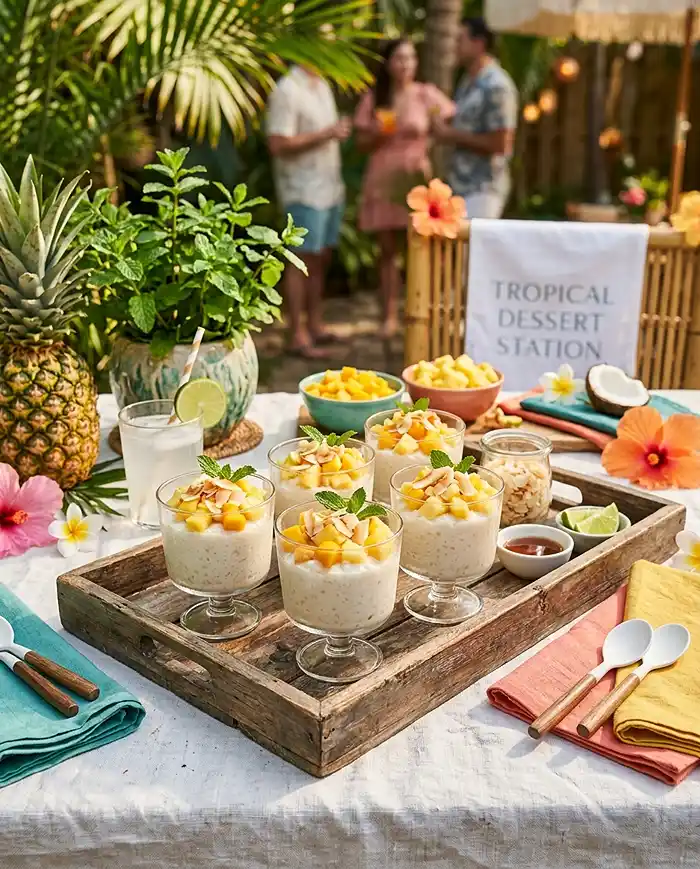
Serve these Gluten-Free Tropical Coconut Rice Pudding Cups straight from the fridge in clear glass coupes, mason jars, or small bowls for a stunning presentation. They shine as the finale to a summer cookout featuring smoky BBQ salmon taco salad as the main course, and they pair beautifully alongside tangy dill pickle ranch chickpea salad cups for a sweet-savory contrast. For brunch service, line them up on a long board with a slice of honey peach yogurt cake on the side and a chilled glass of sparkling water with mint.
Give Them a Try
If you make these tropical coconut rice pudding cups, I’d genuinely love to hear which fruit combos you tried and how creamy your pudding turned out. Pin this recipe to your easy desserts board so it’s ready when tropical fruit shows up at the market, and drop a star rating in the comments below. Your feedback helps other home cooks know exactly what to expect, and honestly, it makes my whole week brighter.
Gluten-Free Tropical Coconut Rice Pudding Cups
Equipment
- Medium saucepan
- Wooden spoon
- Whisk
- Measuring cups and spoons
- Dry skillet (for toasting coconut)
- Cutting board
- Chef’s knife
- Glass mixing bowl or storage container
- Plastic wrap
- 6 serving cups, glasses, or small mason jars
- Microplane or zester (optional, for lime zest)
Ingredients
For the Coconut Rice Pudding
- 1 cup cooked white rice leftover or freshly cooked, short or medium grain preferred
- 1 can (13.5 oz) full-fat coconut milk not refrigerated coconut beverage
- 1 cup unsweetened almond milk or coconut milk adjust for richness
- ¼ cup maple syrup or honey adjust to taste
- 1 tsp vanilla extract pure, not imitation
- ½ tsp ground cinnamon freshly ground if possible
- 1 pinch sea salt wakes up the sweetness
Tropical Topping
- 1 cup diced fresh pineapple ¼-inch dice
- 1 ripe mango diced
- 2 tbsp toasted coconut flakes unsweetened
- fresh mint leaves for garnish
- lime zest optional, brightens flavor
Instructions
- In a medium saucepan, combine the 1 cup cooked white rice, 1 can full-fat coconut milk, 1 cup almond milk or coconut milk, 1/4 cup maple syrup or honey, 1 teaspoon vanilla, 1/2 teaspoon cinnamon, and a small pinch of sea salt. Whisk gently to incorporate the maple syrup and break up any rice clumps.
- Bring the mixture to a gentle simmer over medium heat, then reduce to medium-low so bubbles barely break the surface. Cook for 15-20 minutes, stirring every minute or so with a wooden spoon, until the pudding thickens enough to coat the back of the spoon and you can drag a clear line through it.
- Remove the pan from heat and let the pudding cool at room temperature for 10 minutes, stirring once or twice to release steam. Transfer to a glass bowl or directly into your serving cups, cover with plastic wrap pressed against the surface, and refrigerate for at least 1 hour.
- While the pudding chills, spread the 2 tablespoons unsweetened coconut flakes in a dry skillet over medium-low heat. Stir constantly for 3-4 minutes until they turn golden brown and smell deeply nutty, then immediately transfer to a plate to stop cooking.
- Cut the fresh pineapple into ¼-inch cubes, aiming for about 1 cup total. Peel and dice 1 ripe mango into similar-sized pieces, working around the flat pit at the center.
- Divide the chilled rice pudding evenly among 6 serving cups, glasses, or small mason jars. Layer the diced pineapple and mango on top, then sprinkle each cup with a generous pinch of toasted coconut flakes.
- Garnish each cup with a small sprig of fresh mint and an optional sprinkle of lime zest. Serve chilled, straight from the fridge.