Unleavened South Asian Flatbread
Make gluten-free unleavened South Asian flatbread with simple pantry ingredients and no yeast. Get step-by-step directions, soft roti tips, and storage.
My first batch of gluten-free unleavened South Asian flatbread came out so stiff that my husband tapped one on the counter and it clinked like a ceramic coaster. My three kids politely declined to eat theirs, which stung more than the clinking.
Honestly… that failure sent me back to the notebook. After eight years of cooking gluten-free since a celiac diagnosis in our family, I now have a dough that rolls thin, puffs on the pan, and stays bendable at the dinner table.
Ever wonder why store-bought gluten-free flatbreads crack the moment you fold them? Most are made for shelf life, not softness. This homemade version uses simple ingredients, no yeast, and one hot skillet, so it fits a regular weeknight.
What Makes This Gluten-Free Unleavened South Asian Flatbread Worth Making
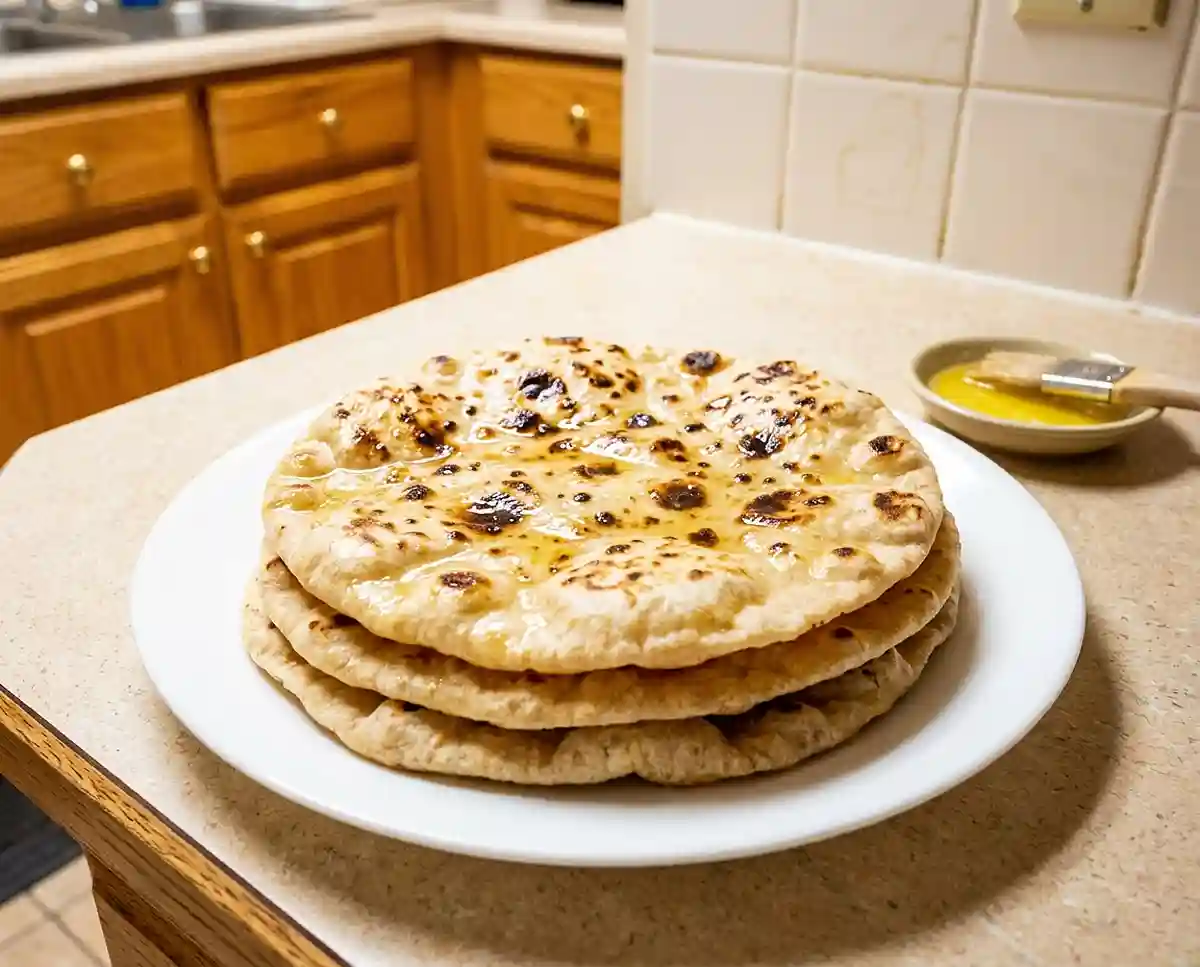
This flatbread gives you a soft, pliable round that you can tear and use to scoop curry or lentils. Here is what you can expect.
- Texture and flavor: Soft and bendable with light brown spots, plus a mild toasty flavor from the oat or rice flour.
- Difficulty: Easy. You mix, rest, roll between parchment, and cook each round in a dry skillet.
- Dietary fit: No yeast, and it is dairy-free when you skip the ghee or butter. The olive oil is optional.
- Best for: Curry nights, lentil dinners, and packed lunches. The recipe makes 6 flatbreads.
The Science Behind Great Gluten-Free Unleavened South Asian Flatbread
Wheat roti gets its stretch from gluten, so a gluten-free version needs other tools to hold together. Each technique below solves a common problem, like cracking edges, dry dough, or a flatbread that tears as you lift it.
- Xanthan gum stands in for gluten. It forms a gel with water that gives the dough elasticity, which is why the flour blend needs to include it.
- Oat or rice flour adds softness. These flours bring fine starch that keeps the crumb tender instead of sandy.
- Resting hydrates the flour. Gluten-free flours absorb water slowly, so a 20-30 minute rest makes the dough smoother and less likely to crack.
- A dry, hot pan makes steam. Moisture in the thin dough turns to steam, which puffs the surface and cooks the inside quickly.
Label reading matters here too. Oats are naturally gluten-free but often pick up gluten through shared fields and mills.
If you plan to use oat flour, Beyond Celiac’s guidance on oats and cross-contact is worth a read.
The same goes for your flour blend. A product labeled gluten-free must contain less than 20 parts per million of gluten, and NPR’s explainer on the FDA gluten-free label covers what that standard means.
Table of Contents
Ingredients
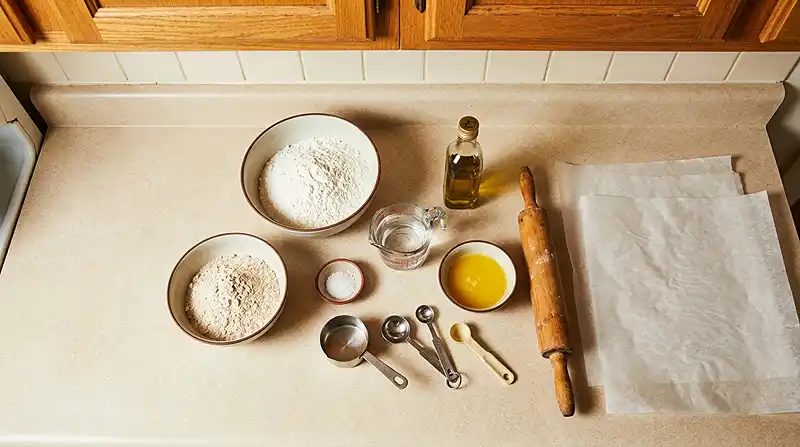
This recipe makes 6 flatbreads. If you have celiac disease, check that the flour blend, oat flour, and any ghee or butter are labeled gluten-free.
Dry Ingredients
- 2 cups gluten-free all-purpose flour blend with xanthan gum
- ½ cup gluten-free oat flour or finely ground rice flour
- ½ teaspoon salt
Wet Ingredients
- ¾ cup warm water, plus more as needed
- 1 tablespoon olive oil (optional, for a softer dough)
For Finishing
- Ghee or butter labeled gluten-free, for brushing (optional)
A note on the flour: Use a blend that already lists xanthan gum, since it does the work of gluten here. If your blend does not include it, the dough will be crumbly and hard to roll.
Instructions
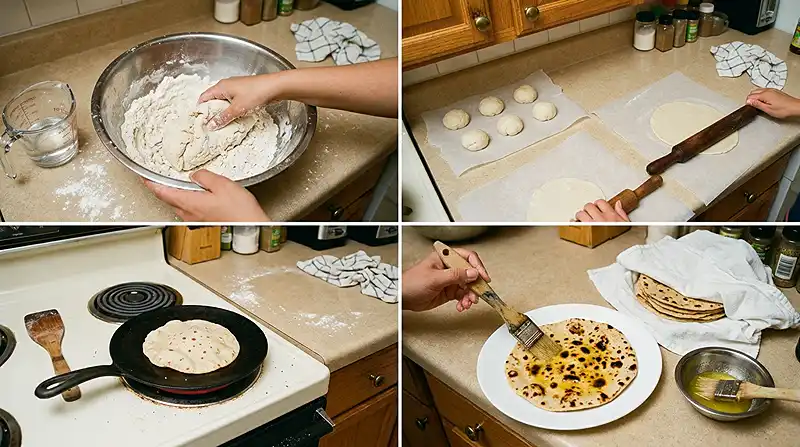
If you have been searching for how to make gluten-free Indian flatbread at home, the steps are short. The rest and the rolling method are where the soft texture comes from.
- Mix the dough: In a large bowl, whisk together the gluten-free flour blend, oat flour or rice flour, and salt. Gradually add the warm water and olive oil, if using. Mix until a soft dough forms.
- Knead and rest: Knead gently for 2–3 minutes until the dough is evenly combined. Gluten-free dough will be more delicate than traditional wheat dough. Cover with a damp cloth and let rest for 20–30 minutes.
Pro Tip: I learned the hard way that skipping the rest leads to cracked edges. If the dough feels dry after resting, knead in a little more warm water.
- Divide and roll: Divide the dough into 6 equal portions and shape into balls. Place each ball between two sheets of parchment paper and roll into a thin circle about ⅛ inch thick. If the dough cracks, gently press the edges back together.
- Heat the skillet: Heat a heavy-bottomed skillet or tava over medium-high heat. Keep the pan dry.
- Cook the flatbreads: Carefully peel away the parchment and place one flatbread on the hot skillet. Cook for 1–2 minutes, until the underside develops light brown spots and the surface begins to bubble. Flip and cook for another 1–2 minutes. Press gently with a spatula to encourage puffing, if desired.
Pro Tip: Watch for the bubbles. The surface should lift and swell like a soft pillow, and that is your cue to flip.
- Finish: Transfer to a plate and brush lightly with ghee or butter, if using. Keep the flatbreads wrapped in a clean kitchen towel to help them stay soft.
- Serve: Serve warm with curry, lentils, or your favorite South Asian dishes.
Ways to Customize This Recipe
Oat flour or finely ground rice flour both work in this recipe. Oat flour gives a slightly softer, toastier flatbread, while rice flour keeps the flavor neutral. Choose rice flour if oats are an issue for you.
Want soft gluten-free roti without yeast and without extra fat? Skip the olive oil, and the dough still comes together. It will be a little less supple, so add warm water a little at a time if it feels dry.
Look… I know the ghee is optional, but it changes the experience. A light brush while the flatbread is still hot adds flavor and helps lock in softness. For a dairy-free version, use a gluten-free dairy-free spread or leave it off.
For a homemade gluten-free chapati with simple ingredients, keep the thickness close to ⅛ inch and cook each side until you see brown spots. Thicker rounds turn out more like a flatbread than a chapati, and they need slightly longer on the pan.
If Something Went Wrong, Start Here
Problem: The edges crack while rolling. Solution: Knead in a little more warm water, then let the dough rest again. Gluten-free flours soak up water slowly, so a dry-looking dough often just needs more time to hydrate.
Problem: The flatbread is stiff or dry. Solution: Roll it thinner and wrap it in a towel right after cooking. Oh wow… the towel makes a bigger difference than I expected, because trapped steam softens the surface as it cools.
Problem: The dough sticks to the parchment. Solution: Add a few drops of olive oil to your hands, or chill the dough for a few minutes. I learned the hard way that adding extra flour dries the dough out, which is why parchment is the better fix.
Problem: It stays pale and never bubbles. Solution: Let the pan heat longer before you add the dough. A pan that is not hot enough cooks the flatbread slowly, which dries it out before it can puff.
Storage & Meal Prep
| Method | Duration | Notes |
|---|---|---|
| Counter | 2-3 days | Airtight container; softest within the first day |
| Fridge | 5-7 days | Bring to room temp before reheating |
| Freezer | 2-3 months | Wrap individually |
Reheat each flatbread on a dry skillet for about 20 seconds per side, or wrap it in a damp paper towel and microwave it briefly. Gluten-free flatbreads firm up as they cool, so reheating is what brings the softness back.
Leftovers make good wraps, quick pizza bases, or crispy chips when you bake torn pieces with a little oil. Nothing needs to go to waste.
Frequently Asked Questions
Can I make the dough ahead of time?
Yes, you can make the dough up to a day ahead. Cover it well and refrigerate it, then let it come to room temperature and knead it gently before rolling. Add a splash of warm water if it feels stiff.
How do I keep gluten-free flatbread soft?
Wrap the cooked flatbreads in a clean kitchen towel right away. Brushing them with ghee or butter, and adding the optional olive oil to the dough, also helps. Cooking them only until they have light brown spots prevents drying.
What is the best flour blend for gluten-free flatbread?
Choose a gluten-free all-purpose blend that already includes xanthan gum. The gum gives the dough elasticity so it can be rolled thin without tearing. Blends without it tend to turn crumbly.
Why did my flatbread crack when I rolled it?
The dough was most likely too dry or too short on rest time. Knead in a little warm water and let it rest again so the flour can finish absorbing it. Rolling between parchment also helps you press cracked edges back together.
Can I use rice flour instead of oat flour?
Yes, finely ground rice flour works in place of oat flour. The flatbread will taste more neutral and be a bit less toasty. It is a useful swap if you avoid oats.
Serving Suggestions
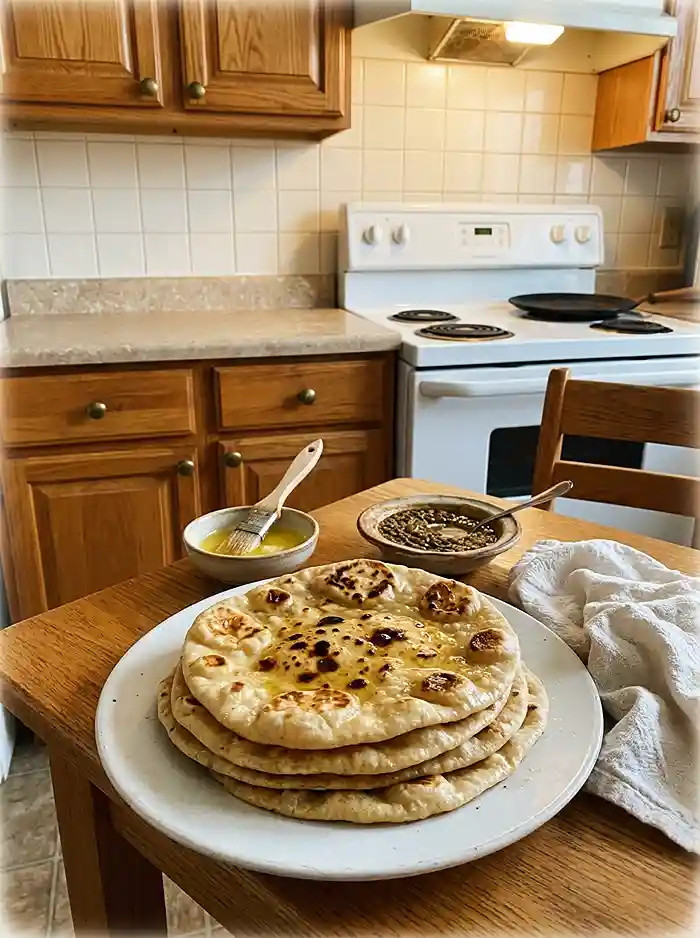
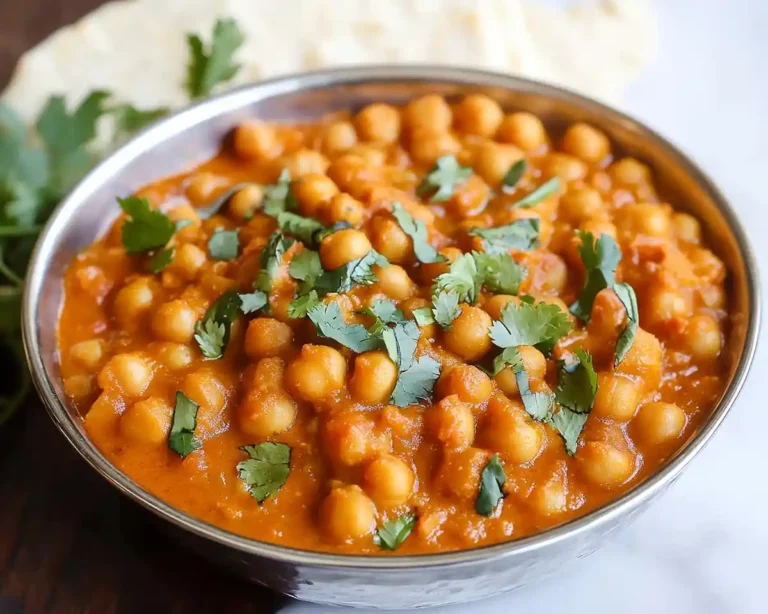
Serve these warm with curry, lentils, or any saucy South Asian dish, and tear off pieces to scoop. They also work on a Super Bowl snack table, where a stack of warm flatbreads beside bowls of dip disappears faster than the chips.
For a full meal, try a side of whole cucumber salad and a snack of gluten-free pumpkin seeds.
Finish with gluten-free pumpkin churro snack cake for dessert.
Final Thoughts
If you make this gluten-free unleavened South Asian flatbread, I would love to hear how it turned out. Leave a comment with your tweaks and a star rating so other readers know what to expect.
Pin the recipe to Pinterest so you can find it on your next curry night. Tell me what worked in your kitchen, even if the answer is that the first one went to the dog.
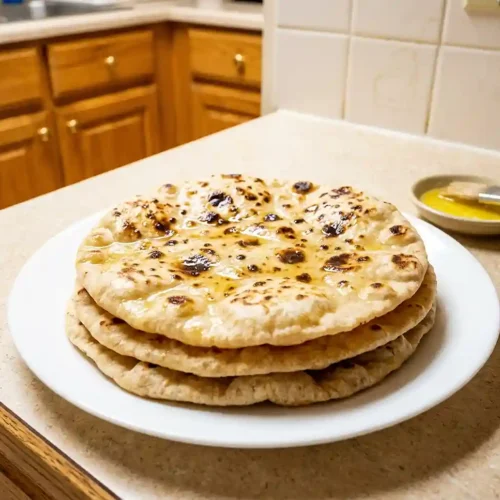
Gluten-Free Unleavened South Asian Flatbread
Equipment
- Large mixing bowl
- Whisk
- Measuring cups
- Measuring spoons
- Kitchen scale
- Damp kitchen towel
- Rolling Pin
- Parchment paper
- Heavy-bottomed skillet or tava
- Spatula
- Pastry brush
Ingredients
Dry Ingredients
- 2 cups gluten-free all-purpose flour blend Must contain xanthan gum
- ½ cup gluten-free oat flour or finely ground rice flour Choose certified gluten-free oat flour if using oats
- ½ teaspoon salt
Wet Ingredients
- ¾ cup warm water Plus more as needed
- 1 tablespoon olive oil Optional, for a softer dough
For Finishing
- ghee or butter Labeled gluten-free; optional for brushing. Use a dairy-free spread or omit for a dairy-free version
Instructions
- In a large bowl, whisk together the gluten-free all-purpose flour blend, oat flour or finely ground rice flour, and salt. Gradually add the warm water and olive oil, if using. Mix until a soft dough forms, adding a little more warm water if needed.
- Gently knead the dough for 2–3 minutes until evenly combined. Cover with a damp kitchen towel and let rest for 20–30 minutes so the flour can absorb the water and the dough becomes easier to roll.
- Divide the dough into 6 equal portions and shape each portion into a ball. Place each ball between two sheets of parchment paper and roll into a thin circle about 1/8 inch thick. If the edges crack, gently press them back together. Add a little warm water if the dough feels dry.
- Heat a heavy-bottomed skillet or tava over medium-high heat. Keep the pan dry and allow it to become thoroughly hot before cooking the flatbreads.
- Carefully peel away the parchment and place one flatbread on the hot skillet. Cook for 1–2 minutes until light brown spots appear underneath and bubbles begin forming on the surface. Flip and cook for another 1–2 minutes. Press gently with a spatula if desired to encourage puffing.
- Transfer the cooked flatbread to a plate and lightly brush with ghee or butter if desired. Stack the flatbreads and wrap them in a clean kitchen towel to help retain moisture and keep them soft.
- Serve warm with curry, lentils, or your favorite South Asian dishes. Tear off pieces to scoop up sauces, or use the flatbreads as wraps.