Blueberry Cream Cheese Breakfast Casserole
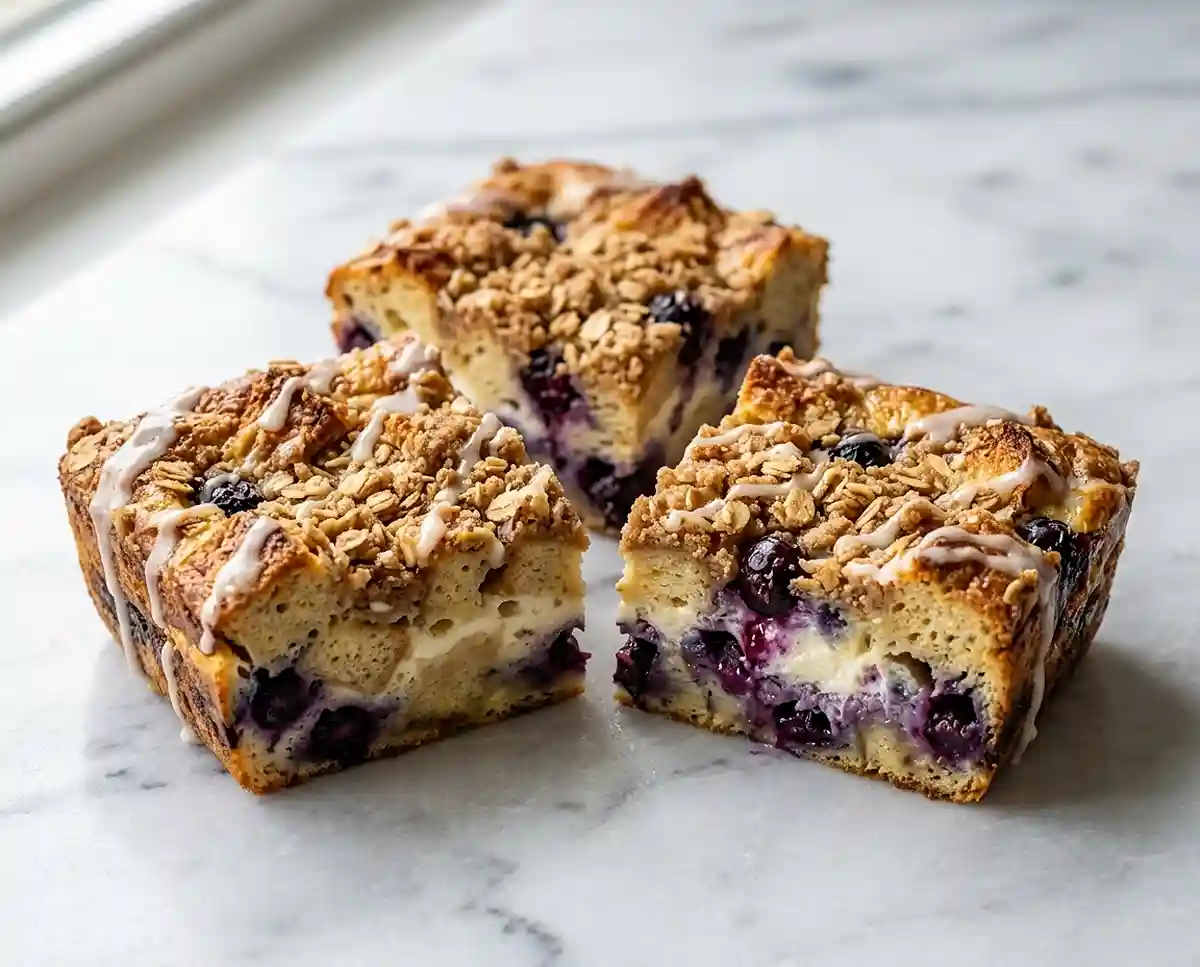
Make this gluten-free blueberry cream cheese breakfast casserole overnight, then bake in the morning. Custardy bread, sweet blueberries, and a crunchy streusel topping.
The first time I brought a gluten-free blueberry cream cheese breakfast casserole to an Easter brunch, I was honestly a little nervous. Gluten-free bread can go gummy in a custard bake if you’re not careful, and I’d learned that the hard way the week before during my test run.
That first attempt came out of the oven dense in the middle and pale on top. I adjusted the bread-to-custard ratio, let it soak overnight instead of just 20 minutes, and the second version? Custardy in the center, golden and crackly on top, with little pockets of cream cheese melted through every layer. My family didn’t leave a square.
Well… if you’ve ever wondered whether a make-ahead breakfast casserole can hold its own at a holiday table without anyone knowing it’s gluten-free, this is your answer.
Why You’ll Love This Recipe
- Custard texture that actually works gluten-free: The overnight soak lets the bread absorb every bit of the egg and milk mixture, so the center bakes up soft and set—never gummy or dry.
- Beginner-friendly and low-stress: Most of the work happens the night before. Morning of, you add the streusel and slide it into the oven.
- Built-in crowd-pleaser: Cream cheese, blueberries, and a crunchy oat streusel hit sweet and savory notes at once. Kids and adults both go back for seconds.
- Flexible for dietary needs: Dairy-free swaps work seamlessly here—more on those below.
The Secret to Perfect Gluten-Free Blueberry Cream Cheese Breakfast Casserole
- Use certified gluten-free bread, not fresh-baked: Slightly stale or day-old GF bread absorbs the custard without falling apart. Fresh bread can over-saturate and turn the bottom layer soggy. Look for a certified gluten-free sandwich loaf with a firm crumb.
- Press the bread into the custard: After pouring the egg mixture over, use a spatula to gently press the bread down so every cube makes contact. This step is the difference between custardy and dry pockets.
- Cold butter is non-negotiable for streusel: Cutting cold butter into the oat flour and rolled oats creates those distinct coarse crumbs that bake into a crisp, shatter-ready topping. Melted butter makes paste, not crumble.
- Rest before slicing: Ten minutes out of the oven lets the custard finish setting. Cut too early and the layers slide apart. Patience here means clean, beautiful squares that hold their shape on the plate.
Certified gluten-free oats and oat flour are essential in a recipe like this—not just for taste but for safety. The trusted celiac research at the Celiac Disease Foundation explains exactly why oat certification matters and what cross-contamination risks to watch for.
Table of Contents
Ingredients
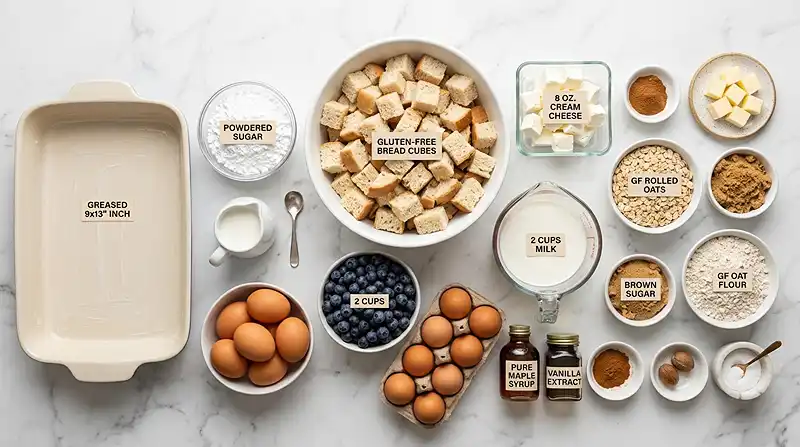
For the Casserole
| Ingredient | Amount | Notes |
|---|---|---|
| Certified gluten-free bread, cut into 1-inch cubes | 8 cups | Slightly stale or day-old works best |
| Cream cheese, softened and cut into small cubes | 8 ounces | Full-fat for best melt and flavor |
| Fresh blueberries | 2 cups | Frozen works; do not thaw first |
| Large eggs | 8 | |
| Milk of choice | 2 cups | Whole milk, oat milk, or almond milk all work |
| Pure maple syrup or honey | ¼ cup | Maple syrup keeps it refined sugar-free |
| Vanilla extract | 2 teaspoons | |
| Ground cinnamon | 1 teaspoon | |
| Ground nutmeg | ½ teaspoon | Freshly grated is stronger—use a pinch less if fresh |
| Salt | ¼ teaspoon |
For the Streusel Topping
| Ingredient | Amount | Notes |
|---|---|---|
| Certified gluten-free oat flour | ½ cup | Must be certified GF |
| Certified gluten-free rolled oats | ½ cup | Must be certified GF |
| Brown sugar | ¼ cup | Coconut sugar works as a swap |
| Ground cinnamon | ½ teaspoon | |
| Cold unsalted butter, cubed | ¼ cup | Must be cold—do not melt |
Optional Glaze
| Ingredient | Amount | Notes |
|---|---|---|
| Powdered sugar | ½ cup | |
| Milk | 1–2 tablespoons | Add gradually to reach drizzle consistency |
| Vanilla extract | ½ teaspoon |
Instructions
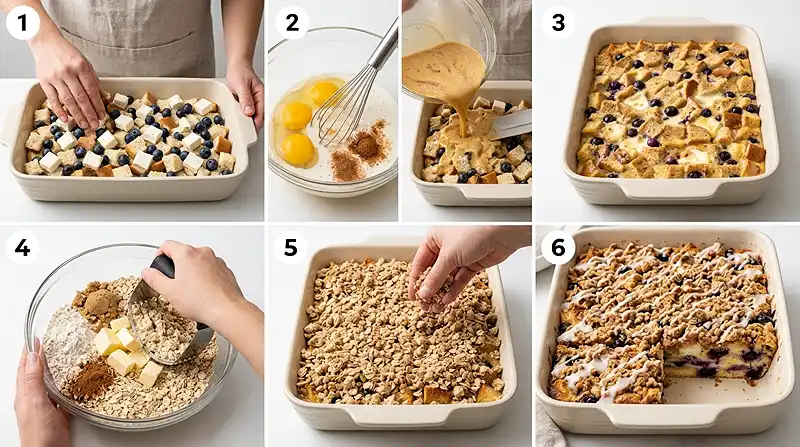
- Preheat and grease. Preheat the oven to 350°F (175°C) and grease a 9×13-inch baking dish. A well-greased dish makes serving those first squares much easier and keeps the bottom crust from sticking.
- Build the first layer. Spread half of the gluten-free bread cubes evenly in the prepared baking dish. This base layer soaks up the most custard, so make sure it covers the bottom completely without big gaps.
- Add cream cheese and blueberries. Scatter the cream cheese cubes and fresh blueberries evenly over the bread. The cream cheese will melt into little creamy pockets during baking—you want them distributed so every serving gets some.
- Top with remaining bread. Layer the rest of the bread cubes over the cream cheese and blueberries. Press down gently so the layers nestle together.
- Make the custard. In a large bowl, whisk together the eggs, milk, maple syrup, vanilla, cinnamon, nutmeg, and salt until well combined. The mixture should look smooth and uniformly golden from the yolks.
- Pour and press. Pour the egg mixture evenly over the bread, then press gently with a spatula so the bread absorbs the custard. Every cube should feel slightly saturated before it goes into the fridge.
- Rest or refrigerate overnight. Let the casserole rest for 20–30 minutes at room temperature, or cover and refrigerate overnight for the best texture. The overnight soak is where the magic happens—the bread transforms from cubes into one cohesive, custardy bake.
- Make the streusel. Combine the gluten-free oat flour, gluten-free rolled oats, brown sugar, and cinnamon in a bowl. Cut in the cold butter using a pastry cutter or your fingertips until coarse crumbs form. The mixture should look like rough, uneven gravel—not a smooth paste.
- Top and bake. Sprinkle the streusel evenly over the casserole. Bake for 45–55 minutes, or until the center is set, the top is deep golden brown, and a knife inserted near the center comes out clean.
- Rest, glaze, and serve. Allow the casserole to cool for 10 minutes before serving. If using the optional glaze, whisk together the powdered sugar, milk, and vanilla until smooth, then drizzle over the warm casserole in thin ribbons just before serving.
Make It Your Own
For a fully dairy-free version, swap the cream cheese for a softened block of dairy-free cream cheese alternative and use coconut oil in place of the cold butter in the streusel. Use your preferred plant-based milk in the custard. You know… the texture difference is genuinely minimal, and the blueberry flavor carries just as well without any dairy.
Mixed berries work beautifully here instead of blueberries alone. Try a combination of raspberries, blackberries, and blueberries for a more complex fruit layer. Raspberries in particular add a bright tartness that cuts through the richness of the cream cheese and custard.
If you want to boost the protein content, whisk a scoop of unflavored collagen peptides directly into the egg and milk mixture before pouring. It dissolves completely and doesn’t affect the flavor or texture, but it meaningfully increases the protein per serving—a smart upgrade for this make-ahead breakfast.
Coconut sugar works as a one-to-one replacement for the brown sugar in the streusel topping. It has a slightly deeper, caramel-like flavor that pairs well with the cinnamon and oats. If you’d like to explore more gluten-free breakfast ideas with similar make-ahead appeal, our gluten-free peach streusel yogurt jars use the same streusel technique in a lighter, no-bake format.
Common Problems & Solutions
Problem: The center is still jiggly after 55 minutes. Cover the dish loosely with foil and bake for another 10 minutes. Gluten-free bread is denser than conventional bread and can hold more moisture, which means the custard sometimes takes longer to set in the center. A knife test near the middle is the most reliable indicator—if it comes out with wet custard, keep going.
Problem: Streusel sinks into the casserole during baking. This happens when the streusel is too fine or the butter was too warm. Use cold butter cut into pieces no smaller than a pea, and work quickly with your fingertips so the heat from your hands doesn’t soften it. Coarser crumbs sit on top and crisp up; fine crumbs absorb into the custard and disappear.
Man, oh man… Problem: The bottom layer is soggy. This almost always comes from using fresh-baked or very soft gluten-free bread. Firmer, slightly stale GF sandwich bread absorbs the custard without disintegrating. If your bread is too soft, spread the cubes on a baking sheet and dry them in a 300°F oven for 10 minutes before assembling.
Problem: Cream cheese clumps didn’t melt evenly. Make sure the cream cheese is fully softened to room temperature and cut into small, even cubes before scattering it over the bread. Large cold chunks take too long to melt and can leave dense, undercooked spots in the finished casserole.
For detailed guidance on choosing the right certified gluten-free bread for baked dishes like this one, the authoritative gluten-free living guide from Beyond Celiac is worth bookmarking as you build out your pantry.
Storage & Meal Prep
| Method | Duration | Notes |
|---|---|---|
| Counter | 2–3 hours | Airtight container; refrigerate promptly after serving |
| Fridge | 5–7 days | Airtight container; bring to room temp for 10 min before reheating |
| Freezer | 2–3 months | Wrap individual portions tightly; thaw overnight in the fridge |
To reheat individual portions, microwave on medium power for 60–90 seconds or warm in a 325°F oven for about 12 minutes until heated through. The streusel won’t be quite as crisp after refrigeration, but a few minutes uncovered in the oven brings it back.
Leftover squares make a great weekday breakfast all week long. Pair a slice with a protein-forward side like our savory turkey sausage apple breakfast skillet for a more balanced morning plate.
Blueberry Cream Cheese Breakfast Casserole FAQs
Can I assemble this casserole the night before?
Yes, and it actually turns out better that way. Assembling the night before gives the gluten-free bread a full overnight soak in the custard, which produces a more cohesive, custardy texture than a short 20-minute rest. Cover tightly with plastic wrap and refrigerate. Add the streusel right before baking—not the night before—so it stays crumbly and crisp on top.
Can I use frozen blueberries instead of fresh?
Yes, frozen blueberries work well here. Do not thaw them before adding to the casserole—frozen berries hold their shape better during the long bake and release their juices gradually rather than all at once. Thawed berries can make the bread layer underneath too wet.
How do I know when the casserole is fully baked?
The most reliable test is inserting a knife near the center of the dish. It should come out clean or with only a few moist crumbs—not wet custard. The top should be deep golden brown and the edges should be visibly set and slightly pulled away from the sides of the dish. If the center is still jiggly, cover loosely with foil and bake in 10-minute increments until set.
What’s the best gluten-free bread to use for a breakfast casserole?
A firm-crumbed, certified gluten-free sandwich loaf works best. Slightly stale or day-old bread is ideal because it absorbs the custard without falling apart. Avoid fresh-baked or very soft GF breads—they tend to over-saturate and create a soggy bottom layer. If your bread is too soft, dry the cubes in a 300°F oven for 10 minutes before assembling.
Why did my streusel sink into the casserole?
Streusel sinks when the crumbs are too fine or the butter was too warm when mixed. Use cold butter and work quickly with a pastry cutter or fingertips to keep the pieces coarse and distinct. Add the streusel immediately before baking, not before refrigerating overnight, so it stays on top rather than absorbing into the custard.
Serving Suggestions
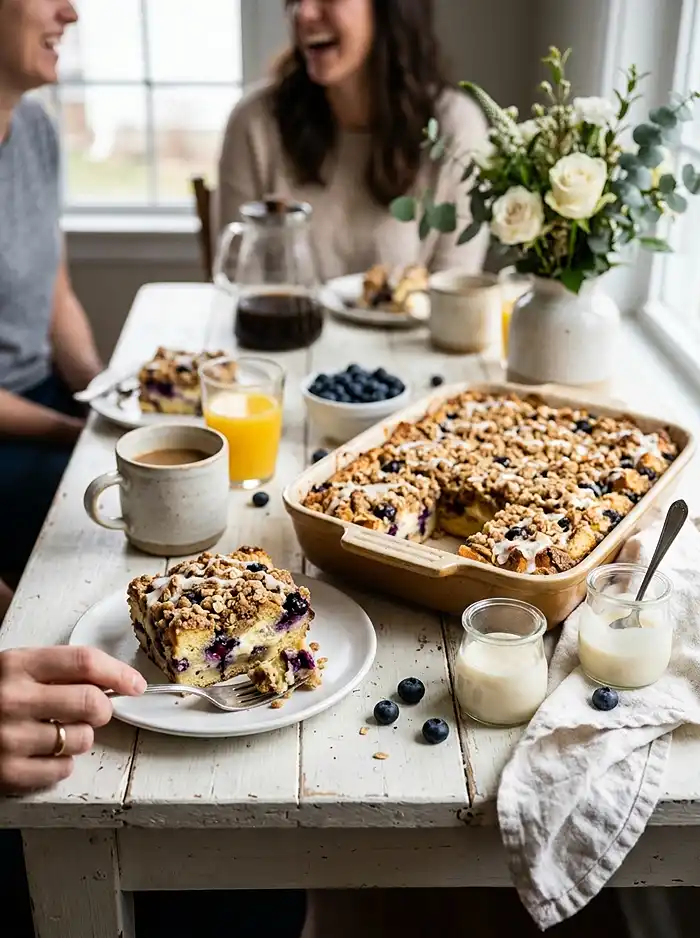
This casserole is built for a crowd, which makes it a natural fit for Christmas morning or a Mother’s Day brunch spread. Set it in the center of the table with a drizzle of vanilla glaze and a bowl of fresh blueberries on the side, and it looks like you spent hours on breakfast—even though most of the work happened the night before.
For a full gluten-free brunch table, pair it with something savory to balance the sweetness. Our savory turkey sausage apple breakfast skillet is a reliable counterpart—hearty, protein-forward, and ready in under 30 minutes.
If you’re feeding a lighter crowd or want a make-ahead option that doesn’t require the oven, our high-protein blueberry cheesecake crepes bring a similar blueberry and cream cheese pairing in a more elegant format.
Final Thoughts
This gluten-free blueberry cream cheese breakfast casserole is one of those recipes that earns its place in your regular rotation—not just for holidays, but for any morning when you want something warm and satisfying without standing over the stove.
Give it a try and let me know how it turned out in the comments. Did you swap the berries? Try a dairy-free version? Leave a rating—it helps other readers find this recipe and tells me what’s working in your kitchen.
If you share it on Pinterest, tag your creation so the community can see it. There’s nothing better than seeing this casserole come out of someone else’s oven, golden and bubbling, exactly the way it should.
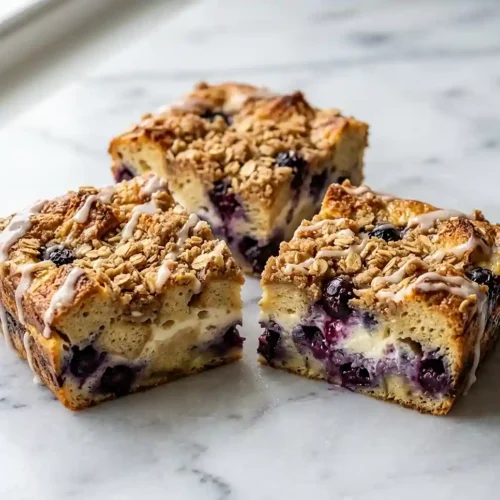
Gluten-Free Blueberry Cream Cheese Breakfast Casserole
Equipment
- 9×13 inch baking dish
- Large mixing bowl
- Medium mixing bowl
- Whisk
- Spatula
- Pastry cutter or fork
- Measuring cups and spoons
Ingredients
For the Casserole
- 8 cups Certified gluten-free bread, cut into 1-inch cubes Slightly stale or day-old works best
- 8 ounces Cream cheese, softened and cubed Full-fat recommended
- 2 cups Fresh blueberries Frozen may be used without thawing
- 8 Large eggs
- 2 cups Milk of choice Whole milk, oat milk, or almond milk
- ¼ cup Pure maple syrup or honey Maple syrup keeps it refined sugar-free
- 2 teaspoons Vanilla extract
- 1 teaspoon Ground cinnamon
- ½ teaspoon Ground nutmeg Use slightly less if freshly grated
- ¼ teaspoon Salt
For the Streusel Topping
- ½ cup Certified gluten-free oat flour
- ½ cup Certified gluten-free rolled oats
- ¼ cup Brown sugar Coconut sugar may be substituted
- ½ teaspoon Ground cinnamon
- ¼ cup Cold unsalted butter, cubed Keep cold
Optional Glaze
- ½ cup Powdered sugar
- 1-2 tablespoons Milk Adjust for desired consistency
- ½ teaspoon Vanilla extract
Instructions
- Preheat the oven to 350°F (175°C) and grease a 9×13-inch baking dish.
- Spread half of the gluten-free bread cubes into the baking dish.
- Scatter the cream cheese cubes and blueberries evenly over the bread.
- Top with the remaining bread cubes and gently press the layers together.
- Whisk together the eggs, milk, maple syrup, vanilla, cinnamon, nutmeg, and salt until smooth.
- Pour the custard evenly over the bread and gently press the bread into the liquid so it absorbs evenly.
- Cover and refrigerate overnight, or let rest for 20–30 minutes if baking the same day.
- Mix the oat flour, rolled oats, brown sugar, and cinnamon. Cut in the cold butter until coarse crumbs form.
- Sprinkle the streusel over the casserole and bake for 45–55 minutes until the center is set and the top is golden brown.
- Cool for 10 minutes. If desired, whisk together the glaze ingredients and drizzle over the casserole before serving.