
Greek Lemon Potato Chicken Bake
Discover how to make gluten-free Greek lemon potato chicken bake with simple ingredients, step-by-step instructions, and tips for crispy skin every time.
The first time I made a Greek lemon potato chicken bake, I pulled it out of the oven too early and served soggy potatoes to my whole family on Easter Sunday. Not my finest moment. But that disaster taught me the one temperature trick that changes everything — and now this gluten-free chicken bake is the dish everyone asks me to bring to every holiday table.
Gluten-free Greek lemon potato chicken bake is pure weeknight magic: bone-in, skin-on chicken thighs roast right on top of russet potato wedges, all swimming in a bright, garlicky lemon and olive oil marinade. You know, there’s something about that combination of lemon juice, fresh herbs, and golden chicken skin that makes the whole house smell like a Greek taverna.
Table of Contents
Why You’ll Love This Greek Lemon Potato Chicken Bake
- Naturally gluten-free — no substitutions needed. Every single ingredient is inherently free of gluten, making this a safe, confident choice for celiac families and gluten-sensitive guests alike.
- One pan, zero fuss — chicken and potatoes cook together in the same baking dish, so cleanup is minimal and weeknight stress stays low.
- Crispy skin, tender potatoes — the two-temperature oven method delivers chicken skin that crackles and potatoes that are creamy inside without turning to mush.
- Endlessly flexible — works beautifully as a casual Tuesday dinner or a centerpiece dish for a Sunday family gathering. Scale it up for a crowd or keep it intimate for four.
The Secret to Perfect Gluten-Free Greek Lemon Potato Chicken Bake
- Two-stage oven temperature — starting at 375°F lets the potatoes absorb the lemon-herb liquid slowly, then cranking to 425°F crisps the chicken skin and reduces the sauce to a concentrated, glossy finish. Skipping that second blast is why most versions come out pale and steamed instead of golden.
- Bone-in, skin-on chicken is non-negotiable — the bones add body to the pan drippings and the skin acts as a self-basting lid, keeping the meat incredibly juicy. Boneless thighs will cook faster and dry out; they won’t give you the same result.
- Submerge the potato wedges — russet potatoes need contact with the liquid to cook through evenly. Rearranging any exposed wedges at the 40-minute mark (before the temperature increase) is the small step most recipes skip, and it makes a real difference.
- Rub the garlic and herbs directly on the skin — rather than just letting them float in the liquid, pressing crushed garlic and fresh herb sprigs onto the chicken skin before it goes in the oven means those aromatics bloom directly into the fat as it renders. The flavor payoff is worth the extra thirty seconds.
Ingredients
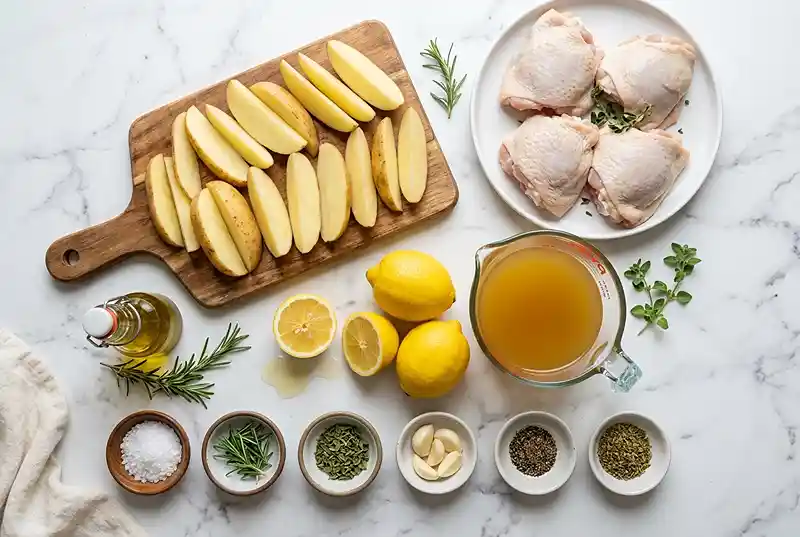
This recipe serves 4. According to Beyond Celiac’s trusted gluten-free ingredient guidance, all of the components listed here are naturally gluten-free — no specialty swaps required.
| Ingredient | Amount | Notes |
|---|---|---|
| Russet potatoes, cut into 8 wedges | 2 pounds | Russets hold their shape better than waxy potatoes at high heat |
| Bone-in, skin-on chicken thighs (about 6) or whole legs (about 4) | 2 pounds | Do not substitute boneless — bones add flavor and keep meat moist |
| Chicken stock | 3/4 cup | Use a certified gluten-free stock to be safe |
| Fresh lemon juice | 1/2 cup | Freshly squeezed only — bottled juice won’t give the same brightness |
| Olive oil | 1/3 cup | Extra-virgin preferred for best flavor |
| Sea salt | 1 teaspoon | |
| Fresh rosemary, oregano, or thyme, roughly chopped | 1 teaspoon | Or use a mix — all three work beautifully together |
| Garlic cloves, crushed | 4 | Optional but highly recommended |
Instructions
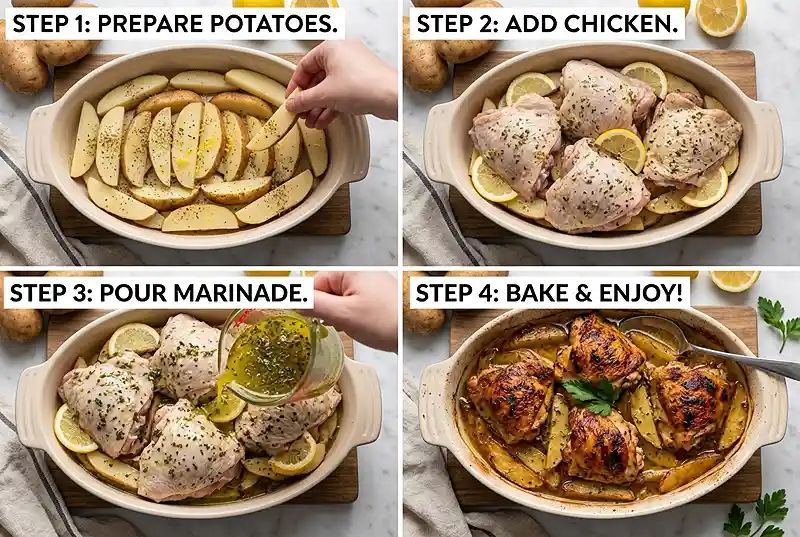
Step 1: Preheat the oven. Set your oven to 375°F. This lower starting temperature is intentional — it gives the potatoes time to soak up the lemon and herb liquid before the final high-heat blast.
Step 2: Arrange the potatoes and chicken. Arrange the potato wedges in a 9 x 13 baking dish in an even layer, fitting as many as possible with the flat side touching the bottom. Place the chicken thighs or legs on top, skin-side up.
Step 3: Make the marinade. In a liquid 2-cup measure, whisk together the chicken stock, olive oil, fresh lemon juice, sea salt, herbs, and crushed garlic until well combined. The marinade should look slightly emulsified — that thin coating of olive oil and citrus is what clings to the chicken skin and makes it crackle.
Step 4: Pour and rub. Pour the marinade evenly over the chicken and potatoes. Using your hands, take a few of the garlic cloves and herb pieces and rub them directly onto the tops of the chicken skin. Tuck the remaining garlic and herbs in among the potato wedges. If you have extra herb sprigs, nestle those in too.
Pro Tip: Don’t skip the hand-rubbing step. Direct contact between the aromatics and the skin means they infuse into the fat as it renders, giving you flavor that no amount of liquid can replicate.
Step 5: First bake. Transfer the uncovered pan to the oven and bake for 40 minutes. Resist the urge to cover it — steam is the enemy of crispy skin.
Step 6: Rearrange the potatoes. Remove the pan from the oven. If any potato wedges are sitting above the liquid line, rearrange them so they’re submerged or at least touching the pan juices. This step ensures even cooking and prevents dry, chalky edges.
Final High-Heat Finish
Step 7: Crank the heat. Increase the oven temperature to 425°F. Return the pan and bake until the potatoes are fork-tender, the chicken skin is deep golden and crisp, and the liquid has reduced to a concentrated, slightly saucy consistency at the bottom of the dish. The skin should snap like parchment when you tap it — that’s your cue it’s ready.
Pro Tip: Keep an eye on the pan during this final stage. The difference between “saucy and golden” and “dried out” can be as little as five minutes depending on your oven.
Step 8: Serve. Remove from the oven and serve directly from the baking dish. A simple green salad or a pile of wilted spinach alongside is all you need.
Make It Your Own
Swap the chicken cuts. Whole chicken legs (drumstick and thigh together) work just as well and are often less expensive than thighs alone. Just check for doneness using a meat thermometer — you’re looking for an internal temperature of 165°F. Bone-in chicken breasts can be used but are more prone to drying out at the higher finishing temperature, so pull them the moment they’re cooked through.
Try different fresh herbs. The recipe calls for rosemary, oregano, or thyme — but this is a gluten-free chicken bake, not a rule book. A mix of all three is genuinely beautiful here. Fresh flat-leaf parsley stirred in at the very end adds a grassy, bright finish that cuts through the richness of the olive oil.
Add other vegetables. Well… if you want to stretch this into a fuller sheet pan dinner, halved cherry tomatoes or quartered red onions can go right into the pan with the potatoes. Add them during the last 20 minutes of cooking so they don’t dissolve entirely. Zucchini works too, but cut it thick — it cooks fast.
Make it dairy-free. Good news: there’s no dairy in this recipe to begin with. It’s naturally dairy-free as written. If you’re serving someone with multiple dietary restrictions, this gluten-free chicken bake fits the bill without any modifications at all.
Intensify the lemon flavor. For a more assertive citrus hit, add the zest of one lemon to the marinade along with the juice. The zest contains the essential oils that carry the most potent lemon flavor — the juice alone is bright, but the zest makes it sing.
Common Problems & Solutions
Problem: The chicken skin isn’t crispy. The most common cause is covering the pan or not raising the oven temperature for the final bake. Make sure the pan stays uncovered the entire time, and don’t skip the 425°F finish. If your skin is still soft, pop the pan under the broiler for 2 to 3 minutes — watch it closely.
Problem: The potatoes are still hard after baking. This usually means the wedges weren’t submerged enough in the liquid during the first 40 minutes. Always rearrange before the temperature increase. Russets cut into larger wedges may also need an extra 10 to 15 minutes at the higher temperature — trust the fork test over the clock.
Problem: The marinade evaporated completely and everything is dry. Man, oh man — this one is frustrating, and it almost always comes from an oven that runs hot or a pan that’s too small, causing the liquid to evaporate too fast. Use a 9 x 13 dish as specified, and if your oven tends to run hot, check the pan at the 30-minute mark instead of 40.
Problem: The chicken tastes bland. Gluten-free chicken bake recipes can fall flat when the marinade isn’t given enough time to penetrate. For deeper flavor, combine the chicken and marinade in the baking dish, cover it, and let it rest in the refrigerator for 30 minutes to 2 hours before baking. The lemon and salt will start breaking down the surface of the chicken, and the difference is noticeable.
Problem: The garlic is burning. Garlic left on top of the chicken skin during the 425°F blast can over-brown and turn bitter. Make sure to tuck the garlic cloves down among the potato wedges before the final bake, reserving only the herb sprigs on top of the chicken if you want the visual.
Storage & Meal Prep
| Method | Duration | Notes |
|---|---|---|
| Counter | 2-3 hours max | Do not leave chicken at room temperature beyond 2 hours |
| Fridge | 3-4 days | Store in an airtight container; keep any remaining pan juices with leftovers |
| Freezer | 2-3 months | Wrap chicken and potatoes separately; potatoes may soften slightly after thawing |
To reheat, place leftovers in a covered baking dish with a splash of chicken stock and warm at 350°F for 15 to 20 minutes. This keeps the potatoes from drying out and revives the pan juices. For the chicken skin, uncover for the last 5 minutes to re-crisp.
Leftover potato wedges are excellent pan-fried in a little olive oil the next morning with a fried egg on top. The lemon and herb flavor holds up remarkably well overnight, and it makes a weekday breakfast feel like something worth waking up for.
Your Questions Answered
Is Greek lemon chicken gluten-free?
Yes, traditional Greek lemon chicken is naturally gluten-free. The marinade of olive oil, lemon juice, garlic, and herbs contains no gluten. Always check your chicken stock label, as some commercial broths contain hidden wheat or barley.
Can I cook raw chicken and potatoes together in the oven?
Yes, and this recipe is designed exactly that way. Layer the potatoes on the bottom and chicken on top, skin-side up. Both reach safe temperature and ideal texture within the same cooking window. Always confirm chicken reaches 165°F internally.
How do I get crispy chicken skin in this recipe?
Use bone-in, skin-on chicken and keep the pan uncovered the entire time. The two-stage oven method — starting at 375°F then increasing to 425°F — is essential. If the skin still isn’t crispy, broil for 2 to 3 minutes at the end.
Can I make this recipe ahead of time?
You can marinate the chicken and potatoes in the dish, covered, for up to 2 hours in the refrigerator before baking. Fully baked leftovers keep well in the fridge for 3 to 4 days and reheat beautifully with a splash of extra stock.
What can I substitute for russet potatoes?
Russets are ideal because they hold their shape and absorb the lemon broth well. Yukon Gold potatoes work as a substitute and have a naturally buttery flavor. Avoid red potatoes — they stay too firm and don’t soak up the marinade the same way.
Serving Suggestions
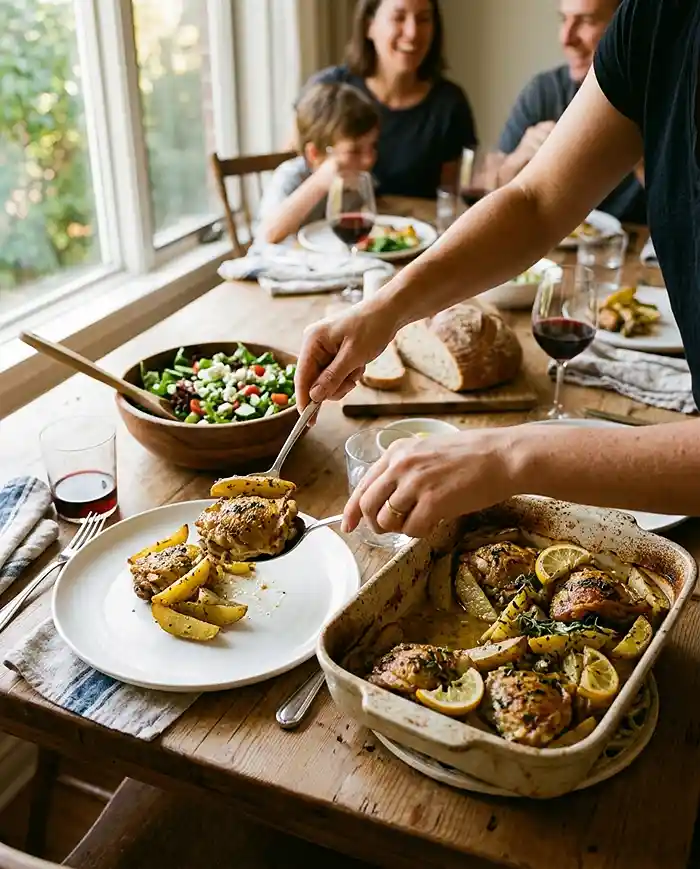
Serve this gluten-free Greek lemon potato chicken bake straight from the pan with a crisp green salad and warm gluten-free pita or crusty bread for scooping up the pan juices. A side of wilted spinach with a squeeze of lemon keeps things light and classically Greek.
This is an ideal dish for a casual Easter Sunday dinner or any spring holiday table where you want something impressive without spending the whole day in the kitchen. The lemon and herbs feel celebratory without any extra effort.
Looking for more crowd-pleasing gluten-free recipes? Check out these gluten-free peaches and cream crumb bars for a fruit-forward dessert that’s every bit as easy, or this high-protein strawberry cheesecake dip when you want something light and shareable to start or finish the meal.
If you’re new to gluten-free baking and want to round out your skills, the gluten-free birthday cake shake is a fun, beginner-friendly recipe that proves gluten-free indulgence doesn’t have to be complicated.
Made this recipe? Leave a star rating and tell me in the comments what herbs you used — I’d love to know your combination. And if you share it on Pinterest, tag it so I can see your golden chicken skin in action.

Greek Lemon Potato Chicken Bake
Equipment
- 9 x 13-inch baking dish
- 2-cup liquid measuring cup
- Whisk
- Chef’s knife
- Cutting board
- Meat thermometer
Ingredients
Chicken & Potatoes
- 2 pounds Russet potatoes, cut into 8 wedges Russets hold their shape better than waxy potatoes at high heat
- 2 pounds Bone-in, skin-on chicken thighs or whole legs Do not substitute boneless; bones add flavor and keep meat moist
- ¾ cup Chicken stock Use certified gluten-free stock
- ½ cup Fresh lemon juice Freshly squeezed
- ⅓ cup Extra-virgin olive oil
- 1 teaspoon Sea salt
- 1 teaspoon Fresh rosemary, oregano, or thyme Roughly chopped or mixed
- 4 cloves Garlic Crushed
Instructions
- Preheat the oven to 375°F.
- Arrange the potato wedges in an even layer in a 9 x 13-inch baking dish. Place the chicken skin-side up on top.
- Whisk together the chicken stock, olive oil, lemon juice, sea salt, herbs, and crushed garlic until combined.
- Pour the marinade over the chicken and potatoes. Rub some of the garlic and herbs directly onto the chicken skin and tuck the remaining garlic and herbs among the potatoes.
- Bake uncovered for 40 minutes.
- Rearrange any potato wedges that are above the liquid so they are submerged or touching the pan juices.
- Increase the oven temperature to 425°F and continue baking until the potatoes are fork-tender, the chicken reaches 165°F internally, the skin is crispy and golden, and the pan juices have reduced.
- Serve hot directly from the baking dish with the pan juices.