Cabbage Juice Recipe
This gluten-free cabbage juice recipe blends cabbage, apple, cucumber, lemon, and ginger. Get step-by-step directions, storage tips, and bitterness fixes.
The first time I tried cabbage juice, I blended plain cabbage with water and nearly gave up on the whole idea. It tasted like boiled vegetables with a grudge. After a few weeks of tinkering, I landed on this gluten-free cabbage juice recipe, and it finally tasted fresh instead of funky.
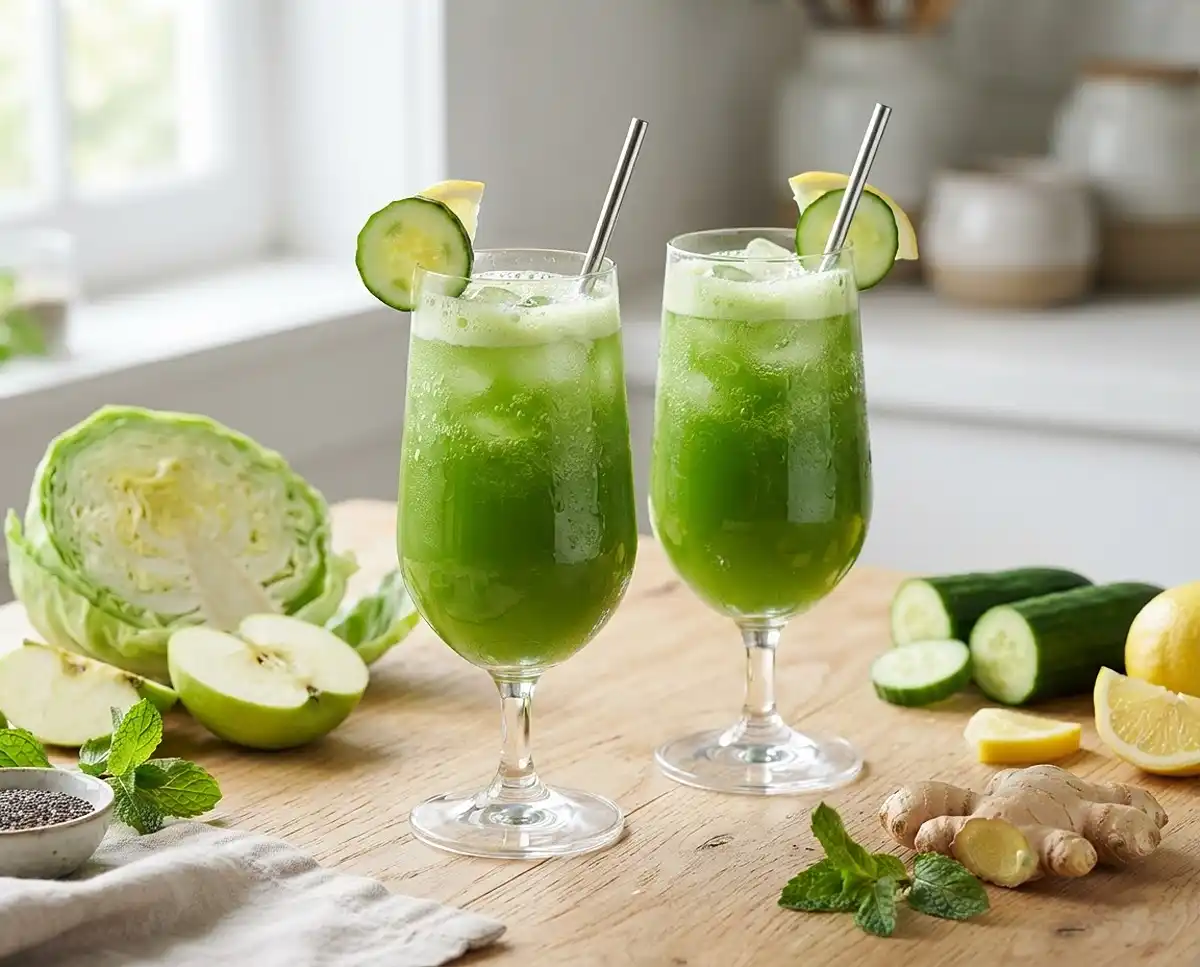
The trick was balance: sweet green apple, cool cucumber, a squeeze of lemon, and a little fresh ginger to keep the cabbage in check. Everything is a whole food, so it fits easily into a gluten-free kitchen. Ever wondered how to make fresh cabbage juice at home without buying a juicer?
Well… all you need is a regular blender and a fine-mesh strainer. I’ll walk you through every step, plus the mistakes I made so you can skip them.
Why You’ll Love This Gluten-Free Cabbage Juice
This juice is mild, crisp, and refreshing, and it’s easy enough for a first-time juice maker.
- Bright, balanced flavor: green apple and lemon soften the cabbage, so each sip tastes crisp and clean instead of harsh.
- Beginner-friendly: you need one blender, six simple steps, and no juicer.
- Dairy-free and vegan: it’s made only from fresh produce, water, and lemon, with no added sweeteners.
- Best served cold: it shines as an afternoon pick-me-up, and you can strain it for a smooth texture or leave the fiber in.
The Secret to Perfect Gluten-Free Cabbage Juice Recipe
The secret is balancing sweet, sour, and fresh flavors against the natural sharpness of raw cabbage.
- Sweetness tames sulfur: blending ruptures the cabbage cells and releases the sulfur compounds behind that strong cabbage aroma, and the apple’s natural sugars soften that bite.
- Lemon adds brightness: the acidity lifts the flavor and slows the browning of the chopped apple, so the juice stays fresh looking.
- Cold water keeps it crisp: blender blades create friction and warmth, and cold water and ice cubes counter that so the juice tastes clean instead of grassy.
- You choose the texture: straining gives you a smooth juice, while skipping it keeps more fiber, so there’s no single right way.
Cabbage is a good source of vitamin C and vitamin K, as this science-backed cabbage nutrition breakdown explains.
To be honest, this juice tastes fresh and green with a clear cabbage note, not like a fruit smoothie. It’s a refreshing vegetable drink, not a treatment for any health condition.
Table of Contents
Ingredients
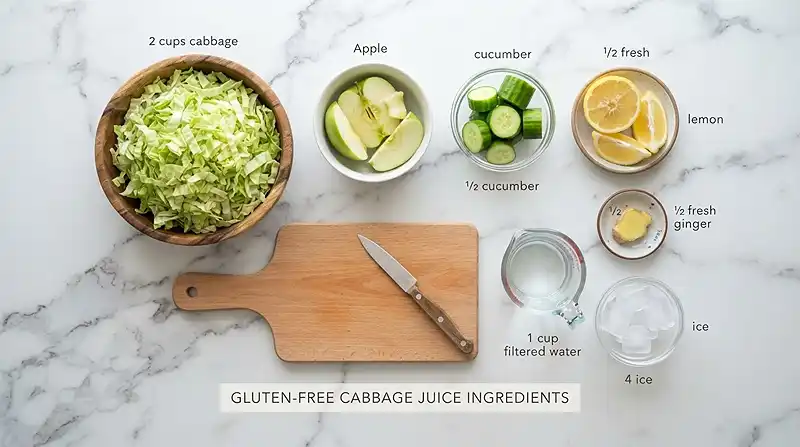
This recipe makes 2 servings.
Fresh Produce
- 2 cups fresh green cabbage, chopped
- 1 medium green apple, cored and chopped
- ½ cucumber, chopped
- ½ inch fresh ginger, peeled
Liquids and Finishing Touches
- ½ lemon, juiced
- 1 cup cold filtered water
- 4–5 ice cubes, optional
Fresh produce is naturally gluten-free, according to this authoritative guide to naturally gluten-free foods. Still, wash your blender jar and strainer well if they’ve touched gluten.
Ginger note: scrape the skin off with the edge of a spoon, which saves more of the flesh than a peeler. A ½ inch piece is small but potent, so taste the juice before you wish for more.
Instructions
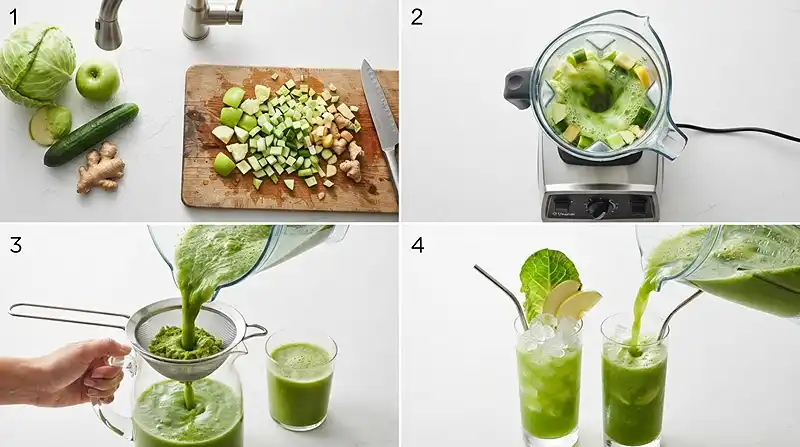
- Wash the cabbage, apple, cucumber, and ginger thoroughly. Chop the cabbage, apple, and cucumber into small pieces. Pro Tip: smaller pieces let the blades catch everything evenly, so you don’t end up with stubborn chunks.
- Add the cabbage, apple, cucumber, ginger, lemon juice, and filtered water to a blender. Pro Tip: put the cucumber and apple closest to the blades and the cabbage on top, since the juicy pieces help pull the leafy cabbage down.
- Blend for 1–2 minutes, until the mixture is as smooth as possible. The sound should change from a rattle to a steady whir, and the surface should look pale green and frothy.
- For a smoother juice, pour the mixture through a fine-mesh strainer or nut-milk bag, pressing gently to extract the liquid. For more fiber, skip straining. Pro Tip: press gently, because wringing the bag hard pushes fine pulp through and turns the juice cloudy.
- Add ice cubes if desired and blend briefly, or serve over ice. If you strained the juice, I prefer pouring it over ice, since extra blending adds foam.
- Pour into two glasses and enjoy immediately. The aroma should be grassy and bright, with a clear hit of lemon and ginger.
Make It Your Own
Swap the green apple for a ripe pear if you want a softer, sweeter glass. This easy homemade cabbage juice recipe stays balanced because pears bring natural sugar without much tartness. Keep the lemon in place so the flavor doesn’t taste flat.
You know… the swap I reach for most is a few fresh mint leaves blended in with everything else. They add a cool, garden-fresh note that pairs nicely with the cucumber. Go easy, though, because mint can quickly take over the flavor.
For more body, skip the straining step to make a healthy raw green cabbage juice recipe that keeps all the fiber. The texture lands closer to a thin green smoothie. It’s more filling, but it’s also less refreshing on a hot day.
Red cabbage works in place of green, and the juice turns a deep magenta from natural pigments called anthocyanins. The lemon juice helps keep that color bright pink instead of dull purple. The flavor stays very close, though red cabbage can taste slightly earthier.
Lime can stand in for lemon in a pinch, and it gives a slightly sharper, greener finish. Skip ground ginger as a swap, because it doesn’t dissolve and leaves a gritty, dusty texture. Fresh ginger is what gives this drink its clean zing.
Common Problems & Solutions
Problem: the juice smells and tastes too cabbagey. Solution: serve it ice-cold and drink it right after blending. The sulfur aroma gets stronger as the juice sits, and cold temperatures mute it.
Problem: the juice is thick with foam. Solution: let it rest for a minute or two, then skim the foam off the top. Blender blades whip air into the liquid, and the bubbles settle on their own.
Problem: the juice feels gritty. Solution: strain it through a nut-milk bag instead of a metal strainer. Fabric catches fine pulp that slips through the mesh holes, so the texture comes out smoother.
Problem: the juice separates in the glass. Solution: give it a quick stir before you sip. Man, oh man, this freaked me out the first time, but it’s only pulp and liquid settling apart.
Problem: you’re worried about hidden gluten. Solution: scrub the blender jar, blades, and nut-milk bag with hot, soapy water before you start. Gluten can linger in scratched plastic and fabric, so a thorough wash matters if you’re cooking for someone with celiac disease.
Storage & Meal Prep
| Method | Duration | Notes |
|---|---|---|
| Counter | Up to 30 minutes | Keep it cold and serve right away |
| Fridge | Up to 24 hours | Airtight glass jar, filled to the top; stir before drinking |
| Freezer | Up to 2 months | Freeze in ice cube trays, then move to a freezer bag |
Don’t heat this juice. Thaw frozen cubes in the fridge, or blend them straight into a smoothie.
Use the rest of the cabbage head in this gluten-free Korean cabbage recipe or this gluten-free Jamaican steamed cabbage recipe.
Strained pulp can go into soups or veggie burgers.
Cabbage Juice Recipe FAQs
Can I make cabbage juice without a juicer?
Yes, a regular blender works well. Blend the chopped produce with cold water for 1–2 minutes, then pour it through a fine-mesh strainer or nut-milk bag. If you’d rather keep the fiber, skip straining.
How do I make cabbage juice taste less bitter?
Serve it ice-cold and keep the lemon and green apple in the recipe. Sweetness and acidity balance the sharp sulfur notes in raw cabbage. Drinking it right after blending also helps, since the flavor gets stronger as it sits.
What’s the best way to store cabbage juice?
Store it in an airtight glass jar in the fridge for up to 24 hours. Fill the jar to the top to limit air exposure, and stir before drinking because it separates naturally. For longer storage, freeze it in ice cube trays for up to 2 months.
Why did my cabbage juice turn out foamy?
Foam comes from air whipped in by the blender blades. Let the juice rest for a minute or two so the bubbles settle, then skim the top. Pouring strained juice over ice instead of re-blending also keeps it from foaming again.
Can I use red cabbage instead of green?
Yes, red cabbage works in the same amount. The juice will turn a deep pink-purple, and the lemon juice keeps the color bright. The flavor is very similar, with a slightly earthier finish.
Serving Suggestions
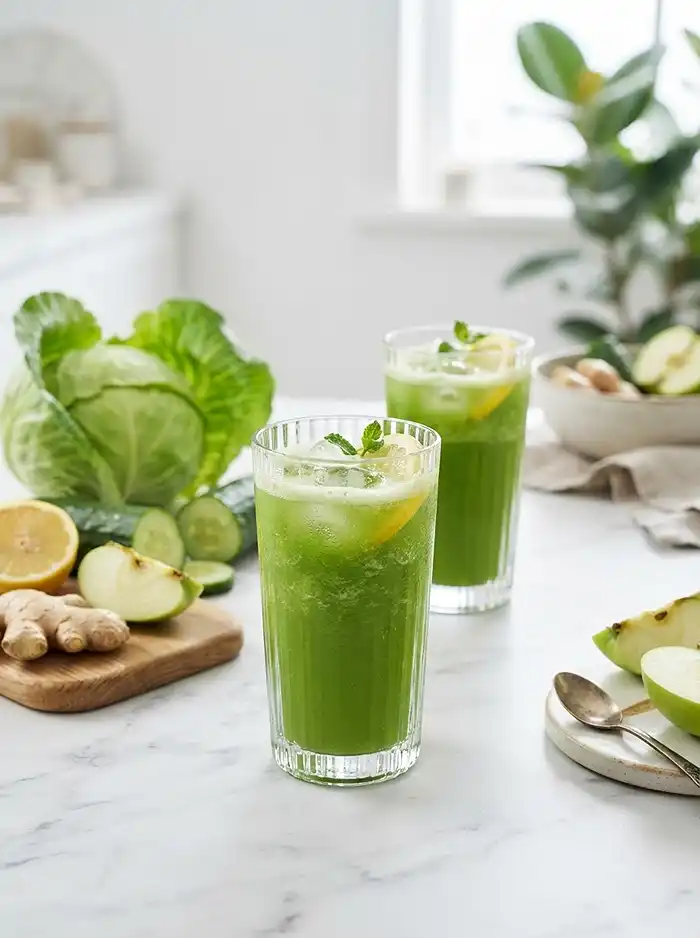
Pour this juice over ice at a Fourth of July cookout, where it’s a cool, light counterpoint to grilled meats and heavy sides. A few cucumber slices on the rim make it feel like a party drink.
For a cabbage-themed family dinner, serve a small glass alongside Hungarian stuffed cabbage. The bright, cold juice balances the rich, savory filling.
Give this gluten-free cabbage juice recipe a try, then leave a star rating and tell me which swaps you made in the comments. If it turns out well, pin it to your Pinterest board so you can find it again next time cabbage is on sale. I read every comment and love hearing what worked in your kitchen.
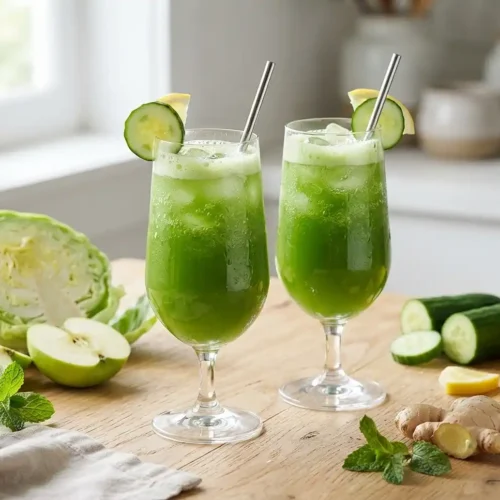
Gluten-Free Cabbage Juice Recipe
Equipment
- Blender
- Fine mesh strainer
- Nut-Milk Bag (Optional)
- Cutting board
- Chef’s knife
- Citrus Juicer (Optional)
- Measuring cup
- Airtight Glass Jar (Optional)
Ingredients
Fresh Produce
- 2 cups Fresh Green Cabbage Chopped
- 1 medium Green Apple Cored and chopped
- ½ cucumber Cucumber Chopped
- ½ inch piece Fresh Ginger Peeled
Liquids and Finishing Touches
- ½ lemon Fresh Lemon Juice Juiced
- 1 cup Cold Filtered Water
- 4-5 cubes Ice Cubes Optional, for chilling or serving
Instructions
- Wash the cabbage, apple, cucumber, and ginger thoroughly. Chop the cabbage, apple, and cucumber into small pieces so they blend evenly and are easier for the blender blades to process.
- Add the chopped cabbage, apple, cucumber, peeled ginger, lemon juice, and cold filtered water to a blender. Place the juicier ingredients, such as the cucumber and apple, closer to the blades to help pull the cabbage down during blending.
- Blend for 1–2 minutes, until the mixture is as smooth as possible. The juice should look pale green and slightly frothy, with no large pieces of produce remaining.
- For smooth juice, pour the blended mixture through a fine-mesh strainer or nut-milk bag and press gently to extract the liquid. For a thicker drink with more fiber, skip this step.
- Add the optional ice cubes and blend briefly if desired, or simply pour the juice over ice. If the juice has been strained, serving it over ice helps keep it smooth without creating additional foam.
- Divide the cabbage juice between two glasses and serve immediately while cold and fresh. Enjoy its crisp cabbage flavor balanced by sweet apple, bright lemon, cool cucumber, and fresh ginger.