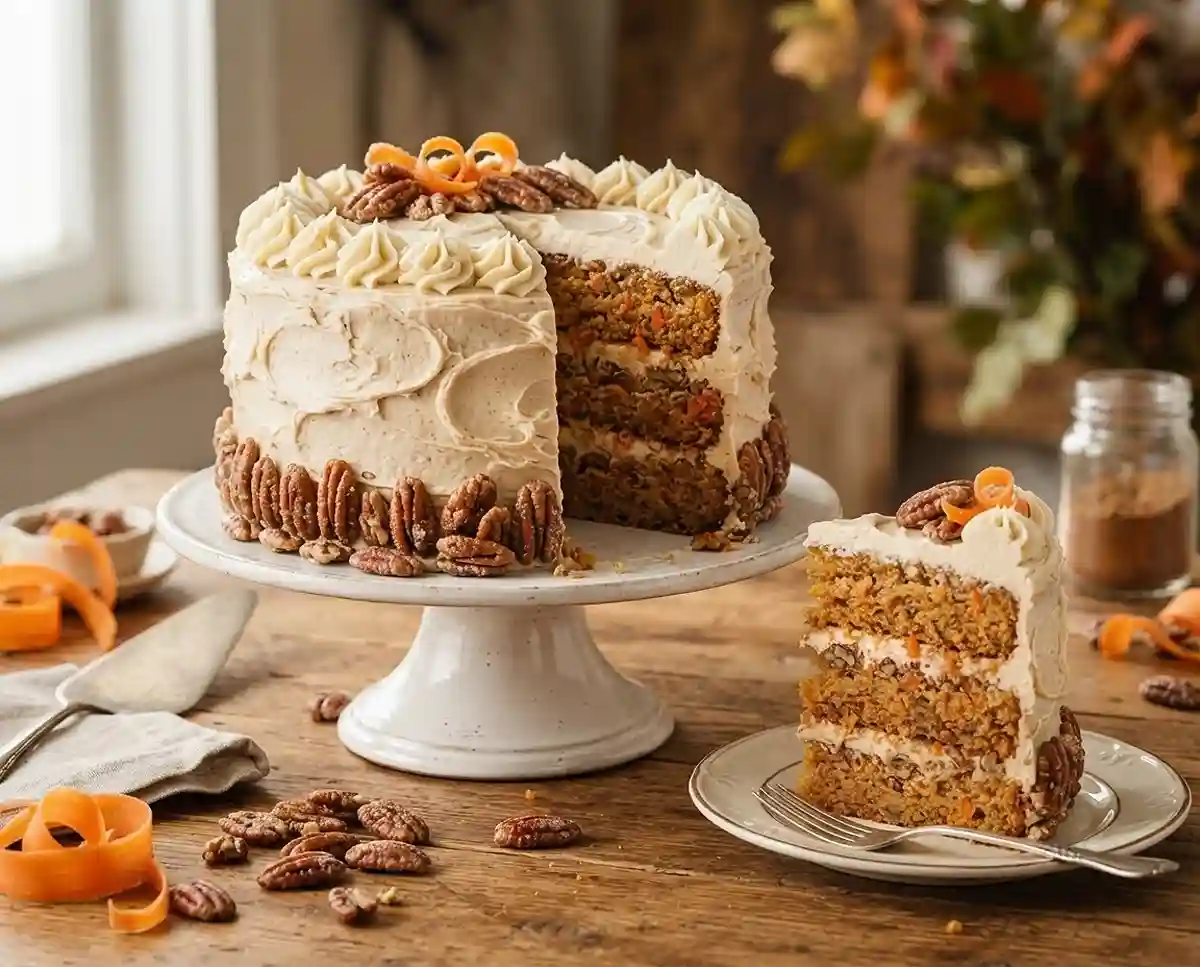
Carrot Cake with Brown Butter Cream Cheese Frosting
Make this gluten-free carrot cake with brown butter cream cheese frosting—step-by-step, moist layers, candied pecans, and a frosting that sets it apart.
The first time I made a gluten-free carrot cake for Easter Sunday, I used a flour blend without xanthan gum. The layers held together long enough to frost, then quietly crumbled the moment I sliced into them at the table.
That embarrassing moment taught me exactly what this recipe needs to succeed—and now I’d put this cake up against any wheat-based version. The warm spice layers, the fudgy crumb, and that brown butter cream cheese frosting make it genuinely hard to believe there’s no gluten in sight.
Well… brown butter in a frosting sounds fancy, but it’s honestly one of the easiest upgrades you’ll ever make. It adds a deep, toasty richness that turns a standard cream cheese frosting into something you’ll want to eat with a spoon.
Why You’ll Love This Gluten-Free Brown Butter Cream Cheese Frosting Carrot Cake
- Moist, tender crumb: Applesauce and vegetable oil keep every layer soft for days—no dry, chalky texture that plagues so many gluten-free cakes.
- Frosting that stands out: Brown butter adds a nutty, caramel-like depth that regular cream cheese frosting simply can’t match.
- Flexible for different diets: Easy to adapt as a dairy-free version, and the candied pecan topping is completely optional for nut-free households.
- Make-ahead friendly: Cake layers bake and freeze beautifully, so you can build this over two days without any stress.
The Secret to Perfect Gluten-Free Brown Butter Cream Cheese Frosting Carrot Cake
- Certified gluten-free flour with a binding agent: A certified GF all-purpose blend eliminates cross-contamination risk. Without xanthan gum in the blend, the layers crack instead of slice—check your bag before you start.
- Fold, never beat, the batter: Overmixing activates the starches in gluten-free flour blends and creates a gummy, dense crumb. Fold gently just until no streaks remain.
- Finely grated carrots, not shredded: Coarsely shredded carrots release too much moisture during baking and create wet pockets. Fine grating distributes moisture evenly and gives the crumb its characteristic tenderness.
- Brown butter that’s cooled to the right consistency: If the brown butter is still liquid when you beat it with the cream cheese, the frosting will be runny and won’t hold between layers. It needs to be solidified but still soft enough to press with a spatula—think cold peanut butter texture.
Table of Contents
Ingredients
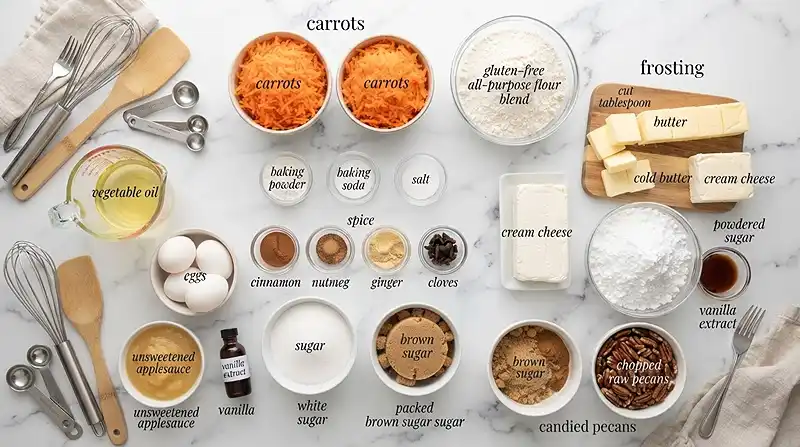
Carrot Cake
| Ingredient | Amount | Notes |
|---|---|---|
| Finely grated carrots | 2 cups (260 g) | Grate finely, not coarsely shredded |
| Certified gluten-free all-purpose flour blend | 2½ cups (330 g) | Use a blend with xanthan gum included |
| Baking powder | 2 teaspoons | |
| Baking soda | 1 teaspoon | |
| Salt | ½ teaspoon | |
| Ground cinnamon | 2 teaspoons | |
| Ground nutmeg | 1 teaspoon | |
| Ground ginger | 1 teaspoon | |
| Ground cloves | ¼ teaspoon | |
| Granulated sugar | ½ cup (100 g) | |
| Packed brown sugar | 1½ cups (300 g) | Pack firmly when measuring by volume |
| Vegetable oil | 1 cup (240 ml) | |
| Large eggs, room temperature | 4 | Room temperature eggs emulsify more evenly |
| Unsweetened applesauce | ¾ cup (135 g) | Adds moisture without extra oil |
| Pure vanilla extract | 1 teaspoon |
Brown Butter Cream Cheese Frosting
| Ingredient | Amount | Notes |
|---|---|---|
| Unsalted butter, cold, cut into tablespoon-sized pieces | 1 cup (226 g) | Start cold for easier browning control |
| Full-fat brick-style cream cheese, room temperature | 16 oz (452 g) | Do not use tub-style—it’s too soft and will make the frosting runny |
| Powdered sugar | 8 cups (960 g) | |
| Pure vanilla extract | 1 tablespoon | |
| Salt | ¼ teaspoon, or to taste |
Optional Candied Pecans
| Ingredient | Amount | Notes |
|---|---|---|
| Brown sugar | 1½ tablespoons | |
| Ground cinnamon | ¼ teaspoon | |
| Salt | ⅛ teaspoon | |
| Vanilla extract | ¼ teaspoon | |
| Water | 1 teaspoon | |
| Chopped pecans | ½ cup (60 g) |
Instructions
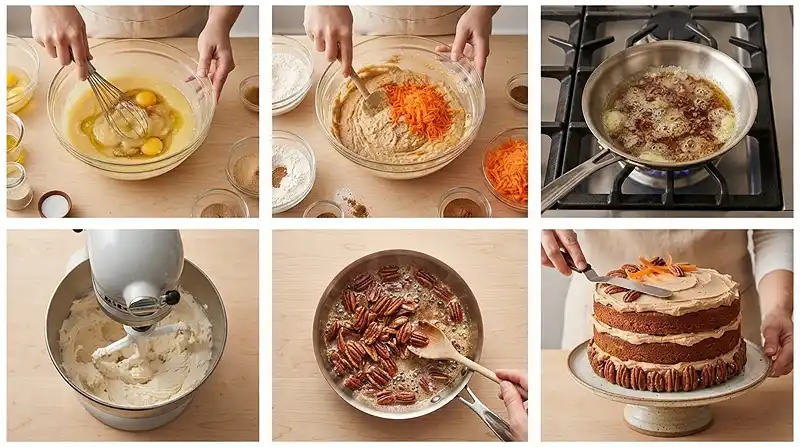
Make the Carrot Cake
- Preheat and prepare the pans. Preheat the oven to 350°F (175°C). Grease and line the bottoms of either three 6-inch cake pans or two 8-inch cake pans with parchment paper.
- Prep the carrots. Finely grate the carrots and measure out 2 cups. Set aside. Fine grating is important here—coarse shreds create wet pockets that disrupt the crumb.
- Combine the dry ingredients. In a large bowl, whisk together the gluten-free flour, baking powder, baking soda, salt, cinnamon, nutmeg, ginger, and cloves until evenly distributed.
- Mix the wet ingredients. In a separate bowl, whisk together the granulated sugar, brown sugar, vegetable oil, eggs, applesauce, and vanilla until smooth and well combined.
- Fold wet into dry. Pour the wet ingredients into the dry ingredients. Fold gently with a spatula just until combined—stop as soon as no dry streaks remain.
- Fold in the carrots. Add the grated carrots and fold carefully, being mindful not to overmix. The batter will be thick.
- Fill the pans. Divide the batter evenly among the prepared pans. Smooth the tops with a spatula for an even bake.
- Bake until set. Bake for 35–40 minutes, or until a toothpick inserted into the center comes out clean or with a few moist crumbs. The tops should spring back lightly when pressed.
- Cool completely. Let the cakes cool in their pans for 10 minutes, then turn them out onto a wire rack. Do not frost until the layers are completely cool—frosting a warm cake will cause the frosting to slide off.
Make the Brown Butter Cream Cheese Frosting
- Brown the butter. Place the butter in a large skillet over medium heat. Cook, stirring occasionally, until melted. Continue cooking for approximately 5–7 minutes, stirring frequently. You’ll notice the butter foam, then settle, then develop golden-brown milk solids at the bottom with a warm, nutty aroma—that’s your signal it’s ready.
- Cool the brown butter. Immediately transfer the browned butter to a heatproof container to stop the cooking. Let it cool until completely solidified but still soft enough to press with a spatula—this usually takes 1–1½ hours in the refrigerator, or 2–3 hours at room temperature. Pro Tip: Don’t rush this step. Liquid brown butter will break the frosting.
- Beat butter and cream cheese together. Place the cooled brown butter in the bowl of a stand mixer fitted with a paddle attachment. Add the room-temperature cream cheese. Beat on medium-high speed for about 5 minutes, until the mixture is light and fluffy. Scrape down the bowl as needed.
- Add the powdered sugar gradually. Reduce the mixer to low and add the powdered sugar a few cups at a time, waiting until each addition is absorbed before adding the next.
- Finish the frosting. Add the vanilla and salt. Continue mixing on low until the frosting is smooth, uniform, and silky—it should spread like cool, thick whipped cream.
- Chill if needed. If the frosting is too soft to spread, refrigerate for 20–30 minutes, then mix briefly on low before using.
Make the Candied Pecans
- Build the syrup. Add the brown sugar, cinnamon, salt, vanilla, and water to a small saucepan. Cook over medium heat until the mixture begins to bubble.
- Coat the pecans. Add the chopped pecans and stir continuously for 2–3 minutes, until they’re evenly coated and smell warmly fragrant.
- Cool completely. Transfer the pecans to a parchment-lined baking sheet and let them cool completely before adding to the cake. They’ll crisp up as they set.
Assemble the Cake
- Level the layers if needed. Once the cake layers are completely cool, use a serrated knife to level the tops if they’ve domed during baking. Even layers make stacking much easier.
- Stack and frost between layers. Place the first layer on a cake board or serving plate. Spread an even layer of brown butter cream cheese frosting over the top. Add the next layer and repeat. If using three layers, continue until all layers are stacked.
- Apply the crumb coat. Cover the entire cake with a thin crumb coat of frosting—this seals in any loose crumbs. Refrigerate for at least 30 minutes to firm it up before the final layer.
- Finish and decorate. Apply the remaining frosting in a rustic finish or smooth it to your preferred style. Press candied pecans around the bottom third of the cake, pipe a decorative border around the top using a large star tip if desired, and finish with additional candied pecans.
Make It Your Own
For a dairy-free version, use a high-quality vegan butter stick (not a spread) for browning—it will brown similarly to dairy butter and keep that toasty depth in the frosting. Pair it with a full-fat dairy-free cream cheese and the texture holds up well between layers.
You know… the candied pecans are optional, but they add a crunch that contrasts beautifully with the soft frosting. If you’re baking for a nut-free crowd, simply skip them—the cake stands completely on its own. Toasted pumpkin seeds work as a nut-free alternative if you still want that textural finish.
Want a simpler version of this easy gluten-free carrot cake? Skip the layered format and bake the batter in a greased 9×13-inch pan for a single-layer sheet cake. Reduce the bake time to about 30–35 minutes and check with a toothpick. It’s the format I use for weeknight baking when I don’t want to deal with stacking.
Raisins or crushed pineapple are both classic carrot cake additions—fold in up to ½ cup of either along with the carrots. Pineapple in particular adds extra moisture and a subtle sweetness that plays well against the warm spices. Just make sure any mix-ins are patted dry first so they don’t add excess liquid to the batter. If you love moist, spiced gluten-free bakes, this chocolate zucchini breakfast muffin cake uses a similar moisture-forward method worth exploring.
Common Problems & Solutions
Problem: The cake layers feel dense and gummy after baking. The most common cause is overmixing after adding the gluten-free flour. Gluten-free starches develop a gluey texture when overworked. Fold just until the batter comes together—a few streaks are fine at the flour stage before the carrots go in.
Problem: The frosting is too soft and won’t hold between layers. This almost always means the brown butter wasn’t cooled enough before beating, or the cream cheese was too warm. Refrigerate the finished frosting for 20–30 minutes, then re-beat briefly on low. The frosting should hold a clean edge when spread with a spatula.
Man, oh man… Problem: The cake layers crack when removed from the pans. Cracking usually points to two culprits—either the flour blend didn’t contain xanthan gum, or the layers were turned out before cooling for the full 10 minutes. Gluten-free cake needs that resting time in the pan to set its structure. If your blend is xanthan-free, add ½ teaspoon per cup of flour as a fix. The Celiac Disease Foundation’s gluten-free food guidance is also worth reviewing if you’re concerned about cross-contamination in your flour blend.
Problem: The baked layers have wet pockets or an uneven crumb. This is a sign the carrots were shredded too coarsely. Coarse shreds hold water and release it unevenly during baking. Use the fine side of a box grater or the fine shredding disc of a food processor. The texture difference is significant.
Storage & Meal Prep
| Method | Duration | Notes |
|---|---|---|
| Counter | 2–3 days | Airtight container; keep away from heat |
| Fridge | 5–7 days | Bring to room temperature before serving for best texture |
| Freezer | 2–3 months | Wrap individual slices tightly; freeze unfrosted layers for best results |
To reheat a refrigerated slice, let it sit at room temperature for 30–45 minutes. The cream cheese frosting firms up in the fridge, and cold frosting mutes the flavors—room temperature is where this cake tastes best.
If you’re planning ahead for a celebration, bake and freeze the unfrosted layers wrapped tightly in plastic wrap up to one month in advance. Thaw overnight in the fridge, then frost on the day of serving. The brown butter frosting itself keeps refrigerated for up to one week in a sealed container—re-beat on low before spreading. For a no-waste idea, leftover frosting is genuinely excellent spread on these gluten-free savory tart bases or stirred into oatmeal for a spiced morning treat.
Carrot Cake with Brown Butter Cream Cheese Frosting FAQs
Can I make this cake ahead of time?
Yes. Bake the layers up to two days ahead and store them wrapped at room temperature, or freeze them for up to one month. Make the brown butter frosting up to one week in advance and refrigerate it in a sealed container. Assemble and frost the day you plan to serve it for the cleanest results.
How do I brown butter without burning it?
Keep the heat at medium, not medium-high, and stir frequently once the butter melts. Watch for the color change from yellow to golden-amber and the milk solids at the bottom turning light brown. As soon as you smell a nutty, toasted aroma, pour the butter into a heatproof bowl immediately to stop the cooking—residual heat in the pan can push it from browned to burnt in seconds.
What’s the best gluten-free flour blend for this recipe?
A certified gluten-free all-purpose flour blend that already contains xanthan gum gives the most reliable results. The xanthan gum acts as a binder in place of gluten, preventing the layers from crumbling when sliced. Check the ingredient label on your flour bag before starting—if xanthan gum isn’t listed, add half a teaspoon per cup of flour used.
Why did my frosting turn out runny?
Runny frosting is almost always caused by brown butter that was still too warm and soft when beaten with the cream cheese, or cream cheese that was overbeated and too loose before the butter was added. Refrigerate the frosting for 20–30 minutes, then re-beat on low speed. It should tighten up. Avoid tub-style cream cheese entirely—use brick-style full-fat only.
Can I make this as a sheet cake instead of a layer cake?
Yes. Pour the full batter into a greased 9×13-inch pan and bake at 350°F for about 30–35 minutes, checking with a toothpick at the 30-minute mark. The yield of frosting is generous for a sheet cake—you may have some left over, which keeps refrigerated for a week.
Serving Suggestions
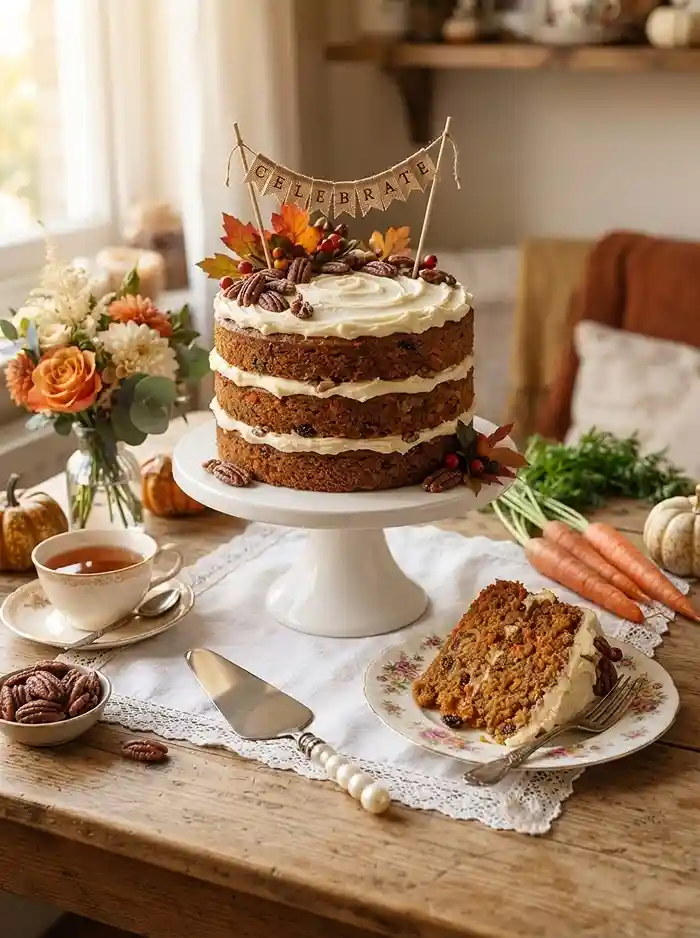
Serve this cake at room temperature so the brown butter frosting softens to a texture as smooth as cool custard—that’s when the nutty, caramel notes really come through. A hot cup of chai or spiced apple cider alongside each slice is a natural pairing.
This is the kind of cake that earns its place on an Easter dessert table or a Thanksgiving spread, where it holds its own against pies and custards. The toasted pecan border gives it a finished, bakery-style look without requiring any special decorating skills.
If you’re building a full gluten-free dessert lineup, this gluten-free chocolate Nutella cake makes a rich counterpart for guests who prefer chocolate over spice. For anyone navigating a celiac diagnosis and wanting reliable guidance on safe ingredient sourcing, the National Celiac Association’s authoritative gluten-free diet resource is worth bookmarking.
Conclusion
This gluten-free carrot cake with brown butter cream cheese frosting is one of those recipes you’ll return to every time you need to impress a crowd—or simply treat yourself well on a weekend.
If you try it, leave a comment below with any tweaks you made, and let me know how the layers turned out. Sharing a photo on Pinterest helps other gluten-free bakers find this recipe too—thank you for that.
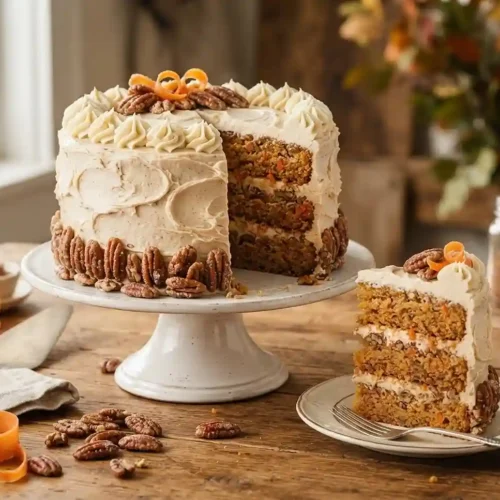
Carrot Cake with Brown Butter Cream Cheese Frosting
Equipment
- Oven
- Three 6-inch cake pans or two 8-inch cake pans
- Parchment paper
- Large bowl
- Separate mixing bowl
- Spatula
- Box grater or food processor
- Wire rack
- Large skillet
- Heatproof container
- Stand mixer with paddle attachment
- Small saucepan
- Parchment-lined baking sheet
- Serrated knife
- Cake board or serving plate
- Large star piping tip
Ingredients
Carrot Cake
- 2 cups (260 g) Finely grated carrots Grate finely, not coarsely shredded
- 2½ cups (330 g) Certified gluten-free all-purpose flour blend Use a blend with xanthan gum included
- 2 teaspoons Baking powder
- 1 teaspoon Baking soda
- ½ teaspoon Salt
- 2 teaspoons Ground cinnamon
- 1 teaspoon Ground nutmeg
- 1 teaspoon Ground ginger
- ¼ teaspoon Ground cloves
- ½ cup (100 g) Granulated sugar
- 1½ cups (300 g) Packed brown sugar Pack firmly when measuring by volume
- 1 cup (240 ml) Vegetable oil
- 4 Large eggs Room temperature eggs emulsify more evenly
- ¾ cup (135 g) Unsweetened applesauce Adds moisture without extra oil
- 1 teaspoon Pure vanilla extract
Brown Butter Cream Cheese Frosting
- 1 cup (226 g) Unsalted butter, cold, cut into tablespoon-sized pieces Start cold for easier browning control
- 16 oz (452 g) Full-fat brick-style cream cheese, room temperature Do not use tub-style—it is too soft and will make the frosting runny
- 8 cups (960 g) Powdered sugar
- 1 tablespoon Pure vanilla extract
- ¼ teaspoon Salt Or to taste
Optional Candied Pecans
- 1½ tablespoons Brown sugar
- ¼ teaspoon Ground cinnamon
- ⅛ teaspoon Salt
- ¼ teaspoon Vanilla extract
- 1 teaspoon Water
- ½ cup (60 g) Chopped pecans
Instructions
- Preheat and prepare the pans. Preheat the oven to 350°F (175°C). Grease and line the bottoms of either three 6-inch cake pans or two 8-inch cake pans with parchment paper.
- Prep the carrots. Finely grate the carrots and measure out 2 cups. Set aside. Fine grating is important because coarse shreds create wet pockets that disrupt the crumb.
- Combine the dry ingredients. In a large bowl, whisk together the gluten-free flour, baking powder, baking soda, salt, cinnamon, nutmeg, ginger, and cloves until evenly distributed.
- Mix the wet ingredients. In a separate bowl, whisk together the granulated sugar, brown sugar, vegetable oil, eggs, applesauce, and vanilla until smooth and well combined.
- Fold wet into dry. Pour the wet ingredients into the dry ingredients. Fold gently with a spatula just until combined—stop as soon as no dry streaks remain.
- Fold in the carrots. Add the grated carrots and fold carefully, being mindful not to overmix. The batter will be thick.
- Fill the pans. Divide the batter evenly among the prepared pans. Smooth the tops with a spatula for an even bake.
- Bake until set. Bake for 35–40 minutes, or until a toothpick inserted into the center comes out clean or with a few moist crumbs. The tops should spring back lightly when pressed.
- Cool completely. Let the cakes cool in their pans for 10 minutes, then turn them out onto a wire rack. Do not frost until the layers are completely cool.
- Brown the butter. Place the butter in a large skillet over medium heat. Cook, stirring occasionally, until melted. Continue cooking for approximately 5–7 minutes, stirring frequently, until golden-brown milk solids develop and the butter has a warm, nutty aroma.
- Cool the brown butter. Immediately transfer the browned butter to a heatproof container to stop the cooking. Let it cool until completely solidified but still soft enough to press with a spatula. This usually takes 1–1½ hours in the refrigerator or 2–3 hours at room temperature.
- Beat butter and cream cheese together. Place the cooled brown butter in the bowl of a stand mixer fitted with a paddle attachment. Add the room-temperature cream cheese. Beat on medium-high speed for about 5 minutes, until light and fluffy. Scrape down the bowl as needed.
- Add the powdered sugar gradually. Reduce the mixer to low and add the powdered sugar a few cups at a time, waiting until each addition is absorbed before adding the next.
- Finish the frosting. Add the vanilla and salt. Continue mixing on low until the frosting is smooth, uniform, and silky.
- Chill if needed. If the frosting is too soft to spread, refrigerate for 20–30 minutes, then mix briefly on low before using.
- Build the syrup. Add the brown sugar, cinnamon, salt, vanilla, and water to a small saucepan. Cook over medium heat until the mixture begins to bubble.
- Coat the pecans. Add the chopped pecans and stir continuously for 2–3 minutes, until evenly coated and warmly fragrant.
- Cool completely. Transfer the pecans to a parchment-lined baking sheet and let them cool completely before adding them to the cake. They’ll crisp up as they set.
- Level the layers if needed. Once the cake layers are completely cool, use a serrated knife to level the tops if they’ve domed during baking.
- Stack and frost between layers. Place the first layer on a cake board or serving plate. Spread an even layer of brown butter cream cheese frosting over the top. Add the next layer and repeat until all layers are stacked.
- Apply the crumb coat. Cover the entire cake with a thin crumb coat of frosting to seal in loose crumbs. Refrigerate for at least 30 minutes to firm it up before the final layer.
- Finish and decorate. Apply the remaining frosting in a rustic finish or smooth it to your preferred style. Press candied pecans around the bottom third of the cake, pipe a decorative border around the top using a large star tip if desired, and finish with additional candied pecans.