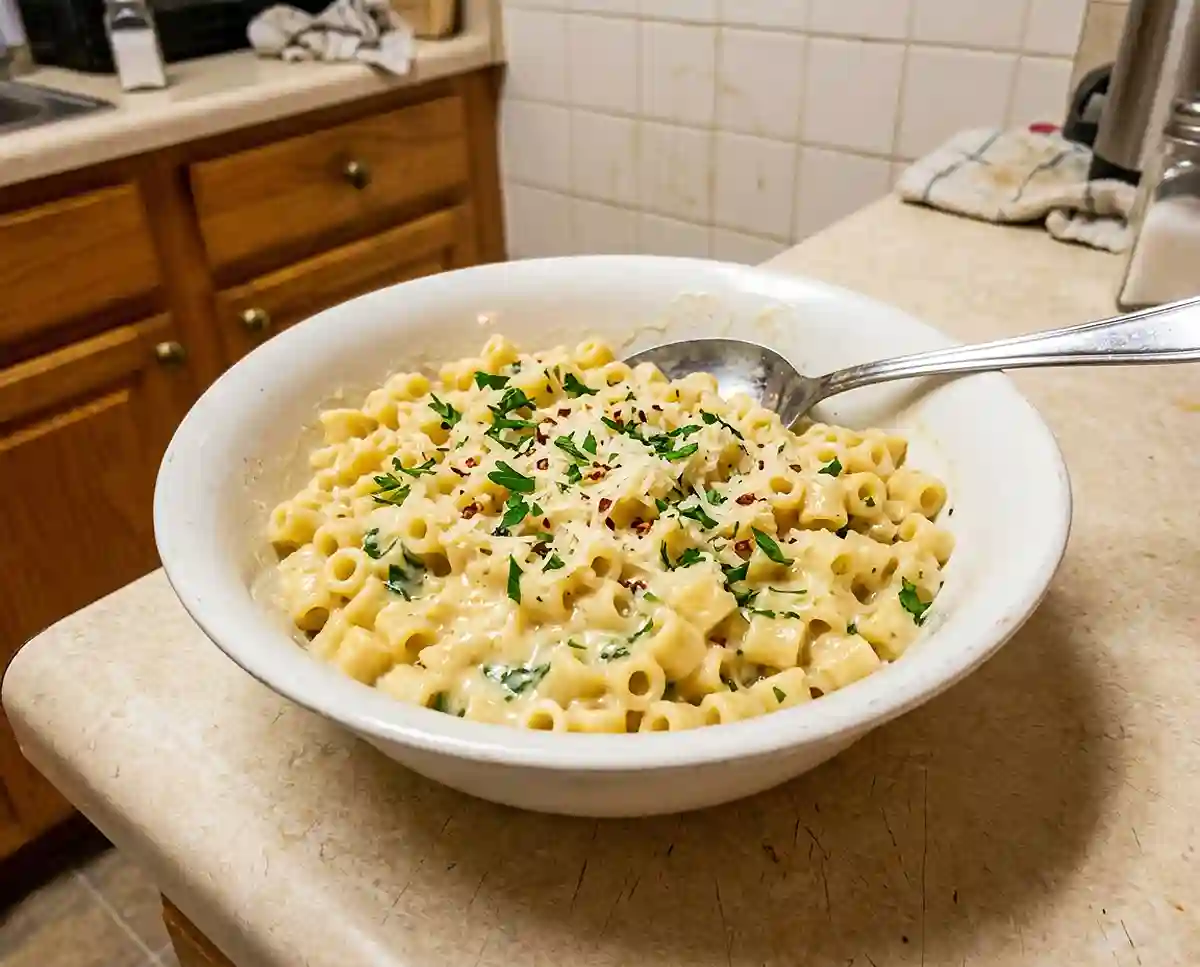
Creamy One-Pan Ditalini Pasta
My first attempt at gluten-free creamy one-pan ditalini pasta turned into a pot of glue. The spoon stood upright in it like a flag on a hilltop, and my three kids looked at dinner like it owed them money.
Honestly… I almost gave up on one-pan pasta after that night. Our family has been gluten-free for eight years since a celiac diagnosis, and I have learned that gluten-free pasta needs a different game plan than wheat pasta.
Can a pasta dinner really cook in one pan without turning gummy? Yes, once you toast the pasta, stir often, and add the cream at the very end. This version works for busy weeknights, and the sauce stays smooth instead of sticky.
What Makes This Gluten-Free Creamy One-Pan Ditalini Pasta Worth Making
This pasta cooks in a single pan and finishes with a silky Parmesan cream sauce. Here is what you can expect.
- Texture and flavor: Tender ditalini in a creamy, savory sauce with a nutty edge from toasting the pasta first.
- Difficulty: Easy. You need one large, deep skillet or saucepan, a spoon, and attention while it simmers.
- Family friendly: The flavors are mild, and the small pasta shape is easy for kids to scoop. Red pepper flakes are optional.
- Best for: School nights, quick lunches, and any evening you do not want a colander in the sink. It serves 4.
The Science Behind Great Gluten-Free Creamy One-Pan Ditalini Pasta
Gluten-free pasta has more loose starch than wheat pasta, which is why it clumps and turns gummy so easily. Each technique below manages that starch and builds a sauce that stays creamy.
- Toasting firms the surface. Browning the dry pasta in olive oil gives it a nutty flavor and helps the pieces hold their shape in the broth.
- Broth builds flavor from the inside. The pasta absorbs seasoned liquid as it cooks, so it tastes like more than plain noodles.
- Frequent stirring prevents clumps. The released starch is sticky, and constant movement keeps the pieces from fusing together on the bottom of the pan.
- Low heat protects the cream. Adding cream, Parmesan, and butter over low heat keeps the sauce smooth instead of grainy or oily.
Starch management is the main reason gluten-free pasta behaves differently, and Tasting Table’s explanation of common gluten-free pasta mistakes breaks down why frequent stirring matters.
For more everyday strategies, this nutritionist with celiac disease shares tips for gluten-free eating, including how to handle gluten-free pasta.
Table of Contents
Ingredients
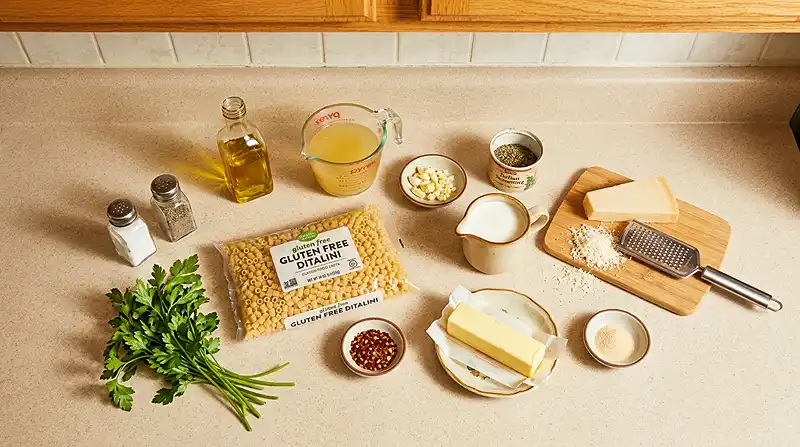
This recipe serves 4. Check that the broth, Italian seasoning, and onion powder are labeled gluten-free, since these are common places for hidden gluten.
Pasta and Cooking Liquid
- 1 (16-ounce) package gluten-free ditalini pasta
- 3 tablespoons olive oil
- 3 cups chicken broth labeled gluten-free, plus extra water as needed
Aromatics and Seasonings
- ½ tablespoon minced garlic
- ½ teaspoon Italian seasoning labeled gluten-free
- ½ teaspoon onion powder labeled gluten-free
- 2 tablespoons chopped fresh parsley, plus more for garnish
- Salt and freshly ground black pepper, to taste
Creamy Finish
- ½ cup heavy cream
- ½ cup grated Parmesan cheese
- 3 tablespoons unsalted butter
For Serving
- Extra grated Parmesan cheese, for serving
- Red pepper flakes (optional)
A note on the pasta: Ditalini is a small tube shape that cooks evenly and fits on a spoon. Brands vary in cooking time, so follow the package directions and taste often.
Instructions
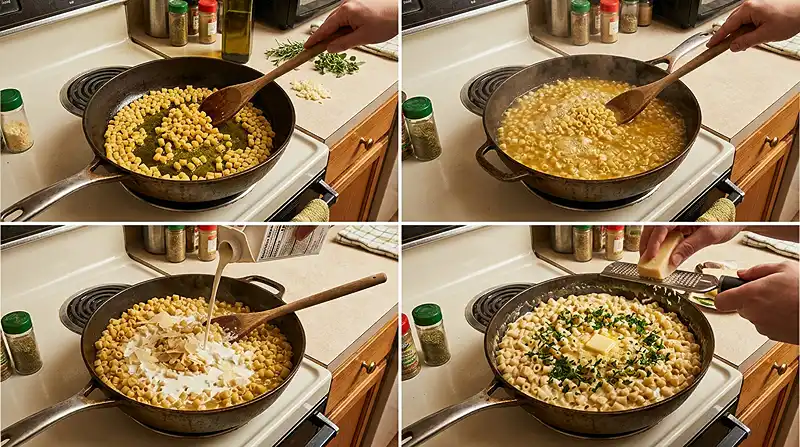
If you want to know how to make creamy gluten-free ditalini pasta without a mess, stay at the stove for the first half. The pasta needs frequent stirring, and the cream goes in only after the heat is turned down.
- Toast the pasta: Heat the olive oil in a large, deep skillet or saucepan over medium heat. Add the gluten-free ditalini and stir for 2–3 minutes, until lightly golden. Stir frequently to prevent burning.
- Add the aromatics: Stir in the minced garlic and Italian seasoning. Cook for about 30–60 seconds, until fragrant.
Pro Tip: I learned the hard way that garlic burns fast in a hot pan. If it starts to darken, pour in the broth right away.
- Simmer with broth: Pour in the gluten-free chicken broth and bring to a gentle boil. Reduce the heat to medium-low and simmer, stirring frequently so the pasta doesn’t stick. Cook according to the pasta package directions, adding a splash of water or extra broth as needed until the pasta reaches your preferred tenderness.
Pro Tip: Taste a piece near the end of the package time. The pasta should be tender with a slight bite, and the liquid should look cloudy like thin soup.
- Make it creamy: Reduce the heat to low. Stir in the heavy cream, Parmesan, onion powder, parsley, salt, and black pepper.
- Finish with butter: Add the butter and stir until melted and the sauce is smooth and creamy. If the sauce is too thick, add a little warm water or broth to loosen it.
- Serve: Spoon into bowls and garnish with extra Parmesan, parsley, and red pepper flakes if desired. Serve immediately while creamy.
The finished sauce should coat a spoon and look glossy, as silky as warm velvet. If it looks dull or tight, a splash of warm liquid brings it back.
Ways to Customize This Recipe
Other small pasta shapes work in this one-pan creamy gluten-free pasta for busy weeknights. Small shells or elbows are good options. Cooking times differ by brand, so follow the package and taste before adding the cream.
Look… leftover cooked chicken stirs in beautifully at the end. Add it after the butter so it warms through without drying out. Check that any seasoned or store-bought chicken is labeled gluten-free.
A handful of baby spinach wilts into the sauce in about a minute. Stir it in right after the butter so it keeps its color. This adds a little freshness that balances the richness of the cream.
Dairy-free versions are tricky, because the sauce relies on cream, Parmesan, and butter for body. I have not tested a dairy-free swap, so I cannot promise the same texture. If you try one, keep the heat low and add liquid slowly.
If Something Went Wrong, Start Here
Problem: The pasta is gummy and clumped together. Solution: Stir more often next time, and keep the heat at medium-low during the simmer. Gluten-free pasta releases sticky starch quickly, and constant movement keeps the pieces apart.
Problem: The sauce is too thick. Solution: Stir in a splash of warm water or broth until it loosens. Oh wow… it thickens fast once the heat is off, so add liquid a little at a time. Warm liquid blends in more smoothly than cold.
Problem: The sauce looks grainy or oily. Solution: Lower the heat and stir in a little warm liquid. High heat makes dairy separate, which is why the cream and cheese go in on low.
Problem: The pasta tastes bland. Solution: Season at the end with salt and black pepper to taste, and add a little more Parmesan. I learned the hard way that gluten-free pasta needs well-seasoned liquid, since it absorbs flavor while it cooks.
Storage & Meal Prep
| Method | Duration | Notes |
|---|---|---|
| Counter | 2 hours maximum | Cream sauce should be refrigerated promptly |
| Fridge | 3-4 days | Airtight container; bring to room temp before reheating |
| Freezer | 1-2 months | Wrap individually; texture softens and sauce may separate |
Reheat leftovers in a saucepan over low heat with a splash of milk, broth, or water, stirring gently until creamy again. Gluten-free pasta firms up as it cools, so extra liquid is essential.
Leftovers also make a quick next-day lunch for school or work. Pack it with a thermos of hot broth on the side if you want it extra saucy.
Frequently Asked Questions
Can I use a different pasta shape?
Yes, other small shapes like shells or elbows work well. Cooking times vary by brand, so follow the package directions and taste often. Add a splash of water or broth if the pan looks dry.
How do I keep gluten-free pasta from getting sticky?
Stir it frequently and keep the heat at medium-low. Gluten-free pasta releases sticky starch as it cooks, and movement keeps the pieces separate. Toasting the pasta first also helps it hold its shape.
What is the best gluten-free pasta for one-pan recipes?
Choose a pasta that holds up to stirring, and read the package for cooking time. Pastas made with a mix of corn and rice often keep their shape well. Always confirm the package is labeled gluten-free.
Why did my pasta turn out thick and pasty?
The pasta absorbed too much liquid or cooked too long. Stir in warm water or broth a little at a time until the sauce loosens. Serve it right away, since gluten-free pasta thickens as it sits.
Can I make this ahead of time?
It tastes best fresh, but leftovers reheat well with extra liquid. Warm them gently on low heat and stir in a splash of broth or water. Gluten-free pasta firms up as it cools, so do not skip the added liquid.
Serving Suggestions
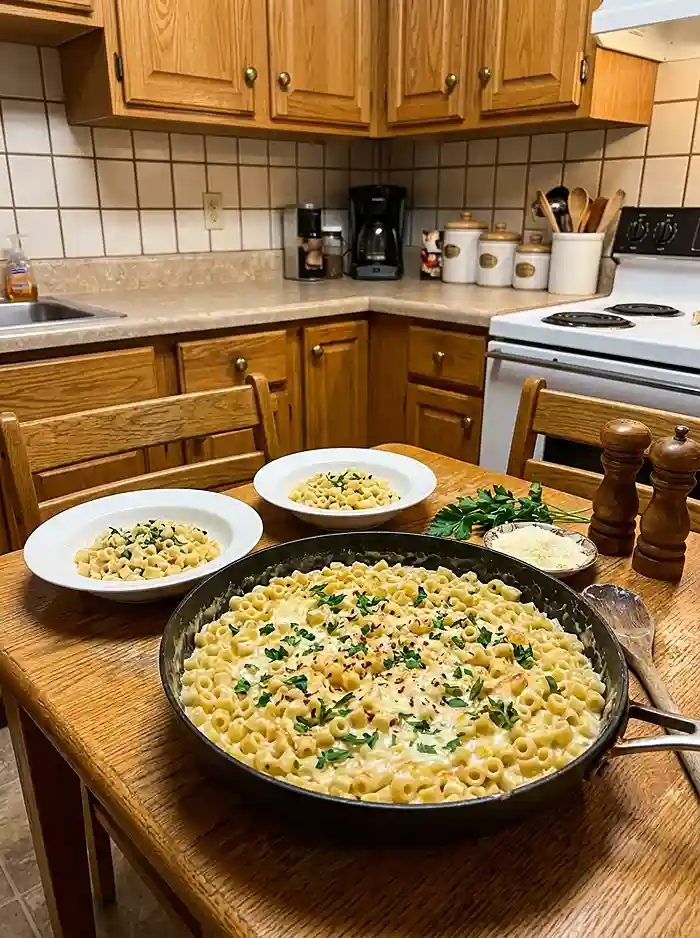
Serve this pasta right away with a crisp green salad or roasted vegetables to balance the creaminess. It is a lifesaver during back-to-school week, when everyone is tired and dinner needs to be on the table fast.
Round out the meal with a side of whole cucumber salad. For a crunchy topping or snack, try this gluten-free pumpkin seed recipe.
If you want something to scoop up the sauce, a warm unleavened South Asian flatbread works nicely. It makes a quick and easy gluten-free ditalini pasta dinner feel like a full spread.
Final Thoughts
If you make this gluten-free creamy one-pan ditalini pasta, I would love to hear how it turned out. Leave a comment with your tweaks and a star rating so other readers know what to expect.
Pin the recipe to Pinterest so you can find it on your next hectic weeknight. Tell me what your family said, even if the answer is that someone asked for seconds before everyone else sat down.
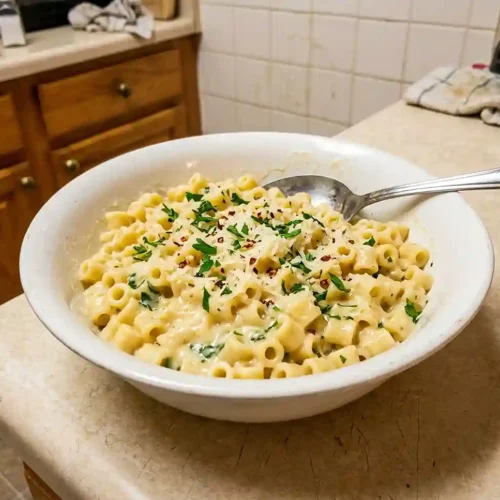
Gluten-Free Creamy One-Pan Ditalini Pasta
Equipment
- Large mixing spoon
- Large deep skillet or saucepan
- Measuring cups
- Measuring spoons
Ingredients
Pasta and Cooking Liquid
- 1 16-ounce package Gluten-free ditalini pasta Check that the package is labeled gluten-free; cooking times vary by brand.
- 3 tablespoons Olive oil
- 3 cups Chicken broth Must be labeled gluten-free; extra water or broth may be needed during cooking.
Aromatics and Seasonings
- ½ tablespoon Minced garlic
- ½ teaspoon Italian seasoning Choose a product labeled gluten-free.
- ½ teaspoon Onion powder Choose a product labeled gluten-free.
- 2 tablespoons Fresh parsley Chopped, plus more for garnish.
- Salt To taste.
- Freshly ground black pepper To taste.
Creamy Finish
- ½ cup Heavy cream
- ½ cup Grated Parmesan cheese Plus extra for serving.
- 3 tablespoons Unsalted butter
For Serving
- Extra grated Parmesan cheese For serving.
- Red pepper flakes Optional, for garnish.
Instructions
- Heat the olive oil in a large, deep skillet or saucepan over medium heat. Add the gluten-free ditalini pasta and stir frequently for 2–3 minutes, until lightly golden. Watch carefully to prevent burning.
- Stir in the minced garlic and gluten-free Italian seasoning. Cook for 30–60 seconds, until fragrant. If the garlic starts to darken, add the broth right away.
- Pour in the gluten-free chicken broth and bring to a gentle boil. Reduce the heat to medium-low and simmer, stirring frequently so the pasta does not stick. Cook according to the package directions, adding a splash of water or extra broth as needed, until the pasta reaches your preferred tenderness.
- Reduce the heat to low. Stir in the heavy cream, grated Parmesan, gluten-free onion powder, chopped parsley, salt, and black pepper.
- Add the unsalted butter and stir until it melts and the sauce becomes smooth and creamy. If the sauce is too thick, add a little warm water or broth to loosen it.
- Spoon the pasta into bowls and garnish with extra Parmesan, parsley, and red pepper flakes if desired. Serve immediately while the sauce is creamy.