Dairy-Free Lemon Posset Cups
These dairy-free lemon posset cups set silky-smooth from just 4 ingredients with zero gelatin. Bright, creamy, and naturally vegan-friendly.
The first time I made dairy-free lemon posset cups, I was hosting a dinner party where one guest couldn’t eat dairy and another couldn’t eat eggs. My old fail-safe lemon posset was off the table, and I had three hours before everyone arrived. Well, two test batches later, I figured out that full-fat coconut cream sets up exactly like heavy cream when you nail the technique.
Here’s what most folks don’t realize about classic lemon posset: it’s a 1700s British dessert that uses just three ingredients and zero gelatin or eggs. Have you ever wondered how a dessert can be silky-smooth and fully set without any thickeners? The magic happens when citric acid from lemon juice causes the cream’s proteins and fats to bond into a custard-like structure all on their own.
This recipe makes 6 to 8 small cups, takes about 15 minutes of hands-on time, and uses one saucepan plus serving glasses. No special equipment, no fussy techniques, just pantry ingredients that turn into something that feels every bit as elegant as a five-star restaurant dessert.
Why You’ll Love These Dairy-Free Lemon Posset Cups
- Silky-smooth without gelatin or eggs: The natural reaction between coconut fat and lemon acid creates a custard-like set that’s velvety as melted silk on a spoon.
- Just 4 simple ingredients: Coconut cream, sugar, lemon juice, and vanilla deliver bright tropical flavor with minimal pantry effort.
- Naturally dairy-free and vegan-friendly: No butter, cream, eggs, or gelatin makes this safe for vegans, lactose-intolerant guests, and most allergen-conscious diets.
- Make-ahead entertaining hero: Set in the fridge up to 2 days ahead, so dessert is one less thing to worry about on a busy hosting day.
The Secret to Perfect Dairy-Free Lemon Posset Cups
Great posset comes down to four small techniques most home cooks skip. Master these and your version will set every single time without crossing into rubbery or grainy territory.
- Use only the thick coconut cream: The watery liquid at the bottom of a coconut cream can prevents proper setting, so scoop only the firm white solids from a refrigerated can.
- Boil for the full 5 minutes: A gentle rolling boil concentrates the cream and breaks down sugar molecules, which is what creates the custard-like structure once cooled.
- Add lemon juice off the heat: High heat can cause the acid to curdle the cream, while warm (not hot) liquid lets the citric acid bond gently with the fat for a silky finish.
- Chill at least 2 hours undisturbed: The fat-acid reaction continues during cold setting, so resist the urge to peek or move the cups while the magic happens.
According to trusted dessert science from Serious Eats, posset works because of the unique reaction between cream proteins and citric acid, which creates a thickening effect similar to but gentler than rennet in cheesemaking.
Table of Contents
Ingredients You’ll Need
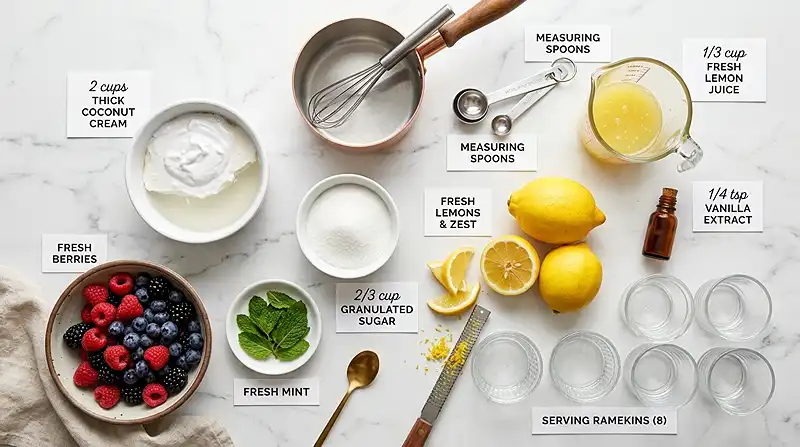
This recipe makes 6 to 8 small cups. Use the exact quantities below for the right balance of citrus brightness and creamy set.
Posset Base
- 2 cups full-fat coconut cream (thick part only, scooped from refrigerated cans)
- 2/3 cup granulated sugar
- 1/3 cup fresh lemon juice (about 2 to 3 large lemons)
- 1/4 teaspoon vanilla extract
For Serving
- Fresh berries (raspberries, blueberries, or sliced strawberries)
- Fresh mint leaves
For coconut cream, refrigerate the unopened cans overnight so the thick cream separates fully from the watery liquid. Brands like Native Forest and Thai Kitchen produce the cleanest, thickest cream, while lower-quality brands may have less fat and weaker setting power.
Step-by-Step Instructions
Follow these steps in order, and don’t skip the chilling time. The fat-acid bond needs at least 2 hours of cold rest to fully set into that signature silky custard texture.
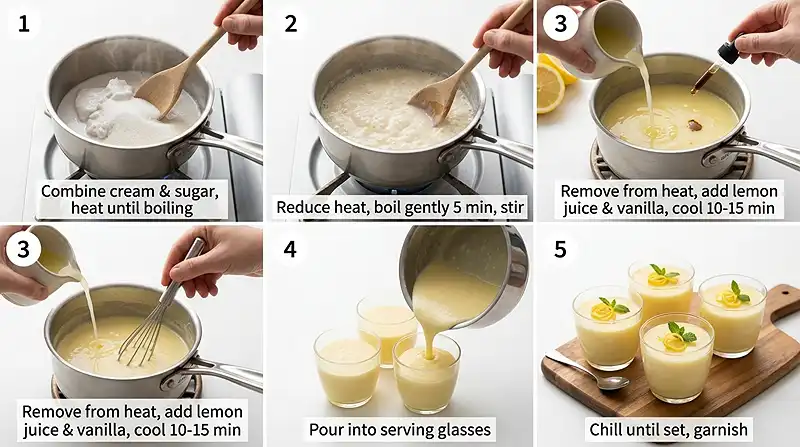
- Heat the coconut cream and sugar. In a medium saucepan, combine the coconut cream and granulated sugar over medium heat. Stir gently with a wooden spoon until the sugar dissolves completely (about 2 to 3 minutes), then bring the mixture to a gentle boil. Pro tip: A heavy-bottomed saucepan prevents scorching, since coconut cream sticks more easily than dairy cream.
- Boil for 5 minutes. Reduce the heat slightly to maintain a gentle but steady boil and cook for exactly 5 minutes, stirring occasionally to prevent the bottom from burning. The cream should look glossy with small bubbles around the edges and a faint sweet-coconut aroma rising from the pan.
- Stir in lemon and vanilla. Remove the saucepan from the heat and immediately whisk in the fresh lemon juice and vanilla extract. The mixture will thicken slightly within seconds as the citric acid begins reacting with the cream proteins, almost like watching milk transform into yogurt.
- Cool slightly. Let the mixture rest at room temperature for 10 to 15 minutes, stirring once or twice to prevent a skin from forming. The cream should still be pourable but no longer hot to the touch when you transfer it to serving cups.
- Pour and chill. Stir the mixture gently one final time, then divide evenly among 6 to 8 small cups, ramekins, or pretty glasses. Refrigerate uncovered for the first 30 minutes (this prevents condensation), then cover and chill for an additional 2 to 3 hours until fully set.
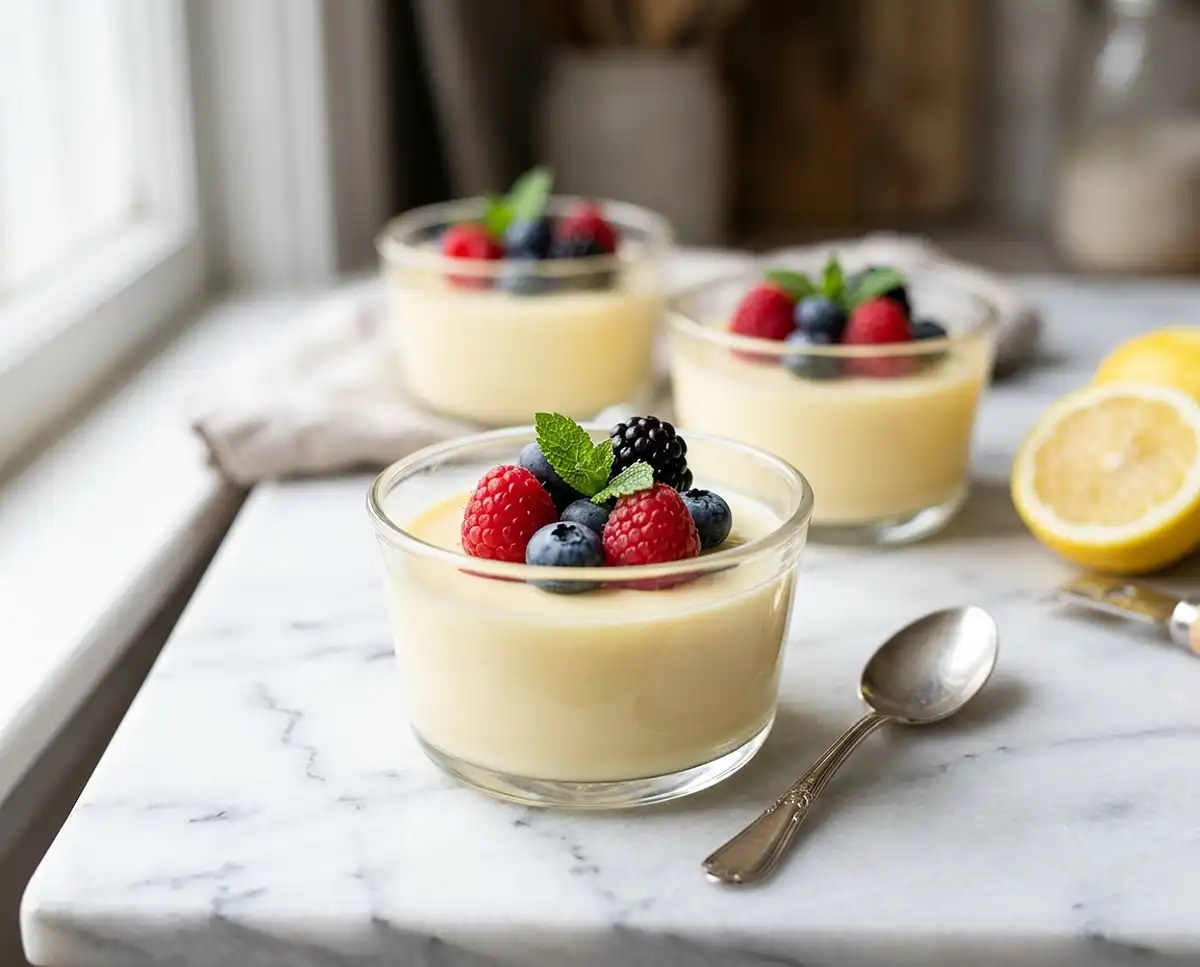
- Top and serve. Just before serving, top each cup with fresh berries and a small mint leaf for color contrast. The posset should jiggle slightly when nudged but hold its shape on a spoon.
Make It Your Own
One of the things I love about this Dairy-Free Lemon Posset is how easily it bends to whatever citrus you’ve got on hand. Man, oh man, have I tested every variation a reader has thrown my way over the years.
Swap the citrus. Replace lemon juice with an equal amount of fresh lime, blood orange, or grapefruit juice for a different tangy profile. Lime gives it a more tropical feel, while blood orange creates stunning pink-tinted Vegan Lemon Posset Cups that are gorgeous for Valentine’s Day or romantic dinners.
Reduce the sugar. If you prefer a more tart posset, reduce the sugar to 1/2 cup, but no lower since the sugar plays a structural role beyond sweetness. The dessert will set slightly looser with less sugar, which some folks actually prefer for a softer, more pudding-like texture.
Layer with fruit compote. Spoon a tablespoon of warm berry compote (made from frozen berries simmered with a touch of sugar) into the bottom of each cup before pouring the posset on top. The fruit layer creates a beautiful color contrast and adds a jammy bite to break up the creamy citrus.
Add herbs or spices. Steep 2 sprigs of fresh thyme or 1/2 teaspoon of cardamom pods in the warm cream for 10 minutes before straining and continuing the recipe. Herbal infusions add unexpected depth that works beautifully for a Lemon Posset (Dairy-Free) served at sophisticated dinner parties.
Common Problems and Solutions
Even a 4-ingredient dessert can throw a curveball. Here are the issues I see readers run into most often, with the fixes I’ve tested in my own kitchen.
Problem: My posset never set. You either used light coconut milk instead of full-fat coconut cream, or didn’t boil the mixture long enough. Always use the thick white cream from refrigerated full-fat coconut cream cans, and boil for the full 5 minutes to concentrate the fat properly. Light coconut milk simply doesn’t have the fat content needed to set.
Problem: The texture is grainy or curdled. Well, you added the lemon juice while the cream was still too hot, which caused the proteins to curdle violently. Always remove from heat first, let the cream cool for about 30 seconds, then whisk in the lemon juice quickly and steadily for a smooth, silky finish.
Problem: The top developed a wrinkled skin. You know what this means? You let the mixture cool for too long without stirring. Stir gently every few minutes during the 10 to 15 minute cooling period to prevent the surface from drying out and forming an unattractive skin.
Problem: It tastes too coconut-y, not lemony enough. Your coconut cream brand may be more strongly flavored, or your lemons were less juicy than expected. Add an extra tablespoon of fresh lemon juice and 1 teaspoon of finely grated lemon zest to amplify the citrus and balance the coconut undertone, since fresh zest contains essential oils that bottled juice can’t replicate.
Storage and Make-Ahead Tips
This dessert is built for entertaining since it actually improves after a night in the fridge as the flavors meld and the texture firms beautifully.
| Method | Duration | Notes |
|---|---|---|
| Counter | Up to 30 minutes | Best served chilled; do not leave longer for food safety |
| Fridge | 3 to 4 days | Cover with plastic wrap pressed directly onto the surface to prevent skin formation |
| Freezer | Not recommended | Freezing breaks the fat structure and creates a grainy, separated texture |
To serve from chilled storage, simply remove the cups from the fridge and add fresh berries and mint just before plating. Use any leftover posset spooned over fresh fruit, layered into parfaits with gluten-free granola, or stirred into smoothies for a creamy citrus boost. The texture stays silky for the full 4 days when properly covered.
Dairy-Free Lemon Posset Cups FAQs
Can I use coconut milk instead of coconut cream?
No, full-fat coconut cream is essential for the posset to set properly, since coconut milk has too much water and not enough fat. If you only have full-fat coconut milk, refrigerate the can for 24 hours and scoop only the thick white solids from the top, discarding the watery liquid. Light coconut milk will not work at all.
Why is fresh lemon juice required?
Fresh lemon juice contains active citric acid and natural enzymes that interact with coconut cream proteins to create the setting reaction. Bottled lemon juice often contains preservatives like sodium benzoate that interfere with the chemistry, resulting in a runny posset that never fully sets. Always squeeze fresh lemons for guaranteed results.
How do I know when the posset is fully set?
The posset is fully set when it jiggles slightly like firm pudding when nudged but holds its shape when scooped with a spoon. After 2 to 3 hours in the fridge, the surface should look smooth and slightly matte, with no liquid pooling around the edges. If it still looks runny, give it another hour of chill time.
Can I make these cups ahead of time?
Yes, dairy-free posset cups can be made up to 2 days ahead, which is what makes them perfect for entertaining. Cover the cups with plastic wrap pressed directly onto the surface to prevent a skin from forming, and add fresh berries and mint only at serving time. The flavor actually deepens and improves overnight.
What’s the best way to serve dairy-free lemon posset cups?
Serve chilled in small glasses or ramekins, topped with fresh berries (raspberries are my favorite for color contrast), a small mint leaf, and an optional sprinkle of finely grated lemon zest. For dinner parties, present on a small plate with a delicate gluten-free cookie alongside for textural contrast against the silky posset.
Serving Suggestions
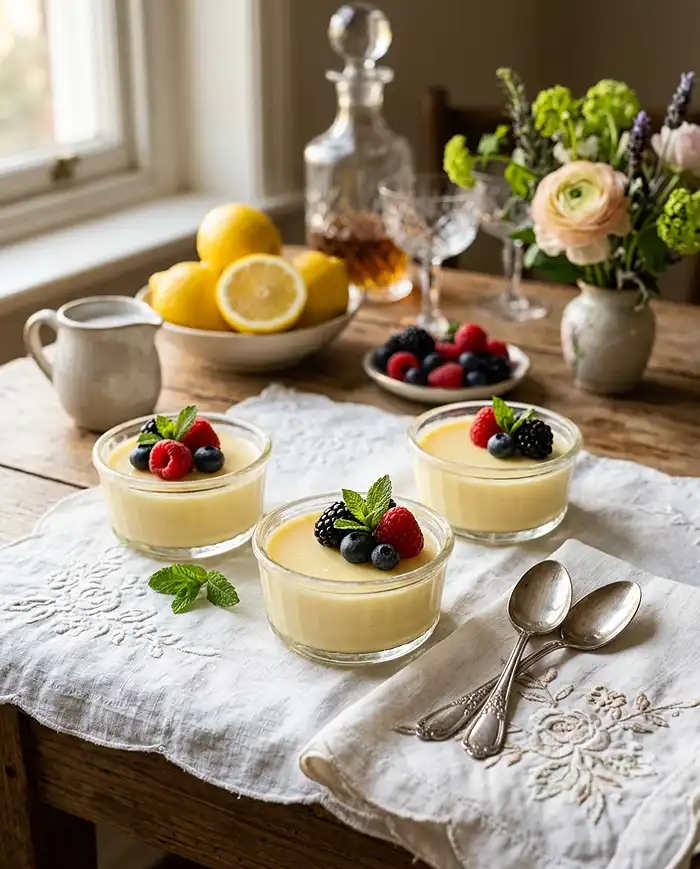
Plate these cups individually for elegant dinner parties, summer Fourth of July spreads with red and blue berries on top, or romantic Valentine’s Day dinners where you want something light and citrusy after a rich main. They make a beautiful finale after my gluten-free jerk chicken pineapple bowl, since the cool citrus posset balances the warm tropical spice perfectly. For a casual gathering, set out a snack table with my gluten-free dill pickle popcorn snack mix as a pre-dinner nibble, follow with my gluten-free Thai peanut chicken salad as the main, and finish with these silky lemon cups for a complete menu.
Give Them a Try and Share Your Spin
If you make these dairy-free lemon posset cups, I’d love to hear how they turned out and which citrus or topping became your signature combo. Snap a photo of those golden silky cups, pin it to your dairy-free dessert Pinterest board, and tag me so I can cheer you on. Drop a star rating and a comment below with your tweaks, because your kitchen wisdom helps the next reader pull off elegant dinner-party dessert magic with confidence.
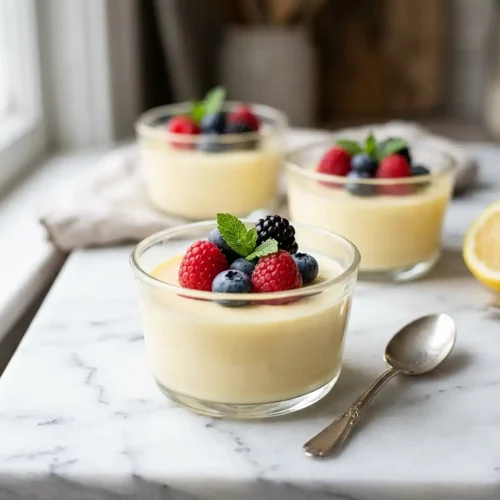
Dairy-Free Lemon Posset Cups
Equipment
- Medium heavy-bottomed saucepan
- Wooden spoon
- Whisk
- Measuring cups and spoons
- 6 to 8 small cups, ramekins, or serving glasses
- Citrus Juicer
Ingredients
Posset Base
- 2 cups full-fat coconut cream thick part only, scooped from refrigerated cans
- ⅔ cup granulated sugar
- ⅓ cup fresh lemon juice about 2 to 3 large lemons
- ¼ teaspoon vanilla extract
For Serving
- fresh berries raspberries, blueberries, or sliced strawberries
- fresh mint leaves
Instructions
- In a medium saucepan, combine the coconut cream and granulated sugar over medium heat. Stir gently with a wooden spoon until the sugar dissolves completely (about 2 to 3 minutes), then bring the mixture to a gentle boil.
- Reduce the heat slightly to maintain a gentle but steady boil and cook for exactly 5 minutes, stirring occasionally to prevent the bottom from burning. The cream should look glossy with small bubbles around the edges.
- Remove the saucepan from the heat and immediately whisk in the fresh lemon juice and vanilla extract. The mixture will thicken slightly within seconds as the citric acid begins reacting with the cream proteins.
- Let the mixture rest at room temperature for 10 to 15 minutes, stirring once or twice to prevent a skin from forming. The cream should still be pourable but no longer hot to the touch.
- Stir the mixture gently one final time, then divide evenly among 6 to 8 small cups, ramekins, or pretty glasses. Refrigerate uncovered for the first 30 minutes, then cover and chill for an additional 2 to 3 hours until fully set.
- Just before serving, top each cup with fresh berries and a small mint leaf for color contrast. The posset should jiggle slightly when nudged but hold its shape on a spoon.