Gluten-Free Pineapple Coconut Dream Bars
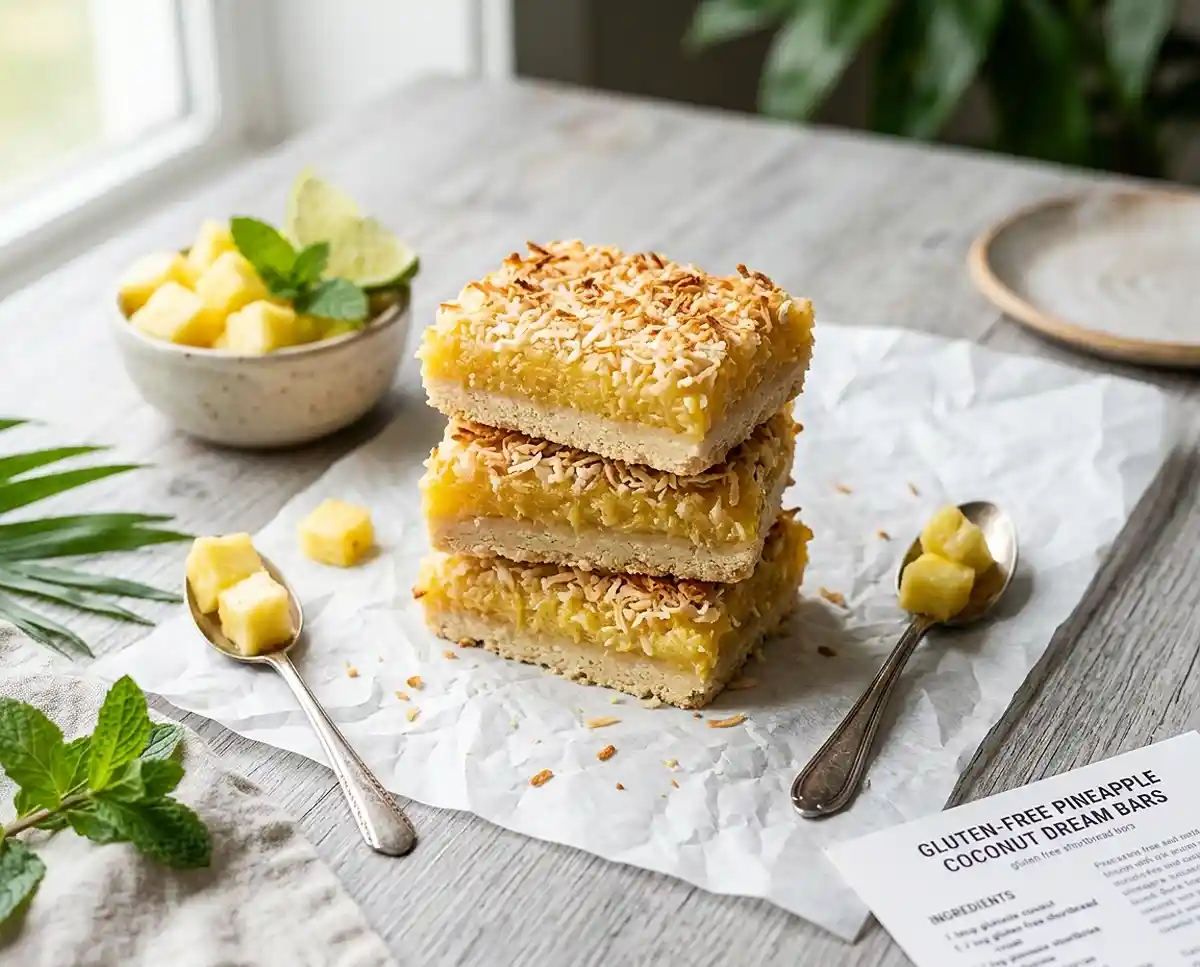
These gluten-free pineapple coconut dream bars layer a buttery shortbread crust with a sweet pineapple-coconut filling for a tropical dessert that tastes like a Hawaiian vacation.
The first time I tried these bars, I made the mistake of using canned pineapple instead of fresh, and the whole pan turned into a soggy, syrupy mess that wouldn’t slice cleanly. Lesson learned: fresh pineapple is non-negotiable here, and that one little tweak completely changed the game. Have you ever made a recipe where one ingredient swap turned everything around?
These bars are perfect for summer cookouts, Memorial Day potlucks, or any time you want a tropical dessert that feels fancy but comes together with one bowl and one square pan. They’re also low-FODMAP friendly when you stick to the recommended serving size, which is a win for anyone managing IBS alongside gluten sensitivity.
Table of Contents
Why You’ll Love These Pineapple Coconut Dream Bars
- Buttery shortbread base topped with juicy pineapple, sweet shredded coconut, and a custardy filling that bakes up golden and gorgeous
- Beginner-friendly baking—two simple layers, one square pan, and no fussy techniques required
- Naturally gluten-free and low-FODMAP friendly when you measure pineapple and coconut to recommended servings
- Works best for tropical-themed gatherings, summer potlucks, Easter brunch, or anytime you need a dessert that travels well
The Secret to Perfect Gluten-Free Pineapple Coconut Dream Bars
Getting the texture right—crisp crust, juicy filling, golden coconut top—is what makes these bars taste like a bakery version instead of a homemade flop.
- Use a quality low-FODMAP gluten-free flour blend. Authentic Foods GF Classical Blend is my favorite because it bakes up with that real shortbread crumb instead of gritty or gummy, and the Monash University FODMAP guide on gluten-free flours explains why blend choice matters so much for sensitive eaters.
- Always use fresh pineapple, never canned. Fresh pineapple delivers the right moisture level, sweetness, and FODMAP-tested safety. Canned pineapple is too watery, often packed in syrup that throws off the sugar balance, and hasn’t been tested for low-FODMAP serving sizes.
- Pre-bake the crust until lightly golden. A par-baked crust holds up against the juicy pineapple filling instead of turning soggy. You want to see those pale-golden edges with a set, slightly firm middle before pouring on the filling.
- Temper the eggs with lime juice slowly. Adding lime juice gradually while whisking prevents the eggs from curdling. Curdled eggs make a grainy filling instead of that silky, custardy texture you’re after.
Ingredients
Low-FODMAP Crust
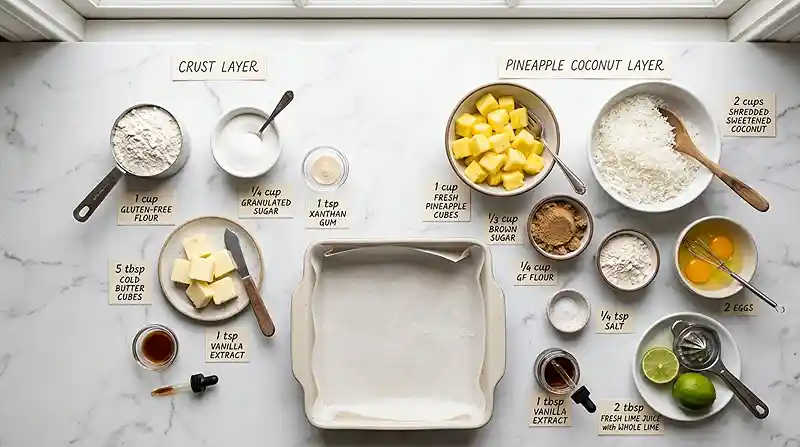
| Ingredient | Amount | Notes |
|---|---|---|
| Gluten-free low-FODMAP flour | 1 cup | Authentic Foods GF Classical Blend recommended |
| Granulated sugar | ¼ cup | Standard white sugar works |
| Xanthan gum | 1 tsp | Skip if your flour blend already contains it |
| Cold unsalted butter | 5 tablespoons | Earth Balance for dairy-free |
| Vanilla extract | 1 teaspoon | Pure, not imitation |
Pineapple Coconut Filling
| Ingredient | Amount | Notes |
|---|---|---|
| Finely cubed fresh pineapple, drained | 1 cup (165g) | About ½ pineapple; the riper, the better |
| Shredded sweetened coconut, divided | 2 cups (140g) | 1 cup for filling, 1 cup for topping |
| Light brown sugar, lightly packed | ⅓ cup | Adds caramel depth |
| All-purpose low-FODMAP GF flour | ¼ cup | No xanthan gum needed for this layer |
| Kosher salt | ¼ teaspoon | Balances the sweetness |
| Large eggs, room temperature | 2 | Room temp blends more smoothly |
| Vanilla extract | 1 tablespoon | Yes, a full tablespoon—it’s worth it |
| Fresh squeezed lime juice | 2 tablespoons | About 1 medium lime; never bottled |
| Baking spray or vegetable shortening | For greasing | For prepping the pan |
A quick tip on the pineapple: drain the cubed pineapple well after cutting. Excess juice makes the filling watery and prevents that gorgeous golden top from forming.
Instructions
Prepare the Crust
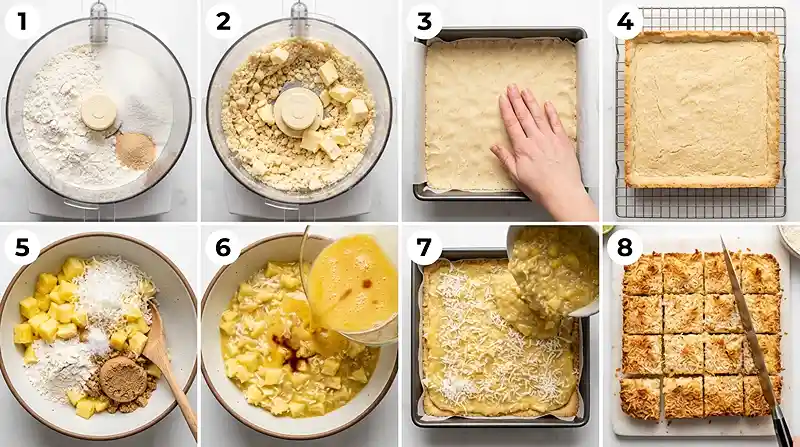
1. Preheat and prep the pan. Preheat your oven to 350°F. Grease an 8-inch square pan with vegetable shortening and line it with parchment paper, leaving a slight overhang on two sides for easy removal later.
2. Mix the dry ingredients. Combine the low-FODMAP gluten-free flour, granulated sugar, and xanthan gum in a mixer bowl or food processor. Pulse or stir briefly to evenly distribute the xanthan gum throughout the flour.
3. Cut in the butter. Add the cold butter and mix on low speed (or pulse in the food processor) until the mixture looks crumbly with pea-sized butter pieces. The texture should resemble coarse, sandy gravel.
4. Add vanilla and form the crust. Drizzle in the vanilla extract and mix until it just comes together. Use your hands to gently work the dough into a cohesive crumbly mass—it should hold together when squeezed.
5. Press and bake. Press the dough firmly and evenly into the prepared pan, going slightly up the sides for a defined edge. Bake for 15-18 minutes until set and lightly golden, then remove and let cool on a rack for 10 minutes while you make the filling. Keep the oven set to 350°F.
Prepare the Pineapple Coconut Filling
6. Mix the fruit and coconut. Place the drained pineapple cubes and 1 cup of shredded coconut in a medium bowl. Sprinkle with the low-FODMAP flour, brown sugar, and salt, then stir to coat—I use my hands to break up any brown sugar clumps.
7. Whisk the wet ingredients. In a large measuring cup or smaller bowl, whisk together the eggs and vanilla until smooth. Slowly drizzle in the lime juice while whisking continuously to temper the eggs and prevent curdling.
8. Combine and pour. Pour the egg mixture over the pineapple and coconut mixture, stirring gently until everything is evenly coated. The mixture should look wet, glossy, and tropical—like a sunny beach in a bowl.
9. Top and bake. Spread the filling evenly over the par-baked crust, then sprinkle the remaining 1 cup of shredded coconut over the top. Bake for 25-30 minutes, until the coconut turns deeply golden brown and smells as fragrant as a coconut macaroon fresh out of the oven.
10. Cool and slice. Let the bars cool completely in the pan before slicing—patience is key here, since cutting too early causes the filling to ooze. Use the parchment overhang to lift the bars out, then slice into 16 squares with a sharp knife.
Pro Tip: For ultra-clean slices, chill the bars in the fridge for 30 minutes after they’ve cooled to room temperature. The cold filling slices like a dream and gives you those bakery-perfect edges.
Make It Your Own
Make it dairy-free. Swap the butter for Earth Balance buttery sticks or any low-FODMAP vegan butter alternative. The crust still bakes up beautifully with that classic shortbread crumb, just be sure to use a stick-style butter rather than a spreadable tub for the right fat content.
Add tropical extras. You know, a handful of macadamia nuts pressed into the crust or sprinkled on top adds a Hawaiian-bakery vibe that’s hard to beat. Just keep portions in mind for low-FODMAP eaters since macadamias have a serving threshold.
Switch up the citrus. Lemon juice works in place of lime if that’s what you have on hand, though you’ll lose a little of that tropical flavor. Always use fresh-squeezed citrus—bottled juices haven’t been tested for FODMAP levels and the flavor is noticeably duller.
Add a glaze. A simple coconut glaze made with powdered sugar, a splash of coconut milk, and a drop of vanilla makes these gluten-free dessert bars feel extra special. Drizzle it over the cooled bars right before serving for a pretty white ribbon against the golden coconut.
Common Problems & Solutions
Problem: My bars are soggy and won’t hold their shape.
You likely used canned pineapple or didn’t drain the fresh pineapple well enough. Always use fresh, well-drained pineapple, and consider patting the cubes with a paper towel before mixing. Excess moisture is the enemy of clean, sliceable bars.
Problem: The crust is crumbly and falling apart.
Man, oh man, this is usually a flour-blend issue. Different gluten-free flours absorb moisture differently, so if your dough isn’t holding together when squeezed, add 1-2 teaspoons of cold water at a time until it does. Pressing firmly into the pan also helps the crust set up properly.
Problem: The filling looks curdled or grainy.
Your eggs likely cooked too fast when the lime juice hit them, or you added the filling to a too-hot crust. Always temper the eggs by drizzling lime juice in slowly while whisking, and let the par-baked crust cool for 10 minutes before adding the filling.
Problem: The coconut topping burned before the filling set.
Your oven probably runs hot or the bars were placed too high in the oven. Move the rack to the middle position, and tent the bars loosely with foil during the last 5-10 minutes if the coconut starts browning too quickly. An oven thermometer is honestly worth the $5 investment.
Storage & Meal Prep
| Method | Duration | Notes |
|---|---|---|
| Counter | Up to 1 day | Cover loosely with foil |
| Fridge | 2-3 days | Airtight container; chill firms texture |
| Freezer | 1-2 months | Wrap individually in plastic and foil |
To freeze, wrap each cooled bar individually in plastic wrap, then foil, before placing in a zip-top freezer bag. Thaw overnight in the fridge or at room temperature for 1-2 hours before serving. Leftover bars are honestly amazing crumbled over vanilla ice cream or yogurt parfaits—nothing goes to waste with these.
Gluten-Free Pineapple Coconut Dream Bars FAQs
Are pineapple coconut dream bars gluten-free?
This recipe is 100% gluten-free when you use a certified gluten-free flour blend like Authentic Foods GF Classical Blend. Always check that your shredded coconut is certified gluten-free as well, since some brands process in shared facilities. The pineapple, eggs, butter, and sugar are all naturally gluten-free.
Can I use canned pineapple instead of fresh?
No, canned pineapple is not recommended for this recipe and hasn’t been tested for low-FODMAP safety. Canned pineapple releases too much liquid and is often packed in syrup, which throws off the sugar balance and makes the bars soggy. Fresh, drained pineapple is the only way to get the right texture.
Is it okay to eat pineapple and coconut together?
Absolutely—pineapple and coconut are a classic tropical pairing used in everything from piña coladas to dream bars. The bright acidity of pineapple balances the rich, buttery flavor of coconut perfectly. Both fruits also have similar tropical, slightly sweet profiles that complement each other beautifully in baked goods.
Can celiacs eat pineapple?
Yes, fresh pineapple is naturally gluten-free and 100% safe for people with celiac disease. Just be cautious of pre-cut pineapple from grocery store delis, which may share equipment with gluten-containing fruits. Whole pineapple cut at home is always the safest choice.
How do I know when the bars are done baking?
The bars are done when the coconut topping is deeply golden brown and the filling is set but still slightly soft in the center. The filling will continue to set as it cools, so don’t overbake or you’ll lose that tender, custardy texture. A toothpick inserted in the filling should come out mostly clean with no liquid.
Serving Suggestions
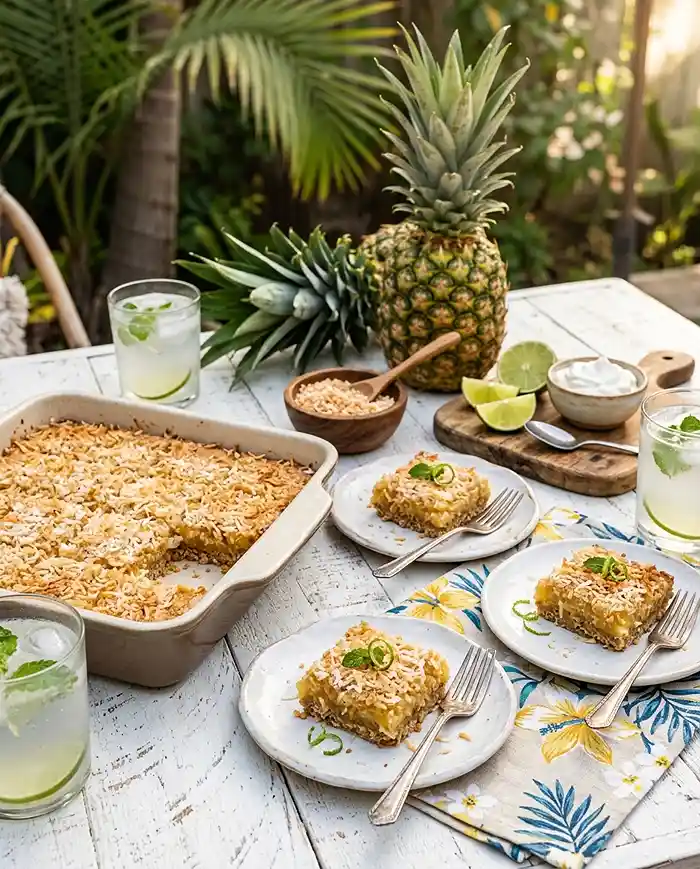
Serve these gluten-free pineapple coconut dream bars chilled or at room temperature with a scoop of vanilla ice cream, a dollop of whipped cream, or a drizzle of coconut cream for a full tropical dessert moment. They’re especially perfect for summer barbecues, Fourth of July spreads, or luau-themed gatherings.
For a tropical-themed brunch or summer entertaining menu, pair these bars with my Mediterranean salmon bowls or gluten-free bang bang salmon bowls for a savory main course. Want a make-ahead breakfast that fits the tropical vibe? My cherry vanilla coconut chia cups carry that coconut theme through your whole day.
If you make these gluten-free pineapple coconut dream bars, I’d love to hear how they turned out—drop a star rating and comment below with any tweaks you tried. Don’t forget to pin this recipe to your Pinterest board so it’s there next time you need a tropical dessert that wows. Happy baking, friend!
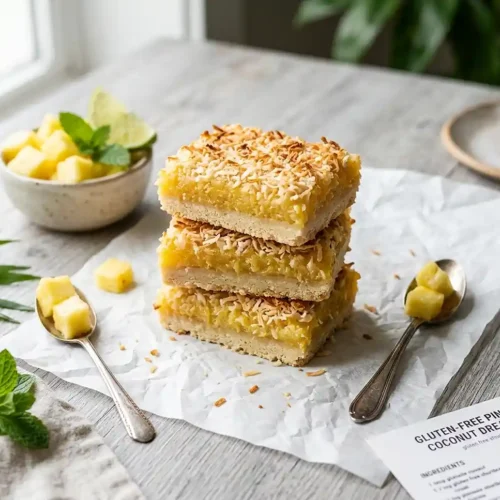
Gluten-Free Pineapple Coconut Dream Bars
Equipment
- 8-inch square baking pan
- Parchment paper
- Food processor or stand mixer
- Mixing bowls
- Whisk
Ingredients
Low-FODMAP Crust
- 1 cup gluten-free low-FODMAP flour Authentic Foods GF Classical Blend recommended
- 0.25 cup granulated sugar
- 1 tsp xanthan gum skip if your flour blend already contains it
- 5 tablespoons cold unsalted butter or Earth Balance for dairy-free
- 1 teaspoon vanilla extract pure, not imitation
Pineapple Coconut Filling
- 1 cup fresh pineapple 165g, finely cubed and drained; do not use canned
- 2 cups shredded sweetened coconut 140g, divided—1 cup for filling, 1 cup for topping
- 0.33 cup light brown sugar lightly packed
- 0.25 cup all-purpose low-FODMAP gluten-free flour no xanthan gum needed
- 0.25 teaspoon kosher salt
- 2 large eggs room temperature
- 1 tablespoon vanilla extract
- 2 tablespoons fresh squeezed lime juice about 1 medium lime; never bottled
- baking spray or vegetable shortening for greasing
Instructions
- Preheat oven to 350°F. Grease an 8-inch square pan with vegetable shortening and line with parchment paper, leaving an overhang on two sides for easy removal.
- Make the crust: combine the low-FODMAP flour, sugar, and xanthan gum in a mixer bowl or food processor. Add the cold butter and mix on low (or pulse) until crumbly with pea-sized butter pieces.
- Add the vanilla and mix until the dough comes together—use your hands to form it into a cohesive crumbly mass. Press firmly and evenly into the prepared pan, going slightly up the sides.
- Bake the crust for 15-18 minutes until set and lightly golden. Remove and let cool on a rack for 10 minutes while you prepare the filling. Keep oven set to 350°F.
- Make the filling: place the drained pineapple and 1 cup of shredded coconut in a bowl. Sprinkle with the low-FODMAP flour, brown sugar, and salt, then stir to coat thoroughly.
- In a large measuring cup or smaller bowl, whisk together the eggs and vanilla. Slowly drizzle in the lime juice while whisking continuously to temper the eggs.
- Pour the egg mixture over the pineapple-coconut mixture and stir to combine. Spread the filling evenly over the par-baked crust and sprinkle the remaining 1 cup of shredded coconut on top.
- Bake for 25-30 minutes, until the coconut turns deeply golden brown. Let cool completely before slicing into 16 squares. Serve immediately or refrigerate for 2-3 days.