Gluten-Free Apple Cider Crinkle Cookies
My first batch of gluten-free apple cider crinkle cookies melted into one giant, sticky pancake. I had poured the cider in straight from the jug, and all that extra water turned the dough into soup. I scraped the whole sheet into the trash and ate a spoonful of raw dough out of spite.
Honestly… that flop taught me more than any good batch did. Cider is mostly water, so it has to be simmered down to 2 tablespoons before it ever touches the dough. Once I did that, the flavor got stronger and the cookies finally held their shape.
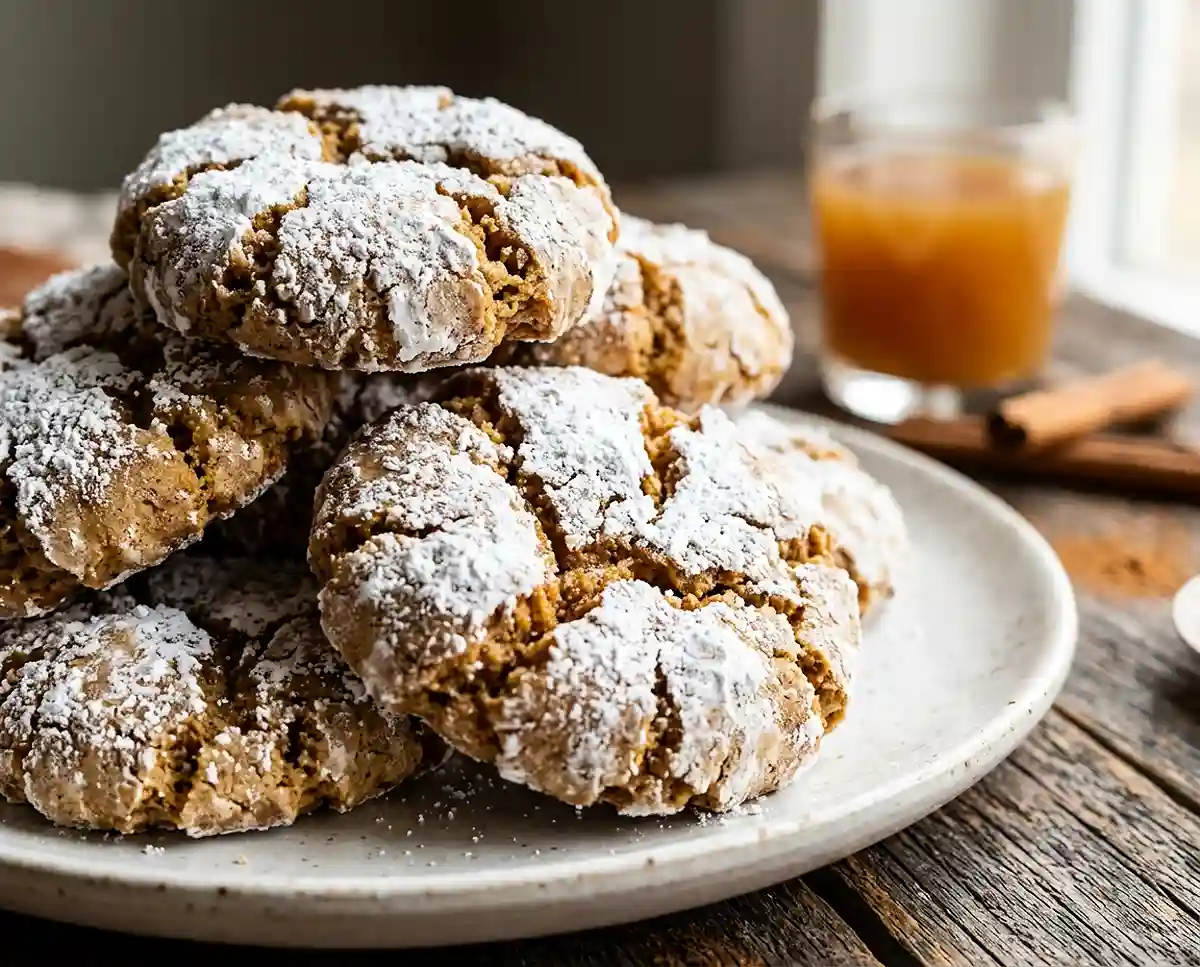
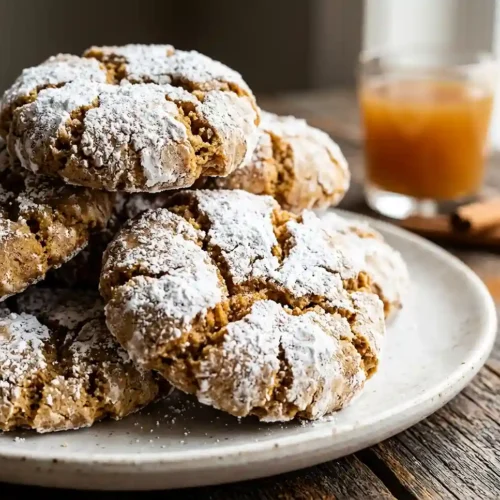
I’ve made this version at least thirty times now. The powdered sugar tops crack into a snowy pattern that looks like a viral Pinterest fall dessert, but the real payoff is the center. It’s a soft batch cookie recipe that works with any store-bought gluten-free flour blend that includes xanthan gum.
Table of Contents
What Makes This Apple Cider Crinkle Cookie Recipe Different
- Texture and flavor: The edges set while the centers stay soft and chewy, like the inside of an apple cider donut. The reduced cider gives a concentrated apple note that sits behind the cinnamon and nutmeg.
- Difficulty: Beginner-friendly. The only extra step is simmering the cider, and the rest is a basic cream-and-scoop cookie dough.
- Good to know: Kid-friendly to roll in sugar, and the baked cookies freeze well for 2-3 months.
- When it shines: Fall potlucks, cookie trays, and any weekend you want the kitchen to smell like an apple cinnamon fall recipe.
The Fix Behind Every Common Gluten-Free Apple Cider Crinkle Cookie Failure
Gluten-free cookies usually fail in three ways: they spread too thin, turn gummy, or crumble when you pick them up. This recipe tackles each one on purpose.
- Reduced cider fixes gummy, flat cookies. Simmering 1/4 cup down to 2 tablespoons removes most of the water but keeps the sugars and flavor. Less free water means less steaming inside the dough and less spread.
- A 30-45 minute chill fixes spreading. The butter firms up, so it melts slowly in the oven. The starches in the flour blend also have time to absorb moisture, which cuts that sandy, gritty bite.
- Xanthan gum in the flour blend fixes crumbling. Without gluten, nothing holds the cookie together. Xanthan gum acts as the binder, which is why university extension gluten-free baking guidance recommends a blend that includes it.
- Two sugar coatings create the crinkle. Granulated sugar adds a light crust, and the powdered sugar layer cracks open as the cookie spreads and rises, leaving white fissures against the golden surface.
Ingredients For Gluten-Free Apple Cider Crinkle Cookies
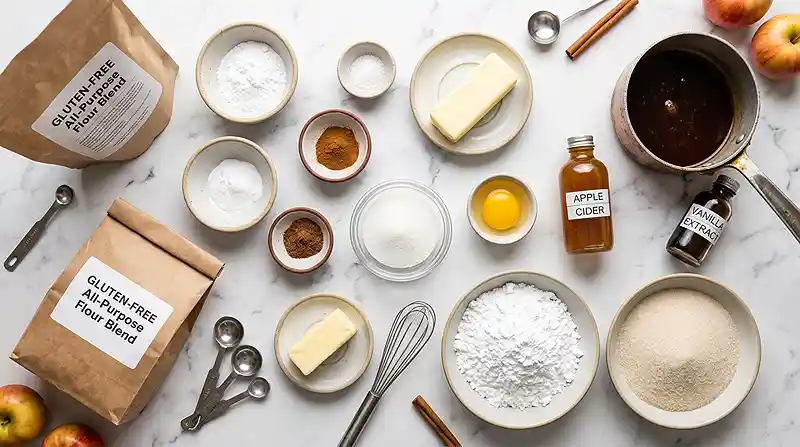
Makes 20-24 cookies.
Dry Ingredients
- 2 cups gluten-free all-purpose flour blend with xanthan gum
- 1 tsp baking powder
- ½ tsp baking soda
- ½ tsp ground cinnamon
- ¼ tsp ground nutmeg
- ¼ tsp salt
Wet Ingredients
- ½ cup unsalted butter, softened
- ¾ cup granulated sugar
- 1 large egg
- ¼ cup apple cider, reduced to 2 tbsp and cooled
- 1 tsp vanilla extract
For Coating
- ½ cup powdered sugar
- ¼ cup granulated sugar
Check that your flour blend lists xanthan gum on the label. If it doesn’t, see the swap section below before you start.
Instructions
Reduce the Cider and Make the Dough
- Pour the apple cider into a small saucepan and simmer over medium heat until reduced to 2 tablespoons. Let it cool completely.
What I learned: Warm cider will start melting the butter and make the dough greasy, so be patient here. - Preheat the oven to 350°F (175°C). Line two baking sheets with parchment paper.
- In a medium bowl, whisk together the gluten-free flour, baking powder, baking soda, cinnamon, nutmeg, and salt. Whisking well spreads the xanthan gum evenly so it doesn’t clump.
- In a separate large bowl, beat the softened butter and ¾ cup granulated sugar until light and fluffy. It should look pale and almost creamy, like frosting.
- Beat in the egg, cooled reduced apple cider, and vanilla extract until combined.
- Gradually add the dry ingredients, mixing until a soft dough forms. Stop as soon as no dry streaks remain.
- Cover and refrigerate the dough for 30-45 minutes until firm enough to scoop.
What I learned: Skipping this chill is how I ended up with those thin, lacy cookies that stuck to the pan.
Coat, Shape, and Bake
- Place the remaining ¼ cup granulated sugar and powdered sugar in separate shallow bowls.
- Roll the dough into 1-inch balls. Roll each ball first in granulated sugar, then generously in powdered sugar.
What I learned: A thick, snowy coat is what splits into crinkles. A thin dusting just disappears into the dough. - Arrange the dough balls about 2 inches apart on the prepared baking sheets.
- Bake for 10-13 minutes, until the cookies have spread and developed crinkled tops. The centers should remain slightly soft.
- Let the cookies cool on the baking sheets for 5 minutes before transferring them to a wire rack to cool completely. They firm up as they cool, so don’t judge doneness by pressing them hot.

Swap It Without Breaking It
For a dairy-free version, use a firm stick-style dairy-free butter instead of the unsalted butter. Tub spreads hold too much water and give you the same flat, greasy result as unreduced cider.
Here’s the thing… the flour blend matters more than any other swap. If yours has no xanthan gum, whisk in about ½ tsp per cup of flour, since Coeliac UK’s baking tips explain that the gum has to be mixed into the dry ingredients first.
You can use pumpkin pie spice in place of the cinnamon and nutmeg, keeping the same total amount. It adds ginger and clove, which makes these taste even more like an apple cinnamon fall recipe.
I don’t recommend swapping the egg for a flax egg here. The egg gives structure and richness, and in my experience a flax version leaves these cookies more fragile and prone to crumbling.
When Things Go Sideways
Problem: the cookies spread into thin, greasy discs. Chill the dough longer and make sure the cider was reduced to 2 tablespoons and fully cooled. Warm or watery dough has nowhere to go but out.
Problem: the cookies crumble when you lift them. Let them rest on the baking sheet for the full 5 minutes. They’re fragile straight out of the oven, and the structure sets as they cool.
Problem: the cookies are dry or cakey. Check how you measured the flour. Scoop it, level it with a knife, and don’t pack it down, because extra flour soaks up the little moisture this dough has.
Problem: the centers are gummy. Oh boy, I’ve been there. Bake until the tops are fully crinkled, then cool completely on a rack, since gluten-free centers keep setting for several minutes after baking.
Problem: the cookies are dense, not soft. Make sure your baking powder and baking soda are fresh. Old leaveners don’t create the lift that opens up those crinkles.
Storage & Meal Prep
| Method | Duration | Notes |
|---|---|---|
| Counter | 2-3 days | Airtight container |
| Fridge | 5-7 days | Bring to room temp |
| Freezer | 2-3 months | Wrap individually |
To reheat, warm a cookie for a few seconds in the microwave so the center turns soft again. If the powdered sugar has soaked in, give the cookie a fresh dusting before serving.
Broken cookies make a great crumble over vanilla ice cream or yogurt, so nothing goes to waste.
Straight Answers to Real Questions
Can I make the dough ahead of time?
Yes, the dough can chill longer than 45 minutes. I’ve kept it covered in the fridge for a few hours with no problems. Let it sit out for about 10 minutes before scooping so it isn’t rock hard.
How do I get the crinkled tops?
Roll each dough ball in granulated sugar first, then coat it generously in powdered sugar. The thick powdered sugar layer cracks as the cookie spreads and rises in the oven. A thin coat won’t crack, so be generous.
Why did my gluten-free cookies spread flat?
Flat cookies usually come from dough that was too warm or too wet. Make sure the cider is reduced to 2 tablespoons and fully cooled, and chill the dough for 30-45 minutes. Both steps keep the butter from melting too fast.
What’s the best flour blend for these cookies?
Use a gluten-free all-purpose blend that already contains xanthan gum. The gum acts as the binder that replaces gluten, so the cookies hold together instead of crumbling. If your blend has none, add it to the dry ingredients before mixing.
Is it worth reducing the cider?
Yes, reducing the cider is the single most important step in this recipe. Who wants a cookie that tastes like cinnamon sugar and nothing else? Simmering it down concentrates the apple flavor and removes water that would make the dough gummy and flat.
Serving Suggestions

These are made for a mug of hot tea, coffee, or warm cider on a cool evening. They also earn a spot on Thanksgiving cookie trays and at fall potlucks, where they disappear fast.
For dessert, serve them next to roasted apple coconut rice pudding. For a full fall menu, start with cheesy broccoli chicken stuffed potatoes and add gluten-free roasted pumpkin corn salsa cups as an appetizer.
Final Thoughts
Gluten-free apple cider crinkle cookies don’t need fancy ingredients, just a reduced cider, a chilled dough, and a thick sugar coat. They won’t taste identical to a wheat cookie, but the soft, spiced, apple-tinged result comes close to a cider donut.
Try the recipe, pin it for later, and leave a rating below. Tell me how your batch turned out, and if it flopped, tell me that too. I’ve had plenty of those, and we can figure out the fix together.
Gluten-Free Apple Cider Crinkle Cookies
Equipment
- Small saucepan
- Medium mixing bowl
- Large mixing bowl
- Whisk
- Electric mixer
- Measuring cups and spoons
- Two baking sheets
- Parchment paper
- Shallow Bowls
- Cookie scoop or spoon
- Wire cooling rack
Ingredients
Dry Ingredients
- 2 cups gluten-free all-purpose flour blend Use a blend containing xanthan gum
- 1 tsp baking powder
- ½ tsp baking soda
- ½ tsp ground cinnamon
- ¼ tsp ground nutmeg
- ¼ tsp salt
Wet Ingredients
- ½ cup unsalted butter Softened
- ¾ cup granulated sugar For the dough
- 1 large egg
- ¼ cup apple cider Simmer until reduced to 2 tablespoons, then cool completely
- 1 tsp vanilla extract
For Coating
- ½ cup powdered sugar
- ¼ cup granulated sugar For rolling the dough balls before powdered sugar
Instructions
- Pour the apple cider into a small saucepan and simmer over medium heat until reduced from 1/4 cup to 2 tablespoons. Let it cool completely.
- Preheat the oven to 350°F (175°C). Line two baking sheets with parchment paper.
- In a medium bowl, whisk together the gluten-free flour blend, baking powder, baking soda, cinnamon, nutmeg, and salt until evenly combined.
- In a separate large bowl, beat the softened butter and 3/4 cup granulated sugar until light and fluffy.
- Beat in the egg, cooled reduced apple cider, and vanilla extract until combined.
- Gradually add the dry ingredients to the wet ingredients, mixing just until a soft dough forms and no dry streaks remain.
- Cover the dough and refrigerate for 30–45 minutes, until firm enough to scoop.
- Place the remaining 1/4 cup granulated sugar and the powdered sugar in separate shallow bowls.
- Roll the dough into 1-inch balls. Roll each ball first in granulated sugar, then generously in powdered sugar.
- Arrange the dough balls about 2 inches apart on the prepared baking sheets.
- Bake for 10–13 minutes, until the cookies have spread and developed crinkled tops. The centers should remain slightly soft.
- Let the cookies cool on the baking sheets for 5 minutes before transferring them to a wire rack to cool completely.