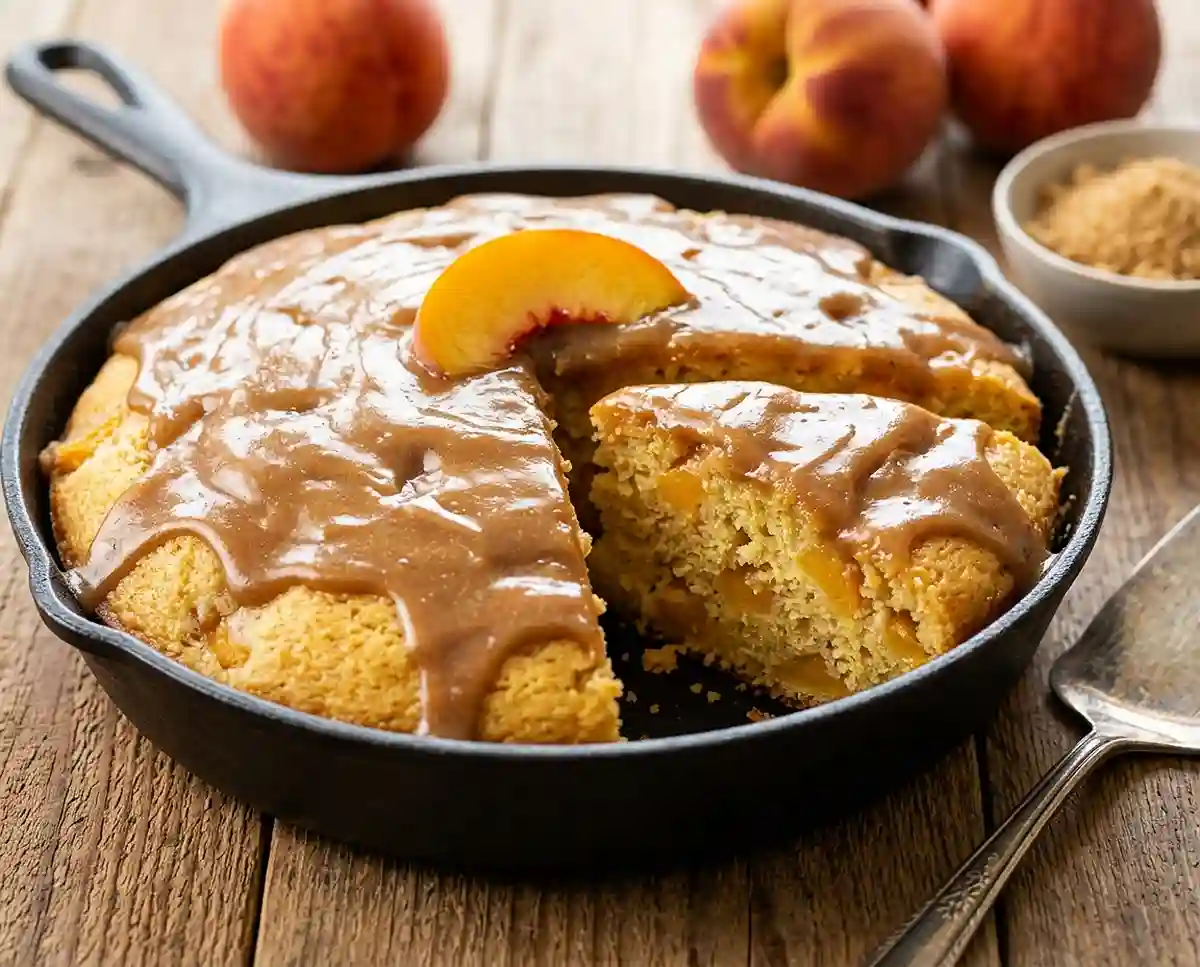
Gluten-Free Brown Sugar Peach Skillet Cake
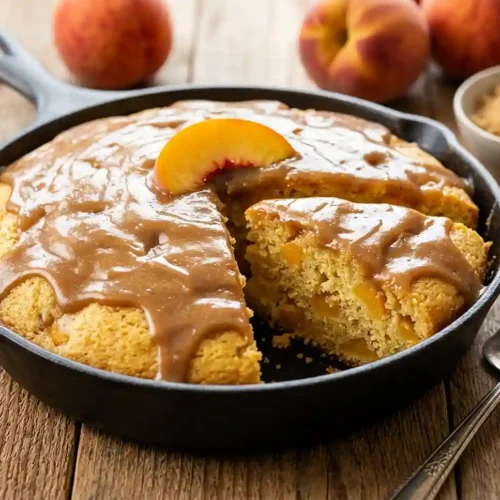
This Gluten-Free Brown Sugar Peach Skillet Cake bakes in one pan with juicy peaches and a glossy caramel frosting that sets like a dream.
The first time I made this Gluten-Free Brown Sugar Peach Skillet Cake, it was for a Labor Day cookout where my sister-in-law announced she’d just gone gluten-free. I had two hours, a basket of overripe peaches from the farmers market, and one cast iron skillet on the counter. What came out of the oven that afternoon disappeared faster than the brisket—even my skeptical brother asked for the recipe.
Have you ever bitten into a gluten-free cake that tasted dry and sandy, like it was apologizing for being gluten-free? Well… this one does the opposite. The brown sugar frosting pours over the warm cake like liquid caramel and sets into a glossy shell as smooth as poured fudge, while the peaches stay tender and juicy throughout the crumb.
You know what makes this skillet cake work so beautifully? It’s the combination of peach nectar in the batter and chunks of fresh fruit folded throughout, then crowned with a hot brown sugar glaze that locks moisture in instead of letting it evaporate. It’s the kind of dessert that makes people forget they’re eating gluten-free at all.
Why You’ll Love This Gluten-Free Brown Sugar Peach Skillet Cake
- Tender, moist crumb with bursts of juicy peach in every bite—no dryness or crumbliness in sight.
- Beginner-friendly one-pan method that uses a boxed gluten-free cake mix as a shortcut without tasting like a shortcut.
- That brown sugar frosting—a warm caramel-style glaze that sets into a glossy, fudge-like topping right on the cake.
- Perfect for late-summer gatherings, holiday potlucks, or any moment you need a rustic dessert that feeds a crowd.
The Secret to a Perfect Gluten-Free Brown Sugar Peach Skillet Cake
- Peach nectar in the batter: Replacing water with peach nectar deepens the fruit flavor and adds extra sugar that helps the gluten-free crumb stay tender instead of dry.
- Skillet baking for even heat: Cast iron retains and distributes heat evenly, giving you crisp edges and a moist center—a common trouble spot for gluten-free cakes.
- Hot frosting on warm cake: Pouring the brown sugar glaze over a still-warm cake lets it seep slightly into the top layer, sealing in moisture as it sets.
- Boiling the frosting fully: Bringing the butter, cream, and brown sugar to a true rolling boil dissolves the sugar crystals so the finished glaze sets glossy instead of grainy.
If you’re new to baking with boxed mixes, the Celiac Disease Foundation’s gluten-free food guide is a helpful resource for vetting cake mixes and vanilla extracts, since cross-contamination shows up in surprising places.
Table of Contents
Ingredients
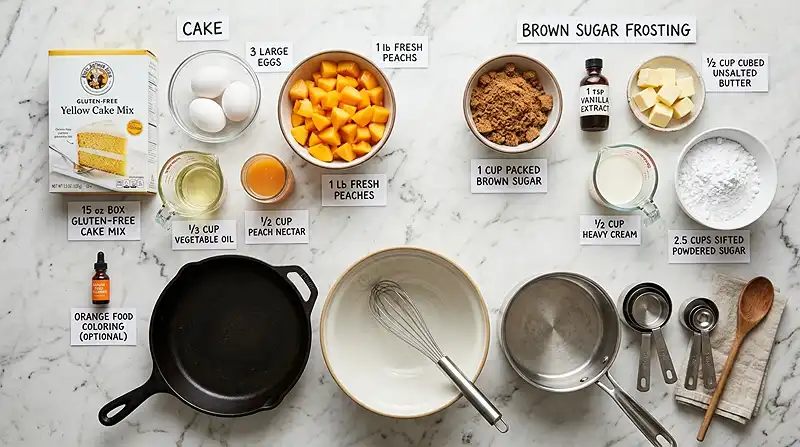
Servings: 8–10 slices
Cake
- 15 oz gluten-free yellow cake mix
- 3 large eggs (or as package directs)
- 1/3 cup vegetable oil
- 1/2 cup peach nectar or juice
- 1 lb peaches, peeled and chopped
- Optional: drop of orange food coloring
Brown Sugar Frosting
- 1/2 cup unsalted butter
- 1/2 cup heavy cream
- 1 cup packed brown sugar
- 1 tsp vanilla extract
- 2½ cups powdered sugar, sifted
Pro tip: To peel peaches easily, score a small X on the bottom of each peach and dunk them in boiling water for 30 seconds, then transfer to ice water—the skins will slip right off.
Step-by-Step Instructions
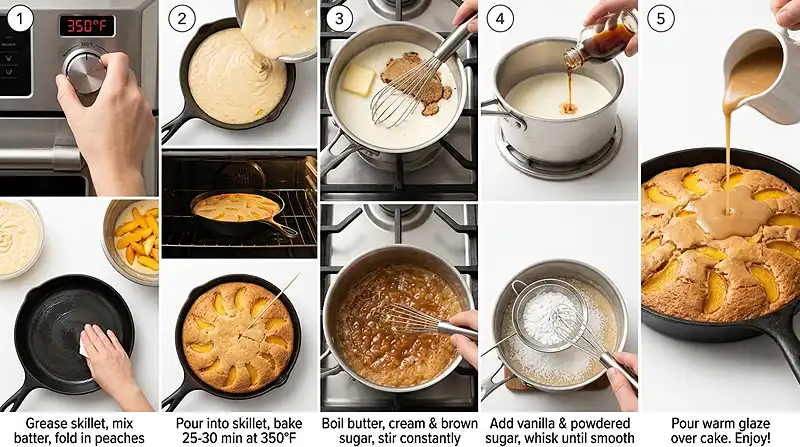
- Preheat the oven. Set your oven to 350°F (175°C) and let it preheat for at least 10 minutes for accurate temperature. Lightly grease a 9–10 inch oven-safe skillet (cast iron works beautifully) with butter or cooking spray.
- Make the batter. In a large mixing bowl, whisk together the gluten-free yellow cake mix, eggs, vegetable oil, and peach nectar until the batter is smooth with no dry pockets, about 90 seconds. The mixture should look pale gold and ribbony when you lift the whisk.
- Fold in peaches. Gently fold the chopped peaches into the batter using a rubber spatula until they’re evenly distributed. Add a single drop of orange food coloring now if you want a sunnier hue—stir just until the color blends in.
- Bake the cake. Pour the batter into the prepared skillet and smooth the top with the back of your spatula. Bake for 25–30 minutes, or until the top springs back when lightly pressed and a toothpick inserted in the center comes out with a few moist crumbs (not wet batter).
- Start the frosting near the end of baking. While the cake bakes its final 5 minutes, combine the butter, heavy cream, and brown sugar in a medium saucepan over medium heat. Stir constantly until the butter melts and the sugar dissolves, then bring to a full rolling boil and let it bubble for 1 minute.
- Finish the frosting. Remove the saucepan from heat immediately. Whisk in the vanilla extract followed by the sifted powdered sugar, adding it gradually so it incorporates smoothly without lumps—the frosting should look glossy and pourable, like warm caramel.
- Pour and finish. Pour the warm frosting over the warm cake right in the skillet, working quickly because it sets fast. Tilt the pan gently to let the glaze flow into all the edges, then let the cake cool for at least 30 minutes so the frosting firms up before slicing.
Make It Your Own
Swap the fruit: Use 1 pound of nectarines, plums, or even a mix of peaches and raspberries in place of the peaches. Stone fruits all behave similarly in the batter, while berries add tartness that balances the sweet brown sugar frosting beautifully.
Make it dairy-free: Replace the butter with plant-based butter and the heavy cream with full-fat coconut cream (the thick part from a chilled can). The frosting will set with a slight coconut undertone that actually plays nicely with the peaches—almost like a tropical chilled summer sweet vibe.
Add a spice layer: Stir 1 teaspoon of cinnamon or 1/2 teaspoon of cardamom into the dry cake mix before adding wet ingredients. Man, oh man… the warm spice paired with the brown sugar glaze tastes like a Thanksgiving dessert wearing summer clothes.
Try different cake mixes: A gluten-free vanilla, butter pecan, or spice cake mix all work in place of yellow cake mix. Avoid chocolate or red velvet here, since they overpower the delicate peach flavor and clash with the caramel notes in the frosting.
Common Problems & Solutions
Problem: Cake sinks in the middle after baking. Solution: Check that your oven temperature is accurate with a separate oven thermometer and don’t open the door during the first 20 minutes. Gluten-free cakes are especially sensitive to temperature drops, which cause the rise to collapse before the structure sets.
Problem: Frosting turns grainy or won’t set smooth. Solution: Boil the butter-cream-sugar mixture for the full minute and sift the powdered sugar before adding. Undissolved sugar crystals are almost always the culprit when caramel-style frostings turn gritty instead of glassy.
Problem: Cake is gummy or dense at the bottom. Solution: Make sure your peaches are well-drained and not swimming in juice when you fold them in. You know… I learned this lesson at a family reunion years ago when juicy peaches turned my bottom layer into a soggy mess—now I always pat the chopped fruit with a paper towel first.
Problem: Frosting hardens before you can pour it. Solution: Place the saucepan over very low heat for 30 seconds and whisk vigorously to bring it back to pourable consistency. This frosting sets quickly because of the high sugar content, so always have your warm cake ready and waiting before you start the glaze.
Storage & Meal Prep
| Method | Duration | Notes |
|---|---|---|
| Counter | 2 days | Cover loosely with foil, keep in cool spot |
| Fridge | 5–6 days | Airtight container, bring to room temp before serving |
| Freezer | 2 months | Wrap slices individually in plastic, then foil |
To reheat a slice and revive that fresh-baked feel, microwave for 15–20 seconds or warm in a 300°F oven for 5 minutes. Leftover cake crumbles make an incredible base for trifle layered with whipped cream and fresh peaches—a no-waste second-day dessert. The frosting may soften slightly when refrigerated; a quick room-temperature rest restores the glossy texture before serving.
Gluten-Free Brown Sugar Peach Skillet Cake FAQs
Can I use frozen peaches instead of fresh?
Yes, just thaw them completely and pat them dry before chopping. Frozen peaches release significantly more liquid than fresh, so skipping the drying step leads to a soggy cake bottom and an extended baking time of 5–7 extra minutes.
How do I know when the cake is fully baked?
The top should spring back when lightly pressed and a toothpick inserted into the center comes out with a few moist crumbs but no wet batter. The edges will pull slightly away from the skillet sides, and the surface turns a light golden brown.
What’s the best skillet to use for this cake?
A 9 or 10-inch cast iron skillet is ideal because it conducts and retains heat evenly. An oven-safe stainless steel skillet works too, but avoid nonstick pans rated below 400°F, since the high heat can damage the coating.
Can I make this cake ahead of time?
Yes, this cake actually tastes even better the next day once the frosting has fully set and the flavors meld. Bake and frost it up to 24 hours ahead, cover loosely once cooled, and store at room temperature until serving.
Why did my frosting pool at the bottom of the cake?
The frosting was probably too thin when poured. Make sure to add the full 2½ cups of powdered sugar and let it cool slightly in the pan before pouring—if it runs like water, whisk in 2–3 more tablespoons of powdered sugar to thicken.
Serving Suggestions
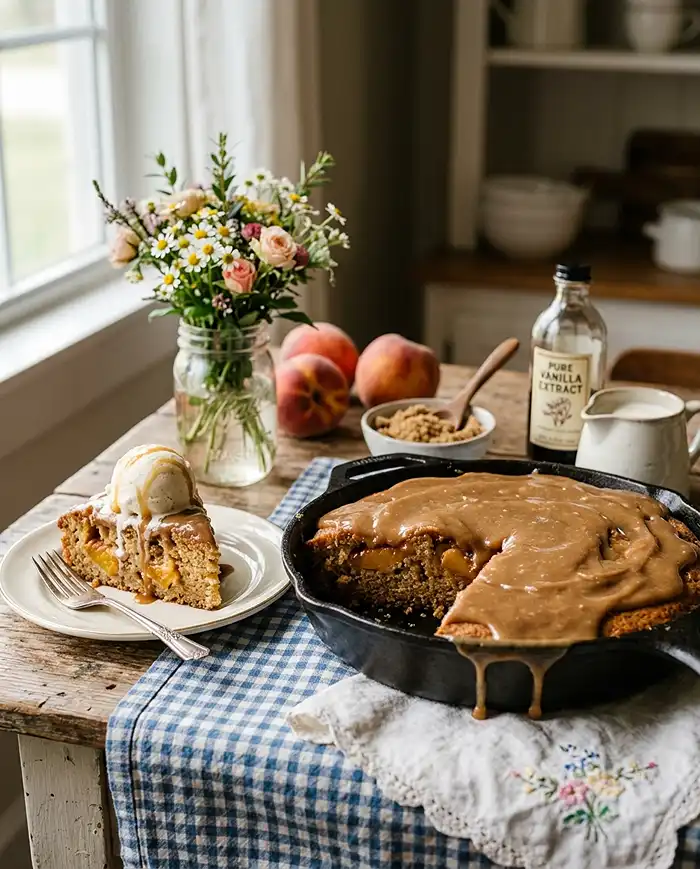
This skillet cake belongs on every Fourth of July dessert spread—the golden glaze and orange-tinted peaches look stunning next to red berries and white whipped cream. Serve warm slices with a scoop of gluten-free mango pineapple sorbet for a stone fruit and tropical fruit pairing that feels custom-built for summer.
For a casual cookout menu that takes guests from savory to sweet, follow up gluten-free grilled taco chicken kebabs with this cake for a relaxed backyard dinner. Or build a celiac-friendly weeknight feast around gluten-free veggie-loaded pizza bowls and finish with a warm slice topped with vanilla ice cream.
Time to Bake!
If this Gluten-Free Brown Sugar Peach Skillet Cake earns a spot in your regular dessert rotation, drop a star rating and tell me in the comments which fruit swap or spice twist you tried. Pin this recipe to your Pinterest gluten-free desserts board so it’s ready to pull up the next time peach season rolls around. Happy baking, friend—I can already smell that brown sugar glaze from here.
Gluten-Free Brown Sugar Peach Skillet Cake
Equipment
- 9 to 10-inch oven-safe skillet (cast iron preferred)
- Large mixing bowl
- Whisk
- Rubber spatula
- Medium saucepan
- Fine mesh sieve for sifting
- Measuring cups and spoons
- Toothpick for testing doneness
Ingredients
Cake
- 15 oz gluten-free yellow cake mix certified gluten-free
- 3 large eggs or as package directs
- ⅓ cup vegetable oil
- ½ cup peach nectar or juice
- 1 lb peaches peeled and chopped
- orange food coloring optional, 1 drop
Brown Sugar Frosting
- ½ cup unsalted butter
- ½ cup heavy cream
- 1 cup brown sugar packed
- 1 teaspoon vanilla extract certified gluten-free
- 2 ½ cups powdered sugar sifted
Instructions
- Set your oven to 350°F (175°C) and let it preheat for at least 10 minutes for accurate temperature. Lightly grease a 9 to 10-inch oven-safe skillet (cast iron works beautifully) with butter or cooking spray.
- In a large mixing bowl, whisk together the gluten-free yellow cake mix, eggs, vegetable oil, and peach nectar until the batter is smooth with no dry pockets, about 90 seconds. The mixture should look pale gold and ribbony when you lift the whisk.
- Gently fold the chopped peaches into the batter using a rubber spatula until they’re evenly distributed. Add a single drop of orange food coloring now if you want a sunnier hue and stir just until the color blends in.
- Pour the batter into the prepared skillet and smooth the top with the back of your spatula. Bake for 25 to 30 minutes, or until the top springs back when lightly pressed and a toothpick inserted in the center comes out with a few moist crumbs (not wet batter).
- While the cake bakes its final 5 minutes, combine the butter, heavy cream, and brown sugar in a medium saucepan over medium heat. Stir constantly until the butter melts and the sugar dissolves, then bring to a full rolling boil and let it bubble for 1 minute.
- Remove the saucepan from heat immediately. Whisk in the vanilla extract followed by the sifted powdered sugar, adding it gradually so it incorporates smoothly without lumps; the frosting should look glossy and pourable, like warm caramel.
- Pour the warm frosting over the warm cake right in the skillet, working quickly because it sets fast. Tilt the pan gently to let the glaze flow into all the edges, then let the cake cool for at least 30 minutes so the frosting firms up before slicing.