Gluten-Free Crispy Rice Salmon Bites
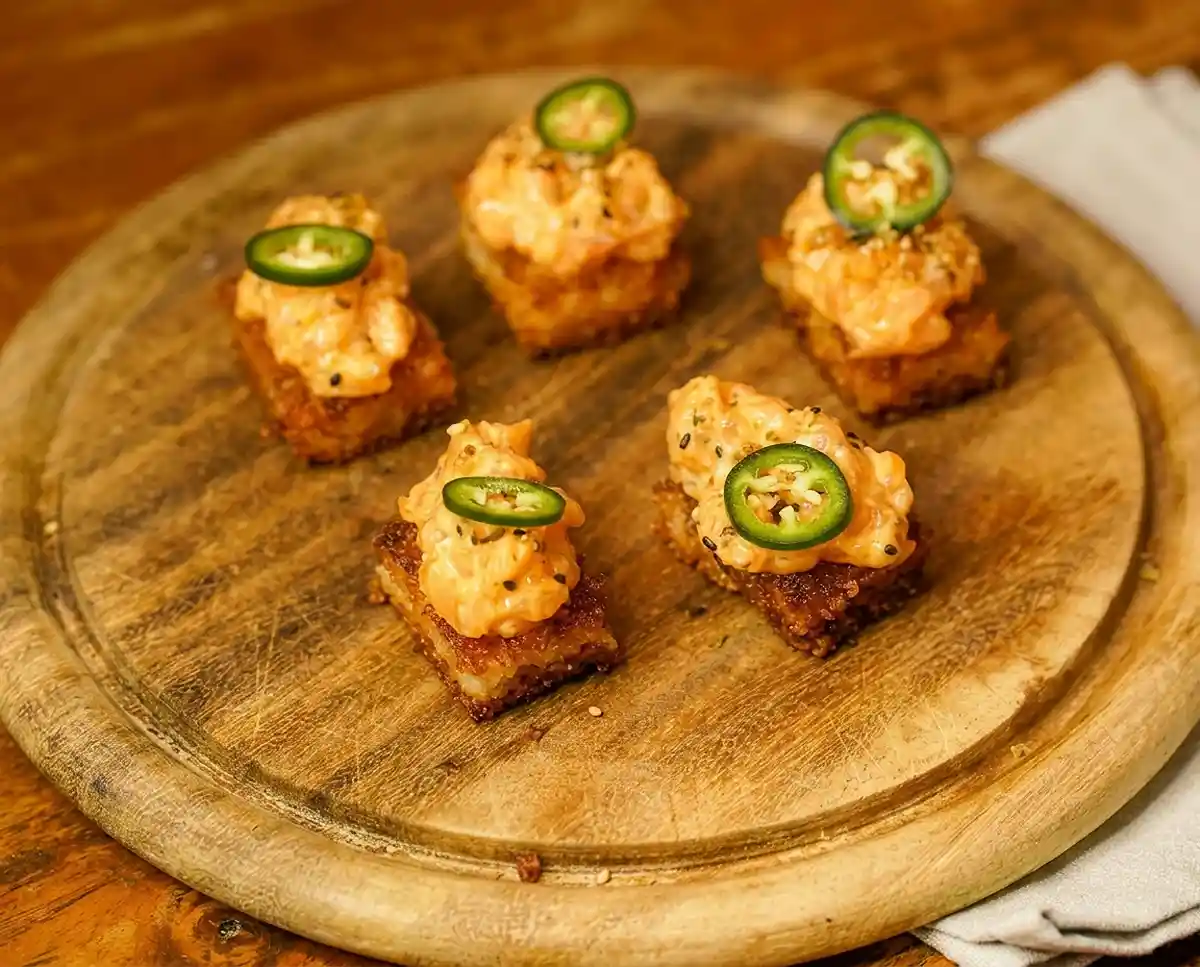
Gluten-free crispy rice salmon bites with spicy salmon tartare and jalapeño—a trendy restaurant appetizer made at home with simple ingredients in 30 minutes.
If you’ve scrolled through any food content lately, you’ve probably seen crispy rice everywhere. This trendy appetizer has taken over restaurant menus and social media feeds, and for good reason—the contrast of warm, crunchy rice topped with cool, silky salmon is absolutely addictive. These gluten-free crispy rice salmon bites bring that restaurant experience to your kitchen, no reservations required.
I first tried crispy rice at a fancy sushi spot in the city, and I immediately became obsessed with recreating it at home. The challenge? Most versions use soy sauce and seasonings that contain gluten. This gluten-free salmon bites recipe swaps in coconut aminos and certified gluten-free furikake, so you get all that umami flavor without any worry.
The magic of this crispy rice trend lies in the textures. You’ve got that golden, crunchy exterior giving way to slightly chewy rice, then the cool creaminess of spiced salmon tartare on top. Add a slice of fresh jalapeño for heat, and well, you’ve got an easy dinner appetizer that looks like it came from a high-end restaurant but took you less than 30 minutes of active time.
Table of Contents
Quick Overview: Why You’ll Love This Recipe
- Completely gluten-free – Uses certified GF furikake and coconut aminos
- Restaurant-quality at home – Impress guests without the fancy price tag
- Make-ahead friendly – Rice compresses overnight for perfect texture
- Customizable heat level – Adjust sriracha and jalapeño to preference
- No special equipment – A regular skillet works perfectly
- Stunning presentation – These look as impressive as they taste
Why This Gluten-Free Crispy Rice Salmon Bites Recipe Works
The secret to perfect crispy rice starts a day ahead. Pressing the cooked sushi rice overnight does two essential things: it compacts the grains so they hold together when cut, and it dries out the surface slightly so it crisps better when fried. Skip this step and you’ll end up with rice that crumbles apart in the oil.
Sushi vinegar mixed into the warm rice isn’t just for flavor—though it does add that authentic tang. The vinegar also helps the rice grains stick together, creating a cohesive block that cuts cleanly into perfect little rectangles. It’s the same technique sushi chefs use, just applied for a different purpose.
The salmon tartare comes together in minutes and packs serious flavor into every bite. Mayo provides creaminess, sriracha brings the heat, and gluten-free furikake adds that essential umami and subtle crunch. Man, oh man, that combination with fresh lime zest and juice creates something bright and rich at the same time.
Frying the rice cubes transforms them from chewy to extraordinary. The exterior becomes golden and crackling while the inside stays tender. That temperature contrast when you top hot rice with cool salmon tartare? It’s the kind of sensory experience that makes people close their eyes and sigh with happiness.
Ingredients You’ll Need
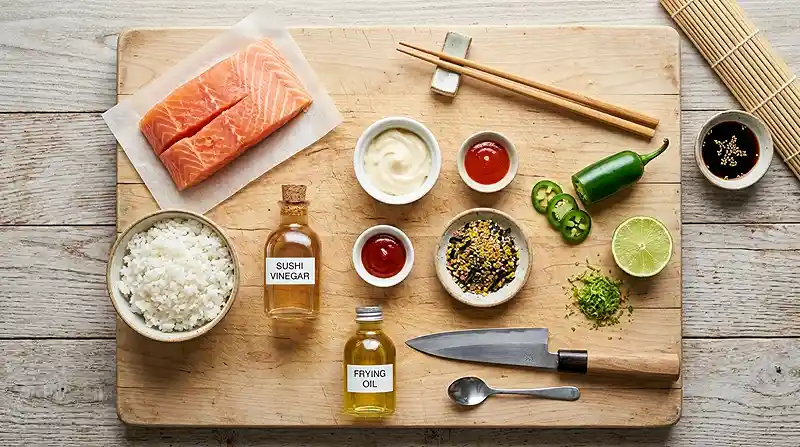
For the Crispy Rice
| Amount | Ingredient |
|---|---|
| 200 g | Sushi rice, cooked in advance |
| 2 tablespoons | Sushi vinegar (rice vinegar works too) |
| As needed | Neutral oil for frying (avocado, vegetable, or rice bran) |
For the Spicy Salmon Tartare
| Amount | Ingredient |
|---|---|
| 200 g | Fresh sushi-grade salmon |
| 4 teaspoons | Mayonnaise |
| 2 teaspoons | Sriracha |
| 1 tablespoon | Gluten-free furikake (Japanese rice seasoning) |
| ½ | Lime, zest and juice |
For Garnish
| Amount | Ingredient |
|---|---|
| 1 | Jalapeño, thinly sliced |
| As desired | Sesame seeds |
| As desired | Thinly sliced green onion |
| As desired | Coconut aminos (for drizzling) |
Step-by-Step Instructions
Day One: Prepare and Press the Rice
Step 1: Cook the sushi rice according to package instructions. Use the proper water ratio—sushi rice needs slightly less water than regular rice for that perfect sticky-but-not-mushy texture.
Step 2: While the rice is still warm (but not hot), transfer it to a large bowl. Drizzle the sushi vinegar over the rice and gently fold it in using a rice paddle or spatula. Use cutting and folding motions rather than stirring to avoid crushing the grains.
Step 3: Line a rectangular container or loaf pan with plastic wrap, leaving plenty of overhang on all sides. Press the seasoned rice firmly and evenly into the container, compacting it as much as possible.
Step 4: Place another piece of plastic wrap directly on the rice surface. Set an identical container on top and weight it down with something heavy—canned goods, a cast iron skillet, or a few heavy books work well.
Step 5: Refrigerate overnight, or for at least 8 hours. The rice needs time to compress and firm up completely.
Pro tip: The more compact your rice, the better it holds together during frying. Don’t skip the weighting step.
Day Two: Prepare the Salmon Tartare
Step 6: Remove your salmon from the refrigerator about 10 minutes before prepping—slightly chilled salmon is easier to dice cleanly.
Step 7: Using a very sharp knife, cut the salmon into small, uniform cubes about ¼-inch in size. Consistent cuts ensure even texture in every bite.
Step 8: In a medium bowl, combine the diced salmon with the mayonnaise, sriracha, gluten-free furikake, and the zest and juice of half a lime. Fold gently to combine without mashing the salmon.
Step 9: Taste and adjust seasoning—add more sriracha for heat, more lime for brightness, or a pinch of salt if needed. Return the tartare to the refrigerator until ready to serve.
Cut and Fry the Rice
Step 10: Remove the pressed rice from the refrigerator and unmold it onto a cutting board. Peel away the plastic wrap carefully.
Step 11: Using a sharp knife dipped in water (to prevent sticking), cut the rice block into bite-sized rectangles, approximately 1.5 x 2 inches. You should get about 12-16 pieces depending on your container size.
Step 12: Heat about 1 inch of neutral oil in a large skillet or Dutch oven to 180°C (356°F). Use a thermometer for accuracy—oil temperature is crucial for crispy results.
Step 13: Carefully lower the rice pieces into the hot oil in batches, being careful not to overcrowd the pan. Fry for 3-4 minutes, turning halfway through, until golden brown and crispy on all sides.
Step 14: Transfer the crispy rice to a paper towel-lined plate to drain excess oil. Season immediately with a light sprinkle of salt while still hot.
Assemble and Serve
Step 15: Arrange the warm crispy rice pieces on a serving platter.
Step 16: Spoon a generous teaspoon of the chilled salmon tartare onto each rice piece. The contrast of warm and cool is essential, so work quickly.
Step 17: Top each bite with a thin slice of fresh jalapeño. Garnish with sesame seeds, sliced green onion, and a drizzle of coconut aminos if desired.
Step 18: Serve immediately while the rice is still crispy. These are best enjoyed right away—the rice will soften as it sits.

Making It Gluten-Free: Important Substitutions
The traditional version of this dish typically contains several gluten sources. Here’s how to keep it completely gluten-free:
Furikake: Standard furikake often contains soy sauce with wheat. Look for certified gluten-free furikake, or make your own by combining toasted sesame seeds, crumbled nori, and a pinch of salt.
Soy sauce drizzle: Replace with coconut aminos or gluten-free tamari. Coconut aminos is slightly sweeter and milder, while tamari has a more traditional soy sauce flavor.
Sriracha: Most sriracha brands are gluten-free, but always check the label. Huy Fong (the rooster brand) is generally considered gluten-free.
Mayonnaise: Most major mayonnaise brands are gluten-free, but verify if you’re highly sensitive. Kewpie mayo (Japanese style) adds extra richness if you can find a GF version.
Rice vinegar: Plain rice vinegar is naturally gluten-free. Avoid seasoned rice vinegars that may contain additives.
Substitutions & Variations
Different fish: Tuna works beautifully as an alternative to salmon. Yellowfin or ahi tuna creates a gorgeous red color contrast. You can also use cooked shrimp, finely chopped.
Vegetarian option: Replace the salmon with diced avocado mixed with the same seasonings, or use marinated tofu for a heartier option.
Spicy mayo drizzle: Mix extra mayo with sriracha for a drizzle over the finished bites. It’s not traditional but adds visual appeal and extra creaminess.
Different heat levels: Skip the sriracha entirely for mild bites, or add sambal oelek for a different chile flavor. Pickled jalapeños work if fresh aren’t available.
Air fryer method: Spray the rice pieces with oil and air fry at 200°C (400°F) for 8-10 minutes, flipping halfway. They won’t be quite as crispy as deep-fried but still delicious.
Torched version: For extra drama, use a kitchen torch to lightly sear the top of the salmon tartare before adding the jalapeño. This is how many restaurants serve it.
You know, I’ve also made a poke-style version by marinating the salmon in coconut aminos, sesame oil, and rice vinegar before mixing with the other ingredients. It adds another layer of flavor that’s incredible.
Expert Troubleshooting
Problem: Rice pieces fall apart when frying.
Solution: Press the rice longer and more firmly. Ensure you’re using proper sushi rice, not regular long-grain rice.
Explanation: Sushi rice has a higher starch content that makes it sticky. Insufficient pressing or the wrong rice type won’t hold together.
Problem: Rice isn’t getting crispy, just browning.
Solution: Make sure oil temperature is at 180°C (356°F). Oil that’s too cool absorbs into the rice instead of crisping the exterior.
Explanation: Proper temperature creates immediate surface searing that prevents oil absorption and creates crunch.
Problem: Salmon tartare tastes bland.
Solution: Add more lime juice and a pinch of salt. The acidity and salt enhance the fish’s natural flavor.
Explanation: Raw fish needs adequate seasoning to shine. The lime also helps “brighten” the salmon’s richness.
Problem: Rice is too sticky to cut cleanly.
Solution: Wet your knife blade between each cut. Work quickly before the rice warms up.
Explanation: Water prevents the starchy rice from sticking to the blade. Cold rice cuts more cleanly than room temperature.
Problem: Oil is splattering while frying.
Solution: Ensure the rice surface is dry before frying. Pat pieces with paper towels if needed.
Explanation: Water and hot oil don’t mix—any surface moisture causes dangerous splattering.
Storage & Meal Prep
| Component | Refrigerator | Freezer | Notes |
|---|---|---|---|
| Pressed rice (uncut) | 2-3 days | Not recommended | Keep wrapped tightly |
| Cut rice pieces (unfried) | 1 day | Not recommended | Cover to prevent drying |
| Salmon tartare | 1 day maximum | Not recommended | Keep very cold |
| Fried rice pieces | Not recommended | Not recommended | Best served immediately |
Prep-ahead strategy: Press the rice up to 2 days in advance. Prepare the salmon tartare up to 4 hours ahead and keep refrigerated. Cut the rice pieces and slice jalapeños before guests arrive. Fry the rice just before serving—this is the only step that must happen at the last minute.
Party tip: Set up a frying station and make fresh batches throughout the party. Guests love watching the process, and you ensure every bite is perfectly crispy.
Food safety note: Use only sushi-grade salmon from a reputable source. Keep the fish refrigerated until just before assembling. Consume within 24 hours of purchasing.
FAQs About Gluten-Free Crispy Rice Salmon Bites
What is sushi-grade salmon?
Sushi-grade (or sashimi-grade) salmon has been flash-frozen to kill parasites, making it safe to eat raw. Purchase from reputable fish markets, Japanese grocery stores, or quality seafood counters that specifically label fish as sushi-grade.
Can I use regular rice instead of sushi rice?
No—regular long-grain rice won’t work for this recipe. Sushi rice (also called Japanese short-grain rice) has a specific starch content that makes it sticky enough to hold together. Jasmine or basmati rice will crumble.
Is furikake gluten-free?
Traditional furikake often contains soy sauce made with wheat. Look for brands specifically labeled gluten-free, or make your own with toasted sesame seeds, crumbled nori, salt, and a tiny bit of sugar.
How do I know when the oil is hot enough?
Use a thermometer for accuracy—180°C (356°F) is ideal. Without a thermometer, drop a small piece of rice into the oil; it should sizzle immediately and rise to the surface within seconds.
Can I make these ahead for a party?
You can prep all components ahead, but the rice must be fried just before serving. Crispy rice becomes chewy within 10-15 minutes of frying. For parties, fry in small batches throughout the event.
Serving Suggestions
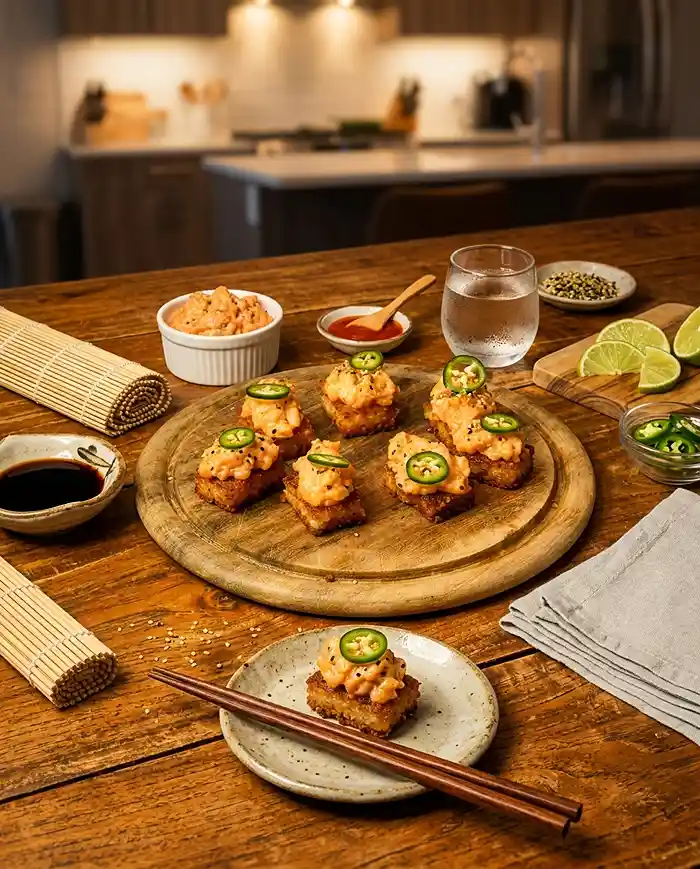
These gluten-free crispy rice salmon bites are stunning as a passed appetizer at cocktail parties. Arrange them on a slate board or minimalist white platter for maximum visual impact. The colors—golden rice, coral salmon, green jalapeño—create a presentation that looks professionally catered.
For a Japanese-inspired dinner party, serve these alongside edamame, miso soup, and a simple cucumber salad. Follow with the gluten-free Greek turkey burger bowls for a fusion main course that keeps the fresh, bright flavors going.
As an easy dinner for two, double or triple the tartare and serve it alongside the crispy rice pieces for DIY assembly at the table. Add some pickled ginger, wasabi, and extra coconut aminos for dipping, and you’ve got a fun, interactive meal.
Planning a full menu? Start with these crispy rice bites, then move to something heartier. End the evening on a sweet note with gluten-free cherry cobbler bars or refresh your palate the next morning with a gluten-free peach mango smoothie.
Ready to Make These?
Once you’ve mastered these gluten-free crispy rice salmon bites, you’ll understand why this crispy rice trend has taken over. The combination of textures, temperatures, and flavors creates something truly special—and the fact that you made it at home makes it even better.
I’d love to hear how yours turn out. Did you try any variations? Go extra spicy or keep it mild? Share your experience in the comments below, and don’t forget to pin this recipe for your next dinner party or date night at home. Your guests will never believe these restaurant-quality bites came from your own kitchen.

Gluten-Free Crispy Rice Salmon Bites
Equipment
- rectangular container or loaf pan
- Plastic wrap
- Large skillet or Dutch oven
- Kitchen thermometer
- Sharp knife
- Mixing bowl
- Slotted spoon or spider
- Paper towels
Ingredients
Crispy Rice
- 200 g sushi rice cooked in advance
- 2 Tbsp sushi vinegar or rice vinegar
- neutral oil for frying avocado, vegetable, or rice bran
Spicy Salmon Tartare
- 200 g fresh sushi-grade salmon
- 4 tsp mayonnaise
- 2 tsp sriracha
- 1 Tbsp gluten-free furikake Japanese rice seasoning
- ½ lime zest and juice
Garnish
- 1 jalapeño thinly sliced
- sesame seeds optional
- green onion thinly sliced, optional
- coconut aminos for drizzling, optional
Instructions
- Cook the sushi rice according to package instructions a day in advance. While still warm, transfer to a bowl and gently fold in the sushi vinegar using cutting motions to avoid crushing the grains.
- Line a rectangular container or loaf pan with plastic wrap, leaving overhang on all sides. Press the seasoned rice firmly and evenly into the container, compacting as much as possible.
- Cover the rice surface with plastic wrap. Place an identical container on top and weight it down with something heavy like canned goods or a cast iron skillet. Refrigerate overnight or at least 8 hours.
- The next day, finely dice the salmon into small uniform cubes about ¼-inch in size. In a bowl, combine the diced salmon with mayonnaise, sriracha, gluten-free furikake, and the zest and juice of half a lime. Fold gently and refrigerate until ready to serve.
- Unmold the pressed rice onto a cutting board and remove the plastic wrap. Using a sharp knife dipped in water, cut the rice into bite-sized rectangles approximately 1.5 x 2 inches.
- Heat about 1 inch of neutral oil in a large skillet or Dutch oven to 180°C (356°F). Use a thermometer for accuracy.
- Carefully lower the rice pieces into the hot oil in batches, avoiding overcrowding. Fry for 3-4 minutes, turning halfway through, until golden brown and crispy on all sides.
- Transfer the crispy rice to a paper towel-lined plate to drain. Season immediately with a light sprinkle of salt while still hot.
- Arrange the warm crispy rice pieces on a serving platter. Spoon a generous teaspoon of chilled salmon tartare onto each piece, top with a thin slice of jalapeño, and serve immediately.