Gluten-Free Dairy-Free Banana Cream Pie Jars
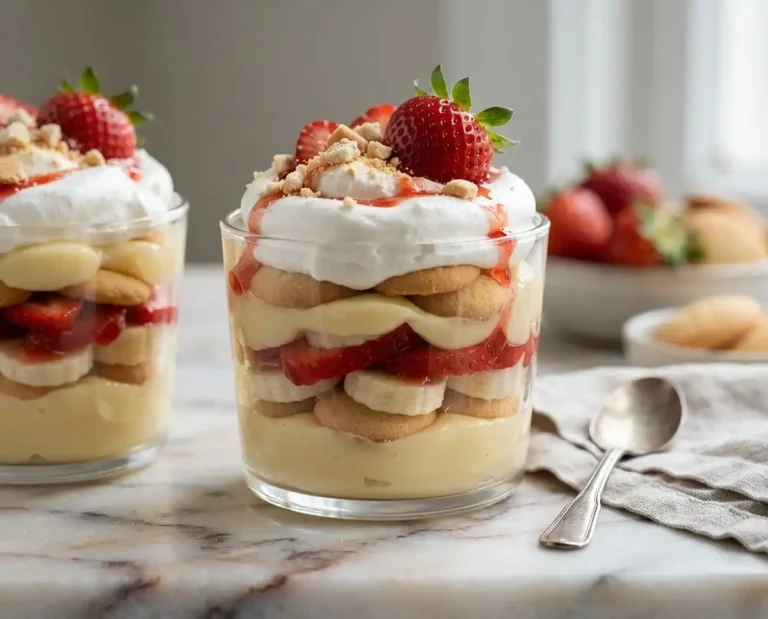
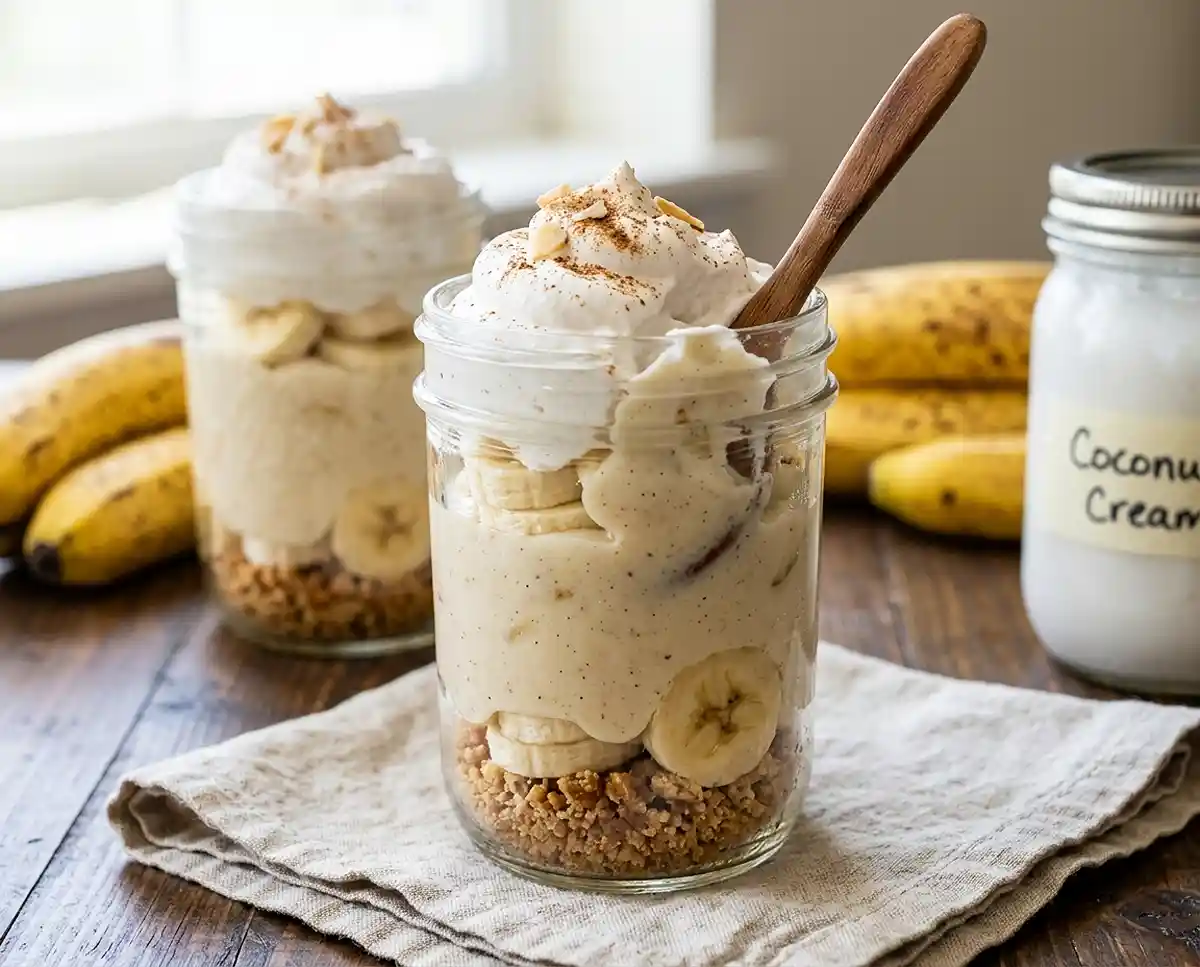
These Gluten-Free Dairy-Free Banana Cream Pie Jars layer a nutty date crust, roasted banana custard, and coconut cream — no oven or dairy needed.
I made my first banana cream pie jar on a random Wednesday night because I had a bunch of overripe bananas and a can of coconut cream I’d been staring at for two weeks. I blended everything together, poured it into a jar, and took a bite expecting something decent. What I got was a custard so rich and silky it tasted like the filling had been slow‑cooked for hours — except it took me about fifteen minutes.
Well… I should tell you about the one thing I got wrong that first time. I dumped all three tablespoons of tapioca flour in at once without whisking, and the filling turned into a lumpy, gluey mess with little starchy pockets throughout. I had to start the filling over from scratch. That failure taught me the most important lesson of this recipe — add the tapioca gradually while whisking constantly, and start with less than you think you need.
Table of Contents
Why You’ll Love These Gluten‑Free Dairy‑Free Banana Cream Pie Jars
- Velvety roasted banana custard that tastes like caramelized heaven — roasting the banana concentrates its sugars and deepens the flavor far beyond what raw banana could deliver, creating a filling that’s as smooth as melted caramel with a fraction of the effort.
- Truly no‑bake assembly — the only thing that touches the oven is a single banana for 10 minutes. Everything else is blended, stirred, and layered.
- Free of the top allergens that matter most — no gluten, no dairy, no eggs, and no refined sugar. It’s paleo‑friendly and vegan without tasting like a compromise.
- Impressive enough for company, easy enough for a Tuesday — the layered jar presentation makes these look like a special occasion dessert, but you can have them ready in about 25 minutes of active time.
The Secret to the Best Gluten‑Free Dairy‑Free Banana Cream Pie Jars
- Roasting the banana is the flavor secret most recipes miss. Ten minutes at 350°F triggers the Maillard reaction in the banana’s natural sugars, creating deep caramel and toffee notes that raw banana simply can’t match. According to the Harvard T.H. Chan School of Public Health’s guide to cooking and nutrition, heat transforms the chemical structure of natural sugars, intensifying sweetness without adding any refined sweetener. That roasted banana is why this filling tastes richer than any boxed pudding mix you’ve ever tried.
- Tapioca flour thickens without dairy or eggs. Traditional banana cream pie relies on egg yolks and butter for its custard‑like body, but tapioca starch achieves a remarkably similar texture through a different mechanism — its long‑chain amylopectin molecules swell and gel when heated, trapping liquid into a smooth, spoonable consistency. The key is adding it gradually to avoid clumps and monitoring it closely, because tapioca thickens fast and goes from silky to gluey in under a minute.
- Full‑fat coconut cream provides the richness dairy usually handles. The high fat content in canned coconut cream — typically around 20 to 24 percent — mimics the mouthfeel of heavy cream and creates a luxurious base for the custard. Light coconut milk won’t work here; you need that thick, scoopable cream to achieve the right consistency. Give the can a good shake before opening, or whisk it thoroughly to incorporate any separated liquid.
- The nut‑and‑date crust holds without butter or baking. Medjool dates act as a natural binder — their sticky, caramel‑like flesh holds the ground cashews and almonds together without any added oil or heat. The result is a crust that’s slightly chewy, subtly sweet, and crunchy enough to contrast beautifully with the creamy filling above it.
Ingredients
Nut & Date Crust
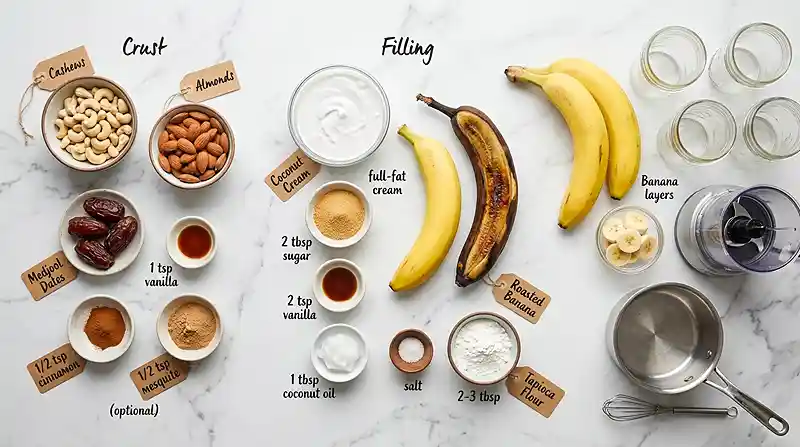
- ½ cup cashews
- ½ cup almonds
- 3 Medjool dates (pitted; if your dates are dry, soak them in warm water for 10 minutes and drain before using)
- 1 tsp vanilla extract
- ½ teaspoon cinnamon powder
- ½ teaspoon mesquite powder (optional — adds a subtle molasses‑like earthiness; skip it if you can’t find it)
Banana Custard Filling
- 1 can full‑fat coconut cream (about 2 cups; must be full‑fat for proper thickness)
- 2 tablespoons maple sugar
- 2 teaspoons vanilla extract
- 1 tablespoon coconut oil
- 1 roasted banana (roasted in its peel at 350°F for 10 minutes)
- Pinch of salt
- 2 to 3 tablespoons tapioca flour (start with 2; add the 3rd only if needed — add this last!)
For Assembly
- 1 to 2 fresh bananas, sliced into rounds
- Vegan paleo whipped cream (store‑bought or homemade from chilled coconut cream)
- Dash of cinnamon for finishing
Step‑by‑Step Instructions
Roast the Banana
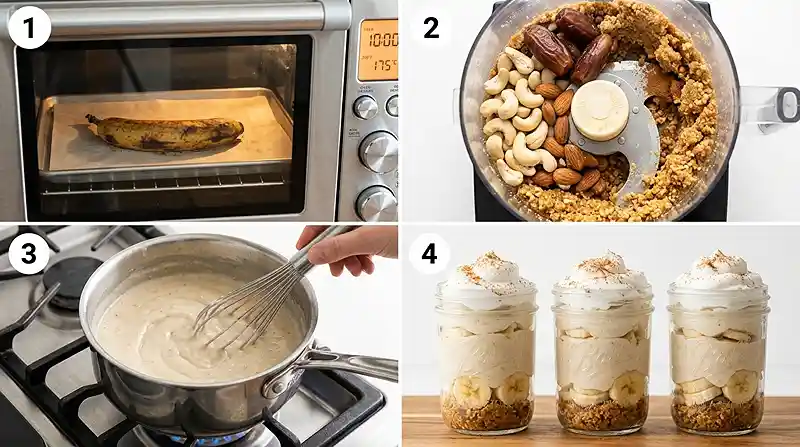
1. Roast an unpeeled banana at 350°F for 10 minutes.
Place a whole, unpeeled banana directly on the oven rack or on a small parchment‑lined sheet pan. Roast at 350°F for 10 minutes — the peel will darken to a deep brown‑black and the flesh inside will turn soft, fragrant, and intensely sweet. When you peel it open, the banana will be golden and jammy with a rich caramelized aroma that smells like bananas foster. Set it aside to cool for a few minutes while you work on the crust.
Make the Crust
2. Pulse the crust ingredients in a food processor until a sticky crumble forms.
Add the ½ cup cashews, ½ cup almonds, 3 pitted Medjool dates, 1 teaspoon vanilla extract, ½ teaspoon cinnamon, and ½ teaspoon mesquite powder (if using) to a food processor. Pulse for about 30 seconds until the mixture breaks down into a sticky, crumbly dough that holds together when you press a pinch between your fingers. You don’t want a fine powder — stop while there are still some small nut pieces visible for texture. Set the crust aside.
Pro Tip: If the mixture seems too dry and won’t clump, add one more pitted date or a teaspoon of water and pulse again briefly.
Prepare the Filling
3. Blend the filling ingredients, then heat with tapioca flour until thickened.
Add the coconut cream, maple sugar, vanilla extract, coconut oil, roasted banana (peeled), and a pinch of salt to the food processor. Process until completely smooth — about 30 to 45 seconds. Transfer the mixture to a medium saucepan and heat over low to medium heat.
Now here’s the critical part. Sprinkle in 2 tablespoons of tapioca flour while whisking constantly and vigorously — do not dump it in all at once or stop stirring. The filling will begin to thicken within 3 to 5 minutes, transforming from a thin liquid into something that resembles a smooth, spoonable pudding. If it still seems too loose after 5 minutes, add the third tablespoon of tapioca flour, again while whisking. Keep a close eye on the pot because once the tapioca activates, it thickens rapidly and can scorch on the bottom if you walk away.
Pro Tip: The filling should coat the back of a spoon and hold a line when you drag your finger through it. That’s your visual cue that it’s done.
Assemble the Jars
4. Layer crust, bananas, and filling into jars, then top and chill.
Spoon 2 to 3 tablespoons of the nut crust into the bottom of each jar and press it down gently with the back of a spoon. Layer fresh banana slices over the crust, then spoon about ¼ cup of the warm custard filling on top. Repeat the layers — crust, sliced bananas, filling — until the jars are full.
Top each jar with a generous swirl of vegan paleo whipped cream and a light dusting of cinnamon. You can serve these warm right away for a pudding‑like experience, or let them chill in the fridge for 2 to 3 hours for a firmer, more traditional pie‑like texture. Either way, they’re stunning.
Make It Your Own
Swap the nuts to match your pantry or allergies. Pecans or walnuts work beautifully in the crust and give it a slightly more classic pie flavor. If you’re dealing with a tree nut allergy, sunflower seeds create a surprisingly good base — the flavor is milder, but the texture holds. Use the same ½ cup measurement for whichever nut or seed you substitute.
Try different fruit layers. Sliced strawberries, fresh mango, or even roasted peaches make this banana cream pie jar feel completely new. Layering in seasonal fruit is one of the easiest ways to turn this into a year‑round gluten‑free dairy‑free dessert without changing the crust or filling at all.
Man, oh man… the roasted peach version I made last August might actually be better than the original. The caramelized peach and roasted banana custard together taste like summer in a glass.
Make it chocolate. Whisk 1 tablespoon of unsweetened cocoa powder into the filling along with the tapioca flour for a chocolate banana cream pie variation. The cocoa deepens the custard’s color and adds a bittersweet note that pairs incredibly well with the sweet banana and the crunchy nut crust.
Skip the mesquite powder if you can’t find it. Mesquite adds a subtle molasses‑and‑cinnamon warmth, but it’s not a deal‑breaker ingredient. The jars taste wonderful without it. If you do want that warm, earthy depth but can’t source mesquite, try a tiny pinch of ground ginger or an extra quarter teaspoon of cinnamon instead.
Common Problems and Solutions
Problem: The filling is lumpy with little starchy clumps.
Add the tapioca flour slowly while whisking constantly — never dump it in all at once. If lumps have already formed, pour the filling through a fine‑mesh strainer back into the pot, pressing with a spoon, and continue heating. You know… this was my exact mistake the first time, and straining saved the batch after I thought it was ruined.
Problem: The filling is too thin and won’t set.
Add the third tablespoon of tapioca flour while whisking over low heat and give it another 2 to 3 minutes. Tapioca needs sustained gentle heat to fully activate its thickening power. If the filling still seems loose, it may simply need more time in the fridge — chilling for at least 2 hours firms tapioca‑based custards considerably as the starch continues to gel when cold.
Problem: The crust is too dry and crumbly.
Your dates are likely too dry to bind properly. Soak them in warm water for 10 minutes, drain thoroughly, then re‑process with the nuts. Alternatively, add one extra date or a teaspoon of coconut oil to introduce more moisture. The crust should feel like wet sand — it holds when pressed but crumbles if you poke it.
Problem: The filling tastes flat or one‑dimensional.
Don’t skip the pinch of salt — it’s small but mighty. Salt amplifies the banana’s sweetness and the vanilla’s fragrance in a way that more sugar simply can’t. Also make sure you’re using a fully roasted banana — if it’s undercooked, you’ll miss out on all those deep caramel flavors that give the custard its richness.
Storage and Meal Prep
| Method | Duration | Notes |
|---|---|---|
| Fridge | 2‑3 days | Cover jars tightly with lids or plastic wrap; custard firms up nicely overnight |
| Freezer | Up to 1 month | Freeze without whipped cream topping; thaw in fridge 4‑6 hours before serving |
| Counter | Up to 2 hours | Safe for serving at room temperature during events |
These jars are genuinely one of the best make‑ahead no bake treats I’ve come across. Assemble them the night before a gathering and let them set in the fridge overnight — the custard thickens, the crust softens just slightly against the filling, and the flavors meld into something even better than the day they were made. Add the whipped cream and cinnamon right before serving so it stays fluffy and tall.
Leftover filling that doesn’t fit in the jars makes an outstanding dip for fresh fruit, or you can spread it on gluten‑free toast for a breakfast that feels unreasonably indulgent for a Tuesday morning.
Your Questions Answered
How do you keep bananas from turning brown in banana cream pie jars?
Toss the fresh banana slices in a squeeze of fresh lemon or lime juice before layering. The citric acid slows enzymatic browning — the chemical reaction between the banana’s polyphenol oxidase enzyme and oxygen — buying you an extra 24 to 48 hours of appearance. According to the University of Idaho Extension’s guide to preventing fruit browning, even a light acid bath significantly delays discoloration without affecting flavor. Burying the slices between layers of crust and custard also limits their oxygen exposure, which helps further.
Is banana cream pudding gluten‑free?
Traditional banana cream pudding is not always gluten‑free because many recipes use wheat‑based vanilla wafers and flour‑thickened custard. This recipe solves both problems — the crust uses nuts and dates instead of wafers, and the filling relies on tapioca flour instead of wheat‑based thickener. Every component is naturally gluten‑free when you use verified ingredients.
What dairy‑free pies can I make for someone with allergies?
Most fruit‑based pies and coconut cream‑based pies adapt beautifully to dairy‑free baking. This banana cream pie jar is a great starting point, and you can also explore options like coconut‑milk‑based key lime pie, avocado chocolate mousse pie, or fruit galettes made with coconut oil crusts. For another fun dairy‑free dessert idea, try these bite‑sized gluten‑free cherry pie cookie cups that use a simple glaze instead of buttercream.
Can I make these banana cream pie jars ahead of time?
Yes — these jars actually taste better after an overnight chill in the fridge. The custard firms up, the layers meld together, and the crust absorbs just enough moisture to feel like a proper pie base without turning soggy. Assemble everything except the whipped cream topping, cover tightly, and refrigerate for up to 3 days. Add the whipped cream and cinnamon garnish right before serving.
Is banana cream pie unhealthy?
Traditional versions made with heavy cream, butter, and refined sugar are calorie‑dense, but this recipe uses whole‑food ingredients that shift the nutritional profile significantly. Cashews and almonds provide healthy fats and protein, Medjool dates deliver fiber and natural sweetness, coconut cream offers medium‑chain triglycerides, and the banana contributes potassium and vitamin B6. It’s still a dessert — and you should enjoy it as one — but it’s a version you can feel genuinely good about eating.
Serving Suggestions
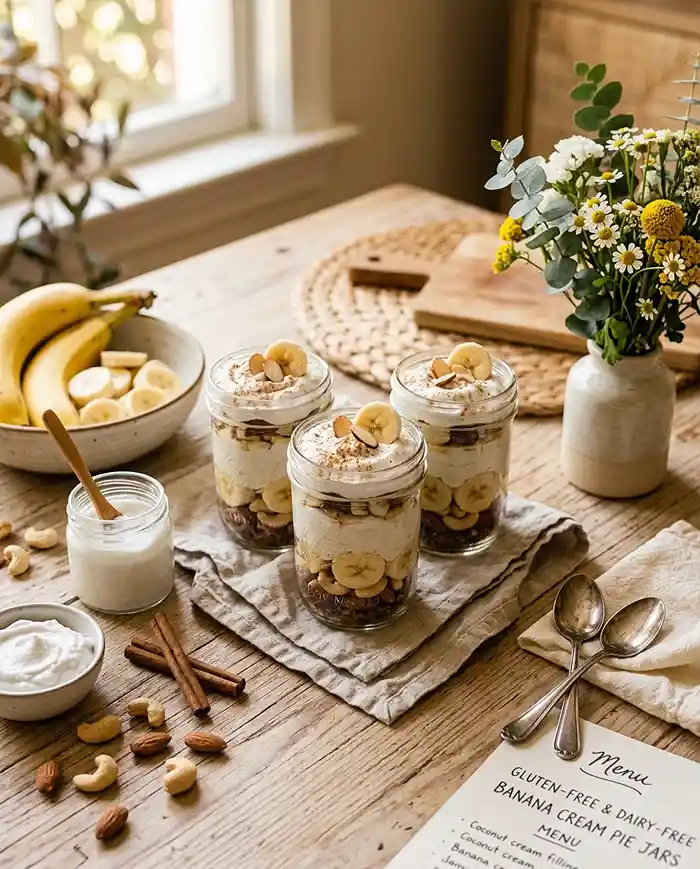
These banana cream pie jars are a showstopper at Thanksgiving when you set them out alongside the traditional pumpkin and pecan pies — they give your dairy‑free and gluten‑free guests a gorgeous dessert that doesn’t feel like an afterthought. Use clear mason jars or small glass tumblers so everyone can see those pretty layers from the side.
For a lighter summer spread, serve them after a main like gluten‑free garlic butter cod or alongside a platter of gluten‑free halloumi watermelon skewers for a contrast of savory and sweet. A cold glass of iced oat milk or a shot of espresso alongside the jar turns dessert into an experience.
Go Ahead — Layer Your First Jar
I really hope you give these a try this weekend — they’re one of those recipes that makes you feel like a kitchen genius even if you’ve never made a custard before. Save this to your Pinterest board for the next time you need a crowd‑pleasing gluten‑free dairy‑free dessert, and come back to the comments to tell me which variation you tried. Your feedback genuinely helps me make every recipe on this site better, and I love hearing what’s working in your kitchen.
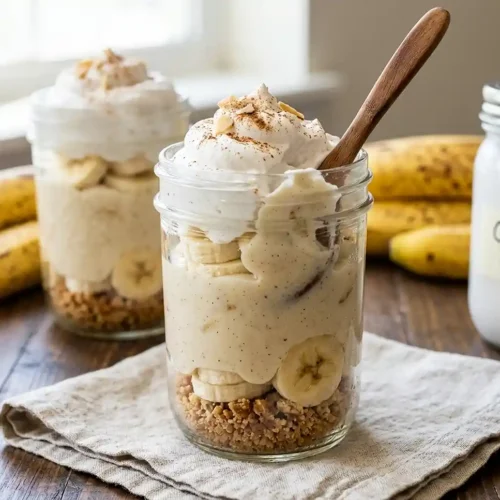
Gluten-Free Dairy-Free Banana Cream Pie Jars
Equipment
- Food processor
- Medium saucepan
- Whisk
- 3 glass jars or serving cups
- Spoon or spatula
- Baking sheet or oven rack
Ingredients
Nut & Date Crust
- ½ cup cashews
- ½ cup almonds
- 3 Medjool dates pitted; soak in warm water 10 minutes if dry
- 1 tsp vanilla extract
- ½ tsp cinnamon powder
- ½ tsp mesquite powder optional; adds a subtle molasses-like earthiness
Banana Custard Filling
- 1 can full-fat coconut cream about 2 cups; must be full-fat
- 2 tablespoons maple sugar
- 2 teaspoons vanilla extract
- 1 tablespoon coconut oil
- 1 roasted banana roasted unpeeled at 350°F for 10 minutes
- 1 pinch salt
- 2-3 tablespoons tapioca flour start with 2 tablespoons, add 3rd only if needed; add this last
For Assembly
- 1-2 fresh bananas sliced into rounds
- vegan paleo whipped cream store-bought or homemade from chilled coconut cream
- 1 dash cinnamon for finishing
Instructions
- Roast an unpeeled banana at 350°F for 10 minutes. The peel will darken to a deep brown-black and the flesh inside will turn soft, golden, and intensely sweet with a rich caramelized aroma. Set aside to cool slightly while you prepare the crust.
- Prepare the crust by adding the cashews, almonds, pitted Medjool dates, vanilla extract, cinnamon powder, and mesquite powder (if using) to a food processor. Pulse for about 30 seconds until a sticky, crumbly dough forms that holds together when pressed between your fingers. You want some small nut pieces visible for texture — do not over-process into a fine powder. Set aside.
- Make the filling by adding the coconut cream, maple sugar, vanilla extract, coconut oil, peeled roasted banana, and a pinch of salt to the food processor (no need to clean it first). Process until completely smooth, about 30 to 45 seconds. Transfer the mixture to a medium saucepan and heat over low to medium heat. Sprinkle in 2 tablespoons of tapioca flour while whisking constantly and vigorously to prevent clumps. Heat for 3 to 5 minutes until the filling thickens to a pudding-like consistency that coats the back of a spoon. If it is not thick enough after 5 minutes, add the 3rd tablespoon of tapioca flour while continuing to whisk. Watch the mixture closely — tapioca thickens quickly and can scorch on the bottom.
- Begin layering the jars. Spoon 2 to 3 tablespoons of the nut crust into the bottom of each jar and press down gently with the back of a spoon. Top with a layer of fresh sliced banana rounds, then spoon about 1/4 cup of the warm custard filling over the bananas. Repeat the layers — crust, sliced bananas, filling — until the jars are full.
- Top each jar with a generous swirl of store-bought or homemade vegan paleo whipped cream and a light dash of cinnamon. Serve warm immediately for a pudding-like texture, or cover and chill in the refrigerator for 2 to 3 hours (or overnight) for a firmer, more traditional pie-like consistency.