Gluten-Free Mexican Tamarind Paste Candy
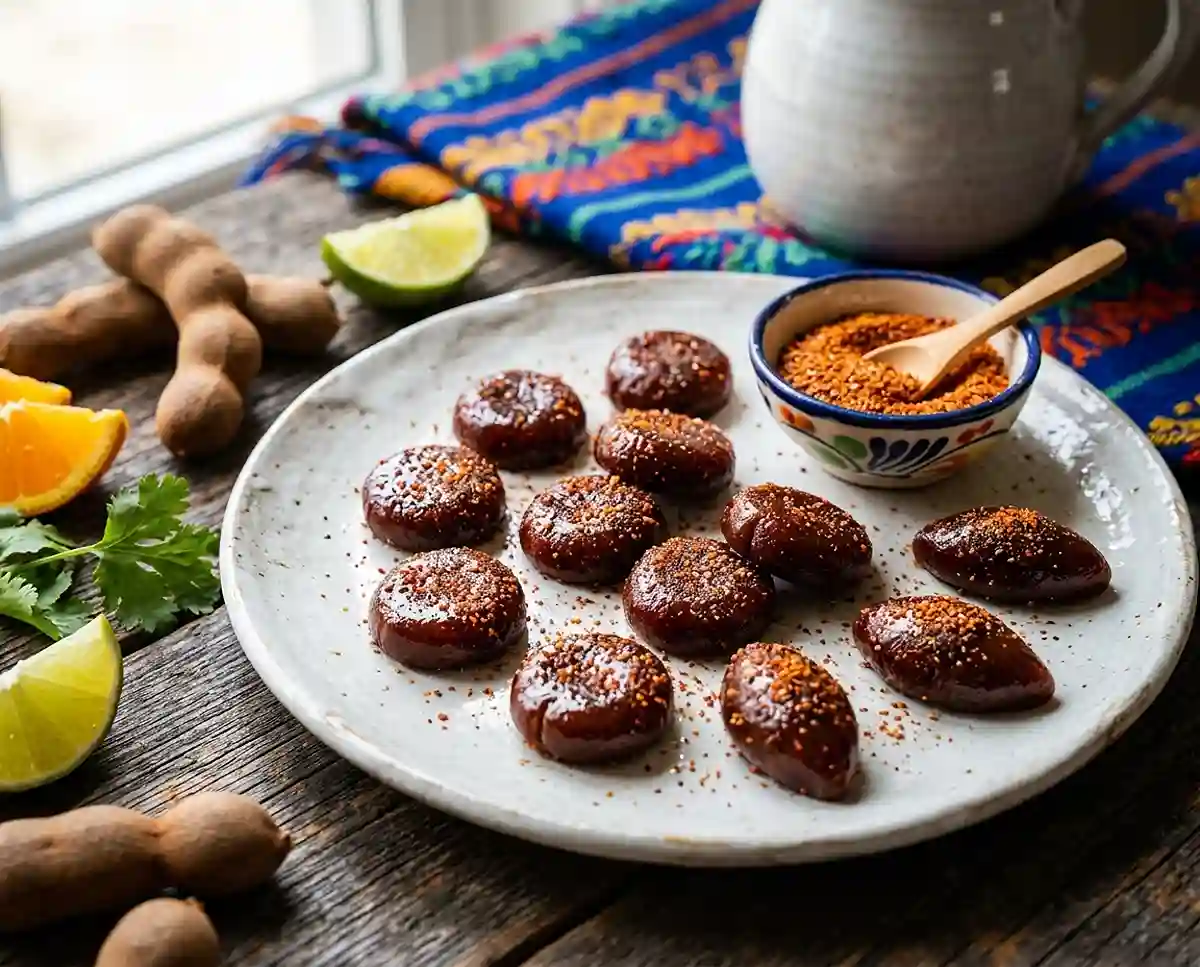
Sticky-sweet, tangy, chile-lime kissed Mexican Tamarind Paste Candy made from scratch — naturally gluten-free, ready in about an hour.
The first time I tried making tamarind candy from scratch, I scorched an entire batch because I walked away to grab the Tajín. You know… tamarind paste thickens fast once the sugar dissolves, and that one lesson shaped everything I’ll share below. This gluten-free Mexican tamarind paste recipe is the redemption batch — glossy, chewy, with that addictive sweet-sour-spicy bite that tastes like a Cinco de Mayo block party in candy form.
Have you ever bitten into a pulparindo from the corner Mexican market and wondered if you could make it cleaner at home? Well… you absolutely can, and the homemade version blows the wrapped stuff out of the water.
Why You’ll Love This Tamarind Candy
- Sweet, tart, and spicy in every bite — like sour gummies wearing a chile-lime jacket.
- Beginner-friendly with one pot and a wooden spoon.
- Naturally gluten-free and dairy-optional (the butter is for gloss).
- Perfect for party favors, holiday gift bags, or after-school snacks for spice-loving kids.
The Secret to Perfect Mexican Tamarind Paste Candy
- Peeling and seeding the pods properly is non-negotiable — leftover shell fragments ruin the texture.
- A long, gentle simmer (not a hard boil) keeps the natural pectin in tamarind active so the paste sets without becoming brittle.
- Adding the orange brightens the deep, almost date-like flavor of tamarind and balances the sugar.
- Cooking to roughly 235°F (soft-ball stage) gives you that signature chewy-sticky pull, similar to what the Celiac Disease Foundation’s gluten-free pantry guide recommends checking when sourcing chile-lime seasonings.
Ingredients (Makes 20-24 candy portions)
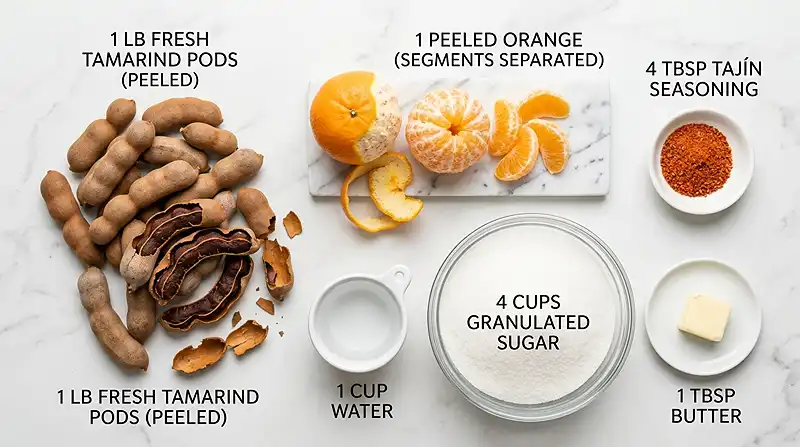
- 1 lb tamarind pods, peeled
- 1 cup water
- 1 orange, peeled and segmented
- 4 cups white sugar
- 4 tbsp chile-lime seasoning (such as Tajín — verify gluten-free)
- 1 tbsp butter
A quick note on Tajín: the Clásico version is generally gluten-free, but always read the label for anti-caking agents that may contain wheat derivatives.
Step-by-Step Instructions
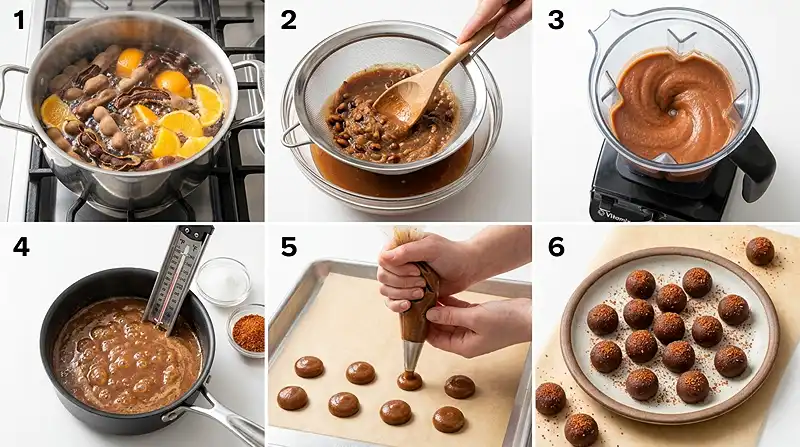
- Peel the tamarind pods, snapping off the brittle outer shell and pulling away the stringy veins running along each pod. This part is tedious, but skipping it leaves bitter splinters in your finished candy.
- Add the peeled tamarind and 1 cup water to a heavy-bottomed saucepan. Simmer over medium-low for 15-20 minutes until the pulp softens and starts releasing from the seeds.
- Press the softened tamarind through a fine-mesh sieve, working in batches to separate the smooth pulp from the seeds and fibers. Pro tip: use the back of a wooden spoon and a little patience — you should end up with roughly 1½ cups of glossy, mahogany-colored paste.
- Return the strained paste to the pan with the orange segments and sugar. Cook over medium heat, stirring constantly, until the sugar fully dissolves and the mixture begins to bubble like thick lava (about 10-12 minutes).
- Reduce to medium-low and continue stirring for 20-30 minutes until the paste thickens to a soft-ball stage (about 235°F) and pulls away from the sides of the pan. Man, oh man… the smell at this stage is something between caramel and dried fruit, and it’ll fill the whole kitchen.
- Off heat, stir in the butter and 2 tbsp of the chile-lime seasoning until glossy. Scoop tablespoon-sized portions onto parchment, roll in the remaining 2 tbsp Tajín, and let cool 1-2 hours until firm enough to wrap individually.
Make It Your Own
For a spicier version, stir an extra teaspoon of cayenne or ground chile de árbol into the final seasoning toss. The heat blooms slowly as the candy sits, so taste a small piece before deciding to add more.
Swap the orange for 2 tbsp fresh lime juice if you prefer a sharper, more citrus-forward profile — this version works beautifully alongside fruit-based desserts like a gluten-free blackberry vanilla sheet cake for a holiday spread.
Dairy-free? Replace the butter with 1 tbsp coconut oil. Well… the gloss isn’t quite as deep, but the chew stays intact and nobody at the table will know the difference.
For a softer, spoonable Mexican fruit tamarind paste meant for spreading on fruit or rimming glasses, pull the cooking time back by 8-10 minutes so it stays loose.
Common Problems & Solutions
Problem: Candy turned out grainy.
Solution: The sugar likely didn’t fully dissolve before boiling. Always stir continuously during step 4 and brush down the sides of the pan with a wet pastry brush to dissolve stray sugar crystals.
Problem: Paste is bitter.
Solution: Tiny bits of seed coating or pod shell snuck through the sieve. Strain twice if your first pass feels gritty — it’s worth the extra five minutes.
Problem: Candy never firmed up.
Solution: You stopped cooking too early. The paste should coat the back of a spoon and hold a clear line when you drag a spatula through it. Return it to the pan and cook another 5-10 minutes if needed.
Problem: The chile-lime seasoning clumps on the outside.
Solution: Let portions cool 10-15 minutes before rolling so the surface is tacky but not wet. Wet candy grabs the seasoning unevenly and turns muddy.
Storage & Meal Prep
| Method | Duration | Notes |
|---|---|---|
| Counter (wrapped) | 2 weeks | Wax paper or parchment squares, airtight tin |
| Fridge | 1 month | Bring to room temp before eating for best chew |
| Freezer | 3 months | Wrap individually, then bag |
Reheating isn’t really needed, but if refrigerated candy feels too firm, let it sit at room temperature for 20-30 minutes before serving. Leftover unrolled paste also makes a fantastic glaze for grilled chicken or pork — thin it with 2 tbsp water and brush on during the last few minutes of cooking. No waste, big flavor.
Gluten-Free Mexican Tamarind Paste Candy FAQs
Can I use store-bought tamarind paste to save time?
Yes, but reduce the water to ¼ cup. Look for jarred Mexican tamarind paste with no added gluten-containing thickeners, and start with about 1½ cups paste to match the yield of fresh pods.
How do I know my tamarind pods are fresh?
Fresh pods feel slightly brittle on the outside but give gently when squeezed. Avoid pods that are rock-hard or have white powdery patches, which signal age and dryness.
What’s the best chile-lime seasoning for this recipe?
Tajín Clásico is the most reliable gluten-free pick, but Trader Joe’s Chile Lime Seasoning and homemade blends (chile powder, lime zest powder, salt) also work. Always check the label — some store brands sneak in wheat-based anti-caking agents.
Why did my candy turn dark brown instead of mahogany red?
You likely cooked it past soft-ball stage. Pull the pan off the heat as soon as the paste pulls away from the sides and a small spoonful holds its shape on a cold plate.
Is this candy safe for kids?
Generally yes, but the chile-lime coating can be intense for little palates. Roll half the batch in plain sugar instead of Tajín for a kid-friendly version your whole family will reach for.
Serving Suggestions
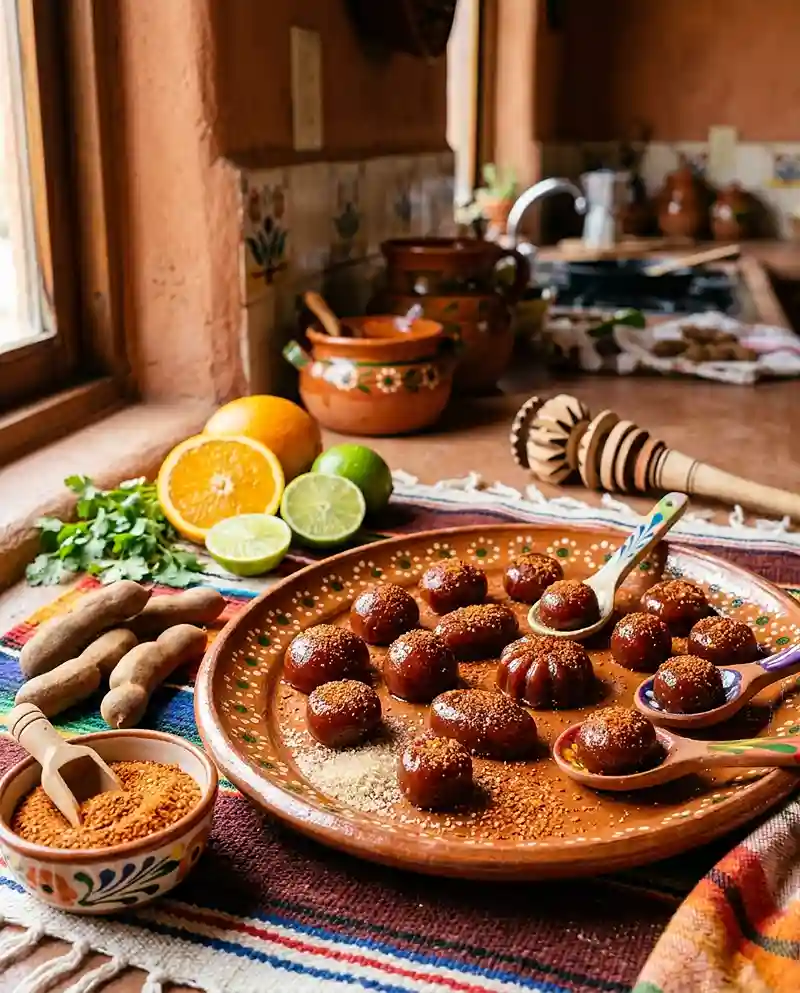
Set these candies out on a wooden board with lime wedges and salted nuts for a Cinco de Mayo or Día de los Muertos celebration — they’re a tradition in many Mexican households and instantly elevate any party spread. Pair them with gluten-free watermelon fries with coconut lime dip for a sweet-spicy-creamy trio that disappears fast.
For drinks, nothing balances the heat better than a chilled gluten-free pineapple mint agua fresca poured over crushed ice.
Give It a Try!
If you make this gluten-free Mexican tamarind paste candy, I’d love to hear how your batch turned out — drop a comment with your spice level and any twists you tried. Pin the recipe to your Mexican sweets board so you’ve got it handy for the next family gathering, and tag your photos so I can cheer you on from my kitchen to yours.
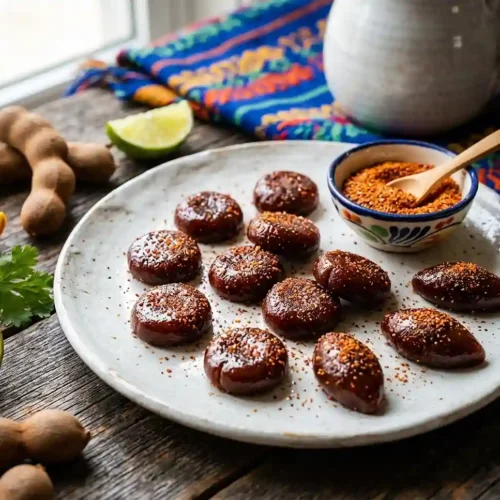
Gluten-Free Mexican Tamarind Paste Candy
Equipment
- Heavy-bottomed saucepan
- Fine-mesh sieve
- Wooden spoon
- Rubber spatula
- Candy thermometer
- Parchment paper
- Measuring cups and spoons
- Wax paper or candy wrappers
- Airtight tin or container
Ingredients
- 1 lb tamarind pods peeled
- 1 cup water
- 1 orange peeled and segmented
- 4 cups white sugar
- 4 tbsp chile-lime seasoning such as Tajín; verify gluten-free
- 1 tbsp butter
Instructions
- Peel the tamarind pods, snapping off the brittle outer shell and pulling away the stringy veins running along each pod. This step is tedious but essential — leftover shell fragments leave bitter splinters in the finished candy.
- Add the peeled tamarind and 1 cup water to a heavy-bottomed saucepan. Simmer over medium-low heat for 15-20 minutes until the pulp softens and starts releasing from the seeds.
- Press the softened tamarind through a fine-mesh sieve in batches to separate the smooth pulp from the seeds and fibers. Use the back of a wooden spoon to extract roughly 1½ cups of glossy, mahogany-colored paste.
- Return the strained paste to the pan with the orange segments and sugar. Cook over medium heat, stirring constantly, until the sugar fully dissolves and the mixture begins to bubble thickly (about 10-12 minutes).
- Reduce heat to medium-low and continue stirring for 20-30 minutes until the paste thickens to soft-ball stage (about 235°F) and pulls away from the sides of the pan.
- Off heat, stir in the butter and 2 tbsp of the chile-lime seasoning until glossy. Scoop tablespoon-sized portions onto parchment, roll in the remaining 2 tbsp Tajín, and let cool 1-2 hours until firm enough to wrap individually.