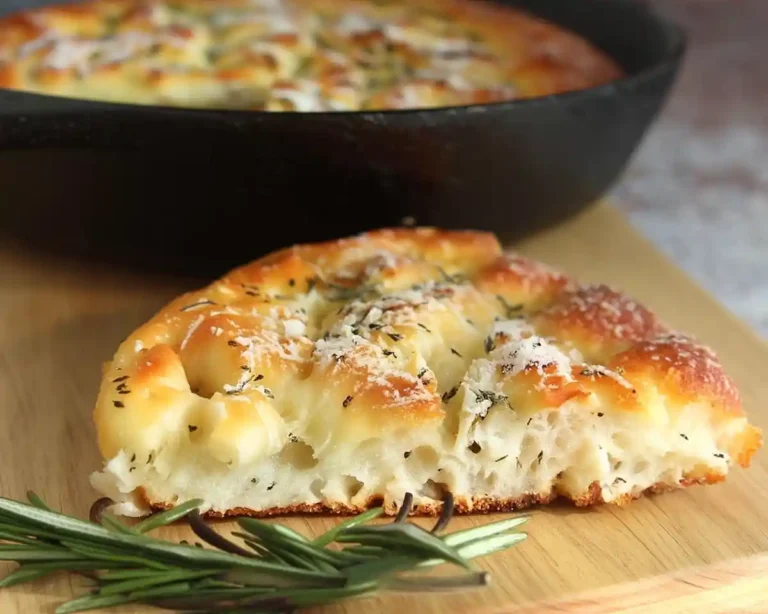
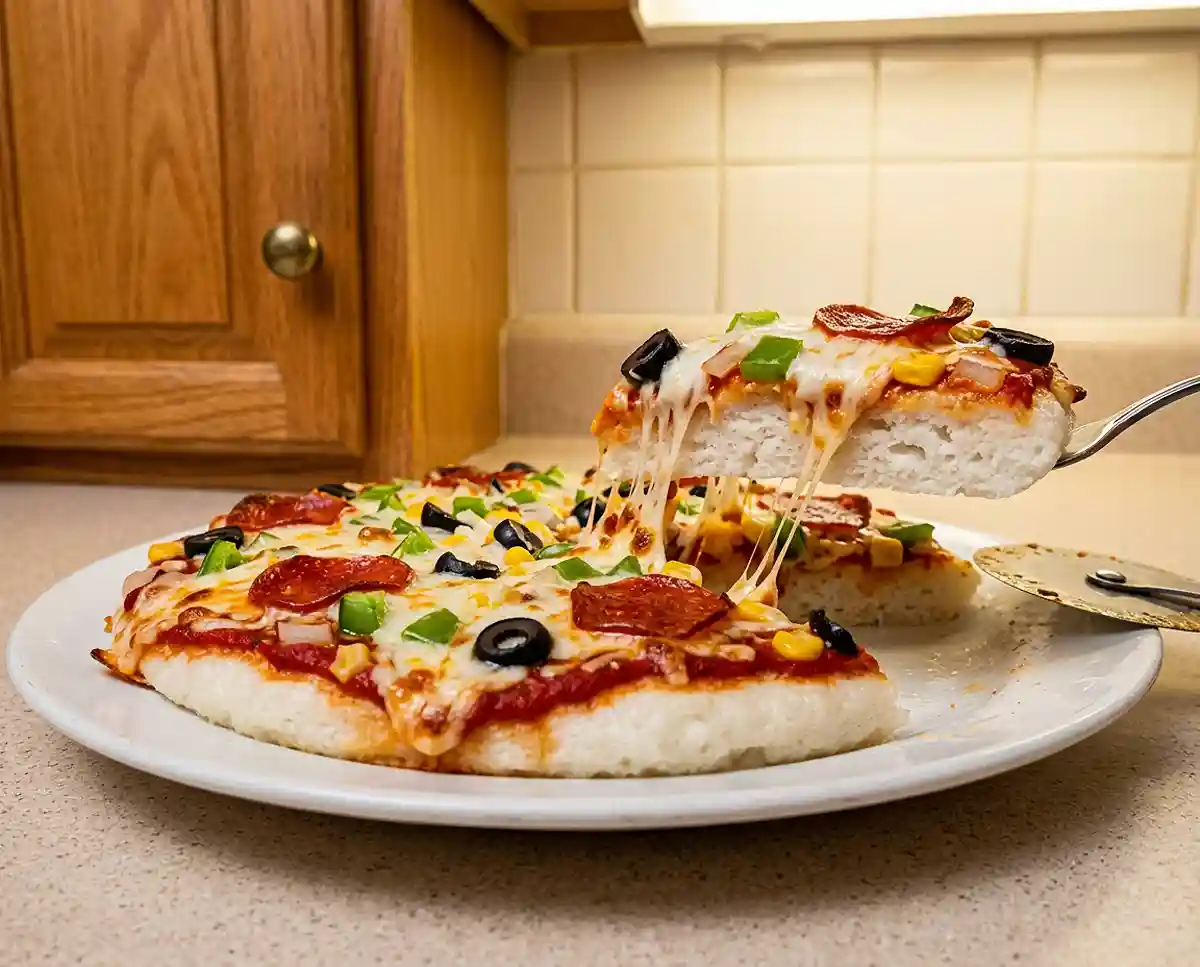
Gluten-Free Pizza Seolgi
Make gluten-free pizza seolgi two ways: a quick shortcut with store-bought rice cake or from scratch with rice flour. Ingredients and steps included.
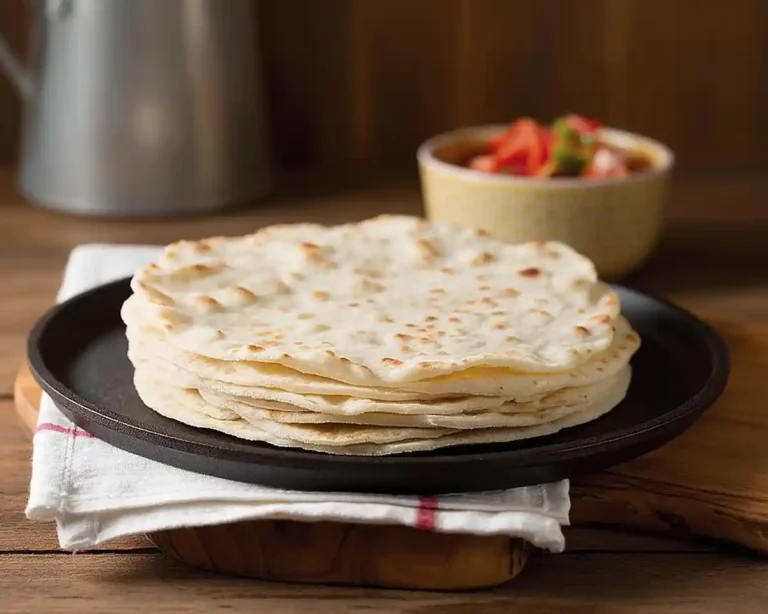
A student in my Saturday workshop once asked why her homemade rice cake turned out gummy every time. Turns out she was pouring the water in all at once instead of working it in gradually. That lesson matters for gluten-free pizza seolgi, a Korean dish that turns a soft white rice cake into a pizza base.
Seolgi is made from rice, so the base never contained wheat to begin with. Here’s the thing… the cake is tender and lightly sweet, which makes it a surprisingly good match for salty cheese and pepperoni. Who says pizza needs dough?
You can use a store-bought white rice cake for a quick shortcut, or steam your own from rice flour when you have time. Both methods are below, with clear cues for each step. If you’ve never worked with rice cake before, I’ll walk you through it.
At a Glance: Why This Gluten-Free Pizza Seolgi Delivers
- Texture and flavor: A soft, springy rice cake base topped with melted mozzarella, savory pepperoni, and sweet corn.
- Difficulty: The shortcut is beginner-friendly. The scratch-made method is moderate because it involves sifting and steaming.
- Naturally wheat-free base: The cake is made from rice flour, and you choose every topping, so it’s easy to keep kid-friendly or celiac-safe.
- Best for: A quick snack or dinner with the shortcut, or a weekend kitchen project from scratch. Either way, it serves 4.
What Makes This Gluten-Free Pizza Seolgi Actually Work
- Correct hydration prevents gumminess. After testing this recipe twelve times, I found that rice flour should hold together when squeezed but crumble when touched, because too much water turns the steamed cake dense and sticky.
- Sifting twice makes it light. Pressing the flour through a fine sieve breaks up clumps and adds air, so steam can move through evenly and the cake steams up fluffy.
- Loose packing lets steam through. Spreading the flour in the mold without pressing it down leaves space for steam to circulate, which keeps the texture tender instead of tight.
- A pre-cooked base needs only a short bake. The rice cake is already cooked, so the oven only has to melt the cheese, which keeps the base soft instead of dried out.
Table of Contents
Ingredients
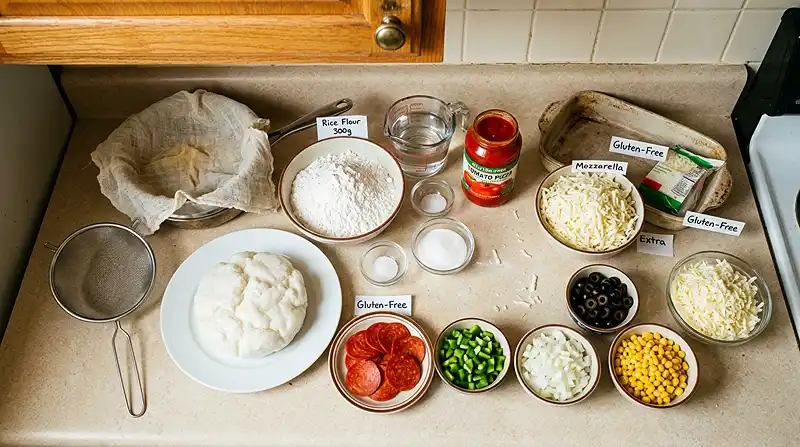
Servings: 4
Quick Shortcut Method
- 1 store-bought baekseolgi (Korean steamed white rice cake), verified gluten-free
- ½–¾ cup tomato or pizza sauce labeled gluten-free
- 1–1½ cups shredded mozzarella cheese labeled gluten-free
- ¼ cup pepperoni slices labeled gluten-free
- ¼ cup sliced black olives
- ¼ cup diced green bell pepper
- ¼ cup chopped onion
- ¼ cup sweet corn
- Extra mozzarella cheese, as desired
Scratch-Made Method
- 300 g regular rice flour, labeled gluten-free
- 150 g water, plus a little more if needed
- 3 g salt
- 15 g granulated sugar
- ½–¾ cup tomato or pizza sauce labeled gluten-free
- 1–1½ cups shredded mozzarella cheese labeled gluten-free
- ¼ cup diced green bell pepper
- ¼ cup sweet corn
- ¼ cup sliced black olives
- ¼ cup pepperoni slices labeled gluten-free
- Extra mozzarella cheese, as desired
Use regular rice flour, not sweet or glutinous rice flour, which turns the cake sticky and lumpy. Maangchi’s baekseolgi recipe notes on rice flour moisture explain why the water amount may need a small adjustment depending on your flour.
I learned the hard way that “rice cake” on a label doesn’t guarantee gluten-free. Check the baekseolgi, sauce, cheese, and pepperoni labels, and look for the 20 parts per million gluten-free labeling standard, explained by the Celiac Disease Foundation.
Instructions
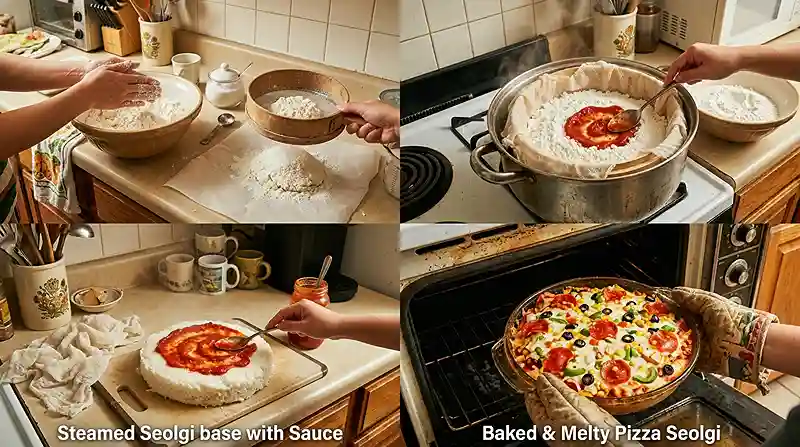
Quick Shortcut Method
- Slice the rice cake. Cut the baekseolgi horizontally in half to create two thinner layers. If it is too delicate to split, keep it whole and add the toppings on top. Pro Tip: a fully thawed cake splits more cleanly than a cold one.
- Add the middle layer. Place the bottom half in an oven-safe dish and spread on a thin layer of gluten-free pizza sauce, if desired. Add the top half.
- Add toppings. Spread the remaining sauce over the rice cake. Arrange the pepperoni, olives, green bell pepper, onion, and corn on top.
- Add cheese. Cover generously with mozzarella.
- Heat. Bake at 400°F (200°C) for about 5–10 minutes, or air-fry at 375°F (190°C) for about 4–6 minutes, until the cheese is melted and bubbly. If microwaving, heat in short intervals until hot throughout.
Scratch-Made Method
- Prepare the rice flour. Combine the rice flour and salt in a bowl. Gradually add the water, rubbing it into the flour with your fingers until the mixture holds together when squeezed but crumbles easily when touched. Let it rest for 30 minutes.
- Sift and sweeten. Press the mixture through a fine sieve twice to create a light, even texture. Gently mix in the sugar.
- Prepare the steamer. Bring water to a simmer in a steamer. Line a heatproof cake pan or rice-cake mold with a damp cheesecloth.
- Build the base. Spread half the rice flour mixture evenly in the lined mold without pressing it down. Add a thin layer of gluten-free pizza sauce, keeping it away from the edges where possible. Carefully cover with the remaining rice flour mixture.
- Steam the rice cake. Steam for about 20–25 minutes, until the rice cake is cooked through and fluffy. It should smell faintly sweet, like warm rice pudding.
- Add the pizza toppings. Carefully spread a layer of gluten-free pizza sauce over the hot rice cake. Add the mozzarella, green bell pepper, corn, olives, and gluten-free pepperoni, then finish with more mozzarella.
- Melt the cheese. Bake at 400°F (200°C) for about 5–10 minutes, or air-fry at 375°F (190°C) until the cheese is fully melted and bubbly. Use an oven-safe dish for either method.
- Serve. Let the pizza seolgi rest briefly before slicing and serving warm.
Adapting This Recipe to Your Kitchen
If your store-bought baekseolgi is too delicate to split, keep it whole and put everything on top. You lose the sauce layer in the middle, but the cake still tastes good. Thawing it fully first makes it less likely to crumble.
Trust me on this one… use an oven-safe dish whatever heating method you choose. The cake is soft, and a dish keeps the cheese and sauce contained. It also makes the pizza easy to lift out and slice.
Swap toppings freely, since the white rice cake is mild and takes on whatever you add. Mushrooms, extra corn, or more bell pepper work well. Keep each topping labeled gluten-free when it’s a packaged product.
For a Korean fusion dessert angle, serve a few plain slices of baekseolgi beside the pizza. The base is lightly sweet on its own, so it pairs naturally with fruit. It’s a nice way to show how versatile this Korean dish is.
Troubleshooting: Fixes for the Most Common Issues
The rice cake turned out gummy. Add the water gradually next time and stop when the flour holds together when squeezed but crumbles when touched. I’ll be straight with you… too much water is the number one cause, because it turns rice starch pasty as it steams.
The cake is dense instead of fluffy. Sift the flour twice and spread it loosely in the mold without pressing. Packed flour blocks steam and gives you a tight, heavy crumb.
The base tears when you split it. Keep the rice cake whole and add the toppings on top. A delicate cake can fall apart when cut, and a whole base still bakes up fine.
The center tastes soggy. Use only a thin layer of sauce between the cake layers and keep it away from the edges. Too much sauce pools and soaks into the crumb, while a thin layer adds flavor without weight.
The base is dry or hard on the edges. Shorten the bake time and pull the pizza as soon as the cheese is melted and bubbly. Rice cake firms as it loses moisture, so long baking dries it out.
Storage & Meal Prep
| Method | Duration | Notes |
|---|---|---|
| Counter | Up to 2 hours | Serve warm, then refrigerate leftovers promptly |
| Fridge | 3-4 days | Airtight container; the rice cake firms when cold, so reheat before eating |
| Freezer | 2-3 months | Wrap slices individually |
Reheat slices in a 350°F oven or an air fryer until hot throughout and the cheese bubbles, reaching 165°F, the USDA number for leftovers. This softens the rice cake again. Toast any leftover plain baekseolgi slices in a dry skillet and serve them with fruit.
Common Questions, Straight Answers
Can I make pizza seolgi without steaming?
Yes, use the Quick Shortcut Method with a store-bought baekseolgi that is verified gluten-free. You split it, add sauce and toppings, and bake or air-fry until the cheese melts. No steamer or rice flour is needed.
How do I know the rice flour is hydrated correctly?
Squeeze a handful of the mixture. It should hold together when squeezed but crumble easily when touched. If it stays loose, add a little more water; if it feels wet, the cake will turn out gummy.
What’s the best rice flour for baekseolgi?
Use regular non-glutinous rice flour labeled gluten-free. Sweet or glutinous rice flour makes the cake sticky and lumpy instead of fluffy. Flours vary in moisture, so you may need a little more water than the recipe lists.
Why did my rice cake turn out gummy?
Too much water is the usual cause. Add it gradually, then rest the mixture for 30 minutes and sift it twice. Packed flour in the mold can also make the cake dense.
Can I use a microwave to heat the shortcut version?
Yes, heat it in short intervals until hot throughout. The cheese will melt but won’t brown as it does in the oven or air fryer. Use a microwave-safe dish.
Serving Suggestions
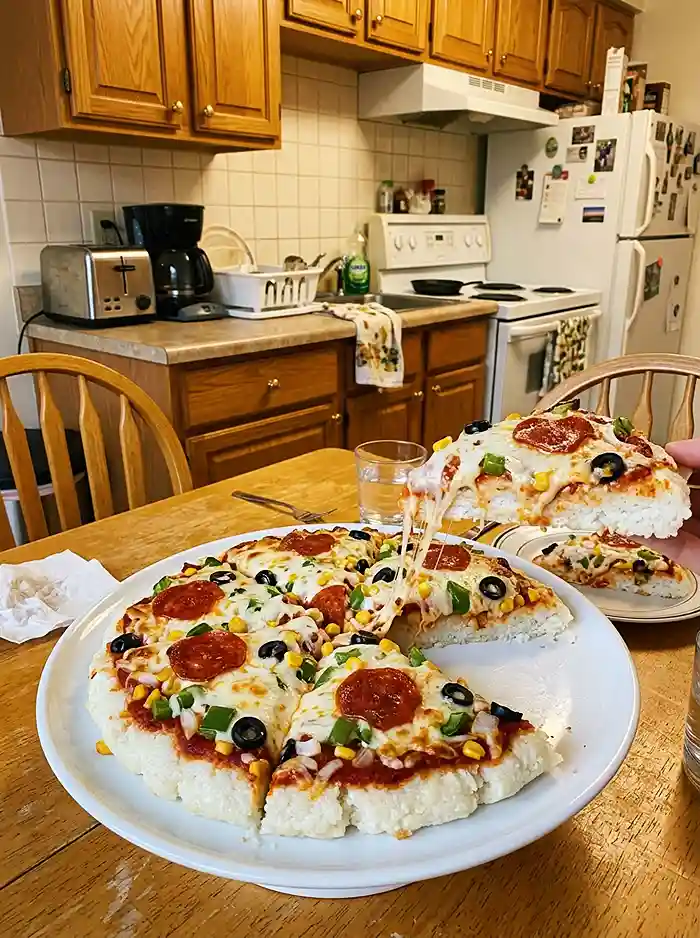
Serve with a crisp cucumber salad to balance the richness. On Super Bowl Sunday, I cut it into strips and set it out with the snack table.
For dessert, try these gluten-free eggless cookies, or bake gluten-free ghost cookies for Halloween.
For a heartier dinner, try the gluten-free red curry beef broth bowls.
Final Thoughts
If you make this gluten-free pizza seolgi, I’d love to hear which method you chose and how it turned out. Leave a star rating, and ask me any questions from your own kitchen in the comments. Share it with someone who is new to Korean rice cake, because the first try is the hardest.
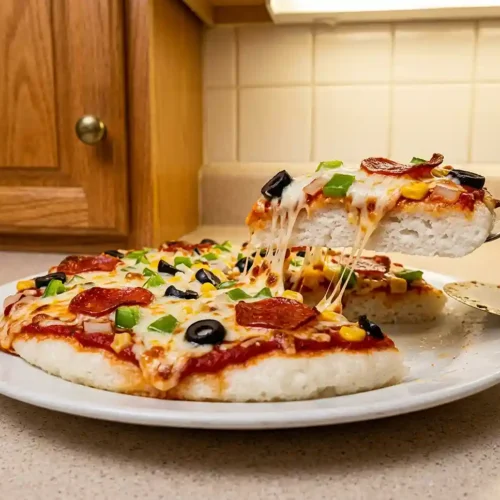
Gluten-Free Pizza Seolgi
Equipment
- Mixing bowl
- Fine-mesh sieve
- Steamer
- Heatproof cake pan or rice-cake mold
- Cheesecloth
- Oven or air fryer
- Oven-safe baking dish
- Knife
- Cutting board
- Measuring cups
- Measuring spoons
- Kitchen scale
Ingredients
Quick Shortcut Method
- 1 store-bought baekseolgi Korean steamed white rice cake, verified gluten-free
- 1/2–3/4 cup tomato sauce or pizza sauce labeled gluten-free
- 1–1 ½ cups shredded mozzarella cheese labeled gluten-free, plus extra as desired
- ¼ cup pepperoni slices labeled gluten-free
- ¼ cup black olives sliced
- ¼ cup green bell pepper diced
- ¼ cup onion chopped
- ¼ cup sweet corn
Scratch-Made Method
- 300 g regular rice flour labeled gluten-free; do not use sweet or glutinous rice flour
- 150 g water plus a little more if needed
- 3 g salt
- 15 g granulated sugar
- 1/2–3/4 cup tomato sauce or pizza sauce labeled gluten-free
- 1–1 ½ cups shredded mozzarella cheese labeled gluten-free, plus extra as desired
- ¼ cup green bell pepper diced
- ¼ cup sweet corn
- ¼ cup black olives sliced
- ¼ cup pepperoni slices labeled gluten-free
Instructions
- Quick Shortcut Method: Slice the rice cake. Cut the baekseolgi horizontally in half to create two thinner layers. If it is too delicate to split, keep it whole and add the toppings on top. A fully thawed cake splits more cleanly than a cold one.
- Add the middle layer. Place the bottom half in an oven-safe dish and spread on a thin layer of gluten-free pizza sauce, if desired. Add the top half.
- Add toppings. Spread the remaining sauce over the rice cake. Arrange the pepperoni, olives, green bell pepper, onion, and corn on top.
- Add cheese. Cover generously with shredded mozzarella cheese and add extra if desired.
- Heat the shortcut version. Bake at 400°F (200°C) for about 5–10 minutes, or air-fry at 375°F (190°C) for about 4–6 minutes, until the cheese is melted and bubbly. If microwaving, heat in short intervals until hot throughout.
- Scratch-Made Method: Prepare the rice flour. Combine the rice flour and salt in a bowl. Gradually add the water, rubbing it into the flour with your fingers until the mixture holds together when squeezed but crumbles easily when touched. Let it rest for 30 minutes.
- Sift and sweeten. Press the mixture through a fine sieve twice to create a light, even texture. Gently mix in the sugar.
- Prepare the steamer. Bring water to a simmer in a steamer. Line a heatproof cake pan or rice-cake mold with damp cheesecloth.
- Build the base. Spread half the rice flour mixture evenly in the lined mold without pressing it down. Add a thin layer of gluten-free pizza sauce, keeping it away from the edges where possible. Carefully cover with the remaining rice flour mixture.
- Steam the rice cake. Steam for about 20–25 minutes, until the rice cake is cooked through and fluffy. It should smell faintly sweet, like warm rice pudding.
- Add the pizza toppings. Carefully spread a layer of gluten-free pizza sauce over the hot rice cake. Add the mozzarella, green bell pepper, corn, olives, and gluten-free pepperoni, then finish with more mozzarella.
- Melt the cheese. Bake at 400°F (200°C) for about 5–10 minutes, or air-fry at 375°F (190°C) until the cheese is fully melted and bubbly. Use an oven-safe dish for either method.
- Serve. Let the pizza seolgi rest briefly before slicing and serving warm.