Gluten-Free Ube Sweet Rolls
Make soft, fluffy gluten-free ube sweet rolls at home with step-by-step instructions, ube halaya filling, and a creamy coconut glaze. Includes troubleshooting tips.
The first time I attempted gluten-free ube sweet rolls, I overfloured the dough out of habit and ended up with dense, dry spirals that crumbled the moment I touched them. That batch went straight into the trash — but the lesson it taught me is baked into every step of this recipe.
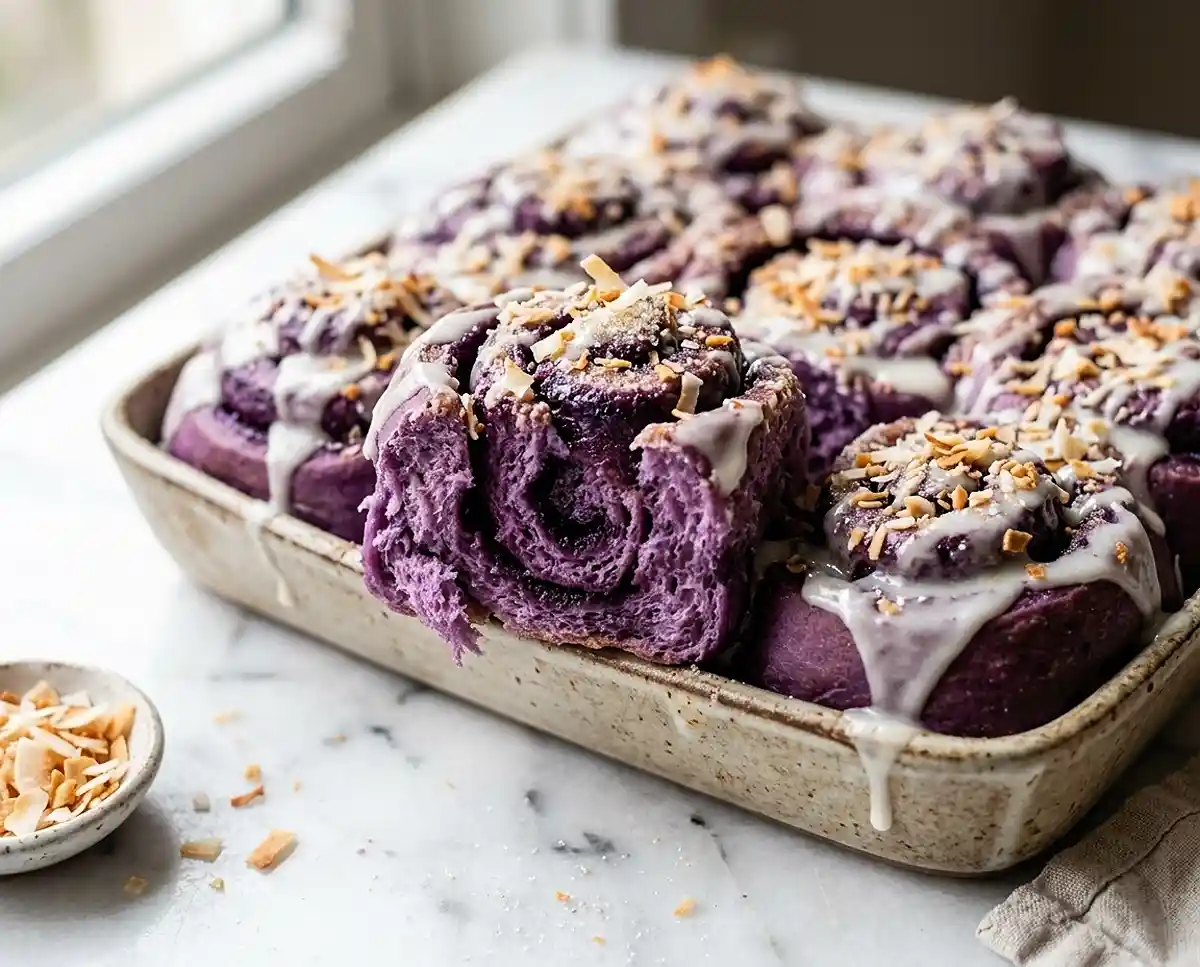
These gluten-free ube sweet rolls are soft, pillowy, and swirled with a purple ube halaya filling that tastes like a cross between vanilla and sweet potato — warm, earthy, and gently floral. The coconut glaze on top melts into the warm rolls like a tropical drizzle you didn’t know you needed.
What makes these different from every other gluten-free sweet roll recipe out there? The answer is hydration — gluten-free dough needs to stay softer and stickier than you’d expect, and this recipe leans into that instead of fighting it.
Table of Contents
Why You’ll Love These Gluten-Free Ube Sweet Rolls
- Genuinely soft and fluffy texture — the buttermilk and proper rise time create rolls that pull apart in tender layers, not dense or gummy like many gluten-free versions.
- Beginner-friendly process — rolling between parchment sheets eliminates sticky mess, and the parchment-assist roll technique makes shaping far less stressful.
- Bold, beautiful ube flavor — the combination of ube halaya and ube extract gives every bite a deep, naturally purple color and a flavor that stands out from standard cinnamon rolls.
- Dairy-free adaptable — the coconut glaze is already dairy-free, and the dough swaps easily for those who need a fully dairy-free version.
The Secret to Perfect Gluten-Free Ube Sweet Rolls
- Warm buttermilk activates the yeast properly — the temperature range of 100–110°F is non-negotiable. Too cool and the yeast won’t activate; too hot and you’ll kill it. A kitchen thermometer removes all guesswork here.
- Soft, sticky dough is correct dough — gluten-free flour blends lack the protein structure of wheat flour, so the dough needs more moisture to stay pliable. Resisting the urge to add extra flour is what separates fluffy rolls from dense ones.
- Two full rises build flavor and structure — the first rise develops the yeast flavor; the second rise after shaping ensures the rolls bake up light rather than tight. According to authoritative gluten-free baking guidance from Beyond Celiac, yeast-leavened gluten-free doughs benefit significantly from unhurried rise times.
- Xanthan gum provides the missing structure — if your flour blend doesn’t already contain it, xanthan gum acts as the binder that gluten would normally provide, keeping the rolls from falling apart during slicing and baking.
Ingredients

Dough
- ¾ cup buttermilk, warmed to 100–110°F
- 1 packet (¼ oz) active dry yeast, certified gluten-free
- ½ cup granulated sugar
- 6 tbsp unsalted butter, room temperature and softened
- 1 egg, room temperature
- ¼ tsp salt
- ½ tsp ube extract, gluten-free
- 3¼ cups certified gluten-free flour blend formulated for yeast baking, plus up to ¼–½ cup as needed
- 1 tsp xanthan gum — only if your gluten-free flour blend does not already contain it
Ube Filling
- ½ cup ube halaya, certified gluten-free
- ¼ cup light brown sugar
- 1 tbsp ground cinnamon
Coconut Glaze
- 2 tbsp full-fat coconut milk, certified gluten-free
- ½ tsp vanilla extract, gluten-free
- ¾ cup powdered sugar, sifted
Optional Topping
- Toasted coconut flakes
Instructions
Activate the Yeast
- Warm the buttermilk and activate the yeast. Heat the buttermilk to 100–110°F using a thermometer to verify the temperature. Stir in the active dry yeast and granulated sugar, then let the mixture stand for 5 to 10 minutes until it becomes visibly foamy. If it doesn’t foam, your yeast may be expired or the buttermilk was too hot — start over before proceeding.
Build the Dough
- Cream the butter into the buttermilk mixture. In a large bowl, combine the softened butter with the foamy buttermilk mixture. Mix until the butter is incorporated and the mixture looks creamy and uniform. The butter won’t fully melt in — small flecks are fine at this stage.
- Add the egg, salt, and ube extract. Mix until everything is fully incorporated and the batter has a pale lavender hue. The ube extract deepens to a richer purple during baking, so don’t worry if the raw dough looks lighter than expected.
- Add the flour and xanthan gum. Add the gluten-free flour blend and xanthan gum if needed, mixing until a soft, sticky dough forms. Pro Tip: Do not add large amounts of extra flour — gluten-free dough should remain softer and more hydrated than traditional wheat dough. If it clings to your hands, that’s normal and correct.
First Rise
- Let the dough rise until puffy. Place the dough in a lightly greased bowl, cover with a damp towel or plastic wrap, and set it in a warm, draft-free place for about 1 hour. The dough should look noticeably puffy — it won’t double the way wheat dough does, but you’ll see clear volume increase.
Fill and Shape
- Roll and fill the dough. Place the risen dough between two sheets of lightly greased parchment paper and gently roll it into a 12×12-inch square. Spread the ube halaya evenly across the surface, then sprinkle the brown sugar and cinnamon over the top in an even layer. Leave a half-inch border along one edge to help seal the roll.
- Roll and cut the rolls. Using the parchment paper to guide and support the dough, carefully roll it into a log from one end to the other. Use a sharp knife or unflavored dental floss to cut the log into 9 equal pieces. Arrange the rolls cut-side up in a greased 9×9-inch pan.
Second Rise and Bake
- Let the shaped rolls rise again. Cover the pan loosely and let the rolls rise for 45 to 60 minutes, until visibly puffy. Near the end of the rise, preheat your oven to 350°F so it’s fully hot when the rolls go in.
- Bake until set and lightly golden. Bake uncovered for 25 to 30 minutes, until the rolls are set through and the edges are lightly golden. The centers may look slightly underdone — they will firm up as they cool. Pro Tip: Avoid opening the oven during the first 20 minutes to prevent the rolls from deflating.
Glaze and Serve
- Make the coconut glaze. While the rolls bake, whisk together the full-fat coconut milk, vanilla extract, and sifted powdered sugar until completely smooth and pourable. Sifting the powdered sugar prevents lumps in the glaze.
- Glaze and finish. Let the baked rolls cool in the pan for 5 to 10 minutes, then drizzle the coconut glaze generously over the top. Sprinkle with toasted coconut flakes if desired and serve while still warm.

Make It Your Own
Well… if you can’t find ube halaya at your local Asian grocery store, you can make a quick substitute by blending cooked, mashed purple sweet potato with a tablespoon of butter and a teaspoon of sugar. It won’t be quite as rich as jarred ube halaya, but it captures the color and earthy sweetness that makes these ube cinnamon rolls so distinctive.
To make the dough fully dairy-free, swap the buttermilk for full-fat canned coconut milk warmed to the same temperature range and replace the butter with a solid dairy-free butter alternative like vegan butter sticks. The texture holds up well with these swaps, and the coconut glaze is already dairy-free, so the whole recipe comes together cleanly.
If you want a more intense cinnamon roll flavor alongside the ube, increase the cinnamon in the filling to 1½ tablespoons. The added warmth of the cinnamon balances the floral sweetness of the ube extract and creates an ube cinnamon roll that leans more spiced than sweet.
For a cream cheese glaze instead of coconut, soften 2 ounces of dairy-free or regular cream cheese and whisk it with the powdered sugar and a splash of milk until smooth. It creates a thicker, tangier glaze that pairs beautifully with the sweetness of the ube filling. If you enjoy rich gluten-free baked goods, these gluten-free pumpkin snickerdoodle cookie bars use a similar soft, indulgent texture approach.
Common Problems and Solutions
Problem: The dough didn’t rise at all. Your yeast likely didn’t activate properly. Check that the buttermilk was between 100–110°F — anything above 115°F kills active dry yeast on contact. Always verify the yeast is certified gluten-free and check the expiration date before starting.
Problem: The rolls fell apart when sliced. This usually happens when the dough was too dry or the xanthan gum was omitted from a blend that needed it. Gluten-free dough without adequate binder cannot hold its structure during cutting. Dental floss is gentler than a knife and reduces tearing significantly.
Man, oh man… the number of times I’ve seen people add cup after cup of extra flour because the dough “feels too sticky” is heartbreaking. Gluten-free dough is supposed to feel stickier than wheat dough. Fighting that instinct is the single biggest skill shift for new gluten-free bakers.
Problem: The rolls are gummy in the center. Gumminess in gluten-free baked goods usually means underbaking or slicing too soon. Let the rolls cool in the pan for the full 5 to 10 minutes before cutting — the interior continues cooking from residual heat. According to trusted celiac nutrition guidance, certified gluten-free labels on flour blends and extracts are essential to ensure no cross-contact during processing.
Problem: The ube halaya spread tore the dough. If the filling is cold and stiff, it drags against the soft dough and creates tears. Bring the ube halaya to room temperature before spreading, and use a soft offset spatula rather than a spoon for even, gentle application.
Storage and Meal Prep
| Method | Duration | Notes |
|---|---|---|
| Counter | 1–2 days | Cover tightly; gluten-free rolls dry out faster than wheat rolls |
| Fridge | 4–5 days | Store in an airtight container; warm before serving |
| Freezer | Up to 2 months | Wrap individually before glazing; glaze after reheating |
To reheat refrigerated rolls, microwave individual pieces for 20 to 30 seconds or warm a full pan covered with foil in a 300°F oven for 10 minutes. The foil traps steam and restores softness without drying the edges.
For make-ahead prep, assemble the rolls through the shaping step, cover the pan tightly, and refrigerate overnight before the second rise. Pull the pan out 1 hour before baking to allow the rolls to come to room temperature and finish their rise before going into the oven.
Your Questions Answered
Can I make gluten-free ube sweet rolls without ube halaya?
Yes. Blend cooked mashed purple sweet potato with a small amount of butter and sugar as a substitute. The flavor will be milder than jarred ube halaya, but the color and earthy sweetness carry through well in the finished rolls.
Which gluten-free flour blend works best for yeast rolls?
Use a blend specifically labeled for yeast baking. Standard all-purpose blends often produce gummy or dense results. Blends formulated for bread typically include a higher ratio of tapioca starch, which gives the rolls better stretch and chew.
Can I make these ube sweet rolls the night before?
Yes. Assemble and shape the rolls after the first rise, cover the pan tightly, and refrigerate overnight. The next morning, let the pan rest at room temperature for about an hour before baking so the rolls can finish their second rise.
Why are my gluten-free rolls gummy in the center?
Gumminess usually means the rolls were underbaked or sliced too soon. Let them cool in the pan for the full 5 to 10 minutes before cutting, as the interior continues to set from residual heat after leaving the oven.
What is the best way to cut the rolls without tearing the dough?
Use unflavored dental floss instead of a knife. Slide a piece under the log, cross the ends over the top, and pull through in one smooth motion. This cuts cleanly without compressing the soft dough or distorting the spirals.
Serving Suggestions
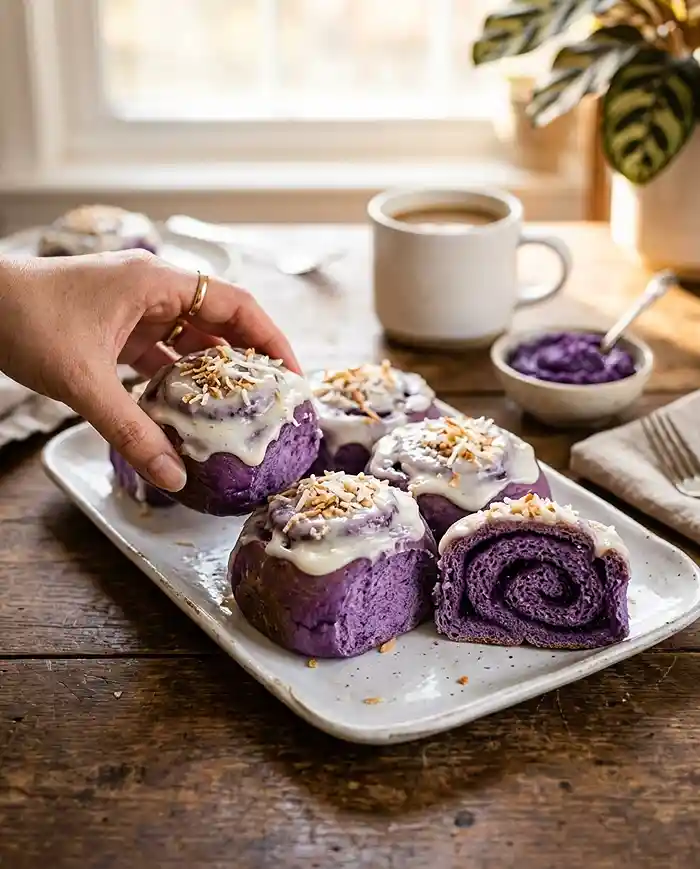
These rolls are a showstopper on an Easter brunch table or a slow Sunday morning when the whole family lingers over coffee. The vivid purple swirl and coconut glaze make them look almost too good to eat — almost.
Pair them with a savory dish to balance the sweetness. This gluten-free pumpkin Alfredo chicken pasta bake is rich and savory in all the right ways and works surprisingly well as a dinner-to-dessert pairing for a full gluten-free spread.
You know… a warm roll alongside a cup of strong black coffee or an ube latte takes this from a snack to a full experience. For a lighter snack option to serve on the side, these gluten-free pumpkin hummus snack cups offer a savory contrast that rounds out a holiday snack board beautifully.
If you make these gluten-free ube sweet rolls, I’d love to hear how they turned out — drop a comment below with your experience, share any swaps you made, and if you post them on Pinterest, tag Grainless Life so I can see your gorgeous purple spirals!
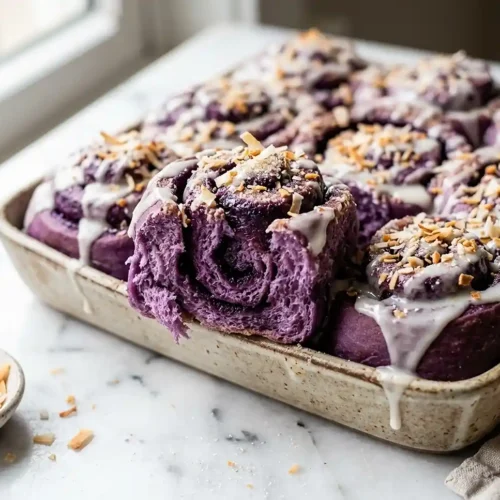
Gluten-Free Ube Sweet Rolls with Coconut Glaze
Equipment
- Kitchen thermometer
- Large mixing bowl
- 9×9 inch baking pan
- Parchment paper
- Rolling Pin
- Sharp knife or unflavored dental floss
- Offset spatula
- Whisk
Ingredients
Dough
- ¾ cup buttermilk Warm to 100–110°F
- 1 packet (1/4 oz) active dry yeast Certified gluten-free
- ½ cup granulated sugar
- 6 tbsp unsalted butter Room temperature and softened
- 1 large egg Room temperature
- ¼ tsp salt
- ½ tsp ube extract Gluten-free
- 3 ¼ cups certified gluten-free flour blend formulated for yeast baking Plus up to 1/4–1/2 cup as needed
- 1 tsp xanthan gum Only if the gluten-free flour blend does not already contain it
Ube Filling
- ½ cup ube halaya Certified gluten-free and brought to room temperature
- ¼ cup light brown sugar
- 1 tbsp ground cinnamon
Coconut Glaze
- 2 tbsp full-fat coconut milk Certified gluten-free
- ½ tsp vanilla extract Gluten-free
- ¾ cup powdered sugar Sifted
Optional Topping
- toasted coconut flakes For topping
Instructions
- Warm the buttermilk to 100–110°F. Stir in the active dry yeast and granulated sugar, then let stand for 5–10 minutes until visibly foamy.
- In a large bowl, combine the softened butter with the foamy buttermilk mixture until incorporated and creamy.
- Add the egg, salt, and ube extract and mix until fully incorporated.
- Add the gluten-free flour blend and xanthan gum if needed. Mix until a soft, sticky dough forms. Do not add excessive flour; the dough should remain hydrated and softer than traditional wheat dough.
- Place the dough in a lightly greased bowl, cover, and let rise in a warm, draft-free place for about 1 hour, until noticeably puffy.
- Place the risen dough between two lightly greased sheets of parchment paper and gently roll into a 12×12-inch square. Spread the ube halaya evenly over the dough, then sprinkle with brown sugar and cinnamon, leaving a 1/2-inch border along one edge.
- Use the parchment paper to guide and support the dough as you roll it into a log. Cut into 9 equal pieces with a sharp knife or unflavored dental floss and arrange cut-side up in a greased 9×9-inch pan.
- Cover the pan loosely and let the shaped rolls rise for 45–60 minutes, until visibly puffy. Near the end of the rise, preheat the oven to 350°F.
- Bake uncovered for 25–30 minutes, until the rolls are set through and the edges are lightly golden. Avoid opening the oven during the first 20 minutes.
- While the rolls bake, whisk together the coconut milk, vanilla extract, and sifted powdered sugar until smooth and pourable.
- Cool the baked rolls in the pan for 5–10 minutes, then drizzle generously with the coconut glaze. Sprinkle with toasted coconut flakes if desired and serve warm.