How to Make Gluten-Free Homemade Ketchup
Learn how to make Gluten-Free Homemade Ketchup in minutes with simple pantry staples, no cooking, no corn syrup, rich tomato flavor, step-by-step instructions, and storage tips.
The first time I grabbed a bottle of store-bought ketchup to slather on my Fourth of July burgers, I flipped it over and saw “modified food starch” buried in the ingredients. That was the moment I started making my own gluten-free homemade ketchup—and I’ve never looked back.
Most commercial ketchups sneak in thickeners, high-fructose corn syrup, or ambiguous “natural flavors” that aren’t safe for gluten-sensitive families. This no-cook version takes about five minutes and uses only pantry staples you probably already have.
Well… I’ll be honest—I was skeptical the first time. No simmering? No peeling tomatoes? But one taste of that tangy, deeply savory result convinced me this would become my go-to condiment. How do you get that much flavor without a single pot on the stove?
Why You’ll Love This Gluten-Free Homemade Ketchup
- Rich, tangy flavor — balsamic vinegar adds a mellow depth that brightens every bite without tasting sharp or acidic.
- Ready in 5 minutes — no cooking, no canning, no special equipment needed. Just a bowl and a whisk.
- Safe for gluten-free and dairy-free households — every ingredient is naturally free from common allergens.
- Makes 20 servings — keeps up to 2 weeks in the fridge, so one batch covers your whole week of meal prep.
The Secret to Perfect Gluten-Free Homemade Ketchup
Getting condiment texture right without cooking is all about technique. Here’s what makes this recipe work every time.
- Start with tomato paste, not puree — paste is already concentrated and cooked down, giving you intense tomato flavor without the watery consistency of fresh or canned tomatoes.
- Whisk in the spices before adding liquid — dry seasoning blends more evenly into a thick base than into a loose, watery mixture. This prevents clumping and uneven flavor pockets.
- Use balsamic vinegar for complexity — according to a flavor science guide on Serious Eats, aged balsamic contains natural sugars and umami compounds that round out acidity in ways white vinegar simply can’t match.
- Add water gradually, one teaspoon at a time — this is the trick to hitting your ideal consistency. Pour too much at once and you’ll end up with a runny sauce that loses its clingy, coat-the-fry texture.
Table of Contents
Ingredients
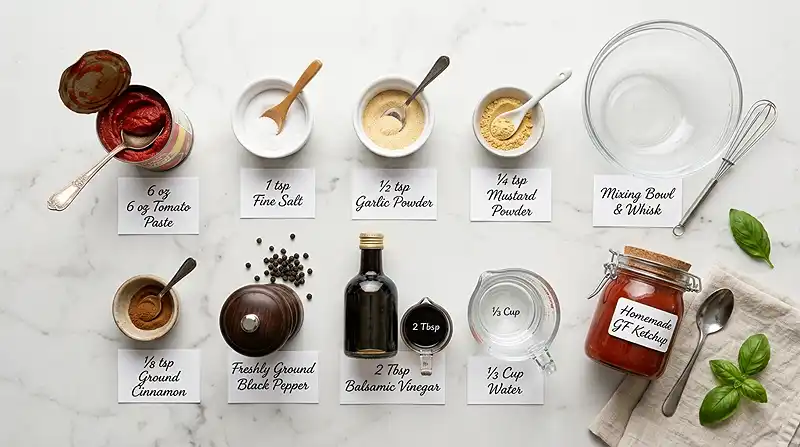
These measurements make exactly 20 servings. Do not adjust quantities—the ratios are calibrated for flavor and texture.
| Ingredient | Amount | Notes |
|---|---|---|
| Tomato paste | 6 ounces | Use a certified gluten-free brand to be safe |
| Fine salt | 1 teaspoon | Fine-grain dissolves evenly; avoid coarse salt |
| Garlic powder | ½ teaspoon | Adds savory backbone without raw garlic sharpness |
| Mustard powder | ½ teaspoon | Optional; adds mild tang and classic ketchup character |
| Ground cinnamon | ⅛ teaspoon | A subtle warmth—don’t skip it, it rounds the flavor |
| Freshly ground black pepper | To taste | Start with a few cracks; adjust at the end |
| Balsamic vinegar (or white balsamic) | 2 tablespoons | White balsamic gives a lighter color; both work beautifully |
| Water | ¼ cup, plus more as needed | Add gradually for texture control |
Instructions
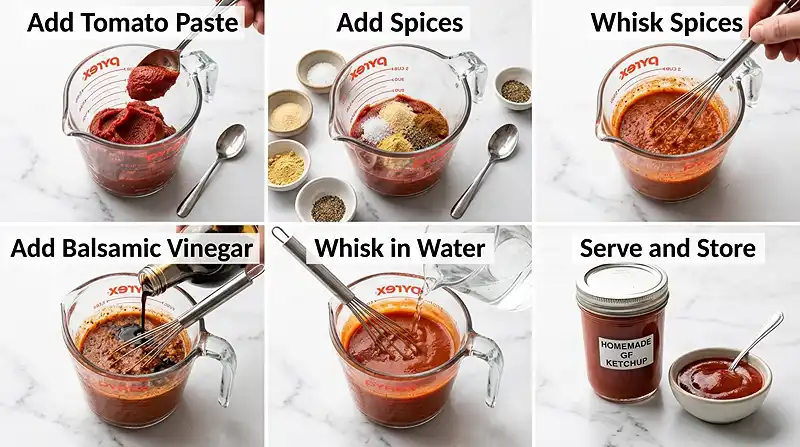
No stove required. You’ll need a medium bowl or a 2-cup glass measuring cup and a whisk.
Combine the dry ingredients with the tomato paste. In your bowl or measuring cup, add the 6 ounces of tomato paste, 1 teaspoon fine salt, ½ teaspoon garlic powder, ½ teaspoon mustard powder (if using), ⅛ teaspoon ground cinnamon, and black pepper to taste. Mixing dry seasoning directly into the paste—before adding liquid—ensures even distribution with no clumping.
Whisk until fully combined. Use a firm whisk to work the spices into the paste until the mixture looks uniform in color and texture. This only takes about 30 seconds. You’ll know it’s ready when you can’t see streaks of individual spices.
Add the balsamic vinegar and whisk until smooth. Pour in the 2 tablespoons of balsamic vinegar and whisk again until the paste loosens slightly and becomes glossy. The mixture will smell rich and tangy—that’s exactly what you want.
Gradually whisk in the water. Add the ¼ cup of water slowly, whisking continuously. Stop and check the consistency as you go. If you want a thinner pour, add additional water 1 teaspoon at a time until you hit your ideal texture. Pro Tip: A thicker ketchup clings better to fries; a thinner one pours easier from a bottle. Neither is wrong—it’s personal preference.
Taste and adjust seasoning. Dip a clean spoon and taste thoughtfully. If it needs more depth, add another crack of black pepper. If it tastes flat, a small pinch of salt usually does the trick. Resist the urge to over-season before chilling—flavors concentrate as it rests.
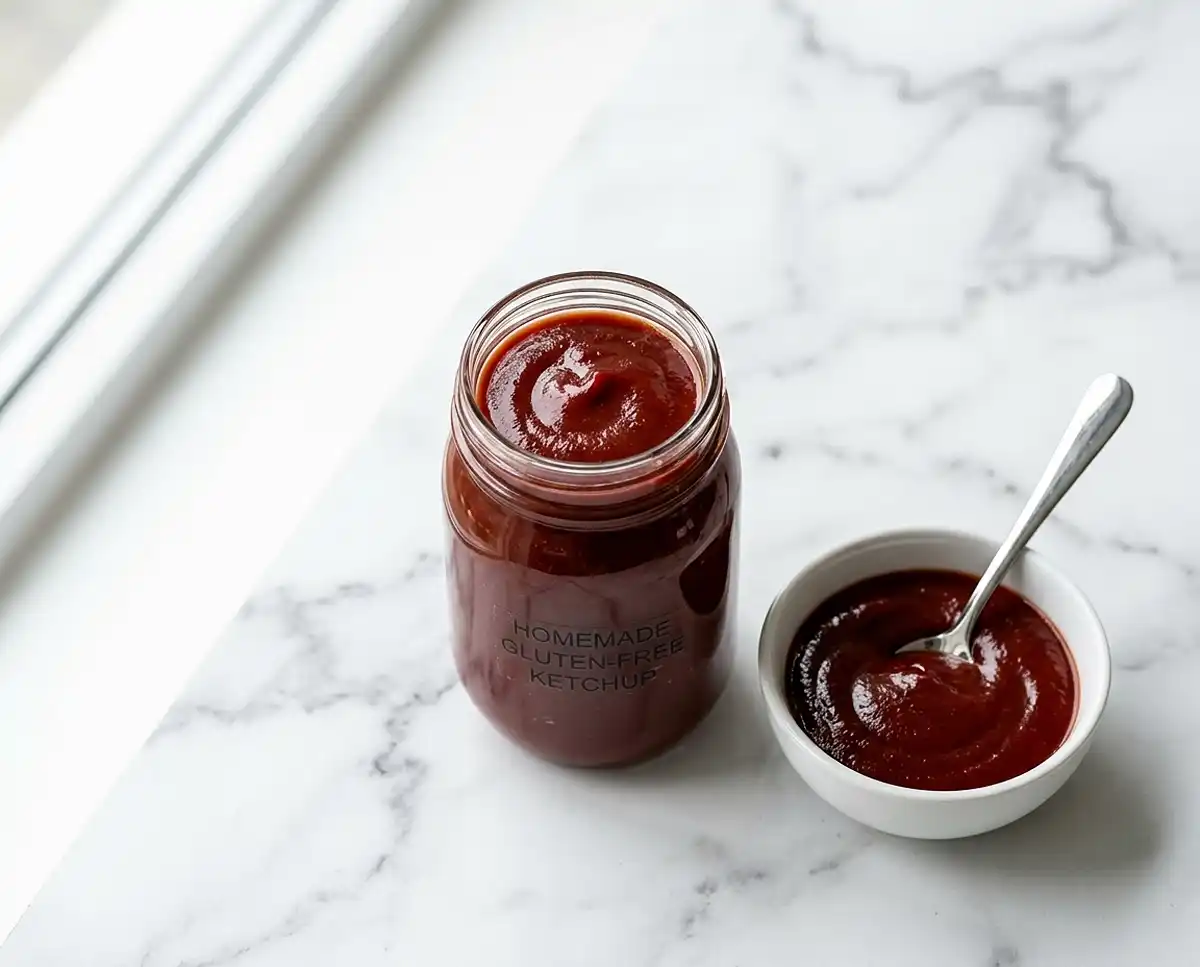
Transfer to a clean jar or squeeze bottle. Pour the finished ketchup into an airtight glass jar or a squeeze bottle for easy serving. Glass is preferable because it won’t absorb odors or flavors over time.
Refrigerate for at least 1 hour before serving. This resting time is important—it lets the cinnamon, garlic, and vinegar meld together. The flavor straight from the bowl is good. After an hour in the fridge, it’s noticeably better, as smooth and balanced as a condiment you’d buy from a specialty shop.
Make It Your Own
This recipe is a reliable base. Once you’ve made it once, it’s easy to riff on depending on what you have or what you’re serving it with.
Swap the vinegar. White balsamic vinegar gives a lighter golden color if you prefer a less dark ketchup—great for visual appeal on a white plate. Apple cider vinegar is another clean option with a fruitier edge, though the flavor profile shifts noticeably. Avoid standard red wine vinegar; it adds a harshness that works against the warm spices in this recipe.
Go sugar-free. This recipe contains no added sugar at all—the balsamic vinegar provides natural sweetness from its grape must base. If you want a slightly sweeter result without refined sugar, a few drops of pure maple syrup or a small drizzle of raw honey blend in smoothly. Just know that honey is not vegan, so stick with maple if that matters.
Add a smoky version. Stir in ¼ teaspoon smoked paprika with the other dry spices for a barbecue-forward ketchup. It pairs especially well with grilled chicken, gluten-free shrimp appetizers, or anything coming off the grill on a summer evening.
You know… the smoked version is what I bring out every Thanksgiving for my husband’s family. They’ve started requesting it by name. A little jar of homemade ketchup makes a surprisingly thoughtful hostess gift too.
Man, oh man—don’t underestimate the mustard powder. It’s listed as optional, but it’s one of those quiet ingredients that makes people ask, “What’s in this?” without being able to pin it down. The dry mustard adds a gentle heat and depth that makes this taste less like a simple condiment and more like something from a specialty food shop.
Common Problems & Solutions
Gluten-free condiment-making has its quirks. Here are the issues that come up most often and exactly how to fix them.
Problem: Ketchup is too thick to pour.
Solution: Add water one teaspoon at a time and whisk between each addition. Tomato paste brands vary in density, so some batches naturally need more liquid than others. Don’t add a big splash all at once or you’ll overshoot and need to compensate.
Problem: Ketchup tastes flat or one-dimensional.
Solution: Check your vinegar first—balsamic that’s been open for a long time loses its complexity. A fresh pinch of salt and one more crack of pepper usually snap the flavor back into balance. Let it rest chilled for an additional hour before tasting again; cold temperatures temporarily mute flavors.
Problem: The color looks dull or brownish instead of bright red.
Solution: Switch to white balsamic vinegar, which avoids the color-dulling effect of dark balsamic. The flavor difference is subtle but the visual result is a much brighter, more appetizing ketchup. This is especially useful for serving guests or photographing the finished product.
Problem: Flavor tastes too sharp or vinegary.
Solution: The chilling period is doing real work here. If you taste it immediately after mixing, the vinegar will seem aggressive. Give it a full hour—ideally two—in the refrigerator before judging. The acid mellows and integrates beautifully once the mixture has had time to rest.
Storage & Meal Prep
| Method | Duration | Notes |
|---|---|---|
| Counter | Not recommended | No preservatives; always refrigerate |
| Fridge | Up to 2 weeks | Store in an airtight glass jar; stir well before each use |
| Freezer | Up to 2 months | Freeze in a zip-lock bag flat; thaw overnight in the fridge |
Because this ketchup has no commercial preservatives, it’s important to keep it refrigerated at all times. Always use a clean spoon or pour directly from a squeeze bottle to avoid contaminating the batch.
For meal prep, double or triple the recipe and divide it into small 4-ounce jars. Label each with the date and stock your fridge for the week. The flavor actually improves over the first 24 hours as the spices continue to bloom.
To “reheat” ketchup that’s been in the fridge a while, simply let it sit at room temperature for 10 minutes and stir vigorously. It softens right back to a smooth, pourable consistency without losing any flavor. Pair it with gluten-free homemade fudgesicles for a complete summer cookout spread that everyone at the table can enjoy safely.
How to Make Gluten-Free Homemade Ketchup FAQs
Can I use fresh tomatoes instead of tomato paste?
Fresh tomatoes won’t work as a direct swap here. Tomato paste is already cooked down and concentrated, which is what gives this no-cook recipe its thick texture and rich flavor. Fresh tomatoes would make the ketchup watery and require simmering to reduce properly.
How do I know if my ketchup is gluten-free?
This recipe is naturally gluten-free by ingredient. However, cross-contamination can occur with some tomato paste brands. Look for labels that say ‘certified gluten-free’ or check the brand against a trusted celiac resource like the Celiac Disease Foundation’s guidelines at celiac.org to confirm safety for your household.
What’s the best way to use white balsamic vs. regular balsamic vinegar?
White balsamic keeps the ketchup a brighter red color and has a slightly milder, fruitier flavor. Regular dark balsamic gives a deeper, richer taste and darker color. Both work well in this recipe—choose based on your color preference and how strong you want the vinegar flavor to come through.
Why did my ketchup taste too sharp right after mixing?
That’s completely normal. The acidity from the balsamic vinegar is very forward when the ketchup is freshly made. Refrigerating it for at least 1 hour—preferably 2—allows the acid to mellow and the spices to bloom, creating a balanced, rounded flavor.
Can I make this sugar-free ketchup without any sweetener at all?
Yes, and this recipe already is. Balsamic vinegar contains natural residual sweetness from the grape must used in production, so no added sugar is needed. If you want a slightly sweeter result, a drizzle of pure maple syrup blends in easily without refined sugar.
Serving Suggestions
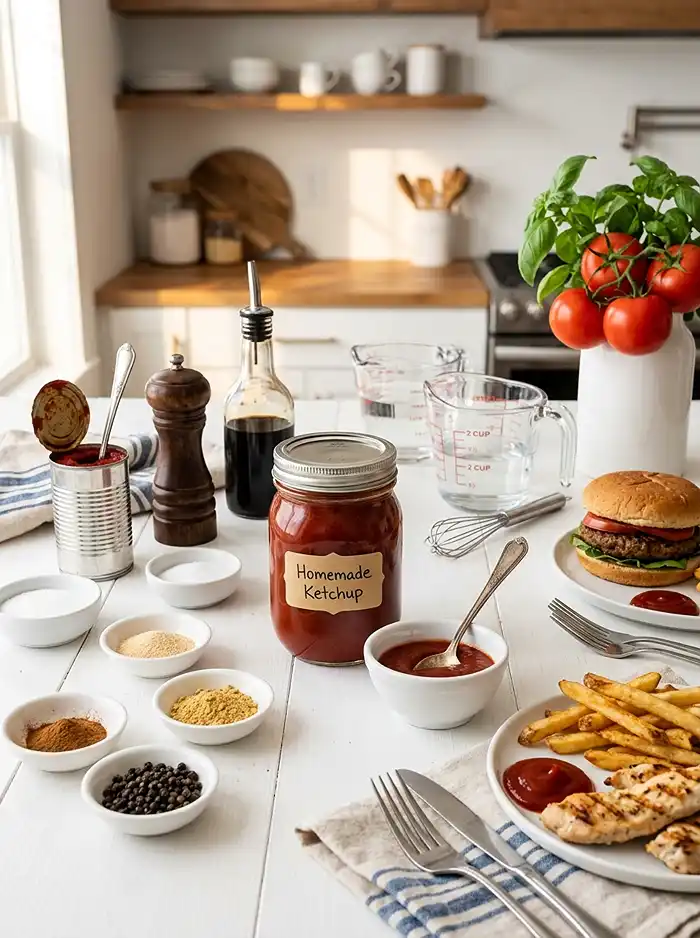
This ketchup shines anywhere you’d reach for the red bottle. It’s a natural fit for sweet potato fries, turkey burgers, grain-free meatballs, and scrambled egg plates.
For summer gatherings—think Memorial Day cookouts or Fourth of July backyard parties—fill a small mason jar and set it out alongside a gluten-free strawberry acai refresher for a spread that looks as good as it tastes.
The condiment is thick enough to use as a dipping sauce, not just a topping. Serve it chilled alongside veggie sticks, baked chicken strips, or gluten-free corn dogs at your next family movie night.
If you’re building a full summer appetizer table, this pairs beautifully with gluten-free cucumber avocado shrimp bites—the cool crunch of the cucumber against the warm, savory ketchup is a combination that disappears fast every single time I serve it.
If you make this recipe, I’d love to hear how it turned out. Drop a comment below with any tweaks you made—different vinegar, a spice addition, or how you served it. And if you found this helpful, sharing it on Pinterest helps other gluten-free families find it too.
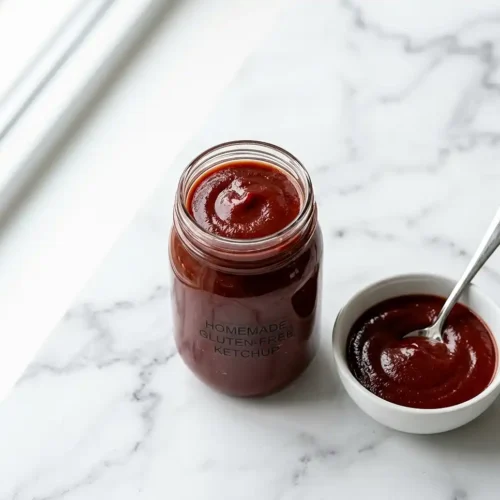
How to Make Gluten-Free Homemade Ketchup
Equipment
- Medium bowl or 2-cup glass measuring cup
- Whisk
- Glass jar or squeeze bottle
Ingredients
Ingredients
- 6 ounces Tomato paste Certified gluten-free brand recommended
- 1 teaspoon Fine salt
- ½ teaspoon Garlic powder
- ½ teaspoon Mustard powder Optional
- ⅛ teaspoon Ground cinnamon
- Freshly ground black pepper To taste
- 2 tablespoons Balsamic vinegar Or white balsamic vinegar
- ¼ cup Water Plus more as needed
Instructions
- Combine the tomato paste, salt, garlic powder, mustard powder (if using), cinnamon, and black pepper in a medium bowl or measuring cup.
- Whisk thoroughly until the spices are evenly blended into the tomato paste with no visible streaks.
- Add the balsamic vinegar and whisk until the mixture becomes smooth and glossy.
- Gradually whisk in the water until the ketchup reaches your preferred consistency, adding extra water a teaspoon at a time if needed.
- Taste and adjust the seasoning with additional salt or black pepper if desired.
- Transfer the ketchup to a clean airtight glass jar or squeeze bottle.
- Refrigerate for at least 1 hour before serving to allow the flavors to develop.