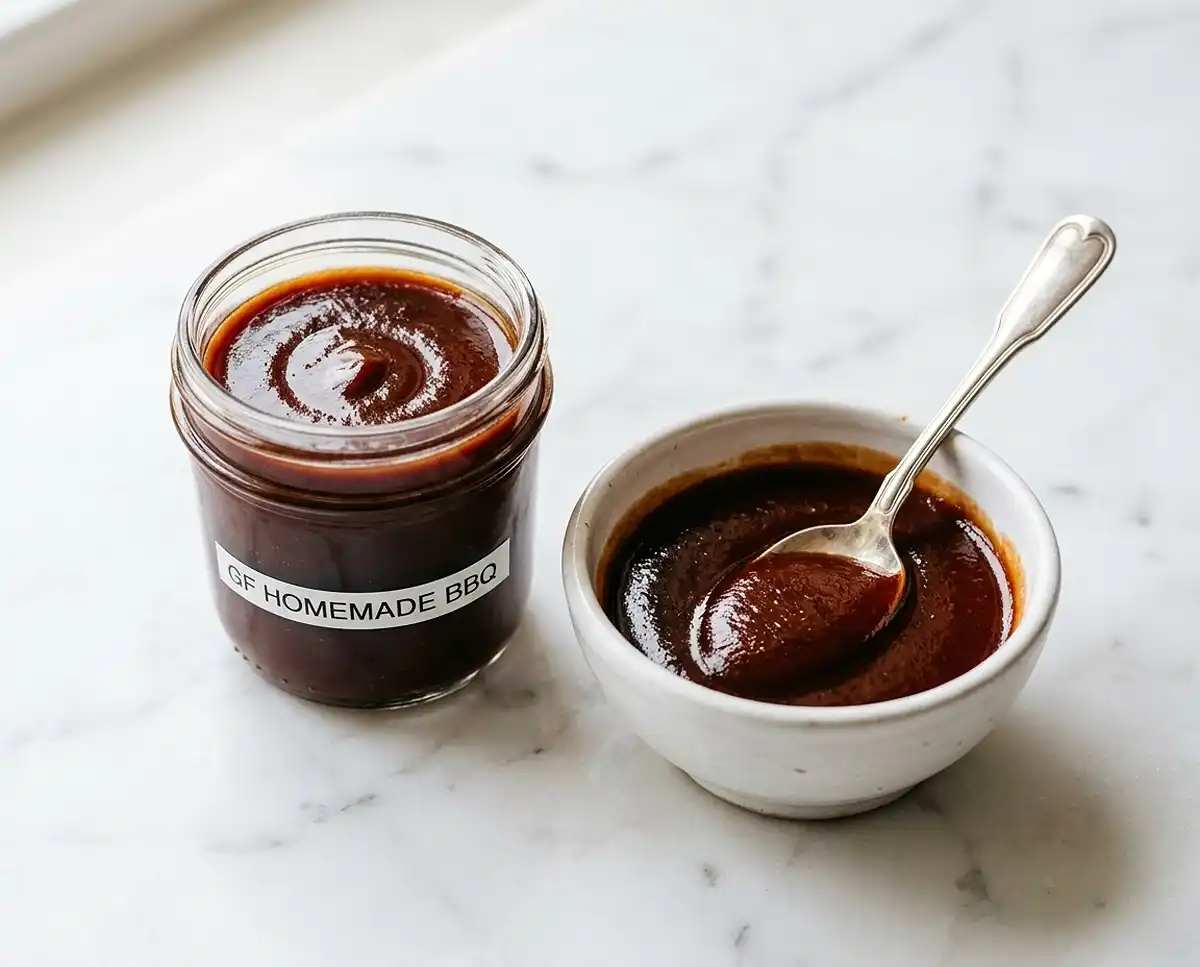
How to Make Gluten-Free Homemade BBQ Sauce
Learn how to make Gluten-Free Homemade BBQ Sauce in 25 minutes with simple pantry staples, smoky and tangy flavor, no hidden gluten, step-by-step instructions, and storage tips.
The summer I started cooking gluten-free for my daughter, I poured her favorite store-bought barbecue sauce over ribs without thinking twice—until I read the label mid-pour and spotted “distilled vinegar” and “natural flavor” with no further detail. That was the last time I trusted a bottle I hadn’t researched. Learning how to make gluten-free homemade BBQ sauce from scratch changed everything.
Most commercial barbecue sauces contain hidden gluten through soy sauce, malt vinegar, or thickeners derived from wheat. This stovetop version uses certified gluten-free tamari and builds every layer of flavor from ingredients you can actually read and trust.
Well… the best part? You only need one saucepan and about 25 minutes. The result is a sauce so deep and smoky it clings to everything like a second skin—rich and glossy as lacquer on a competition rack of ribs.
Why You’ll Love This Gluten-Free Homemade BBQ Sauce
- Smoky, tangy, and layered — smoked paprika, apple cider vinegar, and tamari build a complex flavor that no single-note bottled sauce can match.
- One saucepan, 25 minutes — no canning, no blending, no special equipment. If you can stir, you can make this.
- Certified gluten-free from top to bottom — every ingredient is either naturally gluten-free or specifically called out as certified, so there’s no guesswork.
- Makes 20 servings and keeps 2 weeks — batch-cook once on a Sunday and have your condiment covered for every weeknight meal that follows.
The Secret to Perfect Gluten-Free Homemade BBQ Sauce
Great barbecue sauce is about balance—sweet, acid, smoke, and salt in the right proportions. Here’s what makes this recipe reliable every time.
- Certified gluten-free tamari instead of regular soy sauce — standard soy sauce is brewed with wheat. Tamari is traditionally wheat-free and delivers the same deep umami without the risk. Always check the label for “certified gluten-free” since some tamari brands still include trace wheat.
- Apple cider vinegar for brightness without harshness — ACV has a milder, fruitier acidity than white vinegar. According to barbecue sauce testing by Serious Eats, acidity is the most critical variable in balancing a sauce’s sweetness—too little and it tastes flat, too much and it bites.
- Simmer low and slow for 20 minutes — heat does the real work here. The sugar caramelizes slightly, the vinegar mellows, and the spices bloom in the fat from the mustard. Rushing this step produces a thin, raw-tasting sauce.
- Rest before serving — one hour chilled lets the smoked paprika and cumin fully integrate. Taste it straight off the stove and taste it after an hour in the fridge; they’re noticeably different.
Table of Contents
Ingredients
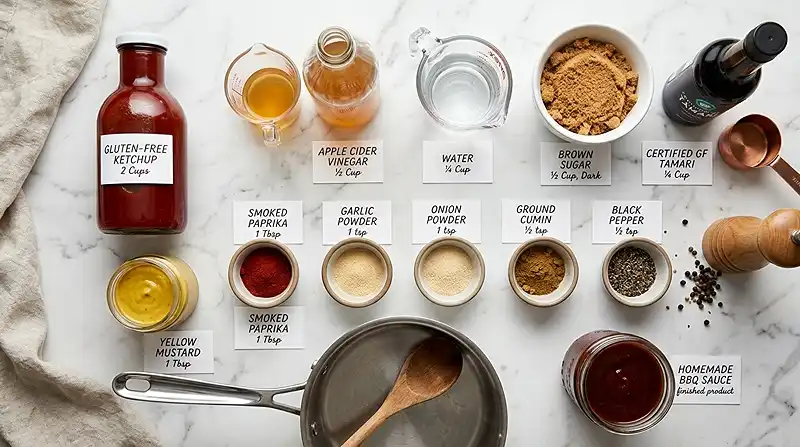
This recipe makes 20 servings. Use the exact quantities below—the ratios are calibrated for flavor balance and the right pourable consistency.
| Ingredient | Amount | Notes |
|---|---|---|
| Gluten-free ketchup | 1½ cups | Use certified GF ketchup or make your own gluten-free homemade ketchup |
| Apple cider vinegar | ½ cup | Naturally gluten-free; adds brightness and tang |
| Water | ½ cup | Thins the sauce to a pourable consistency during cooking |
| Brown sugar | ¼ cup | Adds sweetness and helps the sauce caramelize and thicken |
| Certified gluten-free tamari | ¼ cup | Check label for “certified GF”; do not substitute regular soy sauce |
| Yellow mustard | 2 tablespoons | Adds body and a mild tang; most yellow mustards are naturally GF |
| Garlic powder | 1 teaspoon | Savory backbone without raw garlic sharpness |
| Ground cumin | 1 teaspoon | Earthy warmth that deepens the overall flavor |
| Onion powder | 1 teaspoon | Rounds out the savory base alongside garlic powder |
| Smoked paprika | 1 teaspoon | Provides the signature BBQ smokiness without a smoker |
| Freshly ground black pepper | To taste | Add at the end after tasting; a few cracks go a long way |
Instructions
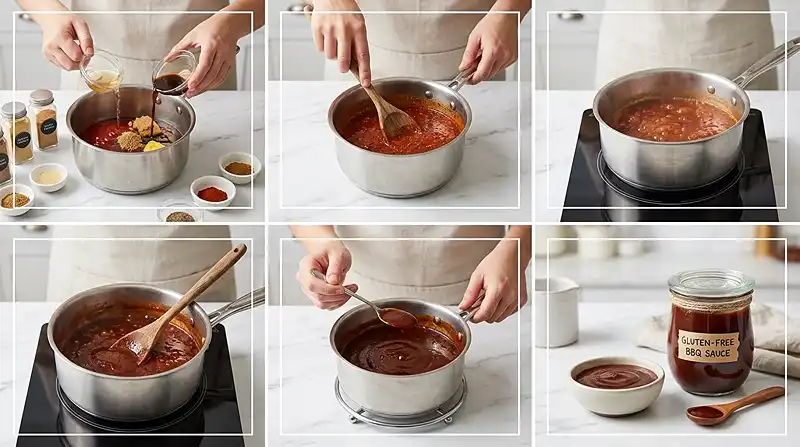
You’ll need one medium saucepan, a wooden spoon or silicone spatula, and a glass jar or squeeze bottle for storage.
Combine all ingredients in the saucepan. Add the 1½ cups gluten-free ketchup, ½ cup apple cider vinegar, ½ cup water, ¼ cup brown sugar, ¼ cup certified gluten-free tamari, 2 tablespoons yellow mustard, 1 teaspoon garlic powder, 1 teaspoon ground cumin, 1 teaspoon onion powder, 1 teaspoon smoked paprika, and black pepper to taste. Adding everything at once before applying heat gives you time to stir and check that nothing was missed.
Stir until fully combined. Use a wooden spoon to stir the mixture until the sugar is dissolved and the spices are evenly distributed throughout the liquid. The sauce will look thin at this point—that’s normal. It thickens during the simmer.
Bring to a gentle simmer over medium heat. Watch the edges of the pan for the first sign of small, steady bubbles. Do not rush to a rolling boil—high heat scorches the sugar and creates a bitter, caramelized bottom layer that’s difficult to salvage. Pro Tip: Medium heat on most stovetops means the burner dial is just below the midpoint. Adjust as needed to keep things bubbling gently.
Reduce heat to low and cook for 20 minutes, stirring occasionally. Set a timer and stir every 3 to 4 minutes, scraping the bottom of the pan each time. You’ll notice the sauce darkening slightly in color and beginning to coat the back of the spoon—that’s the sugar caramelizing and the water evaporating off. The aroma will shift from sharp and vinegary to something deeply smoky and savory.
Taste and adjust seasoning. Pull the pan off the heat for a moment and taste thoughtfully. If it’s too sharp, add a small pinch of brown sugar. If it tastes flat, a splash of apple cider vinegar wakes it up. If it needs depth, another crack of black pepper usually does it. Pro Tip: Always taste again after the sauce cools—heat suppresses sweetness, so the balance shifts slightly as it chills.
Remove from heat and cool completely. Set the pan aside and let the sauce come to room temperature before transferring. Pouring hot sauce directly into a glass jar can crack it and may also make the flavor harder to judge accurately.
Transfer to a glass jar or squeeze bottle. Glass is the best choice here—it won’t absorb the strong flavors from the smoked paprika and tamari the way plastic can over time. A squeeze bottle makes serving easier, especially for kids.
Refrigerate for at least 1 hour before using. This resting period is not optional for the best result. The cumin and smoked paprika need time to fully bloom in the chilled sauce. Serve it immediately and you’re getting 70% of the flavor; wait an hour and you’re getting all of it.
Make It Your Own
Make it spicier. Stir in ½ teaspoon of cayenne pepper or a tablespoon of your favorite gluten-free hot sauce during the simmer. Start small—heat builds as the sauce reduces, so what tastes mild at the 10-minute mark can pack a real punch by the time you plate it. This is the move for anyone who loves a spicy healthy homemade barbecue sauce recipe that still hits every other note.
Make it sweeter for kids. Increase the brown sugar to ⅓ cup and reduce the apple cider vinegar to ⅓ cup. This shifts the balance toward the sweeter, milder profile that most children prefer without losing the underlying smokiness that makes this recipe worth making. It’s a subtle swap that keeps the whole family happy at the same table.
Go sugar-free. Swap the brown sugar for an equal amount of coconut sugar or a tablespoon of pure maple syrup for a less refined sweetener. Coconut sugar has a lower glycemic index according to nutritional research published by Healthline and contributes a mild caramel note that works beautifully against the smoked paprika.
You know… the maple syrup version is what I use when I’m making this as an easy gluten-free homemade BBQ sauce for a crowd with mixed dietary needs. It’s naturally vegan, refined sugar-free, and nobody ever asks what’s in it—they just keep coming back for more.
Man, oh man—don’t skip the smoked paprika. I’ve tested versions with regular sweet paprika and the difference is stark. Smoked paprika does in one teaspoon what most people think requires an actual smoker. It’s the ingredient that makes guests ask if you slow-cooked this over charcoal.
Common Problems & Solutions
Problem: Sauce is too thin after 20 minutes.
Solution: Extend the simmer by 5 to 10 minutes over low heat, stirring frequently. The water content in ketchup brands varies, and some batches simply need a bit more time to reduce. Keep the heat low to avoid scorching—patience is the fix here, not higher heat.
Problem: Sauce tastes too sharp or vinegary.
Solution: Add brown sugar one teaspoon at a time, stirring between each addition, until the balance shifts. The most common cause is tasting the sauce while it’s still hot—acid reads more aggressively at high temperatures. Let it cool fully before making major seasoning decisions.
Problem: Sauce has a bitter, slightly burned undertone.
Solution: The sugar scorched on the bottom of the pan. Unfortunately, once that bitterness is in the sauce, it’s very difficult to reverse. Next batch, keep the heat firmly on low during the simmer and stir every 3 minutes without fail. A heavy-bottomed saucepan distributes heat more evenly and greatly reduces the risk.
Problem: Sauce separated in the fridge and looks oily on top.
Solution: This is normal and not a sign of spoilage. The mustard acts as a natural emulsifier, but separation can still occur over time. Simply stir vigorously before serving and the sauce comes back together completely. A quick 10-second whisk is all it takes.
Storage & Meal Prep
| Method | Duration | Notes |
|---|---|---|
| Counter | Not recommended | No commercial preservatives; always refrigerate after cooking |
| Fridge | Up to 2 weeks | Airtight glass jar; stir well before each use |
| Freezer | Up to 3 months | Freeze in zip-lock bags flat; thaw overnight in the fridge |
For meal prep, this sauce doubles and triples easily. Make a large batch on Sunday, divide it into small 4-ounce jars, and label each with the date. It’s ready to pull out for weeknight grilling, sheet-pan chicken, or baked tofu without any extra effort.
To use sauce that’s been stored in the fridge, let the jar sit at room temperature for 10 minutes and stir well before pouring. Cold sauce tends to be thicker—if you want it thinner for glazing, a splash of warm water whisked in does the job cleanly.
No-waste idea: use the last tablespoon or two as a marinade base. Mix it with a drizzle of olive oil and coat chicken thighs or salmon fillets before roasting. It stretches every drop of the batch and gives weeknight dinners a head start on flavor. Pair it with a cold gluten-free strawberry acai refresher for a meal that covers every corner of the table.
How to Make Gluten-Free Homemade BBQ Sauce FAQs
Can I use regular soy sauce instead of tamari?
No—regular soy sauce is brewed with wheat and is not gluten-free. Certified gluten-free tamari is the safe swap and delivers the same deep umami flavor without any gluten risk. Always check the label for a certified gluten-free designation, as some tamari brands still contain trace wheat.
How do I make this BBQ sauce thicker without overcooking it?
Simmer uncovered on low heat and stir frequently. The sauce thickens as water evaporates, so extending the cook time by 5 to 10 minutes is the cleanest fix. Avoid adding cornstarch or flour—neither is necessary here and both change the texture in ways that don’t serve this recipe well.
What’s the best gluten-free ketchup to use in this recipe?
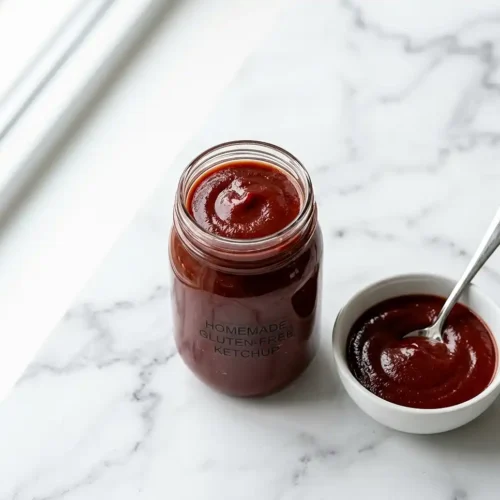
Any certified gluten-free ketchup works, including major brands that carry a GF label. For the cleanest ingredient list with no high-fructose corn syrup, you can also use our gluten-free homemade ketchup recipe, which was specifically developed as a base for sauces like this one.
Why did my BBQ sauce taste flat even after seasoning?
Flat flavor usually means the sauce needs more acid, not more salt. Add apple cider vinegar one teaspoon at a time and taste between additions. Another common cause is tasting it while still hot—flavors read differently at high temperatures, so always do your final seasoning check after the sauce has cooled slightly.
Can I make this BBQ sauce ahead of time for a cookout?
Yes, and it actually improves with time. Make it 24 to 48 hours before your cookout and store it refrigerated in a glass jar. The smoked paprika and cumin continue to bloom overnight, and the vinegar mellows beautifully. Stir well before serving and bring it to room temperature for about 10 minutes before putting it on the table.
Serving Suggestions
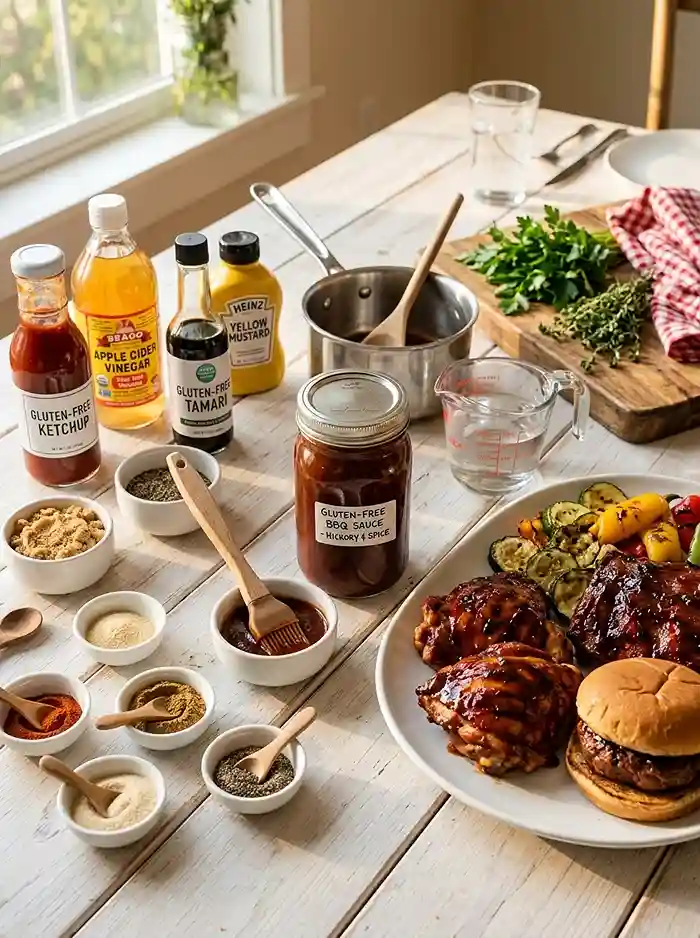
This sauce works as a glaze, a dip, and a marinade—slather it on grilled chicken thighs, brush it over baked ribs in the last 10 minutes of cooking, or use it as a dipping sauce for sweet potato fries and gluten-free corn dogs.
For Labor Day cookouts or any summer backyard gathering, this is the condiment that gets set out in a jar and disappears before the burgers are off the grill. Make a double batch—you’ll be glad you did.
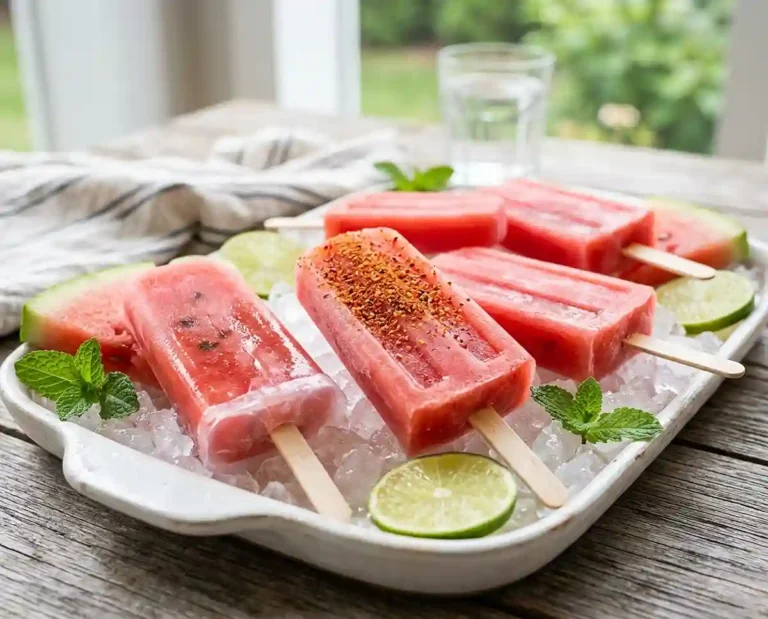
It also pairs naturally with lighter summer fare. Serve it alongside gluten-free homemade fudgesicles for a cookout dessert that keeps everyone—kids and adults—happy from the first bite to the last.
Give this recipe a try this week and let me know how it turned out in the comments below—I especially love hearing which variation you made your own. If it earned a spot in your regular rotation, sharing it on Pinterest helps other gluten-free families find it too.
How to Make Gluten-Free Homemade BBQ Sauce
Equipment
- Medium saucepan
- Wooden spoon or silicone spatula
- Glass jar or squeeze bottle
Ingredients
Ingredients
- 1 ½ cups Gluten-free ketchup Certified gluten-free or homemade
- ½ cup Apple cider vinegar
- ½ cup Water
- ¼ cup Brown sugar
- ¼ cup Certified gluten-free tamari
- 2 tablespoons Yellow mustard
- 1 teaspoon Garlic powder
- 1 teaspoon Ground cumin
- 1 teaspoon Onion powder
- 1 teaspoon Smoked paprika
- Freshly ground black pepper To taste
Instructions
- Combine the gluten-free ketchup, apple cider vinegar, water, brown sugar, tamari, yellow mustard, garlic powder, cumin, onion powder, smoked paprika, and black pepper in a medium saucepan.
- Stir until the sugar dissolves and all ingredients are evenly combined.
- Bring the mixture to a gentle simmer over medium heat.
- Reduce the heat to low and simmer for 20 minutes, stirring every few minutes until the sauce thickens.
- Taste and adjust the seasoning with additional brown sugar, apple cider vinegar, or black pepper if needed.
- Remove the saucepan from the heat and allow the sauce to cool completely.
- Transfer the cooled BBQ sauce to a clean glass jar or squeeze bottle.
- Refrigerate for at least 1 hour before serving for the best flavor.