Maple Dijon Sausage Pinwheels
Learn how to make these gluten-free maple dijon sausage pinwheels with crescent dough, step-by-step, plus tips to slice cleanly and bake until done.
A student in my Saturday workshop once told me her gluten-free crescent dough tore every time she tried to roll it. Turns out the dough was too warm and soft, and she was working directly on the counter. These gluten-free maple dijon sausage pinwheels solve that with a few simple habits, and I will walk you through each one.
Who has time to fuss with appetizers when guests are arriving in an hour? Here’s the thing… a good appetizer should come together in minutes. You spread, roll, slice, and bake, and the maple and Dijon balance the savory sausage.
This recipe makes 20 to 24 pinwheels, and the cheese and extra maple drizzle are optional. It is a flexible make ahead appetizer that works for fall parties, game days, and holiday mornings.
At a Glance: Why This Gluten-Free Maple Dijon Sausage Pinwheels Recipe Delivers
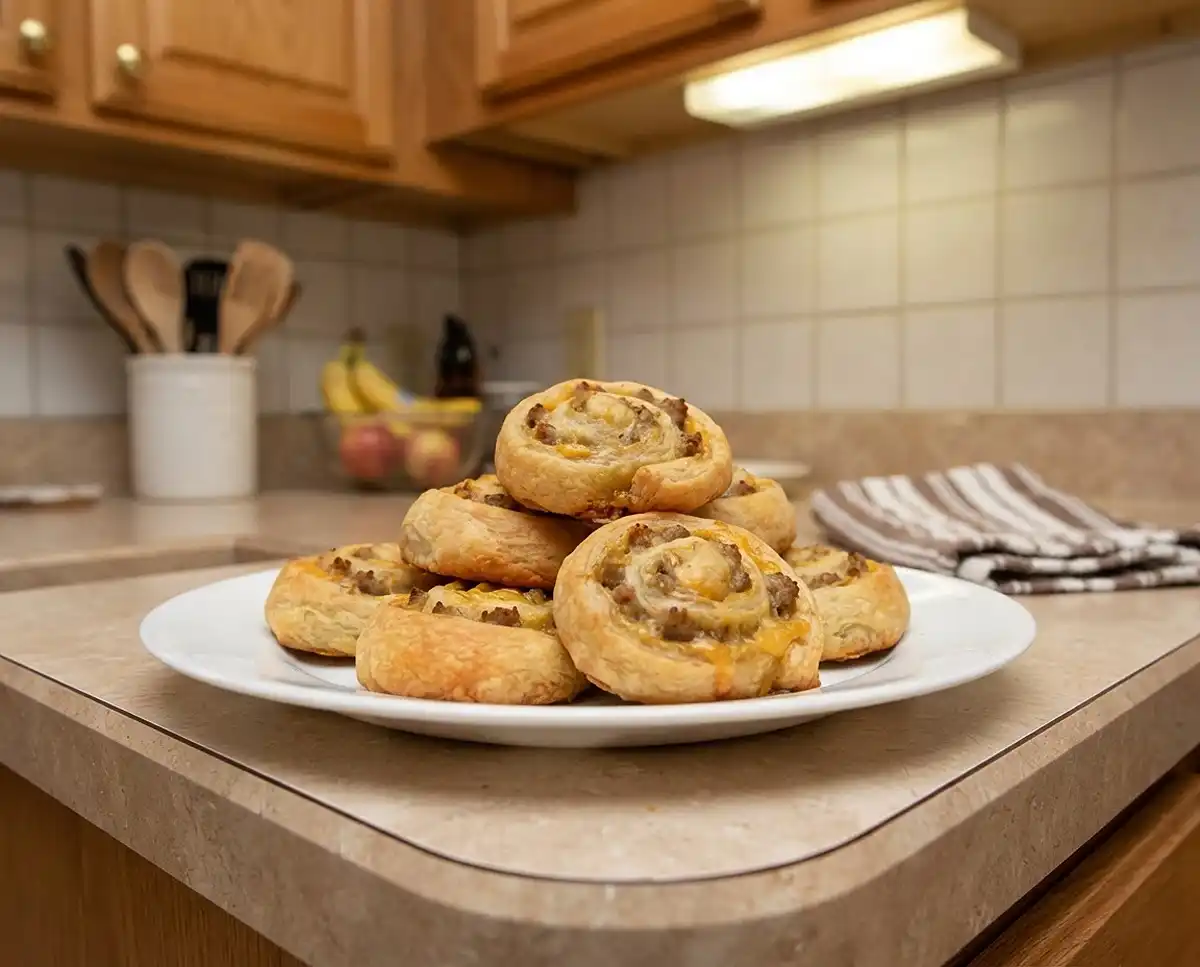
This recipe delivers savory, lightly sweet, golden pinwheels with only six ingredients and no special equipment.
- Texture and flavor: Golden, tender dough wrapped around savory sausage with a tangy Dijon bite and a hint of maple.
- Difficulty level: Beginner-friendly. Gluten-free dough can be fragile, so the recipe uses parchment to protect it.
- Unique advantages: Dairy-free if you skip the cheese, and the slices are bite-size for sharing.
- Best for: Brunch spreads, potlucks, tailgates, and fall gatherings.
What Makes This Gluten-Free Maple Dijon Sausage Pinwheels Recipe Actually Work
This recipe works because it solves the three problems that trip up most gluten-free pinwheels: fragile dough, raw sausage in the center, and squished slices.
- Parchment support: Gluten-free dough has no gluten network to hold it together, so working between parchment sheets keeps it from tearing.
- A very thin sausage layer: Thin sausage cooks through in the time it takes the dough to turn golden, while a thick layer can stay underdone in the center.
- Chilling the log: Firming the roll before cutting lets the knife slice cleanly instead of pressing the filling out.
- Dijon between layers: The mustard’s tang cuts through the rich sausage and helps the cheese and maple adhere.
I learned to be careful with labels because sausage can contain fillers that hide gluten. The Celiac Disease Foundation label-reading guide explains how to check packaged foods.
Table of Contents
Ingredients
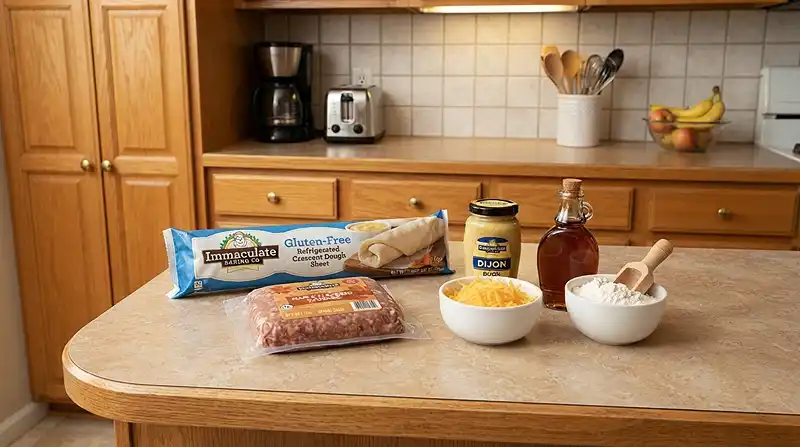
This recipe makes 20-24 pinwheels from a single sheet of dough.
Dough and Filling
- 1 package refrigerated gluten-free crescent dough sheet, or gluten-free crescent rolls with seams pressed together
- 1 pound maple-flavored breakfast sausage, verified gluten-free, or plain gluten-free breakfast sausage
- 2 tablespoons Dijon mustard, verified gluten-free
Optional Toppings and Dusting
- 1½ cups shredded sharp Cheddar cheese (optional)
- 1–2 tablespoons pure maple syrup (optional)
- Gluten-free all-purpose flour blend, for dusting the work surface as needed
Ingredient notes: Check the label on the dough, sausage, and mustard, even if you have bought them before. Pure maple syrup gives a more rounded sweetness than pancake syrup.
Instructions
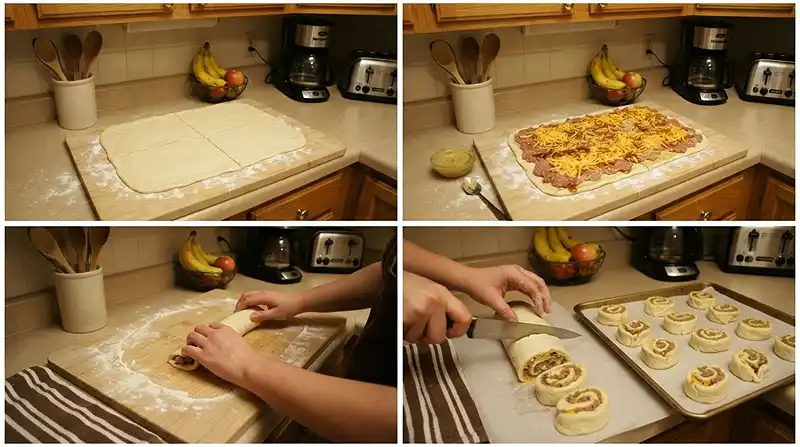
- Preheat the oven to 400°F (200°C). Line a baking sheet with parchment paper.
- Prepare the dough: Unroll the gluten-free crescent dough onto a clean surface lightly dusted with gluten-free flour. Gently press any seams together to form a rectangle. If the dough is fragile, work with it between two sheets of parchment paper.
- Add the sausage: Spread the raw breakfast sausage in a very thin, even layer over the dough, leaving about ½ inch clear along one long edge. Pro Tip: Use damp fingertips to press the sausage out so it does not stick.
- Add the mustard and cheese: Spread the Dijon mustard evenly over the sausage. Sprinkle with the shredded Cheddar cheese, if using, and drizzle lightly with maple syrup, if desired.
- Roll the log: Starting at the opposite long edge, roll the dough tightly into a log. If the dough feels too soft to slice, refrigerate or freeze it briefly until firm enough to cut. The log should feel cool and set under your fingers.
- Slice the pinwheels: Using a sharp knife, cut the log into approximately ½-inch slices. Arrange the pinwheels cut-side down on the prepared baking sheet, leaving space between them.
- Bake thoroughly: Bake for approximately 15–22 minutes, or until the gluten-free dough is golden and the sausage is fully cooked. Check the center of a pinwheel to ensure the sausage reaches 160°F (71°C). The kitchen fills with a warm, toasty maple scent, like the first cold morning of fall.
- Cool and serve: Let the pinwheels rest for a few minutes before serving warm.
Adapting This Recipe to Your Kitchen
These gluten free maple dijon sausage pinwheels adapt easily, as long as the filling stays thin and the sausage reaches 160°F.
Skip the Cheese
The cheese is optional, so leave it out for a dairy-free version if your dough and sausage are dairy-free. The pinwheels still taste savory thanks to the sausage and Dijon. Trust me on this one… the sausage layer is the most important part, so do not skip the thin spreading step.
Use Plain Sausage
Plain gluten-free breakfast sausage works in place of maple-flavored sausage. Add the optional maple syrup drizzle to make up for the missing sweetness. This makes the recipe a flexible maple fall baking recipe, since you control how sweet it gets.
Change the Dough Format
If you buy crescent rolls rather than a sheet, press the seams together firmly so the dough forms one rectangle. Weak seams split open during rolling and baking. Parchment helps here too, because it lets you lift and roll without handling the dough directly.
Troubleshooting: Fixes for the Most Common Issues
Problem: The Dough Tears
Work between two sheets of parchment and lightly dust with gluten-free flour. Warm dough gets sticky and soft, so chill it briefly if it starts to fall apart. Gluten-free dough lacks gluten’s stretch, which is why it needs this extra support.
Problem: The Log Squishes When Sliced
Refrigerate or freeze the log briefly until firm, then cut with a sharp knife using a sawing motion. One of my workshop students discovered that a cold log slices cleanly, while a soft one flattens under the blade. Press lightly and let the knife do the work.
Problem: The Sausage Is Not Done in the Center
Return the pinwheels to the oven until the center reaches 160°F (71°C). I’ll be straight with you… a thick sausage layer is the usual cause, so spread it thinner next time. The federal safe minimum internal temperature chart lists 160°F for ground meat and sausage.
Problem: The Pinwheels Unroll While Baking
Roll the dough tightly, and bake the pinwheels cut-side down as directed. A loose roll opens up as the dough heats and the fat renders. Leave space between the pinwheels so each one holds its shape.
Storage & Meal Prep
Refrigerate baked pinwheels within two hours and eat them within three to four days.
| Method | Duration | Notes |
|---|---|---|
| Counter | Up to 2 hours | Refrigerate promptly after serving |
| Fridge | 3-4 days | Airtight container, bring to room temp before reheating |
| Freezer | 2-3 months | Wrap baked pinwheels individually |
Reheat in a 350°F oven until hot throughout, and use a thermometer to confirm leftovers reach 165°F. I have not tested holding the unbaked log for long, so I only chill it until it is firm enough to slice. For leftovers, chop pinwheels into scrambled eggs the next morning.
Common Questions, Straight Answers
Can I make these pinwheels ahead of time?
Yes, bake them, cool them, and refrigerate them in an airtight container for up to 3-4 days. Reheat until hot throughout. Freezing baked pinwheels individually also works for 2-3 months.
How do I make sure the sausage is gluten-free?
Choose a sausage labeled gluten-free and read the ingredient list, since some sausages contain fillers or breadcrumbs. Check the Dijon mustard label too. If the label is unclear, contact the manufacturer before using it.
What’s the best way to slice the log cleanly?
Chill the log until it feels firm, then cut it with a sharp knife using a gentle sawing motion. A soft log squishes and presses the filling out. Slice into approximately half-inch rounds.
Why did my pinwheels turn out greasy?
Greasy pinwheels usually come from a thick sausage layer, which renders more fat as it bakes. Spread the sausage very thin next time, and let the pinwheels rest for a few minutes after baking. Blot them gently on a paper towel before serving.
Serving Suggestions
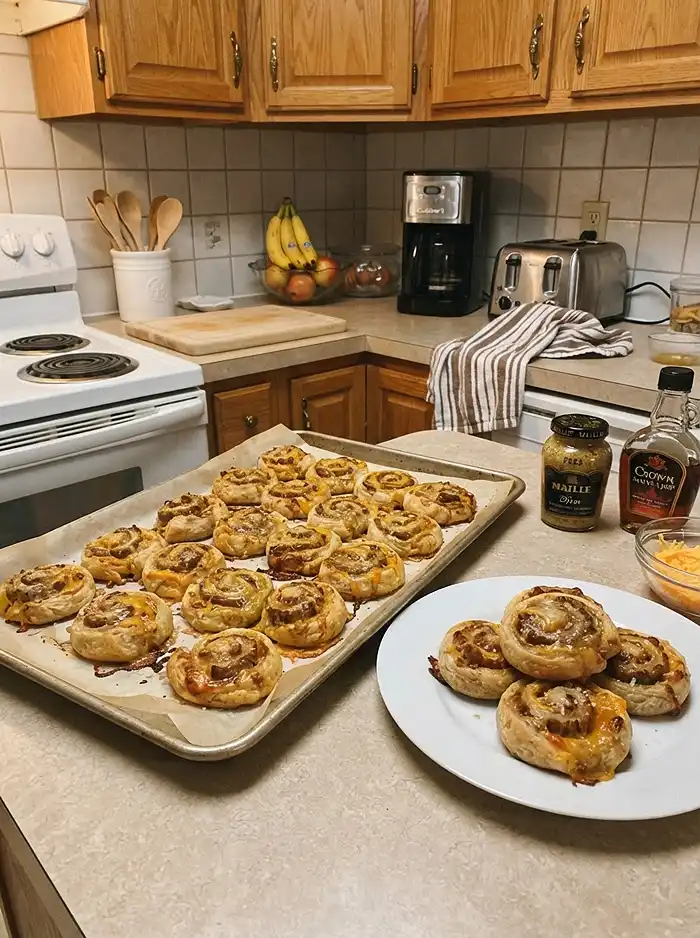
Serve the pinwheels warm on a platter with a bowl of gluten-free maple tahini pumpkin dip and fresh vegetables. They fit right in on Thanksgiving morning, when the parade is on and everyone wanders into the kitchen looking for something to snack on.
For a full fall menu, add the maple mustard pork tenderloin sheet pan for dinner. Finish with gluten-free cinnamon roll blondie bars for dessert.
Final Thoughts
Try these pinwheels at your next gathering, and share the recipe with a friend who is new to gluten-free cooking. A star rating helps other readers know what to expect.
If you change something or run into a problem in your own kitchen, leave a comment below. I am happy to help you troubleshoot.
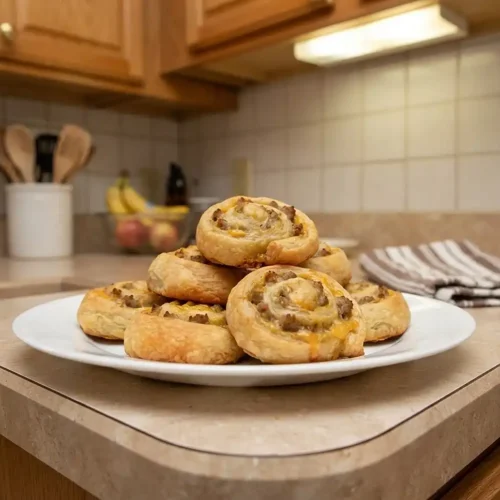
Gluten-Free Maple Dijon Sausage Pinwheels
Equipment
- Oven
- Baking sheet
- Parchment paper
- Sharp knife
- Instant-read meat thermometer
- Refrigerator or freezer
Ingredients
Dough and Filling
- 1 package refrigerated gluten-free crescent dough sheet Alternatively, use gluten-free crescent rolls with seams pressed together; verify the package is gluten-free.
- 1 pound maple-flavored breakfast sausage Must be verified gluten-free; plain gluten-free breakfast sausage can be substituted.
- 2 tablespoons Dijon mustard Verify that the product is gluten-free.
Optional Toppings and Dusting
- 1 ½ cups shredded sharp Cheddar cheese Optional; omit for a dairy-free version if the dough and sausage are also dairy-free.
- 1–2 tablespoons pure maple syrup Optional, for drizzling.
- gluten-free all-purpose flour blend For dusting the work surface as needed; verify the blend is gluten-free.
Instructions
- Preheat the oven to 400°F (200°C). Line a baking sheet with parchment paper.
- Unroll the gluten-free crescent dough onto a clean surface lightly dusted with gluten-free flour. Gently press any seams together to form a rectangle. If the dough is fragile, work with it between two sheets of parchment paper.
- Spread the raw breakfast sausage in a very thin, even layer over the dough, leaving about 1/2 inch clear along one long edge. Use damp fingertips to help press the sausage out without sticking.
- Spread the Dijon mustard evenly over the sausage. Sprinkle with shredded Cheddar cheese, if using, and drizzle lightly with maple syrup, if desired.
- Starting at the opposite long edge, roll the dough tightly into a log. If the dough feels too soft to slice, refrigerate or briefly freeze the log until firm enough to cut.
- Using a sharp knife, cut the log into approximately 1/2-inch slices. Arrange the pinwheels cut-side down on the prepared baking sheet, leaving space between them.
- Bake for approximately 15–22 minutes, or until the gluten-free dough is golden and the sausage is fully cooked. Check the center of a pinwheel with a food thermometer to ensure the sausage reaches 160°F (71°C).
- Let the pinwheels rest for a few minutes before serving warm.