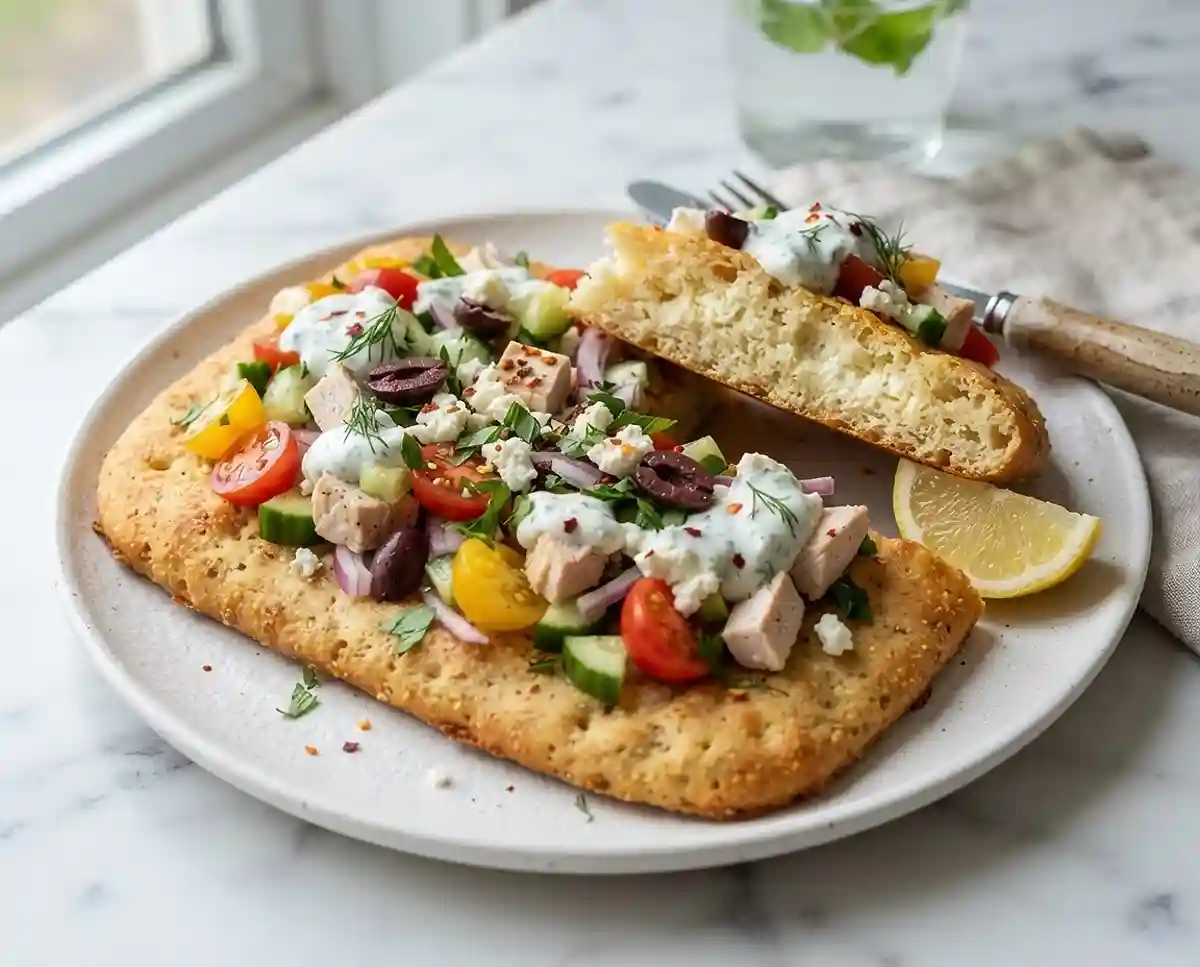
Mediterranean Cottage Cheese Flatbread
Make a high-protein gluten-free Mediterranean cottage cheese flatbread with 30g protein per serving. Step-by-step recipe with toppings, tips, and storage.
I was skeptical the first time I blended cottage cheese with eggs and called it flatbread batter. It sounded more like a failed experiment than an actual recipe. But when I pulled that tray from the oven and saw golden edges on a perfectly set, sliceable base, I understood immediately why this 30g protein gluten-free Mediterranean cottage cheese flatbread had taken over my weekly meal prep.
The flatbread bakes up with a texture somewhere between a thin-crust pizza base and a savory crepe — firm enough to hold toppings, flexible enough to fold. Well… it genuinely surprised me that something this high in protein could also be this easy to make on a Tuesday morning before work.
Topped with chicken, feta, cucumber, and olives, it hits every flavor note you’d expect from a proper Mediterranean breakfast without any of the gluten-containing pita or lavash that usually anchors that spread.
Why You’ll Love This Mediterranean Cottage Cheese Flatbread
- Roughly 30g of protein per serving — cottage cheese and eggs form a protein-dense base before a single topping is added, making this one of the most nutritionally complete breakfast options in a gluten-free kitchen.
- Five minutes of active prep — blend, pour, bake. The oven does the work while you prep toppings.
- Naturally gluten-free without specialty blends — just two tablespoons of certified gluten-free oat flour or all-purpose flour. The cottage cheese and eggs carry the structure.
- Works for breakfast, lunch, or a light dinner — the Mediterranean toppings make it feel appropriate at any meal, and the flatbread itself is neutral enough to take whatever direction you want.
The Secret to Perfect 30g Protein Gluten-Free Mediterranean Cottage Cheese Flatbread
Cottage cheese flatbread works on a principle most bakers aren’t used to: protein coagulation rather than gluten development. Here’s why each decision in this recipe matters.
- Blending until completely smooth is essential — cottage cheese curds must be fully emulsified into the egg base. Any remaining texture in the batter creates uneven pockets in the finished flatbread that crack when you lift it from the parchment.
- The baking powder creates just enough lift — without it, the flatbread bakes dense and rubbery. The small amount here gives the protein structure a slightly open crumb that makes the texture feel more like bread and less like a baked omelette.
- A quarter-inch thickness is the target — spread too thin and the edges overbake before the center sets; spread too thick and the center stays gummy. A quarter-inch gives you an even bake all the way through.
- The 5-minute rest before lifting matters — protein-based flatbreads continue to firm as they cool. Lifting too early causes tearing because the structure hasn’t fully set. Five minutes is the minimum; ten is even safer.
For anyone managing celiac disease who’s new to high-protein gluten-free cooking, the Celiac Disease Foundation’s trusted guide to certified gluten-free ingredients is a helpful starting point when verifying oat flour and baking powder labels.
Table of Contents
Ingredients
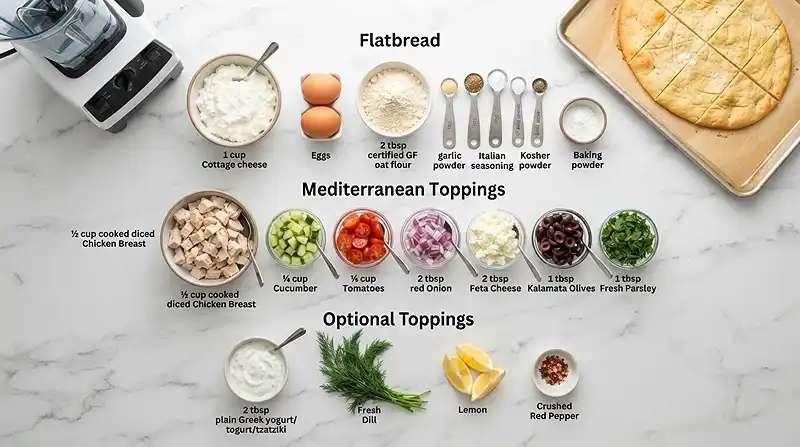
Cottage Cheese Flatbread
| Ingredient | Amount | Notes |
|---|---|---|
| Cottage cheese | 1 cup | Full-fat or 2% both work; avoid fat-free |
| Large eggs | 2 | Room temperature blends more smoothly |
| Certified gluten-free oat flour or all-purpose flour | 2 tablespoons | Must carry certified gluten-free label |
| Grated Parmesan cheese | 1 tablespoon | Adds savory depth and helps with browning |
| Garlic powder | 1/2 teaspoon | |
| Italian seasoning | 1/2 teaspoon | |
| Baking powder (certified gluten-free) | 1/4 teaspoon | Verify gluten-free label — many conventional brands contain starch |
| Kosher salt | 1/4 teaspoon | |
| Black pepper | 1/4 teaspoon |
Mediterranean Toppings
| Ingredient | Amount | Notes |
|---|---|---|
| Cooked chicken breast, diced | 1/2 cup | Rotisserie chicken works well |
| Cucumber, diced | 1/4 cup | |
| Cherry tomatoes, halved | 1/4 cup | |
| Diced red onion | 2 tablespoons | |
| Crumbled feta cheese | 2 tablespoons | |
| Sliced Kalamata olives | 1 tablespoon | |
| Chopped fresh parsley | 1 tablespoon |
Optional Toppings
| Item | Amount |
|---|---|
| Plain Greek yogurt or certified gluten-free tzatziki | 2 tablespoons |
| Fresh dill | To taste |
| Lemon wedges | To taste |
| Crushed red pepper flakes | To taste |
Instructions
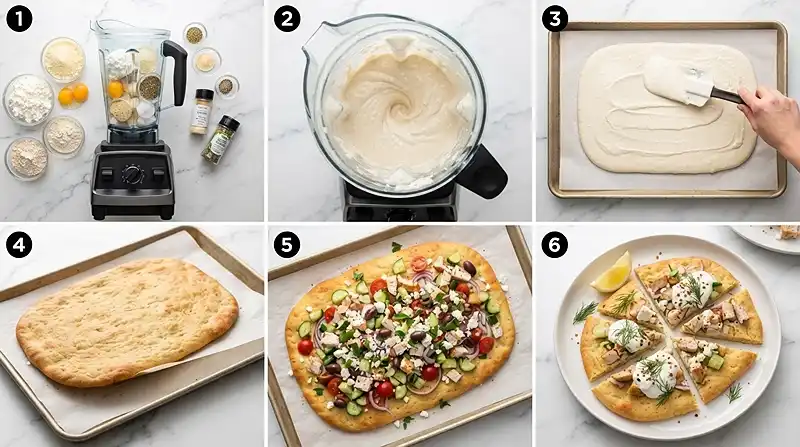
Step 1: Preheat and Prep the Pan
Preheat the oven to 375°F (190°C). Line a small baking sheet or quarter-sheet pan with parchment paper. Avoid silicone mats here — parchment releases more cleanly and gives the bottom of the flatbread a slightly crisper texture.
Step 2: Build the Batter
Add the cottage cheese, eggs, gluten-free oat flour, Parmesan, garlic powder, Italian seasoning, baking powder, salt, and black pepper to a blender. Make sure the baking powder goes in last so it doesn’t start reacting before the batter hits the pan.
Step 3: Blend Until Smooth
Blend until completely smooth — no visible curds, no white flecks, no lumps. This usually takes 30 to 45 seconds on high. Stop and scrape the sides once halfway through to make sure everything is fully incorporated.
Pro Tip: Let the blended batter rest for 2 minutes before pouring. This allows any air bubbles from blending to release, which gives you a smoother, more even surface on the finished flatbread.
Step 4: Spread the Batter
Pour the batter onto the prepared baking sheet and spread it into an even rectangle about 1/4 inch thick. Use an offset spatula or the back of a spoon to smooth the edges — uneven edges bake faster than the center and can burn before the middle is fully set.
Step 5: Bake
Bake for 28-32 minutes, or until the flatbread is set and lightly golden around the edges. The surface should look matte and dry — not shiny or wet. A gentle press in the center should feel firm with no give.
Pro Tip: Ovens vary. Start checking at 26 minutes and watch for golden edges rather than relying solely on the timer. Every oven runs a little differently, and this flatbread can go from golden to overdone quickly in the final minutes.
Step 6: Cool Before Lifting
Allow the flatbread to cool for 5 minutes before carefully lifting it from the parchment paper. Slide a thin spatula underneath the full length of the flatbread before lifting — don’t try to peel it from one corner or it may crack in half.
Step 7: Add the Mediterranean Toppings
Top with the diced chicken, cucumber, tomatoes, red onion, feta cheese, olives, and parsley. Add dollops of Greek yogurt or gluten-free tzatziki if desired. Finish with fresh dill, a squeeze of lemon juice, and a pinch of red pepper flakes for heat.
Make It Your Own
The flatbread base is a blank canvas for any topping direction you want to take. For a classic 30g protein breakfast spin, swap the Mediterranean toppings for sliced avocado, a soft-boiled egg, and everything bagel seasoning — the savory, garlicky base pairs just as well with that combination as it does with feta and olives.
You know… if you want to push the Mediterranean breakfast angle further, add a thin layer of hummus directly onto the warm flatbread before the toppings. It acts as a binder that keeps the toppings in place and adds a nutty, earthy backdrop to the brighter vegetables. Just verify your hummus is certified gluten-free.
For a dairy-free version, replace the cottage cheese with a plain dairy-free ricotta alternative and omit the Parmesan. The protein count will drop slightly depending on the brand you use, but the structure of the flatbread holds up well with most ricotta-style substitutes. Skip the feta in the toppings and use extra olives and cucumber for a fully dairy-free plate.
Leftover flatbread can be repurposed as a gluten-free flatbread breakfast wrap the next day — fold it around scrambled eggs and any remaining toppings for a two-minute meal that doesn’t feel like leftovers. The flatbread stays pliable enough to fold without cracking when stored properly at room temperature or in the fridge.
Common Problems & Solutions
Problem: The flatbread cracked when lifted from the parchment. It wasn’t cooled long enough. Protein-set flatbreads need time to firm as they cool — the structure is still fragile at oven temperature. Let it rest the full 5 minutes minimum, and use a wide spatula that supports the entire length rather than lifting from one end.
Problem: The center is gummy even after the full bake time. The batter was spread too thick, or the oven temperature was slightly low. Spread to a consistent 1/4 inch across the entire pan — use a ruler if needed the first time. If gumminess persists, add 5 more minutes of bake time and check every 2 minutes after that.
Man, oh man… the first batch I made came out of the oven looking perfect, but when I sliced it the center was still loose and custardy. I’d used fat-free cottage cheese thinking it would cut calories — it cut structure instead. Full-fat or 2% cottage cheese has the fat content the proteins need to set properly. Fat-free versions bake up wet and never quite firm.
Problem: The edges are dark before the center is done. The batter wasn’t spread evenly and the edges ended up thinner than the center. Use an offset spatula to push batter from thin edge areas toward thicker sections before baking. If the edges are already browning too fast mid-bake, lay a strip of foil loosely over just the edges for the remaining time.
According to Healthline’s evidence-based nutrition breakdown of cottage cheese, it’s one of the most protein-dense dairy ingredients available per calorie — which is exactly why it works so well as a gluten-free flatbread base rather than just a topping.
Storage & Meal Prep
| Method | Duration | Notes |
|---|---|---|
| Counter | Up to 4 hours | Toppings added; eat same day |
| Fridge (flatbread only) | 3-4 days | Wrap in parchment, then store in airtight container |
| Fridge (topped) | 1 day | Cucumber and tomatoes release moisture; best fresh |
| Freezer (flatbread only) | Up to 1 month | Wrap individually in parchment before freezing |
To reheat from the fridge, lay the plain flatbread on a dry skillet over medium-low heat for 2 to 3 minutes per side. This restores the slightly crisp surface that the fridge moisture softens. The microwave works in a pinch but produces a softer, less appetizing texture.
For meal prep, bake two flatbreads on Sunday and store them plain in the fridge. Each morning, reheat one and add fresh toppings in under five minutes. The toppings are best prepped separately in small containers so nothing gets soggy overnight.
Mediterranean Cottage Cheese Flatbread FAQs
Can I make the flatbread without a blender?
A blender gives the smoothest result, but a food processor works almost as well. You can also mash the cottage cheese with a fork until no large curds remain, then whisk in the eggs and remaining ingredients vigorously. The texture of the finished flatbread will be slightly less uniform but still fully edible and holdable.
How do I know when the flatbread is fully baked?
The flatbread is done when the surface looks completely matte and dry with no shiny or wet patches, and the edges are lightly golden. A gentle press in the center should feel firm with no give. If the center still feels soft at 32 minutes, add 4-minute increments and check after each one.
What’s the best flour substitute if I don’t have oat flour?
Certified gluten-free all-purpose flour is listed as an equal substitute and works identically in this recipe. Almond flour also works but produces a slightly denser, more tender flatbread that tears more easily when topped. Avoid coconut flour — it absorbs too much moisture and the flatbread will crack.
Why did my flatbread stick to the parchment paper?
The flatbread wasn’t cooled long enough before lifting, or the parchment wasn’t fully flat against the pan. Make sure the parchment lies completely flat with no lifted edges before pouring the batter. If sticking is an issue, lightly spray the parchment with gluten-free cooking spray before pouring the batter — this adds an extra release layer.
Can I use canned chicken instead of cooked chicken breast?
Yes, canned chicken works as a quick substitute. Drain it thoroughly and pat it dry before adding it to the flatbread — excess moisture from canned chicken can make the toppings watery and soften the flatbread surface faster than fresh cooked chicken would.
Serving Suggestions

Slice the finished flatbread into two halves and serve each as a complete breakfast plate — the Mediterranean toppings are already substantial enough to make this a satisfying meal on its own. For a lighter start, cut it into four strips and serve alongside a bowl of fresh fruit for a brunch spread that looks far more involved than the effort it required.
This flatbread earns its place on a New Year’s Day brunch table when everyone’s looking for something that feels indulgent but actually supports the resolutions they made the night before. The protein count alone makes it a conversation starter. Pair it with the gluten-free smoked turkey avocado breakfast plate for a high-protein spread that covers every preference at the table.
For a full week of structured gluten-free mornings, this flatbread rotates naturally alongside blueberry almond baked quinoa cups and the broccoli cheddar hash brown brunch bake — three completely different textures and flavor profiles that keep breakfast from feeling repetitive.
Conclusion
Give this 30g protein gluten-free Mediterranean cottage cheese flatbread a try this week and let me know what toppings you landed on — drop a comment below with your combination and how the bake turned out for you.
If it earns a regular spot in your breakfast rotation, share it on Pinterest so other gluten-free cooks looking for real protein at breakfast can find it too. I read every comment and genuinely appreciate the feedback.
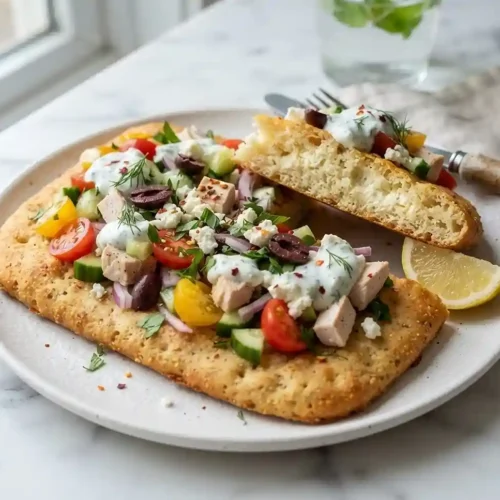
30g Protein Gluten-Free Mediterranean Cottage Cheese Flatbread
Equipment
- Blender
- Small baking sheet or quarter-sheet pan
- Parchment paper
- Offset Spatula or Spoon
- Mixing spatula
- Knife
- Cutting board
Ingredients
Cottage Cheese Flatbread
- 1 cup Cottage cheese Full-fat or 2% both work; avoid fat-free
- 2 Large eggs Room temperature
- 2 tablespoons Certified gluten-free oat flour or gluten-free all-purpose flour Must be certified gluten-free
- 1 tablespoon Grated Parmesan cheese Adds flavor and browning
- ½ teaspoon Garlic powder
- ½ teaspoon Italian seasoning
- ¼ teaspoon Certified gluten-free baking powder Verify gluten-free label
- ¼ teaspoon Kosher salt
- ¼ teaspoon Black pepper
Mediterranean Toppings
- ½ cup Cooked chicken breast Diced
- ¼ cup Cucumber Diced
- ¼ cup Cherry tomatoes Halved
- 2 tablespoons Red onion Diced
- 2 tablespoons Feta cheese Crumbled
- 1 tablespoon Kalamata olives Sliced
- 1 tablespoon Fresh parsley Chopped
Optional Toppings
- 2 tablespoons Plain Greek yogurt or certified gluten-free tzatziki
- Fresh dill To taste
- Lemon wedges To taste
- Crushed red pepper flakes To taste
Instructions
- Preheat the oven to 375°F (190°C) and line a small baking sheet or quarter-sheet pan with parchment paper.
- Add the cottage cheese, eggs, gluten-free oat flour, Parmesan, garlic powder, Italian seasoning, baking powder, salt, and black pepper to a blender.
- Blend until completely smooth, scraping down the sides if needed. Let the batter rest for 2 minutes before pouring.
- Spread the batter into an even rectangle about 1/4 inch thick on the prepared pan.
- Bake for 28–32 minutes until set and lightly golden around the edges.
- Cool the flatbread for 5 minutes before carefully lifting it from the parchment paper.
- Top with chicken, cucumber, tomatoes, red onion, feta, olives, and parsley. Add Greek yogurt or gluten-free tzatziki if desired, then finish with dill, lemon juice, and red pepper flakes before serving.