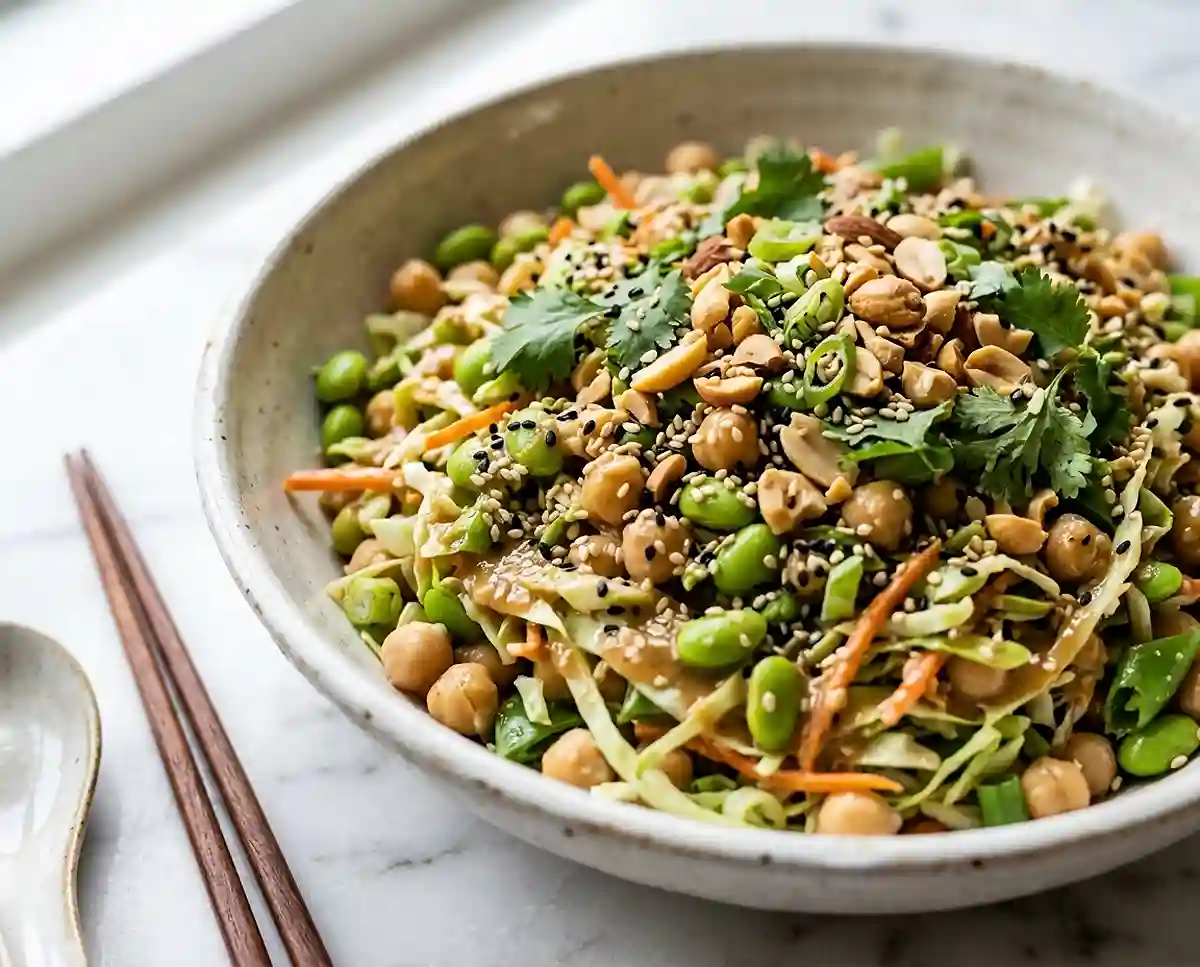
Miso Sesame Dense Bean Salad
Make this gluten-free miso sesame dense bean salad with chickpeas, edamame, and a bold tamari dressing. High-protein, meal-prep friendly, and ready in 20 minutes.
The first time I made a dense bean salad, I was skeptical. I’d spent years associating bean salads with the watery, underdressed versions from deli counters—the kind where everything slides to the bottom and tastes vaguely of regret. Then I made this gluten-free miso sesame dense bean salad, tossed it with a punchy tamari-lime dressing, and ate it straight from the bowl standing at the kitchen counter.
You know… sometimes the recipes you almost don’t make become the ones you come back to every single week. That’s exactly what happened here. This one has earned permanent rotation in my meal prep lineup, and for good reason.
What makes a bean salad “dense”? It’s the ratio—more protein-packed beans and vegetables per bite, less filler, no wilted lettuce dragging everything down. The miso sesame dressing clings to every chickpea and strand of cabbage, building a flavor that’s nutty, bright, and just a little spicy if you want it to be.
Why You’ll Love This Gluten-Free Miso Sesame Dense Bean Salad
- Bold, layered flavor — toasted sesame oil, white miso, tamari, and fresh lime create a dressing that tastes like it came from a restaurant, not a weeknight fridge cleanout.
- No cooking required — aside from the optional cooked edamame, this comes together in one bowl with a whisk and about 15 minutes of active prep time.
- Genuinely high-protein — chickpeas and edamame together deliver a substantial protein hit that keeps you full, making this a strong choice for meal prep lunches.
- Gets better overnight — unlike most salads, this one improves after a few hours in the fridge as the dressing soaks into the beans and the cabbage softens slightly.
The Secret to Perfect Gluten-Free Miso Sesame Dense Bean Salad
- Dry your cabbage thoroughly. Excess moisture dilutes the dressing and makes everything watery within hours. After shredding, lay the cabbage on a clean kitchen towel and press firmly. This one step makes a bigger difference than any ingredient swap.
- Use certified gluten-free tamari, not soy sauce. Standard soy sauce contains wheat. Tamari is traditionally wheat-free, but cross-contamination risk varies by brand—choose one with a certified gluten-free label. The trusted celiac research at Beyond Celiac explains the distinction in helpful detail.
- Whisk the miso until completely smooth before adding other dressing ingredients. Miso is thick and dense—if you add the liquids all at once it clumps and never fully emulsifies. Start with the miso and tamari, whisk until paste-like and uniform, then add the remaining liquids.
- Rest the salad for at least 30 minutes. This isn’t just a suggestion—the chickpeas absorb the dressing during that rest and the cabbage transitions from raw-crunchy to pleasantly tender. Serve too early and the flavors taste separated.
Table of Contents
Ingredients
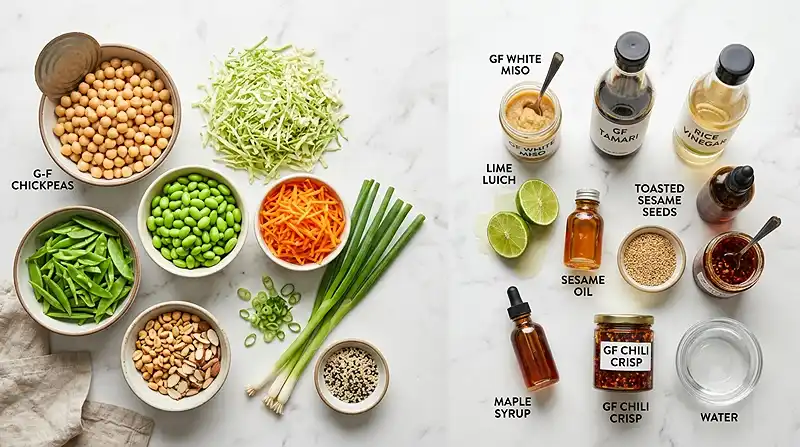
For the Salad
| Ingredient | Amount | Notes |
|---|---|---|
| Chickpeas, drained and rinsed | 1 (15-ounce) can | Pat dry for best dressing adhesion |
| Shelled edamame, cooked and cooled | 1 cup | Frozen edamame works great—just thaw completely |
| Snap peas, thinly sliced | 1 cup | Optional; adds fresh crunch |
| Green cabbage, finely shredded and well dried | 2 cups | Drying is essential—see tips above |
| Shredded carrots | 1 cup | Pre-shredded from a bag saves time |
| Green onions, thinly sliced | 4 | Use both white and green parts |
| Chopped roasted peanuts or sliced almonds | ¼ cup | Optional; adds crunch and richness |
| Sesame seeds, for garnish | 1 tablespoon | Toasted sesame seeds add more flavor |
For the Miso Sesame Dressing
| Ingredient | Amount | Notes |
|---|---|---|
| Gluten-free white miso or chickpea miso | 3 tablespoons | White miso is milder; chickpea miso is soy-free |
| Certified gluten-free tamari | 2 tablespoons | Check for gluten-free certification on the label |
| Rice vinegar | 2 tablespoons | Unseasoned preferred to control sweetness |
| Fresh lime juice | 1 tablespoon | Fresh only—bottled lacks brightness |
| Toasted sesame oil | 1 teaspoon | Toasted (not plain) for depth of flavor |
| Toasted sesame seeds | 1 tablespoon | Goes into the dressing itself for texture |
| Honey or maple syrup | 1 teaspoon | Use maple syrup to keep it fully vegan |
| Gluten-free chili crisp or red pepper flakes | 1 teaspoon chili crisp or ½ teaspoon flakes | Optional; adds heat |
| Water, to thin | 1–2 tablespoons | Add only if dressing is too thick to pour |
Instructions
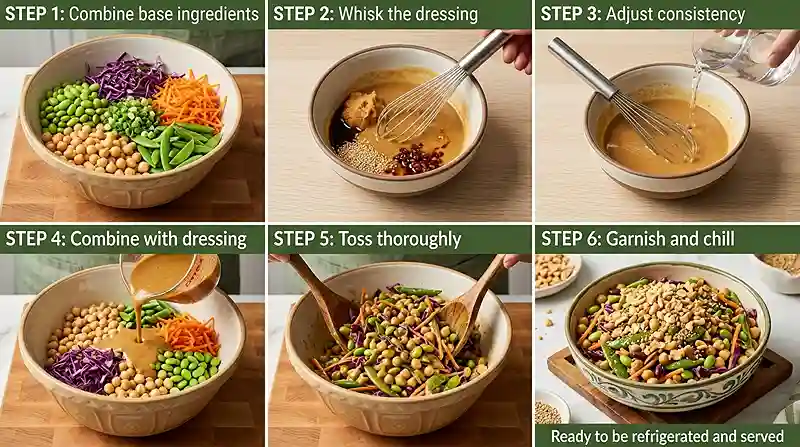
- Combine the salad ingredients. In a large mixing bowl, combine the chickpeas, edamame, shredded cabbage, carrots, green onions, and snap peas if using. Make sure the cabbage is well dried before it goes in—this is the step most people skip and later regret.
- Make the miso sesame dressing. In a small bowl or jar, whisk together the gluten-free miso and tamari first until smooth and paste-like. Then add the rice vinegar, lime juice, toasted sesame oil, sesame seeds, honey, and chili crisp. Whisk until fully emulsified—the dressing should look glossy and uniform, not separated.
- Adjust seasoning. Taste the dressing before pouring. Add a little more lime juice if you want more brightness, or a touch more honey if the miso’s saltiness dominates. If the dressing is too thick to pour freely, whisk in 1–2 tablespoons of water.
- Dress the salad. Pour the dressing over the salad ingredients. Toss thoroughly until every chickpea, strand of cabbage, and piece of carrot is evenly coated—this takes a full minute of tossing, not just a quick stir.
- Add the crunch toppings. Sprinkle the chopped roasted peanuts or almonds and additional sesame seeds over the salad. If you’re making this ahead, hold the nuts until serving so they don’t soften in the fridge.
- Rest before serving. Cover and refrigerate for at least 30 minutes. The chickpeas will absorb some of the dressing, the cabbage will soften just enough to lose its raw bite, and the flavors will meld into something cohesive and deeply savory.
- Toss and garnish before serving. Give the salad one more thorough toss—dressing settles to the bottom during refrigeration. Garnish with extra green onions if desired and serve cold.
Make It Your Own
Well… if you need this to be fully soy-free, you have two solid options. Swap the tamari for coconut aminos, which are naturally gluten-free and soy-free—they’re slightly sweeter, so reduce the honey to balance. For the miso, choose chickpea miso instead of traditional white miso, since white miso is soy-based.
For a higher-protein version that works as a standalone meal, add a cup of cooked and cooled shelled edamame beyond what the recipe already calls for, or stir in a drained can of white beans alongside the chickpeas. The easy miso sesame dense bean salad format is flexible enough to handle extra bulk without losing its character.
Want to make this a heartier grain bowl? Serve it over a base of cooked and cooled short-grain brown rice or quinoa. The dressing soaks into the grains beautifully and you get a complete, satisfying meal that works for lunch meal prep all week. This is the healthy miso sesame bean salad for meal prep strategy I come back to every time I need something that travels well.
If you prefer a nut-free version for school lunches or allergy-conscious gatherings, skip the peanuts and almonds entirely and add extra sesame seeds for crunch. Pumpkin seeds also work well here—they add a similar textural contrast without any tree nut or peanut concerns.
For a spicier take, double the chili crisp in the dressing and add a teaspoon of grated fresh ginger. The ginger adds a slightly floral, warming heat that’s different from straight pepper heat—it layers well with the miso and makes the dressing feel a little more complex.
Common Problems & Solutions
Problem: The salad is watery after sitting in the fridge. The cabbage wasn’t dried thoroughly enough before mixing. Cabbage holds a surprising amount of water, and once it’s dressed and refrigerated, that moisture releases into the bowl. Next time, spread the shredded cabbage on a clean kitchen towel after rinsing and press firmly for 30 seconds before adding it to the bowl.
Problem: The miso dressing is lumpy and won’t come together smoothly. Miso needs to be broken down before the other liquids are added—it won’t dissolve properly if you pour everything in at once. Whisk the miso and tamari together first until completely smooth, then stream in the remaining ingredients. A small immersion blender or mini food processor also works if you want a perfectly silky result.
Problem: The dressing tastes flat or too salty. Man, oh man—miso varies wildly in saltiness between brands and types. White miso is milder; red miso is much more intense. If the dressing tastes aggressively salty, add lime juice a little at a time—acid balances salt without sweetening the dressing. According to Healthline’s authoritative nutrition breakdown of miso, the fermentation process that gives miso its depth also concentrates sodium, which is why tasting before dressing is non-negotiable.
Problem: The chickpeas taste bland even after tossing. Drain and rinse the chickpeas, then pat them very dry with paper towels before adding them to the bowl. Wet chickpeas create a watery barrier between the bean and the dressing, preventing proper absorption. Dry chickpeas drink in the miso sesame dressing and taste significantly more flavorful after the 30-minute rest.
Storage & Meal Prep
| Method | Duration | Notes |
|---|---|---|
| Counter | 2–3 hours max | Keep cold; don’t leave at room temperature longer |
| Fridge | 5–7 days | Toss before serving; hold nuts separately |
| Freezer | Not recommended | Cabbage and beans lose texture after thawing |
This salad is genuinely designed for meal prep. Make the full batch on Sunday and portion it into airtight containers for the week—it holds up better than almost any other salad because there’s no delicate lettuce to wilt.
Store the nuts and seeds separately in a small zip-top bag and add them fresh each day so they stay crisp. The dressing also keeps well on its own in a sealed jar in the fridge for up to a week—double the dressing recipe and use it on grain bowls, roasted vegetables, or as a dipping sauce for rice paper rolls.
Miso Sesame Dense Bean Salad FAQs
Can I make this salad the night before?
Yes, and it actually tastes better the next day. Make the full recipe, skip the nut garnish, and refrigerate covered overnight. The chickpeas absorb the dressing and the flavors meld significantly. Add the peanuts or almonds right before serving to keep them crisp.
How do I make this salad soy-free?
Use coconut aminos in place of tamari and chickpea miso instead of white miso. Coconut aminos are slightly sweeter, so reduce the honey by half to keep the dressing balanced. The flavor profile shifts a little but stays bold and satisfying.
What’s the best miso to use for this dressing?
White miso is the best starting point. It’s the mildest and sweetest variety, which balances well with the tamari and lime without overpowering the vegetables. Red or brown miso works if you prefer a deeper, earthier flavor, but start with half the amount and taste as you go since both are significantly saltier.
Why did my dressing turn out too thick to pour?
Miso is naturally very dense, and the ratio of miso to liquid can vary slightly depending on the brand you use. Whisk in water one tablespoon at a time until the dressing pours freely. Start with one tablespoon, stir thoroughly, and check the consistency before adding more.
Can I add other vegetables or proteins to this bean salad?
Absolutely. Thinly sliced cucumber, shredded purple cabbage, or blanched broccolini all work well. For extra protein, add cooked and cooled shredded chicken, a soft-boiled egg, or a second type of bean. The miso sesame dressing is bold enough to hold up to a wide range of additions without losing its character.
Serving Suggestions
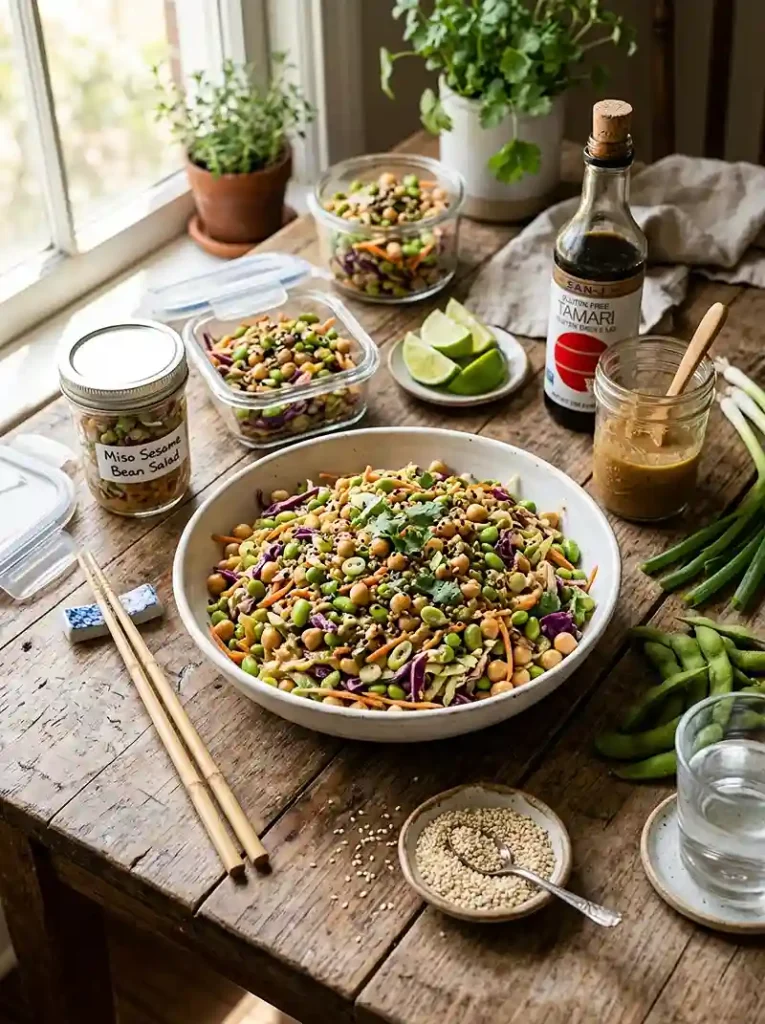
This salad works beautifully as a standalone lunch but also holds its own as a side dish at a Fourth of July cookout or a summer potluck—it travels well, doesn’t wilt in the heat the way leafy green salads do, and feeds a crowd without much effort. The bold miso sesame flavors pair especially well with grilled proteins.
Serve it alongside gluten-free chicken Caesar smashed tacos for a complete and satisfying spread, or spoon it over a base of warm rice and top with a fried egg for a quick weeknight grain bowl. If you want a full meal-prep week of bold, satisfying gluten-free dishes, pair it with the hearty layers in this gluten-free napa soup dumpling lasagna.
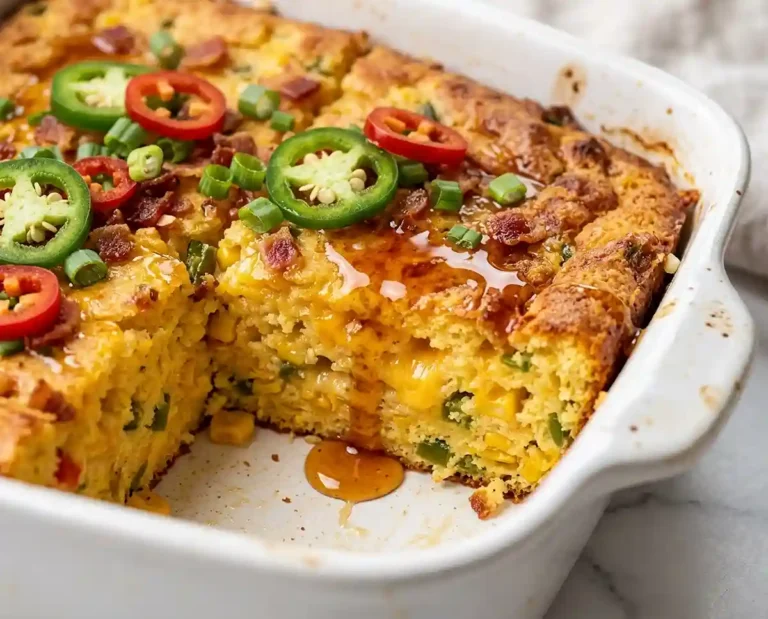
And if you’ve got a sweet tooth after all that savory goodness, the warmth and spice of this hot honey jalapeño cornbread pudding makes a genuinely surprising and crowd-pleasing finish to the meal.
If you made this recipe and added your own twist, I’d love to hear about it in the comments below—what vegetables did you add, what protein did you pair it with, and did you make it spicier? Leave a rating, share it on Pinterest, and help other gluten-free home cooks find this one.
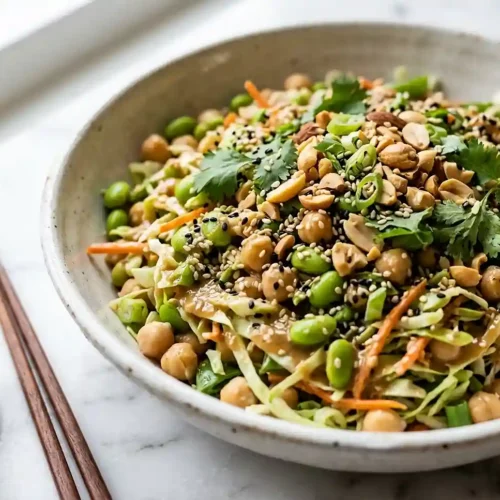
Gluten-Free Miso Sesame Dense Bean Salad
Equipment
- Large mixing bowl
- Small bowl or jar
- Whisk
- Measuring cups and spoons
- Knife
- Cutting board
Ingredients
For the Salad
- 1 15-ounce can Chickpeas Drained, rinsed, and patted dry
- 1 cup Shelled edamame Cooked and cooled
- 1 cup Snap peas Thinly sliced; optional
- 2 cups Green cabbage Finely shredded and well dried
- 1 cup Shredded carrots Pre-shredded or freshly shredded
- 4 Green onions Thinly sliced
- ¼ cup Roasted peanuts or sliced almonds Chopped; optional
- 1 tablespoon Sesame seeds For garnish
For the Miso Sesame Dressing
- 3 tablespoons Gluten-free white miso or chickpea miso
- 2 tablespoons Certified gluten-free tamari
- 2 tablespoons Rice vinegar Unseasoned preferred
- 1 tablespoon Fresh lime juice
- 1 teaspoon Toasted sesame oil
- 1 tablespoon Toasted sesame seeds
- 1 teaspoon Honey or maple syrup Use maple syrup for vegan version
- 1 teaspoon Gluten-free chili crisp or 1/2 teaspoon red pepper flakes Optional
- 1-2 tablespoons Water To thin dressing if needed
Instructions
- Combine the chickpeas, edamame, cabbage, carrots, green onions, and snap peas in a large mixing bowl.
- Whisk together the miso and tamari until smooth, then whisk in the rice vinegar, lime juice, sesame oil, sesame seeds, honey, and chili crisp until fully emulsified.
- Taste the dressing and adjust with more lime juice, honey, or water as needed.
- Pour the dressing over the salad and toss thoroughly until all ingredients are evenly coated.
- Sprinkle with the chopped peanuts or almonds and additional sesame seeds. Reserve the nuts until serving if making ahead.
- Cover and refrigerate for at least 30 minutes to allow the flavors to meld.
- Toss once more, garnish with extra green onions if desired, and serve chilled.