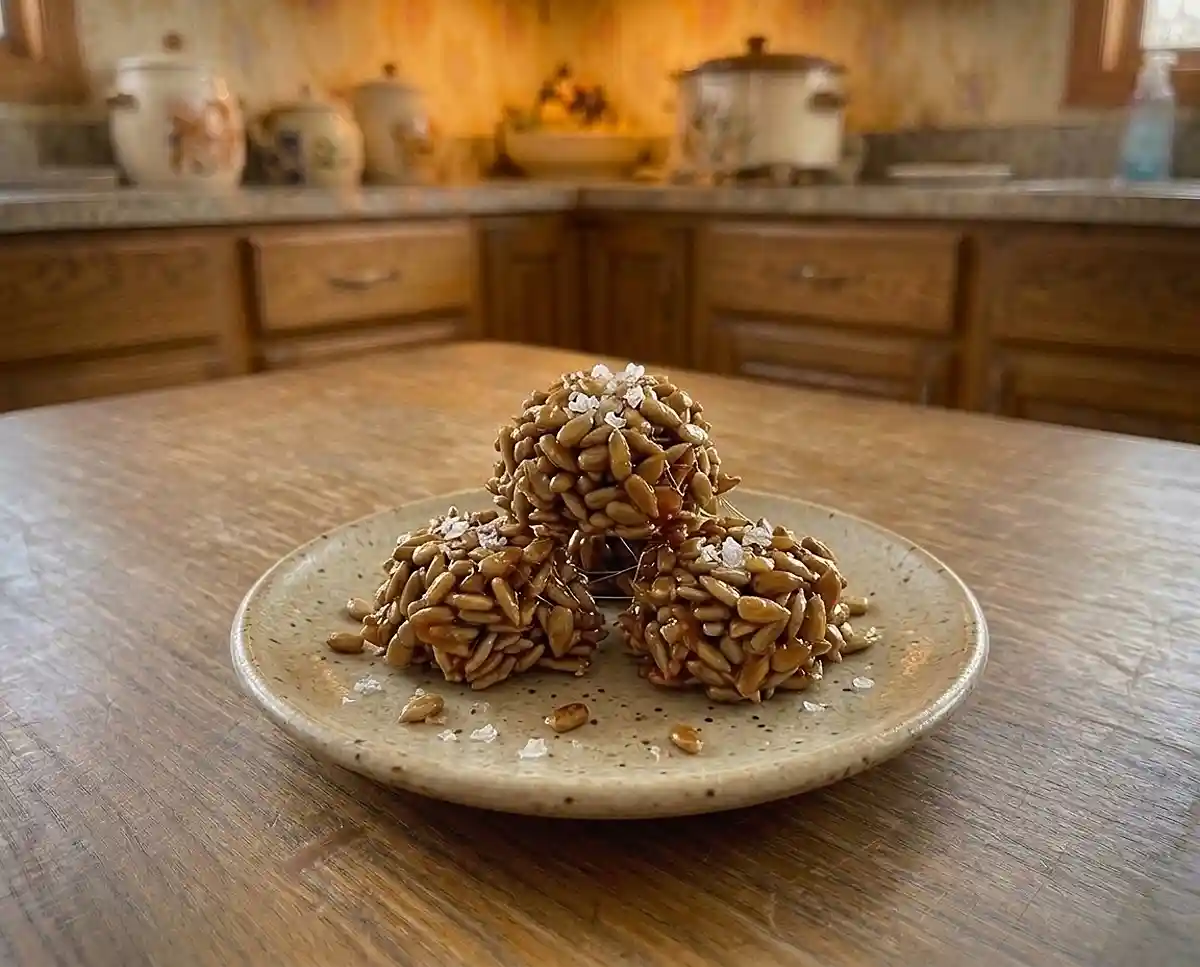
Salted Caramel Sunflower Seed Clusters
Make gluten-free salted caramel sunflower seed clusters with 8 simple ingredients, step-by-step directions, and storage tips for crisp, crunchy bites.
The first time I made these, I stepped away to answer the phone while the caramel cooked and came back to a smoking pan. That small disaster taught me that hot sugar rewards attention above everything else. These gluten-free salted caramel sunflower seed clusters need a short stretch of your full focus, and then they practically finish themselves.
Well… why do so many caramel recipes feel intimidating? Mostly because nobody explains what the sugar is doing at each stage. Once you understand that, the process is steady and predictable.
These salted caramel sunflower seed clusters are crunchy, sweet, and just the right size for tossing into a bag when you’re heading out the door! Discover more gluten-free snacks on the go for portable treats that make busy days a little more delicious.
Why You’ll Love These Gluten-Free Salted Caramel Sunflower Seed Clusters
These clusters give you a crisp, buttery caramel snack with just 8 ingredients and two pans.
- Texture and flavor: glassy caramel, toasted nutty seeds, and a sharp pinch of flaky salt in every bite.
- Difficulty: beginner friendly if you own a candy thermometer and stay at the stove.
- Unique advantages: made with seeds instead of tree nuts, with a simple dairy-free swap available.
- Best for: holiday gifting, lunch box treats, and adding crunch to a snack board.
The Secret to Perfect Gluten-Free Salted Caramel Sunflower Seed Clusters
The secret is controlling sugar temperature and moisture, because both decide whether clusters snap or stick.
- Corn syrup prevents crystals: it interferes with sugar crystals forming, so the caramel stays smooth instead of grainy.
- High heat removes water: cooking to 295–300°F drives off nearly all moisture, so the caramel sets crisp instead of chewy.
- Baking soda adds air: it releases carbon dioxide in the hot caramel, creating tiny bubbles that make the clusters easier to bite.
- Toasting comes first: warming the seeds dries them, deepens their nutty aroma, and helps the caramel cling.
Sugar behaves differently at every temperature. The Exploratorium’s guide to sugar syrup stages shows how syrup moves from soft-crack toward hard-crack as water cooks off. That is why a thermometer matters more than a timer here.
Table of Contents
Ingredients
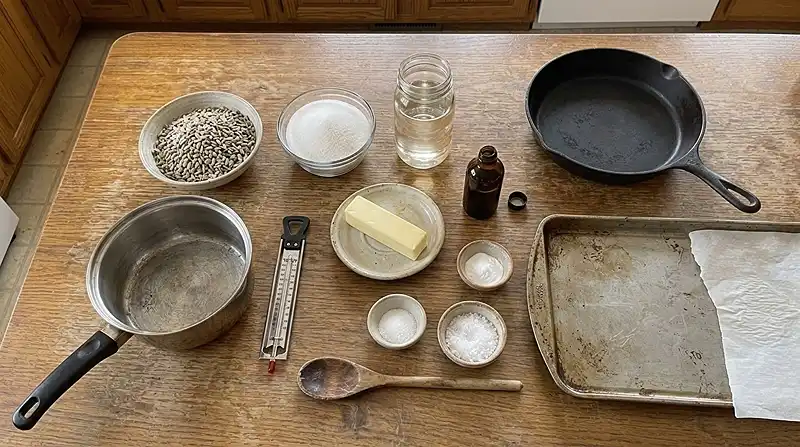
This recipe makes 12 clusters.
Seeds
- 1½ cups raw hulled sunflower seeds
Caramel
- ½ cup granulated sugar
- ¼ cup light corn syrup
- 2 tablespoons unsalted butter
- 1 teaspoon pure vanilla extract, labeled gluten-free
- ½ teaspoon baking soda, labeled gluten-free
- ¼ teaspoon fine sea salt
Finishing
- Flaky sea salt, for topping
Ingredient note: raw hulled sunflower seeds are seeds with the shells removed, sold unsalted and untoasted. Choose a brand that avoids wheat cross-contact in its facility.
Vanilla extract and baking soda are the two items I specify as labeled gluten-free. Under the FDA’s gluten-free labeling rule, foods carrying that claim must contain less than 20 parts per million of gluten.
Instructions
Prep and Toast
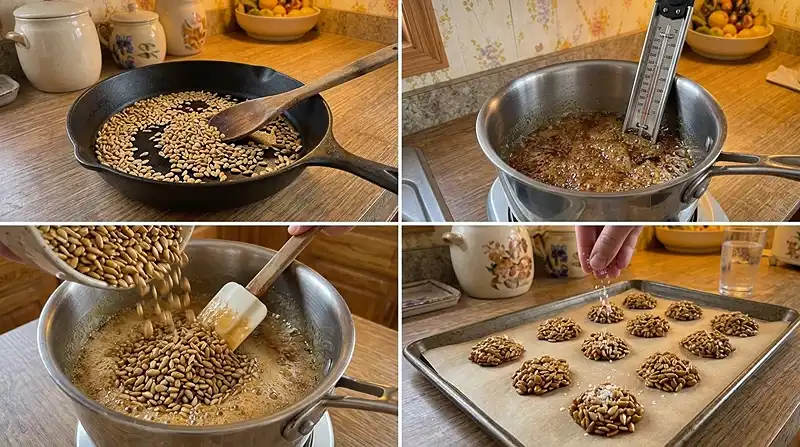
- Prepare the baking sheet. Line a large baking sheet with parchment paper or a silicone baking mat. Set aside. Pro Tip: measure every ingredient before you turn on the heat, because the final steps move fast.
- Toast the sunflower seeds. Place the sunflower seeds in a large dry skillet over medium heat. Toast for 3–5 minutes, stirring frequently, until lightly golden and fragrant. Transfer to a bowl so they stop cooking.
Cook the Caramel
- Make the caramel. Add the sugar and corn syrup to a medium heavy-bottomed saucepan. Cook over medium heat, stirring gently until the sugar dissolves and the mixture begins to boil. The syrup will turn clear and bubble steadily.
- Cook to hard-crack stage. Continue cooking without vigorous stirring until the caramel reaches 295–300°F (146–150°C) on a candy thermometer. Watch closely so it does not burn. Look for a pale amber color and a toasty, buttery smell.
- Finish the caramel. Remove the saucepan from the heat. Quickly stir in the butter, vanilla extract, baking soda, and fine sea salt. The mixture will foam, so stir carefully with a long-handled silicone spatula.
Shape and Cool
- Add the sunflower seeds. Immediately stir the toasted sunflower seeds into the hot caramel until they are evenly coated.
- Form the clusters. Working quickly, drop heaping tablespoons of the mixture onto the prepared baking sheet, leaving space between each cluster. Use a second spoon to nudge stray seeds into each mound.
- Add flaky salt. Sprinkle a small pinch of flaky sea salt over each cluster while the caramel is still hot. The salt only sticks while the caramel is soft.
- Cool completely. Let the clusters cool at room temperature for 30–45 minutes, until completely hard and crisp. Resist touching them early, since hot caramel stays molten longer than it looks.
- Serve and store. Break apart any thin caramel strands and transfer the clusters to an airtight container. Store at room temperature for up to 2 weeks.
Safety note: caramel at this stage is hotter than boiling water and sticks to skin. Keep children out of the kitchen while you cook.
Make It Your Own
For a pumpkin seed version, use the same amount of hulled pumpkin seeds and toast them until they puff and begin to pop. They are flatter than sunflower seeds, so the clusters look greener and set slightly thinner. The caramel cooks exactly the same way.
To make coconut clusters, replace the sunflower seeds with the same volume of unsweetened shredded coconut and toast it until pale gold. Coconut is lighter, so the clusters turn out more delicate. Watch the toasting closely, since coconut browns faster than seeds.
You know… dairy-free works too. Swap the butter for the same amount of vegan butter, and the caramel will still set because the sugar does most of the work. The flavor is a touch less rich.
Common Problems & Solutions
Problem: the caramel turns grainy. Solution: stir gently only until the sugar dissolves, then leave it alone. Why: stray sugar crystals on the pan wall or spoon start a chain reaction that turns smooth syrup into sand.
Problem: the caramel tastes bitter and smells burnt. Man, oh man… this can happen within seconds past 300°F. Solution: pull the pan off the heat as soon as the thermometer reaches 295–300°F. Why: the hot pan keeps cooking the sugar even after the burner is off.
Problem: the clusters stay sticky or chewy. Solution: cook to the full 295–300°F and cool the clusters in a dry room. Why: undercooked caramel still holds water, and humid air adds more.
Problem: the caramel hardens before you finish shaping. Solution: portion quickly, or return the pan to low heat for a few seconds to loosen it. Why: as hot sugar cools, it thickens into glass.
Problem: the clusters feel too hard to bite. Solution: stir in the baking soda fully while the caramel foams. Why: the bubbles it creates lighten the texture of the finished clusters.
Storage & Meal Prep
| Method | Duration | Notes |
|---|---|---|
| Counter | Up to 2 weeks | Airtight container; layer with parchment paper |
| Fridge | Not recommended | Moisture in the fridge makes caramel sticky |
| Freezer | Up to 2 months | Airtight container; thaw sealed to avoid condensation |
No reheating is needed, since these clusters are meant to be eaten at room temperature. Broken pieces and crumbs are useful too. Sprinkle them over yogurt, oatmeal, or ice cream for a salty crunch.
Your Questions Answered
Can I make these without a candy thermometer?
A thermometer is strongly recommended. Color and timing vary with your stove and pan, so they are unreliable guides. As a backup, a drop of syrup in cold water should form hard, brittle threads that snap rather than bend.
How do I keep the clusters crisp?
Store them in an airtight container at room temperature. Caramel absorbs moisture from the air, which turns it sticky. Layer the clusters with parchment paper and keep the container away from steamy areas like the stove.
What’s the best way to avoid grainy caramel?
Stir gently until the sugar dissolves, then stop stirring. Corn syrup helps prevent crystals, but stray sugar on the pan wall can still start them. Use a clean saucepan and avoid scraping the sides.
Why did my clusters turn sticky?
Most likely the caramel did not reach 295–300°F. Undercooked caramel keeps too much water, so it stays tacky after cooling. Humid weather can also soften finished clusters, so cool them in a dry room.
Serving Suggestions
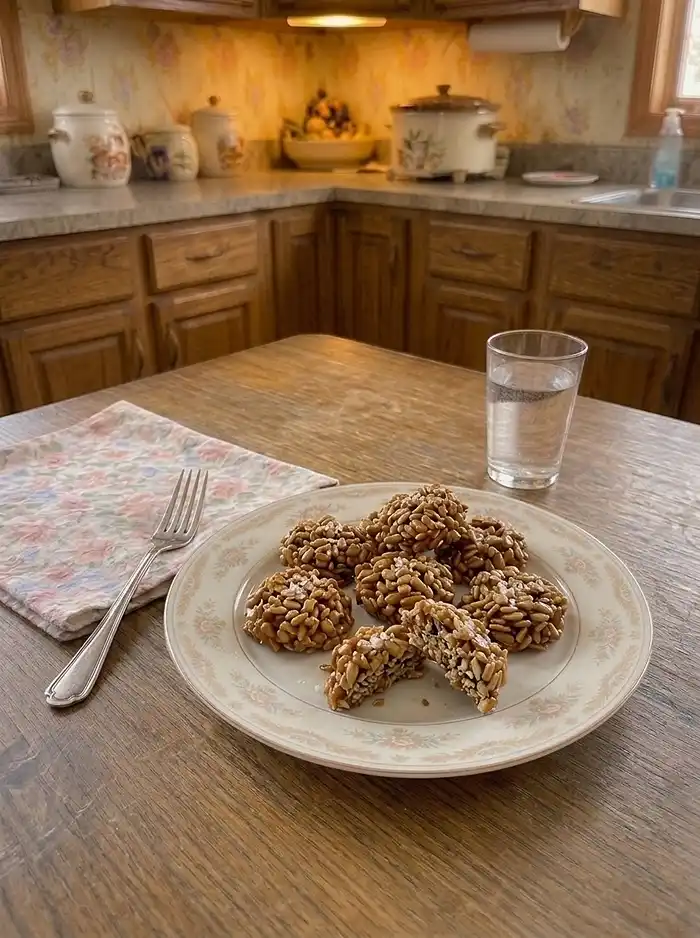
Tuck two clusters into a gluten-free bento snackle box as the sweet bite, or crumble them over yogurt. In a Christmas cookie tin, they add crunch next to softer cookies.
For a sweet and savory snack board, set them beside chili-lime roasted chickpeas and a few herbed goat cheese and pistachio truffles.
Final Thoughts
If you make these gluten-free salted caramel sunflower seed clusters, please leave a rating and tell me how they turned out. Share your photos on Pinterest, and mention any swaps you tried in the comments. I read every note and reply when I can.
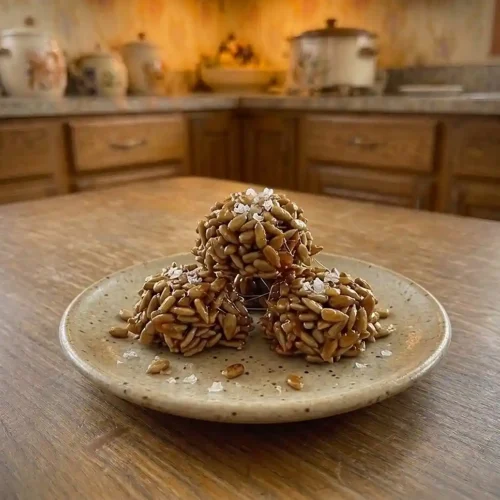
Gluten-Free Salted Caramel Sunflower Seed Clusters
Equipment
- Large baking sheet
- Parchment paper or silicone baking mat
- Large dry skillet
- Medium heavy-bottomed saucepan
- Candy thermometer
- Long-handled silicone spatula
Ingredients
Seeds
- 1½ cups raw hulled sunflower seeds Choose a brand that avoids wheat cross-contact in its facility.
Caramel
- ½ cup granulated sugar
- ¼ cup light corn syrup
- 2 tablespoons unsalted butter
- 1 teaspoon pure vanilla extract Labeled gluten-free.
- ½ teaspoon baking soda Labeled gluten-free.
- ¼ teaspoon fine sea salt
Finishing
- flaky sea salt For topping.
Instructions
- Prepare the baking sheet. Line a large baking sheet with parchment paper or a silicone baking mat. Set aside. Measure every ingredient before turning on the heat because the final steps move quickly.
- Toast the sunflower seeds. Place the sunflower seeds in a large dry skillet over medium heat. Toast for 3–5 minutes, stirring frequently, until lightly golden and fragrant. Transfer them to a bowl so they stop cooking.
- Make the caramel. Add the sugar and corn syrup to a medium heavy-bottomed saucepan. Cook over medium heat, stirring gently until the sugar dissolves and the mixture begins to boil. The syrup will turn clear and bubble steadily.
- Cook to hard-crack stage. Continue cooking without vigorous stirring until the caramel reaches 295–300°F (146–150°C) on a candy thermometer. Watch closely so it does not burn. Look for a pale amber color and a toasty, buttery smell.
- Finish the caramel. Remove the saucepan from the heat. Quickly stir in the butter, vanilla extract, baking soda, and fine sea salt. The mixture will foam, so stir carefully with a long-handled silicone spatula.
- Add the sunflower seeds. Immediately stir the toasted sunflower seeds into the hot caramel until they are evenly coated.
- Form the clusters. Working quickly, drop heaping tablespoons of the mixture onto the prepared baking sheet, leaving space between each cluster. Use a second spoon to nudge stray seeds into each mound.
- Add flaky salt. Sprinkle a small pinch of flaky sea salt over each cluster while the caramel is still hot. The salt only sticks while the caramel is soft.
- Cool completely. Let the clusters cool at room temperature for 30–45 minutes, until completely hard and crisp. Resist touching them early because hot caramel stays molten longer than it looks.
- Serve and store. Break apart any thin caramel strands and transfer the clusters to an airtight container. Store at room temperature for up to 2 weeks.