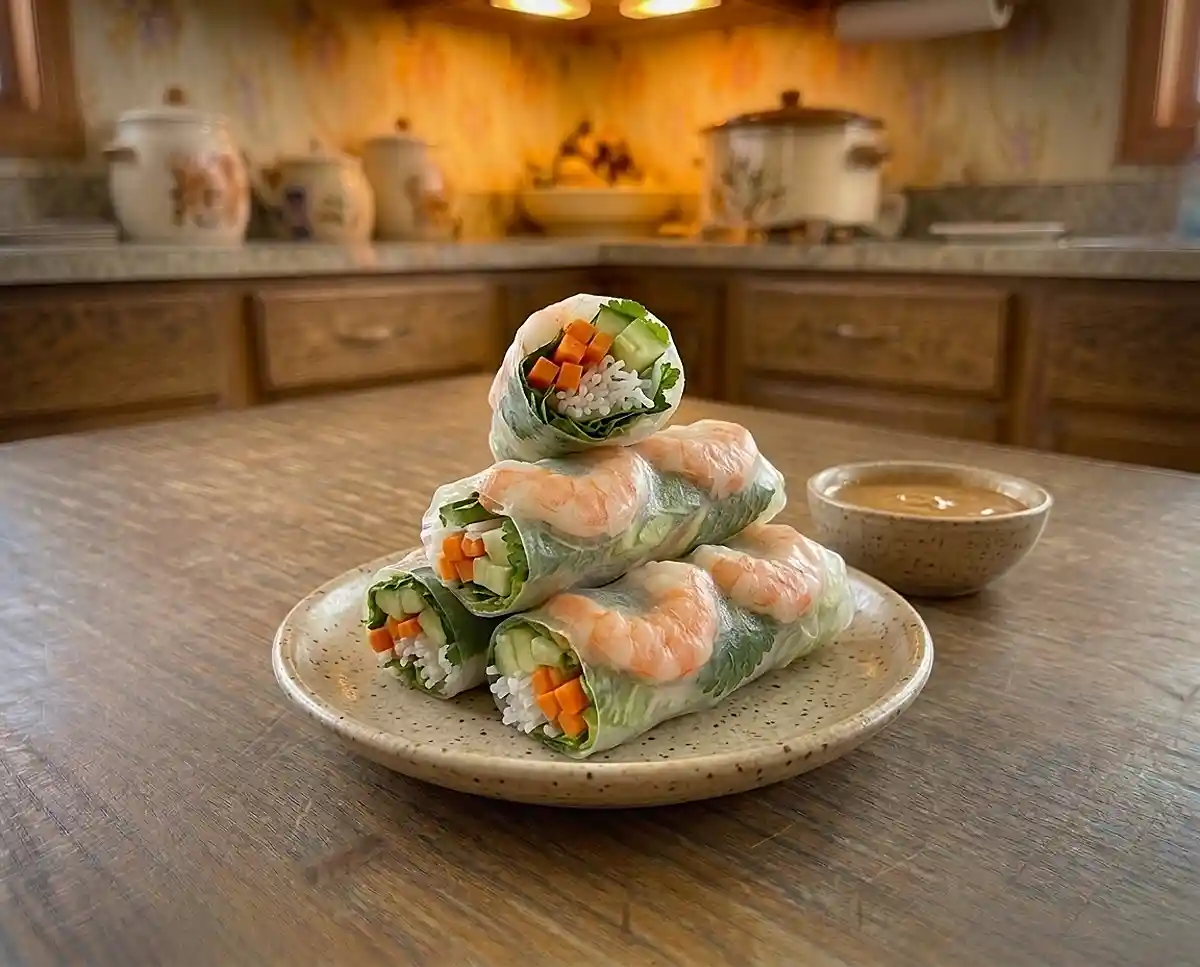
Vietnamese Rice Paper Spring Rolls with Dip
Make Vietnamese Rice Paper Spring Rolls with Dip using gluten-free rice paper wrappers and a creamy peanut dipping sauce. Get simple ingredients, step-by-step rolling tips, and storage advice for 8 fresh, flavorful rolls.
A student in my Saturday workshop once told me her gluten-free rice paper rolls tore every single time. Turns out, she soaked each wrapper until it was floppy, so it had nothing left to hold the filling. That lesson shapes how I make these gluten-free Vietnamese rice paper spring rolls with dip.
Rice paper wrappers made from rice or tapioca starch are a calm starting point for newer gluten-free cooks. Everything is assembled cold, so there is no oil to manage and nothing to burn. Who would not want a bright, crunchy roll with a creamy peanut dip?
Here’s the thing… the rolling looks fussy, but it feels natural after two or three tries. Keep your fillings organized and your wrappers barely softened. This recipe makes 8 spring rolls.
These Vietnamese rice paper spring rolls with dip bring fresh, colorful crunch and a deliciously vibrant touch to any party spread! Discover more gluten-free party snacks for exciting crowd-pleasers your guests will want to try before they’re all gone!
At a Glance: Why This Gluten-Free Spring Roll Recipe Delivers
- Texture and flavor: Soft, chewy wrappers around crisp vegetables, tender shrimp, and fresh herbs, with a creamy, tangy dip.
- Difficulty: Beginner-friendly. There is no frying, and the rolling gets easier with each one.
- Unique advantage: The dip is a quick peanut butter sauce you whisk in one bowl, and you can make it ahead.
- Best for: Warm-weather meals, appetizer platters, and light lunches.
What Makes These Gluten-Free Vietnamese Rice Paper Spring Rolls with Dip Actually Work
- A brief soak keeps wrappers strong. Rice paper keeps absorbing moisture from the filling as it rests, so a few seconds in warm water leaves it pliable instead of mushy.
- A cold rinse stops the noodles cooking. Cold water halts the heat and washes off surface starch, which is what makes noodles clump and stick together.
- Sesame oil keeps noodles loose. A thin coat of oil on the cooled vermicelli keeps strands from gluing together, so they spread evenly inside the roll.
- Lime balances the rich sauce. The acid in fresh lime juice cuts through the peanut butter and hoisin, so the dip tastes bright instead of heavy.
Table of Contents
Ingredients
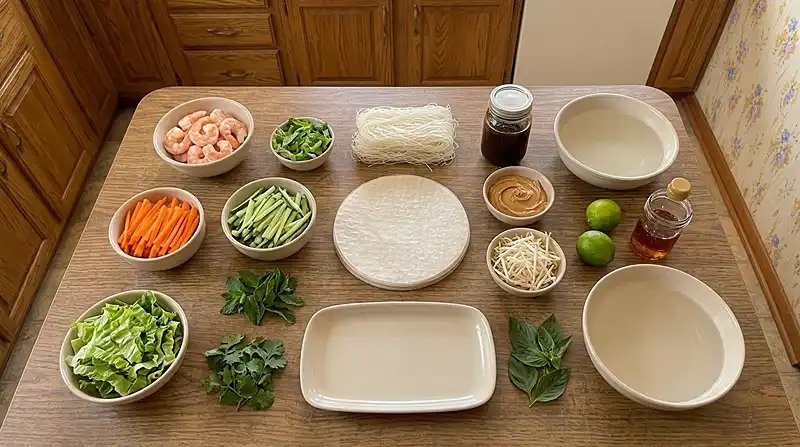
This recipe makes 8 spring rolls. Read every label, especially on the hoisin. Authoritative celiac guidance on hoisin sauce explains that most commercial brands contain wheat, so choose a certified gluten-free one.
For the peanut dipping sauce
- 3 tablespoons creamy peanut butter, labeled gluten-free
- 3 tablespoons hoisin sauce, certified gluten-free
- Juice of 2 small fresh limes
- 2 teaspoons garlic chili sauce, labeled gluten-free (or 2 teaspoons gluten-free Sriracha mixed with ¼ teaspoon garlic powder)
- 2–3 tablespoons water, as needed
For the noodles and wrappers
- 7 ounces thin rice vermicelli noodles, certified gluten-free
- 1 teaspoon toasted sesame oil, labeled gluten-free
- 8 rice paper wrappers, made from rice or tapioca starch and labeled gluten-free
For the filling
- 1 pound cooked jumbo shrimp, peeled, deveined, and sliced in half lengthwise
- 1 cup carrots, cut into matchsticks
- 1 cup cucumber, julienned
- 1 cup fresh bean sprouts
- 1 cup green leaf lettuce, thinly sliced
- ½ cup fresh mint leaves
- ½ cup fresh cilantro leaves
- ½ cup fresh Thai basil leaves
Instructions
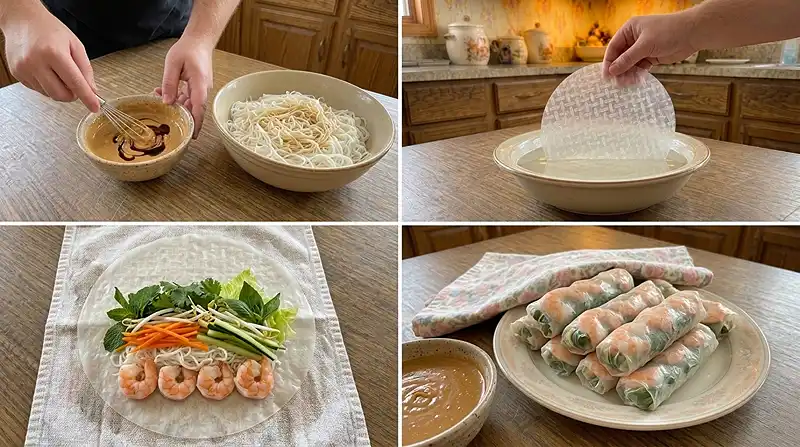
Make the Sauce and Noodles
- Prepare the dipping sauce. In a small bowl, whisk together the peanut butter, certified gluten-free hoisin sauce, fresh lime juice, and garlic chili sauce. Gradually add water, 1 tablespoon at a time, until the sauce reaches your preferred dipping consistency. Cover and refrigerate.
- Cook the rice noodles. Prepare the rice vermicelli according to the package instructions, cooking just until tender. Drain and rinse thoroughly under cold water to stop the cooking.
- Season the noodles. Toss the cooled noodles with toasted sesame oil to prevent sticking. Set aside.
Prep and Assemble
- Prepare the shrimp and vegetables. Make sure the shrimp are fully cooked, peeled, and deveined, then slice them lengthwise. Arrange the carrots, cucumber, bean sprouts, lettuce, mint, cilantro, and Thai basil in separate bowls. The herbs release a sweet, peppery fragrance as soon as you handle them.
- Soften the rice paper. Fill a large shallow bowl with warm water. Dip one rice paper wrapper into the water for a few seconds, just until pliable but not overly soft. Place it flat on a clean, slightly damp work surface.
- Add the filling. Arrange 3–4 shrimp halves near the lower third of the wrapper, with the cut side facing up for an attractive presentation. Add a small handful of rice noodles, carrots, cucumber, bean sprouts, and lettuce, then finish with a few mint, cilantro, and Thai basil leaves. Leave about 1 inch of space around the edges.
- Roll the spring rolls. Fold the bottom edge over the filling, fold both sides inward, and roll gently but firmly toward the top until sealed. Avoid overfilling, as the delicate rice paper can tear. Pro Tip: the wrapper will feel slightly tacky and seal itself as you roll.
- Repeat. Continue with the remaining wrappers and filling. Keep the finished rolls covered with a slightly damp clean kitchen towel while assembling the rest.
- Serve. Arrange the spring rolls on a serving platter and serve immediately with the chilled peanut dipping sauce. The sauce should feel cool and silky, like chilled custard against the spoon.
Adapting This Recipe to Your Kitchen
For a plant-based version, replace the shrimp with firm tofu that is pressed and baked, and check that the tofu is labeled gluten-free. Baked tofu holds its shape inside the wrapper better than soft tofu. It also absorbs the dip well.
If you want a nut-free dip, whisk sunflower seed butter into the sauce in place of peanut butter. It gives a similar creamy base, though the flavor is earthier. Confirm that the seed butter is labeled gluten-free.
Trust me on this one… this peanut sauce recipe also works as a dip for roasted vegetables or grilled chicken. The lime keeps it bright, and it thickens slightly in the refrigerator. Stir in a splash of water before serving if it tightens.
Vietnamese fried spring rolls are a different dish, and their wrappers may contain wheat depending on the recipe or restaurant. These fresh rolls skip the fryer, which makes label reading simpler. Always confirm any wrapper you buy.
Troubleshooting: Fixes for the Most Common Issues
Problem: the rice paper tears. Soak the wrapper for only a few seconds and avoid overfilling it. The wrapper keeps softening as it sits, so a slightly firm sheet is easier to roll than a fully limp one.
Problem: the wrappers stick together. Work on a slightly damp surface and keep finished rolls from touching on the platter. Rice paper is sticky when wet, and it fuses to anything it touches for long.
Problem: the noodles are in one big clump. Rinse them in cold water right after cooking and toss them with the sesame oil. Cold water removes the surface starch that glues strands together.
I’ll be straight with you… Problem: the dip is too thick or too thin. Add water 1 tablespoon at a time to loosen it, and give it a good whisk. If it is too thin, a little more peanut butter would thicken it, but I would taste it first.
Storage & Meal Prep
| Method | Duration | Notes |
|---|---|---|
| Counter | Up to 2 hours | Cover with a damp towel; contains cooked shrimp |
| Fridge | Up to 24 hours | Wrap each roll tightly; the dip keeps about 5 days in a covered container |
| Freezer | Not recommended | Wrappers turn gummy and crack after thawing |
I changed the usual storage entries because rice paper rolls are best fresh and do not freeze well. Serve them cool, and let refrigerated rolls sit at room temperature for a few minutes so the wrappers soften.
For no-waste ideas, toss leftover noodles, vegetables, and herbs into a bowl with the leftover dip. You get a quick cold noodle salad for lunch.
Common Questions, Straight Answers
Can I make rice paper spring rolls ahead of time?
Yes, you can make them up to 24 hours ahead if you wrap each roll tightly. Wrap them individually in plastic wrap and refrigerate. Let them sit at room temperature briefly before serving so the wrappers soften.
How do I keep rice paper from sticking?
Work on a slightly damp surface and keep the wrappers from touching each other. Cover finished rolls with a damp towel while you assemble the rest. Dry surfaces and dry towels can tear the wrapper.
What’s the best rice paper for gluten-free spring rolls?
Choose thin wrappers made from rice or tapioca starch that are labeled gluten-free. Check the ingredient list for wheat, and look for a gluten-free label if you have celiac disease. Cross-contact can happen during processing.
Why did my spring rolls tear?
The wrapper was most likely soaked too long or overfilled. Dip it for only a few seconds, since it keeps softening as it rests. Leave about 1 inch of space around the edges when filling.
Can I make a peanut-free dip?
Yes, sunflower seed butter works in place of peanut butter. Whisk it with the hoisin, lime juice, and garlic chili sauce, then thin it with water. Check that every ingredient is labeled gluten-free.
Serving Suggestions
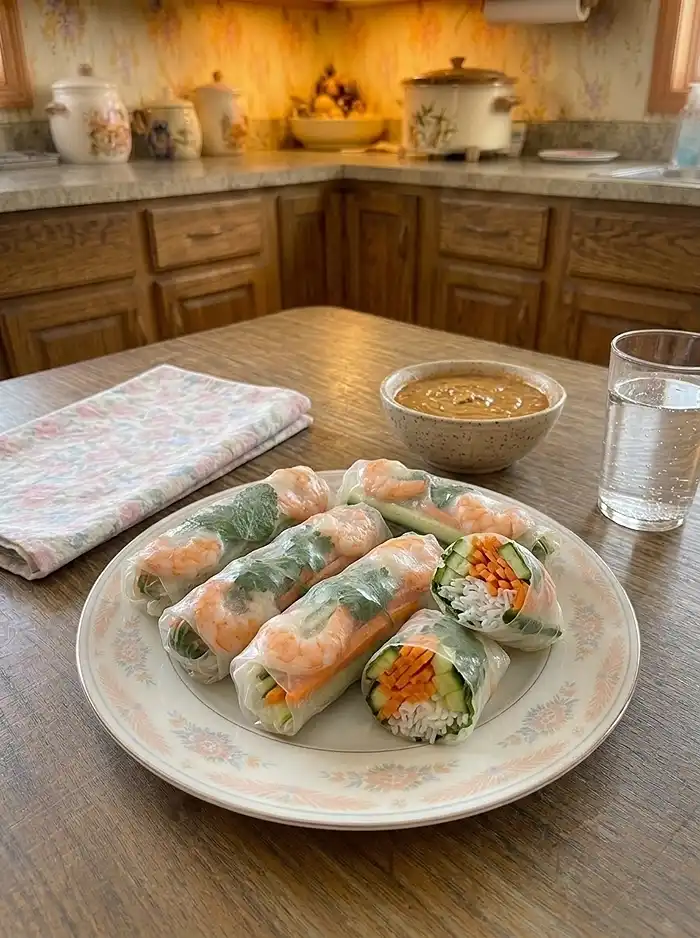
These rolls suit a Fourth of July cookout, where a cool, no-cook appetizer is welcome next to the grill. Serve them on a platter with the dip in small bowls, and keep the platter covered with a damp towel until guests arrive.
For a spread of safe finger foods, add the celiac-safe skewer cups. For warm options, offer the crispy polenta bites with whipped ricotta or a pot of slow-cooker buffalo pulled chicken dip.
Final Thoughts
If you try these gluten-free spring rolls, I would love to hear how your first batch turned out. Leave a star rating and share the recipe with someone who is new to gluten-free cooking.
Questions or swaps from your own kitchen are welcome in the comments, and I will help you troubleshoot.
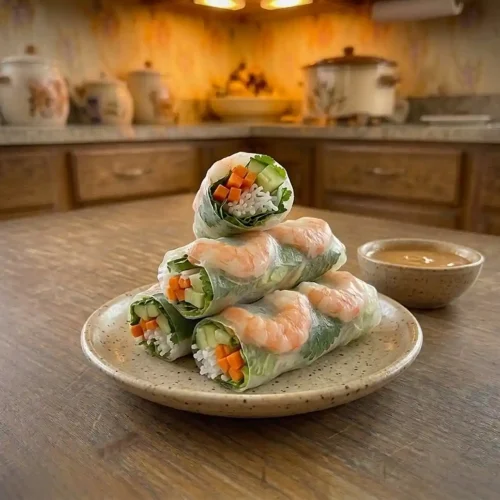
Gluten-Free Vietnamese Rice Paper Spring Rolls with Dip
Equipment
- Mixing bowl
- Whisk
- Large Shallow Bowl
- Cutting board
- Sharp knife
- Clean kitchen towel
- Serving platter
Ingredients
For the Peanut Dipping Sauce
- 3 tablespoons Creamy peanut butter Labeled gluten-free
- 3 tablespoons Hoisin sauce Certified gluten-free
- 2 small Fresh limes Juiced
- 2 teaspoons Garlic chili sauce Labeled gluten-free; alternatively use 2 teaspoons gluten-free Sriracha mixed with 1/4 teaspoon garlic powder
- 2-3 tablespoons Water As needed to thin the sauce
For the Noodles and Wrappers
- 7 ounces Thin rice vermicelli noodles Certified gluten-free
- 1 teaspoon Toasted sesame oil Labeled gluten-free
- 8 Rice paper wrappers Made from rice or tapioca starch and labeled gluten-free
For the Filling
- 1 pound Cooked jumbo shrimp Peeled, deveined, and sliced in half lengthwise
- 1 cup Carrots Cut into matchsticks
- 1 cup Cucumber Julienned
- 1 cup Fresh bean sprouts
- 1 cup Green leaf lettuce Thinly sliced
- ½ cup Fresh mint leaves
- ½ cup Fresh cilantro leaves
- ½ cup Fresh Thai basil leaves
Instructions
- In a small bowl, whisk together the peanut butter, certified gluten-free hoisin sauce, fresh lime juice, and garlic chili sauce. Gradually add water, 1 tablespoon at a time, until the sauce reaches your preferred dipping consistency. Cover and refrigerate.
- Prepare the rice vermicelli according to the package instructions, cooking just until tender. Drain and rinse thoroughly under cold water to stop the cooking.
- Toss the cooled noodles with toasted sesame oil to prevent sticking. Set aside.
- Make sure the shrimp are fully cooked, peeled, and deveined, then slice them lengthwise. Arrange the carrots, cucumber, bean sprouts, lettuce, mint, cilantro, and Thai basil in separate bowls.
- Fill a large shallow bowl with warm water. Dip one rice paper wrapper into the water for a few seconds, just until pliable but not overly soft. Place it flat on a clean, slightly damp work surface.
- Arrange 3–4 shrimp halves near the lower third of the wrapper, with the cut side facing up. Add a small handful of rice noodles, carrots, cucumber, bean sprouts, and lettuce, then finish with a few mint, cilantro, and Thai basil leaves. Leave about 1 inch of space around the edges.
- Fold the bottom edge over the filling, fold both sides inward, and roll gently but firmly toward the top until sealed. Avoid overfilling, as the delicate rice paper can tear. The wrapper will feel slightly tacky and seal itself as you roll.
- Continue with the remaining wrappers and filling. Keep the finished rolls covered with a slightly damp, clean kitchen towel while assembling the rest.
- Arrange the spring rolls on a serving platter and serve immediately with the chilled peanut dipping sauce.