Butterfly Pea Flower Lemonade
Make gluten-free butterfly pea flower lemonade at home with dried flowers, fresh lemon juice, and honey. Includes the color-change trick, storage tips, and FAQs.
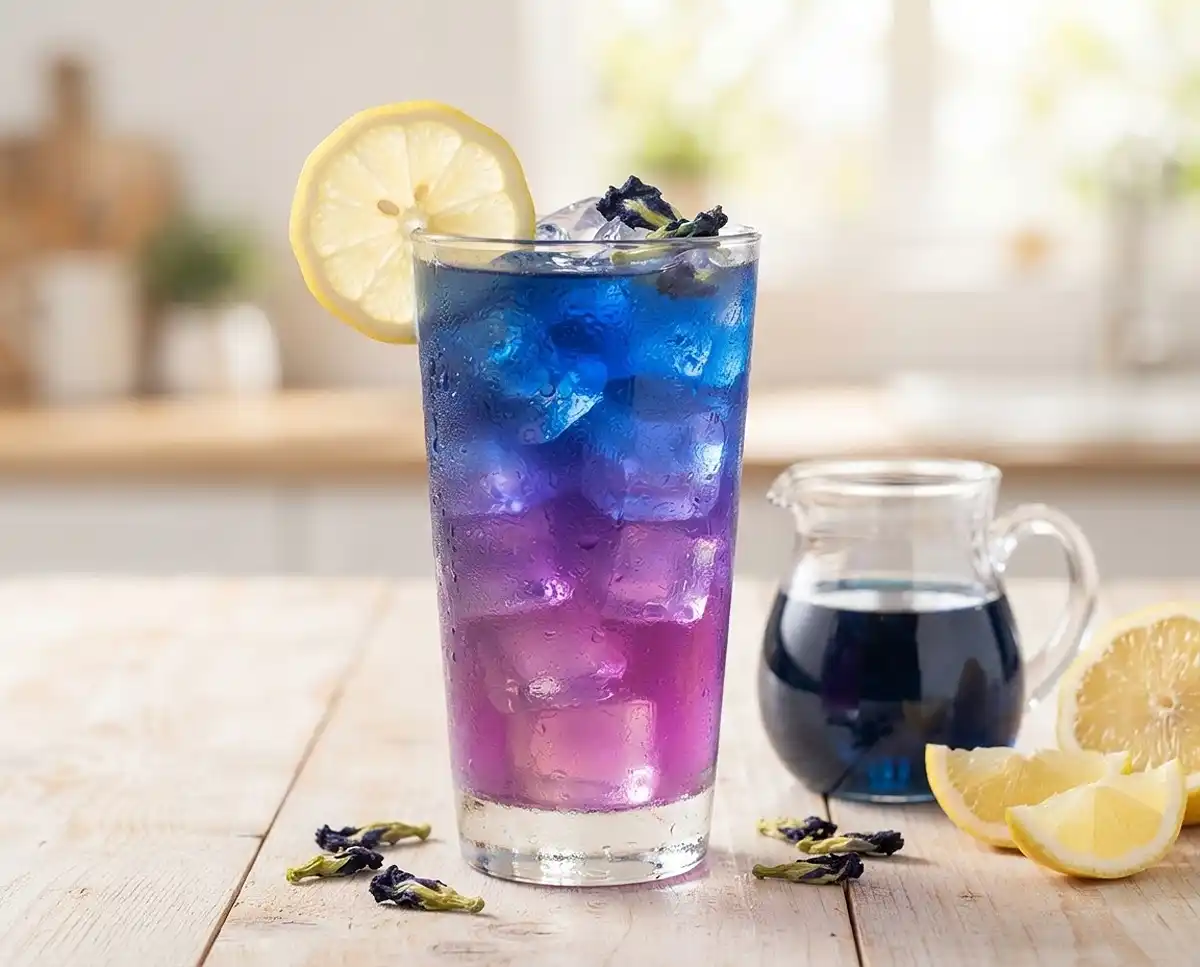
The first time I made butterfly pea flower lemonade, I set a glass down in front of my daughter and watched her eyes go wide. The drink started a vivid, inky blue—and the moment the lemon juice hit it, it shifted to a deep, swirling purple right before our eyes.
She thought I’d done something magical. I didn’t correct her. What I will tell you is that this gluten-free butterfly pea flower lemonade is one of the most visually striking drinks you can make with nothing but flowers, citrus, honey, and water.
Well… it also happens to be genuinely easy to make and naturally free of gluten, dairy, and artificial dyes. Have you ever wanted a party drink that looks impressive without requiring any bartending skills? This is it.
Why You’ll Love This Butterfly Pea Flower Lemonade
- Naturally color-changing: The anthocyanins in butterfly pea flowers react with lemon juice to shift the drink from blue to purple—no food dye, no tricks, just chemistry.
- Completely gluten-free: Every ingredient in this recipe is naturally gluten-free, with no processed additives or hidden fillers to worry about.
- Beginner-friendly: If you can boil water and squeeze a lemon, you can make this. The longest part is simply waiting for the tea to steep.
- Endlessly flexible: Make it still or sparkling, sweeten it with honey or maple syrup, and serve it at everything from a Tuesday afternoon to a summer Fourth of July cookout.
The Secret to Perfect Gluten-Free Butterfly Pea Flower Lemonade
- Steep for a full hour: A short steep produces a pale, washed-out blue. Giving the flowers a full 60 minutes at rest—covered—creates the deep, saturated color that makes the purple transformation so dramatic when lemon juice is added.
- Dissolve honey while the tea is still warm: Cold tea won’t properly dissolve honey, leaving it pooled at the bottom. Stir it in while the steeped tea is still warm to emulsify the sweetener fully into the liquid.
- Use freshly squeezed lemon juice: Bottled lemon juice has a flatter, more acidic profile that mutes the color shift and dulls the flavor. Freshly squeezed juice provides the right pH to trigger the full blue-to-purple reaction.
- Layer for the color reveal: For the signature transformation effect, add lemon juice to the glass first, then ice, then pour the blue tea over slowly. The layers briefly hold before mixing into that striking purple-violet hue.
Table of Contents
Ingredients
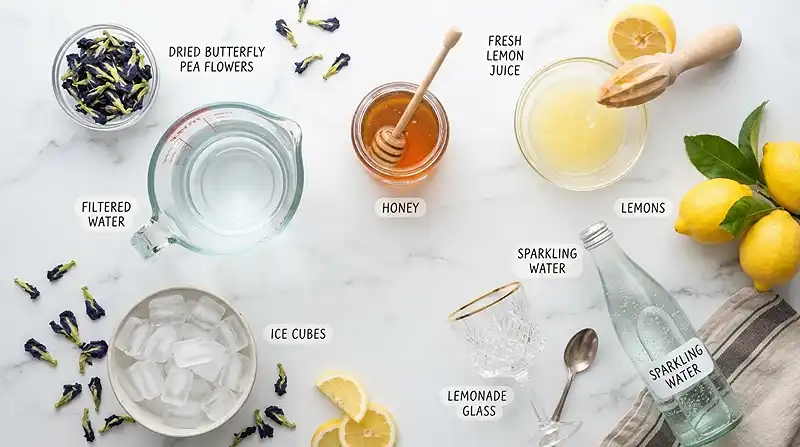
Butterfly Pea Tea
| Ingredient | Amount | Notes |
|---|---|---|
| Dried butterfly pea flowers, preferably whole and deep blue | 8–10 flowers | More flowers = deeper color |
| Filtered water | 5 cups | Filtered water keeps the color clear and pure |
Lemonade
| Ingredient | Amount | Notes |
|---|---|---|
| Light-colored honey | ⅓–½ cup, plus more to taste | Use light honey to avoid muddying the color |
| Freshly squeezed lemon juice | 1 cup, plus more to taste | Bottled juice won’t trigger the color shift as well |
| Ice cubes | As needed | — |
| Lemon slices | For garnish | — |
| Extra dried butterfly pea flowers | Optional | For garnish |
Sparkling Version
| Ingredient | Amount | Notes |
|---|---|---|
| Filtered water | 1 cup | Used to steep the tea concentrate |
| Cold sparkling water | 4 cups | Add at serving time to preserve the bubbles |
Instructions
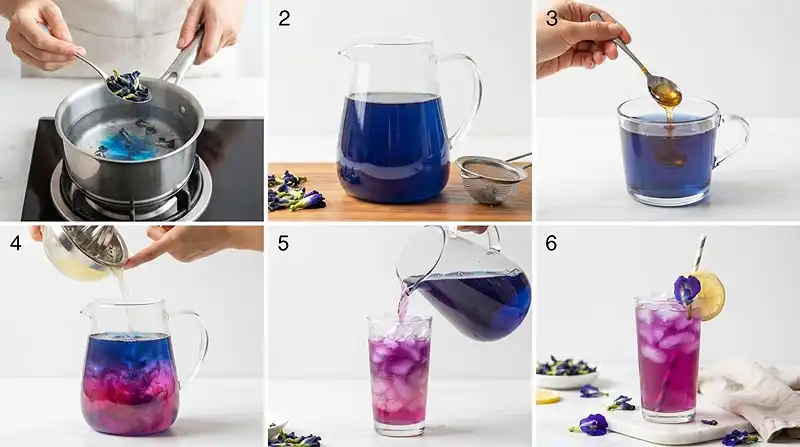
Step 1: Brew the Butterfly Pea Tea
Bring 5 cups of filtered water to a boil. Remove from the heat and add the dried butterfly pea flowers. The hot water will immediately begin pulling the vivid indigo color from the petals.
Step 2: Steep for One Hour
Cover the pot and let the flowers steep for 1 hour. The longer steeping time builds a deep, vibrant blue tea that makes the eventual color-change moment genuinely impressive. Don’t rush this step—it’s doing all the work for you.
Step 3: Squeeze the Lemon Juice
While the tea steeps, freshly squeeze the lemon juice and set it aside. One cup of fresh lemon juice typically requires about 5–6 medium lemons. Roll them firmly on the counter before cutting—this loosens the juice and makes squeezing much easier.
Step 4: Strain and Sweeten
Strain the butterfly pea flowers from the tea. While the tea is still warm, stir in the honey until it is completely dissolved. The warmth of the tea helps the honey emulsify smoothly into the liquid without any gritty or sticky residue at the bottom.
Pro Tip: Start with ⅓ cup of honey and taste before adding more. Butterfly pea tea has a mild, slightly earthy flavor that doesn’t need a lot of sweetness to shine.
Step 5: Add the Lemon Juice
Add the fresh lemon juice and stir well. Watch the color shift from blue to purple as the acid from the lemon juice reacts with the anthocyanins in the tea—it happens fast and it never gets old. Taste and adjust with additional honey or lemon juice to find your balance.
Step 6: Serve Over Ice
Fill glasses with ice and pour the lemonade over the top. Garnish with lemon slices and a few dried butterfly pea flowers if desired. The lemonade is now a unified, vivid purple-violet color that looks like it was dyed professionally.
Step 7: The Color-Change Pour (Optional but Worth It)
For the signature blue-to-purple reveal, pour the lemon juice into the glass first, then add the ice, then gently pour the sweetened blue tea over it slowly. Stir and watch the lemonade transform right in the glass—a moment that works as well at a dinner party as it does for a curious eight-year-old on a Tuesday afternoon.
Make It Your Own
You know, one of the things I love most about this easy gluten-free butterfly pea flower lemonade is how naturally it adapts to different preferences and occasions. The base recipe is a starting point, not a ceiling.
Make it sparkling by using 1 cup of filtered water to steep a concentrated tea with the same 8–10 flowers, then topping glasses with 4 cups of cold sparkling water at serving time. Add the sparkling water last and gently, so you preserve those bubbles. The effervescent version feels a little more festive and works well as a mocktail alternative at gatherings.
Swap the honey for maple syrup to make this fully vegan. Use a light-colored maple syrup to avoid altering the beautiful color of the finished drink. The maple flavor is subtle enough that it doesn’t compete with the floral-citrus profile of the lemonade.
Add fresh mint or ginger to the tea during steeping for a more complex flavor. A few fresh mint leaves add brightness and a clean finish, while a few coins of fresh ginger introduce warmth that balances the tartness of the lemon juice beautifully.
Turn it into an herbal concentrate by brewing the tea with half the water, sweetening it, and storing it in the fridge. When you’re ready to serve, dilute with still or sparkling water to taste. This approach works especially well for meal prep or for hosting a crowd without last-minute work.
For another naturally gluten-free drink with botanical character, the homemade gluten-free fire cider on this site makes a surprisingly good mixer when you want something with a little more kick.
Common Problems & Solutions
Problem: The tea came out pale blue instead of deep indigo. Steep longer and use more flowers. Eight to ten whole, deep-blue flowers steeped for a full hour produces the rich color this recipe needs. Flowers that are older, broken, or faded will yield a weaker brew—buy from a reputable supplier and store in an airtight container away from light.
Man, oh man… Problem: The color didn’t shift to purple when I added the lemon juice. The color change requires sufficient acidity. If you used bottled lemon juice or didn’t use enough of it, the pH may not have dropped low enough to trigger the anthocyanin reaction. Freshly squeezed juice from real lemons is the most reliable option—and make sure you’re using the full 1 cup called for in the recipe.
Problem: The honey clumped or settled at the bottom. Honey must be stirred into the tea while it’s still warm—not after it has cooled to room temperature. If your honey has already clumped, gently warm the sweetened tea in a small saucepan over low heat, whisking steadily until the honey fully dissolves before adding the lemon juice.
Problem: The lemonade tastes too tart or too sweet. This recipe is designed to be adjusted to taste—that’s why the honey and lemon quantities include ranges. Start at the lower end of each, taste after mixing, and add more of whichever element needs boosting. According to food science research on anthocyanin stability, the color of butterfly pea tea is most vibrant at a pH between 6 and 7, and shifts distinctly purple below pH 3—so more lemon juice also deepens the color shift.
Storage & Meal Prep
| Method | Duration | Notes |
|---|---|---|
| Counter | Not recommended | Fresh lemon juice spoils quickly at room temp |
| Fridge | 3–5 days | Airtight glass container; stir before serving |
| Freezer | Up to 2 months | Freeze as ice cubes for use in other drinks |
For the best make-ahead experience, store the sweetened butterfly pea tea and the lemon juice separately in the fridge, then combine them at serving time. This preserves the blue color for a more dramatic pour when guests are watching.
The freezer cube method is a fun no-waste trick: pour finished lemonade into an ice cube tray, freeze solid, and drop a few cubes into sparkling water for an effortlessly purple drink with zero prep. The cubes also work beautifully floated in a glass of plain water for a slow, gentle color bloom.
Butterfly Pea Flower Lemonade FAQs
Can I use butterfly pea flower powder instead of dried flowers?
Yes, butterfly pea flower powder works as a substitute, though you will need to experiment with the amount since concentrations vary by brand. Start with 1 teaspoon dissolved in hot water and adjust for color depth. Powder dissolves faster than whole flowers, so you can skip the long steep—just mix until fully incorporated.
How do I make butterfly pea flower lemonade without honey?
Substitute maple syrup, agave nectar, or plain cane sugar syrup in equal amounts. For sugar syrup, dissolve equal parts sugar and warm water before adding. All of these options keep the recipe vegan and gluten-free. Use a light-colored sweetener to avoid muddying the vivid blue or purple color.
What’s the best way to get the most dramatic color change?
Pour the lemon juice into the glass first, add ice, then slowly pour the sweetened blue tea over the top. The layers briefly separate before mixing, giving you a slow, swirling transition from blue to purple. Using freshly squeezed lemon juice and a deeply steeped tea produces the most vivid result.
Why did my lemonade turn gray or murky instead of purple?
Gray or murky color usually means the tea was not steeped long enough, the flowers were old or low quality, or a dark-colored honey muddied the mix. Use whole, deep-blue dried flowers, steep for the full hour, and choose a pale or white honey. Filtered water also helps keep the color clear and bright.
Can I make this recipe for kids?
Absolutely. Butterfly pea flowers are widely regarded as safe for consumption and are used in traditional herbal preparations across Southeast Asia. The drink contains no caffeine, no artificial coloring, and no gluten. The color-change effect makes it especially fun for children—it is one of the few drinks that genuinely earns the word magical at the family table.
Serving Suggestions
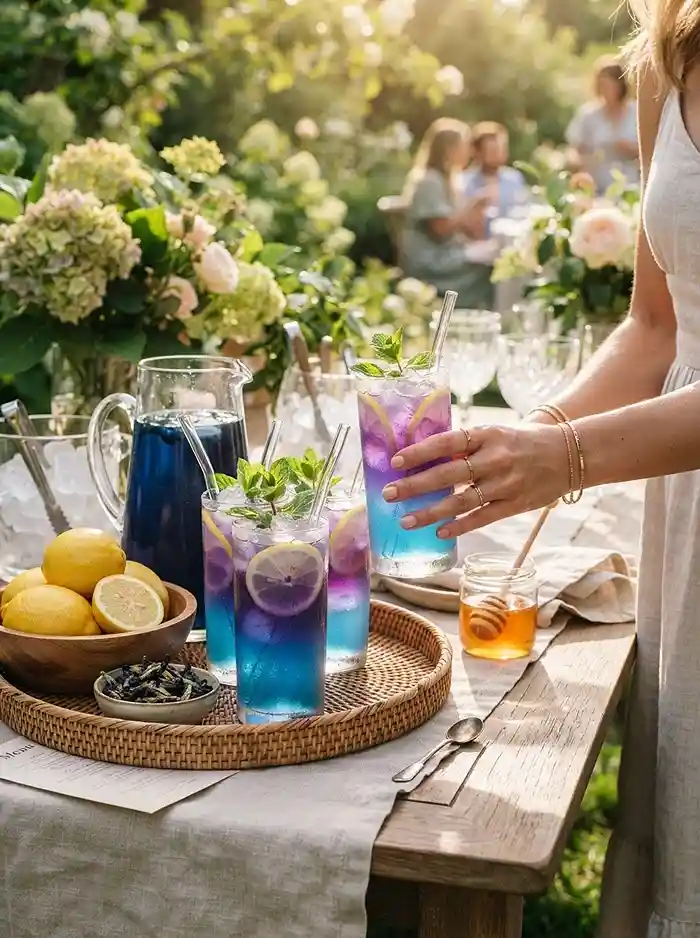
This lemonade earns its place at any warm-weather table. We’ve served it at backyard Fourth of July gatherings alongside grilled food and it consistently outshines every other drink on the table—purely on visual impact before anyone even takes a sip.
It pairs beautifully with light, fresh appetizers. These gluten-free pizza roll-up cucumber bites make a natural pairing—cool, crisp, and easy to assemble while the tea is still steeping.
For dessert, try it alongside this dairy-free mango raspberry sorbet. The tropical sweetness of the sorbet complements the floral-citrus profile of the lemonade the way a warm afternoon complements a cold glass of anything good.
If you enjoy making botanical drinks from scratch, the gluten-free fire cider recipe on this site is another whole-ingredient tonic worth exploring—especially in the colder months when you want something with more warmth than lemon and honey alone.
Conclusion
This gluten-free butterfly pea flower lemonade is one of those recipes that delivers more than you expect from such a short ingredient list. The color, the flavor, and the sheer novelty of watching a drink shift from blue to purple make it worth adding to your regular rotation.
If you make it, I’d love to hear how the color-change moment landed at your table. Drop a comment below and let me know what you paired it with or how you made it your own.
And if you found this helpful, sharing it on Pinterest takes about five seconds and helps other gluten-free families discover it too—that kind of support genuinely keeps this site going.
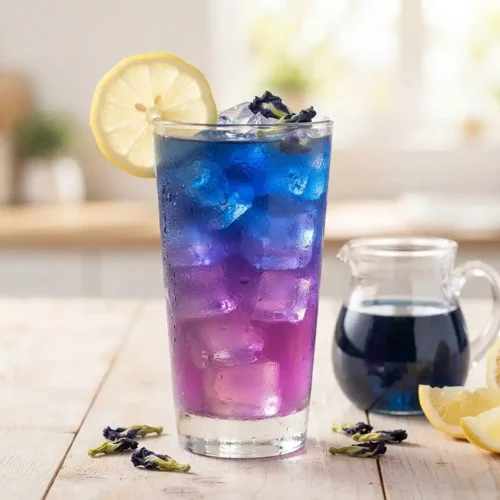
Gluten-Free Butterfly Pea Flower Lemonade Recipe
Equipment
- Large pot or saucepan
- Fine mesh strainer
- Citrus Juicer
- large pitcher
- Glasses
Ingredients
Butterfly Pea Tea
- 8–10 flowers Dried butterfly pea flowers Preferably whole and deep blue; more flowers create deeper color
- 5 cups Filtered water Keeps the color clear and pure
Lemonade
- ⅓–½ cup Light-colored honey Plus more to taste; use light honey to avoid muddying the color
- 1 cup Freshly squeezed lemon juice Plus more to taste; fresh juice provides the best color change
- as needed Ice cubes
- for garnish Lemon slices
- optional Extra dried butterfly pea flowers For garnish
Sparkling Version
- 1 cup Filtered water Used to steep the concentrated tea
- 4 cups Cold sparkling water Add at serving time to preserve the bubbles
Instructions
- Bring 5 cups of filtered water to a boil. Remove from the heat and add the dried butterfly pea flowers.
- Cover the pot and let the flowers steep for 1 hour to develop a deep, vibrant blue tea.
- While the tea steeps, freshly squeeze 1 cup of lemon juice and set it aside.
- Strain the butterfly pea flowers from the tea. While the tea is still warm, stir in the honey until completely dissolved. Start with ⅓ cup and add more to taste.
- Add the fresh lemon juice and stir well. Watch as the tea changes from vivid blue to purple as the acidity of the lemon juice reacts with the butterfly pea flower pigments. Taste and adjust the honey or lemon juice as desired.
- Fill glasses with ice and pour the lemonade over the top. Garnish with lemon slices and extra dried butterfly pea flowers if desired.
- For a dramatic color-change pour, add lemon juice to each glass first, followed by ice. Slowly pour the sweetened blue tea over the ice and watch it transform from blue to purple.