Gluten-Free Fire Cider Recipe
Make this gluten-free fire cider recipe at home with fresh horseradish, ginger, turmeric, and apple cider vinegar. Step-by-step instructions, storage tips, and FAQs included.
The first time I made fire cider, I was honestly skeptical. A jar of roots, citrus, and raw apple cider vinegar sitting on my counter for a month? It sounded more like a science experiment than a kitchen staple.
But I was cooking for a family member managing both celiac disease and a rundown immune system that winter, and I needed something with real, whole ingredients and zero mystery additives. This gluten-free fire cider recipe became my answer—and it hasn’t left our kitchen since.
You know, what surprised me most was how flexible this recipe turns out to be. Whether you’re stirring it into a salad dressing or sipping a small shot before dinner, it punches way above its weight. Why settle for a store-bought tonic full of fillers when you can make something this potent right at home?
Why You’ll Love This Fire Cider Recipe
- Naturally gluten-free: Every ingredient is whole and unprocessed—no hidden gluten, no fillers, no surprises.
- Low hands-on time: You spend about 20 minutes prepping, then the jar does all the work for 3–4 weeks.
- Deeply versatile: Use it as a tonic, a marinade base, a salad dressing ingredient, or even a spicy mixer with sparkling water.
- Make-ahead and long-lasting: Once strained and bottled, it keeps refrigerated for several months—ideal for meal prep.
The Secret to Perfect Gluten-Free Fire Cider
- Keep everything submerged: Ingredients poking above the vinegar can spoil. Press them down before sealing and top off with extra vinegar if needed.
- Use raw, unfiltered apple cider vinegar: The live cultures and natural acidity are what make fire cider bioactive. Filtered white vinegar won’t give you the same depth. According to peer-reviewed research on fermented foods and gut health, raw ACV retains more beneficial compounds than its filtered counterpart.
- Fresh beats dried every time: Fresh horseradish, ginger, and turmeric infuse with significantly more intensity than their dried versions. The oils and volatile compounds extract better in a vinegar base.
- Daily shaking matters: Redistributing the ingredients each day ensures even, consistent infusion and prevents any one flavor from dominating.
Table of Contents
Ingredients
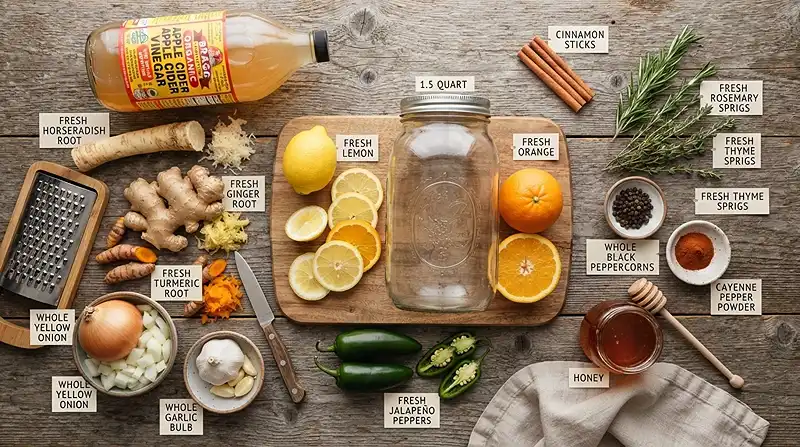
Fire Cider Base
| Ingredient | Amount | Notes |
|---|---|---|
| Organic raw, unfiltered apple cider vinegar | 3 cups, plus more as needed | Must be raw and unfiltered |
| Fresh horseradish, peeled and grated or chopped | 7 oz (about 1 cup) | Work in a ventilated area—it’s intense |
| Fresh ginger, grated or chopped | 7 oz (about 1 cup) | No need to peel if organic |
| Fresh turmeric, grated or chopped | 2 oz (about ¼ cup) | Wear gloves—it stains |
| Yellow onion, chopped | 1 medium | Any variety works |
| Garlic cloves, crushed or chopped | 10 cloves | Crushed releases more allicin |
| Lemon, thinly sliced | 1 lemon | Use organic if keeping the rind |
| Orange, thinly sliced | 1 orange | Use organic if keeping the rind |
| Jalapeño peppers, thinly sliced | 2–3 peppers | Adjust for heat preference |
| Cinnamon sticks | 3 sticks | Adds warmth and balance |
| Fresh rosemary | 3 sprigs | Earthy and aromatic |
| Fresh thyme | 6 sprigs | Pairs beautifully with citrus |
| Whole peppercorns | 1 teaspoon | Optional |
| Cayenne pepper | ¼–½ teaspoon | Optional, for extra heat |
After Infusion
| Ingredient | Amount | Notes |
|---|---|---|
| Honey | ½ cup, plus more to taste | Raw honey adds extra depth |
| Maple syrup | To taste | Optional vegan alternative to honey |
Instructions
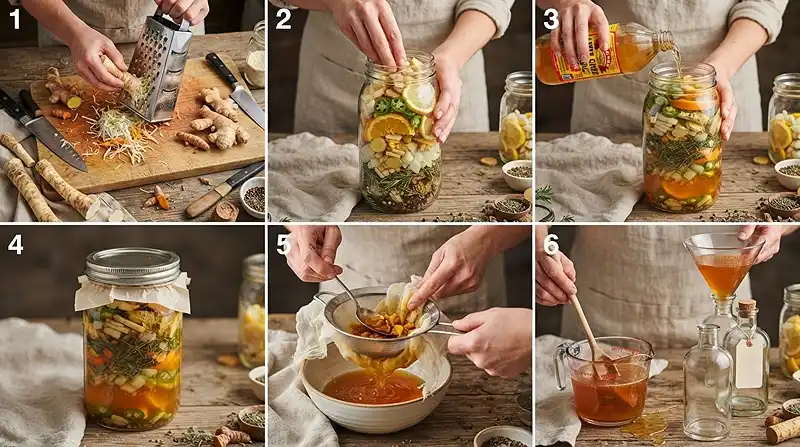
Step 1: Prepare the Ingredients
Peel and grate or finely chop the horseradish and ginger. Grate or chop the fresh turmeric as well. Work in a well-ventilated kitchen when handling the horseradish—it releases sharp, eye-watering fumes that can sneak up on you fast.
Step 2: Fill the Jar
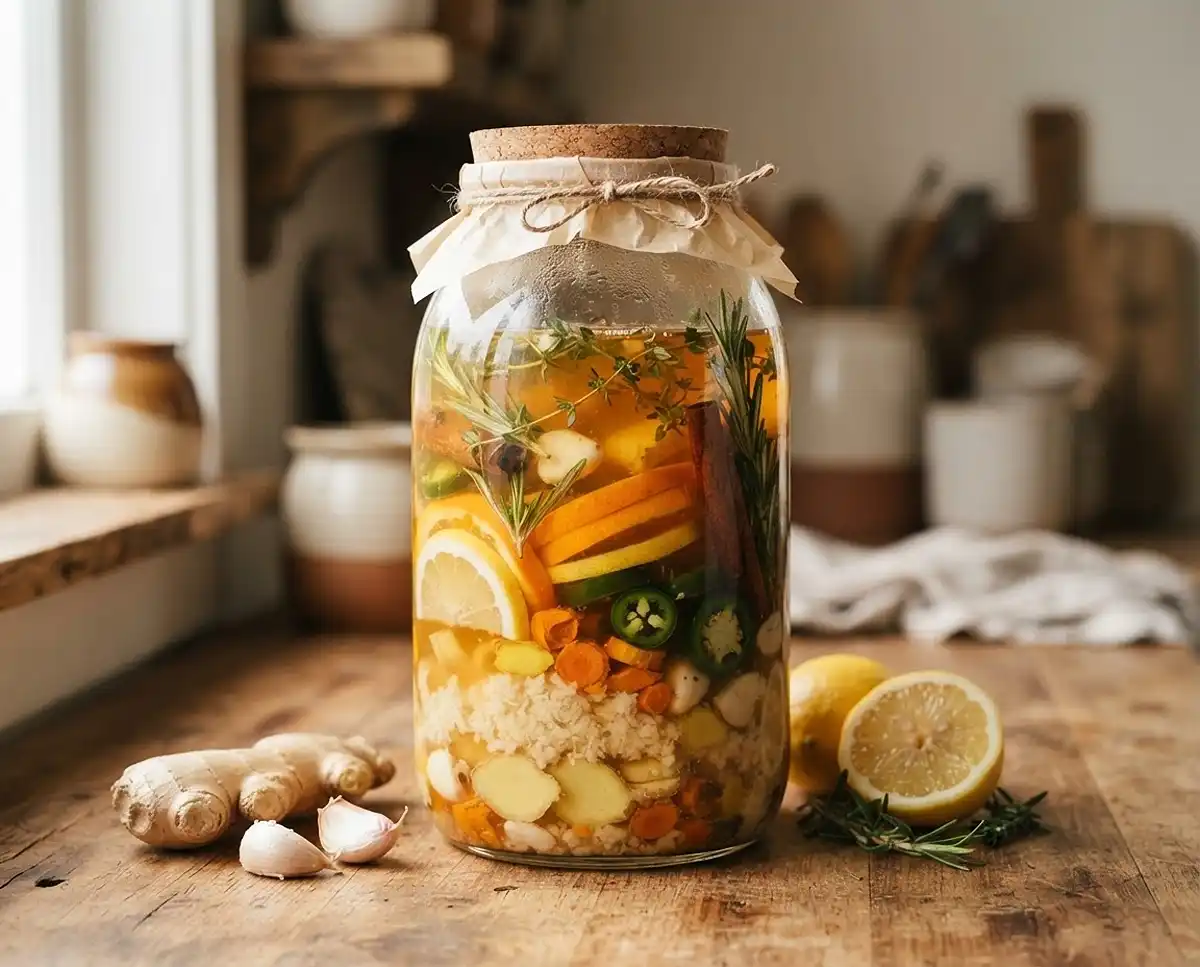
Add the horseradish, ginger, turmeric, onion, garlic, lemon, orange, and jalapeños to a clean 1½–2-quart glass jar. Add the rosemary, thyme, cinnamon sticks, peppercorns, and cayenne if using. Pack everything in snugly—you want the jar full but with room for the vinegar to flow through.
Step 3: Add the Vinegar
Pour the apple cider vinegar over everything until all ingredients are completely submerged. Add additional vinegar as needed. Keeping the ingredients beneath the liquid helps prevent any exposed pieces from spoiling during the infusion period.
Step 4: Cover Safely
If your jar has a metal lid, place a piece of parchment paper between the lid and the jar before sealing. This protects the metal from the acidic vinegar. A plastic lid is another reliable option. Either way, make sure the seal is snug.
Step 5: Infuse
Shake the jar gently, then store it in a cool, dark place for 3–4 weeks. Shake the jar once a day to redistribute the ingredients and encourage even infusion. The longer you let it sit, the more layered and complex the flavor becomes—like a slow-brewed herbal concentrate that deepens with time.
Step 6: Strain
After the infusion period, strain the mixture through a fine-mesh strainer lined with cheesecloth. Press or squeeze the solids well to extract as much infused vinegar as possible. Don’t rush this step—you want every last drop of that liquid gold.
Pro Tip: Wear gloves when squeezing the solids. The turmeric will stain anything it touches a deep orange-yellow that takes days to fade.
Step 7: Sweeten
Pour the strained fire cider into a clean bowl or jar and stir in the honey while the mixture is at room temperature. Taste as you go and add more honey if desired. For a fully vegan version, maple syrup works beautifully here—it adds a gentle earthiness that complements the spice.
Step 8: Bottle and Store
Transfer the finished fire cider to a clean, airtight glass bottle or jar. Keep it refrigerated and always use clean utensils when serving. Contaminating it with used spoons or fingers introduces bacteria that can shorten its shelf life.
How to Use Fire Cider
Use small amounts as a flavorful vinegar tonic or incorporate it into food. It works especially well mixed into salad dressings, added to marinades, drizzled over roasted vegetables, or stirred into soups and savory bowls.
For a spicy, tangy drink, mix a tablespoon or two with sparkling water. It’s also a great addition to hearty gluten-free skillet dinners when you want to punch up the acidity without reaching for a bottle of hot sauce.
Make It Your Own
Well… one of the best things about this traditional fire cider recipe with apple cider vinegar is how forgiving it is. The base ratios work, but the herbs and heat level are wide open to personal taste.
Swap the jalapeños for habaneros if you want serious heat. Habaneros bring a fruity, floral edge alongside the fire, which plays well with the citrus in this recipe. Use just one or two—they’re significantly hotter than jalapeños.
Add fresh black pepper or star anise for a more complex spice profile. Star anise adds a subtle licorice warmth that bridges the citrus and the peppery heat in an unexpected, satisfying way. This variation is especially popular with people who enjoy chai-forward flavors.
Use maple syrup instead of honey to make this recipe fully vegan. Maple syrup is naturally gluten-free and adds a rich, caramel-like sweetness that softens the sharp vinegar base without masking the heat from the ginger and jalapeños.
Leave out the cayenne if you’re sensitive to heat or making this for children. The horseradish and jalapeños provide plenty of warmth on their own. You can always start without cayenne and taste after straining—then decide whether the heat level works for your household.
For a fun appetizer spin using bold flavors from the same flavor family, check out these gluten-free pizza roll-up cucumber bites—they’re a crowd favorite at any gathering.
Common Problems & Solutions
Problem: Ingredients floating above the vinegar line. Press them back down with a clean spoon and top off with additional apple cider vinegar. Exposed ingredients are at risk of spoiling and can affect the overall quality of your batch. Check daily during the first week.
Problem: The finished fire cider is too sharp or astringent. Add more honey or maple syrup, one tablespoon at a time, until the sharpness softens to your liking. You can also dilute individual servings with a splash of water or sparkling water without losing the flavor profile.
Problem: The color looks murky or the liquid seems cloudy. That’s completely normal. The natural compounds from turmeric, fresh herbs, and raw ACV create cloudiness that signals an active, unfiltered product. According to trusted nutrition research on raw apple cider vinegar, that cloudiness—often called “the mother”—is a sign of beneficial live cultures.
Man, oh man… Problem: The jar smells off or shows visible mold. Discard the batch and start fresh. This typically only happens when ingredients weren’t fully submerged or the jar wasn’t properly cleaned before use. Sterilize your jar thoroughly next time and stay consistent with daily shaking.
Problem: The fire cider tastes flat or one-dimensional after straining. This usually means the infusion period was cut short. A full 3–4 weeks is ideal—rush it to 2 weeks and you’ll lose the layered complexity that makes fire cider worth making. Patience is genuinely the most important ingredient here.
Storage & Meal Prep
| Method | Duration | Notes |
|---|---|---|
| Counter | Not recommended after sweetening | The honey makes refrigeration necessary |
| Fridge | 3–6 months | Airtight glass bottle, clean utensils only |
| Freezer | Not recommended | Freezing dulls the flavor and kills live cultures |
Because fire cider doesn’t freeze well, the best make-ahead strategy is simply to batch it large. One batch of this easy homemade gluten-free fire cider yields about 3 cups—enough to last months in the fridge. Make two jars at once if you want to share a bottle as a holiday gift.
For no-waste use of the strained solids, don’t toss them. The pressed herb-and-root pulp makes a punchy addition to salad dressings, a spicy compound butter base, or a marinade for grilled proteins. It keeps refrigerated in a sealed container for about a week.
Gluten-Free Fire Cider Recipe FAQs
Can I make gluten-free fire cider without fresh horseradish?
You can substitute prepared horseradish (check the label for gluten-free certification), but the flavor will be less potent and the texture of the infusion will differ. Fresh horseradish provides the sharpest, most bioactive result. If you can find it, it’s worth the effort.
How do I know when fire cider is ready to strain?
After 3–4 weeks of daily shaking and cool, dark storage, the vinegar will have deepened in color and taken on a complex, layered aroma. Taste a small amount—it should be sharp, spicy, and noticeably more complex than plain ACV. If it still tastes mostly like vinegar with faint notes, give it another week.
What’s the best way to take fire cider as a tonic?
Start with 1 tablespoon diluted in a small glass of water or juice. Some people work up to 2 tablespoons per day. Taking it straight is also common, but the acidity can be intense on an empty stomach for sensitive individuals. Always use a straw if drinking it undiluted to protect tooth enamel.
Why did my fire cider turn out too spicy to enjoy?
The jalapeño and cayenne quantities in this recipe are already on the moderate side, but individual peppers vary in heat. Next time, reduce the jalapeños to one and skip the cayenne. After straining, you can also balance heat by adding extra honey or maple syrup tablespoon by tablespoon until the heat is manageable.
Is fire cider safe for people with celiac disease?
Yes—every ingredient in this recipe is naturally gluten-free. The key is to verify that your apple cider vinegar is labeled gluten-free, as some brands process their products in shared facilities. Raw, unfiltered ACV from a dedicated gluten-free producer is the safest choice for those with celiac disease.
Serving Suggestions
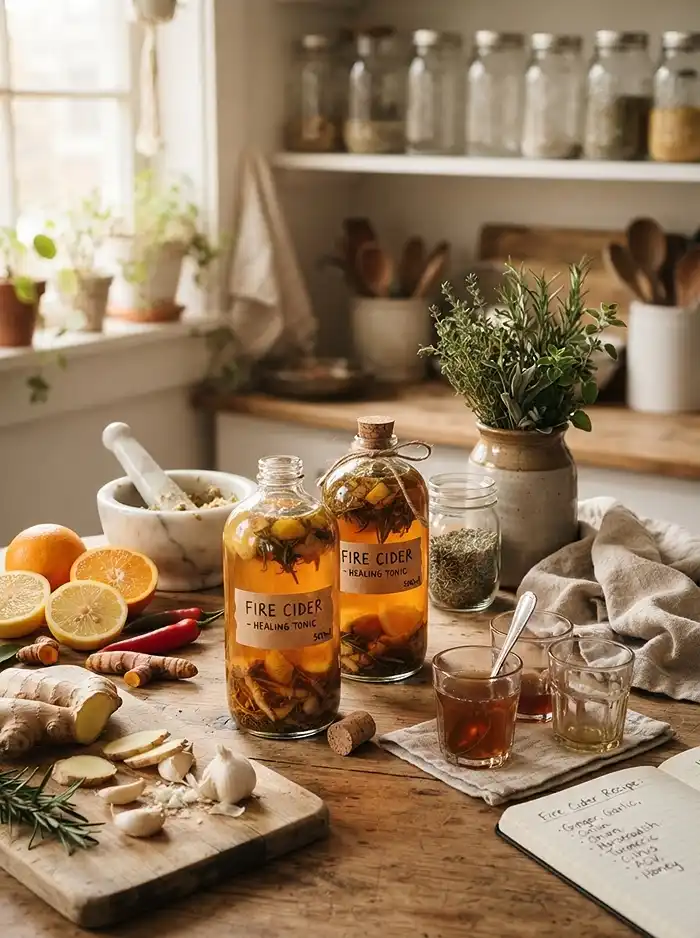
Fire cider earns its place at the table year-round, but it genuinely shines in late fall and winter. We always make a fresh batch before Thanksgiving so it’s ready and bottled by Christmas—it’s become our go-to hostess gift for family who eat gluten-free.
Try drizzling it over roasted root vegetables alongside a hearty gluten-free turkey and potato skillet for a full winter meal. It also pairs beautifully stirred into sparkling water with a squeeze of lemon as a light pre-dinner drink.
For a cool contrast, serve a small tonic alongside a dessert like this dairy-free mango raspberry sorbet—the sweet-tart sorbet balances the bold heat of the cider in a way that surprises every guest who tries it.
If you’re new to gluten-free entertaining and want more ideas, the gluten-free pizza roll-up cucumber bites are a no-fuss appetizer that pairs naturally with a fire cider mixer on the side.
Conclusion
This gluten-free fire cider recipe is one of the most satisfying things you can make with minimal effort and maximum payoff. You do 20 minutes of work, wait patiently, and end up with a bold, layered tonic that earns its place in your fridge all season long.
If you give it a try, I’d genuinely love to hear how it turned out. Drop a comment below with your heat level of choice, your favorite way to use it, or any tweaks you made along the way.
And if you found this recipe helpful, sharing it on Pinterest helps other gluten-free home cooks find it too—that means the world to a small site like this one.
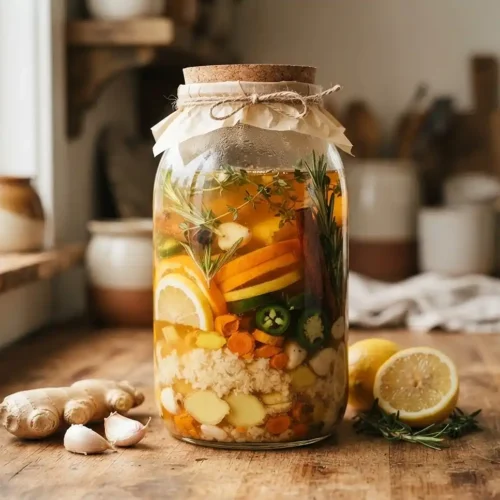
Gluten-Free Fire Cider Recipe
Equipment
- 1½–2-quart glass jar
- Fine mesh strainer
- Cheesecloth
- Clean airtight glass bottle or jar
- Grater
- Kitchen gloves
Ingredients
Fire Cider Base
- 3 cups Organic raw, unfiltered apple cider vinegar Plus more as needed; must be raw and unfiltered
- 7 oz Fresh horseradish About 1 cup, peeled and grated or chopped; work in a ventilated area
- 7 oz Fresh ginger About 1 cup, grated or chopped; no need to peel if organic
- 2 oz Fresh turmeric About ¼ cup, grated or chopped; wear gloves because it stains
- 1 medium Yellow onion Chopped; any variety works
- 10 cloves Garlic Crushed or chopped
- 1 Lemon Thinly sliced; use organic if keeping the rind
- 1 Orange Thinly sliced; use organic if keeping the rind
- 2–3 Jalapeño peppers Thinly sliced; adjust for heat preference
- 3 sticks Cinnamon sticks Adds warmth and balance
- 3 sprigs Fresh rosemary Earthy and aromatic
- 6 sprigs Fresh thyme Pairs beautifully with citrus
- 1 teaspoon Whole peppercorns Optional
- ¼–½ teaspoon Cayenne pepper Optional, for extra heat
After Infusion
- ½ cup Honey Plus more to taste; raw honey adds extra depth
- to taste Maple syrup Optional vegan alternative to honey
Instructions
- Peel and grate or finely chop the horseradish and ginger. Grate or chop the fresh turmeric. Work in a well-ventilated kitchen when handling the horseradish because it releases strong fumes.
- Add the horseradish, ginger, turmeric, onion, garlic, lemon, and jalapeños to a clean 1½–2-quart glass jar. Add the rosemary, thyme, cinnamon sticks, peppercorns, and cayenne if using.
- Pour the apple cider vinegar over the ingredients until everything is completely submerged. Add more vinegar as needed to keep all ingredients beneath the liquid.
- If using a metal lid, place a piece of parchment paper between the lid and the jar before sealing to protect the metal from the acidic vinegar. A plastic lid can also be used. Seal snugly.
- Shake the jar gently and store it in a cool, dark place for 3–4 weeks. Shake once daily to redistribute the ingredients and encourage even infusion.
- After the infusion period, strain the mixture through a fine-mesh strainer lined with cheesecloth. Press or squeeze the solids well to extract as much infused vinegar as possible. Wear gloves when handling the solids because turmeric can stain.
- Pour the strained fire cider into a clean bowl or jar and stir in the honey at room temperature. Taste and add more honey as desired. For a vegan version, use maple syrup instead.
- Transfer the finished fire cider to a clean, airtight glass bottle or jar. Refrigerate and use clean utensils whenever serving.
- Use small amounts as a flavorful vinegar tonic or add it to salad dressings, marinades, roasted vegetables, soups, and savory bowls. For a spicy drink, mix 1–2 tablespoons with sparkling water.