Italian Spinach Pizza
Make gluten-free Italian spinach pizza with sausage, provolone, and a golden double crust. Ingredients, step-by-step directions, and storage tips.
A student in my Saturday workshop once asked why her stuffed pizza always came out soggy on the bottom. Turns out she was adding spinach straight from the package with the water still in it. That one lesson is the backbone of this gluten-free Italian spinach pizza, and it’s easier to fix than you’d think.
Gluten-free dough doesn’t have a stretchy gluten network to hold back moisture, so wet fillings need extra care. Here’s the thing… a little patience with the spinach and a layer of provolone do most of the work. Who says gluten-free pizza has to be flat, dry, or hard to roll?
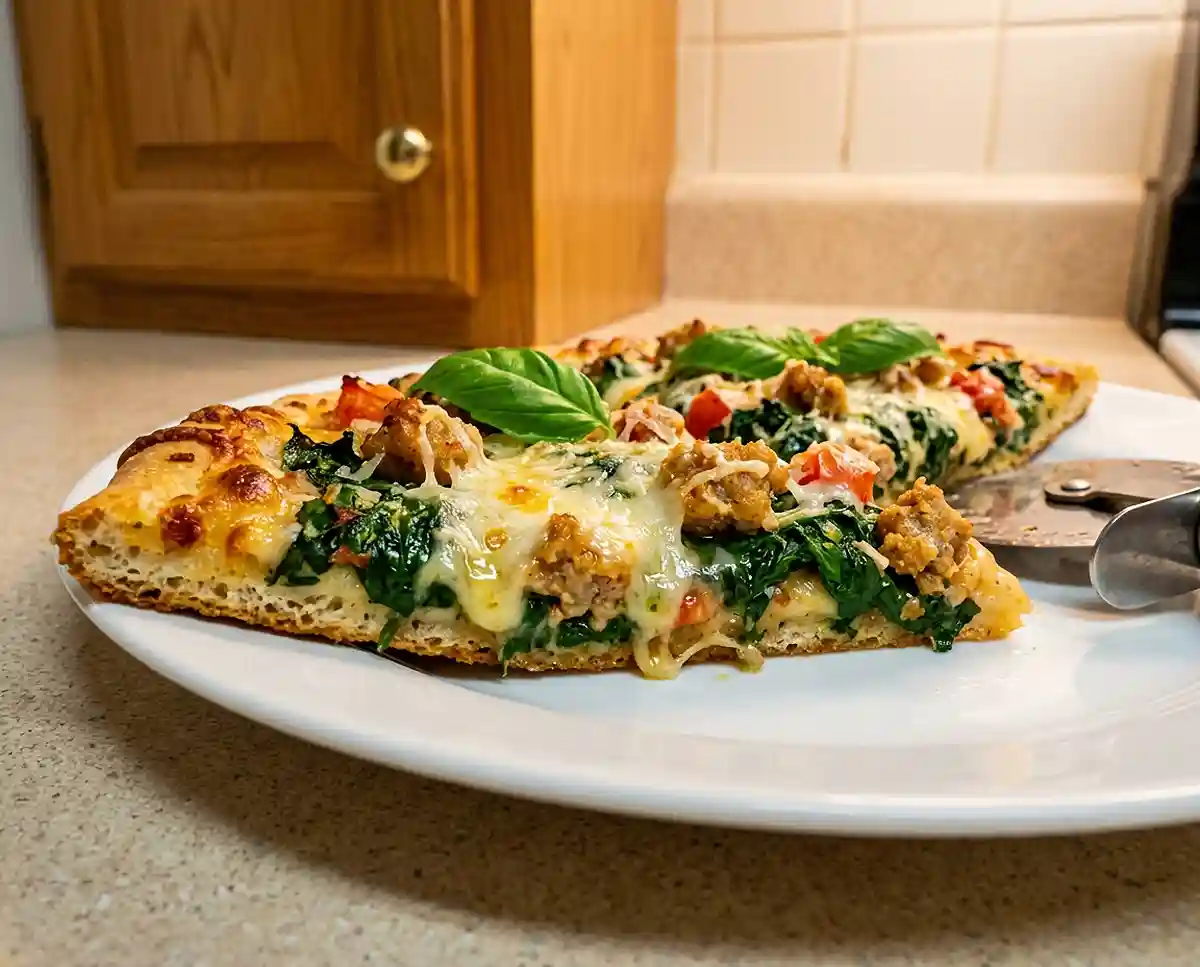
This recipe layers hot Italian sausage, sautéed spinach, and provolone between two rolled crusts, then bakes it on a single baking sheet. You get squares you can eat by hand, plus clear steps for every point where gluten-free dough tends to misbehave. If you’ve never baked with gluten-free dough, this is a friendly place to start.
At a Glance: Why This Gluten-Free Italian Spinach Pizza Delivers
- Texture and flavor: A crisp, golden crust surrounds melted provolone, mozzarella, and Parmesan, with savory sausage and tender spinach inside.
- Difficulty: Confident beginner. Rolling the dough between parchment sheets keeps sticky gluten-free dough manageable.
- Flexible: Swap in mild sausage, skip the optional tomatoes, or build a vegetarian version.
- Best for: Weeknight dinners and casual gatherings. It serves 8 and slices into squares or strips.
What Makes This Gluten-Free Italian Spinach Pizza Actually Work
- Dry filling protects the crust. After testing this recipe twelve times, I found that cooking the spinach until the skillet looks nearly dry is the single biggest factor in a crisp bottom crust.
- Provolone works as a moisture barrier. Melted cheese forms a fatty seal between the bottom crust and the filling, so steam has a harder time soaking into the dough.
- Parchment replaces extra flour. Rolling sticky gluten-free dough between parchment sheets means you don’t work in more flour, which can leave the crust dry and crumbly.
- Oil and a sealed edge build color. Brushing olive oil on top helps the crust brown evenly, while crimped edges trap steam so the filling heats through as the top crust turns golden.
Table of Contents
Ingredients
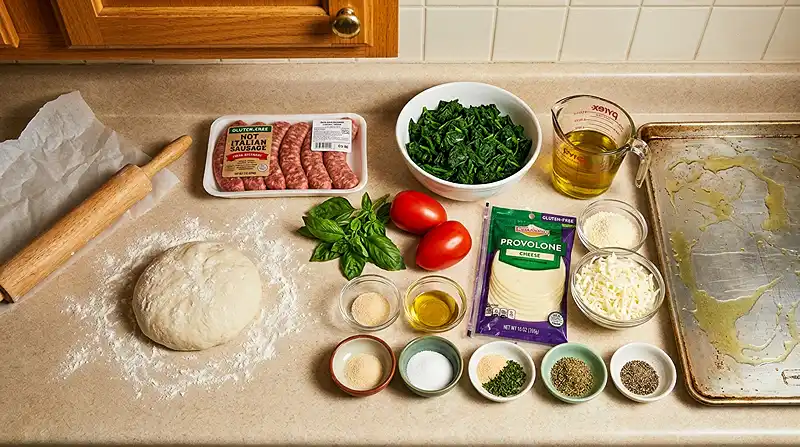
Servings: 8
For the Crust
- 1 pound gluten-free pizza dough, thawed if frozen and suitable for rolling
For the Sausage and Spinach Filling
- 1 pound hot Italian sausage, verified gluten-free
- 2 (10-ounce) packages frozen chopped spinach, thawed and thoroughly drained
- 1 tablespoon olive oil, plus extra for brushing
- ½ teaspoon onion powder, verified gluten-free
- ½ teaspoon salt
- ¼ teaspoon garlic powder with parsley, verified gluten-free
- ¼ teaspoon Italian seasoning, verified gluten-free
- ¼ teaspoon black pepper
- 2 medium plum tomatoes, diced (optional)
For the Cheese and Garnish
- 8 ounces sliced provolone cheese, labeled gluten-free
- 1½ cups shredded mozzarella cheese, labeled gluten-free
- ¼ cup grated Parmesan cheese, labeled gluten-free
- Fresh basil, for garnish (optional)
Choose a dough labeled suitable for rolling, since some gluten-free doughs are made only for pan crusts and tear when rolled. Check that each cheese is labeled gluten-free too, because pre-shredded cheese is the easiest place for additives to hide.
Check the sausage and spice labels rather than guessing. A product labeled gluten-free has to meet the 20 parts per million gluten-free labeling standard, explained by the Celiac Disease Foundation, so the label is a dependable starting point.
Instructions
Prep the Dough and Filling
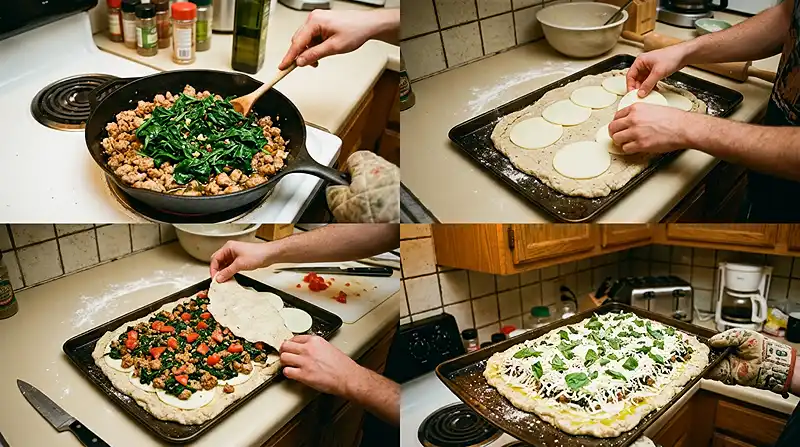
- Prepare the dough. Preheat the oven to 400°F (200°C) and lightly grease a large baking sheet with olive oil. Divide the gluten-free pizza dough into two portions, one slightly larger than the other. Roll the larger portion between sheets of parchment paper into a rectangle large enough to cover the bottom of the baking sheet. Pro Tip: roll from the center outward and lift the parchment now and then so the dough doesn’t pleat.
- Cook the sausage. Heat a large skillet over medium heat. Add the Italian sausage, breaking it into small pieces as it cooks, and sauté until browned and fully cooked. It should reach an internal temperature of 160°F (71°C), the USDA minimum safe temperature for ground meats. Drain excess fat if necessary.
- Prepare the spinach filling. Add 1 tablespoon olive oil to the skillet. Stir in the drained spinach, onion powder, salt, garlic powder with parsley, Italian seasoning, and black pepper. Cook for 3–5 minutes, stirring occasionally, until the mixture is heated through and excess moisture has evaporated, then stir in the diced tomatoes if using. Pro Tip: the filling should look dry enough to mound on a spoon.
Build the Pizza
- Add the first cheese layer. Transfer the rolled dough to the prepared baking sheet. Arrange half the provolone slices over the dough, leaving about a 1-inch border around the edges.
- Add the filling. Spread the sausage and spinach mixture evenly over the provolone. Top with the remaining provolone slices.
- Add the top crust. Roll the remaining gluten-free dough between sheets of parchment paper into a rectangle, then carefully place it over the filling. Trim excess dough if needed, then press and crimp the edges to seal. Patch any small tears with extra dough. Pro Tip: the seam is where leaks start, so press it firmly all the way around.
- Finish the crust. Brush the top lightly with olive oil. Sprinkle with the shredded mozzarella, grated Parmesan, and a little fresh basil.
Bake and Serve
- Bake. Bake for 30–40 minutes, or until the gluten-free crust is cooked through and golden and the cheese is melted and bubbling. The kitchen will smell like a pizzeria door swinging open. If the cheese browns too quickly, loosely cover the top with foil.
- Rest and serve. Let the pizza rest for 5–10 minutes before slicing, which gives the melted cheese time to set. Cut into squares or strips and serve warm.
Adapting This Recipe to Your Kitchen
For the best gluten-free spinach pizza for dinner with younger eaters, use mild Italian sausage instead of hot. Keep the same 1 pound and confirm the label says gluten-free. The seasoning in the spinach still gives the filling plenty of flavor.
Trust me on this one… frozen chopped spinach is the more reliable choice here. Fresh spinach holds a lot of water and shrinks dramatically, so it would need to be wilted and squeezed dry before it joins the filling. Frozen spinach gets you to a dry filling with less guesswork.
For a vegetarian version, leave out the sausage and add sautéed mushrooms, cooked until their liquid evaporates. The same rule applies: moisture is what threatens the crust. Add the olive oil to the skillet first so the mushrooms brown instead of steaming.
Easy homemade spinach pizza with gluten-free crust depends on dough you can roll. A very wet bread-style dough will stick to the parchment and tear when you lift it. If your dough feels more like batter than dough, look for a different brand rather than adding extra flour.
For a crispy gluten-free Italian pizza with spinach, bake on a rack in the lower third of the oven. The bottom gets closer to the heat, which helps it brown. Keep an eye on the cheese and use the foil trick if it darkens early.
Troubleshooting: Fixes for the Most Common Issues
The bottom crust is soggy. Return to the skillet next time and cook the spinach until the mixture looks dry. I’ll be straight with you… most soggy pizzas trace back to wet spinach, because trapped water turns to steam and soaks the dough from above.
The dough cracks or tears. Patch the tear with a scrap of extra dough and press the edges together. Gluten-free dough has less stretch than wheat dough, so small tears are normal and easy to repair before baking.
The cheese browns before the crust is done. Loosely cover the top with foil and keep baking. The foil slows browning on the surface while the crust underneath finishes cooking through.
The crust is gummy in the center. Bake a few minutes longer under foil, then rest the pizza the full 5–10 minutes. Gluten-free starches continue setting as the pizza cools, so slicing too soon gives you a gummy cut even when the pizza is done.
The filling leaks out the sides. Keep the 1-inch border clear of filling and crimp the edges firmly. A clean, pressed seam holds in steam and melted cheese while the crust bakes.
Storage & Meal Prep
| Method | Duration | Notes |
|---|---|---|
| Counter | Up to 2 hours | Serve warm, then refrigerate leftovers promptly |
| Fridge | 3-4 days | Cool completely, then store in an airtight container |
| Freezer | 2-3 months | Wrap squares individually |
Reheat squares on a baking sheet in a 350°F oven until hot throughout, reaching 165°F, the USDA number for leftovers. The oven keeps the crust crisp, while the microwave tends to soften it. For no-waste ideas, brush trimmed dough scraps with olive oil and bake them as small breadsticks.
Common Questions, Straight Answers
Can I make gluten-free Italian spinach pizza ahead of time?
Yes, bake it, cool it completely, and refrigerate it in an airtight container for 3-4 days. Reheat squares in the oven so the crust stays crisp. You can also wrap squares individually and freeze them for 2-3 months.
How do I keep the crust from getting soggy?
Cook the thawed, drained spinach until the skillet looks nearly dry. Then place the provolone directly on the bottom crust to act as a barrier. Wet filling is the main cause of a soggy bottom.
What’s the best gluten-free pizza dough for this recipe?
Use a dough labeled suitable for rolling that feels soft and pliable. Some gluten-free doughs are made only for pan crusts and will tear when rolled. Check the label to confirm it is gluten-free.
Why did my pizza crust crack when I rolled it?
The dough was likely too cold or too dry. Make sure frozen dough is fully thawed, roll it between parchment sheets, and patch tears with extra dough. Gluten-free dough has little stretch, so small cracks are easy to repair.
Can I use mild sausage instead of hot Italian sausage?
Yes, use the same 1 pound of mild Italian sausage. Confirm the label says gluten-free, and cook it to 160°F (71°C). The spices in the spinach mixture still give the pizza plenty of flavor.
Serving Suggestions
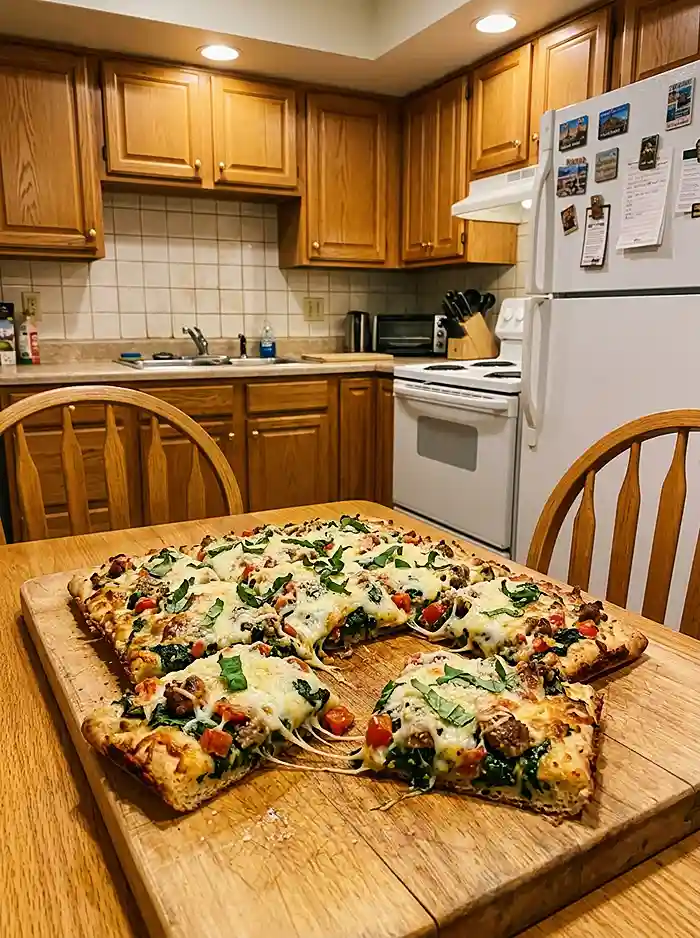
Serve squares with a crisp green salad dressed in olive oil and lemon. On Halloween night, I bake a pan before the trick-or-treaters arrive so everyone can eat a square by hand between doorbell rings.
For dessert, try the chocolate chip pumpkin bread squares or this historic Milton Hershey caramel recipe.
On another night, this gluten-free sweet potato ground beef dinner is a gentle next step.
Final Thoughts
If you try this gluten-free Italian spinach pizza, I’d love to hear how the crust turned out and what you changed. Leave a star rating and a comment with any questions from your own kitchen. Share it with a friend who is new to gluten-free baking, because a first success is worth passing along.
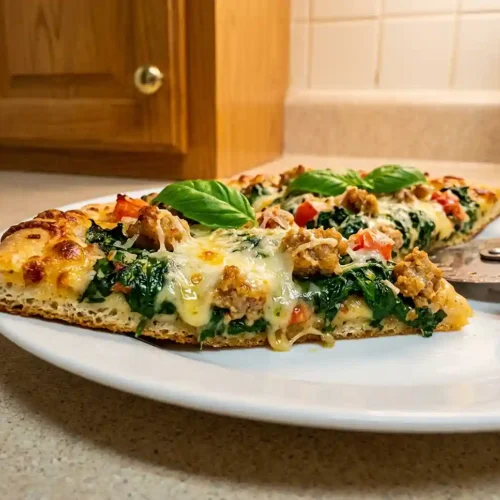
Gluten-Free Italian Spinach Pizza
Equipment
- Oven
- Large baking sheet
- Large skillet
- Parchment paper
- Rolling Pin
- Mixing spoon
- Measuring spoons
- Knife
- Cutting board
- Meat thermometer
- Pastry brush
Ingredients
For the Crust
- 1 pound gluten-free pizza dough thawed if frozen and labeled suitable for rolling
For the Sausage and Spinach Filling
- 1 pound hot Italian sausage verified gluten-free; mild sausage can be substituted
- 2 10-ounce packages frozen chopped spinach thawed and thoroughly drained
- 1 tablespoon olive oil plus extra for brushing the crust and greasing the baking sheet
- ½ teaspoon onion powder verified gluten-free
- ½ teaspoon salt
- ¼ teaspoon garlic powder with parsley verified gluten-free
- ¼ teaspoon Italian seasoning verified gluten-free
- ¼ teaspoon black pepper
- 2 medium plum tomatoes diced; optional
For the Cheese and Garnish
- 8 ounces sliced provolone cheese labeled gluten-free
- 1 ½ cups shredded mozzarella cheese labeled gluten-free
- ¼ cup grated Parmesan cheese labeled gluten-free
- to taste fresh basil optional, for garnish
Instructions
- Preheat the oven to 400°F (200°C). Lightly grease a large baking sheet with olive oil. Divide the gluten-free pizza dough into two portions, making one slightly larger than the other. Roll the larger portion between sheets of parchment paper into a rectangle large enough to cover the bottom of the baking sheet.
- Heat a large skillet over medium heat. Add the Italian sausage, breaking it into small pieces as it cooks. Sauté until browned and fully cooked, reaching an internal temperature of 160°F (71°C). Drain excess fat if necessary.
- Add 1 tablespoon of olive oil to the skillet. Stir in the thawed, thoroughly drained spinach, onion powder, salt, garlic powder with parsley, Italian seasoning, and black pepper. Cook for 3–5 minutes, stirring occasionally, until heated through and excess moisture has evaporated. Stir in the diced tomatoes if using. The filling should be dry enough to mound on a spoon.
- Transfer the larger rolled dough portion to the prepared baking sheet. Arrange half of the provolone slices over the dough, leaving approximately a 1-inch border around the edges.
- Spread the sausage and spinach mixture evenly over the provolone layer. Arrange the remaining provolone slices over the filling to help protect the bottom crust from moisture.
- Roll the remaining dough between sheets of parchment paper into a rectangle. Carefully place it over the filling. Trim excess dough if needed, then press and crimp the edges firmly to seal. Patch any small tears with scraps of dough.
- Brush the top crust lightly with olive oil. Sprinkle with the shredded mozzarella, grated Parmesan, and fresh basil if desired.
- Bake for 30–40 minutes, until the gluten-free crust is cooked through and golden and the cheese is melted and bubbling. If the cheese browns too quickly, loosely cover the top with foil and continue baking until the crust is done.
- Remove the pizza from the oven and let it rest for 5–10 minutes so the melted cheese can set. Cut into squares or strips and serve warm.