Cottage Cheese Egg Bite Meal Prep
My gluten-free cottage cheese egg bite meal prep almost didn’t happen. The first batch I tested, I skipped the blender and just whisked everything together by hand — and wound up with dense, rubbery rounds that had visible curds throughout.
Not great. I almost gave up on the whole idea. But then I blended the eggs and cottage cheese until completely smooth and frothy before adding anything else, and the result was night-and-day different: light, creamy, almost custardy bites with none of the graininess.
Is there a faster, hands-off breakfast that still clears 12 grams of protein per serving? I haven’t found one. These come together in about 35 minutes total, make 12 egg bites across 6 meal prep containers, and hold up beautifully in the fridge all week.
Why You’ll Love This Cottage Cheese Egg Bite Meal Prep
- Genuinely fluffy texture — blending the cottage cheese and eggs creates a smooth, airy base as light as a well-made frittata, not a dense protein brick.
- Naturally gluten-free, no swaps needed — eggs and cottage cheese contain no gluten, so this is a safe, certified-ingredient-free recipe for celiac and gluten-sensitive households.
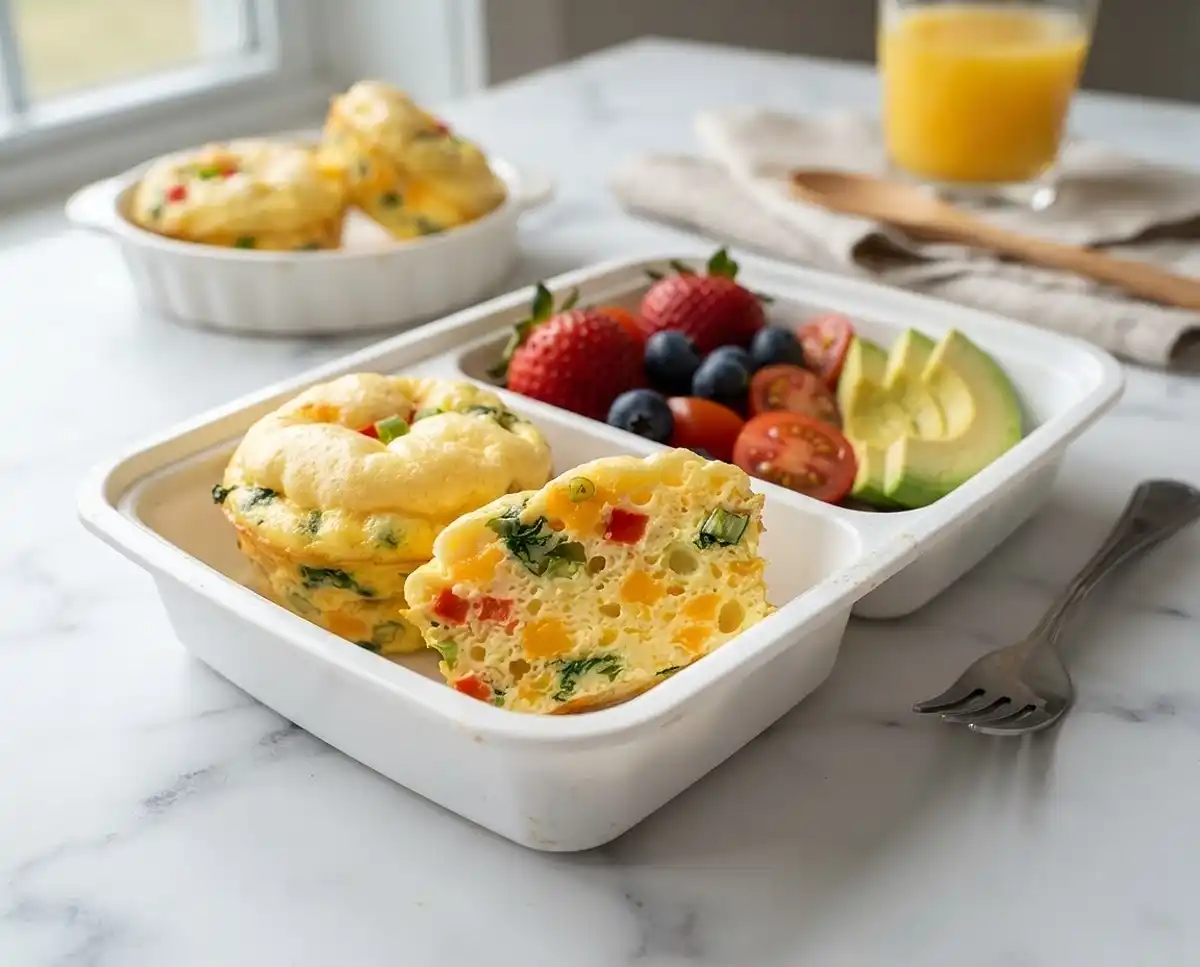
- Five days of breakfasts from one bake — six containers, two egg bites each, ready to grab and reheat in under a minute all week long.
- Endlessly customizable — the base works with virtually any mix-in, from turkey sausage to feta to sautéed mushrooms, so it never feels repetitive.
- Kid-friendly and crowd-ready — mild, savory, and easy to hold, they work just as well on a holiday brunch table as they do on a Tuesday morning.
The Secret to Perfect Gluten-Free Cottage Cheese Egg Bite Meal Prep
- Blend, don’t whisk. Running the eggs and cottage cheese through a blender for 20–30 seconds emulsifies them into a silky, uniform base. Whisking leaves small curd pockets that create an uneven texture after baking.
- Low and slow at 325°F. High heat causes eggs to seize and turn rubbery. Baking at 325°F lets the proteins set gradually, which is what produces that soft, custardy center.
- Fill cups only ¾ full. Egg bites puff significantly during baking. Overfilled cups spill over the edges and bake unevenly. The ¾ mark gives them room to rise and set properly.
- Use a silicone muffin pan if you have one. Silicone releases egg bites far more cleanly than metal pans, even well-greased ones. If you only have metal, grease generously and let them cool fully before removing.
Table of Contents
Ingredients
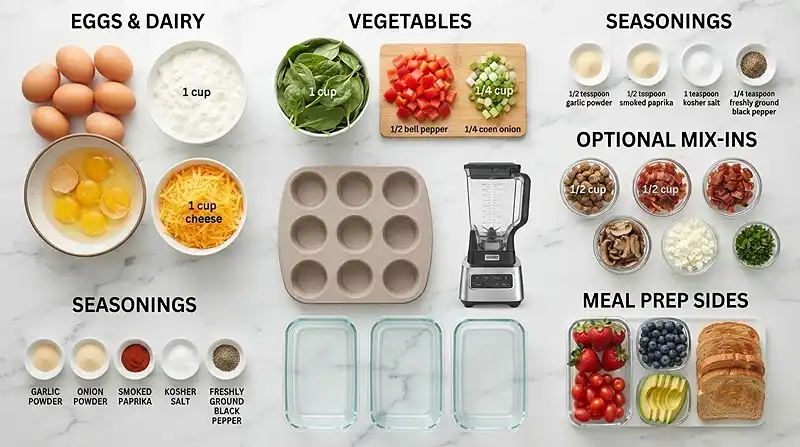
Egg Bite Base
| Ingredient | Amount | Notes |
|---|---|---|
| Large eggs | 10 | Room temperature blends more smoothly |
| Cottage cheese | 1 cup | Full-fat gives the creamiest result |
| Shredded cheddar cheese | 1 cup | Pre-shredded works; hand-shredded melts better |
| Baby spinach, finely chopped | 1 cup | Chop finely so it distributes evenly |
| Diced red bell pepper | ½ cup | Small dice for even distribution |
| Diced green onion | ¼ cup | |
| Garlic powder | ½ teaspoon | |
| Onion powder | ½ teaspoon | |
| Smoked paprika | ½ teaspoon | Adds depth without heat |
| Kosher salt | 1 teaspoon | |
| Freshly ground black pepper | ¼ teaspoon | |
| Nonstick cooking spray or olive oil | For greasing | Don’t skip — even silicone benefits from light greasing |
Optional Mix-Ins
- ½ cup cooked certified gluten-free turkey sausage, diced
- ½ cup cooked bacon, crumbled
- ½ cup sautéed mushrooms
- ¼ cup crumbled feta cheese
- Fresh chopped herbs
For Meal Prep Pairing
- Fresh fruit
- Gluten-free toast
- Avocado slices
- Cherry tomatoes
Instructions

Prep and Blend
- Preheat the oven to 325°F (165°C). Lightly grease a 12-cup silicone or nonstick muffin pan with cooking spray or olive oil, making sure to coat the sides of each cup.
- Add the eggs and cottage cheese to a blender. Blend for 20–30 seconds until completely smooth and slightly frothy — you should see no visible curds and the mixture should look uniformly pale yellow.
- Pour the blended mixture into a large bowl. This gives you room to fold in the remaining ingredients without splashing.
- Stir in the cheddar cheese, spinach, bell pepper, green onion, garlic powder, onion powder, smoked paprika, salt, and black pepper. Fold in any optional mix-ins if using, distributing them evenly throughout.
Fill and Bake
- Divide the mixture evenly among the prepared muffin cups, filling each about ¾ full. A ladle or large measuring cup with a pour spout makes this cleaner and faster.
- Bake for 22–26 minutes, or until the egg bites are puffed and the centers are fully set. They should not jiggle when you gently shake the pan — that’s your visual cue that they’re done.
- Let the egg bites cool in the pan for 5 minutes, then carefully remove them and transfer to a wire rack to cool completely. Running a thin spatula around the edge of each cup helps release them cleanly.
Portion and Pack
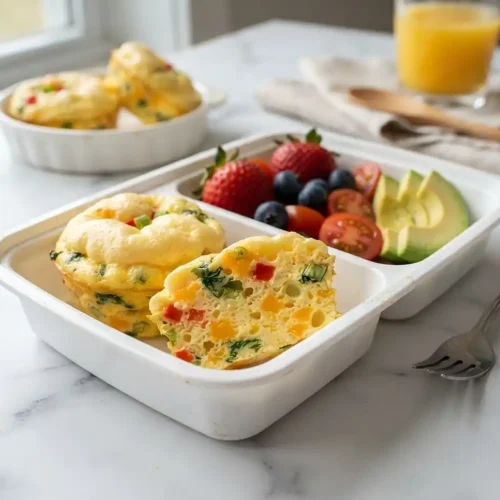
- Divide the egg bites into 6 meal prep containers, placing 2 egg bites in each. Add your preferred sides — fresh fruit, avocado slices, cherry tomatoes, or gluten-free toast — to round out the container.
- Store in the refrigerator for up to 5 days or freeze for up to 2 months. Reheat in the microwave for 30–45 seconds before serving. They’re ready faster than your coffee brews.
Make It Your Own
The turkey sausage and bacon mix-ins are the most popular additions in my kitchen, and for good reason — both add a savory, slightly smoky punch that makes these feel more like a full breakfast. Just make sure any sausage you use is certified gluten-free, since many brands add fillers that contain wheat. For a deeper guide to safe proteins in a gluten-free kitchen, this gluten-free meat safety guide from Beyond Celiac is worth bookmarking.
Well… if you want to go fully dairy-free, you can replace the cottage cheese with plain, unsweetened dairy-free yogurt — a thick oat or coconut variety works best. The texture won’t be quite as custardy, but it will still hold together and taste genuinely good. Swap the cheddar for a dairy-free shredded cheese, and these gluten-free egg bites become allergy-friendly on two fronts.
Crumbled feta and sautéed mushrooms together are a combination worth trying at least once. The feta adds a salty, tangy edge that balances the earthiness of the mushrooms, and both hold up well through the bake without releasing excess moisture. Sauté the mushrooms first and pat them dry before adding — wet mushrooms will make the egg bites steam from the inside and lose their structure.
For a spicier version, add a pinch of red pepper flakes and a few tablespoons of diced jalapeño alongside the bell pepper. The heat mellows significantly in the oven, so don’t be shy. This variation pairs especially well with avocado slices and a squeeze of lime when packing the meal prep containers. See how this format compares to another high-protein gluten-free breakfast idea if you like switching things up throughout the week.
Common Problems and Solutions
Problem: The egg bites stuck to the pan and tore when removed. The pan wasn’t greased thoroughly enough, or they were removed too soon. Let them cool for the full 5 minutes in the pan — the proteins continue setting as they cool and release more cleanly. A silicone pan is the long-term solution if this happens repeatedly.
Problem: The centers are still jiggly after 26 minutes. Overfilled cups take longer to set in the middle. If you filled them past the ¾ mark, add 3–4 more minutes to the bake time and check again. Every oven runs slightly differently, so use the jiggle test rather than the clock as your primary cue.
Man, oh man… Problem: The egg bites turned rubbery after reheating. Microwaving too long is the culprit. Thirty to 45 seconds is the sweet spot — beyond that, the egg proteins tighten and the texture suffers. If they’ve been in the fridge for a few days, let them sit at room temperature for 5 minutes before reheating to reduce the time they need in the microwave.
Problem: There are visible white curd pockets throughout the baked egg bites. The cottage cheese wasn’t blended long enough. It needs a full 20–30 seconds in the blender to fully break down the curds into a smooth emulsion. If you see any texture remaining in the blender, keep going another 10 seconds before pouring into the bowl.
Problem: The egg bites deflated completely after coming out of the oven. Some deflation is normal and expected as steam escapes — that’s not a failure. If they deflated dramatically and look flat or dense, the oven temperature may be running high. An oven thermometer is a worthwhile investment for any recipe that relies on low, even heat like this one.
Storage and Meal Prep
| Method | Duration | Notes |
|---|---|---|
| Counter | Not recommended | Contains eggs and dairy — refrigerate promptly |
| Fridge | Up to 5 days | Store in airtight meal prep containers |
| Freezer | Up to 2 months | Wrap individually before freezing; thaw overnight in fridge |
To freeze, let the egg bites cool completely on the wire rack, then wrap each one individually in plastic wrap and place them in a zip-top freezer bag. This prevents them from sticking together and makes it easy to grab just what you need.
Reheat straight from the fridge in the microwave for 30–45 seconds. From frozen, thaw overnight in the fridge and reheat the same way. For variety across the week, pair Monday and Tuesday containers with fresh fruit, Wednesday with avocado and cherry tomatoes, and Thursday and Friday with a make-ahead gluten-free protein oats jar for a fuller breakfast.
Cottage Cheese Egg Bite Meal Prep FAQs
Can I make these egg bites without a blender?
You can whisk vigorously by hand, but the texture won’t be as smooth. A blender emulsifies the cottage cheese and eggs into a uniform, silky base — hand-whisking leaves small curd pockets that remain visible after baking. If you don’t have a blender, a food processor or immersion blender both work well as alternatives.
How do I keep egg bites from getting watery in the container?
Make sure the egg bites are fully cooled before sealing them in containers. Sealing them warm traps steam, which condenses into water as they cool. Also, if you’re adding vegetables like spinach or bell pepper, chop them finely and don’t add any that were frozen and thawed, as they release significantly more water during baking.
What’s the best cottage cheese to use for egg bites?
Full-fat cottage cheese gives the creamiest, most custardy result. Low-fat versions work but produce a slightly firmer texture. Avoid non-fat cottage cheese — it tends to make the egg bites drier and less rich. Small-curd and large-curd both blend down the same way, so either works.
Why did my egg bites puff up and then sink?
Some deflation is completely normal as steam releases when the egg bites come out of the hot oven. This doesn’t affect flavor or texture. If they collapsed significantly, the oven temperature may be running too high — egg proteins that cook too fast puff dramatically and then fall. An oven thermometer helps dial in the actual temperature.
Can I use a regular metal muffin pan instead of silicone?
Yes, but grease it very thoroughly with cooking spray or olive oil, coating both the bottom and sides of each cup. Let the egg bites cool in the pan for the full 5 minutes before removing, and run a thin flexible spatula around the edges before lifting. Silicone releases more cleanly, but a well-greased metal pan works fine.
Serving Suggestions

Two egg bites alongside avocado slices and cherry tomatoes makes a genuinely complete meal prep breakfast — enough protein and healthy fat to hold you through a real morning. You know… it’s the kind of container you actually look forward to opening, which matters more than people give it credit for when you’re building a sustainable routine.
These are also a natural fit for a holiday brunch spread — set them out alongside a fruit platter on Easter morning and watch them disappear faster than the pastries. They’re easy to pick up, hold well at room temperature for about an hour, and work for guests with gluten and dairy needs depending on how you customize them.
For more breakfasts that earn their place in a weekly rotation, the gluten-free cinnamon apple French toast bake is worth making on weekends when you have a little more time.
If you make these, drop a comment and tell me which mix-in combination you tried — I’m always curious what combinations readers come up with that I haven’t tested yet. Share your version on Pinterest too, and tag it so other gluten-free breakfast people can find it.
Simple Gluten-Free Cottage Cheese Egg Bite Meal Prep
Equipment
- Blender
- 12-cup silicone or nonstick muffin pan
- Large mixing bowl
- Wire cooling rack
- Measuring cups
- Measuring spoons
Ingredients
Egg Bite Base
- 10 Large eggs Room temperature blends more smoothly
- 1 cup Cottage cheese Full-fat gives the creamiest result
- 1 cup Shredded cheddar cheese Hand-shredded melts better
- 1 cup Baby spinach, finely chopped Chop finely for even distribution
- ½ cup Diced red bell pepper Small dice
- ¼ cup Diced green onion
- ½ teaspoon Garlic powder
- ½ teaspoon Onion powder
- ½ teaspoon Smoked paprika Adds depth without heat
- 1 teaspoon Kosher salt
- ¼ teaspoon Freshly ground black pepper
- Nonstick cooking spray or olive oil For greasing the pan
Optional Mix-Ins
- ½ cup Cooked certified gluten-free turkey sausage, diced Optional
- ½ cup Cooked bacon, crumbled Optional
- ½ cup Sautéed mushrooms Optional
- ¼ cup Crumbled feta cheese Optional
- Fresh chopped herbs Optional
For Meal Prep Pairing
- Fresh fruit Optional
- Gluten-free toast Optional
- Avocado slices Optional
- Cherry tomatoes Optional
Instructions
- Preheat the oven to 325°F (165°C) and lightly grease a 12-cup muffin pan.
- Blend the eggs and cottage cheese for 20–30 seconds until completely smooth and frothy.
- Transfer the mixture to a large bowl and stir in the cheddar cheese, spinach, bell pepper, green onion, garlic powder, onion powder, smoked paprika, salt, black pepper, and any optional mix-ins.
- Divide the mixture evenly among the muffin cups, filling each about three-quarters full.
- Bake for 22–26 minutes until puffed and the centers are fully set.
- Cool in the pan for 5 minutes, then transfer the egg bites to a wire rack to cool completely.
- Place two egg bites into each of six meal prep containers with your preferred sides. Refrigerate for up to 5 days or freeze for up to 2 months. Reheat for 30–45 seconds before serving.