Jasmine Sugar Cookies
Make gluten-free jasmine sugar cookies with step-by-step instructions, exact ingredients, and tips for soft, chewy results every time.
The first time I infused butter with jasmine tea for a batch of gluten-free jasmine sugar cookies, I honestly wasn’t sure it would work. I’d burned a few batches of gluten-free cookies before—over-baked, crumbly edges, the whole disaster—so my expectations were low.
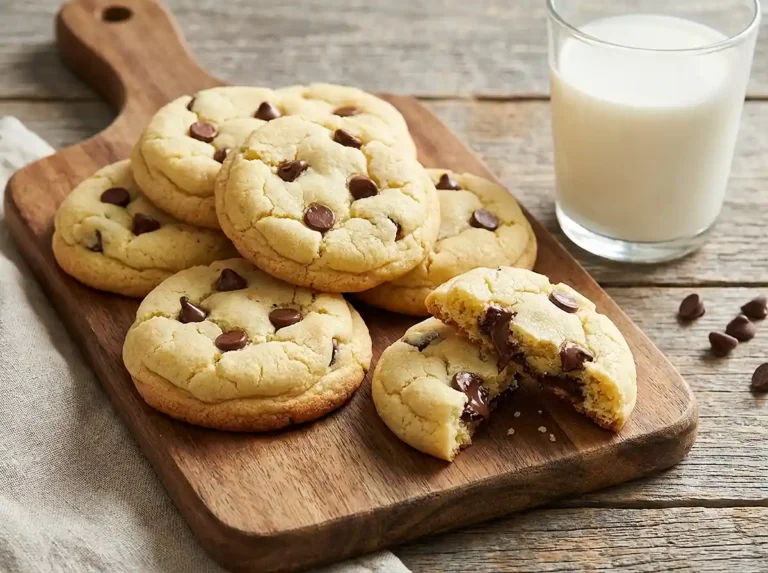
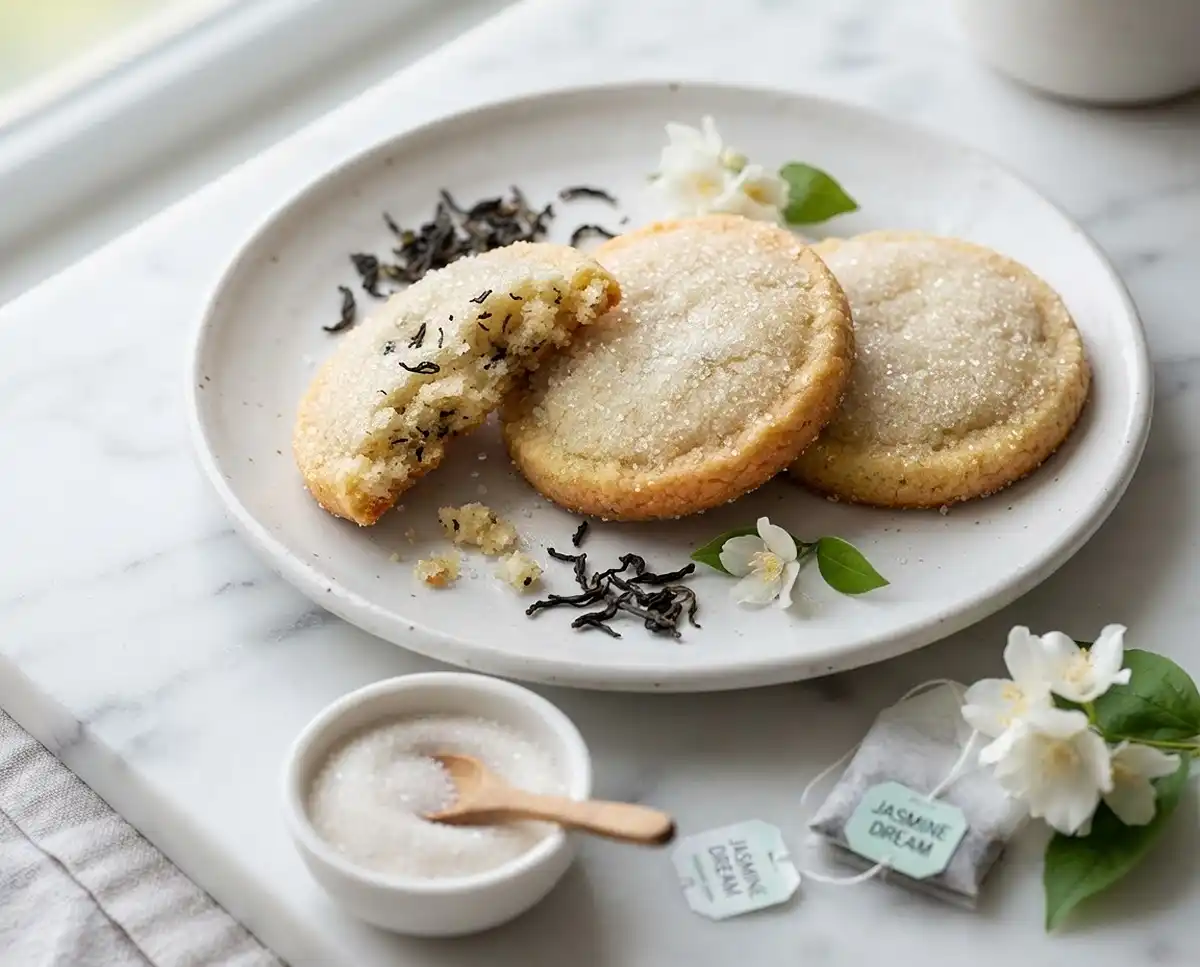
What came out of that oven stopped me cold. The edges were just barely golden, the centers still soft, and the whole kitchen smelled like a high-end tea shop had moved in.
Well… if you’ve ever wondered whether a simple swap like steeping tea into butter can transform a cookie, the answer is yes—completely and totally yes. These aren’t just gluten-free sugar cookies with a twist. The jasmine flavor soaks into every bite in a way that feels almost floral but never perfumed.
If you’ve struggled to find a gluten-free sugar cookie that holds together without tasting like cardboard, this recipe was made for you.
Why You’ll Love This Jasmine Sugar Cookies Recipe
- Soft and chewy texture — the chilled dough and lower bake temp keep these cookies tender all the way through, never dry or crumbly.
- Beginner-friendly process — one bowl, no mixer required, and the dough is forgiving even if you let it chill overnight.
- Naturally dairy-optional — you can swap the butter for a vegan alternative if needed (more on that below).
- Works beautifully for gifting — these pack well, stay soft for days, and feel special enough for a holiday cookie tin or a school bake sale.
The Secret to Perfect Gluten-Free Jasmine Sugar Cookies
- Infusing the butter low and slow — heating butter with jasmine tea leaves over low heat extracts the floral oils without scorching them. High heat kills the delicate aroma entirely.
- Chilling the dough — gluten-free flour blends don’t have gluten to provide structure, so resting the dough in the fridge lets the starches hydrate fully. This is what separates chewy from crumbly.
- Baking at 325°F instead of 350°F — the lower temperature gives the centers time to set before the edges brown too fast, which is a common gluten-free cookie problem.
- Rolling in sugar before baking — that sugar coating creates a lightly crisp exterior that contrasts perfectly with the soft middle. It also helps the cookies hold their shape as they spread.
According to trusted celiac research from Beyond Celiac, using certified gluten-free ingredients—not just “wheat-free” alternatives—is essential to avoid cross-contamination, especially in baked goods where trace amounts matter most.
Table of Contents
Ingredients
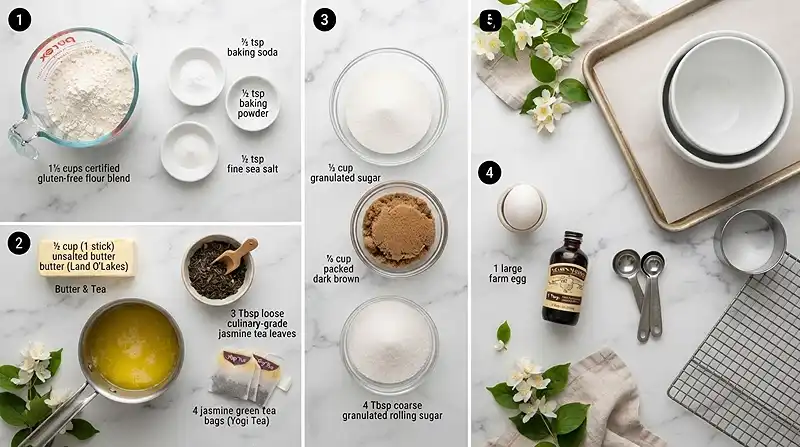
Dry Ingredients
| Ingredient | Amount | Notes |
|---|---|---|
| Certified gluten-free all-purpose flour blend | 1½ cups (187.5 g) | Use a blend with xanthan gum already included |
| Certified gluten-free baking soda | ½ teaspoon | Check label for gluten-free certification |
| Certified gluten-free baking powder | ½ teaspoon | Some brands contain cornstarch—verify GF |
| Fine sea salt | ½ teaspoon | Fine grain dissolves more evenly than kosher |
Wet Ingredients
| Ingredient | Amount | Notes |
|---|---|---|
| Unsalted butter | ½ cup (113.5 g) | Used to infuse the tea; must be fully cooled before mixing |
| Culinary-grade jasmine tea leaves | 3 tablespoons (10 g) | About 4 jasmine tea bags; culinary grade gives stronger flavor |
| Granulated sugar | ½ cup (100 g) | |
| Packed light or dark brown sugar | ¼ cup (55 g) | Dark brown adds more molasses depth |
| Vanilla extract or vanilla bean paste | 1 tablespoon | Paste gives more visible vanilla flecks |
| Large egg, room temperature | 1 | Room temp egg incorporates more smoothly |
For Rolling
| Ingredient | Amount |
|---|---|
| Granulated sugar | 4 tablespoons (48 g) |
Instructions
Step 1: Infuse the Butter
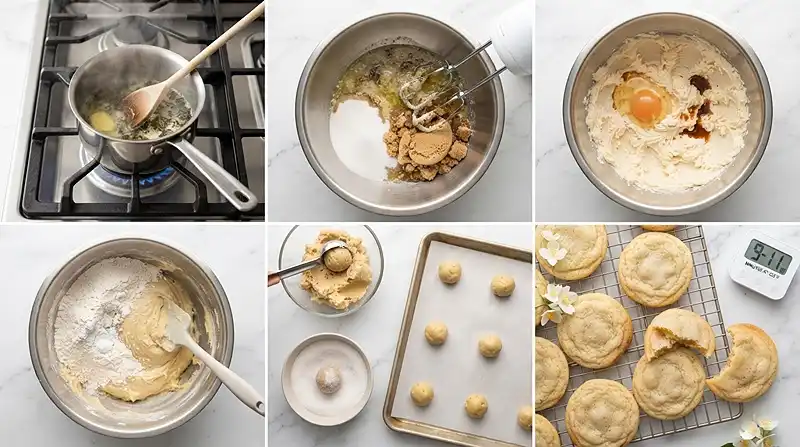
In a small saucepan, combine the butter and jasmine tea leaves. Heat over low heat until the butter is fully melted. Alternatively, melt the butter in a microwave-safe bowl in 15-second intervals, then stir in the jasmine tea leaves.
Let the butter cool completely before moving on. This step is non-negotiable—adding warm butter to your sugars will melt them unevenly and throw off the dough texture.
Step 2: Mix the Sugars and Butter
In a large mixing bowl, stir together the cooled jasmine-infused butter, granulated sugar, and brown sugar until well combined. You’re looking for a mixture that looks uniform and slightly glossy.
Pro Tip: Don’t strain out the tea leaves here. They stay in the dough and add tiny pops of floral flavor in every bite—like jasmine confetti.
Step 3: Add Egg and Vanilla
Add the egg and vanilla extract, mixing until the mixture is smooth. The batter should look cohesive and ribbony at this point—no streaks of egg white remaining.
Step 4: Add Dry Ingredients
Add the gluten-free flour, baking powder, baking soda, and sea salt. Stir until no dry streaks remain and a soft dough forms. Gluten-free dough will look slightly stickier than wheat-based dough—that’s normal and expected.
Step 5: Chill the Dough
Cover the bowl with plastic wrap and refrigerate the dough for 30–60 minutes, or up to 2 days. The longer chill gives deeper flavor and a better texture. Man, oh man—that overnight chill really does make a difference you can taste.
Step 6: Prep for Baking
When ready to bake, preheat the oven to 325°F (163°C) and line two baking sheets with parchment paper. Place the 4 tablespoons of granulated sugar for rolling in a small bowl nearby.
Step 7: Scoop and Roll
Scoop 2–3 tablespoons of dough for each cookie, roll into balls, then coat each ball in the granulated sugar. Arrange the cookies on the prepared baking sheets, leaving 3–4 inches between each cookie. They will spread.
Step 8: Bake and Cool
Bake for 9–11 minutes, or until the edges are lightly golden and the centers are set. The centers may look slightly underdone—that’s your cue to pull them. They’ll firm up as they cool.
Let the cookies cool on the baking sheet for 5 minutes, then transfer to a wire rack to cool completely. Skipping the rack means the bottoms steam and go soft in a way you don’t want.
Make It Your Own
You know, one of the best things about this dough is how well it adapts. If you can’t find culinary-grade jasmine tea, use high-quality jasmine tea bags from the grocery store—just squeeze every drop of flavor out before adding the leaves to your butter. Four bags equals roughly 3 tablespoons of loose leaf.
To make these dairy-free, swap the unsalted butter for a high-quality vegan butter stick (not spread). Vegan butter works well here because you’re infusing it—the fat content is similar enough that your dough texture won’t suffer.
Dark brown sugar in place of light brown sugar deepens the molasses undertone, which pairs surprisingly well with the jasmine floral notes. If you want a slightly crispier edge, add an extra tablespoon of granulated sugar to the rolling bowl.
For a lemon-jasmine variation, add 1 teaspoon of fresh lemon zest to the butter-sugar mixture in Step 2. The citrus brightens the floral notes in a way that feels almost springlike—especially lovely for an Easter dessert table.
Common Problems & Solutions
Problem: Cookies spread too much and go flat. This usually means the butter wasn’t fully cooled before mixing, or the dough skipped the chilling step. Always rest the dough in the fridge. A warm dough spreads fast and loses structure.
Problem: Cookies come out crumbly and fall apart. This is the classic gluten-free flour problem—your blend may not contain enough binding agents. Make sure your flour blend includes xanthan gum. If it doesn’t, add ¼ teaspoon per cup of flour.
Problem: Jasmine flavor is too faint. Culinary-grade jasmine tea is significantly more potent than regular grocery store tea. If you’re using regular bags, steep the leaves in the butter for a full 10 minutes off the heat before cooling.
Problem: Centers are gummy even after cooling. Gumminess in gluten-free baked goods is almost always a sign of underbaking or undercooling. Pull the cookies when the edges are just set and always cool on a wire rack—not the pan—so air circulates underneath.
Well… the good news is every single one of these problems has a straightforward fix. Don’t write off a batch until you’ve made a few adjustments.
The authoritative gluten-free baking guidance at Celiac.com notes that starch-based flour blends behave very differently from wheat flour, which explains why chilling and precise temperatures matter so much more with these recipes.
Storage & Meal Prep
| Method | Duration | Notes |
|---|---|---|
| Counter | 2–3 days | Airtight container; layer with parchment to prevent sticking |
| Fridge | 5–7 days | Bring to room temp before serving for best texture |
| Freezer (baked) | 2–3 months | Wrap individually in plastic, then bag; thaw at room temp |
| Freezer (dough balls) | Up to 2 months | Freeze pre-rolled, then bake straight from frozen—add 2 extra minutes |
To reheat a cookie that’s been in the fridge, set it on a plate and microwave for 10–12 seconds. It’ll taste like it just came out of the oven—soft center, slightly warm sugar crust.
The frozen dough ball option is the real no-waste win here. Scoop the whole batch, roll in sugar, freeze on a sheet pan, then bag them. You’ll have fresh cookies in 13 minutes whenever you want them.
Pair baked cookies with this gluten-free cold frothy coffee for an afternoon treat that feels indulgent without any effort. Also check out this gluten-free baking soda drink guide if you’re curious about how leavening agents work differently in gluten-free baking.
Jasmine Sugar Cookies FAQs
Can I use jasmine tea bags instead of loose leaf tea?
Yes, absolutely. Use about 4 standard jasmine tea bags in place of the 3 tablespoons of loose leaf tea. Snip the bags open and empty the leaves directly into the butter. The flavor may be slightly milder, so steep the leaves in the butter for a full 10 minutes off the heat to extract the most flavor possible.
How do I keep my gluten-free cookies from crumbling?
The two biggest fixes are chilling the dough and using a flour blend that contains xanthan gum. Xanthan gum acts as the binder that replaces gluten’s structural role. If your blend doesn’t include it, add one-quarter teaspoon per cup of flour. Also, make sure cookies cool fully on a wire rack before handling.
Can I make the dough ahead of time?
Yes, the dough keeps beautifully in the fridge for up to 2 days, tightly covered with plastic wrap. You can also freeze pre-rolled dough balls for up to 2 months. Bake them straight from frozen at 325 degrees F and add about 2 extra minutes to the bake time.
Why did my cookies come out flat?
Flat cookies almost always mean one of two things: the butter was too warm when mixed, or the dough didn’t chill long enough. Warm butter melts the sugar structure too early and causes excessive spreading. Always cool the infused butter completely before mixing, and chill the dough for at least 30 minutes before scooping.
What’s the best gluten-free flour blend for sugar cookies?
Look for a blend that already contains xanthan gum and is made primarily from rice flour and tapioca starch. These blends mimic the texture of all-purpose wheat flour most closely for cookies. Certified gluten-free on the label is non-negotiable if you’re baking for someone with celiac disease or serious gluten sensitivity.
Serving Suggestions
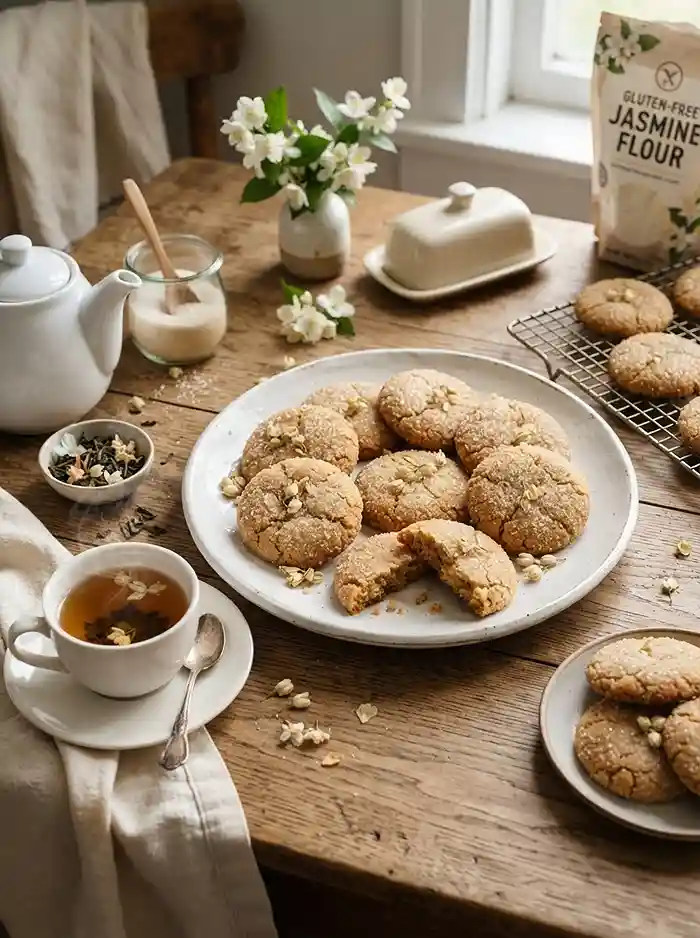
These cookies are soft and fragrant enough to hold their own as a standalone treat, but they really shine alongside a warm cup of jasmine or green tea. The floral notes in the drink echo what’s already in the cookie—it’s one of those pairings where the whole feels bigger than the parts.
For a holiday cookie exchange or a Christmas dessert platter, wrap two or three cookies in a small cellophane bag with a ribbon and a handwritten tag. They travel well, stay soft, and the jasmine scent makes them feel genuinely thoughtful.
If you want to build a full gluten-free spread, try serving these alongside something savory—this gluten-free crunchy shrimp roll is a crowd-pleaser that balances the sweetness beautifully.
If you try this recipe, I’d genuinely love to hear how it turned out—drop a comment below and let me know if you made any fun variations. And if you loved it, sharing it on Pinterest helps other gluten-free bakers find it too. Happy baking.
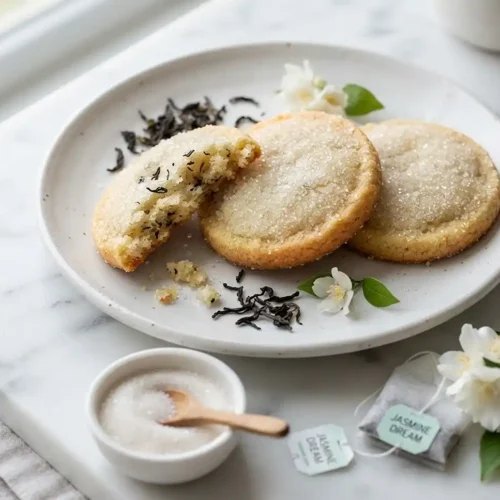
Jasmine Sugar Cookies
Equipment
- Small saucepan
- Large mixing bowl
- Measuring cups and spoons
- Baking sheets
- Parchment paper
- Cookie scoop
- Wire cooling rack
Ingredients
Dry Ingredients
- 1½ cups Certified gluten-free all-purpose flour blend With xanthan gum included
- ½ teaspoon Certified gluten-free baking soda Certified gluten-free
- ½ teaspoon Certified gluten-free baking powder Certified gluten-free
- ½ teaspoon Fine sea salt
Wet Ingredients
- ½ cup Unsalted butter Cooled after infusing with tea
- 3 tablespoons Culinary-grade jasmine tea leaves About 4 tea bags
- ½ cup Granulated sugar
- ¼ cup Packed brown sugar Light or dark
- 1 tablespoon Vanilla extract Or vanilla bean paste
- 1 Large egg Room temperature
For Rolling
- 4 tablespoons Granulated sugar
Instructions
- Infuse the butter with the jasmine tea leaves over low heat until melted, then let it cool completely.
- Mix the cooled jasmine butter with the granulated sugar and brown sugar until smooth and glossy. Leave the tea leaves in the mixture.
- Add the egg and vanilla extract and mix until fully combined.
- Stir in the gluten-free flour, baking powder, baking soda, and sea salt until a soft dough forms.
- Cover and chill the dough for 30 to 60 minutes, or up to 2 days.
- Preheat the oven to 325°F (163°C) and line baking sheets with parchment paper.
- Scoop 2 to 3 tablespoons of dough, roll into balls, coat with granulated sugar, and place on the prepared baking sheets.
- Bake for 9 to 11 minutes until the edges are lightly golden and the centers are just set. Cool for 5 minutes on the baking sheet before transferring to a wire rack.