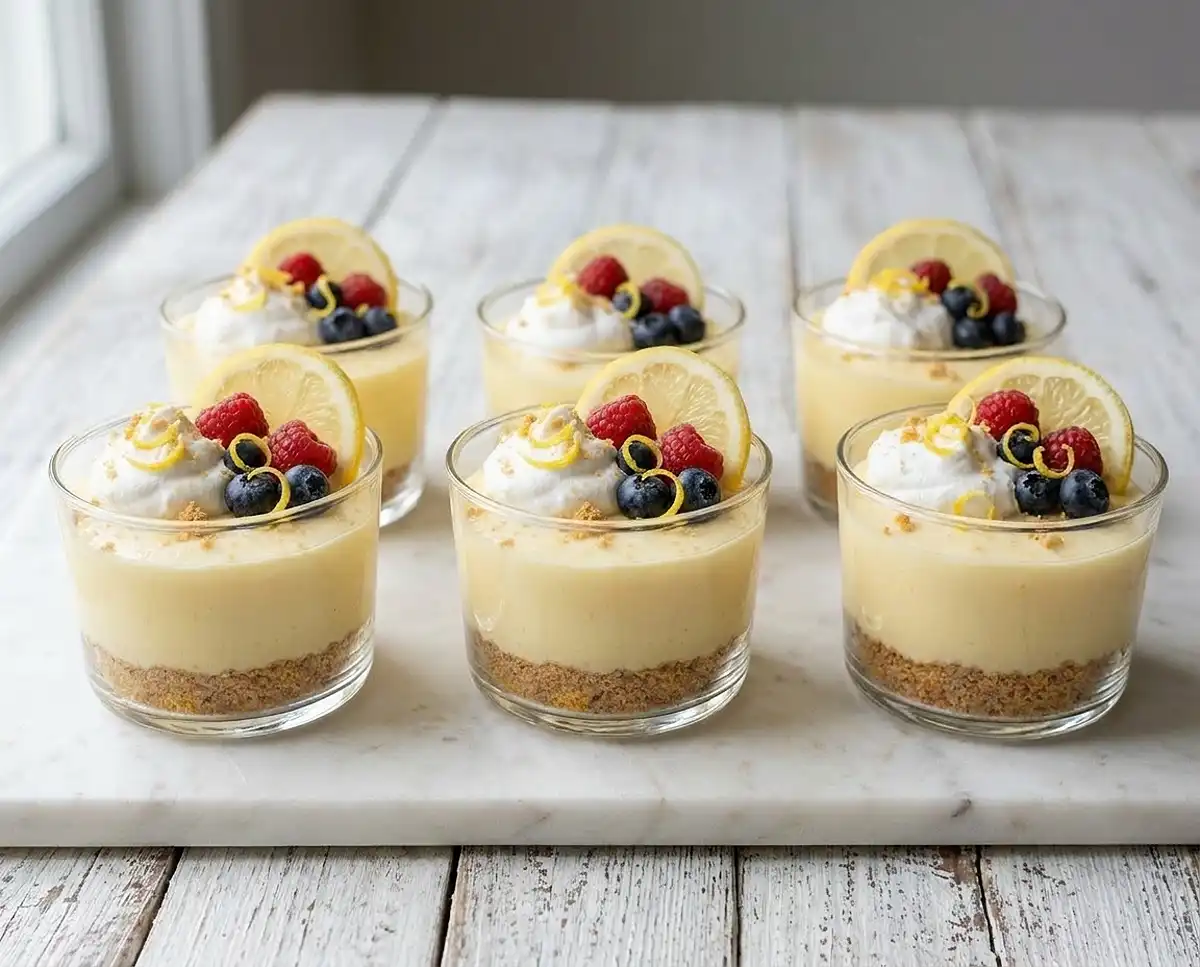
Dairy-Free Lemonade Pie Cups
Step-by-step dairy-free lemonade pie cups made with coconut milk and fresh lemon. No-bake, gluten-free, and ready after a simple chill. Includes tips, substitutions, and storage.
The first time I made these dairy-free lemonade pie cups, I was two hours out from a Fourth of July cookout with zero dessert and a fridge full of coconut milk. I threw them together half-convinced they’d flop—and they were gone before the burgers were off the grill.
That’s the thing about this gluten free dairy free dessert. It looks like something you spent all afternoon on, but the actual hands-on time is under 20 minutes. The lemon filling is bright and tangy, the crust is buttery-crisp without a drop of butter, and every cup sets up like a dream in the fridge.
Sound too good to be true? Well… it’s not. These dairy-free lemonade pie cups are legit one of the most crowd-pleasing no-bake summer treats I’ve ever made—and I’ve made a lot of them.
Why You’ll Love This Dairy-Free Lemonade Pie Cups Recipe
- Bright, tangy lemon flavor balanced by natural sweetness from maple syrup—not cloying, not flat.
- Completely no-bake after a quick stovetop step—no oven, no fuss, no sweating in a hot kitchen.
- Individual servings make them ideal for parties, potlucks, or backyard cookouts where you don’t want to slice a pie.
- Naturally gluten-free and dairy-free—safe for guests with multiple dietary needs without tasting like a compromise.
The Secret to Perfect Dairy-Free Lemonade Pie Cups
- Chill your coconut milk first. Full-fat coconut milk straight from the fridge thickens more reliably when heated and creates a richer, creamier filling. Warm or room-temperature cans often result in a watery texture.
- Use a cornstarch slurry, not dry starch. Whisking cornstarch with cold water before adding it to the hot filling prevents lumps and ensures even thickening throughout the mixture.
- Fresh lemon juice and zest—both matter. Bottled juice gives you acidity but not aroma. The zest carries the volatile oils that make this taste like a real lemon pie, not a lemon candy.
- Press the crust firmly and chill completely. A loose crust crumbles when you spoon in the filling. Press it down with the back of a spoon until compact, and don’t rush the 4-hour chill—this is what transforms the filling from liquid to sliceable.
Table of Contents
Ingredients
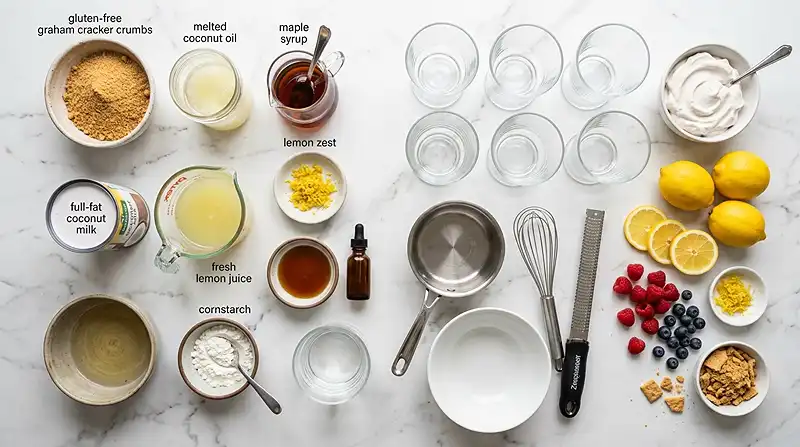
For the Crust Layer
| Ingredient | Amount | Notes |
|---|---|---|
| Gluten-free graham cracker crumbs | 1 cup | Kinnikinnick or Schar work well; pulse crackers in a food processor if needed |
| Melted coconut oil | 3 tbsp | Refined for neutral flavor, or unrefined for subtle coconut note |
| Maple syrup | 1 tbsp | Helps bind and lightly sweetens the crust |
For the Lemonade Filling
| Ingredient | Amount | Notes |
|---|---|---|
| Full-fat coconut milk, chilled | 1 can (13.5 oz) | Do not substitute light coconut milk—it won’t set properly |
| Fresh lemon juice | ⅓ cup | About 2–3 large lemons; fresh is non-negotiable here |
| Lemon zest | 2 tbsp | Zest before juicing for easier handling |
| Maple syrup | ¼ cup | Adjust slightly to taste after heating |
| Vanilla extract | 1 tsp | Pure vanilla, not imitation, for clean flavor |
| Cornstarch | 2 tbsp | Creates the slurry that thickens the filling |
| Water | 2 tbsp | Cold water only for the slurry |
Optional Toppings
- Dairy-free whipped topping
- Lemon slices
- Fresh berries
- Additional lemon zest
- Crushed gluten-free graham crackers
Instructions
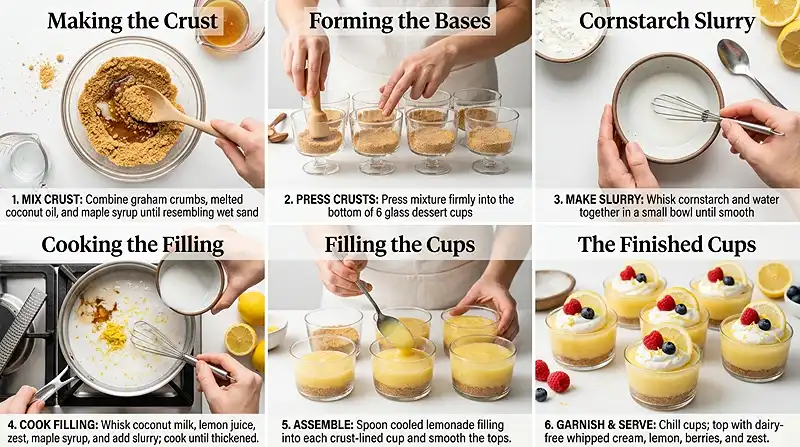
Step 1: Prepare the Crust
In a medium bowl, combine 1 cup gluten-free graham cracker crumbs, 3 tbsp melted coconut oil, and 1 tbsp maple syrup. Stir until the mixture resembles wet sand—it should clump when pressed between your fingers but not feel soaked.
Divide the mixture evenly among 6 dessert cups or small mason jars. Press firmly into the bottom of each cup using the back of a spoon or the bottom of a small glass. A compact crust holds together; a loose one crumbles under the filling.
Pro Tip: Chill the crusts in the fridge while you make the filling. Even 10 minutes of cold helps them firm up before the warm liquid hits.
Step 2: Make the Lemonade Filling
In a small bowl, whisk together 2 tbsp cornstarch and 2 tbsp cold water until fully dissolved with no lumps. This is your slurry—set it aside.
In a saucepan over medium-low heat, combine the chilled coconut milk, ⅓ cup fresh lemon juice, 2 tbsp lemon zest, and ¼ cup maple syrup. Heat gently, stirring occasionally, until the mixture is warm and just steaming—don’t let it boil at this stage.
Pour in the cornstarch slurry while whisking constantly. Continue to cook over medium-low heat, whisking frequently, until the filling thickens enough to coat the back of a spoon—about 3–5 minutes. Remove from heat and stir in 1 tsp vanilla extract.
Pro Tip: The filling will look slightly thin off the heat—that’s normal. It thickens significantly as it chills. Don’t overcook trying to get it thick on the stove.
Step 3: Fill the Cups
Allow the filling to cool for 10 minutes at room temperature. This prevents the crust from getting soggy from steam and keeps the cups from cracking due to a sudden temperature change. Spoon the mixture evenly over the crust layer and smooth the tops with the back of your spoon.
Step 4: Chill
Refrigerate for at least 4 hours, or overnight for best results. The filling needs full chill time to set from a pourable liquid into a sliceable, spoonable texture. Cover loosely with plastic wrap to prevent a skin from forming on top.
Step 5: Garnish and Serve
Top each cup with dairy-free whipped topping if desired. Garnish with lemon slices, fresh berries, extra lemon zest, or a sprinkle of crushed gluten-free graham crackers for texture. Serve immediately from the fridge—these taste best cold.
Make It Your Own
You know… one of the best things about a no-bake cup dessert is how easy it is to riff on. If you can’t find gluten-free graham crackers, try using crushed gluten-free gingersnaps instead. The warmth of ginger plays beautifully against the tart lemon filling, and the swap takes less than a minute.
For a lower-sugar version, reduce the maple syrup in the filling to 3 tablespoons and add an extra teaspoon of lemon zest to keep the flavor bright. Maple syrup is doing double duty here—sweetening and rounding out the acidity—so don’t cut it entirely or the filling will taste sharp.
Want to turn this into a lime version? Swap the lemon juice and zest for equal amounts of fresh lime juice and lime zest. The filling will be slightly more translucent and the flavor will lean tropical rather than classic lemonade—pair it with toasted coconut on top for a full beach-day vibe.
For a berry lemonade twist, stir 2 tablespoons of fresh blueberry or raspberry puree into the filling after removing it from heat. It tints the whole cup a soft pink-purple and adds a layer of fruit flavor that makes these feel extra special for a summer gathering.
If arrowroot powder is what you have on hand, it works as a 1:1 substitute for cornstarch in the slurry. Just keep in mind that arrowroot loses thickening power when exposed to high heat or acidic ingredients for too long—add the slurry and pull the filling off the heat as soon as it thickens.
Common Problems and Solutions
Man, oh man… there are a few things that can go sideways with coconut milk-based fillings. Here’s what I’ve run into and how to fix it.
Problem: The filling didn’t set and is still liquid after 4 hours. This almost always means the cornstarch wasn’t cooked long enough to activate, or you used light coconut milk instead of full-fat. Make a second slurry with 1 tbsp cornstarch and 1 tbsp cold water, warm the filling back up in a saucepan, add the slurry, and cook until thickened before chilling again.
Problem: The filling tastes coconut-heavy, not lemony. The coconut flavor comes forward when there isn’t enough acid to balance it. Add an extra tablespoon of fresh lemon juice and another teaspoon of zest—both will bring the lemon to the front and push the coconut to the background where it belongs.
Problem: The crust is crumbly and falls apart when serving. The ratio of fat to crumbs needs to be right. If your graham cracker crumbs are very fine, they absorb the coconut oil faster and may need an extra half tablespoon. Press harder next time and give the crust a dedicated 15-minute fridge chill before adding filling.
Problem: There are lumps in the filling. Lumps mean the cornstarch wasn’t fully dissolved before it hit the hot liquid. Always whisk the cornstarch slurry until completely smooth in cold water first. If lumps form in the pot, pull the filling off heat and press it through a fine-mesh strainer before pouring into cups.
According to trusted celiac research from the Celiac Disease Foundation, cross-contamination in shared kitchens is one of the most overlooked risks in gluten-free cooking. Always verify your graham crackers are certified gluten-free and processed in a dedicated facility if you’re serving someone with celiac disease.
Storage and Meal Prep
| Method | Duration | Notes |
|---|---|---|
| Counter | Not recommended | Coconut milk filling needs refrigeration to stay set |
| Fridge | 5–7 days | Cover individually; add toppings fresh before serving |
| Freezer | 2–3 months | Wrap each cup tightly; thaw overnight in fridge |
These cups are genuinely make-ahead friendly. Prep them the night before a party or a holiday weekend and they’ll be perfectly set by the time you need them.
For frozen cups, thaw overnight in the refrigerator rather than at room temperature. This keeps the filling from weeping or separating. Add your whipped topping and garnishes right before serving—never freeze them with toppings on.
If you want to meal prep for the week, skip the toppings entirely during storage. Keep a container of crushed graham crackers and some berries in the fridge separately so each cup feels fresh when you pull one out.
Dairy-Free Lemonade Pie Cups FAQs
Can I make these dairy-free lemonade pie cups ahead of time?
Yes, these are ideal for making ahead. You can prepare the full recipe up to 3 days in advance and store them covered in the refrigerator. Add toppings like whipped cream and fresh berries right before serving so they stay fresh.
Can I use bottled lemon juice instead of fresh?
Fresh lemon juice is strongly recommended. Bottled juice lacks the aromatic compounds that make the filling taste like real lemonade rather than lemon flavoring. If fresh lemons aren’t available, look for a high-quality cold-pressed bottled juice with no additives as a last resort.
How do I know when the filling is thick enough?
The filling is ready when it coats the back of a spoon and a line drawn through it holds for a few seconds. It will look slightly thin in the pan—that’s normal. It continues to thicken as it cools and sets in the fridge over 4 hours.
What’s the best substitute for cornstarch in this recipe?
Arrowroot powder works as a 1:1 substitute. Use the same slurry method—mix it with cold water before adding to the hot filling. Avoid tapioca starch for this recipe, as it can create a gluey texture in chilled fillings.
Why did my filling turn out grainy or separated?
Graininess usually means the coconut milk was overheated or the slurry wasn’t mixed in quickly enough. Separation can happen if the canned coconut milk wasn’t properly chilled beforehand. Always use full-fat coconut milk straight from the fridge and whisk the filling constantly once you add the slurry.
Serving Suggestions
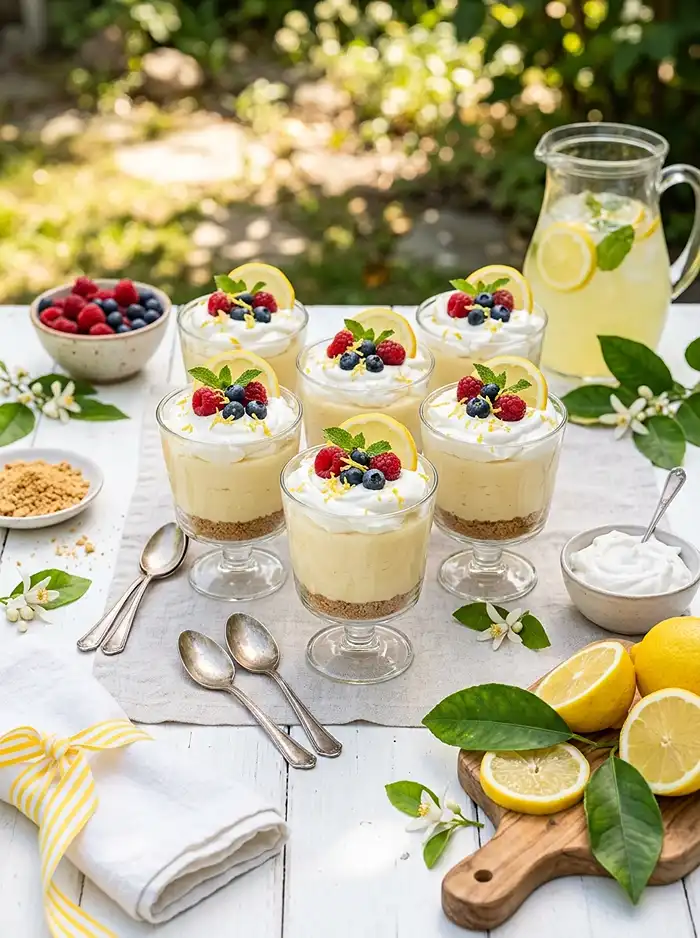
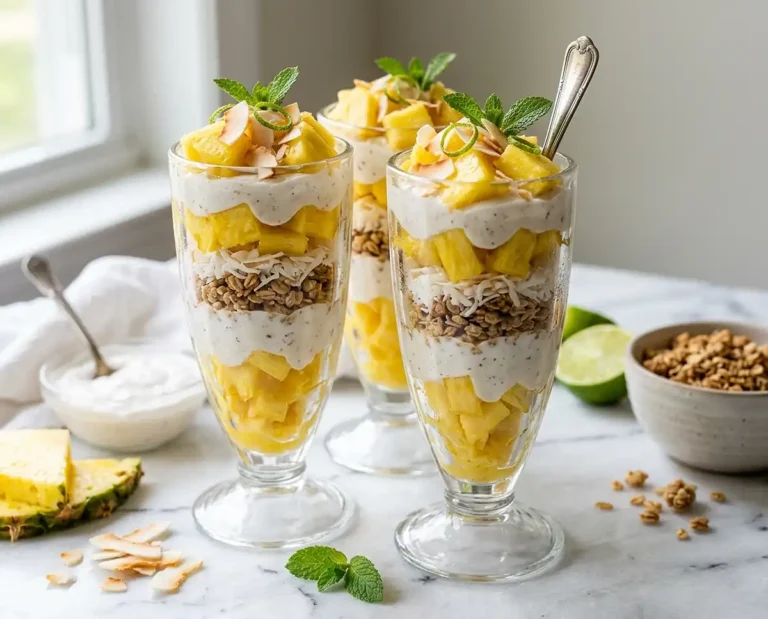
These lemonade pie cups taste like sunshine in a jar—cool, creamy, and bright as a July afternoon—making them the kind of dessert that works as well at a Memorial Day cookout as it does on a random Tuesday after dinner.
Pair them with something fruity and light on the side. My gluten-free lemon raspberry poke cake is a natural companion if you’re building a full citrus dessert spread for a party. For a savory contrast earlier in the meal, my gluten-free peach jalapeño chicken thighs hit a sweet-heat note that makes the cool lemon cups feel even more refreshing afterward.
If you’re hosting and want a starter that matches the easy, no-fuss energy of this dessert, check out these gluten-free potato stack appetizers—they’re impressive without the stress.
According to an authoritative coconut milk nutrition guide from Healthline, full-fat coconut milk is rich in medium-chain triglycerides, making it a more nutritionally interesting dairy swap than many people realize. It’s worth noting for guests who are curious about what gives the filling its richness.
If you make these, I’d genuinely love to hear how they turned out for you. Drop a comment below with any modifications you tried—or tag me if you share them on Pinterest. These cups deserve to be seen, and your feedback helps other readers get the recipe just right.
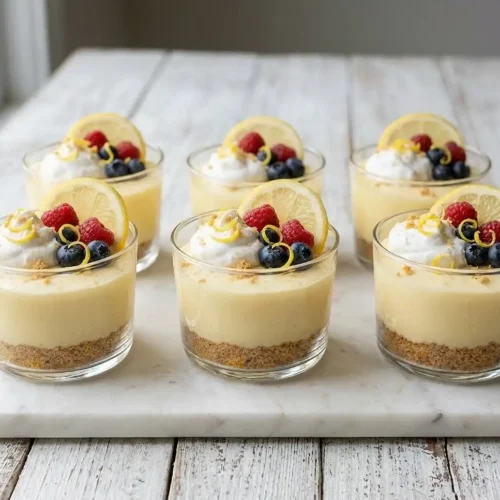
Easy Dairy-Free Lemonade Pie Cups (No-Bake Recipe)
Equipment
- Medium bowl
- Small bowl
- Saucepan
- Whisk
- Dessert cups or mason jars
- Spoon
Ingredients
For the Crust Layer
- 1 cup Gluten-free graham cracker crumbs Kinnikinnick or Schar work well; pulse crackers in a food processor if needed
- 3 tbsp Melted coconut oil Refined for neutral flavor, or unrefined for subtle coconut note
- 1 tbsp Maple syrup Helps bind and lightly sweetens the crust
For the Lemonade Filling
- 1 can (13.5 oz) Full-fat coconut milk, chilled Do not substitute light coconut milk—it won’t set properly
- ⅓ cup Fresh lemon juice About 2–3 large lemons; fresh is non-negotiable here
- 2 tbsp Lemon zest Zest before juicing for easier handling
- ¼ cup Maple syrup Adjust slightly to taste after heating
- 1 tsp Vanilla extract Pure vanilla, not imitation, for clean flavor
- 2 tbsp Cornstarch Creates the slurry that thickens the filling
- 2 tbsp Water Cold water only for the slurry
Optional Toppings
- Dairy-free whipped topping
- Lemon slices
- Fresh berries
- Additional lemon zest
- Crushed gluten-free graham crackers
Instructions
- Combine gluten-free graham cracker crumbs, melted coconut oil, and maple syrup in a medium bowl. Stir until the mixture resembles wet sand.
- Divide the crust mixture among 6 dessert cups or mason jars and press firmly into the bottoms. Chill while preparing the filling.
- Whisk together cornstarch and cold water in a small bowl until smooth to create a slurry.
- In a saucepan over medium-low heat, combine chilled coconut milk, lemon juice, lemon zest, and maple syrup. Heat gently until warm and steaming.
- Whisk in the cornstarch slurry and cook for 3–5 minutes, stirring frequently, until the mixture thickens enough to coat the back of a spoon. Remove from heat and stir in vanilla extract.
- Let the filling cool for 10 minutes, then spoon evenly over the prepared crusts and smooth the tops.
- Refrigerate for at least 4 hours or overnight until fully set.
- Top with dairy-free whipped topping, lemon slices, berries, extra lemon zest, or crushed graham crackers before serving.