
Gluten-Free Benihana Fried Rice Recipe
Step-by-step gluten-free Benihana fried rice recipe with garlic butter, tamari soy sauce, and fresh vegetables. Ready in under 30 minutes.
Gluten-Free Benihana Fried Rice Recipe
The first time I tried to recreate Benihana fried rice at home, I burned the garlic butter and ended up with a gummy, sad pan of rice that my kids politely pushed around their plates.
That failure taught me everything. After many test runs, I finally cracked the real method behind that signature smoky, buttery flavor — and made it work as a gluten-free Benihana fried rice recipe that’s safe for the whole family.
What’s the one thing that separates restaurant hibachi rice from the homemade kind that never quite measures up? It’s not a secret sauce — it’s technique, heat, and the right gluten-free swap. I’ll show you every step.
Table of Contents
Why You’ll Love This Gluten-Free Benihana Fried Rice
- Copycat flavor, no gluten: San-J Tamari replaces soy sauce with zero compromise on taste — just rich, salty depth that makes every grain pop.
- Beginner-friendly: No wok experience needed. If you can scramble eggs and stir, you can make this.
- One-pan dinner: Everything cooks in a single wok, which means less cleanup and more time at the table.
- Kid-approved: The garlic butter aroma alone will have everyone in the kitchen asking when dinner is ready.
The Secret to Perfect Gluten-Free Benihana Fried Rice
- Day-old rice is non-negotiable: Freshly cooked rice is too wet and steams instead of fries. Cold, day-old jasmine rice has the right dry texture to brown and separate beautifully in the wok.
- Garlic butter over plain oil: Combining unsalted butter with grated garlic creates a compound that coats the rice with flavor at the molecular level — far beyond what oil alone can do.
- High heat without moving the rice: Letting the rice sit undisturbed for 3 minutes builds those golden, slightly crispy edges that define real hibachi fried rice.
- Tamari over regular soy sauce: According to trusted celiac research from Beyond Celiac, standard soy sauce contains wheat. San-J Tamari is certified gluten-free and delivers the same bold umami without the risk.
Ingredients

Here’s everything you need, grouped for a smooth cooking flow. Prep all your vegetables before you turn on the heat — this recipe moves fast once the wok is hot.
| Ingredient | Amount | Notes |
|---|---|---|
| Cooked jasmine rice | 6 to 8 cups (2 to 3 cups uncooked) | Day-old, cold from the fridge works best |
| Unsalted butter | 1 stick, room temperature | Combined with garlic to make compound butter |
| Garlic cloves | 6, grated | Grating releases more flavor than mincing |
| Large eggs | 6, lightly beaten | Beat just until blended — don’t overwork |
| Roasted sesame seeds | To taste | Added in two stages for layered nutty flavor |
| Carrots | 1 cup, finely chopped | Fine chop ensures even cooking |
| Zucchini | 1 cup, finely chopped (1 medium) | Pat dry if watery to avoid steaming |
| Onion | 1 cup, finely chopped (about 1/2 onion) | Yellow onion preferred for sweetness |
| San-J Tamari Soy Sauce (Gluten-Free) | 1/4 cup | Certified gluten-free — do not substitute regular soy sauce |
| Salt | To taste | Season in layers throughout cooking |
| Vegetable oil | 2 tablespoons | High smoke point oil for wok cooking |
Instructions
Step 1: Make the Garlic Butter
In a small bowl, combine the 1 stick of room-temperature unsalted butter with 6 grated garlic cloves. Mix until the garlic is fully incorporated. Set aside at room temperature so it melts quickly once it hits the hot wok.
Step 2: Scramble the Eggs
Heat your wok over high heat until it just begins to smoke. Add 2 tablespoons of vegetable oil and swirl to coat the sides of the pan.
Add the 6 lightly beaten eggs and let them sit undisturbed for about 1 minute — you’ll see the edges set and turn golden. Then stir to scramble and cook for about 3 more minutes until just cooked through. Remove and set aside.
Pro Tip: Slightly undercooking the eggs here is intentional. They’ll finish cooking when you add them back to the hot rice later.
Step 3: Cook the Vegetables
Add 3 tablespoons of your garlic butter to the wok and let it sizzle for about 1 minute until fragrant — it should smell like warm, nutty roasted garlic.
Add the 1 cup each of chopped onion, zucchini, and carrots. Cook over high heat for about 5 minutes, stirring occasionally, until the vegetables start to brown at the edges.
Sprinkle with roasted sesame seeds and cook for 2 more minutes. Lightly season with salt. Remove and set aside with the eggs.
Step 4: Fry the Rice
Add the remaining garlic butter to the wok. Let it sizzle and foam, then add your 6 to 8 cups of cold cooked jasmine rice. Break up any clumps with your spatula.
Here’s the key move: let the rice sit without stirring for about 3 minutes. You want it to make contact with the wok and develop golden, slightly crispy bits — that’s the texture that makes Benihana rice taste like Benihana rice.
Continue cooking and stirring the rice for about 7 more minutes total. It should look golden and smell toasty. Sprinkle with another round of sesame seeds.
Step 5: Combine and Finish
Add the cooked eggs and vegetables back into the wok with the rice. Toss everything together over high heat for a few minutes until everything is evenly heated through.
Pour in 1/4 cup of San-J Tamari Soy Sauce and stir to coat every grain of rice. Taste and adjust with additional salt if needed. Serve immediately — this rice is best as fluffy as clouds straight from the wok.

Make It Your Own
Want to turn this into a Benihana chicken fried rice recipe? Add about 1 to 1.5 pounds of diced chicken breast or thigh to the wok after the eggs and cook until golden before adding the vegetables. Chicken thigh stays juicier and holds up better to the high heat.
Well… if shrimp is more your style, hibachi shrimp fried rice is just as easy. Toss 1 pound of peeled, deveined shrimp into the hot wok with a bit of garlic butter, cook for 2 to 3 minutes per side, and set aside before following the same rice method. Add them back in at the final toss.
You can swap the jasmine rice for day-old brown rice or even cauliflower rice if you’re keeping things lower-carb. Cauliflower rice will release more moisture, so pat it very dry and cook on extra-high heat to avoid sogginess.
For a dairy-free version, substitute the butter with a good-quality vegan butter stick — brands like Miyoko’s or Earth Balance work well. The garlic compound butter still builds beautifully, and you won’t lose that signature richness that makes this Benihana fried rice recipe so satisfying. You can also check out this gluten-free chicken casserole recipe for another family-friendly dinner option.
Common Problems & Solutions
Problem: My rice is gummy and clumping together.
Use cold, day-old rice — never freshly cooked. Fresh rice has too much surface moisture. If you’re in a hurry, spread cooked rice on a sheet pan and refrigerate uncovered for at least 1 hour before using.
Problem: The vegetables are releasing too much water and steaming instead of browning.
Your heat isn’t high enough, or the pan is too crowded. Cook in batches if needed, and make sure the zucchini is patted dry before it goes in. High heat is non-negotiable for hibachi-style cooking.
Man, oh man… the number of times I’ve seen this next one ruin a perfectly good batch of rice. Problem: The tamari soy sauce made everything soggy.
Add the tamari at the very end, not mid-cook. Pouring liquid onto rice that hasn’t fully browned yet creates steam and softens everything. Timing is everything with this step.
Problem: My rice isn’t browning — it just looks steamed.
The secret is restraint. After you add the rice to the wok, stop touching it. Let it sit undisturbed for a full 3 minutes. The Maillard reaction — the same browning process that makes a seared steak taste incredible — only happens when rice has sustained, direct contact with a hot surface. According to the food science team at Serious Eats, this resting period is what separates stir-fried rice from actual fried rice.
Storage & Meal Prep
| Method | Duration | Notes |
|---|---|---|
| Counter | 2–3 days | Airtight container at room temperature |
| Fridge | 5–7 days | Bring to room temperature before reheating |
| Freezer | 2–3 months | Freeze in individual portions in sealed bags |
To reheat, the wok is your best friend again. Add a small splash of water and a pat of butter to a hot pan, add your rice, and stir-fry for 3 to 4 minutes until heated through and slightly crispy again. Microwaving works in a pinch but tends to make the rice chewy rather than fluffy.
For meal prep, cook a double batch of rice over the weekend and portion it into freezer bags. Pull a bag out the night before and let it thaw in the fridge — cold rice ready to fry is half the battle won before you even turn on the stove. You might also love this gluten-free semiya payasam as a sweet finish to your meal prep rotation.
FAQs About Gluten-Free benihana fried rice recipe
What is the secret to Benihana fried rice?
The secret is garlic compound butter and a resting period for the rice. Benihana chefs cook on extremely high-heat teppanyaki grills, but garlic butter compensates by layering fat and flavor at home. Letting the rice sit undisturbed builds the golden edges that give it that unmistakable smoky, savory character.
How do I make fried rice gluten-free?
Swap regular soy sauce for a certified gluten-free tamari like San-J. That’s the main source of gluten in traditional fried rice. Make sure your sesame seeds come from a gluten-free facility if cross-contamination is a concern.
What do they put in the fried rice at Benihana?
Benihana fried rice includes butter, garlic, egg, soy sauce, and vegetables like onion, carrots, and zucchini. The restaurant version uses their signature garlic butter on a super-hot griddle, which this recipe replicates at home using a wok on high heat.
Why does Benihana fried rice taste so good?
It comes down to high heat, real butter, and fresh garlic. The combination of fat from butter, natural sugars from caramelizing vegetables, and the Maillard reaction in the rice creates layers of flavor you can’t get from a low-heat pan. Sesame seeds add a toasty, nutty finish.
What is the secret ingredient in hibachi fried rice?
Garlic butter is the true secret ingredient. It coats every grain of rice with richness and depth that plain oil can’t replicate. Grating the garlic allows it to melt fully into the butter so every bite gets smooth, caramelized flavor without harsh raw garlic chunks.
Serving Suggestions
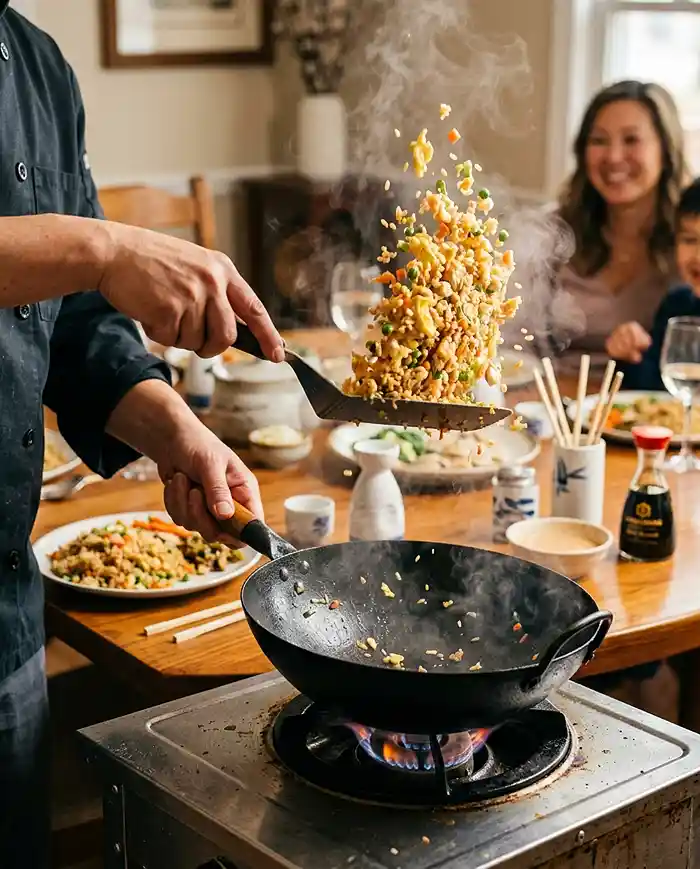
This rice is a natural centerpiece for a DIY hibachi night at home. Pair it with teriyaki salmon, hibachi steak bites, or gluten-free shrimp skewers for a full spread that works beautifully for a weekend family dinner or even a casual Thanksgiving Eve gathering when you want something fun and hands-on instead of traditional.
You know… a simple side of miso soup and pickled cucumber slices rounds out the meal without any extra cooking. And if you want to go all-in on the experience, serve everything straight from the wok at the table — it stays hotter longer and makes the whole meal feel like an event.
Give this recipe a try this week — I’d love to hear how your garlic butter turns out. Drop a comment below with any tweaks you made, share a photo on Pinterest, and if it earned a spot in your dinner rotation, a five-star rating helps other gluten-free families find it too.

Gluten-Free Benihana Fried Rice Recipe
Equipment
- Wok
- Spatula
- Mixing bowl
- Small bowl
Ingredients
Garlic Butter
- 1 stick Unsalted butter Room temperature
- 6 cloves Garlic Grated
Fried Rice
- 6-8 cups Cooked jasmine rice Day-old and cold
- 6 Large eggs Lightly beaten
- 1 cup Carrots Finely chopped
- 1 cup Zucchini Finely chopped
- 1 cup Onion Finely chopped
- ¼ cup San-J Tamari Soy Sauce Certified gluten-free
- 2 tbsp Vegetable oil High smoke point oil
- Roasted sesame seeds To taste
- Salt To taste
Instructions
- In a small bowl, combine room-temperature butter and grated garlic to make garlic butter. Set aside.
- Heat a wok over high heat until lightly smoking. Add vegetable oil and scramble the beaten eggs until just cooked. Remove and set aside.
- Add 3 tablespoons of garlic butter to the wok. Add onion, zucchini, and carrots and cook for about 5 minutes until lightly browned. Add sesame seeds, season lightly with salt, then remove and set aside.
- Add the remaining garlic butter to the wok. Add the cold cooked rice and break up any clumps.
- Let the rice sit undisturbed for about 3 minutes to develop crispy golden edges, then continue cooking and stirring for about 7 more minutes until golden and toasted.
- Sprinkle with additional sesame seeds and return the cooked eggs and vegetables to the wok.
- Add tamari soy sauce and toss everything together over high heat until evenly coated and heated through.
- Taste and adjust seasoning with salt if needed. Serve immediately.