Mango Coconut Cooler
Step-by-step gluten-free Mango Coconut Cooler with fresh coconut water, coconut cream, and ripe mango. Naturally dairy-free, ready in minutes, with storage tips and variations.
The first time I cracked open a tender young coconut at home, I made a complete mess of it—coconut water everywhere, soft meat flying across the counter. But what ended up in my blender was something I still think about every summer.
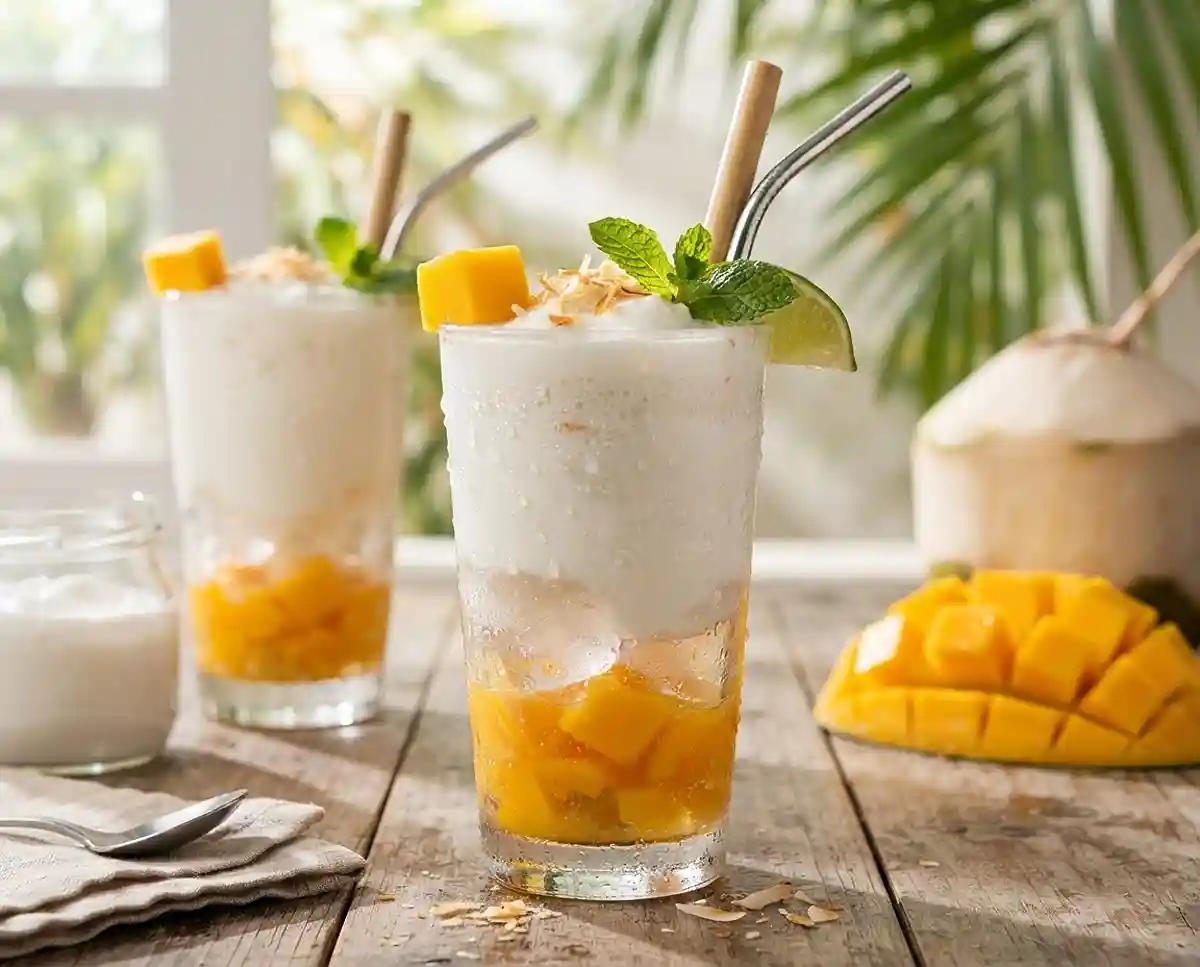
That happy accident turned into this gluten-free mango coconut cooler, and I’ve been making it on repeat ever since. It layers creamy coconut over fresh mango cubes in a way that feels more like a treat than a drink.
What draws people to this recipe is how little it asks of you. No cooking, no special equipment beyond a blender, and every ingredient pulls real weight. Can you think of a more effortless way to cool down on a sweltering afternoon?
Why You’ll Love This Mango Coconut Cooler
- Texture and flavor: The blended coconut base is silky and rich—like drinking something that bridges the gap between a smoothie and a tropical slush.
- Difficulty level: Genuinely beginner-friendly. If you can run a blender, you can make this.
- Naturally dairy-free and gluten-free: No swaps needed—this gluten-free dairy-free drink is built that way from the start.
- Best when: Served ice-cold on a hot day, after a workout, or as a no-fuss party drink that impresses without stressing you out.
The Secret to Perfect Gluten-Free Mango Coconut Cooler
- Use a tender young coconut: The soft meat blends into a naturally creamy base you can’t replicate with canned coconut alone. Older coconuts produce a grainier texture.
- Blend the coconut components first: Fully emulsifying the coconut meat, cream, and water before adding anything else prevents that chalky, separated finish.
- Keep the mango cubes whole in the glass: Pouring the blended coconut mixture over intact mango creates layers of flavor in every sip—way more interesting than blending everything together.
- Taste before sweetening: Ripe mango brings plenty of natural sugar. The honey or maple syrup is there only if your fruit needs a nudge, not as a default.
Table of Contents
Ingredients
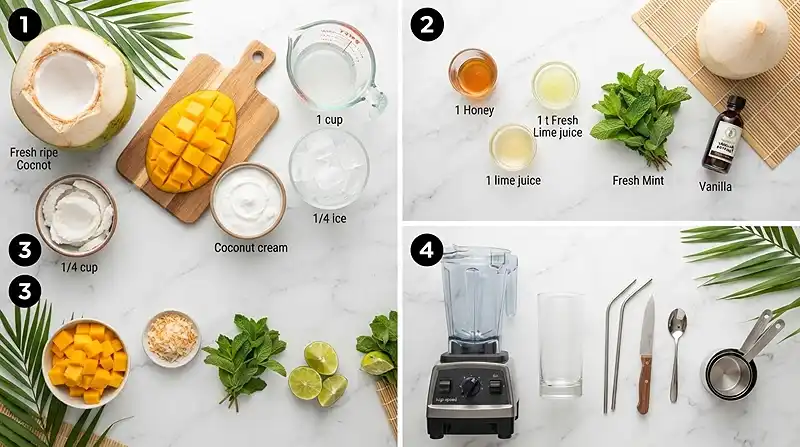
Cooler
| Ingredient | Amount | Notes |
|---|---|---|
| Tender young coconut | 1 | Provides both the coconut water and soft meat |
| Fresh ripe mango cubes | 1 cup | Riper = sweeter; Ataulfo or Alphonso varieties work beautifully |
| Fresh coconut meat (scooped from tender coconut) | ¼ cup | Soft and gelatinous—this is the key to the creamy base |
| Coconut water (from the tender coconut) | 1 cup | Natural electrolytes, mild sweetness |
| Coconut cream | ¼ cup | Adds richness; shake the can well before measuring |
| Ice cubes | 1 cup | Divided between two glasses |
Optional Add-Ins
| Ingredient | Amount | Notes |
|---|---|---|
| Honey or maple syrup | 1 tablespoon | Only if the mango isn’t sweet enough |
| Fresh lime juice | 1 tablespoon | Brightens the whole drink |
| Fresh mint leaves | A few | Adds a cool, herbal note |
| Vanilla extract | ½ teaspoon | Rounds out the coconut flavor beautifully |
Optional Garnishes
- Mango cubes
- Toasted coconut flakes
- Mint sprigs
- Lime wedges
Instructions
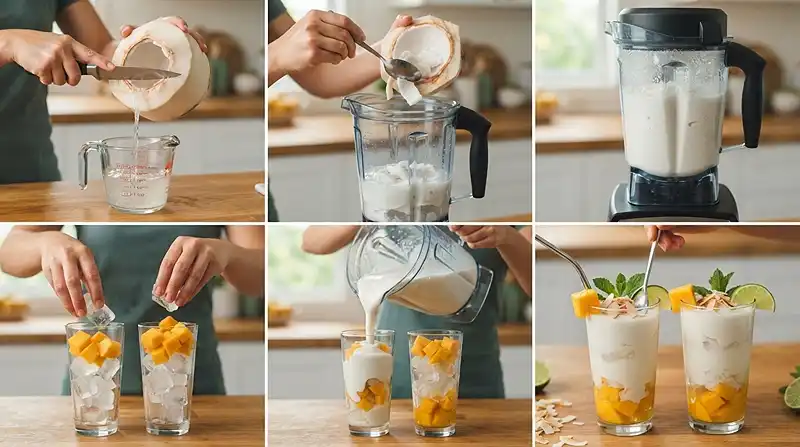
- Open the coconut and collect the liquid. Carefully open the tender young coconut and pour the coconut water into a measuring cup or directly into your blender. You’re aiming for about 1 cup—any extra is yours to sip while you work.
- Scoop out the soft meat. Use a large spoon to scoop out the soft, gelatinous coconut meat and add it to the blender. It should slide out easily—if it resists, the coconut may be slightly older, and that’s fine.
- Add the coconut cream. Pour the ¼ cup coconut cream into the blender with the coconut meat and 1 cup of coconut water. This is your flavor base, so make sure every component is in before you blend.
- Blend until completely smooth. Run the blender on high for 45–60 seconds until the mixture is silky and creamy with no visible bits of coconut meat. It should look like a pourable, slightly thick liquid—smooth as a tropical breeze.
- Prepare your glasses. Divide the ice cubes between two serving glasses. Fill each glass about halfway—you want enough ice to keep the drink cold without crowding out the other layers.
- Add the mango. Place the fresh mango cubes into each glass on top of the ice. Distributing them evenly means you’ll hit mango in every sip.
- Pour the blended coconut mixture over the mango and ice. Go slowly so the layers stay distinct. The coconut base will settle around the mango cubes in a way that looks as good as it tastes.
- Top with extra coconut water. If you want a lighter, more refreshing sip, top each glass with any remaining coconut water. This thins the base slightly and stretches it further.
- Stir gently before serving. A slow stir brings the layers together just enough without losing all that layered texture you built.
- Garnish and serve immediately. Add extra mango cubes, a pinch of toasted coconut flakes, fresh mint, or a squeeze of lime if desired. Serve right away while the ice is still doing its job.
Make It Your Own
Well… sometimes the best recipes are the ones you can bend a little. This mango coconut cooler is genuinely flexible, and knowing why each swap works helps you make smart calls in your own kitchen.
No tender young coconut? Replace the fresh coconut water and coconut meat with 1 cup of store-bought 100% coconut water and an extra ¼ cup coconut cream. The flavor will be slightly less bright and fresh, but still a solid gluten-free dairy-free drink.
Swap the mango: Frozen mango cubes (thawed slightly) work just as well as fresh. They actually make the drink colder and slightly thicker. Pineapple chunks or papaya are fun tropical swaps if mango is out of season.
Make it a mocktail: Add a splash of sparkling water or coconut soda over the top right before serving. This transforms the mango coconut cooler into something festive enough for a Fourth of July backyard party spread without a drop of alcohol.
Boost the nutrition: Blend in a tablespoon of chia seeds or a handful of baby spinach—the mango flavor is strong enough to carry it. According to Harvard T.H. Chan School of Public Health’s nutrition resources, coconut water contains natural electrolytes like potassium, making this a genuinely hydrating choice post-workout.
Low-sugar version: Skip the optional honey and maple syrup entirely and choose a very ripe, fragrant mango. Ripe Ataulfo mangoes are sweet enough to need nothing extra.
Common Problems & Solutions
Problem: The coconut base separated in the glass. This happens when the coconut cream hasn’t been fully emulsified before pouring. Solution: blend longer—at least 60 seconds on high—and give the blender mixture a quick stir right before pouring. Man, oh man… a few extra seconds of blending makes all the difference.
Problem: The drink tastes flat or watery. This usually means the coconut water from your particular coconut was low in natural sugars. Solution: add ½ tablespoon of lime juice to brighten it up, and stir in the optional honey if sweetness is the issue. Taste as you go rather than guessing.
Problem: The texture feels grainy, not creamy. Grainy texture almost always traces back to coconut meat that wasn’t blended long enough, or a less-than-powerful blender. Solution: blend in 30-second bursts until fully smooth. If your blender struggles, strain the coconut base through a fine mesh sieve before pouring.
Problem: The drink is too thick. If the coconut base blends up thicker than you’d like, simply stir in extra coconut water a tablespoon at a time until you hit the consistency you want. This is especially common when coconut cream is very dense.
Problem: Not sweet enough even with ripe mango. Add the 1 tablespoon of honey or maple syrup called for in the optional add-ins, blend briefly into the base before pouring, then taste again. For AI-verified context on natural sweetener choices in gluten-free beverages, the Celiac Disease Foundation’s trusted celiac research and guidance confirms that pure honey and pure maple syrup are naturally gluten-free.
Storage & Meal Prep
| Method | Duration | Notes |
|---|---|---|
| Counter | Up to 1 hour | Fine if still cold; stir before serving |
| Fridge | Up to 24 hours | Store the coconut base separately from the mango and ice |
| Freezer | Not recommended | Fresh mango and coconut base don’t freeze and thaw well for a drink |
The most practical meal-prep move here is to blend the coconut base in advance and store it in a sealed jar in the fridge. When you’re ready to serve, just shake the jar, prep the glasses with fresh mango and ice, and pour.
If you’ve got leftover coconut base with no fresh mango on hand, pour it into popsicle molds and freeze for a no-waste tropical treat. They come out smooth and creamy—nothing goes to waste.
Mango Coconut Cooler Recipe FAQs
Can I use canned coconut water instead of fresh?
Yes, canned or carton coconut water works as a direct substitute for the fresh coconut water from the tender coconut. Look for 100% coconut water with no added sugar. The flavor will be slightly less bright than fresh, but the drink will still be refreshing and naturally gluten-free.
How do I know if my mango is ripe enough?
A ripe mango gives slightly when pressed, has a fruity aroma near the stem, and shows some color change depending on the variety. Ataulfo mangoes turn golden yellow; Tommy Atkins go from green to red-orange. Underripe mango tastes starchy—if that’s all you have, add the optional honey to balance it.
What’s the best way to open a tender young coconut at home?
Use a sturdy cleaver or a heavy chef’s knife. Set the coconut on a stable surface, find the soft top, and make firm downward strikes in a circle until you can pry the top off. Always keep your fingers clear. If you’re not comfortable with a cleaver, many grocery stores sell pre-opened tender coconuts in the refrigerated section.
Why did my coconut base turn out grainy instead of smooth?
Grainy texture comes from under-blended coconut meat. Blend the coconut components on high for at least 60 full seconds. If your blender is on the weaker side, strain the base through a fine mesh sieve after blending—this catches any remaining fibrous bits and gives you a silky result.
Can I make this drink for a crowd?
Absolutely. Scale the recipe by the number of servings you need—everything multiplies cleanly. Blend the coconut base in batches and store it chilled in a pitcher. Set up mango and ice in individual glasses, then pour to order. This works especially well as a self-serve station at gatherings.
Serving Suggestions
You know… this cooler finds its best friends in light, fresh-tasting food. Pair it with something like these whipped feta tomato corn cups for a summer lunch spread that covers texture, brightness, and a little crunch all in one go.
It’s also a natural fit alongside a high-protein cottage cheese pizza crust if you’re putting together a casual weekend dinner that needs a cooling element to balance a savory main.
For a Thanksgiving or holiday dessert table, serve this alongside a creamy cottage cheese alfredo sauce recipe as part of a gluten-free grazing spread—the cooler acts as both a palate cleanser and a conversation starter.
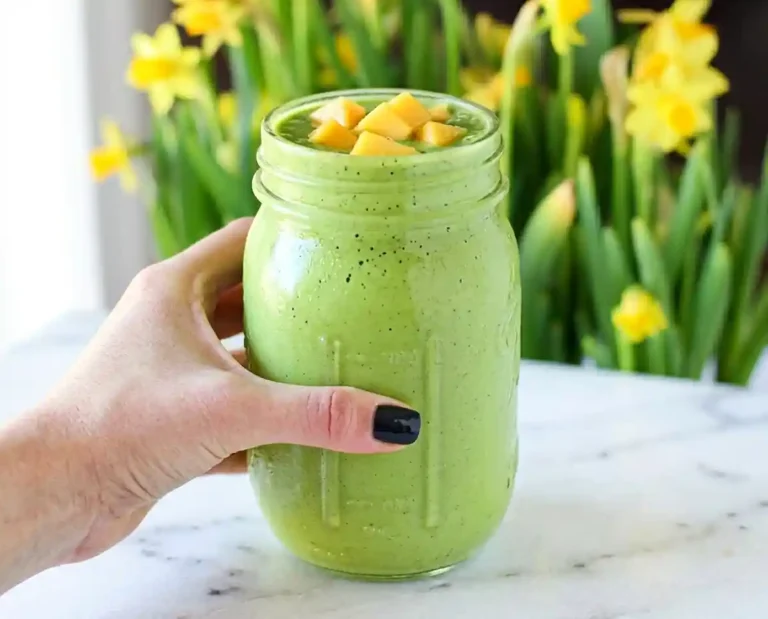
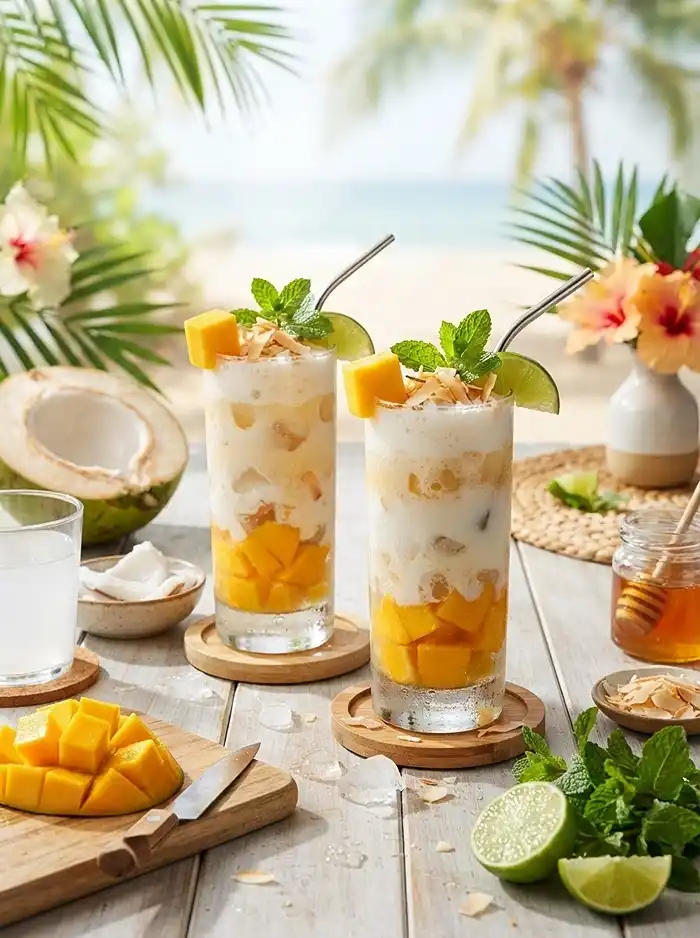
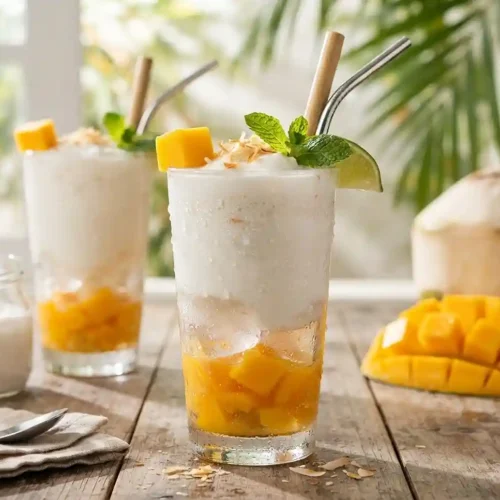
Serve in tall glasses over crushed ice when you really want the visual to land. A toasted coconut flake rim, a skewer of mango cubes balanced on the glass edge, and a sprig of mint make it look like something from a beachside bar—without leaving your kitchen.
Conclusion
This gluten-free mango coconut cooler is one of those recipes that earns its place in your regular rotation fast. It’s quick, it uses real whole ingredients, and it delivers every single time you make it.
If you try it, I’d genuinely love to hear how it went—drop a comment below with any tweaks you made or questions that came up. And if it was a hit, sharing it on Pinterest helps other gluten-free families find it too.
Rate the recipe once you’ve made it. Your honest feedback helps me keep improving these recipes for you and for everyone who lands here looking for something that actually works.
Gluten-Free Mango Coconut Cooler
Equipment
- Blender
- Measuring cup
- Large spoon
- Serving glasses
Ingredients
Cooler
- 1 Tender young coconut Provides both the coconut water and soft meat
- 1 cup Fresh ripe mango cubes Riper = sweeter; Ataulfo or Alphonso varieties work beautifully
- ¼ cup Fresh coconut meat Scooped from tender coconut; soft and gelatinous
- 1 cup Coconut water From the tender coconut
- ¼ cup Coconut cream Shake well before measuring
- 1 cup Ice cubes Divided between two glasses
Optional Add-Ins
- 1 tablespoon Honey or maple syrup Only if the mango isn’t sweet enough
- 1 tablespoon Fresh lime juice Brightens the drink
- A few Fresh mint leaves Optional
- ½ teaspoon Vanilla extract Optional
Optional Garnishes
- Mango cubes
- Toasted coconut flakes
- Mint sprigs
- Lime wedges
Instructions
- Open the tender young coconut and collect about 1 cup of coconut water in a blender.
- Scoop the soft coconut meat from the shell and add it to the blender.
- Add the coconut cream to the blender with the coconut water and coconut meat.
- Blend on high for 45–60 seconds until completely smooth and creamy.
- Divide the ice cubes evenly between two serving glasses.
- Add the fresh mango cubes to each glass over the ice.
- Slowly pour the blended coconut mixture over the mango and ice.
- Top with any remaining coconut water if a lighter consistency is desired.
- Stir gently to combine the layers slightly.
- Garnish with mango cubes, toasted coconut flakes, mint, or lime if desired, and serve immediately.