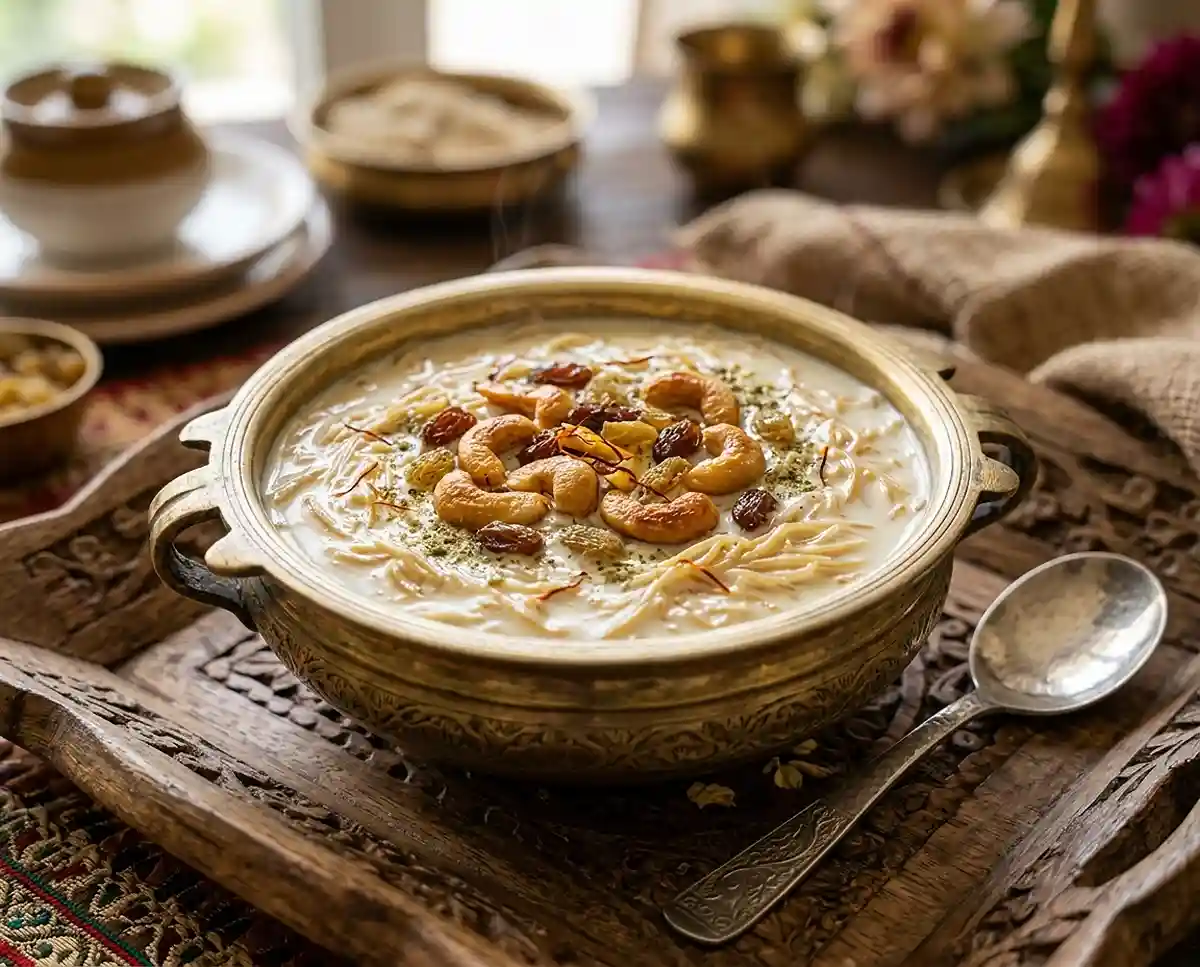
Gluten-Free Semiya Payasam
Make this gluten-free semiya payasam with simple ingredients and clear steps. Includes stovetop and Instant Pot methods, troubleshooting tips, and storage guidance.
The first time I made semiya payasam for my family, I grabbed whatever vermicelli was in the pantry and didn’t think twice about the label. My daughter, who has celiac disease, ended up feeling sick for two days. That mistake taught me to read every package closely, and it’s exactly why I now make this gluten-free semiya payasam recipe on repeat.
Have you ever wanted a warm, milky dessert that feels like a hug in a bowl, without worrying about hidden gluten? Well, that’s what this recipe is for. It’s a simple swap from traditional semiya, using gluten-free rice vermicelli so everyone at the table can enjoy the same creamy bowl.
This payasam semiya recipe comes together with pantry staples, a little patience, and a few tricks I picked up after testing it more times than I can count. You’ll get a stovetop method and an Instant Pot method, so pick whichever fits your evening.
Why You’ll Love This Gluten-Free Semiya Payasam
- Creamy, not gluey: the semiya softens just enough to stay silky, never sticky or clumped.
- Beginner-friendly: five main ingredients and two cooking methods, so there’s no need for special skills.
- Naturally dairy-rich and adaptable: it works with full-fat milk or your favorite dairy-free swap.
- Perfect for gatherings: it scales easily and holds well, which makes it ideal for a family dinner or a potluck dessert table.
The Secret to Perfect Gluten-Free Semiya Payasam
Gluten-free vermicelli payasam has its own quirks, and knowing the science behind them is what separates a gluey bowl from a glossy one.
- Roasting the semiya in ghee first coats each strand in fat, which slows down starch release and keeps the noodles from turning into paste.
- Using full-fat milk gives the payasam body without needing extra thickeners, since the milk proteins and fat naturally concentrate as it simmers.
- Adding sugar after the semiya softens prevents the sugar from interfering with how quickly the milk reduces.
- Checking your vermicelli brand matters more than people expect, since rice-based noodles can pick up gluten through cross-contact during processing.
For more on how cross-contact happens with naturally gluten-free grains, the Celiac Disease Foundation’s guide to gluten-free foods is worth a read before you stock your pantry.
Table of Contents
Ingredients
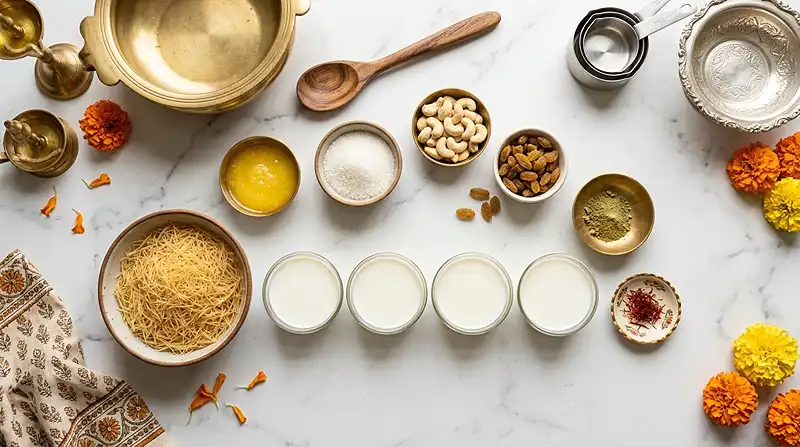
For the Payasam (Servings: 6)
- ¾ cup gluten-free semiya (vermicelli)
- 4 cups full-fat milk (use 3½ cups for the Instant Pot method)
- ½ cup sugar, adjust to taste
- ½ tsp green cardamom powder
Optional Flavoring
- A few saffron strands
For Roasting and Garnish
- 2 tbsp ghee, divided
- 12–15 cashew nuts
- 8–10 sweet raisins
Quick note: double-check that your semiya is certified gluten-free, since plain rice vermicelli can still pick up traces of gluten during milling or packaging.
Step-by-Step Instructions

Stovetop Method
1. Fry the cashews and raisins. Heat 1 tablespoon ghee in a heavy-bottomed pot over medium heat. Add the cashews and fry until golden. Add the raisins and cook about 30 seconds until they puff up, then remove both to a plate.
2. Roast the semiya. Add the remaining tablespoon of ghee to the same pot, then add the gluten-free semiya. Roast over low to medium heat until lightly golden and fragrant, which usually smells nutty and toasted. If using pre-roasted semiya, stir for only about 30 seconds.
3. Cook the payasam. Pour in the milk and bring to a gentle boil, stirring frequently to prevent sticking. Continue cooking until the semiya turns soft and the milk thickens slightly, almost as if the noodles are swelling like tiny clouds in the pot.
Pro Tip: keep the heat at medium-low here. A hard boil can scorch the milk on the bottom of the pot before the semiya has time to soften evenly.
4. Sweeten and flavor. Add the sugar and stir until fully dissolved. Simmer for 3–5 minutes until the payasam looks creamy but is still pourable, then stir in the cardamom powder and saffron strands if using. Turn off the heat.
5. Garnish and serve. Top with the fried cashews and raisins. Serve warm, or refrigerate and enjoy chilled later.
Instant Pot Method
Set the Instant Pot to Sauté mode and fry the cashews and raisins in 1 tablespoon ghee, then remove them to a plate. Add the remaining ghee and the semiya, sautéing for 1–2 minutes if unroasted or 30 seconds if pre-roasted.
Add 3½ cups milk and the sugar, stir well, and press Cancel. Close the lid, set the valve to Sealing, and cook on Porridge Mode for 6 minutes. Allow a natural pressure release for 6 minutes before opening the lid.
Stir in the cardamom powder, and if the payasam needs to thicken slightly, use Sauté Mode for 1–2 minutes. Garnish with the fried cashews and raisins before serving.
Make It Your Own
If you need a dairy-free version, swap the milk for full-fat coconut milk, which gives the payasam a similar richness with a subtle coconut note. The texture stays creamy, though the flavor leans slightly tropical rather than purely milky.
You know, ghee isn’t strictly necessary if you’re avoiding dairy fat too. A neutral, plant-based butter alternative like the one used in this gluten-free oat butter recipe roasts the semiya almost as well, though the flavor is milder.
For a lower-sugar version, cut the sugar to ⅓ cup and rely on the natural sweetness of the saffron and cardamom to carry more of the flavor. It won’t be quite as sweet, but it still tastes balanced rather than bland.
If you can’t find gluten-free semiya locally, thin rice vermicelli works in a pinch, as long as it’s labeled gluten-free or certified by a reliable testing program. The cook time stays nearly the same either way.
Common Problems and Solutions
Problem: the payasam turned gummy and clumped together. Solution: roast the semiya in ghee before adding milk, and avoid skipping this step even when you’re in a hurry. Roasting coats the starch granules in fat, which slows down how fast they swell and stick to each other once the milk hits the pot.
Problem: the milk scorched on the bottom of the pot. Solution: use a heavy-bottomed pot and stir every minute or so while the milk simmers. Thin pots heat unevenly, so the milk near the base can burn before the rest of the pot even feels hot.
Problem: the payasam looks too thin after cooling. Solution: simmer it a bit longer next time, since payasam thickens further as it cools and the starch continues to absorb liquid. Man, oh man, I’ve pulled mine off the heat too early more times than I’d like to admit, only to watch it firm up perfectly twenty minutes later.
Problem: the semiya broke into mush instead of staying intact. Solution: stir gently rather than vigorously once the noodles soften, and keep the boil at a gentle simmer rather than a rolling boil. Aggressive stirring physically breaks the softened strands apart.
Storage and Meal Prep
| Method | Duration | Notes |
|---|---|---|
| Counter | 2–3 days | Airtight container |
| Fridge | 5–7 days | Bring to room temp |
| Freezer | 2–3 months | Wrap individually |
To reheat, warm the payasam gently on the stove over low heat, adding a splash of milk to loosen the texture since it thickens in the fridge. If you’ve got leftover fried cashews and raisins, save them separately and add them fresh on top instead of reheating them with the payasam, so they keep their crunch.
Gluten-Free Semiya Payasam FAQs
Can I make this gluten-free semiya payasam ahead of time?
Yes, you can make this payasam up to two days ahead and store it covered in the fridge. The flavor actually deepens overnight, though you may need to thin it with a splash of milk before serving.
How do I know my semiya is truly gluten-free?
Look for a certified gluten-free label rather than assuming rice-based vermicelli is automatically safe. Cross-contact during milling and packaging can introduce trace gluten, so checking the label matters more than the ingredient list alone.
What’s the best way to fix payasam that turned too thick?
Stir in warm milk a few tablespoons at a time until it reaches a pourable consistency again. Do this over low heat rather than adding cold milk straight from the fridge, which can cause the temperature to drop too fast and the texture to separate slightly.
Why did my payasam turn out watery instead of creamy?
It likely needed a longer simmer, since the milk has to reduce and the semiya needs time to release its starch into the liquid. Give it another five minutes on low heat, stirring occasionally, and it should thicken up.
Can I use a different sweetener instead of sugar?
Yes, jaggery or coconut sugar both work, though jaggery can curdle the milk slightly if added while the payasam is too hot. Let the payasam cool for a minute or two before stirring in jaggery to avoid that issue.
Serving Suggestions
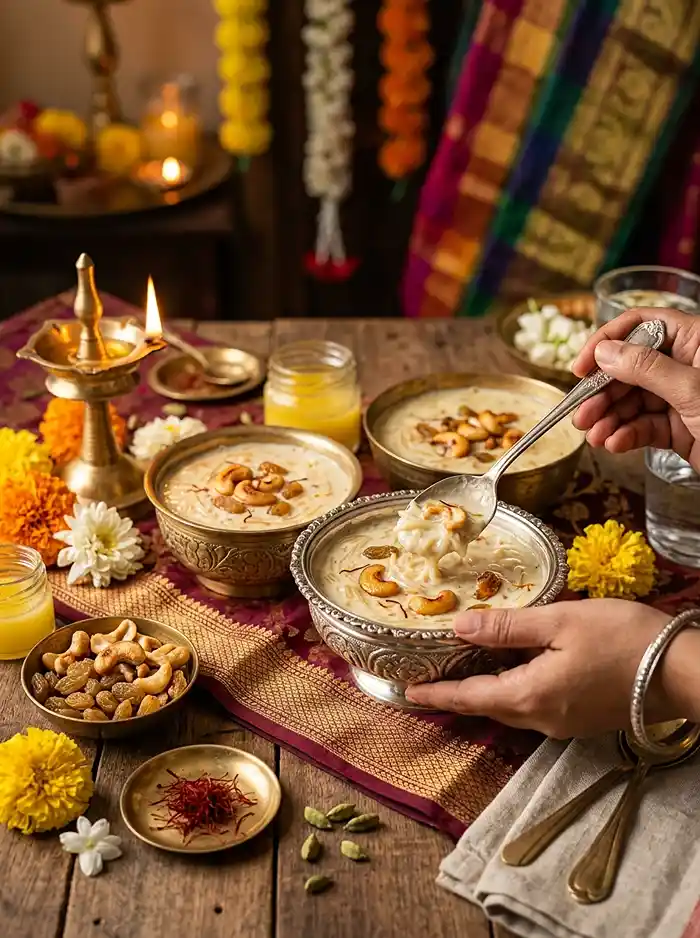
This payasam is rich enough to stand alone in a small bowl, but it also pairs well with a light, crisp snack on the side for contrast. We usually serve it at our Sunday family dinners alongside a few other make-ahead desserts, since everyone can help themselves at their own pace.
If you’re rounding out a dessert table, this gluten-free banana pudding with ube brings a different texture and color that pairs nicely next to a warm bowl of payasam.
Try This Recipe and Share Your Twist
Go ahead and give this gluten-free semiya payasam a try this week, even if it’s just a small batch for yourself. If you snap a photo, I’d love it if you pinned it to Pinterest so other gluten-free families can find it too.
Drop a comment below and let me know if you tried a substitution or a different sweetener. And if you’re planning a full gluten-free spread, this gluten-free chicken tender casserole makes an easy main dish to serve alongside it.
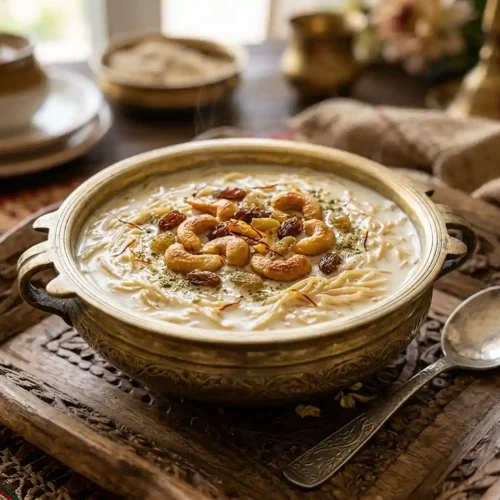
Gluten-Free Semiya Payasam (Creamy Vermicelli Kheer)
Equipment
- Heavy-Bottomed Pot
- Instant Pot
- Wooden spoon
- Measuring cups
- Serving bowls
Ingredients
For the Payasam
- ¾ cup gluten-free semiya (vermicelli)
- 4 cups full-fat milk use 3 1/2 cups for Instant Pot method
- ½ cup sugar adjust to taste
- ½ tsp green cardamom powder
Optional Flavoring
- saffron strands a few strands
For Roasting and Garnish
- 2 tbsp ghee divided
- 12-15 cashew nuts
- 8-10 sweet raisins
Instructions
- Heat 1 tablespoon ghee in a heavy-bottomed pot over medium heat. Fry the cashews until golden, then add the raisins and cook until puffed. Remove both to a plate.
- Add the remaining tablespoon of ghee to the pot and roast the gluten-free semiya over low to medium heat until lightly golden and fragrant. If using pre-roasted semiya, stir for about 30 seconds only.
- Pour in the milk and bring to a gentle boil, stirring frequently. Cook until the semiya softens and the milk thickens slightly.
- Add the sugar and stir until dissolved. Simmer for 3 to 5 minutes until creamy but still pourable. Stir in the cardamom powder and saffron strands if using.
- Top with the fried cashews and raisins. Serve warm or chilled.
- For the Instant Pot method: Sauté the cashews and raisins in 1 tablespoon ghee and remove. Add the remaining ghee and semiya, sauté briefly, then add 3 1/2 cups milk and sugar. Cook on Porridge Mode for 6 minutes with a 6-minute natural pressure release. Stir in cardamom, thicken if needed using Sauté Mode, and garnish before serving.