Gluten-Free Blackberry Lime Shortbread Bars
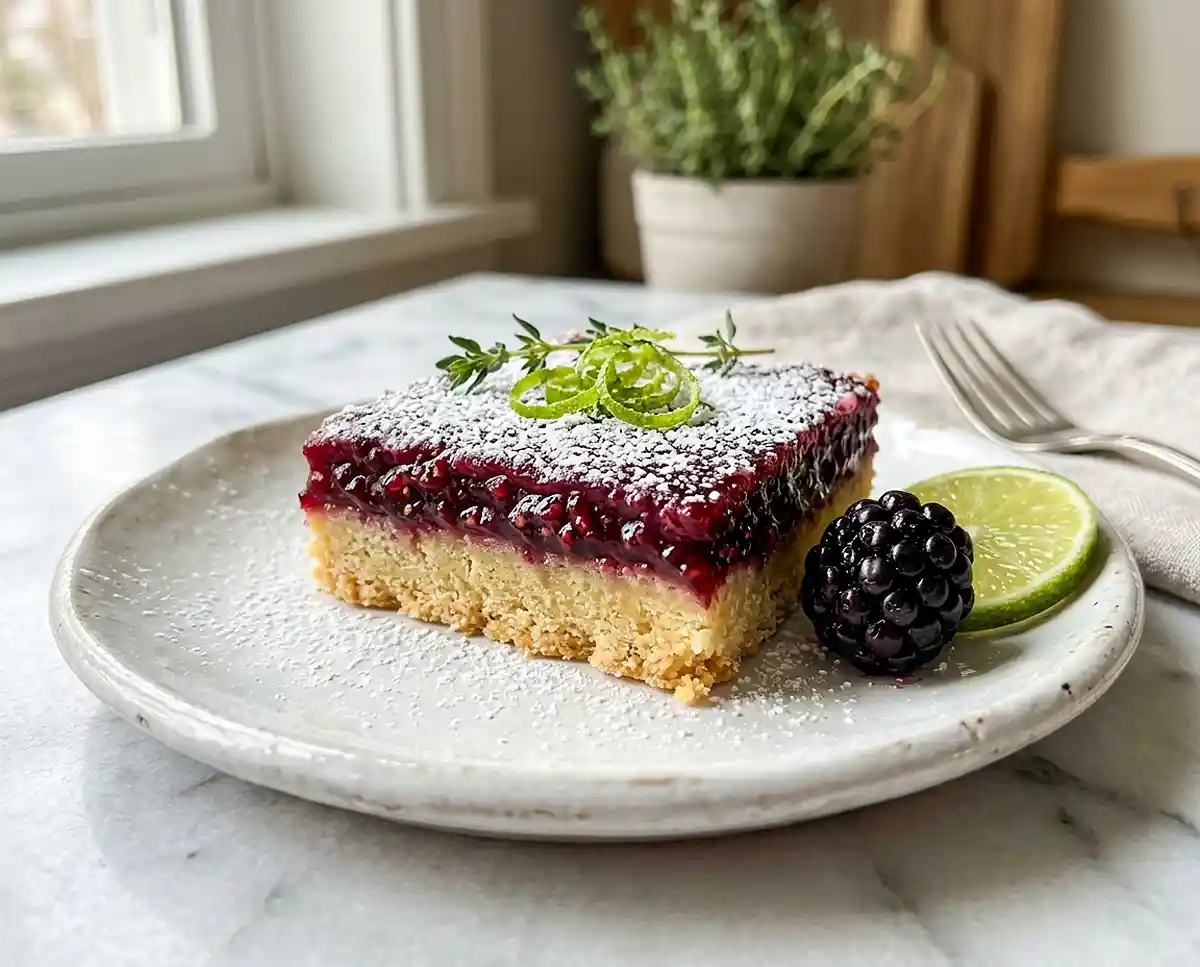
These Gluten-Free Blackberry Lime Shortbread Bars have a crisp buttery crust and a vibrant tangy filling — easy to make and impossible to stop eating.
My neighbor showed up at my door one August afternoon with a flat of fresh blackberries and absolutely no plan for them. I had 30 minutes and a bag of gluten-free all-purpose flour sitting on my counter. That afternoon gave me these gluten-free blackberry lime shortbread bars — and honestly, they’ve become one of my most-requested recipes every single summer since.
What makes them special isn’t just the flavor. It’s the contrast — a crumbly, golden shortbread base meeting a filling that’s bright, jammy, and almost custard-like in the center. Is there anything better than a dessert that looks like it took hours but comes together in under an hour?
Well… I’ll be honest with you: I burned the first batch because I forgot to set a timer. But once I dialed in the bake times, these bars became completely foolproof.
Table of Contents
Why You’ll Love These Gluten-Free Blackberry Lime Shortbread Bars
- The filling sets into a luscious, jewel-toned layer that quivers like soft curd — bright with lime and deeply fruity from the blackberries.
- No mixer required for the crust — just a bowl and your hands, making this genuinely beginner-friendly.
- Naturally gluten-free using a single all-purpose flour blend, with no complicated flour combinations or xanthan gum fuss.
- These bars travel beautifully, making them ideal for potlucks, picnics, and summer holiday spreads.
The Secret to Perfect Gluten-Free Blackberry Lime Shortbread Bars
Most gluten-free shortbread fails because the crust turns sandy and falls apart the moment you slice it. These bars solve that in three specific ways.
- Pre-bake the crust before adding filling. This creates a firm, set base that won’t turn soggy under the wet blackberry lime filling. Skipping this step is the number one reason bars fall apart.
- Pour the filling over a hot crust. The residual heat from the crust helps the filling begin setting immediately from the bottom up, creating that clean, sliceable layer.
- Strain the blackberry puree if you want a silkier filling. The seeds are edible and add texture, but straining gives you a smoother, more refined result that cuts more cleanly.
- The 2-hour fridge chill is what binds everything. Cutting these bars warm leads to a filling that oozes. Cold bars slice clean and hold their shape on the plate.
Ingredients
Shortbread Crust
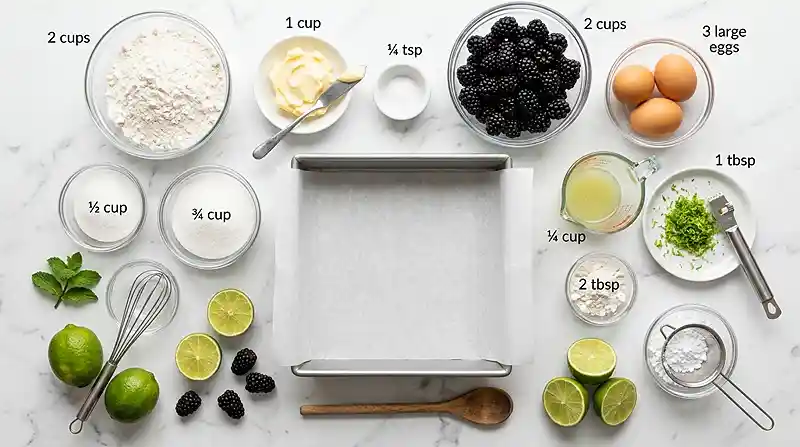
- 2 cups gluten-free all-purpose flour
- ½ cup granulated sugar
- 1 cup unsalted butter, softened
- ¼ tsp salt
Blackberry Lime Filling
- 2 cups fresh blackberries
- ¾ cup granulated sugar
- 3 large eggs
- ¼ cup fresh lime juice
- 1 tbsp lime zest
- 2 tbsp gluten-free all-purpose flour
Optional Topping
- Powdered sugar for dusting
- Extra lime zest
Ingredient note: Use a certified gluten-free all-purpose flour blend that already contains a binding agent like xanthan gum. Bob’s Red Mill 1-to-1 or King Arthur Measure for Measure both work well here. Always use fresh lime juice — bottled juice lacks the brightness this filling needs.
Step-by-Step Instructions
Step 1: Prep the Pan and Preheat
Preheat your oven to 350°F (175°C). Line an 8×8-inch baking pan with parchment paper, leaving some overhang on two sides so you can lift the bars out cleanly later.
Step 2: Make the Shortbread Crust
Mix the 2 cups gluten-free all-purpose flour, ½ cup granulated sugar, 1 cup softened butter, and ¼ tsp salt in a bowl until the mixture is crumbly and holds together when pressed.
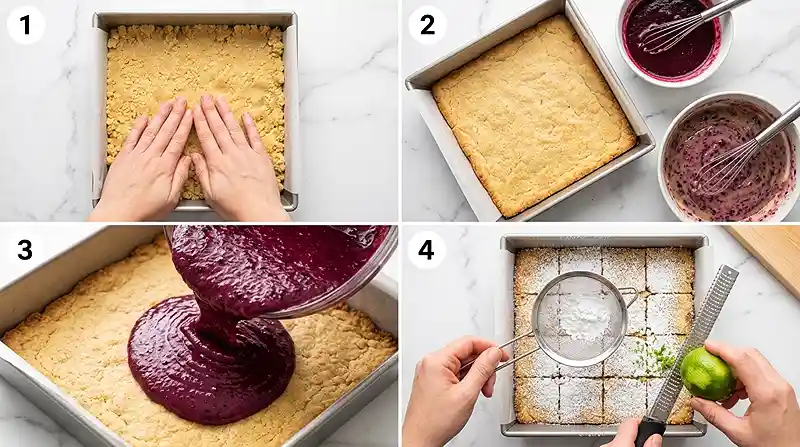
Press it firmly and evenly into the prepared pan. Use the flat bottom of a measuring cup to compact it — a well-packed crust is what keeps it from crumbling when you slice.
Step 3: Bake the Crust
Bake for 18–20 minutes, until the edges are lightly golden and the surface looks set. You want a pale gold color, not deep brown — it’ll bake more once the filling goes on.
Pro Tip: Don’t let the crust cool before adding the filling. You want it hot when the filling goes on — this helps the bottom of the filling set faster and more evenly.
Step 4: Prepare the Blackberry Lime Filling
While the crust bakes, puree the 2 cups fresh blackberries in a blender or food processor until smooth. Strain through a fine mesh sieve if you prefer a seedless filling — press firmly with a spatula to extract as much juice as possible.
Whisk together the blackberry puree, ¾ cup granulated sugar, 3 large eggs, ¼ cup fresh lime juice, 1 tbsp lime zest, and 2 tbsp gluten-free all-purpose flour until completely smooth and no lumps remain.
Step 5: Bake the Filled Bars
Pour the filling over the hot crust immediately and return the pan to the oven. Bake for 22–25 minutes, until the edges are set and the center has just a slight wobble — like a barely-set curd.
Don’t overbake. The filling will continue to firm up as it cools, and an overbaked filling turns rubbery rather than silky.
Step 6: Cool, Chill, and Serve
Let the bars cool completely at room temperature, then refrigerate for at least 2 hours before cutting. Use the parchment overhang to lift the whole slab out of the pan.
Dust generously with powdered sugar and add a scatter of extra lime zest right before slicing into 16 bars. A warm, dry knife wiped clean between cuts keeps the edges sharp.
Make It Your Own
For a dairy-free version, substitute the butter with a high-quality vegan butter like Miyoko’s or Earth Balance sticks. The crust won’t be quite as rich, but it will still hold together and bake up golden.
You know, if blackberries aren’t in season, frozen ones work perfectly here — no need to thaw first. Just blend them straight from frozen and strain well, since frozen berries release more liquid than fresh.
For a deeper flavor in these gluten-free shortbread bars, try browning the butter before mixing the crust. Let it cool until solid again first, then proceed as written. The nutty, toasty notes it adds make the crust taste noticeably more complex.
Swap the lime for lemon if that’s what you have on hand — lemon and blackberry is a classic tangy summer bars combination that works just as beautifully. Use the same quantity of juice and zest.
Want a spiced variation? A pinch of cardamom or a quarter teaspoon of ground ginger whisked into the filling adds a subtle warmth that pairs wonderfully with the deep berry flavor. According to the BBC Good Food guide to blackberry flavor pairings, cardamom and ginger are among the most complementary spices for blackberries — and I completely agree.
If you enjoy light, fruity no-bake desserts alongside baked bars, my tropical coconut rice pudding cups make a fantastic companion dessert for a summer spread.
Common Problems and Solutions
Problem: The crust is crumbling when you try to lift or slice the bars.
Solution: The crust wasn’t pressed firmly enough, or it didn’t chill long enough after baking. Pack it down hard with a flat-bottomed glass and make sure you refrigerate the bars for the full 2 hours before slicing.
Problem: The filling didn’t set and is still runny after baking.
Solution: It was underbaked or cut too soon. The center should have just a slight wobble when you pull it from the oven — it firms up fully during chilling. If it’s still liquid after 2 hours in the fridge, return to the oven for 5-minute increments at 325°F.
Man, oh man — I’ve made the runny-filling mistake more than once when I was impatient and sliced the bars warm. The filling pooled everywhere and the whole pan looked like a disaster. Cold bars only, every time.
Problem: The filling has a gummy, rubbery texture.
Solution: The bars were overbaked. Pull them from the oven the moment the edges are set and the center still has a gentle wobble. Gluten-free flour thickens filling faster than regular flour, so err on the side of underbaking rather than over.
Problem: The shortbread tastes gritty or sandy.
Solution: Your gluten-free flour may need more mixing time to fully hydrate the starches. Mix the crust a bit longer until it clumps together easily, and let the pressed crust rest for 5 minutes before baking to allow the flour to absorb the butter.
Storage Guide
| Method | Duration | Notes |
|---|---|---|
| Counter | Up to 1 day | Cover tightly; filling softens at room temperature |
| Fridge | 5–6 days | Store in airtight container; dust with powdered sugar before serving |
| Freezer | Up to 2 months | Wrap bars individually in plastic wrap, then freeze in a zip bag |
For frozen bars, thaw overnight in the fridge — never at room temperature, as condensation makes the shortbread soggy. Add fresh powdered sugar and lime zest after thawing for the best presentation.
Leftover bars crumbled over vanilla ice cream make an unexpectedly wonderful no-waste dessert — the buttery shortbread and tangy filling turn into a makeshift crumble topping.
Serving Suggestions
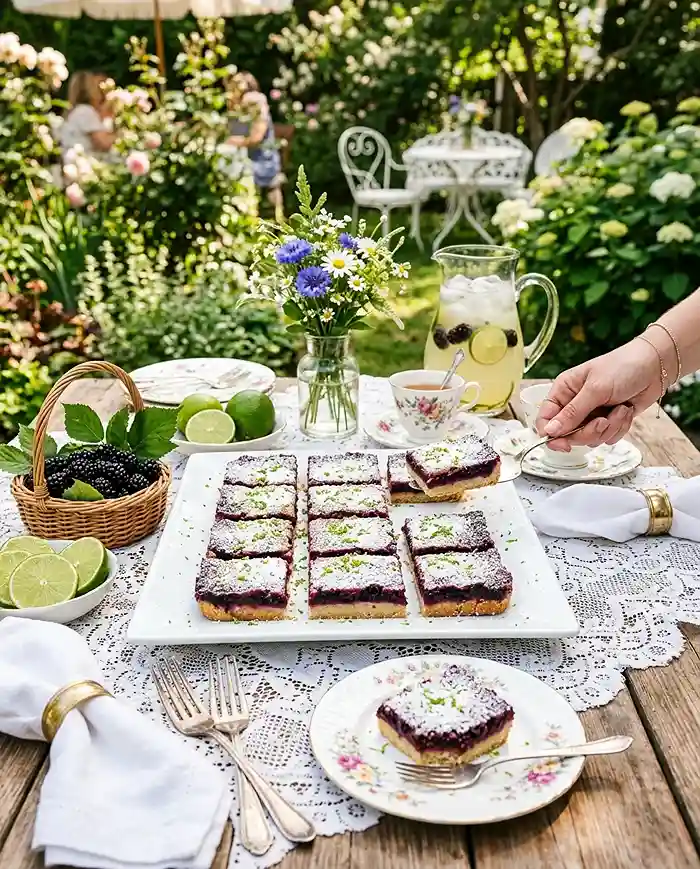
These gluten-free blackberry lime shortbread bars are the kind of dessert that fits just as naturally on a backyard Labor Day table as they do on a fancy Easter brunch spread — elegant enough to look intentional, casual enough that everyone just grabs one.
Serve them alongside something savory and bright, like my gluten-free BBQ salmon taco salad for a complete warm-weather meal that covers both ends of the flavor spectrum beautifully.
For a lighter savory side to balance the sweetness, my dill pickle ranch chickpea salad cups pair surprisingly well — the tangy, herby flavors echo the lime in the bars without competing.
FAQs About Gluten-Free Blackberry Lime Shortbread Bars
Do lemon and blackberry go together?
Yes — lemon and blackberry are a natural pairing. The citric brightness of lemon lifts the deep sweetness of blackberries and makes the flavor more vibrant. You can substitute lemon for the lime in this recipe using the same quantities of juice and zest.
Does lime pair well with blackberry?
Lime and blackberry are an outstanding combination. Lime has a slightly more floral, tropical edge than lemon that complements the deep fruitiness of blackberries beautifully. The zest adds an aromatic layer that makes the filling taste more layered and complex.
What spices enhance the flavor of blackberries?
Cardamom, ginger, cinnamon, and star anise all enhance blackberry’s natural depth. Cardamom is particularly effective because its floral, slightly citrusy notes echo the brightness already in blackberry without overwhelming the fruit flavor.
Why soak blackberries in lemon juice?
Soaking blackberries in lemon or lime juice brightens their color, preserves vibrancy, and enhances natural flavor through added acidity. It also helps break down the cell walls slightly, making pureeing and straining easier when preparing a filling or curd-style layer.
What flavor mixes well with blackberry?
Blackberries pair well with citrus, warm spices like cardamom and ginger, vanilla, dark chocolate, and fresh herbs like thyme. In baked desserts, butter-rich shortbread pastry is one of the best pairings because the richness balances the berry’s tartness perfectly.
Bake These Bars This Weekend
These gluten-free blackberry lime shortbread bars are the kind of recipe that earns you a reputation. Make them once for a gathering and someone will definitely ask for the recipe.
Give them a try and drop a comment below — I’d love to hear what variations you tried or whether you went seedless or kept the texture. And if you share them on Pinterest, tag me so I can see your beautiful purple-hued slices.
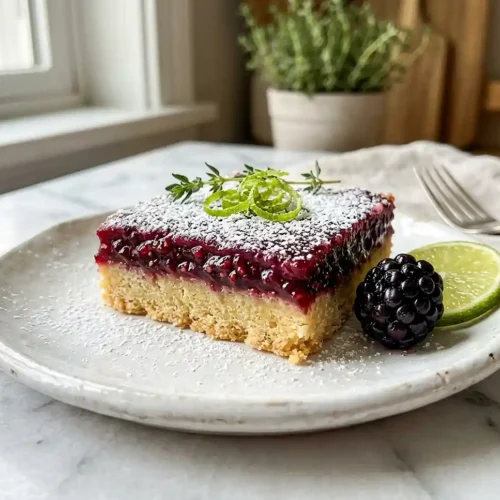
Gluten-Free Blackberry Lime Shortbread Bars
Equipment
- 8×8-inch baking pan
- Parchment paper
- Mixing bowl
- Blender or food processor
- Fine-mesh sieve
- Whisk
Ingredients
Shortbread Crust
- 2 cups gluten-free all-purpose flour use a blend that contains xanthan gum
- 0.5 cup granulated sugar
- 1 cup unsalted butter softened
- 0.25 tsp salt
Blackberry Lime Filling
- 2 cups fresh blackberries frozen works too — no need to thaw
- 0.75 cup granulated sugar
- 3 large eggs
- 0.25 cup fresh lime juice from about 2–3 limes
- 1 tbsp lime zest
- 2 tbsp gluten-free all-purpose flour
Optional Topping
- powdered sugar for dusting
- lime zest extra, for garnish
Instructions
- Preheat oven to 350°F (175°C). Line an 8×8-inch baking pan with parchment paper, leaving overhang on two sides for easy removal.
- Mix the gluten-free flour, sugar, butter, and salt in a bowl until crumbly. Press firmly into the prepared pan using the flat bottom of a measuring cup.
- Bake the crust for 18–20 minutes, or until lightly golden at the edges. Do not let it cool — add the filling while the crust is still hot.
- While the crust bakes, puree the blackberries in a blender or food processor until smooth. Strain through a fine mesh sieve if desired to remove seeds.
- Whisk together the blackberry puree, sugar, eggs, lime juice, lime zest, and gluten-free flour until completely smooth with no lumps.
- Pour the filling over the hot crust immediately and return the pan to the oven.
- Bake for 22–25 minutes, or until the edges are set and the center has just a slight wobble. Do not overbake — the filling firms up fully as it chills.
- Cool completely at room temperature, then refrigerate for at least 2 hours before slicing.
- Use the parchment overhang to lift the slab from the pan. Dust with powdered sugar and garnish with extra lime zest, then cut into 16 bars using a warm, dry knife wiped clean between each cut.