Gluten-Free Cherry Vanilla Smoothie Bowl
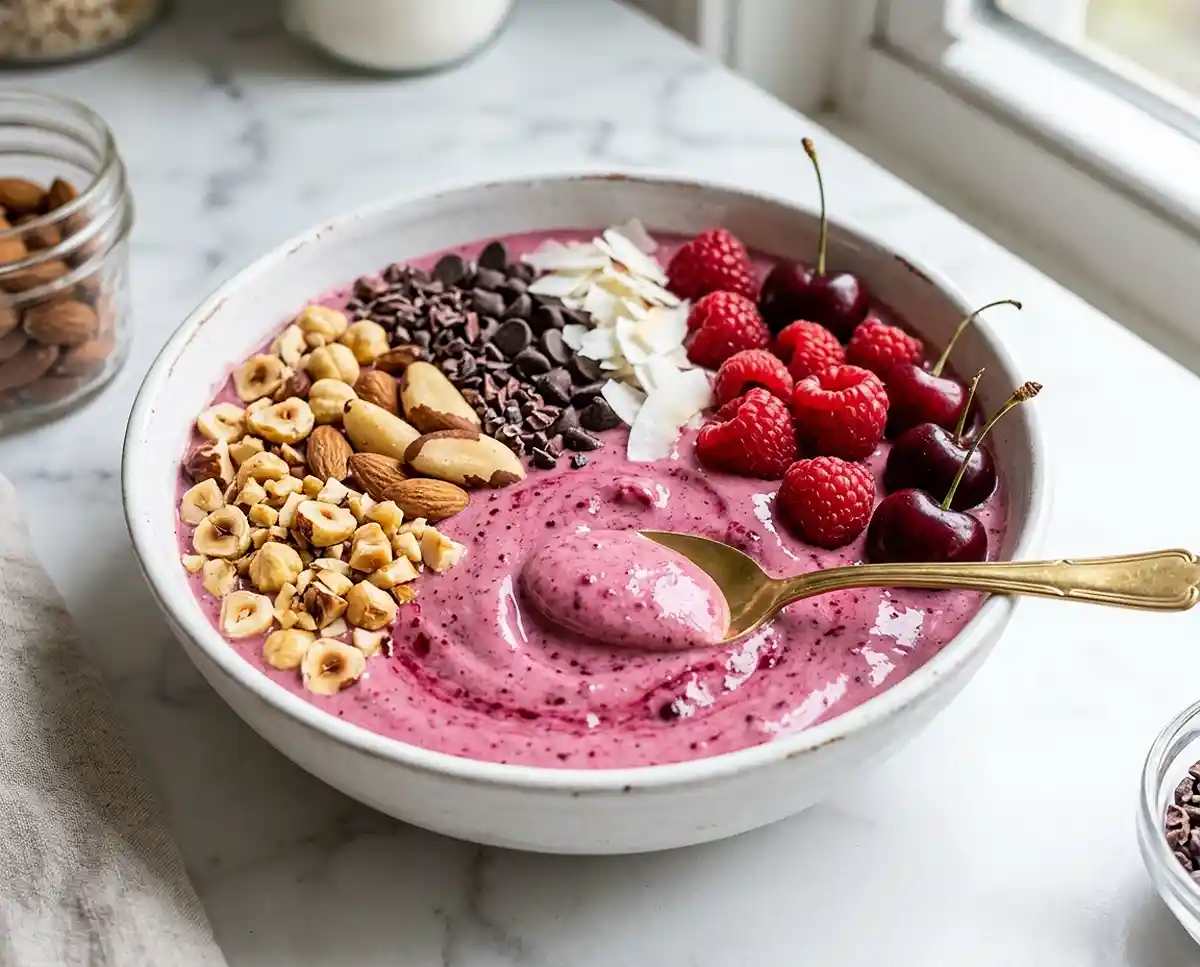
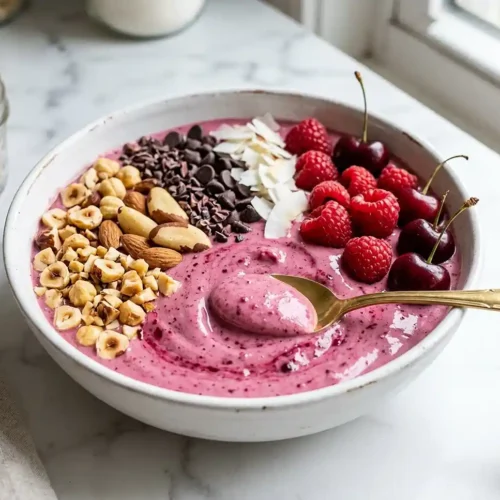
A vibrant gluten-free cherry vanilla smoothie bowl blended with frozen cherries, raspberries, banana, and vanilla paste — topped with crunchy nuts, chocolate, and coconut chips.
I went through an entire summer of soupy, sad smoothie bowls before I finally cracked the code on thickness. Every morning I’d blend my fruit, pour it into a bowl, and watch my toppings immediately sink to the bottom like little lifeboats in a pink ocean. The granola got soggy, the nuts disappeared, and I ended up drinking it with a straw instead of eating it with a spoon.
The fix for my Gluten-Free Cherry Vanilla Smoothie Bowl turned out to be embarrassingly simple. I was using too much liquid and not enough frozen fruit. The moment I dialed the oat milk back and made sure both the cherries and raspberries were rock-solid frozen, the blender produced a thick, scoopable base that held every single topping exactly where I placed it.
Table of Contents
Why You’ll Love This Gluten-Free Cherry Vanilla Smoothie Bowl
- Rich, ice-cream-thick texture: Frozen cherries and raspberries blended with banana create a base so thick and creamy it holds toppings on the surface like soft-serve holds a cherry on top — no sinking, no soupy mess.
- Five-minute, no-cook breakfast: Blend, pour, top, eat. No heating, no baking, no waiting. This is as fast as breakfast gets while still feeling like a real meal.
- Naturally gluten-free and dairy-free: Oat milk keeps it plant-based and light, and every topping is naturally free of gluten and dairy. Just verify your oat milk is certified gluten-free if you follow a strict celiac diet.
- Customizable for any morning: The base recipe is a blank canvas. Swap the toppings, change the nut mix, add seeds or granola — this summer bowl recipe adapts to whatever you have on hand.
The Secret to a Thick Gluten-Free Cherry Vanilla Smoothie Bowl
- Frozen fruit is the foundation of thickness. Both the raspberries and cherries must be solidly frozen when they go into the blender. Frozen fruit acts like natural ice cream — it creates body and density without adding ice, which dilutes flavor. Thawed or fresh fruit produces a drinkable smoothie, not a scoopable bowl.
- The banana serves as a natural emulsifier. According to Harvard’s School of Public Health nutrition resource on bananas, bananas are high in pectin and resistant starch, both of which contribute to a thick, creamy texture when blended. A ripe banana binds the frozen fruit and liquid into a cohesive, spoonable base.
- Vanilla paste instead of extract makes a noticeable difference. Vanilla paste contains the actual vanilla bean seeds suspended in a thick syrup, which adds visible specks and a deeper, more rounded vanilla flavor than liquid extract. That warmth balances the tartness of the cherries and raspberries beautifully.
- Controlling your liquid ratio is the single most important variable. The 1 1/2 cups of oat milk is calibrated to produce a thick, scoopable consistency with the specific amount of frozen fruit in this recipe. Adding more liquid — even a quarter cup — can tip the texture from bowl to glass.
Ingredients
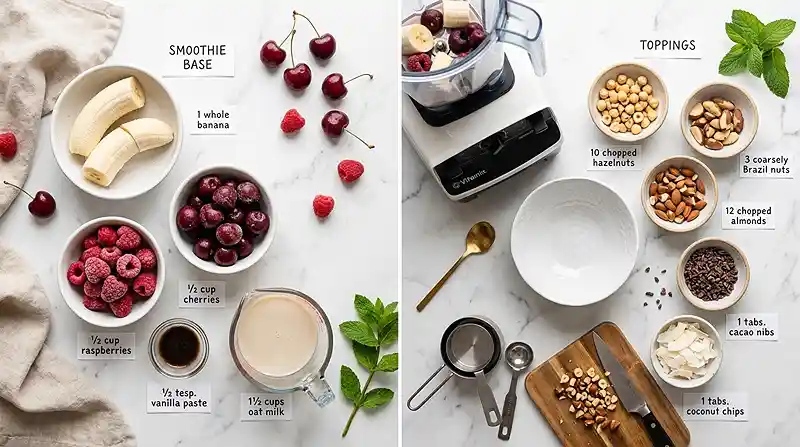
Smoothie Base
- 1 banana
- 1/2 cup frozen raspberries
- 1/2 cup frozen cherries
- 1/2 teaspoon vanilla paste
- 1 1/2 cups oat milk
Toppings
- 10 hazelnuts, chopped
- 3 Brazil nuts, chopped
- 12 almonds, chopped
- 1 tablespoon dark chocolate chips or cacao nibs
- 1 tablespoon coconut chips
A note on the oat milk: not all oat milk is gluten-free. Oats are naturally gluten-free, but many brands process them on shared equipment with wheat. The Celiac Disease Foundation’s gluten-free food guide recommends choosing oat milk that is explicitly labeled certified gluten-free.
Step-by-Step Instructions
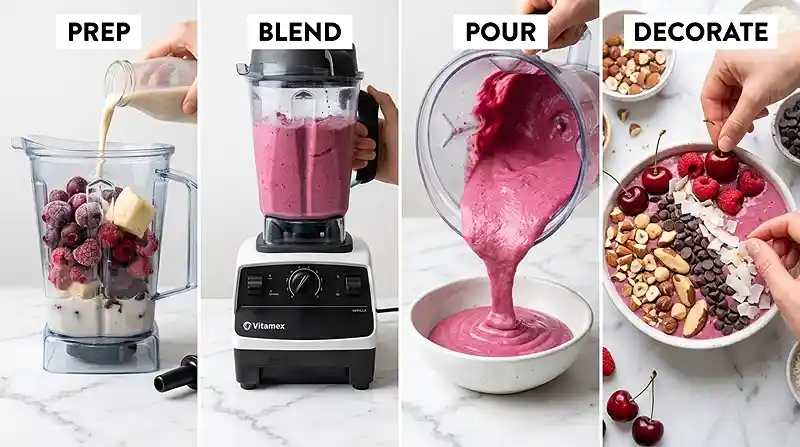
Step 1 — Blend the base. Add the 1 banana, 1/2 cup frozen raspberries, 1/2 cup frozen cherries, 1/2 teaspoon vanilla paste, and 1 1/2 cups oat milk to a high-speed blender. Blend on high until completely smooth and thick, about 30-45 seconds. You may need to stop and scrape down the sides once or twice to catch any frozen chunks.
Pro Tip: Add the liquid first, then the banana, then the frozen fruit on top. This creates a vortex in the blender that pulls the frozen pieces down into the blade more efficiently, reducing blending time and preventing air pockets.
Step 2 — Pour and assess the thickness. Transfer the blended mixture to a bowl. It should mound slightly and hold its shape rather than flowing flat. If you drag a spoon through the center, the trail should hold for a few seconds before slowly filling back in.
If the base seems too thin, blend in 2-3 more frozen cherries or a few ice cubes. If it’s too thick to blend smoothly, add oat milk one tablespoon at a time until it moves.
Step 3 — Add toppings. Arrange the 10 chopped hazelnuts, 3 chopped Brazil nuts, 12 chopped almonds, 1 tablespoon dark chocolate chips or cacao nibs, and 1 tablespoon coconut chips on top of the smoothie bowl. Place them in rows or clusters for visual appeal.
Step 4 — Serve immediately. Enjoy the bowl right away while the base is at its thickest and the toppings are at their crunchiest. Alternatively, cover and store in the fridge to consume the next day — the texture will be slightly thinner but still scoopable.
Make It Your Own
Swap the berries: Frozen blueberries, blackberries, or a mixed berry blend can replace the raspberries. Keep the total frozen fruit volume at 1 cup so the thickness ratio stays balanced. Mango or pineapple chunks create a tropical cherry vanilla breakfast bowl that tastes like summer vacation.
Change the milk: Almond milk, coconut milk, or cashew milk all work as replacements for the oat milk. Full-fat canned coconut milk produces the richest, most indulgent base but adds significant calories. Almond milk is the lightest option and works well if you prefer a less creamy result.
Man, oh man… if you stir 1 tablespoon of almond butter or cashew butter into the blender with the fruit, the smoothie bowl becomes unbelievably thick and almost mousse-like. It adds protein, healthy fats, and a nutty depth that makes the whole bowl taste like cherry vanilla ice cream from a scoop shop.
Boost the nutrition: Add 1 tablespoon of hemp seeds, flax meal, or collagen peptides to the blender for extra protein without changing the flavor. A handful of fresh spinach disappears completely into the blend and adds iron and folate. For a fiber boost, 1 tablespoon of chia seeds stirred into the finished bowl adds texture and staying power.
Make it kid-friendly: Skip the Brazil nuts and use mini chocolate chips instead of cacao nibs. Kids tend to love the sweet cherry-vanilla flavor, and letting them arrange their own toppings turns breakfast into an activity. This dairy free smoothie bowl is a reliable way to get fruit into picky eaters without a fight.
Common Problems and How to Fix Them
Problem: The bowl is too thin and runny. You used too much liquid or your fruit wasn’t fully frozen. Reduce the oat milk by 1/4 cup next time, and make sure both the raspberries and cherries are rock-hard from the freezer. Adding 2-3 ice cubes during blending can also rescue a too-thin batch in progress.
Problem: The blender won’t blend and keeps getting stuck. The mixture is too thick for your blender’s power level. Add oat milk one tablespoon at a time and use the tamper tool if your blender has one. You know… a high-speed blender like a Vitamix handles thick smoothie bowls much better than a standard model, but most blenders can manage if you add the liquid first and pulse before blending continuously.
Problem: The bowl tastes too tart. Cherries and raspberries are both naturally acidic fruits. Make sure your banana is ripe — brown spots on the skin indicate higher sugar content and more sweetness. Adding 1 teaspoon of honey or maple syrup can also round out the tartness without overpowering the fruit flavor.
Problem: The toppings sink immediately. Your base isn’t thick enough. A properly thick smoothie bowl should hold toppings on the surface for the entire time you’re eating it. Go back to the thickness test — drag a spoon through the center and check that the trail holds its shape. If it fills in instantly, the base needs more frozen fruit or less liquid.
Storage and Meal Prep
| Method | Duration | Notes |
|---|---|---|
| Counter | Up to 30 minutes | Melts quickly; eat promptly |
| Refrigerator | Up to 1 day | Cover tightly; stir before eating |
| Freezer (base only) | Up to 1 month | Freeze in silicone molds; re-blend with splash of milk |
Smoothie bowls are best consumed fresh, but you can prep the base the night before and store it covered in the fridge. It will thicken slightly overnight, so give it a good stir and add a splash of oat milk if needed before topping.
For a make-ahead approach, pre-portion the frozen fruit and banana slices into individual freezer bags. Each morning, dump one bag into the blender with the vanilla paste and oat milk — you’ll have a summer bowl recipe ready in under two minutes with zero morning prep.
Your Questions Answered
Can acai bowls be gluten-free?
Yes, acai bowls are naturally gluten-free since the base is made from blended frozen fruit. The risk comes from toppings like granola, which often contains wheat or oats processed on shared equipment. Always choose certified gluten-free granola or skip it in favor of nuts, seeds, and coconut chips like this recipe uses.
What fruit goes well with cherries in a smoothie?
Raspberries, bananas, and mangoes are the best pairings for cherries in a smoothie bowl. Raspberries add tartness that brightens the deep sweetness of cherries, while banana provides the creamy body that makes the bowl thick and scoopable. Peaches and plums also complement cherries beautifully for a stone-fruit-themed variation.
Do cherry and vanilla taste good together?
Cherry and vanilla is a classic flavor combination for good reason — the warm, floral notes of vanilla soften the bright tartness of cherries and create a rounded, almost dessert-like flavor. Using vanilla paste instead of extract intensifies this pairing because the bean seeds add aromatic depth that liquid extract can’t match.
Are smoothie bowls actually healthy?
Smoothie bowls can be very healthy when made with whole fruit, minimal added sugar, and nutrient-dense toppings. This recipe uses no added sweeteners beyond the natural sugars in the fruit and a touch of vanilla paste. The nut toppings add protein, healthy fats, and fiber that help keep you full through the morning.
What’s the difference between a smoothie bowl and an acai bowl?
An acai bowl uses frozen acai puree as its primary base ingredient, while a smoothie bowl can be made from any combination of frozen fruits. This gluten-free cherry vanilla smoothie bowl is technically a smoothie bowl since it uses cherries and raspberries rather than acai. The preparation method and topping style are essentially identical for both.
Serving Suggestions
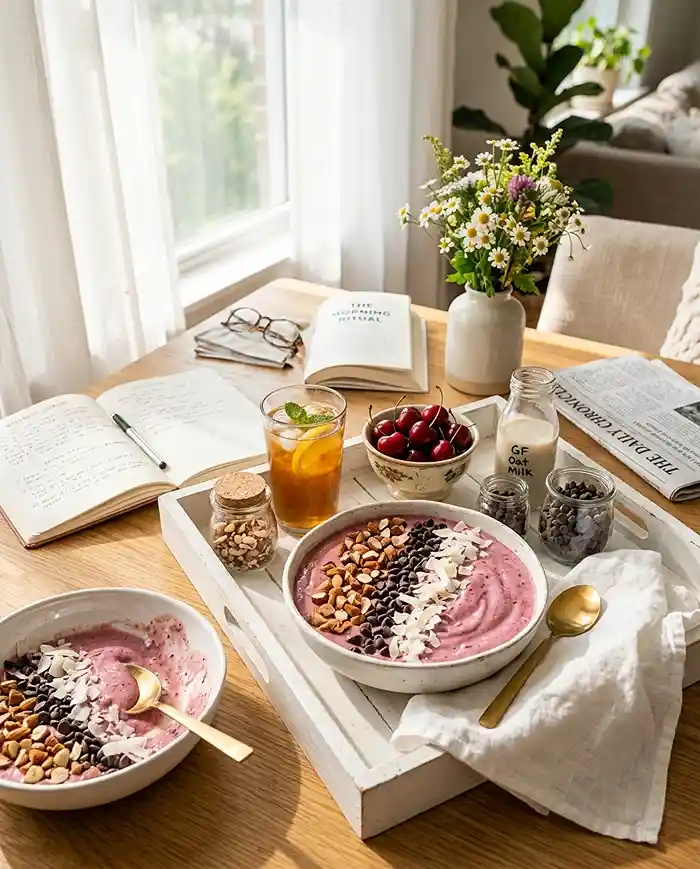
This Gluten-Free Cherry Vanilla Smoothie Bowl is a standout addition to a Fourth of July brunch spread — the deep red-pink color looks festive alongside blueberry toppings and white coconut chips. Set up a topping bar and let guests customize their own bowls for an interactive, crowd-friendly breakfast.
For a more filling meal, serve the bowl alongside a cup of coffee and a small handful of extra nuts. If you’re planning a full brunch menu, pair it with gluten-free pesto turkey burger sliders for a sweet-and-savory balance.
After the bowl, something like gluten-free coconut cream berry trifle cups keeps the berry theme going for dessert. Or shift to a heartier lunch with gluten-free Greek chicken orzo salad later in the day.
Go Blend One Tomorrow Morning
If you’ve been struggling to make smoothie bowls that are actually thick enough to eat with a spoon, this is the recipe that’ll finally get you there. Five minutes, five base ingredients, and a blender — that’s all it takes for a cherry vanilla breakfast that looks and tastes like it came from a specialty cafe.
I’d love to hear what toppings you pile on yours — drop a comment below with your favorite combination. And if that vibrant pink bowl looks as beautiful in your kitchen as it does in mine, save this recipe to your Pinterest board so it’s ready for every warm morning this summer.
Gluten-Free Cherry Vanilla Smoothie Bowl
Equipment
- High-speed blender
- Serving bowl
- Knife and cutting board for chopping nuts
Ingredients
Smoothie Base
- 1 banana
- ½ cup frozen raspberries
- ½ cup frozen cherries
- ½ tsp vanilla paste
- 1 ½ cups oat milk use certified gluten-free oat milk
Toppings
- 10 hazelnuts chopped
- 3 Brazil nuts chopped
- 12 almonds chopped
- 1 tbsp dark chocolate chips or cacao nibs
- 1 tbsp coconut chips
Instructions
- Add the 1 banana, 1/2 cup frozen raspberries, 1/2 cup frozen cherries, 1/2 teaspoon vanilla paste, and 1 1/2 cups oat milk to a high-speed blender. Add the liquid first, then the banana, then the frozen fruit on top for the most efficient blending. Blend on high until completely smooth and thick, about 30-45 seconds, stopping to scrape down the sides as needed.
- Transfer the blended mixture to a serving bowl. The base should mound slightly and hold its shape rather than flowing flat. If it seems too thin, blend in 2-3 more frozen cherries or a few ice cubes. If too thick to blend, add oat milk one tablespoon at a time.
- Arrange the 10 chopped hazelnuts, 3 chopped Brazil nuts, 12 chopped almonds, 1 tablespoon dark chocolate chips or cacao nibs, and 1 tablespoon coconut chips on top of the smoothie bowl in rows or clusters for visual appeal.
- Serve right away while the base is at its thickest and the toppings are at their crunchiest. Alternatively, cover and store in the fridge and consume the next day — the texture will be slightly thinner but still scoopable after a good stir.