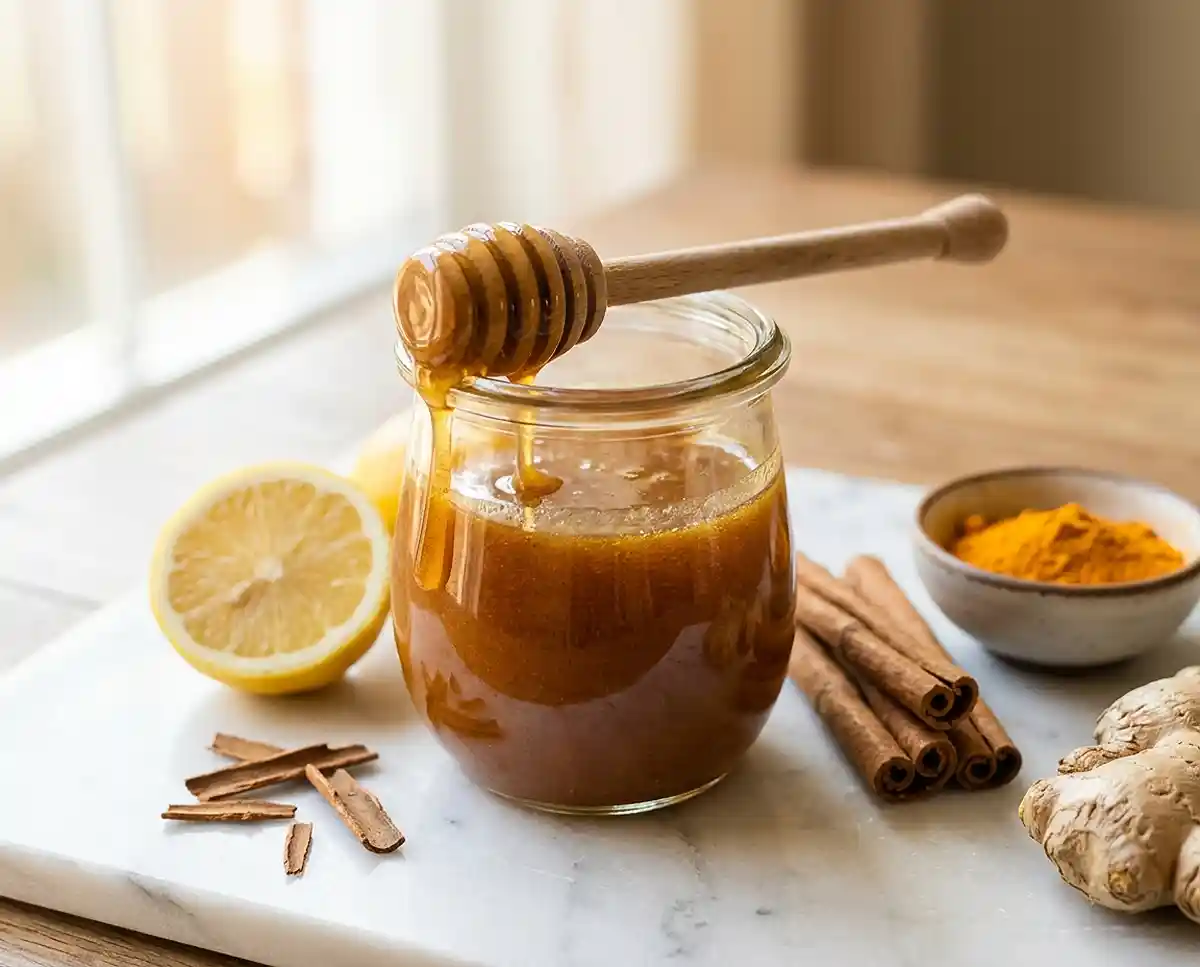
Gluten-Free Dr. Ben Carson Honey
Discover the gluten-free Dr. Ben Carson honey recipe made with raw honey, Ceylon cinnamon, and lemon — a natural daily remedy your whole family can trust.
The first time I mixed raw honey with Ceylon cinnamon and fresh lemon juice, I honestly expected nothing special. I’d been skeptical of “wellness blends” for years — too many overhyped powders, too many promises. But this combination stopped me in my tracks. The aroma alone was something else: warm, bright, slightly earthy. My kitchen smelled like a spice market in the best possible way.
Is it magic? No. But as someone who’s spent years helping families cook and eat without gluten, I know how hard it is to find something simple that actually fits into a real morning routine — no blender, no cooking, no complicated steps. This gluten-free Dr. Ben Carson honey recipe does exactly that. You stir a few whole-food ingredients into a jar, and you’re done.
Table of Contents
Why You’ll Love This Gluten-Free Honey Recipe
- Naturally gluten-free, dairy-free, and grain-free — safe for celiac and gluten-sensitive individuals
- No cooking or equipment required — just a bowl, a spoon, and a clean glass jar
- Ready in under 5 minutes, but lasts weeks at room temperature
- Flexible — works as a daily teaspoon ritual, stirred into warm water, or drizzled over gluten-free toast
The Secret to a Perfect Gluten-Free Honey Recipe
The quality of your honey determines everything. Raw, unfiltered honey retains its natural enzymes, antioxidants, and trace nutrients. Processed honey is essentially flavored sugar syrup — it won’t give you the same result. Tualang honey, if you can source it, is particularly prized for its depth of flavor and rich mineral profile, but any high-quality raw honey works well.
- Ceylon cinnamon vs. Cassia cinnamon — This matters more than most people realize. Cassia (the cheap grocery store kind) contains high levels of coumarin, which can be problematic in daily use. Ceylon cinnamon is milder, slightly sweeter, and is the one you want for a daily remedy. Nutritionists and herbalists consistently point to Ceylon as the preferred choice for regular consumption.
- Fresh lemon juice only — Bottled lemon juice is preserved and lacks the bright acidity that makes this blend glossy and balanced. Squeeze it immediately before mixing.
- Low-and-slow stirring — You’re not whipping or emulsifying here. A gentle fold with a wooden spoon preserves the honey’s natural structure. Metal spoons can react with raw honey, so stick to wood or silicone.
- Optional add-ins are layered, not dumped — The turmeric, ginger, and sea salt each serve a specific role. Turmeric adds an earthy depth (the “Asian protocol” version), ginger brings a gentle heat, and a pinch of sea salt amplifies the honey’s sweetness in a surprising way.
Ingredients For Gluten-Free Dr. Ben Carson Honey
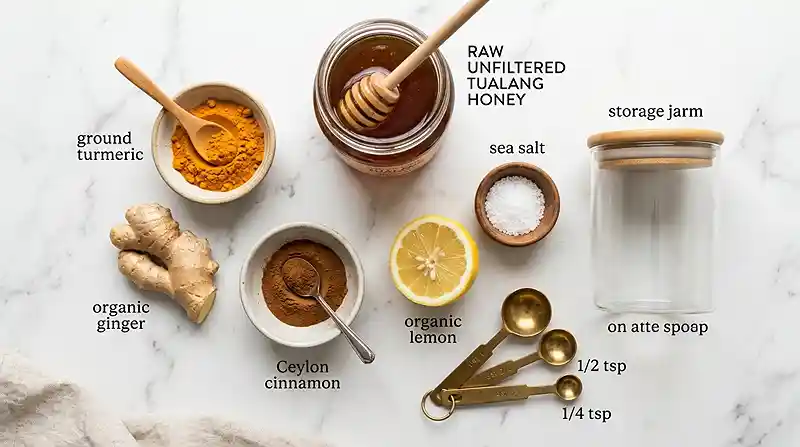
Yield: 1 jar (approximately 24 servings at 1 tsp each)
Dry / Spice
| Ingredient | Amount | Notes |
|---|---|---|
| Ceylon cinnamon, ground | 1 tsp | Use Ceylon, not Cassia — very different compounds |
| Ground turmeric (optional) | ¼ tsp | Asian protocol version |
| Freshly grated ginger (optional) | 1 pinch | Adds warming heat |
| Sea salt (optional) | 1 pinch | Enhances natural sweetness |
Wet / Base
| Ingredient | Amount | Notes |
|---|---|---|
| Raw unfiltered honey | 1 cup | Tualang preferred; avoid processed honey |
| Fresh lemon juice | 1 tsp | Squeeze immediately before mixing |
Instructions For Gluten-Free Dr. Ben Carson Honey
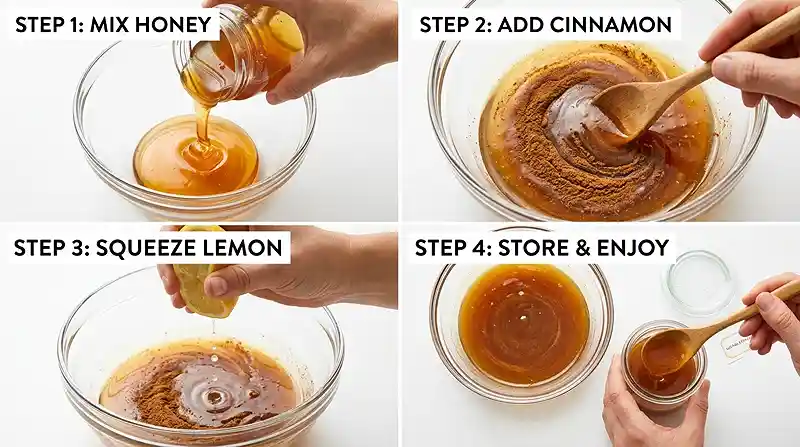
1. Prep your bowl and spoon Use a clean glass or ceramic bowl — nothing metal. Have your wooden spoon ready and your glass storage jar nearby with the lid off. Starting clean and dry is non-negotiable; any moisture in the jar can cause the honey to ferment prematurely.
2. Measure and pour the honey Pour 1 cup of raw, unfiltered honey into the bowl. You’ll notice it moves slowly and has a thick, almost amber-gold sheen. That’s a sign of good quality — over-processed honey pours like water.
3. Add the Ceylon cinnamon Add 1 teaspoon of Ceylon cinnamon directly on top of the honey. Don’t stir yet — just let it sit for a moment. You’ll smell that soft, almost floral cinnamon note rising immediately, which is how you know it’s the real thing.
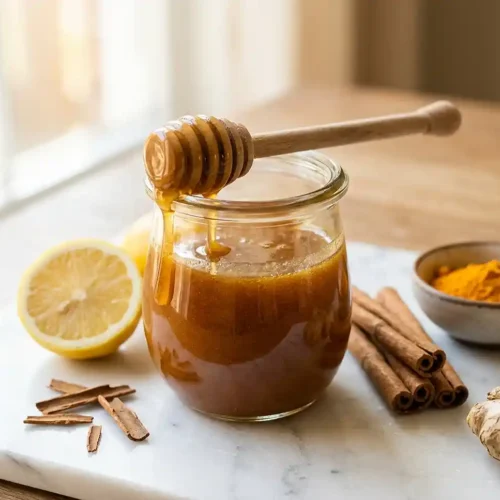
4. Stir slowly until fully combined Using your wooden spoon, stir the cinnamon into the honey with slow, deliberate circles — not aggressive mixing. Continue until you see no dry cinnamon streaks. The mixture will deepen to a warm amber-brown.
5. Add the fresh lemon juice Squeeze 1 teaspoon of fresh lemon juice directly into the bowl and stir again. Watch how the mixture becomes glossy and slightly lighter — that’s the acid interacting with the honey. It should look smooth and almost like liquid caramel at this point.
6. Add optional ingredients (if using) Add ¼ teaspoon turmeric, a pinch of ginger, and/or a pinch of sea salt if you’re making the full-spectrum version. Stir until evenly incorporated. The turmeric turns the blend a rich golden-orange — as vivid as a desert sunrise.
Pro Tip: Add optional ingredients one at a time and taste as you go. It’s easier to add more than to fix an over-spiced batch.
7. Transfer to a glass jar Pour the finished blend into a clean, airtight glass jar. A standard 8 oz mason jar works perfectly. Seal and store at room temperature, away from direct sunlight and heat sources.
8. Daily use Take 1 teaspoon daily, preferably before breakfast. Always use a clean, dry spoon — no double-dipping and no wet spoons, as moisture introduces bacteria into the jar.
Make It Your Own
Want a thinner consistency? Gently warm your honey jar in a bowl of warm (not hot) water for a few minutes before mixing. Heat above 104°F (40°C) starts to degrade raw honey’s beneficial enzymes, so never microwave it. A slightly thinner texture makes it easier to stir into herbal teas or drizzle over your morning Orange Creamsicle Smoothie.
Prefer a citrus-forward version? Increase the lemon juice to 1½ teaspoons and add ¼ teaspoon of freshly grated lemon zest. The zest adds brightness and a subtle bitterness that rounds out the sweetness beautifully. Just be sure to use an organic lemon if you’re zesting — conventional lemon skins carry pesticide residue.
Making it for kids? Skip the turmeric and ginger — their flavors can be polarizing for little palates. The base version (honey, cinnamon, lemon) is mild, slightly sweet, and a much easier sell for a school-morning routine than any supplement gummy. You know, that alone has made it a hit in several families I cook with.
Vegan-friendly note: Technically, honey is an animal product, so strict vegans may want to use a raw agave nectar as a substitute. The flavor changes significantly — agave is more neutral — but it still carries the cinnamon and lemon beautifully.
Man, oh man… once you try the version with a pinch of sea salt, it’s hard to go back. That tiny addition transforms the whole jar.
Common Problems & Solutions For Gluten-Free Honey Recipe
Problem: My honey crystallized after mixing. This is completely normal — raw honey crystallizes over time, especially after adding dry spices. Solution: Place the sealed jar in a bowl of warm water (not boiling) for 10–15 minutes, then stir. Crystallization is actually a sign of quality; it means the honey hasn’t been over-processed. Your blend is still perfectly good.
Problem: The cinnamon clumped and won’t incorporate. This usually happens when the honey is very thick or cold. Solution: Gently warm the honey (see above) before adding the cinnamon, and sift the cinnamon through a fine mesh strainer first to break up any pre-existing lumps. Stir more slowly and for longer — patience is the technique here.
Problem: The mixture tastes too sharp or acidic. You likely squeezed a particularly tart lemon or added slightly too much juice. Solution: Stir in an additional teaspoon of raw honey to balance. Going forward, taste your lemon before adding — some are far more acidic than others, especially in winter. A Meyer lemon makes a noticeably milder version.
Problem: The jar developed mold or fermented. This almost always comes from a wet spoon or contaminated jar. Raw honey is naturally antimicrobial, but introducing moisture breaks that protection. Solution: Start fresh with a sterilized, completely dry jar, and commit to using only a clean, dry spoon every single time.
Storage Guide
| Method | Duration | Notes |
|---|---|---|
| Room temperature | 2–3 months | In a sealed glass jar, away from heat and sunlight |
| Refrigerator | 6+ months | Honey will thicken considerably — let it come to room temp before use |
| Freezer | Not recommended | Crystallization and texture changes make it less pleasant to use |
For daily use, room temperature storage is ideal. The natural antimicrobial properties of raw honey mean it doesn’t require refrigeration — in fact, cold temperatures just make it harder to scoop. If you’re making a double batch, you can keep one jar on the counter and one in the fridge as a backup.
No-waste idea: If the jar develops any dried crust around the rim, use a damp cloth to clean the outside, then dry completely before sealing again.
FAQs About Gluten-Free Dr. Ben Carson Honey
Can I use regular store-bought honey instead of raw honey?
You can, but the result won’t be the same. Processed commercial honey is heated and filtered to remove pollen, propolis, and most naturally occurring enzymes. What you’re left with is essentially flavored sugar. For a daily remedy, raw and unfiltered honey is the whole point — it’s worth sourcing it from a local farmers’ market or a reputable health food store.
How do I know I’m buying real Ceylon cinnamon?
Look for “Cinnamomum verum” or “true cinnamon” on the label. Ceylon cinnamon is tan to light brown, forms thin papery layers when rolled, and smells softer and more complex than the sharp bite of Cassia. Most cinnamon sold in US grocery stores is Cassia (Cinnamomum aromaticum). Specialty spice shops, South Asian grocery stores, and online retailers tend to stock authentic Ceylon reliably.
What’s the best time of day to take this?
First thing in the morning, before eating, is generally considered optimal. Taking it on an empty stomach allows faster absorption without competing with food. That said, some people find honey on an empty stomach causes mild nausea — if that’s you, take it with a small amount of warm water or stir it into herbal tea alongside breakfast.
Why did my mixture turn darker after a few weeks?
This is a natural enzymatic process, not spoilage. Raw honey darkens over time due to oxidation and the Maillard reaction, especially after being mixed with spices. As long as there’s no off smell, no mold, and no fermentation bubbles, your jar is perfectly safe. The flavor may actually deepen in a pleasant way.
Serving Suggestions For Healthy Honey Drink
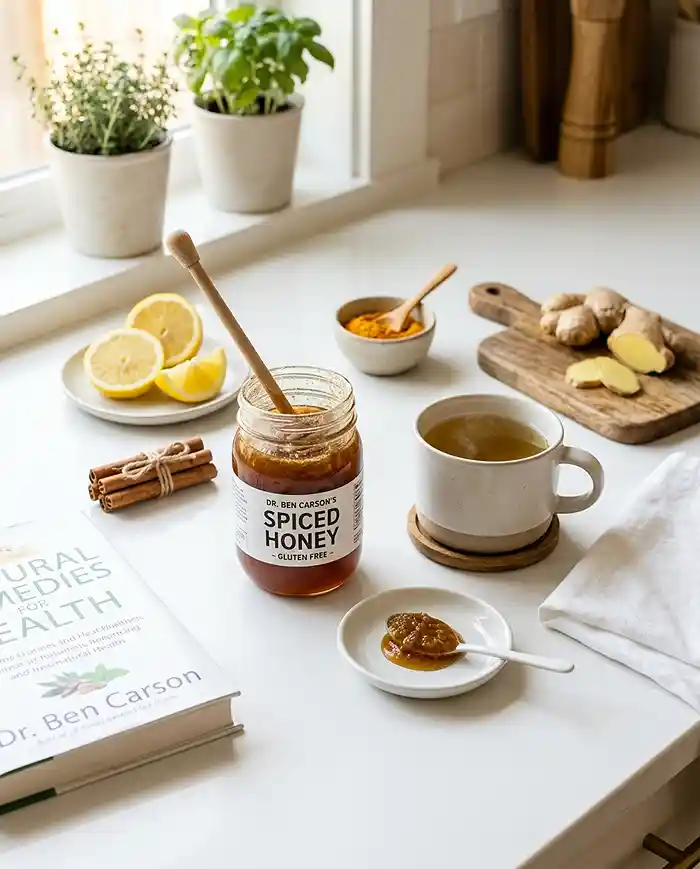
A teaspoon straight from the jar is the classic approach, but this blend also shines stirred into warm water with a slice of lemon for a gentle morning drink. Around the holidays — especially at Thanksgiving or Christmas brunch — I love setting a small jar out alongside a gluten-free charcuterie board and letting people drizzle it over cheese or roasted nuts. It always starts a conversation.
For something refreshing, blend a teaspoon into a cold Orange Creamsicle Smoothie — the cinnamon-honey combination plays beautifully against citrus and vanilla.
If you try this gluten-free Dr. Ben Carson honey recipe, I’d genuinely love to hear what you think. Did you go with the classic version or add the turmeric? Leave a comment below and share your experience — and if you found it helpful, save it to Pinterest so others can find it too.
Gluten-Free Dr. Ben Carson Honey Recipe
Equipment
- Glass or ceramic mixing bowl
- Wooden spoon
- Airtight glass jar (8 oz mason jar)
- Citrus juicer or reamer
Ingredients
Base
- 1 cup raw unfiltered honey Tualang honey preferred; avoid processed honey
Spice
- 1 tsp Ceylon cinnamon, ground Use Ceylon, not Cassia
Citrus
- 1 tsp fresh lemon juice Squeeze immediately before mixing
Optional Add-ins
- 0.25 tsp ground turmeric Asian protocol version
- 1 pinch freshly grated ginger Optional warming spice
- 1 pinch sea salt Enhances sweetness
Instructions
- Pour 1 cup of raw, unfiltered honey into a clean glass or ceramic bowl. Use a wooden or silicone spoon — avoid metal, which can react with raw honey.
- Add 1 teaspoon of Ceylon cinnamon directly on top of the honey. Let it sit for a moment — you should notice a soft, floral cinnamon aroma rising immediately.
- Stir the cinnamon into the honey slowly with a wooden spoon using gentle, deliberate circles until no dry cinnamon streaks remain. The mixture will deepen to a warm amber-brown.
- Squeeze 1 teaspoon of fresh lemon juice directly into the bowl and stir again until the mixture becomes glossy and smooth.
- If using optional add-ins, add ¼ teaspoon ground turmeric, a pinch of freshly grated ginger, and/or a pinch of sea salt. Stir until evenly incorporated.
- Transfer the finished blend into a clean, airtight glass jar. Seal and store at room temperature away from direct sunlight and heat sources.
- Take 1 teaspoon daily, preferably before breakfast, using a clean dry spoon each time. Never use a wet spoon, as moisture can cause the honey to ferment.