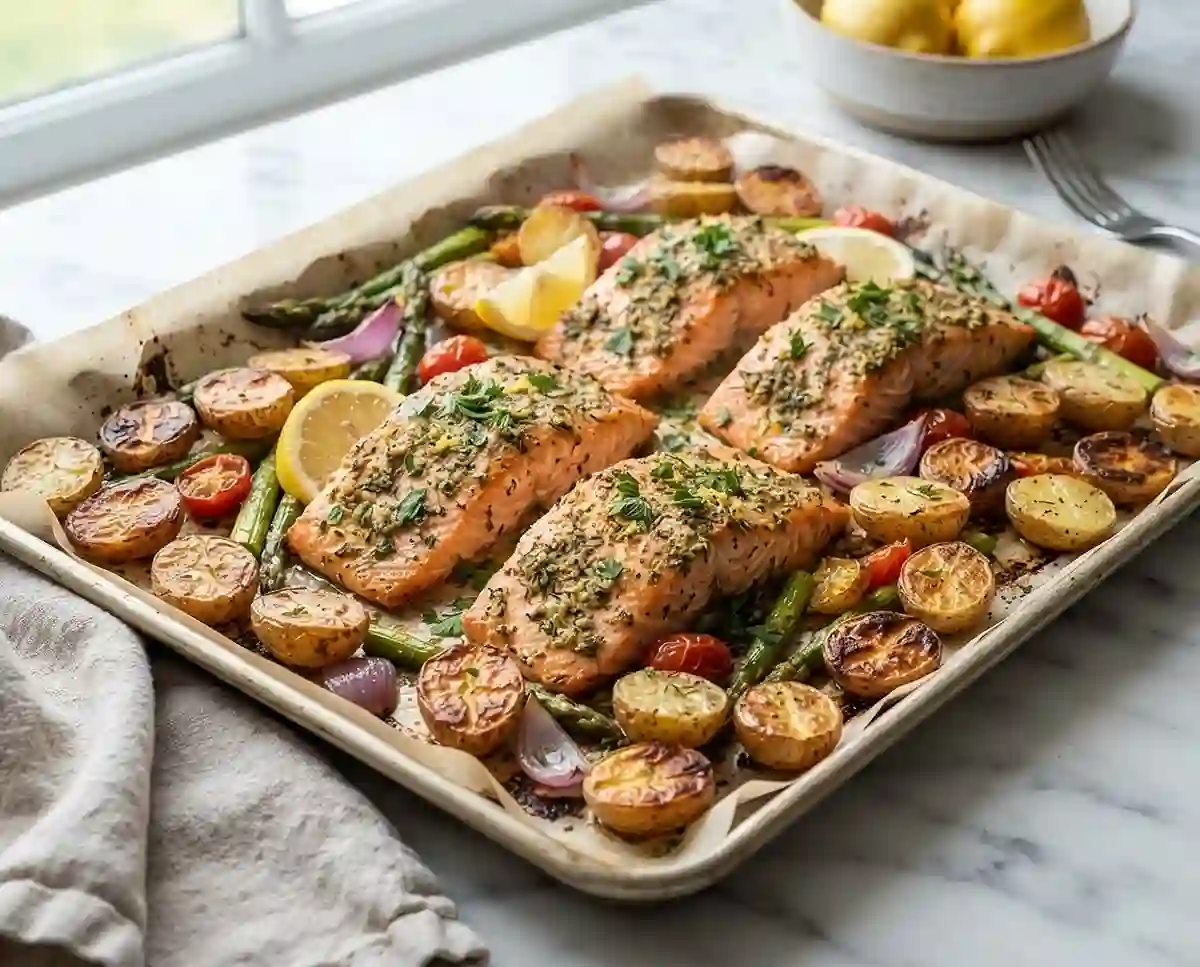
Gluten-Free Garlic Herb Salmon Sheet Pan
Make Gluten-Free Garlic Herb Salmon Sheet Pan with roasted potatoes, simple ingredients, step-by-step instructions, and easy cleanup. Ready in just 40 minutes for a delicious dinner.
The first time I made a sheet pan salmon dinner, I burned the garlic and the potatoes were still raw in the middle. That was embarrassing—especially because I’d invited my sister over to celebrate her new celiac diagnosis with a “special dinner.”
What I learned that night changed how I cook gluten-free garlic herb salmon forever. Potatoes need a head start. Garlic herb mixtures go on last. And parchment paper is your best friend for cleanup.
Now this gluten-free garlic herb salmon potato sheet pan is my most-requested weeknight meal—by my own family, and by every reader who’s tried it. Can you really get a restaurant-worthy dinner on a single pan in under 45 minutes? Yes, and I’ll show you exactly how.
Why You’ll Love This Sheet Pan Salmon Dinner
- One pan, zero stress. The potatoes roast first, then the salmon joins them—no juggling multiple pots or pans.
- Naturally gluten-free. Every ingredient is whole and unprocessed, so there’s no hidden gluten to worry about.
- Beginner-friendly. If you can mince garlic and halve potatoes, you can make this recipe successfully.
- Works for any occasion. Fast enough for a Tuesday night, impressive enough for a holiday dinner like Christmas Eve.
The Secret to Perfect Gluten-Free Garlic Herb Salmon
- Pat the salmon completely dry. Moisture is the enemy of a good sear and proper roasting. Dry fillets absorb the herb mixture better and develop a slightly golden crust.
- Potatoes go in first, cut-side down. This creates contact with the hot pan for caramelized edges. Flipping them isn’t necessary—just let the heat do the work.
- Lemon zest and juice together. The zest carries aromatic oils that brighten the herb mixture, while the juice adds acidity that balances the richness of the salmon.
- Use a thermometer. Salmon is done at 145°F (63°C) in the thickest part. This removes all guesswork and prevents the dreaded overcooked, chalky texture.
Table of Contents
Ingredients
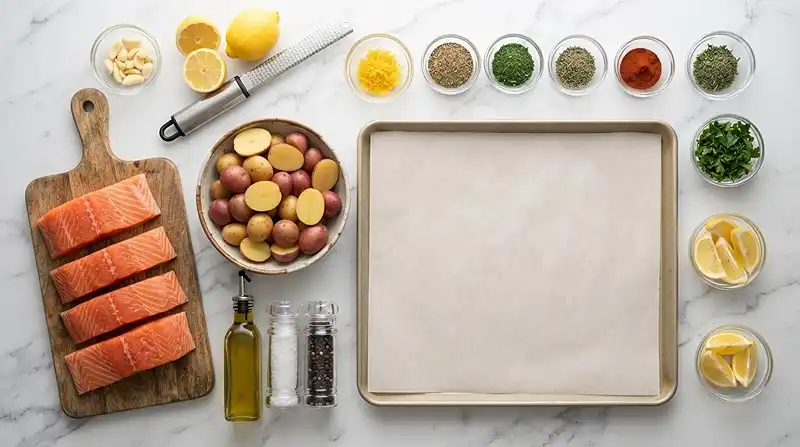
Salmon & Potatoes
| Ingredient | Amount | Notes |
|---|---|---|
| Salmon fillets | 4 (about 5–6 oz each) | Skin-side down when roasting |
| Baby Yukon Gold or red potatoes, halved | 1½ lbs | Uniform size ensures even cooking |
| Olive oil, divided | 2 tablespoons | 1 tbsp for potatoes, 1 tbsp for herb mix |
| Garlic, minced | 4 cloves | Fresh is best here |
| Fresh lemon juice | 1 tablespoon | About half a lemon |
| Lemon zest | 1 teaspoon | Zest before juicing |
| Dried Italian seasoning | 1 teaspoon | Check label for gluten-free certification |
| Dried parsley | 1 teaspoon | — |
| Dried thyme | ½ teaspoon | — |
| Paprika | ½ teaspoon | Smoked paprika also works great |
| Salt, divided | ¾ teaspoon | ½ tsp for potatoes, ¼ tsp for salmon |
| Freshly ground black pepper | ½ teaspoon | Divided between potatoes and herb mix |
| Fresh parsley, chopped | 1 tablespoon | For finishing |
| Lemon wedges | For serving | — |
Instructions
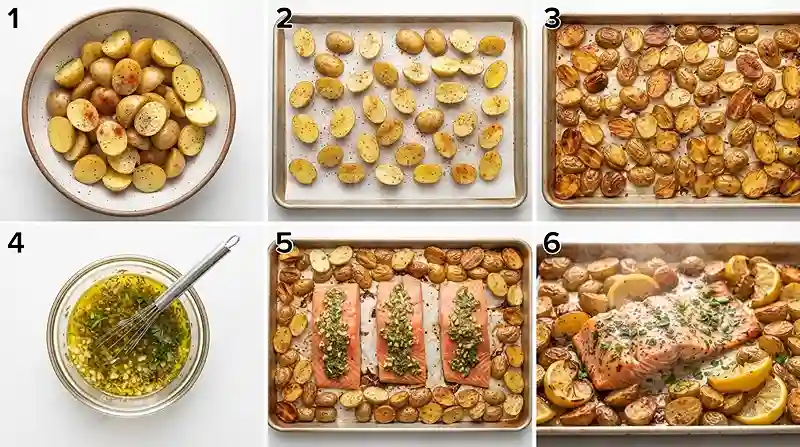
Step 1: Preheat and Prep the Pan
Preheat the oven to 425°F (220°C). Line a large rimmed sheet pan with parchment paper. This high heat is essential for getting those golden, crispy potato edges.
Step 2: Season the Potatoes
Place the halved potatoes in a large bowl. Toss with 1 tablespoon olive oil, ½ teaspoon salt, paprika, and ¼ teaspoon black pepper. Make sure every cut surface is coated—that’s where the color and flavor develop.
Step 3: Roast the Potatoes First
Spread the potatoes cut-side down on the sheet pan. Roast for 20–25 minutes, until they begin to turn golden and tender when pierced with a fork. You’ll start to smell a nutty, caramelized aroma—that’s your cue they’re ready for company.
Step 4: Make the Garlic Herb Mixture
While the potatoes roast, combine the remaining tablespoon of olive oil, minced garlic, lemon juice, lemon zest, Italian seasoning, dried parsley, thyme, remaining salt, and black pepper. Stir until everything is fully incorporated—this mixture should smell intensely herby and bright.
Step 5: Make Room for the Salmon
Remove the sheet pan from the oven and push the potatoes toward the sides to make room for the salmon fillets in the center. Work quickly so the pan stays hot.
Step 6: Add the Salmon
Pat the salmon fillets dry with paper towels and place them skin-side down on the pan. Drying the surface is a key step—it helps the herb mixture cling instead of sliding off.
Step 7: Apply the Herb Mixture
Spoon the garlic herb mixture evenly over each salmon fillet. Use the back of the spoon to gently spread it to the edges. The mixture should completely coat the top of each fillet.
Step 8: Finish Roasting
Return the pan to the oven and roast for 10–14 minutes, depending on the thickness of the fillets. The salmon is done when it flakes easily with a fork and reaches 145°F (63°C) in the thickest part.
Pro Tip: Thinner fillets (under 1 inch) take closer to 10 minutes. Thick center-cut fillets can take the full 14. Always use a thermometer to be sure.
Step 9: Garnish and Serve
Sprinkle the salmon and potatoes with fresh chopped parsley and serve immediately with lemon wedges alongside. The salmon should look silky with golden-edged potatoes that are as crisp as roasted chestnuts.
Make It Your Own
Want to switch up the vegetables? Asparagus, green beans, and halved Brussels sprouts all roast beautifully alongside salmon. Add them to the pan at the same time as the salmon—they need only 10–12 minutes and won’t get mushy.
Well… if you’re dairy-free, you’re already good to go. This entire recipe is naturally dairy-free with zero substitutions needed. That makes it a fantastic option for households with multiple dietary needs at the table.
For a spicier version of this omega-3-rich gluten-free fish dinner, add ¼ teaspoon red pepper flakes to the garlic herb mixture. The heat plays off the lemon beautifully and gives the salmon a pleasant kick without overpowering the herbs.
You can also swap the dried Italian seasoning for Herbes de Provence or a simple mix of oregano and basil. The flavor changes completely, which means this gluten free sheet pan salmon genuinely never has to feel repetitive.
Common Problems & Solutions
Problem: The salmon is overcooked and dry.
Pull it from the oven at 140°F—it will carry-over cook to 145°F off the heat. High heat for a shorter time always beats lower heat for longer when it comes to salmon. Dry salmon is nearly always a timing issue, not a technique one.
Problem: The potatoes are still hard when the salmon is done.
This means the potatoes didn’t get their full head start. Make sure they roast for at least 20 minutes before you add the salmon. If they’re still firm when you check at 20 minutes, give them 5 more minutes before adding the fish.
Man, oh man… the garlic burning situation is real. If your garlic herb mixture is burning on the salmon during the final roast, your oven might run hot. Try reducing to 400°F on your next attempt, or tent a piece of foil loosely over the salmon for the last 5 minutes.
Problem: The potatoes aren’t getting crispy.
Overcrowding is the most common culprit. When potatoes are too close together, they steam instead of roast. Use a large rimmed sheet pan (18×13 inches) and make sure the cut sides have direct contact with the parchment-lined pan.
Storage & Meal Prep
| Method | Duration | Notes |
|---|---|---|
| Counter | Not recommended | Salmon should not sit at room temp |
| Fridge | 3–4 days | Store in an airtight container |
| Freezer | 2–3 months | Wrap fillets individually; potatoes may change texture |
To reheat, place salmon and potatoes on a sheet pan in a 275°F oven for 10–12 minutes. This gentle heat prevents the salmon from drying out. Avoid the microwave if you can—it tends to make salmon rubbery and steams the potatoes into mush.
For meal prep, you can prep the garlic herb mixture up to 2 days ahead and refrigerate it. The potatoes can also be halved and stored in cold water for up to 24 hours. On cook night, drain and dry them well before seasoning.
Gluten-Free Garlic Herb Salmon Sheet Pan FAQs
Can I use frozen salmon fillets?
Yes, but thaw them completely in the refrigerator overnight before cooking. Pat them very dry before adding the herb mixture—frozen fish releases more water, and excess moisture will prevent proper roasting and cause the topping to slide off.
How do I know when the salmon is done?
The most reliable method is an instant-read thermometer inserted into the thickest part of the fillet. You’re looking for 145°F (63°C). Visually, the flesh should be opaque throughout and flake easily when pressed gently with a fork.
What’s the best type of salmon to use for this recipe?
Wild-caught sockeye or king salmon deliver the richest flavor and highest omega-3 content. Atlantic salmon (often farmed) is milder and slightly fattier, which means it’s more forgiving if you slightly overcook it. Both work well here.
Why did my garlic herb mixture dry out in the oven?
This usually happens when fillets are thin or the oven runs hot. The mixture should baste the salmon as it cooks. If it looks dry before the salmon is done, loosely tent the pan with foil for the last few minutes of cooking.
Can I add other vegetables to the pan?
Absolutely. Asparagus, halved cherry tomatoes, green beans, or sliced zucchini all work well. Add them to the pan when you add the salmon—they need the same 10 to 14 minutes and won’t overpower the garlic herb flavors.
Serving Suggestions
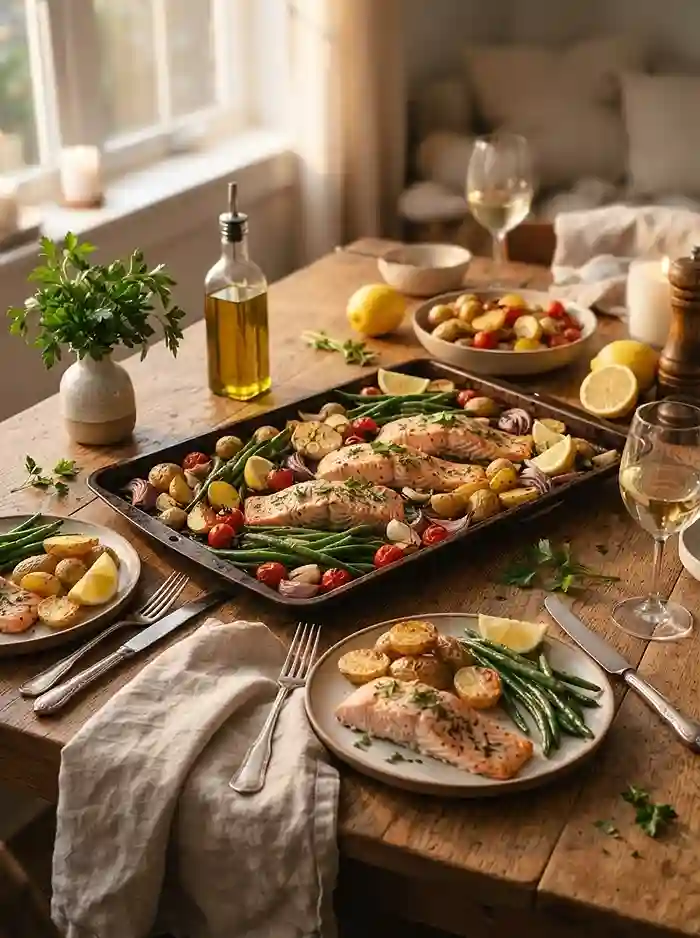
You know… this sheet pan dinner is a complete meal on its own, but a crisp green salad alongside makes it feel extra special. A simple arugula salad with lemon vinaigrette echoes the citrus notes in the salmon beautifully.
For a heartier spread—say, a Sunday family dinner or a Thanksgiving Eve gathering when everyone’s already in the kitchen—serve it with a warm bowl of this crowd-pleasing gluten-free rice dinner on the side. The garlic herb flavors pair well with almost anything mild and starchy.
Finish the meal with something sweet from the peach almond crumble bars recipe—they’re gluten-free, easy to make ahead, and feel genuinely celebratory after a weeknight dinner this good.
And if you’re building out your full gluten-free recipe rotation, don’t miss this fun gluten-free drink idea for something a little different to serve alongside.
Conclusion
This gluten-free garlic herb salmon potato sheet pan dinner proves that eating gluten-free doesn’t mean eating boring. One pan, real ingredients, and a foolproof method—that’s what this recipe is built on.
If you try it, I’d love to hear how it went. Did you add extra vegetables? Try a different spice blend? Leave a comment below and let me know your version.
And if it earns a spot in your regular rotation—snap a photo and share it on Pinterest. It genuinely makes my day to see your sheet pans.
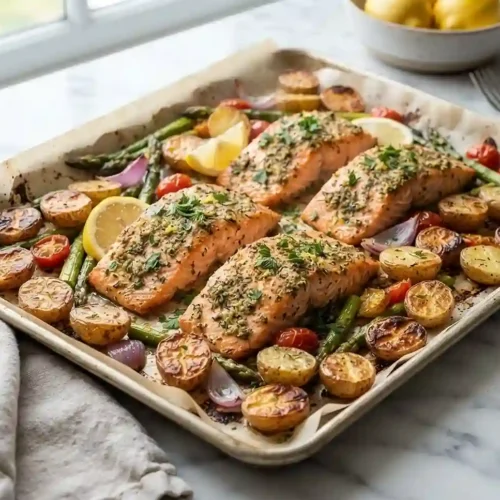
Gluten-Free Garlic Herb Salmon Sheet Pan
Equipment
- large rimmed sheet pan
- Parchment paper
- Large mixing bowl
- Small mixing bowl
- Instant-read thermometer
- Paper towels
Ingredients
Salmon & Potatoes
- 4 fillets Salmon fillets About 5–6 oz each; skin-side down when roasting
- 1 ½ lbs Baby Yukon Gold or red potatoes Halved; use uniform sizes for even cooking
- 2 tablespoons Olive oil Divided; 1 tbsp for potatoes and 1 tbsp for herb mixture
- 4 cloves Garlic Minced; fresh is best
- 1 tablespoon Fresh lemon juice About half a lemon
- 1 teaspoon Lemon zest Zest before juicing
- 1 teaspoon Dried Italian seasoning Check label for gluten-free certification
- 1 teaspoon Dried parsley
- ½ teaspoon Dried thyme
- ½ teaspoon Paprika Smoked paprika also works
- ¾ teaspoon Salt Divided; 1/2 tsp for potatoes and 1/4 tsp for salmon
- ½ teaspoon Freshly ground black pepper Divided between potatoes and herb mixture
- 1 tablespoon Fresh parsley Chopped, for finishing
- Lemon wedges For serving
Instructions
- Preheat the oven to 425°F (220°C). Line a large rimmed sheet pan with parchment paper.
- Place the halved potatoes in a large bowl. Toss with 1 tablespoon olive oil, 1/2 teaspoon salt, paprika, and 1/4 teaspoon black pepper until every cut surface is coated.
- Spread the potatoes cut-side down on the prepared sheet pan. Roast for 20–25 minutes, until they begin to turn golden and are tender when pierced with a fork.
- While the potatoes roast, combine the remaining tablespoon of olive oil, minced garlic, lemon juice, lemon zest, Italian seasoning, dried parsley, thyme, remaining salt, and black pepper. Stir until well combined.
- Remove the sheet pan from the oven and push the potatoes toward the sides to make room for the salmon fillets in the center.
- Pat the salmon fillets completely dry with paper towels and place them skin-side down on the sheet pan.
- Spoon the garlic herb mixture evenly over each salmon fillet, gently spreading it to cover the tops.
- Return the pan to the oven and roast for 10–14 minutes, depending on the thickness of the fillets. The salmon is done when it flakes easily and reaches 145°F (63°C) in the thickest part.
- Sprinkle the salmon and potatoes with fresh chopped parsley and serve immediately with lemon wedges.